The entire computer field has been rocked, with two major giants announcing on the same day that the century-old ETH conjecture has been falsified.
The theoretical computer science community has also been bombarded by AI!
Last night, AI has fully crossed the Rubicon of scientific research and officially begun to "overturn" the edifice of human knowledge.
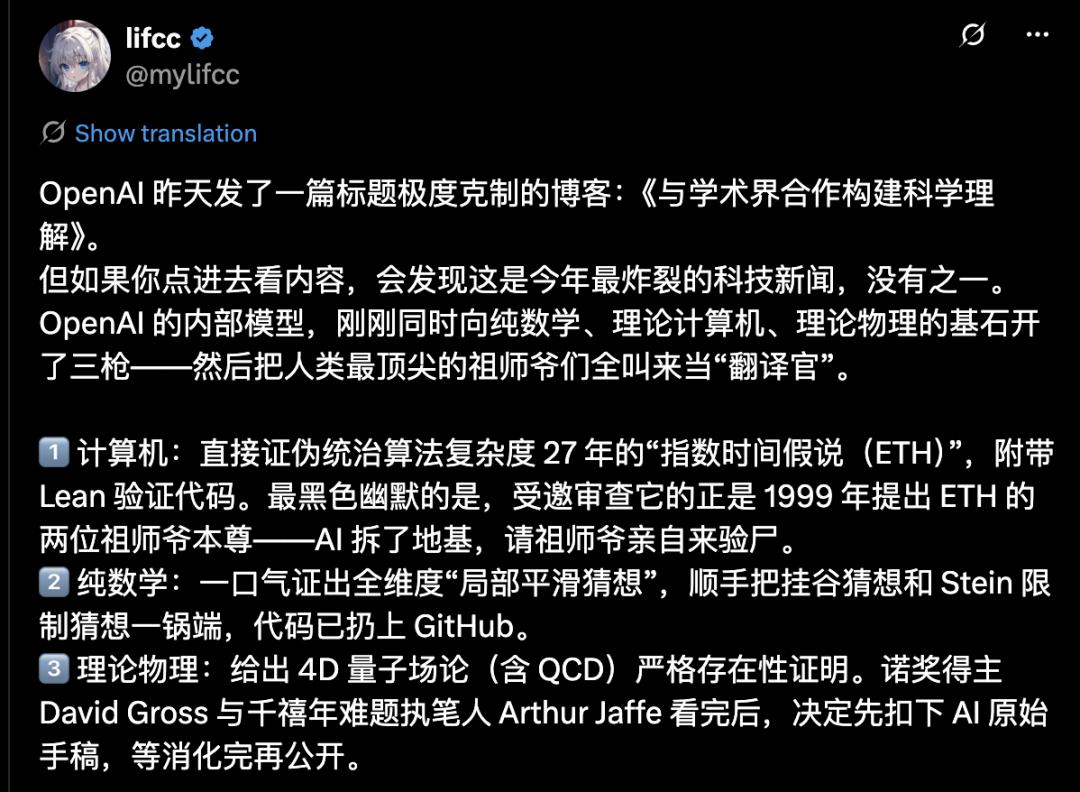
OpenAI dropped nuclear bombs in three major fields: theoretical computer science, pure mathematics, and theoretical physics in one go:
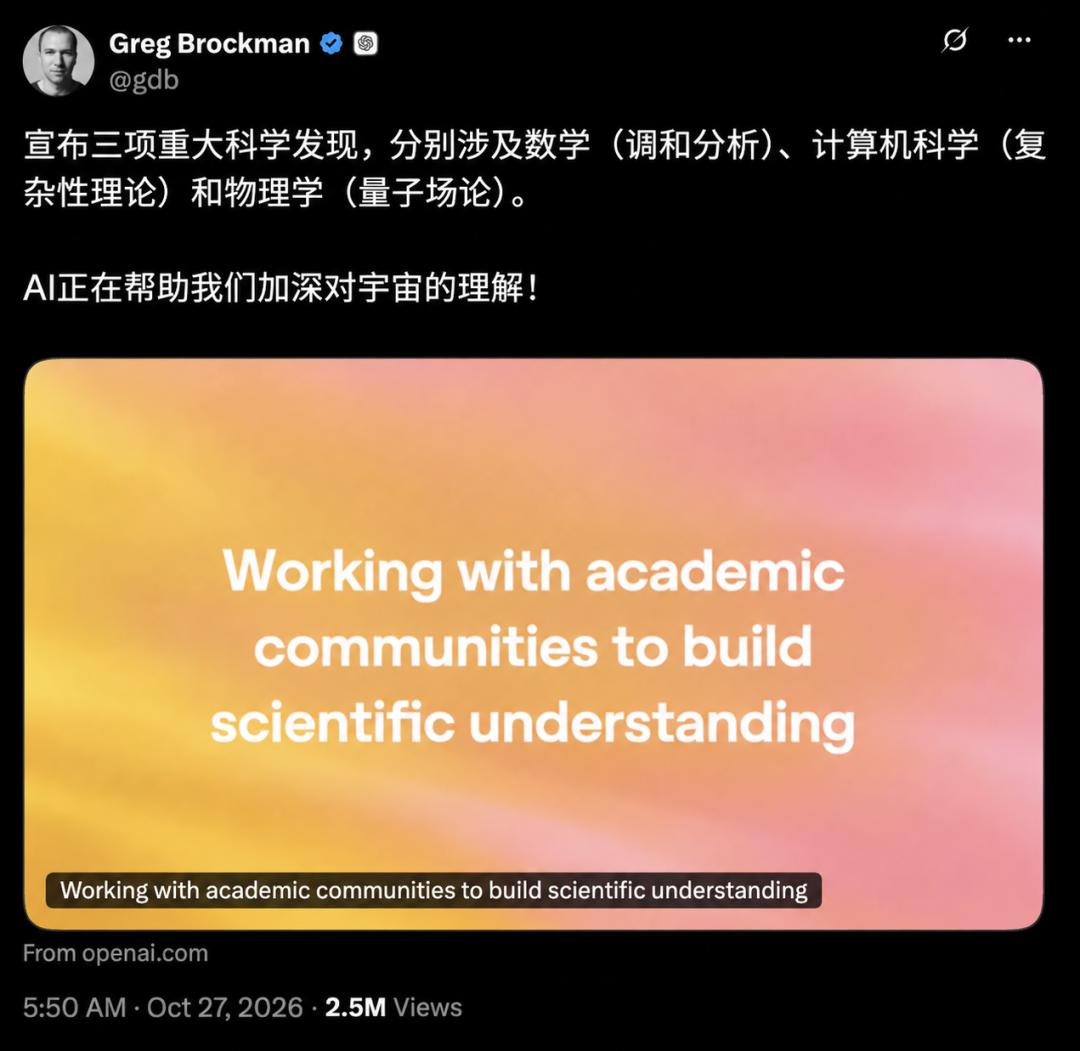
This is probably the most explosive tech news of the year, if not the only one.
Claude even stated bluntly that if these results hold, this will be the most important day in the history of mathematics and theoretical computer science.
Among them, the mathematical breakthrough is highly related to the previous work of Fields Medal winner Hong Wang on the Kakeya conjecture, while the physical breakthrough may be the most important of the three, potentially solving the remaining problem left by Nobel laureate Chen-Ning Yang.
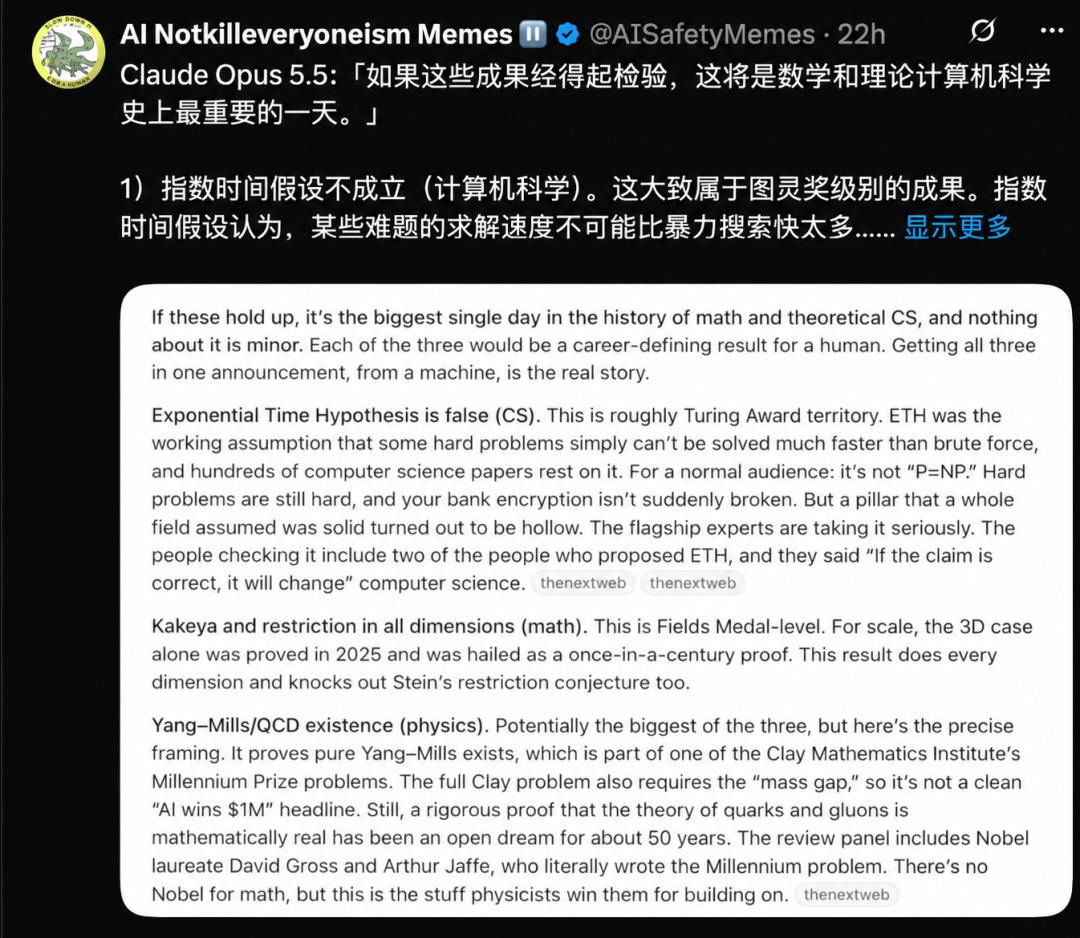
And what we are talking about this time is the breakthrough in the computer field: the Exponential Time Hypothesis is not valid.
According to Claude, this is a disruptive Turing Award-level achievement, "If the statement is completely correct, it will transform computer science."
Sebastien Bubeck, current OpenAI researcher, former Vice President of Microsoft Artificial Intelligence and Distinguished Scientist, praised this as "the biggest surprise I have seen in 20 years".
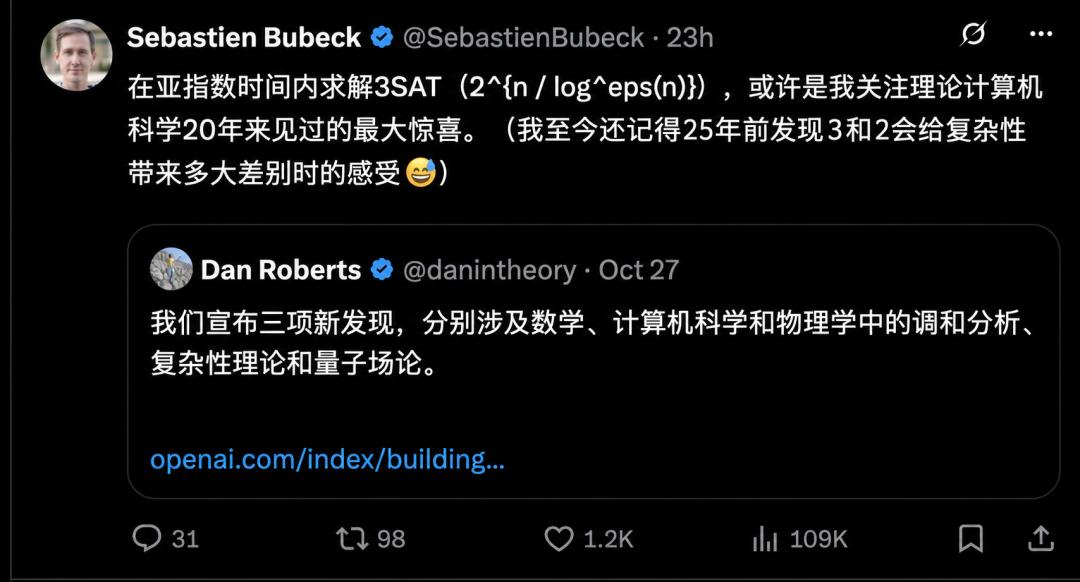
Moreover, on the same day, two AIs almost simultaneously announced that they had made this breakthrough!
The two AI giants OpenAI and Anthropic almost at the same time announced that their in-house models had overturned the "Exponential Time Hypothesis" (ETH) that had dominated theoretical computer science for 27 years!
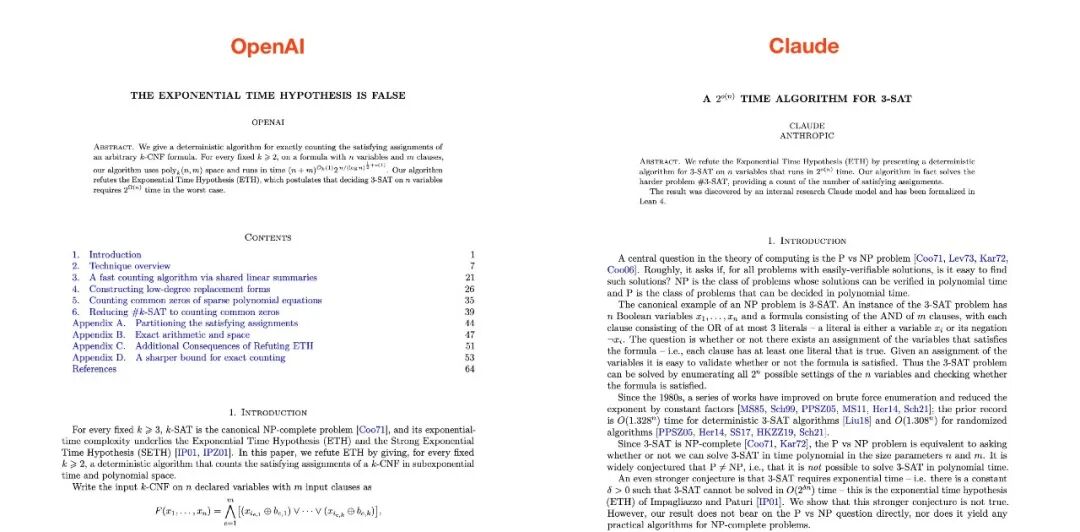
What is even more thought-provoking is that the paper released by Anthropic clearly marks that the core algorithm was independently deduced and discovered by the in-house model Claude under zero human intervention.
This paper that may go down in the history of human science has only one sole author, Claude.
The "sky" of the theoretical computer science community has fallen, what on earth does this mean?
Simply put, in 1999, the Exponential Time Hypothesis (ETH) was proposed by Russell Impagliazzo and Ramamohan Paturi of the University of California, San Diego.
You can imagine it as a combination lock with n switches, which is the 3SAT problem.
For half a century, countless extremely intelligent minds have tried every means to unlock it, but no one has been able to break one thing: the time to crack this lock will always rise "exponentially" as the number of switches increases.
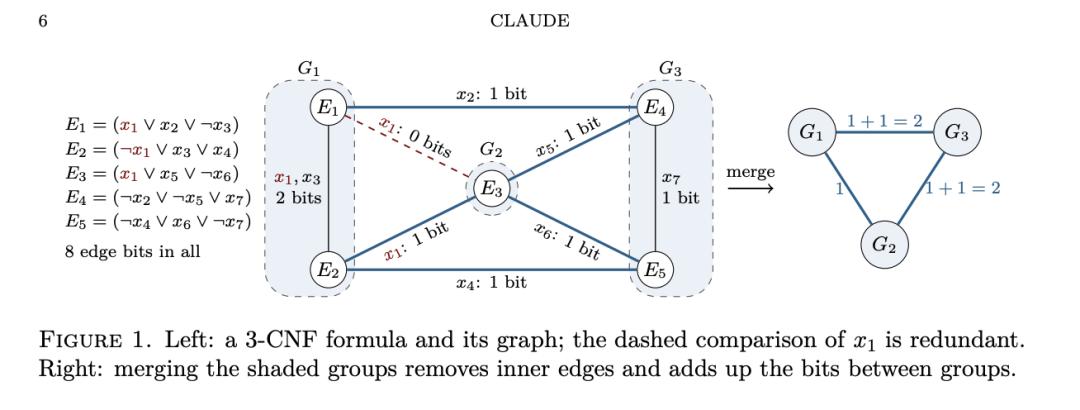
For example, suppose a lock requires n digits to be filled in, each digit ranging from 1 to 9. There are 9 choices for each position, so there are a total of 9ⁿ possibilities, that is, 9 multiplied by n times.
We can solve this puzzle by brute-forcing all 9ⁿ possibilities. But this method is extremely inefficient: for a Sudoku puzzle that requires n=100 digits to be filled in, even using all the computers in the world, it will not be completed until after the sun cools down.
For a long time, people have been trying to find algorithms whose running time grows slower than 9ⁿ with n, but they have never succeeded.
In 1999, scholars wrote this collective intuition into a formal hypothesis: there is no sub-exponential time algorithm for 3SAT.
You can improve the speed a little bit, but you can never climb over this "exponential wall". It is just like "the speed of light cannot be exceeded" in physics.
This conjecture has been put forward for more than 20 years. In the past, hundreds of papers took the establishment of ETH as the premise to study the lower complexity bounds of various computational problems.
From graph theory, combinatorial optimization, to databases and computational biology, many studies are built on this hypothesis.
If the Riemann Hypothesis is overturned, number theory will collapse; if ETH is overturned, complexity theory and parameterized algorithms will collapse.
The status of ETH is not at the millennium level of "P vs NP" or the Riemann Hypothesis.
But it is stronger and more specific than P≠NP: if ETH holds, P≠NP can be deduced; but if ETH is overturned, P=NP cannot be deduced.
A large number of conditional research conclusions that rely on ETH will need to be reassessed.
A new batch of "victims" in the AI field have already appeared —
There is a guy in the group, and one of the papers he wrote before was based on the premise that ETH holds.
Now this premise may be gone directly, and the conclusion of the paper needs to be re-examined.
Imagine that you have spent several years studying a problem, writing papers, making proofs, and even scholars in an entire field have been researching around this hypothesis for more than 20 years (like the professor in the picture).
Then one day, an AI model tells you that the premise that everyone has always believed in may be wrong.

Crossing the Rubicon of scientific research: Claude as the sole author
A dramatic scene followed immediately.
Right after OpenAI President Greg Brockman posted an official announcement, his old rival Anthropic directly released a paper on the same topic, head-on confrontation, direct collision!
Anthropic said: What a coincidence, our in-house Claude model independently overturned ETH as early as October 16!
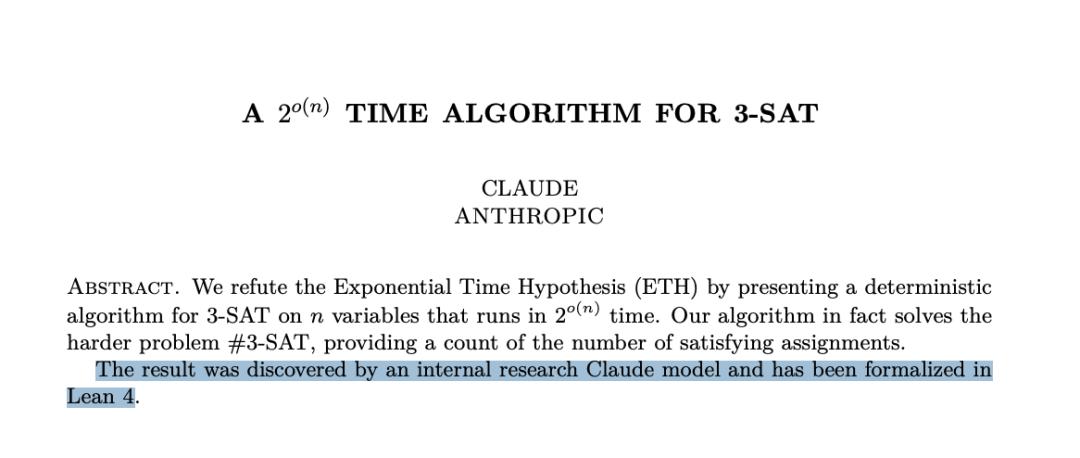
Moreover, Anthropic left a "source statement" on the paper page:
The core algorithm was found by an in-house Claude research model on October 16, consuming 14 million output Tokens without any human input.
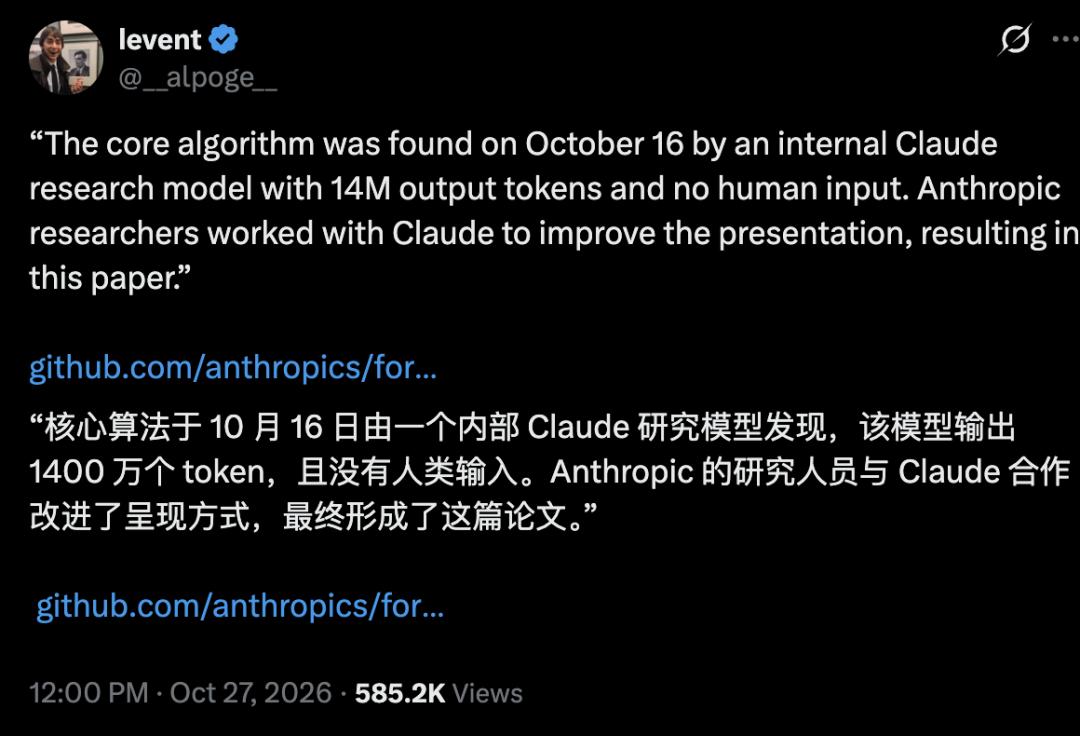
This means that AI has completely crossed the Rubicon of scientific research — it is no longer a tool for humans, but has become a real "first author".
What is the concept of 14 million Tokens? The full collection of *The Three-Body Problem* is about 900,000 Chinese characters. 14 million Tokens is equivalent to Claude frantically deducing more than a dozen drafts as thick as *The Three-Body Problem* in one go.
After evaluation by many top scholars, this is equivalent to an AI model completing the scientific research output of a top human postdoc for 1 to 2 years in a few days without eating, drinking or sleeping.
In these few days, Claude explored the path by itself, deduced formulas by itself, verified logic by itself, and even used obscure mathematical tools from unrelated fields across boundaries, finally presenting a proof to humans.
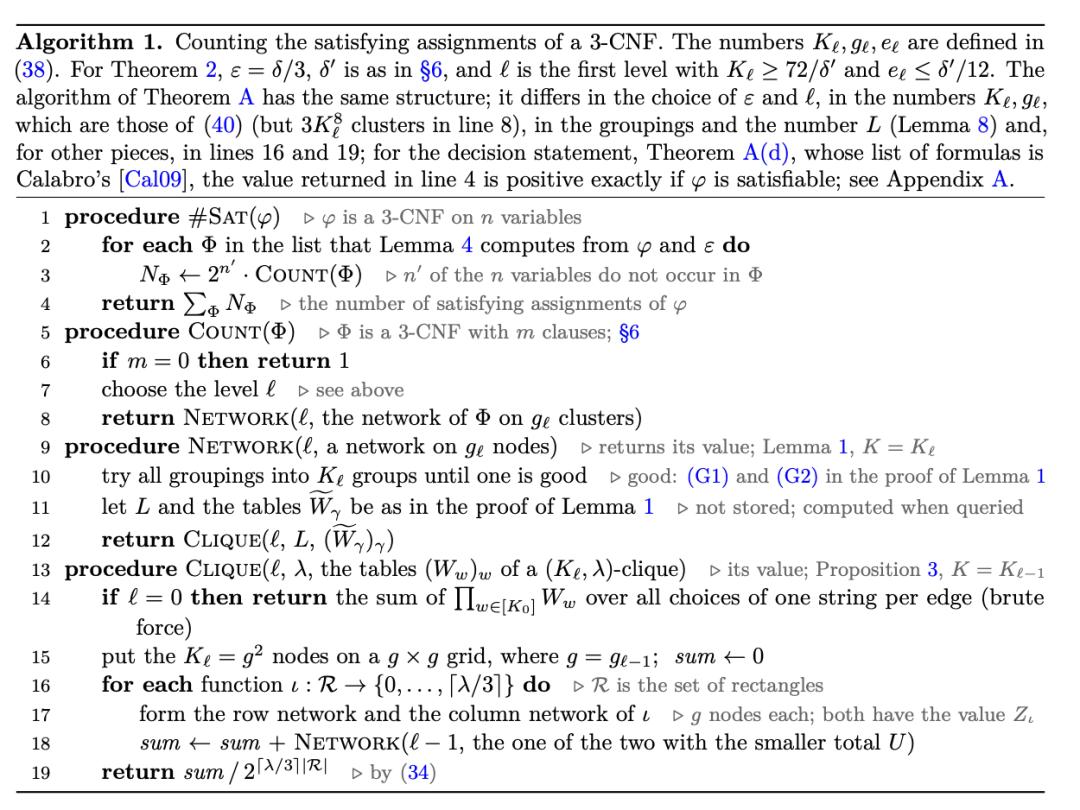
This time, it is not "AI helping mathematicians look up literature", let alone "AI solving an Olympiad math problem correctly".
This is AI, in the hardest and purest theoretical discipline of mankind, single-handedly breaking through the ceiling.
The founding fathers were woken up overnight, and mathematicians turned into "auditors" to speed up the verification process
Can AI overturn the hypothesis just by saying so? Could it be that AI is "talking nonsense in all seriousness (hallucination)"?
The most surreal scene happened. To prove their innocence, neither company just threw out a PDF, but publicly released Lean formalized proof code at the same time.
Lean is an "impartial electronic reviewer". Even if there is a logical leap in one step, it will directly report an error. Since the code can run, it means that the possibility of error at the bottom of the logic is almost completely blocked. Handing in a "machine-verifiable" paper is the irrefutable confidence of AI.
But this still cannot fully confirm the correctness of the proof.
The two founders who proposed the ETH conjecture back then — Russell Impagliazzo and Ramamohan Paturi — are rumored to have been urgently invited to come out of retirement.
27 years ago, the two scholars wrote down a conjecture; 27 years later, they were woken up to check how an AI overturned it.
This is probably the most complicated mood in the history of academia.
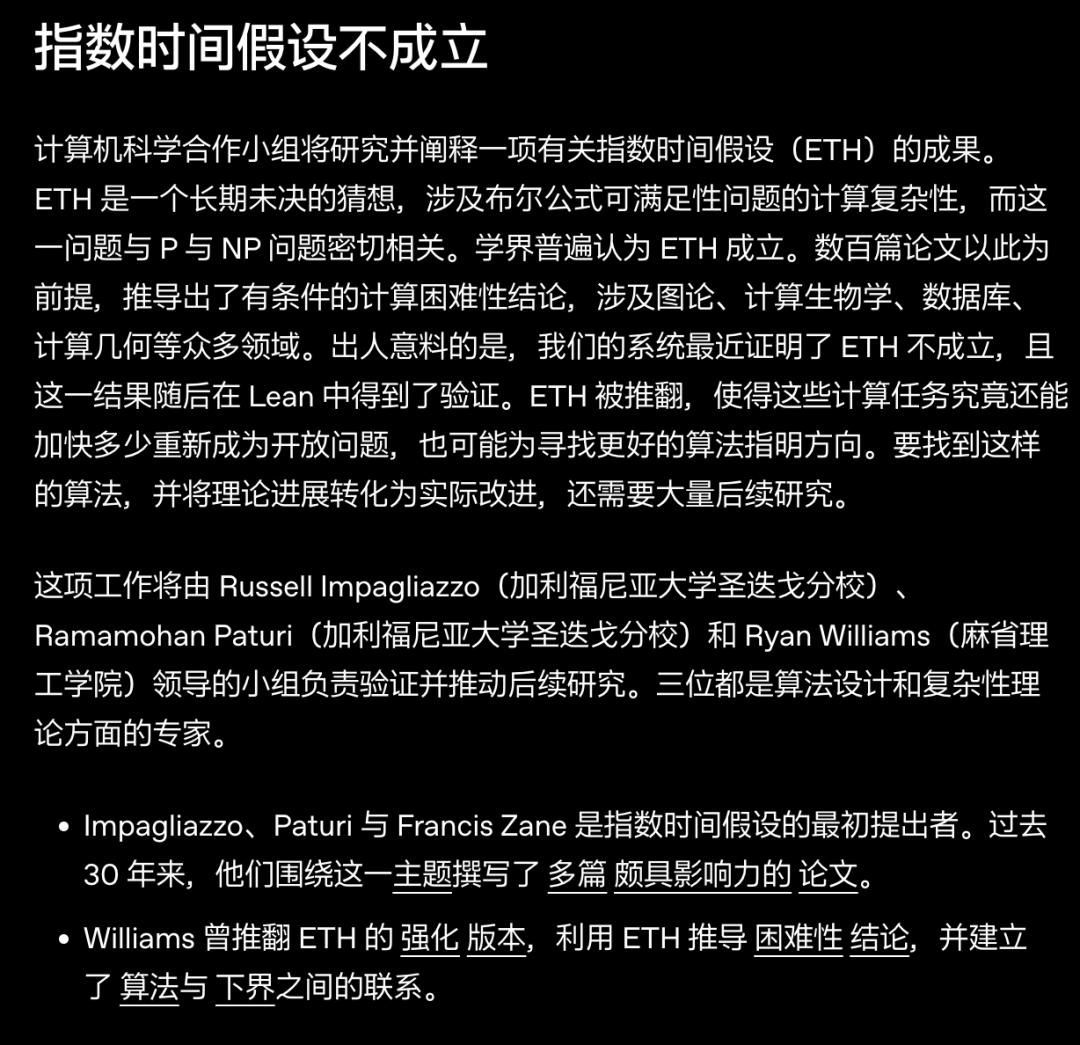
At present, these two leading authorities, together with top teams from universities such as MIT, are conducting line-by-line verification of the code of both companies.
At the same time, another front is also advancing rapidly.
Facing this more than 60-page "alien" proof produced by AI, the human brain finds it extremely difficult to read.
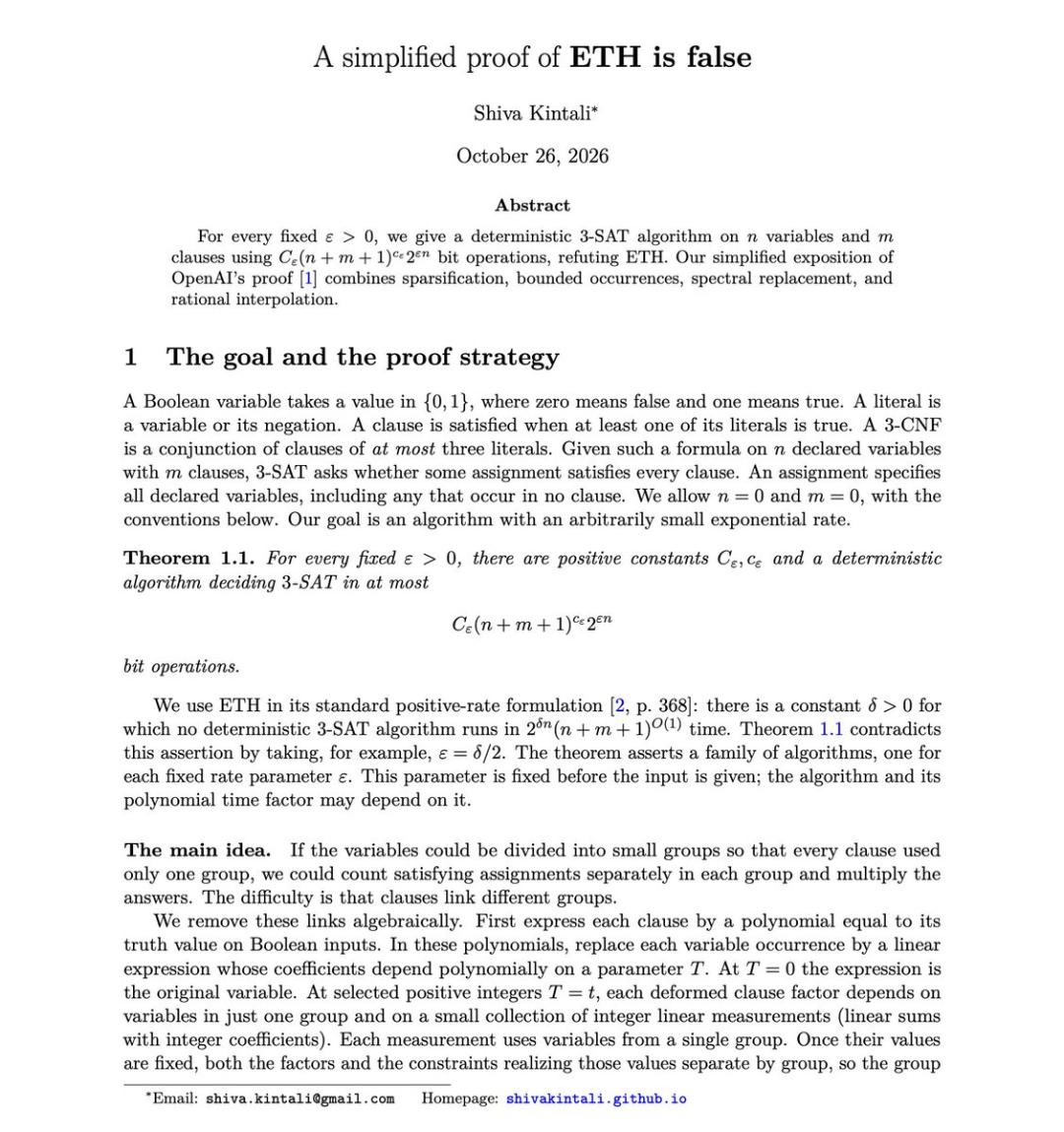
Shiva Kintali, senior AI architect at NVIDIA, worked through the night to compress the original 60+ page ETH disproof proof from OpenAI into a streamlined 22-page version!
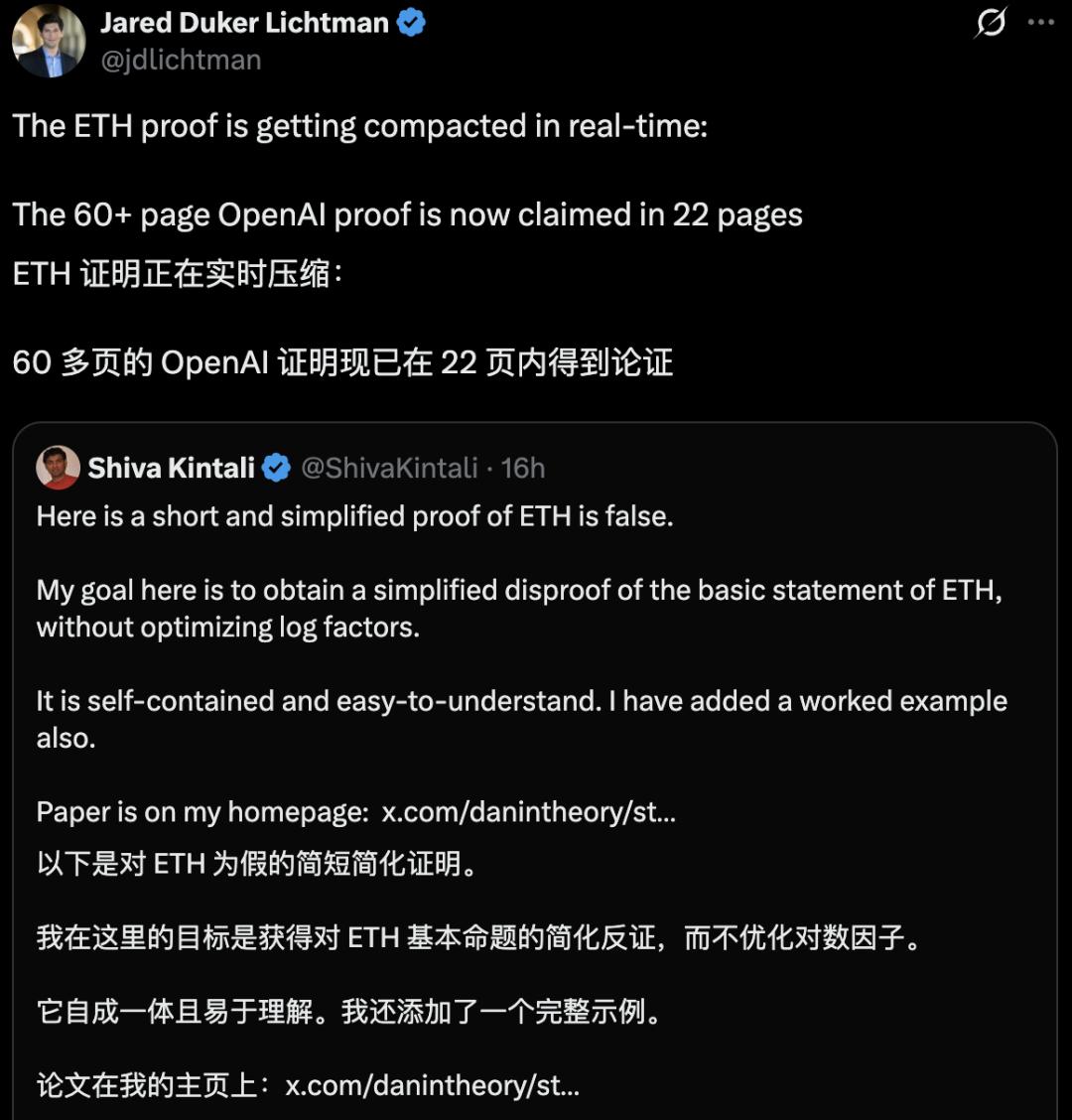
He cut out the tedious steps of AI, did not pursue the optimal logarithmic factor, but only sought to clearly disprove the basic statement, and supplemented calculation examples.
He has only one goal: "Let human peers truly understand it."
Now, an unprecedented academic spectacle has emerged:
AI takes charge of tackling tough problems: breaking through a door that no one has opened for 27 years in a few days;
Humans take charge of digestion: distilling the lengthy deduction of AI into knowledge that humans can understand and continue to push forward.
Now it is human's turn to grade and streamline AI's homework.
The "reversal of subject and object" in basic scientific research
As early as March 2023, OpenAI released a sensational "Report on the Impact of AI on the Job Market". In this list, the top of the "occupations most impacted by AI" is surprisingly mathematicians.
