Offense is the best defense, and the fraud industry has welcomed a stern AI disciplinarian.
01: Turning the Tables
In a world where AI-powered scams run rampant.
From North Korean hackers using AI phishing platforms to defraud tens of millions of US dollars, to ordinary young people using AI to trick elderly people out of small sums of money just enough to buy a milk tea, AI scams have become pervasive.
Faced with this almost unguardable and desperate situation, a group of people took a contrarian approach and blazed a new path of "AI anti-scam".

Scammers fighting against digital avatars
This Australian AI startup named Apate does not focus on large model R&D. Instead, it has deployed more than 350,000 AI Agents, which are specifically designed to play all kinds of potential scam victims.
What is the point of doing this?
Simply put, it is to waste scammers' time.

The creative idea has won widespread praise from netizens
These AI "victims" make scammers believe that they are on the verge of success, but they only use endless circular arguments and routines to delay the conversation.
The more time and energy scammers spend on these AI Agents, the less time they will have to target real human victims in the real world. This anti-scam logic is quite unique, but it does make sense after careful consideration.
These Agents not only pretend to be elderly people to actively answer scam calls, but also cooperate with scammers' instructions to click phishing links or reply to phishing SMS. They can even lurk into scam group chats, fully embodying the idea that "a top hunter often appears in the form of prey".
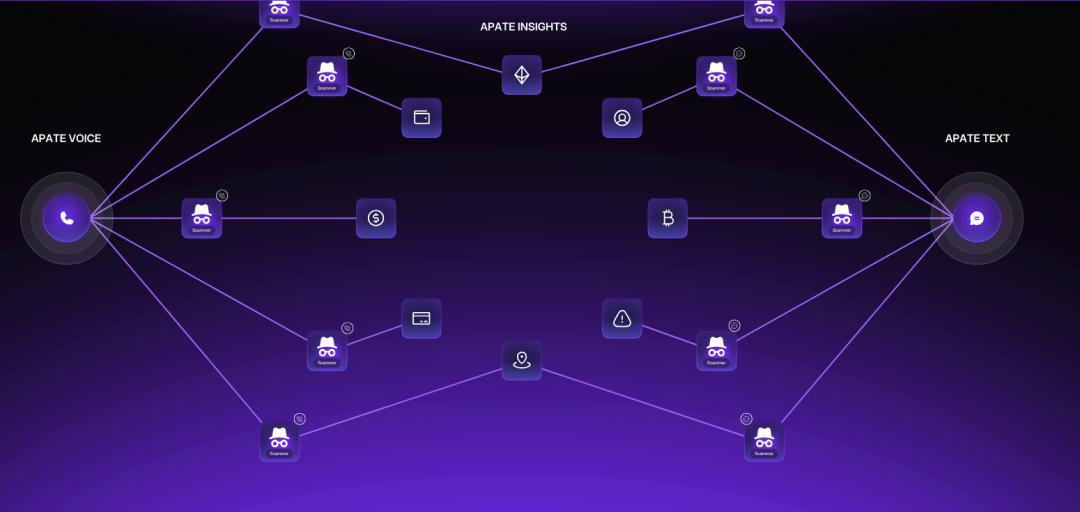
Of course, no real money will ever be transferred. Every time scammers think the other party is about to fall for the scam, these AI "actors" will use extremely natural ways to delay infinitely.
How effective is this approach in practice?
According to many counter-scam cases released on Apate's official website, the results are quite impressive.
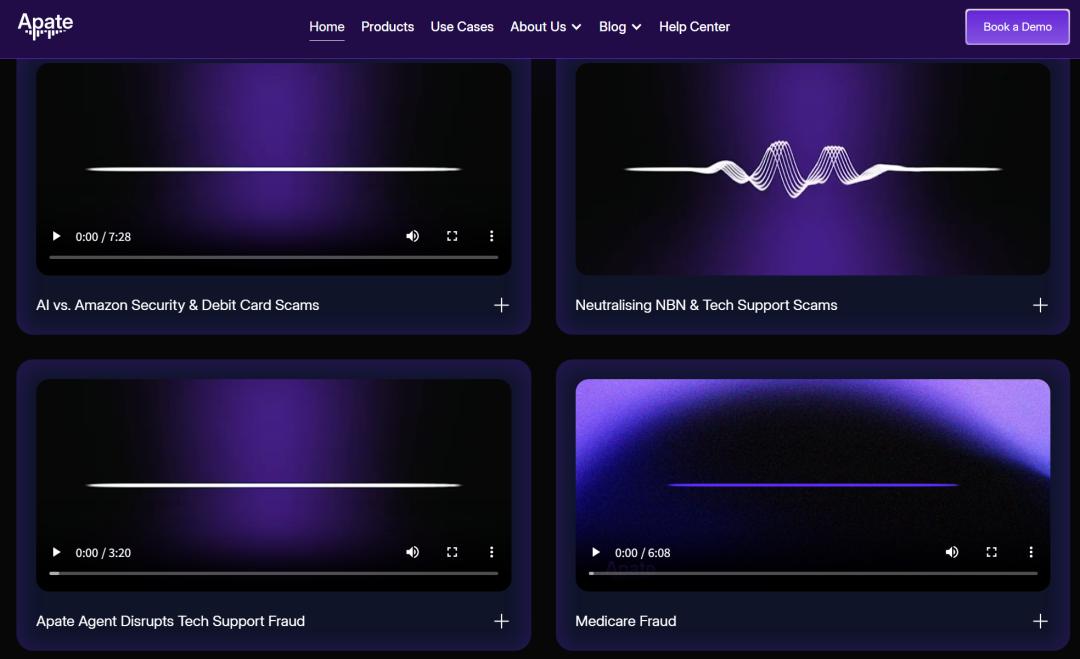
There are also many Agents with Indian accents
The situation is the same overseas. Many telecom scam routines start with problems such as broadband faults, incorrect phone bills, or administrative penalties, and then the scammers will ask the victim to handle the issue remotely.
On the other end of the line, there are already very cooperative "AI elderly people" waiting. They will input personal information as requested, click links as instructed, and never say no.
After a series of operations, the scammers just wait for the "hooked victim" to download the remote control software disguised as a normal app or link.
But when it comes to the critical step of successfully making money, these AI "elderly people" will suddenly become unresponsive and keep making mistakes.

They claim they cannot figure out how to use the browser, the network speed is too slow to load the page, or they have to go out to pick up their grandchildren temporarily. In short, they cannot handle it right now, no matter how the scammers urge them, they just keep delaying again and again...
In most cases, the scammers cannot bear it anymore and hang up the phone, while the AI "elderly people" are still stuck at the previous step and going around in circles.
According to the latest business data released by the company, this AI system has completed more than 2.5 million conversations so far, occupying scammers' time for a total of 17 years. Through close conversations with scammers, it has successfully extracted more than 250,000 pieces of useful information (such as scammers' account addresses, encrypted wallet addresses, etc.).
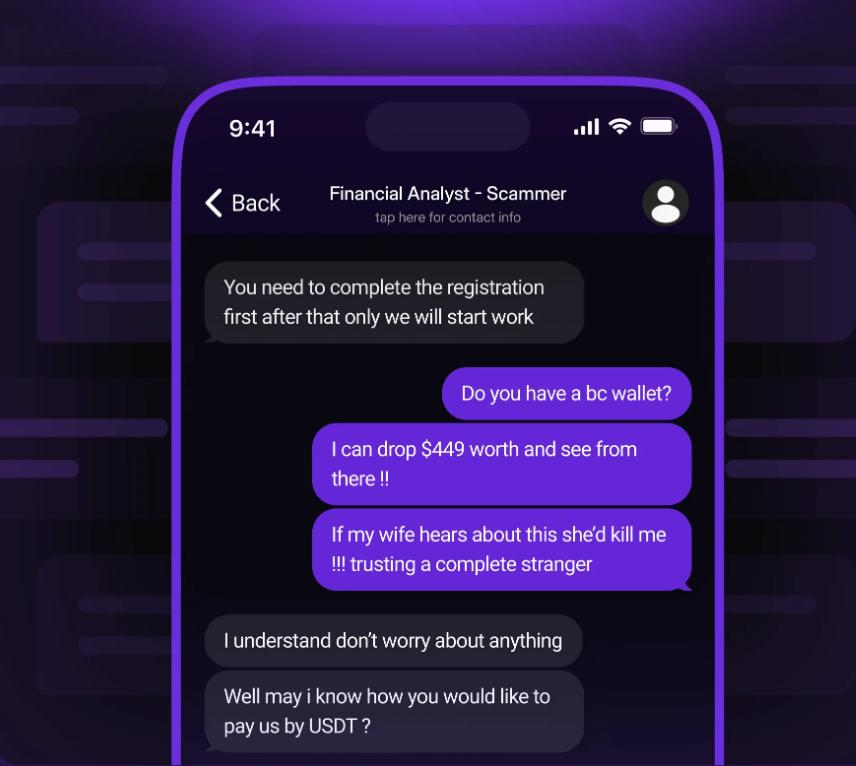
Both voice and text conversations can be used to delay scammers
Of course, the 17 years of wasted scammers' time does not mean that a single scammer was consumed by AI for 17 years, but the sum of all conversation durations.
This is not a clickbait title. From another perspective, all this time was originally going to be used to scam real people.
What is even more unexpected is that this remarkable achievement originated from a very ordinary scam phone call...

The team of anti-scam pioneers
A few years ago, Dali Kaafar, a professor at Macquarie University in Australia, received a strange call during a family picnic, which was clearly a scam.
Instead of hanging up, he chatted with the scammer for 44 minutes, making all his family members laugh.
As a researcher, he has amazing endurance, and he did not chat in vain. After hanging up, he immediately thought of a question: what if machines could do this kind of work?

This idea later turned into the company mentioned above in 2024, and its name Apate is taken from the Greek goddess of deception in mythology.
At this point, people may ask, how does the company carry out its business? How do scammers get connected with these AI "veteran actors"?
At present, the cooperative Australian telecom operator TPG will first identify suspicious calls with its own system. Instead of intercepting them directly, it transfers them to Apate's AI to answer. In addition, those numbers that ordinary people hang up, block and report immediately will also be marked as potential transfer targets.
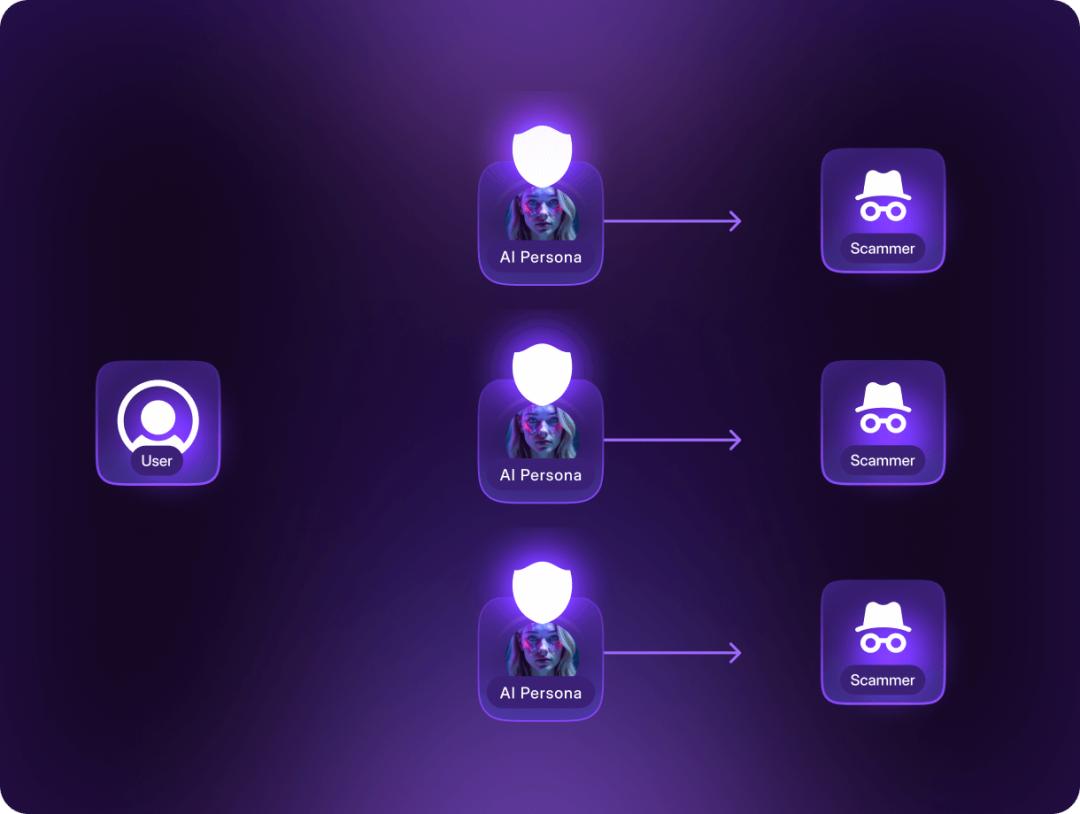
It is reported that TPG transferred more than 280,000 scam calls during the pilot period, identified more than 20,000 impersonated institutions. The longest single call lasted 54 minutes, and the recognition accuracy of scam traffic is claimed to reach 98%.
After that, the total number of calls transferred by TPG has approached 590,000, and according to the company's estimation, about 13 million US dollars of losses have been avoided.
In addition to call transfer, Apate also releases a number of "decoy numbers" on the Internet, waiting for scammers to take the bait.
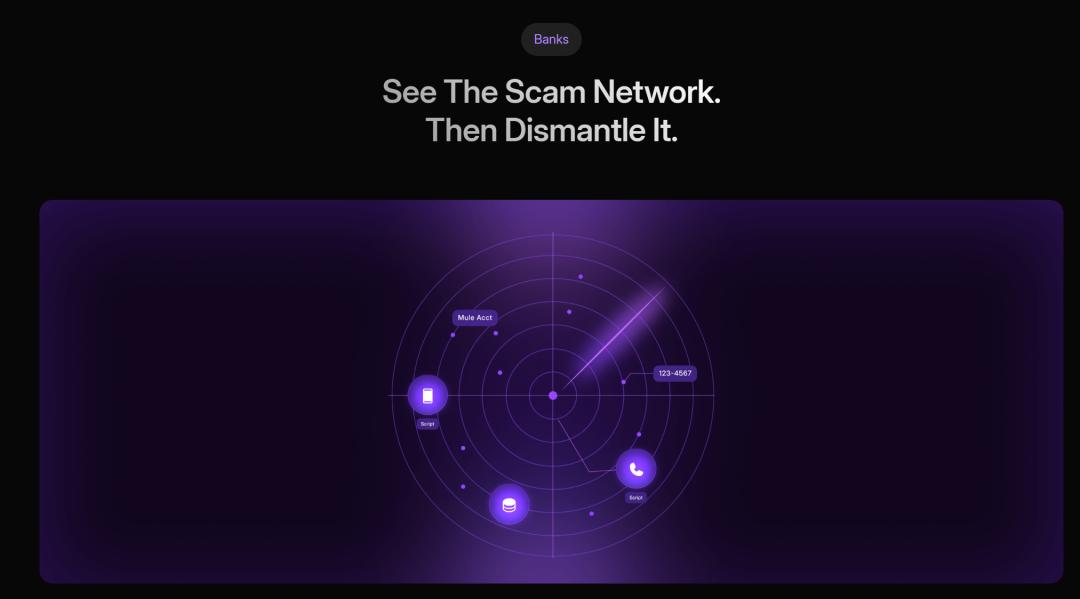
Huge recognition and scanning network
Of course, besides answering calls, these AI Agents also infiltrate into various investment groups and scam groups on social platforms. It is said that they process hundreds of thousands of calls and chats every day on platforms such as WhatsApp and Telegram.
The business can be built smoothly, but can this work make money?
The answer is yes, and the revenue may be quite considerable. It seems like a public welfare project, but it actually solves many key pain points of multiple industries.
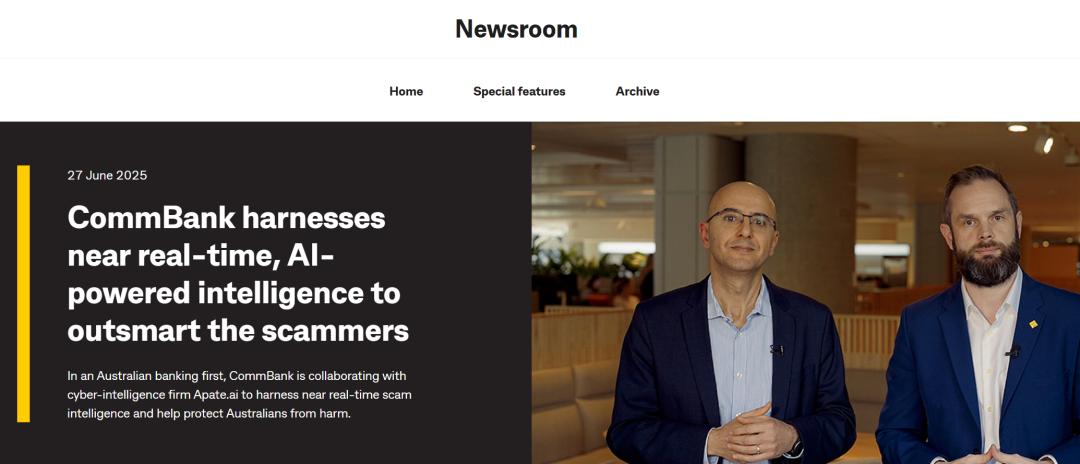
It has launched cooperation with many Australian financial institutions
According to the statement of investor Investible, Apate provides scam intelligence for financial institutions, telecom enterprises and government departments through its software platform and real-time alerts, and has established business cooperation with institutions such as the Commonwealth Bank of Australia and TPG Telecom.
As for the Commonwealth Bank of Australia (CBA), it is said that the two sides launched a pilot program in 2024 and announced the expansion of cooperation in June 2025. According to the public data released by CBA itself, customers' scam losses have dropped by 76% compared with the peak value.
Another Australian financial institution also said that after using Apate's outbound robot, it successfully disrupted 22 scam gang operations.
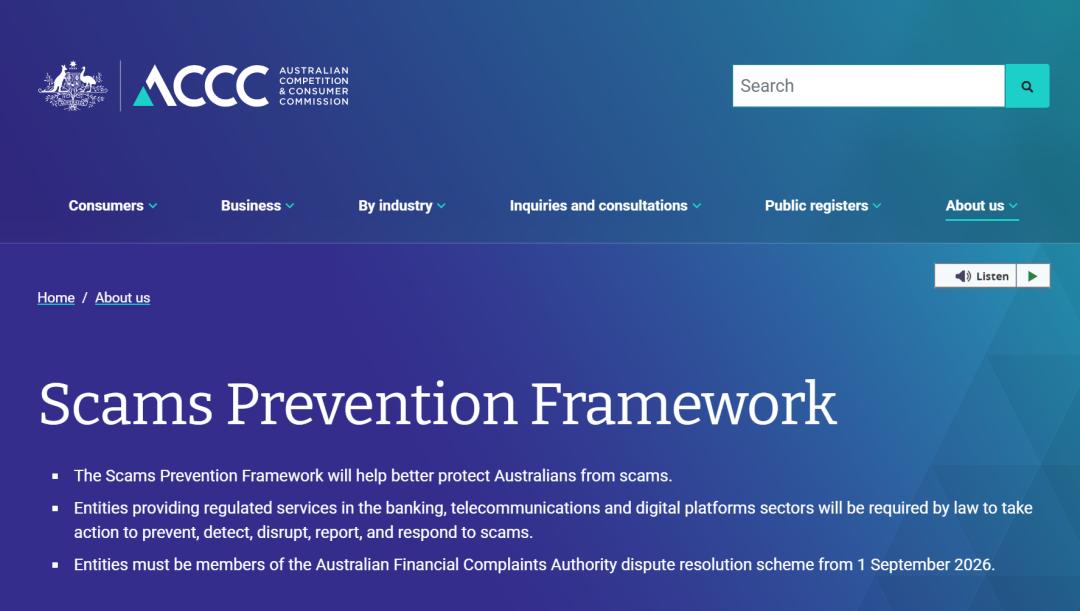
Scam Prevention Framework
There is also a major background that the policy cost brought by scam activities is constantly rising.
In February 2025, Australia passed the Scam Prevention Framework (SPF), which stipulates that banks, telecom operators and digital platforms that fail to take "reasonable measures" to report, block and respond to scams can be fined up to 50 million Australian dollars; victims also have clear claim channels when institutions violate the regulations.
So the account is very easy to calculate.

Large banks have already invested astronomical amounts of money in anti-scam and cybersecurity every year, and now they are also facing the risk of fines and potential claims, so they naturally need to find solutions.
What's more, these AI Agents that target scammers instead of ordinary people have achieved qualitative improvement in the efficiency and scale of anti-scam intelligence collection.
Joffe, co-founder of Apate, said in an interview that generally speaking, telecom operators just block numbers, and scammers can easily change to a new one. Even if banks monitor transactions, by the time they find anomalies, scammers have already contacted the customers.
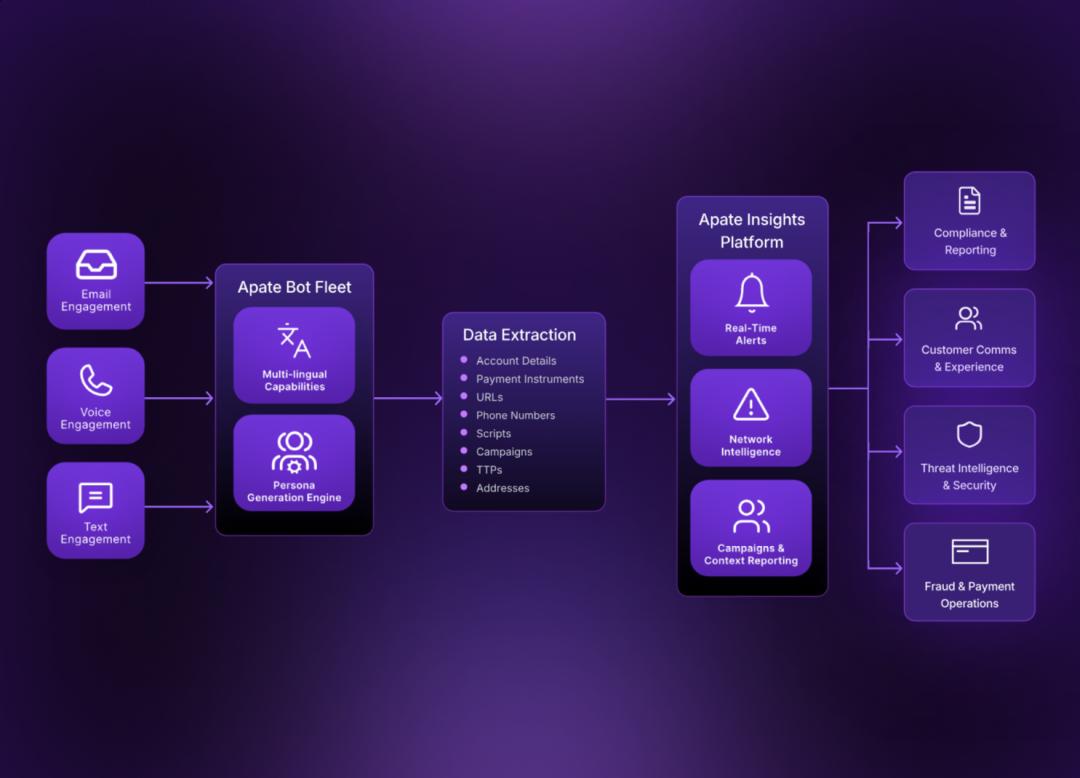
Full set of anti-scam defense
But in the scam chain, there is one link that is not so easy to replace, which is "collecting money".
Numbers, scripts and identities can be changed at any time, but bank accounts need to be opened, identities verified, and someone is responsible for receiving and transferring funds. Once the account is frozen by risk control, scammers have to find new ones.
This has spawned an underground business: money mule accounts. As the name suggests, some people provide bank accounts specifically to collect and transfer money for scam groups, and then draw commissions.
