Why Has the Once-Written-Off HDD Become the "Final Data Destination" for AI?
In the NAND series of reports, Dolphin Research once proposed: AI inference has elevated NAND from a "peripheral data warehouse" to a "necessity on the computing path", and SSD has virtually become a "Token battery" that stores computing power.
However, the market often ignores another fact: about 80% of cloud data is still stored in Hard Disk Drives (HDDs) to this day. Most of the massive data generated by AI will eventually flow into HDDs, this "final data destination".
Over the past decade, as laptops, desktops and traditional enterprise drives have successively shifted to SSDs, HDD shipments have declined for consecutive years, and the industry has long been labeled as a "sunset industry". Western Digital even spun off Sandisk (its NAND business) in February 2025, turning itself into a pure HDD company.
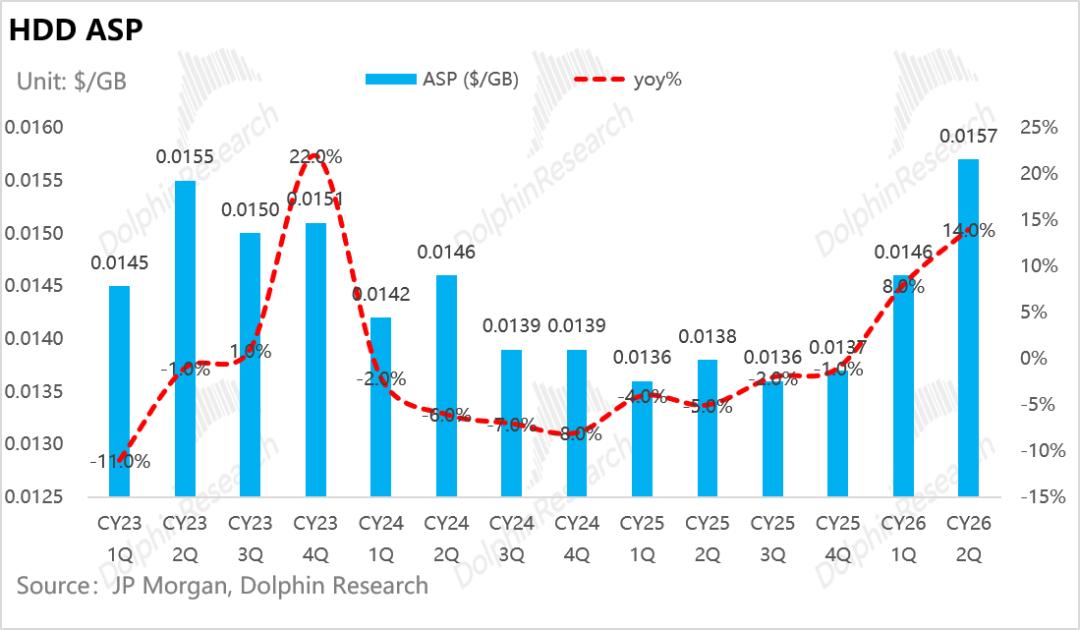
Nevertheless, this "sunset industry" is ushering in a rare reversal: in the second quarter of 2026, the global HDD industry revenue surged by 47% year-on-year, driven by rising shipment volume and average price at the same time — the total shipped capacity increased by 29% year-on-year, and the average price per GB rose by 14%. The average price per GB has ended years of consecutive annual decline and turned upward, indicating that the multi-year downward cycle of the industry has come to an end.
In this article, Dolphin Research will focus on the following four questions:
I. What is HDD? How is it different from NAND?
II. Why has the HDD industry formed an oligopoly pattern?
III. Why is it difficult to expand supply? Can Chinese production capacity participate in the competition?
IV. Why can the once-dismissed HDD become the "final data destination" in the AI era?
The detailed analysis is as follows
What is HDD? How is it different from NAND?
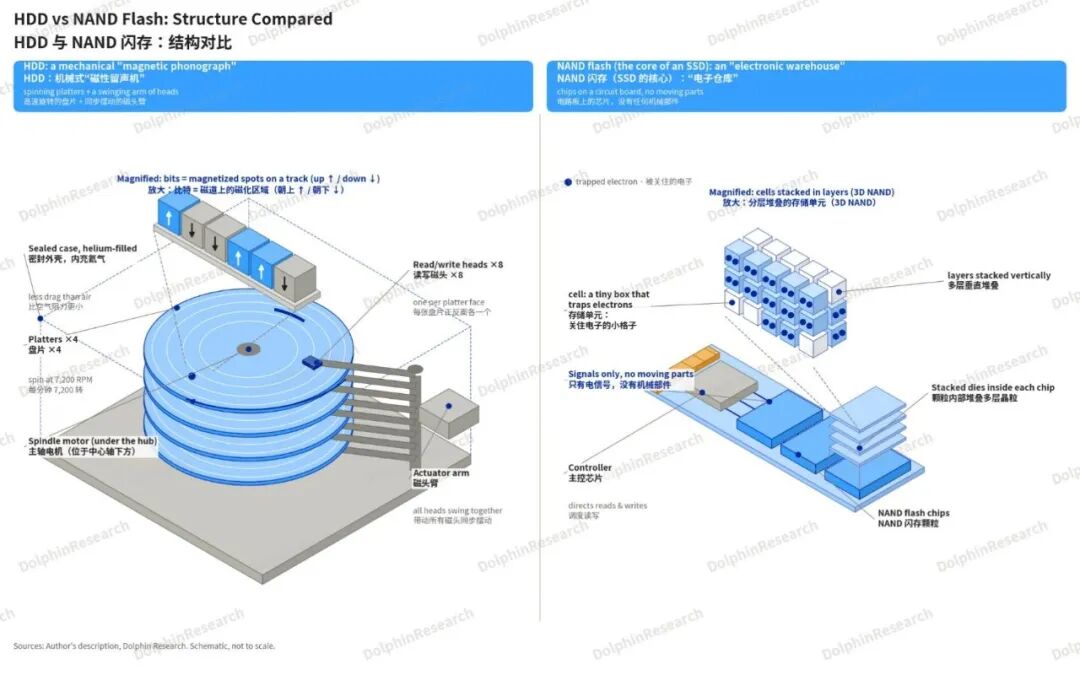
HDD (Hard Disk Drive) and NAND flash memory (the core component of SSD) are the two poles of data storage: HDD works like a "magnetic gramophone", which uses a read-write head to record and read data on rotating platters; NAND is like an "electronic warehouse", which uses circuits to trap electrons in tiny memory cells. The former is low-cost, large-capacity, and resistant to repeated overwrites, but has slow read speed; the latter has fast speed and no mechanical components, but is more expensive and has limited erase-write cycles.
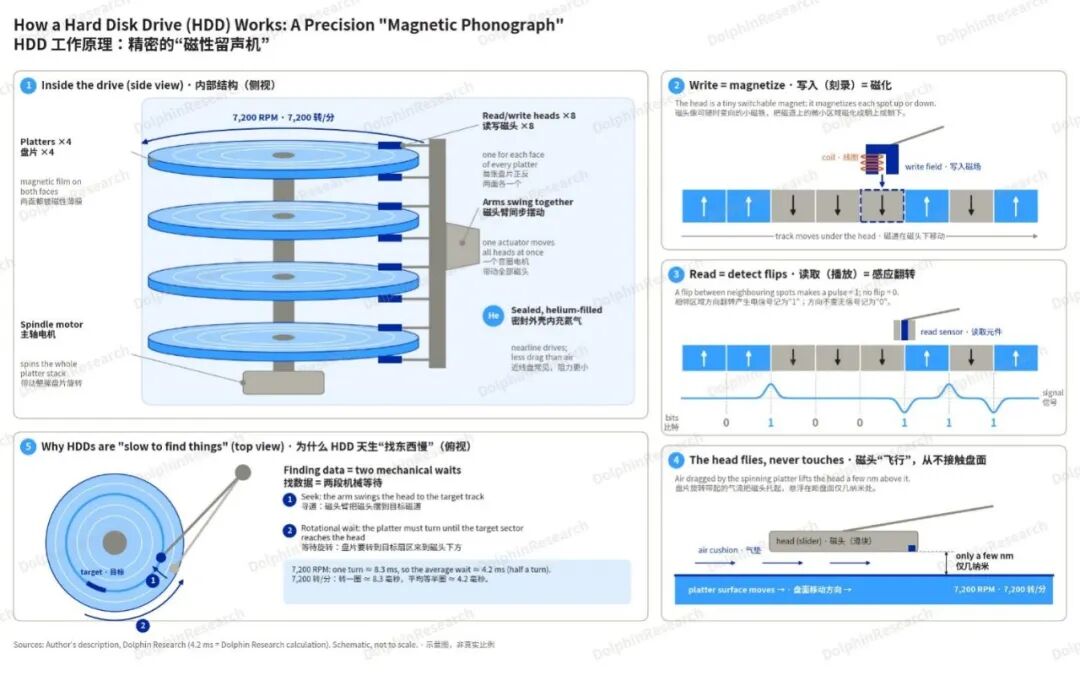
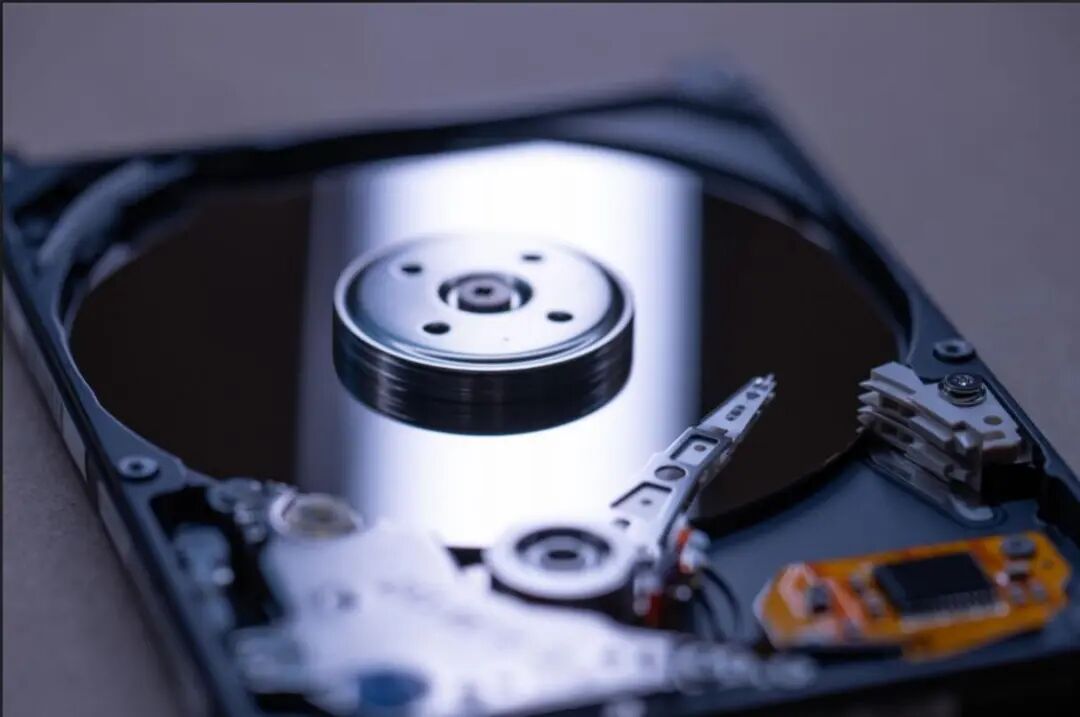
Inside the HDD casing is a stack of high-speed rotating platters (nearline drives are usually filled with helium to reduce resistance) and a set of synchronously swinging head arms. The head magnetizes tiny areas on the track to face up or down to record 0s and 1s, and "flies" only a few nanometers above the platter surface. Since it needs the mechanical arm to seek tracks and then wait for the platter to rotate to the target position, HDD is inherently "slow at finding data".
NAND has no mechanical components and is composed of tens of billions of tiny transistors: during writing, electrons are "pushed" into the storage layer of the transistor, and during reading, the stored data is judged according to the level of turn-on voltage.
The differences in principles determine the gaps between the two in performance, application scenarios and industrial form:
a. Lifespan: HDD records data through magnetization direction, which can be flipped repeatedly without wear; every erase-write operation of NAND ages the insulating layer, so there is an upper limit on the number of erase-write cycles.
b. Speed: A random access of HDD takes 5–15 milliseconds, and it can only complete about hundreds of operations per second; NAND responds in only tens to one hundred microseconds, with random read and write capabilities hundreds of times higher. Therefore, NAND is suitable for hot/warm data that is frequently accessed, while HDD is suitable for warm/cold data dominated by sequential read and write operations.
c. Manufacturing: HDD is assembled from parts such as motors, heads, platters and casings, so manufacturing one more drive requires one more set of parts; NAND is "printed" in a wafer fab, and as long as more layers are stacked, the output of the same wafer can increase by about 30% every year without building new factories. This is the root cause why NAND supply "cannot be reduced" while HDD supply can be actively controlled by manufacturers.
Why has the HDD industry formed an oligopoly pattern?
Before the AI wave, HDD was a mature industry with limited growth, strong cyclicality and high commoditization, which was long regarded as a "cash cow in the sunset": the oligopoly pattern ensures that there will be no large losses, but the industry is characterized by slow growth, large fluctuations and low demand visibility.
From the 1990s to the early 2010s, more than a dozen manufacturers including Conner, Quantum, IBM, Maxtor, Fujitsu, Samsung and Hitachi were trapped in long-term share competition and price wars, making industry profitability extremely fragile.
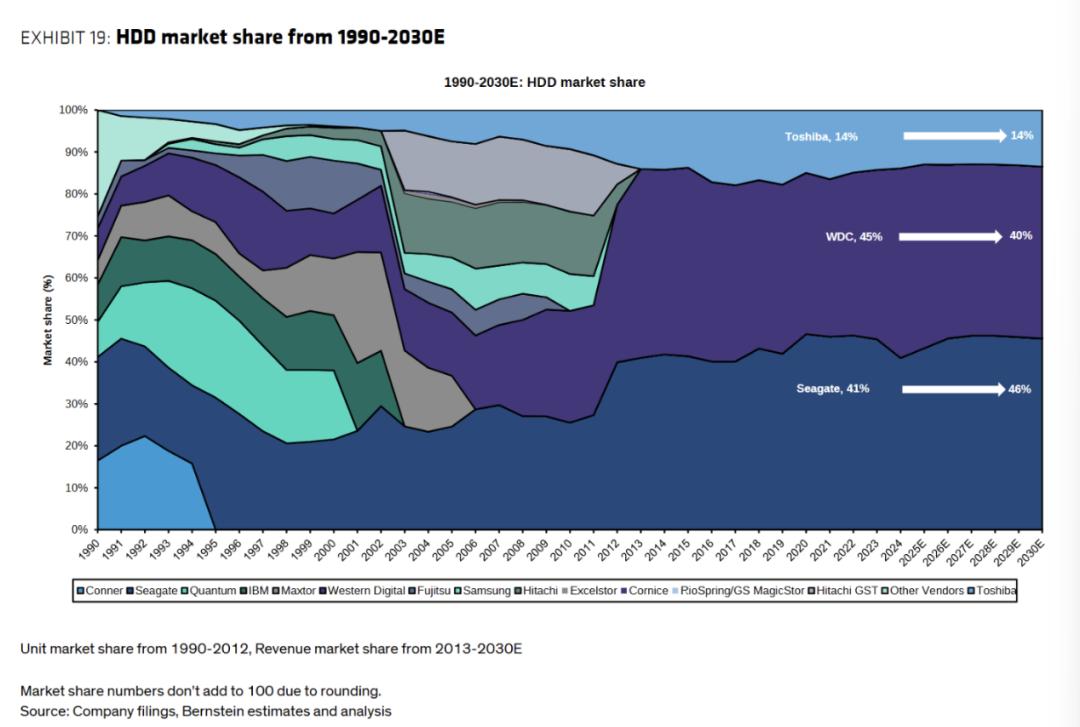
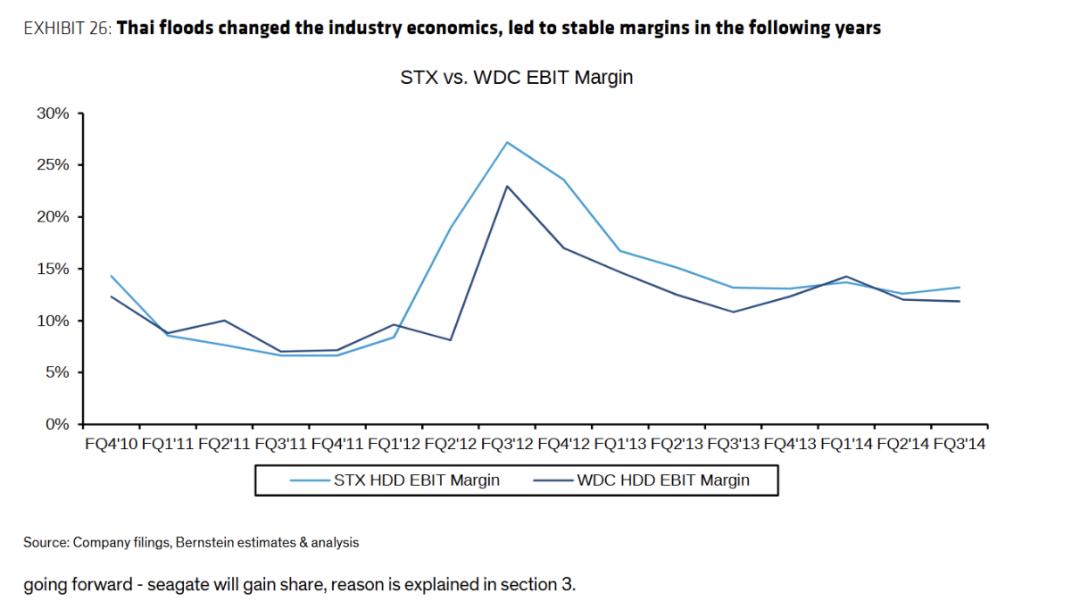
In 2011–2012, the industry witnessed a decisive reshuffle: Seagate acquired Samsung's HDD business, and Western Digital acquired Hitachi GST. Right at the critical period of merger and acquisition delivery, a catastrophic flood broke out in Thailand in October 2011. At that time, about 53% of the global HDD production capacity was concentrated in Thailand, and key component factories were also affected, leaving no manufacturer in the industry spared.
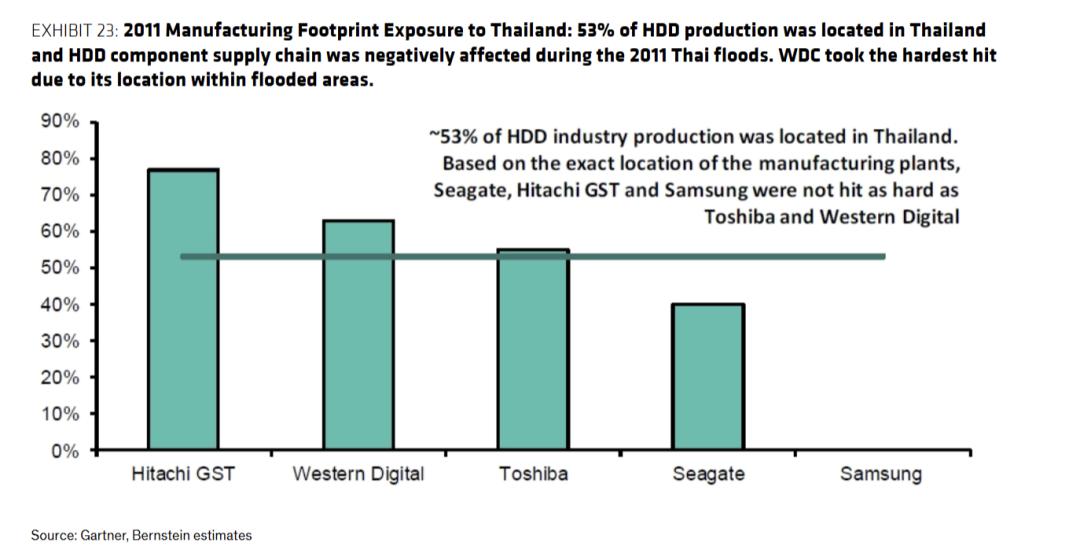
This flood brought three far-reaching impacts:
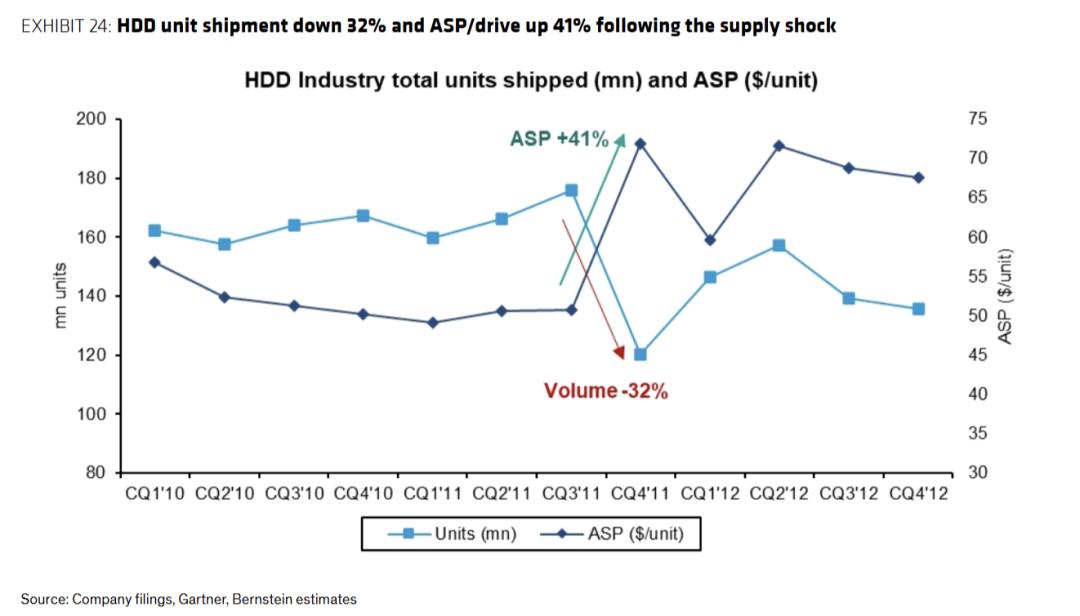
a. Short-term volume drop and price rise: In the fourth quarter of 2011, the industry's shipment volume plummeted from 176 million units in the third quarter to 120 million units (-32%), resulting in a severe imbalance between supply and demand, and the average selling price (ASP) per unit rose by about 41% against the trend.
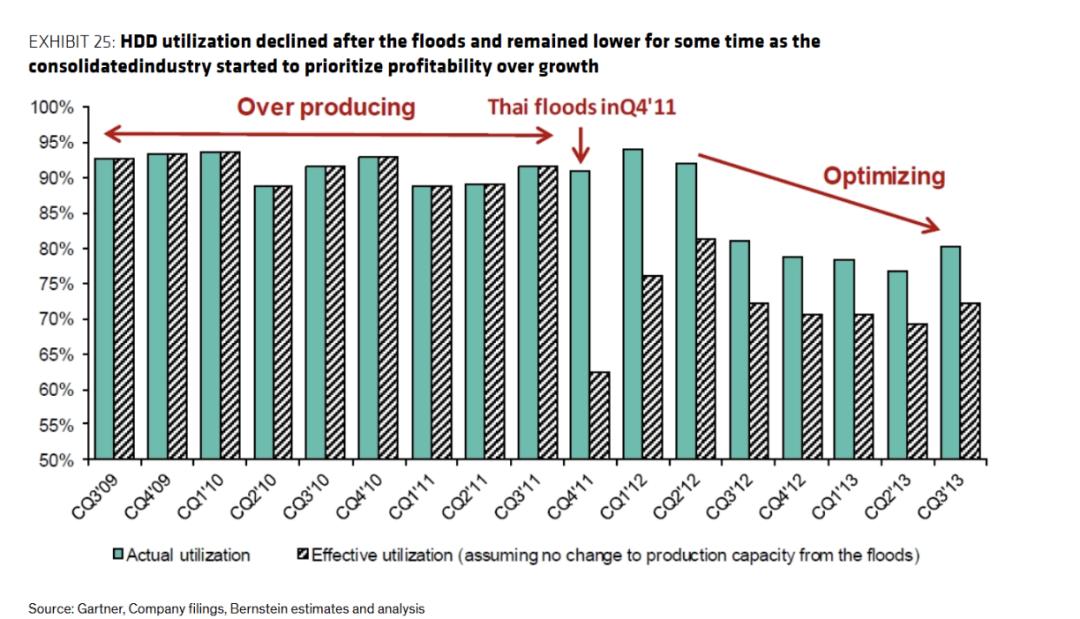
b. Demand never recovered: Manufacturers had restored most of their production capacity in the second quarter of 2012, but the post-disaster high price accelerated the weakening of PC market and SSD substitution, and the quarterly shipment volume never returned to the peak of 176 million units, with the capacity utilization rate dropping from about 90% before the flood to 77%–81%.
c. Profit center raised: Before the flood, the HDD operating profit margins of Seagate and Western Digital were only about 6%–7%; the shortage pushed them up to 27% and 23% respectively in 2012, and then remained stable at 11%–16% for a long time (with a center of about 13%), almost doubling compared with the pre-flood level.
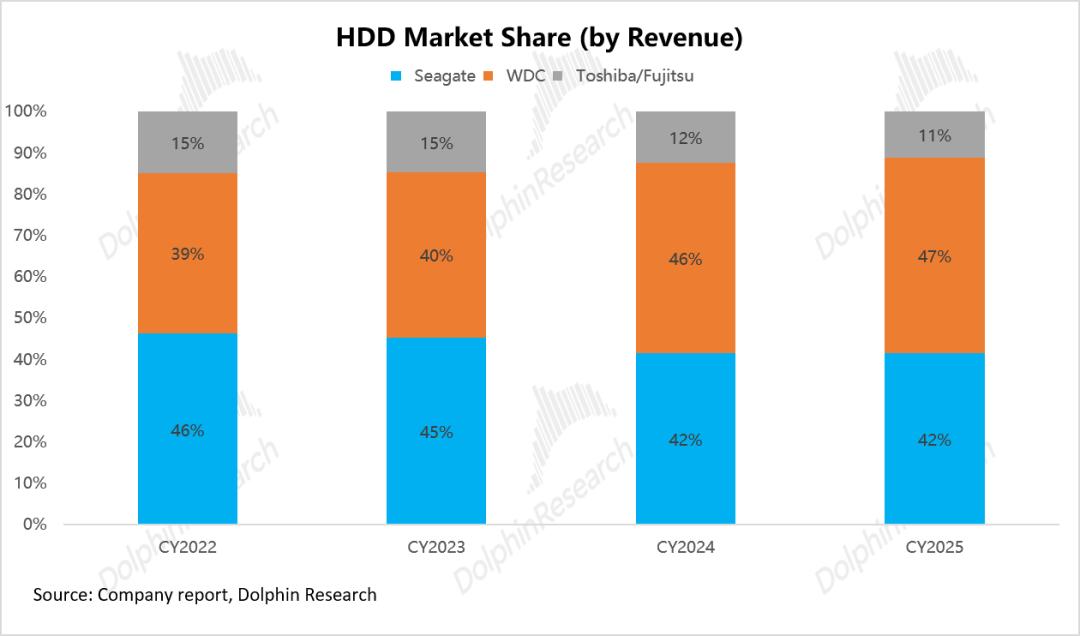
With the completion of mergers and acquisitions, there are only three manufacturers left globally: Seagate, Western Digital and Toshiba (in 2025, their shares by revenue are about 47%, 42% and 11% respectively). After the flood, cloud vendors including Microsoft, Google and Amazon signed multi-year long-term agreements (LTA) with Seagate and Western Digital to lock in production capacity, and HDD shifted from the drastic commodity-style cycle to a more stable and predictable mode.
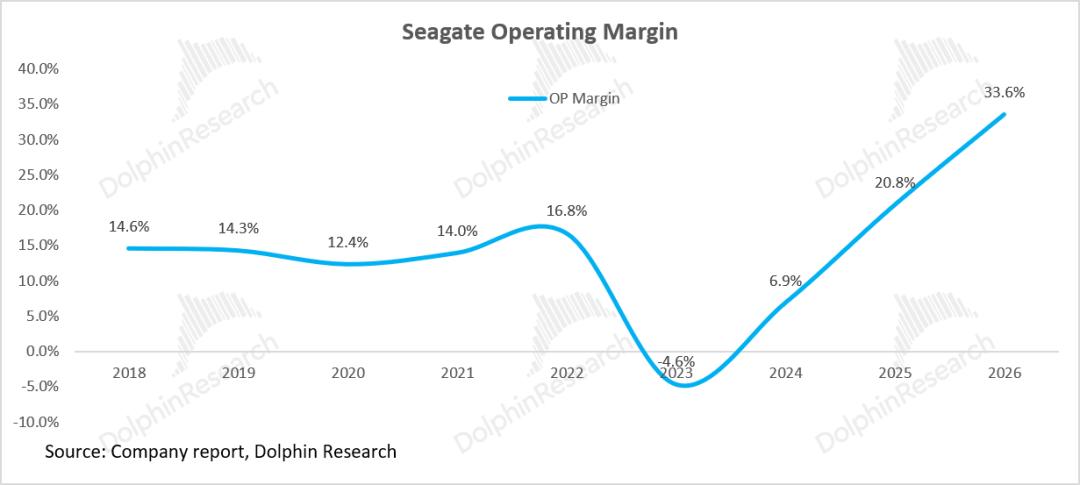
More importantly, the flood and the subsequent demand shrinkage made the surviving giants form a rational supply strategy: after the merger, they did not restart the price war, but reached the common discipline of "prioritizing profits over market share", which has continued to this day.
Why is it difficult to expand supply? Can Chinese production capacity participate in the competition?
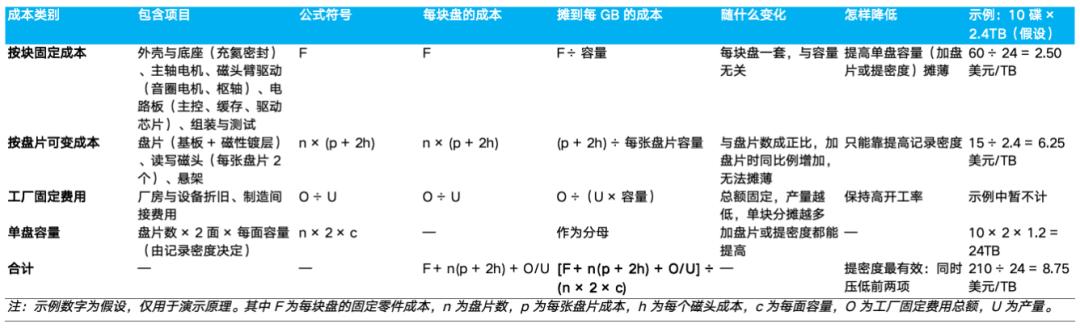
The total shipped capacity of HDD = number of drives × capacity per drive, and the capacity per drive depends on the number of platters and areal density (the amount of data that can be stored per square inch of platter). Therefore, manufacturers have only three ways to expand supply, with completely different costs:
a. Increase the number of drives: Expand or restart production lines. Each drive requires a complete set of motors, head arms, circuit boards and casings, and the cost per TB hardly decreases.
b. Increase the number of platters: Fit more platters into the same size of drive enclosure. But each additional platter requires paying for one more platter and two more heads, which are exactly the two parts with the highest cost proportion in nearline drives, and the additional capacity brought by each additional platter decreases marginally (only 10% increase from 10 platters to 11 platters).
c. Improve areal density: Without changing the parts, storing more data on each platter can dilute all physical costs, which is the most cost-effective way. This also explains why neither Seagate nor Western Digital is willing to add new unit production capacity in this AI cycle.
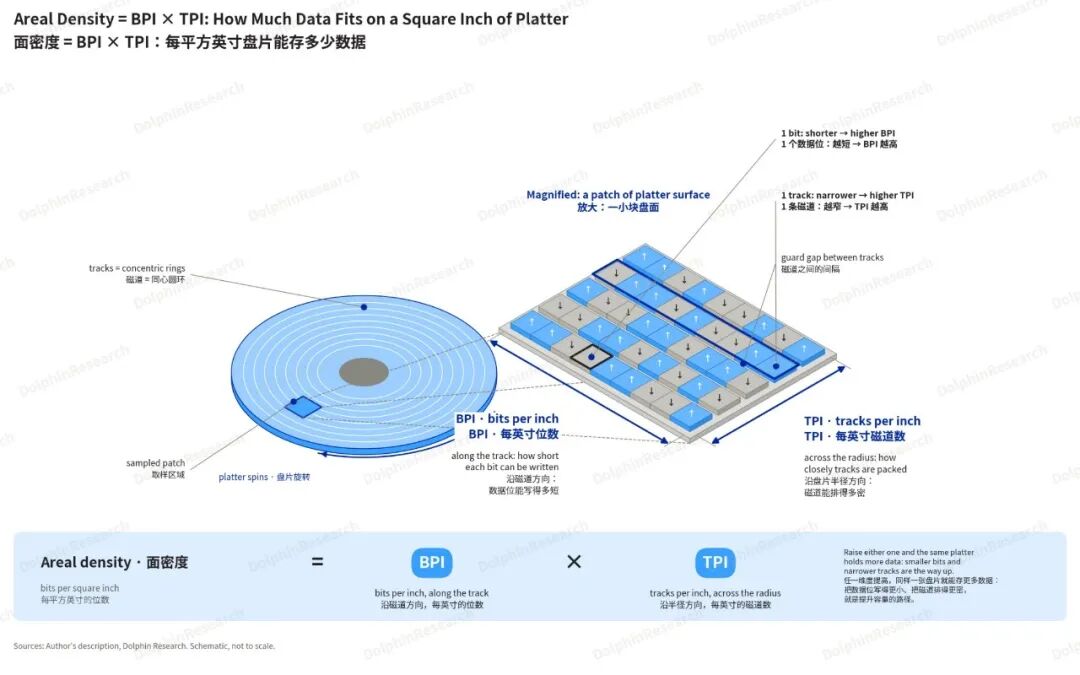
Technology: Areal density determines cost, Seagate widens the gap with HAMR
Traditional Perpendicular Magnetic Recording (PMR) has approached the physical limit: the smaller the data bit, the more prone it is to errors caused by thermal disturbance, and if more "stubborn" magnetic materials are used, ordinary heads cannot write data into them. The industry has thus turned to energy-assisted magnetic recording:
HAMR (Heat-Assisted Magnetic Recording): Use a laser to heat the platter surface at the moment of writing, so that the stubborn material temporarily "softens", just like baking the frozen hard wax soft before stamping. It requires replacing almost all core components, with the highest difficulty and the greatest potential, and the representative manufacturer is Seagate.
MAMR / ePMR: Use microwave or auxiliary current to assist writing, with minor modifications and low cost, but limited improvement, and the representative manufacturers are Toshiba and Western Digital respectively.
