After being released for three days and grossing only millions of yuan at the box office, why did the first AI theatrical film receive such a lukewarm response?
Released for 3 days, *Sanxingdui: Past and Future*, the first domestic AI theatrical film that netizens have long anticipated, only grossed millions of yuan at the box office.
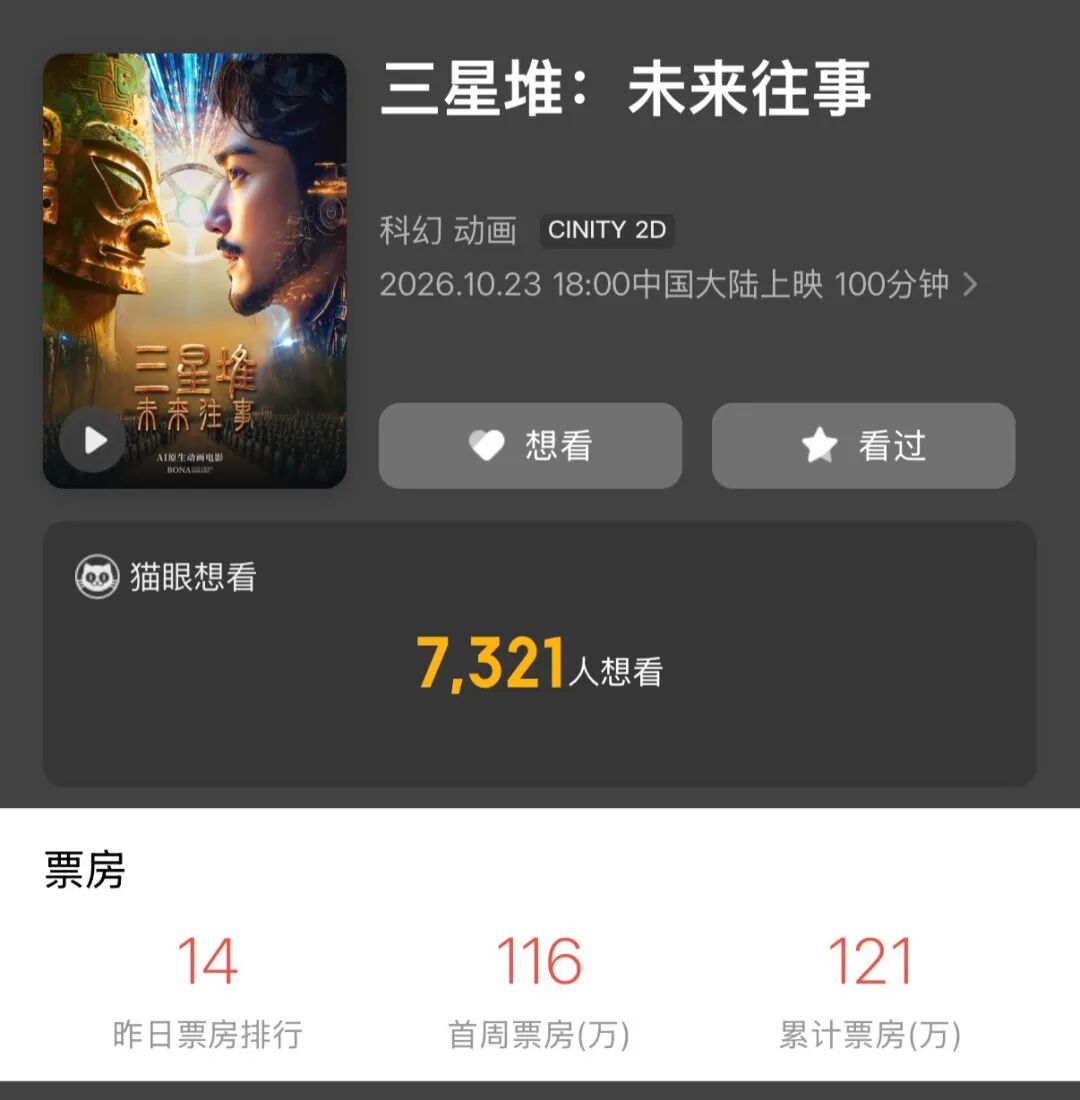
This film took 2 years to produce, generated more than 1.2 million base images, and involved nearly a hundred people. The production cost disclosed by the film's producer is at the ten-million-yuan level.
It successfully completed the entire workflow of AI feature films from production, censorship to theatrical release, bringing AI film and television from short videos and short dramas to the doorstep of the traditional film industry.
However, the market feedback is rather lukewarm. What exactly is missing in between?
01 AI Film: At Least Someone Dares to Bring It to Theaters
First, let's talk about the parts that are worthy of recognition.
*Sanxingdui: Past and Future* is not just a patchwork of several AI video clips. The full-length film lasts 100 minutes, with stories spanning the ancient Shu Kingdom, ancient Egypt, and the future world in 2045 and 2095, while handling various scenes such as wars, historical relics, and snow-capped mountains.
From the project launch in 2024 to the official release, the production lasted 2 years. Referring to the traditional film crew setup, it set up 17 professional positions including screenwriter, director, art director, cinematographer, lighting engineer, sound effect designer, and editor.
To make the AI-generated characters consistent across different shots, and combine scenes, actions and sounds into a complete feature film is in itself an industrial experiment with considerable difficulty.
Some audiences also recognized the visual effects of the film.
The Bronze Sacred Tree, the Great Bronze Standing Figure, the Vertical-eyed Mask, as well as the ancient Shu royal capital and large-scale sacrificial scenes, have received a number of positive reviews.
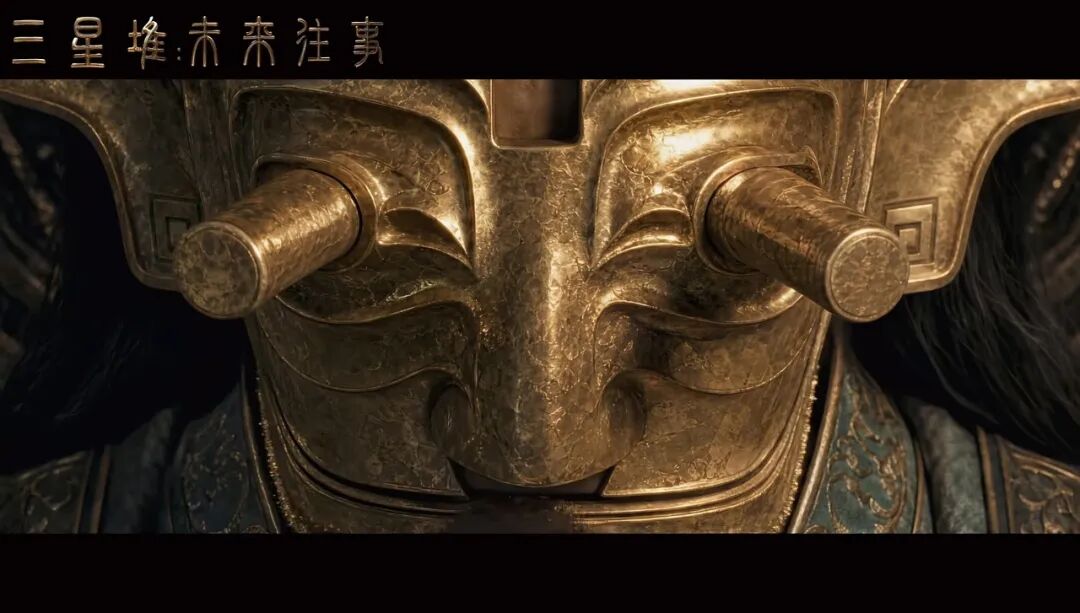
Some audiences also said that they wanted to visit the Sanxingdui Museum after watching the film.
At least in the visual presentation of specific scenes, AI already has the ability to amaze the audience.
More importantly, this film has actually entered the theater chain. For the entire industry, it provides an opportunity to observe the production cost, production process and market acceptance of AI feature films.
Therefore, there is no need to dismiss this attempt as completely worthless just because of the lukewarm box office.
02 The Unavoidable Flaws of AI Long Videos
Now let's talk about what exactly went wrong with it.
The first problem is the inconsistency of both frames and emotions.
There is a very funny segment in the film.
The characters just found a clue and decided to go to the snow-capped mountain, and after a cut, they had already arrived there; after experiencing an avalanche, another cut showed they were already standing at the entrance of the relic.
The whole process of traveling, searching, waiting, and the reactions after encountering danger, which could have promoted the development of character relationships, were all compressed into several simple shot fragments.
What's more absurd is that the king of the ancient Shu Kingdom 5000 years ago in the film decided to go to Egypt.
You know, even now, it still takes 16 hours of flight to travel from Sichuan to Egypt.
But in the film, after only several scenes of walking, taking a boat and riding a camel, the king successfully met the Pharaoh of Egypt, and even the Pharaoh spoke fluent Chinese directly.
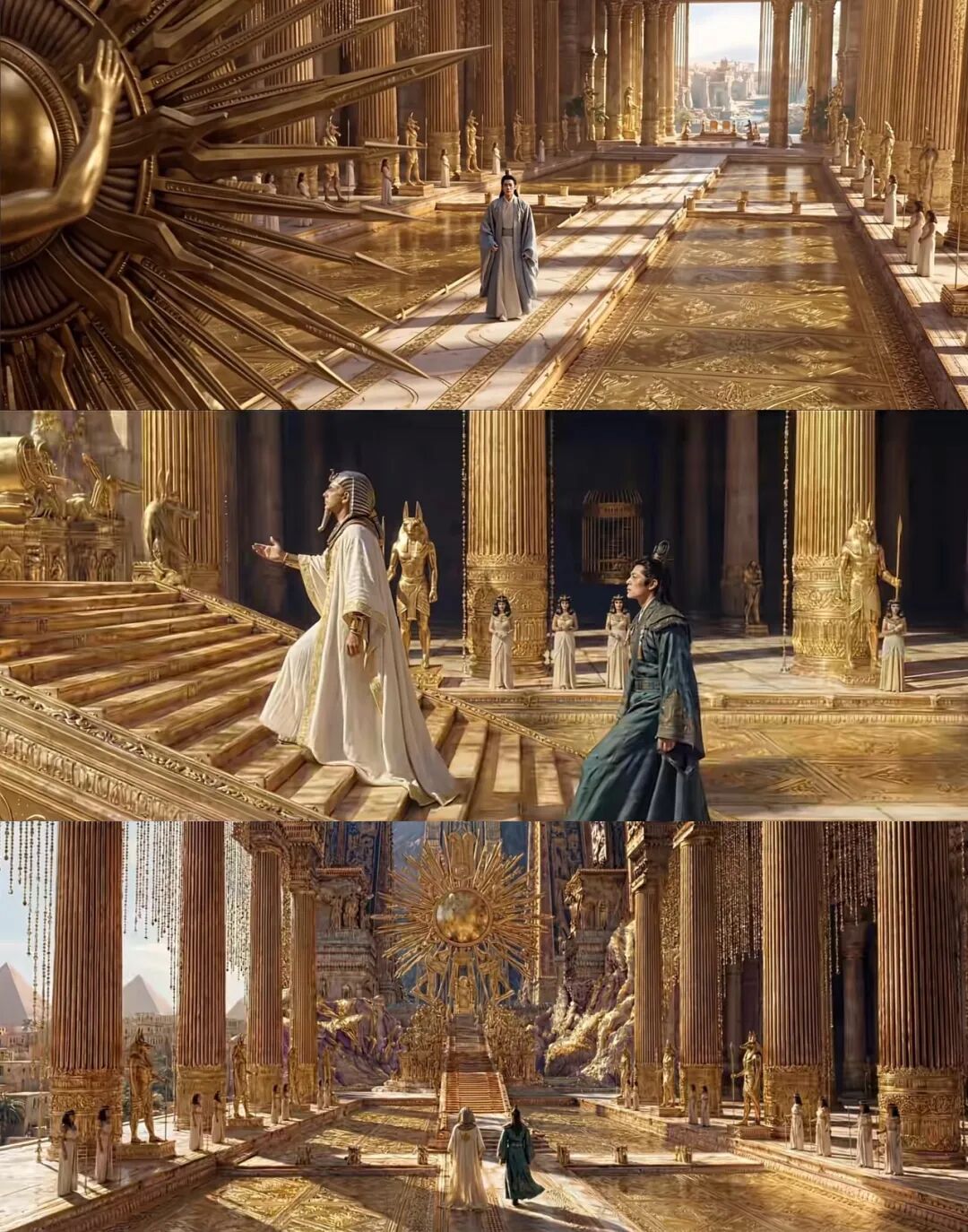
(The king of the ancient Shu Kingdom and the Pharaoh of Egypt in the official promotional video)
This kind of omission looks like lazy editing, but behind it is actually a hard limitation of current video generation models.
By 2026, the single continuous generation length of mainstream models still falls in the range of 8 seconds to 30 seconds: Veo 3.1 generates 8 seconds at a time, Keling and most domestic models generate 15 seconds, and Seedance 2.5 can reach 30 seconds.
In the long video arrangement work released by Google in September 2026, this kind of problem was named semantic drift and cascading failure, which refers to the subtle deviations in the spatial relationship of character costumes, props and light that accumulate along the subsequent shots.
Traveling happens to be the most difficult type of material to generate. It has no visual wonders, but requires the character, together with their costume, light and environment, to remain unchanged for a long period of time.
Deleting the process and only keeping the result is the lowest-cost processing method at this stage, at the cost of losing space for the growth of character relationships.
Apart from the discontinuity of scenes, the "behavior" and "performance" of the characters are also disconnected.
Some film critics pointed out that the character was still wearing leather shoes and a shirt when hiking in the snow-capped mountain, and was almost unhurt after the avalanche, with no changes to their costume and hairstyle at all.
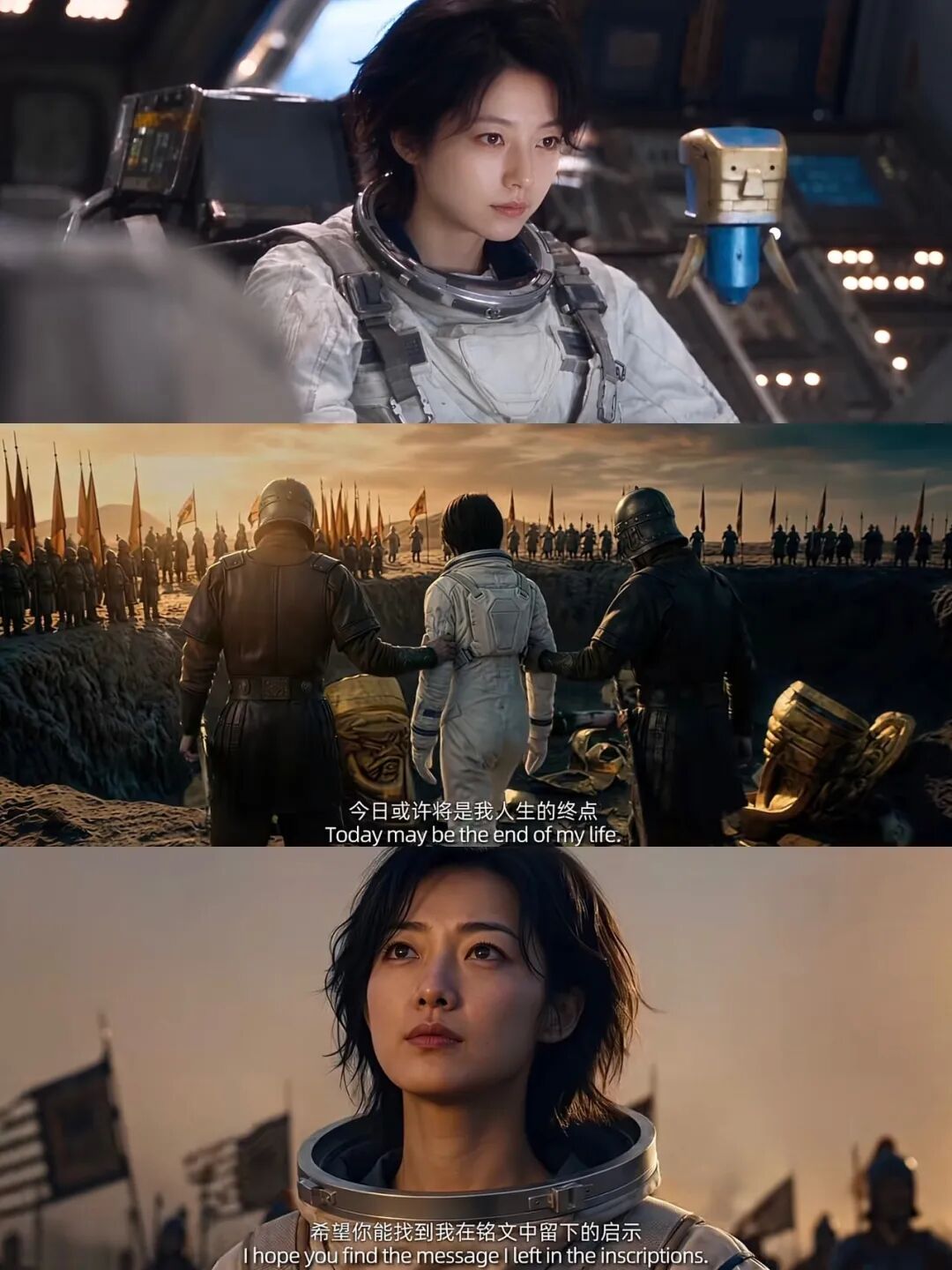
(The female lead in the official promotional video almost wears a spacesuit throughout the whole film)
This is not just a continuity error, but also involves the state consistency and physical causality problems in AI-generated videos.
For human beings, an avalanche means impact, burial, cold and potential injury. After experiencing these events, a person's body, clothing and behavior usually change.
However, if the generation system does not continuously track these states, different shots may generate seemingly reasonable frames respectively, which contradict each other when put together.
Including the emotions of the characters: in the previous scene, they were still expressionless, but when the shot cuts to the next scene, they suddenly burst into tears without any emotional transition. The crying just looks like eye drops overflowing from their eyes, and their eye sockets don't even turn red.
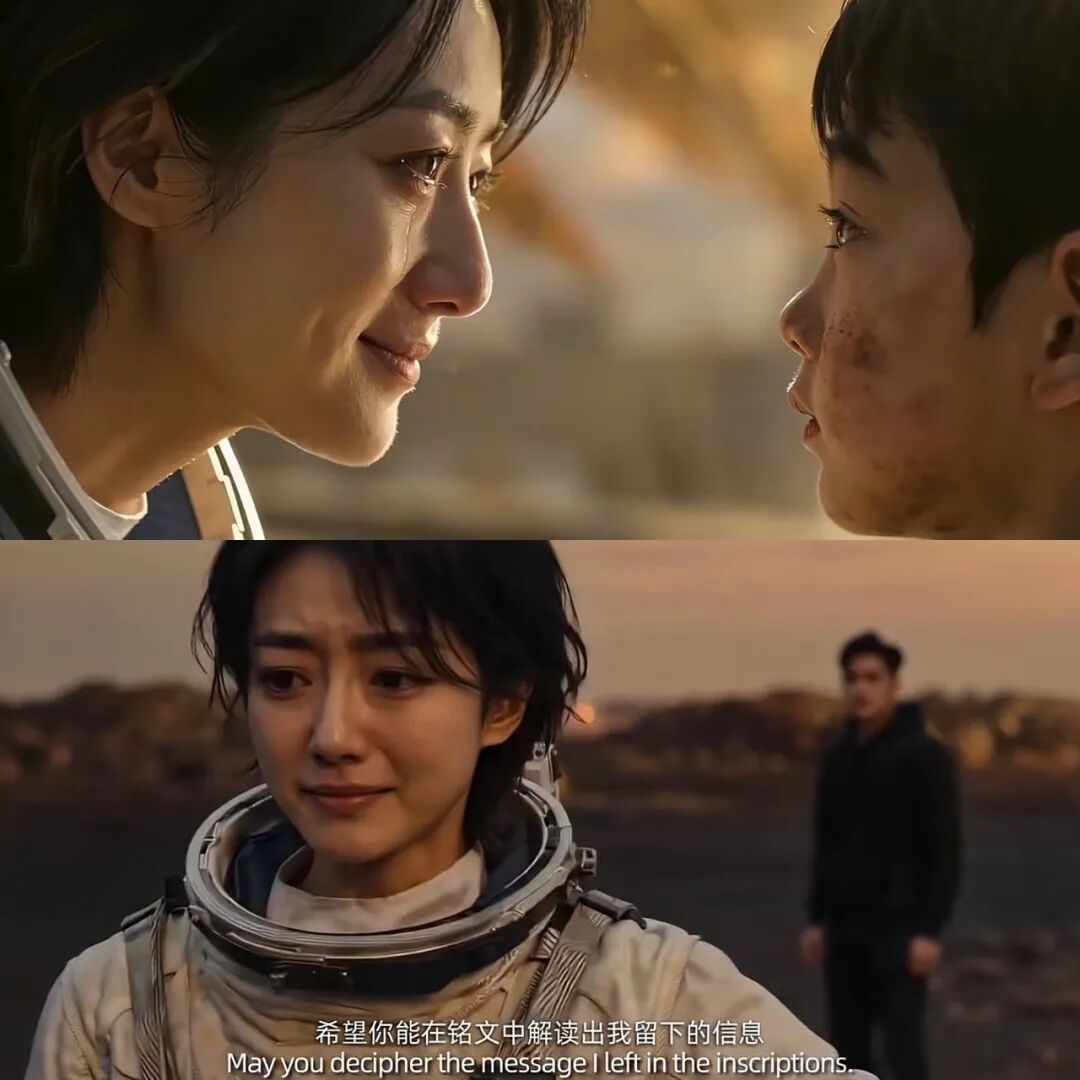
In addition, in some close-up shots, the character's mouth is moving, but other facial muscles lack corresponding changes. These irrational details make it hard for people to believe that this is a "living person".
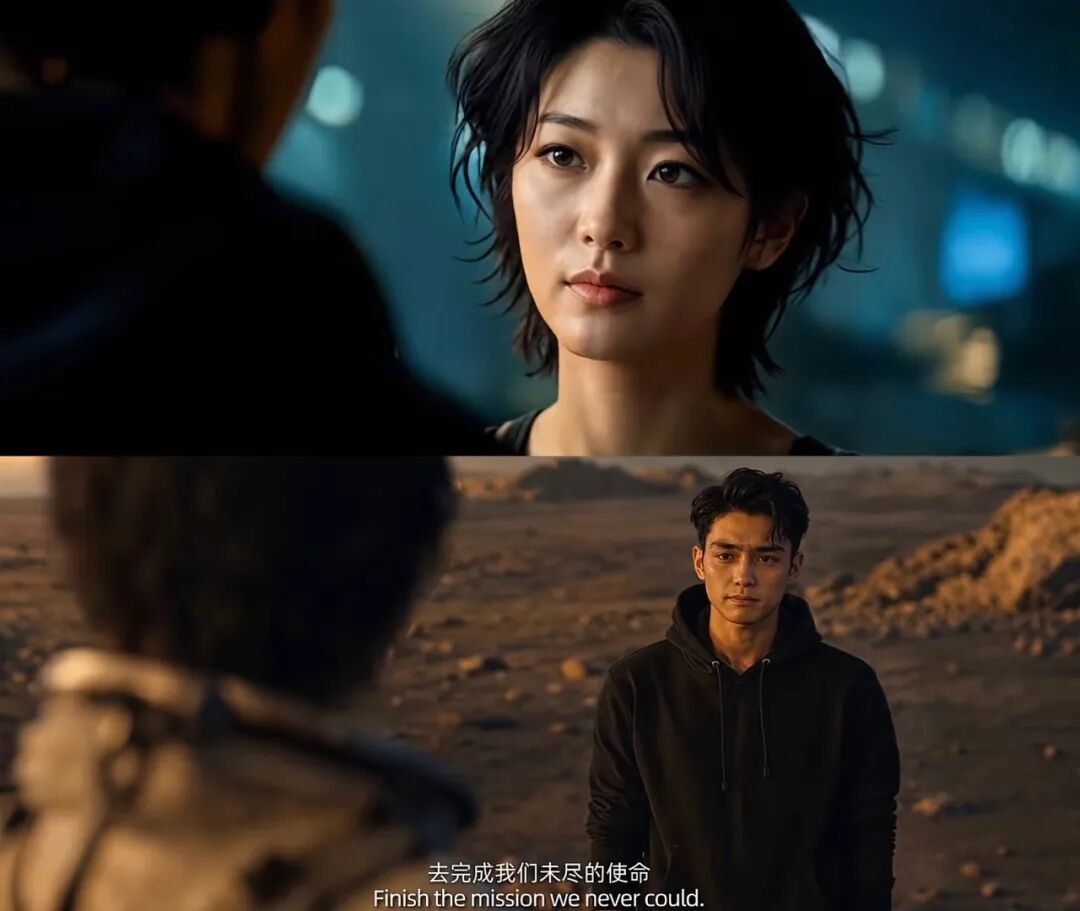
This is also why the AI industry has attached great importance to the World Model, namely the world model, and Physical AI in recent years.
The two are not equivalent to film generation technology, but they face a shared core problem: the system can not only identify what is in front of it, but also understand the spatial relationship between objects, motion laws, and what consequences an action will bring as much as possible.
Therefore, we can not simply say that AI can never act, but we can not equate a realistic face directly with a credible character.
Generative AI is good at producing visual results, while films also require these results to form a complete expression in terms of time, action and emotion.
03 Why Is the Film and Television Industry in a Hurry to Make AI Films?
There are still so many problems with AI films, can't the producers and reviewers see them at all? Then why are they in such a hurry to push AI films to theaters?
First of all, both the technology and the industry need an opportunity to prove themselves.
In the past, AI-generated videos mainly appeared in short videos, advertisements and short dramas. Short content can attract audiences with several stunning shots, but films have more complete narrative requirements.
Whether it is possible to produce a 100-minute feature film means whether AI can enter a more complex content production workflow.
For film companies, this is also an opportunity to explore the cost structure, production efficiency and new production processes.
The grand scenes of traditional films usually require huge investment in art, set building and shooting. AI has the opportunity to reduce the cost of some links, or make scenes that were difficult to realize in the past easier to produce.
Secondly, there is the expectation of capital and the market for being the "first".
After the release of the schedule announcement of *Sanxingdui: Past and Future*, Bona Pictures' stock price once rose significantly.
The market's imagination for AI film and television obviously goes far beyond how many tickets a single film can sell, and also includes whether the future content production method will change.
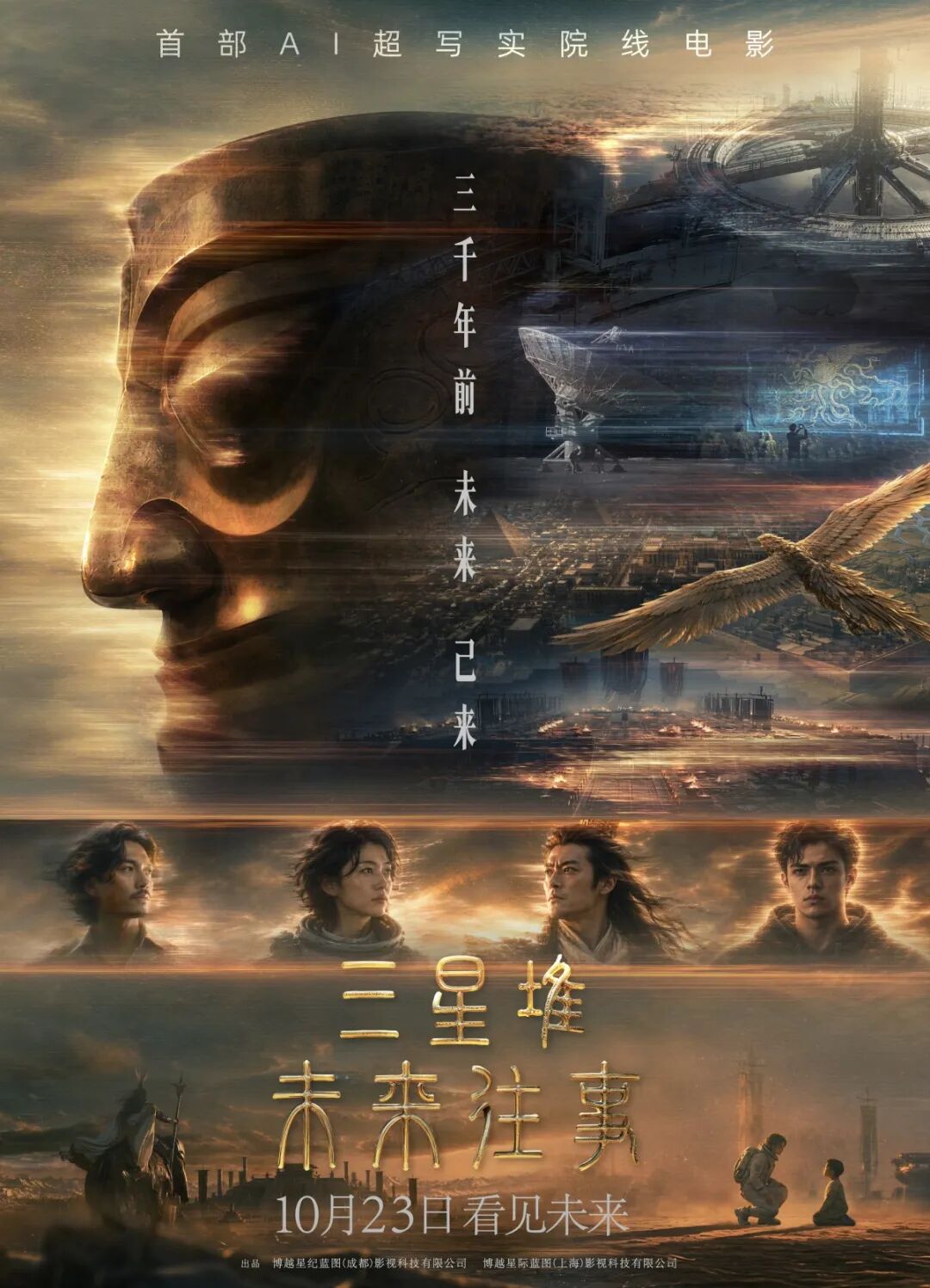
There is also a very practical consumption problem.
The play volume of AI-generated short dramas on Douyin exceeded 200 billion times in September 2026, which shows that consumers do not naturally reject AI content.
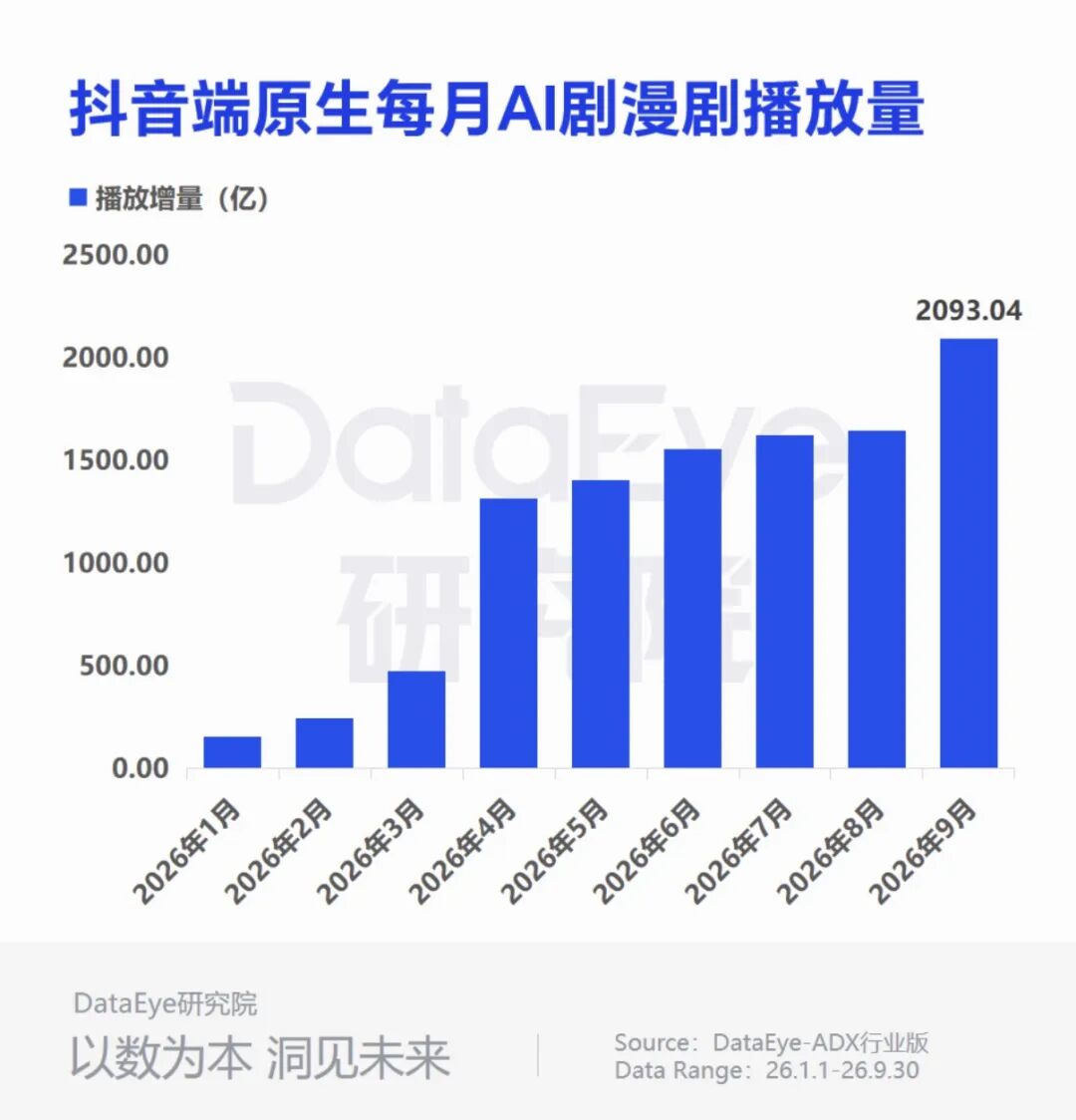
However, when there are a large number of AI videos available for free viewing on the Internet, why should people spend 19.9 yuan, 39.9 yuan or even higher prices to go to the cinema specifically to watch an AI film?
If theatrical works have no obvious advantages in plot, characters and audio-visual experience, "AI production" can hardly become a selling point. It may even backfire, making the audience check every unnatural detail with a magnifying glass.
Therefore, the next step of AI film and television should not just rush to prove that it can make a film.
Instead, it needs to prove that when the audience knows it is made by AI, they still think the movie ticket is worth the money.
This article is from the WeChat official account "Crazy Tech Lab", written by Kong Yilin, and published with authorization from 36Kr.