iPhone Duo Teardown: The most repairable foldable iPhone, just don't peel off the film.
It has been three days since the official shipment of iPhone Duo. Facing this iPhone, the "first new form factor in 19 years", the market response is undoubtedly extremely enthusiastic.
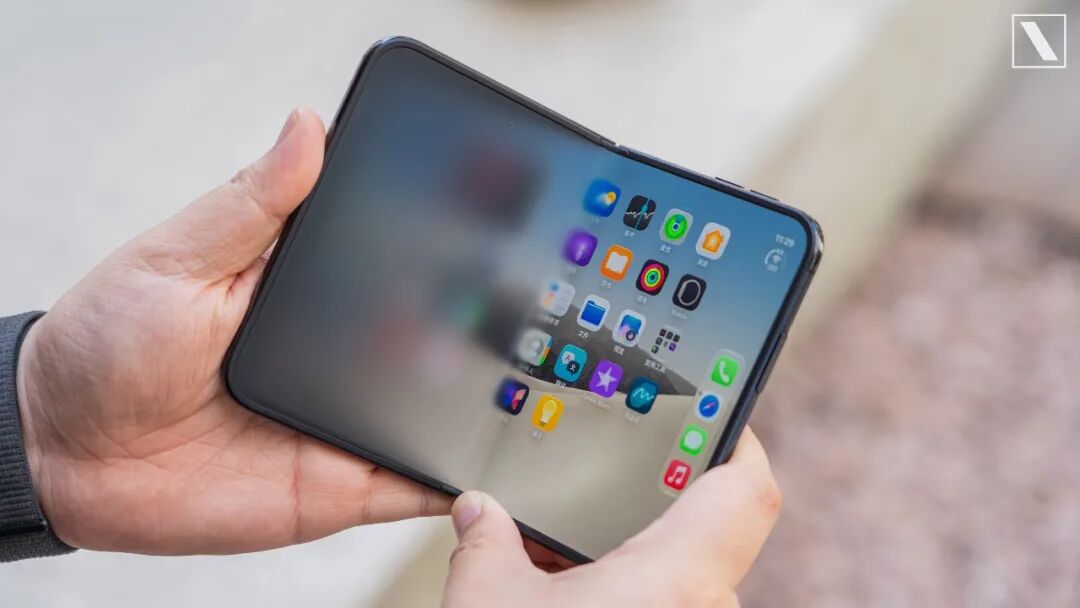
As the first "new form factor" product in iPhone history that Apple spent seven years of development to launch, people's attention to it is mainly focused on two aspects — hardware design and software capabilities.
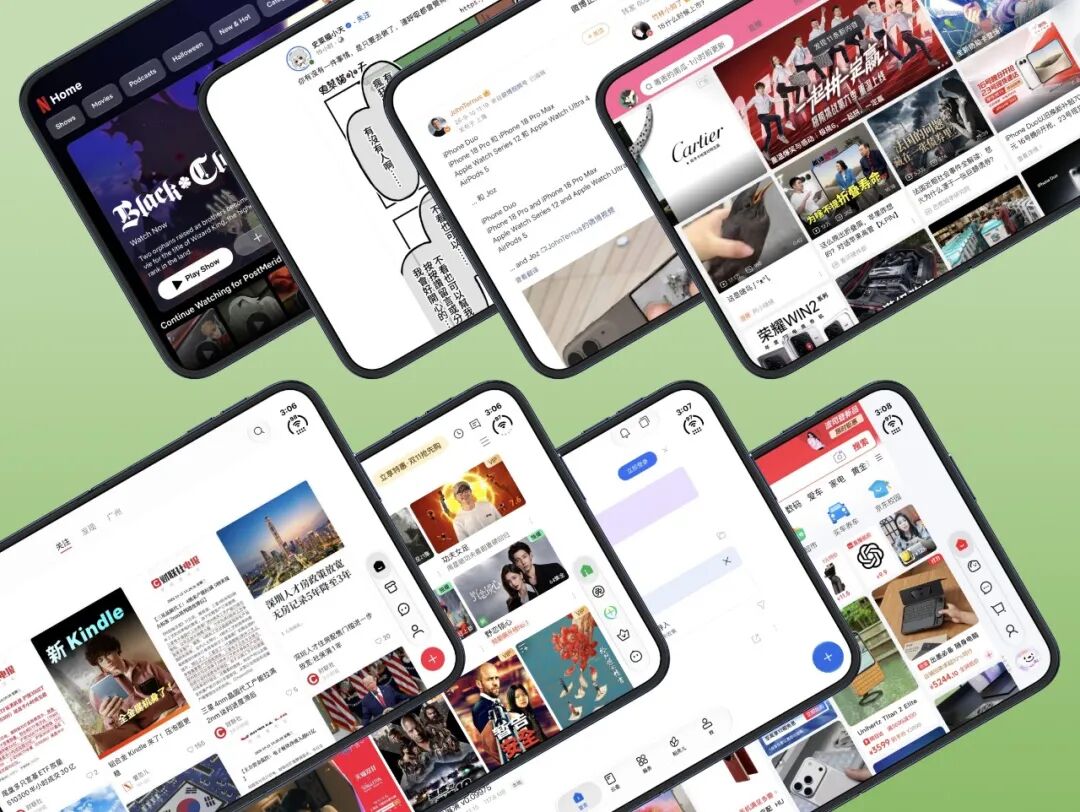
For the latter, we have indeed witnessed Apple's determination and appeal from the launch event to the official sale period.
Before the App Store deadline in April 2027, major application developers have taken the initiative to carry out round after round of adaptation, a treatment that has never been seen on the Android ecosystem:
As for the former, although the form of iPhone Duo has long existed in the market, its ingenious design choices and tradeoffs in the internal structure were not known to the public until teardown contents were gradually released in recent days.
01
First of all, it must be acknowledged that although iPhone Duo is a product with a brand new form factor, in terms of its internal design and workmanship, it still maintains Apple's consistently excellent standards:
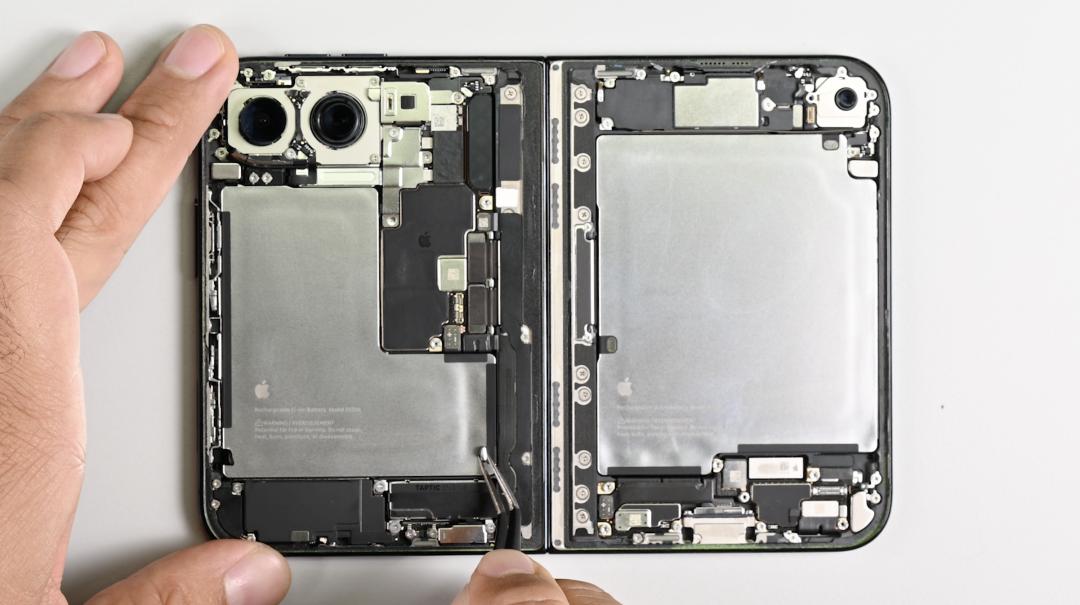
Photo from YouTube @iFixit
Even if the physical shape of iPhone Duo is not something "unprecedented", there are actually some elements inside the body that are completely different from all foldable screen phones on the market, and are even "Apple-exclusive".
Take the much-discussed "nanotextured surface layer" for example —
In terms of form, it is a screen protector that can be replaced separately. But just like all other foldable screen phones, even if you don't like it, never tear off this factory-applied film.
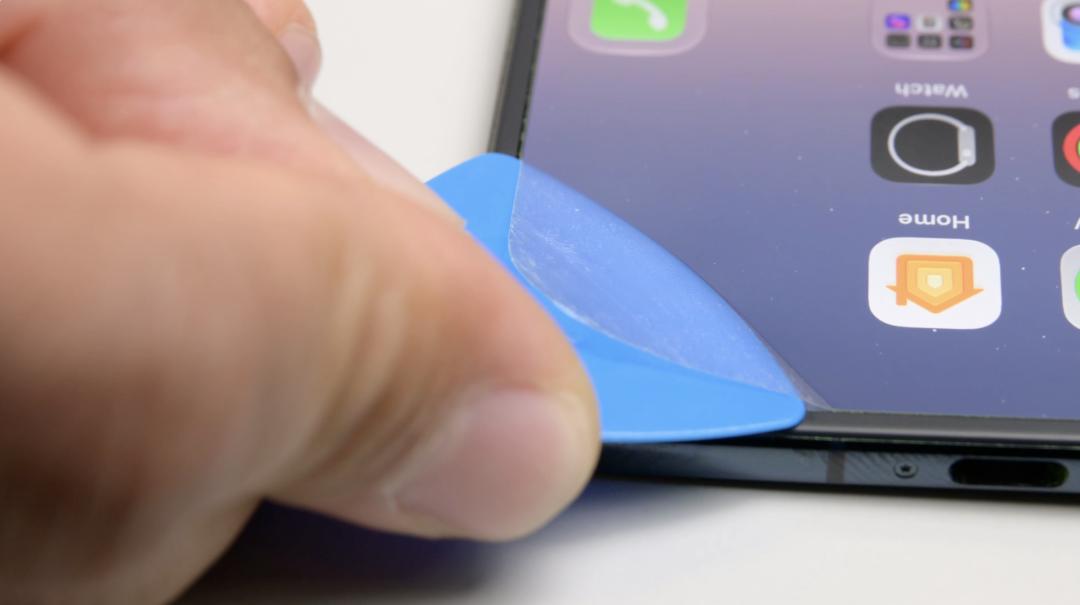
Photo from YouTube @iFixit
The screen under the nanotextured layer not only has far lower material strength than the nanotextured layer itself, but also has no oleophobic coating on its surface. It is not designed to be exposed and in direct contact with fingers from the very beginning.
There are so-called "iPhone Duo inner screen protectors" with extremely absurd prices on Taobao and JD right now, and these are pure products that make people pay for nothing but a bad IQ tax.
The second layer of film cannot even adhere firmly to the nanotextured layer, and its extra thickness may even cause screen extrusion and damage the display, which is totally not worth the loss:
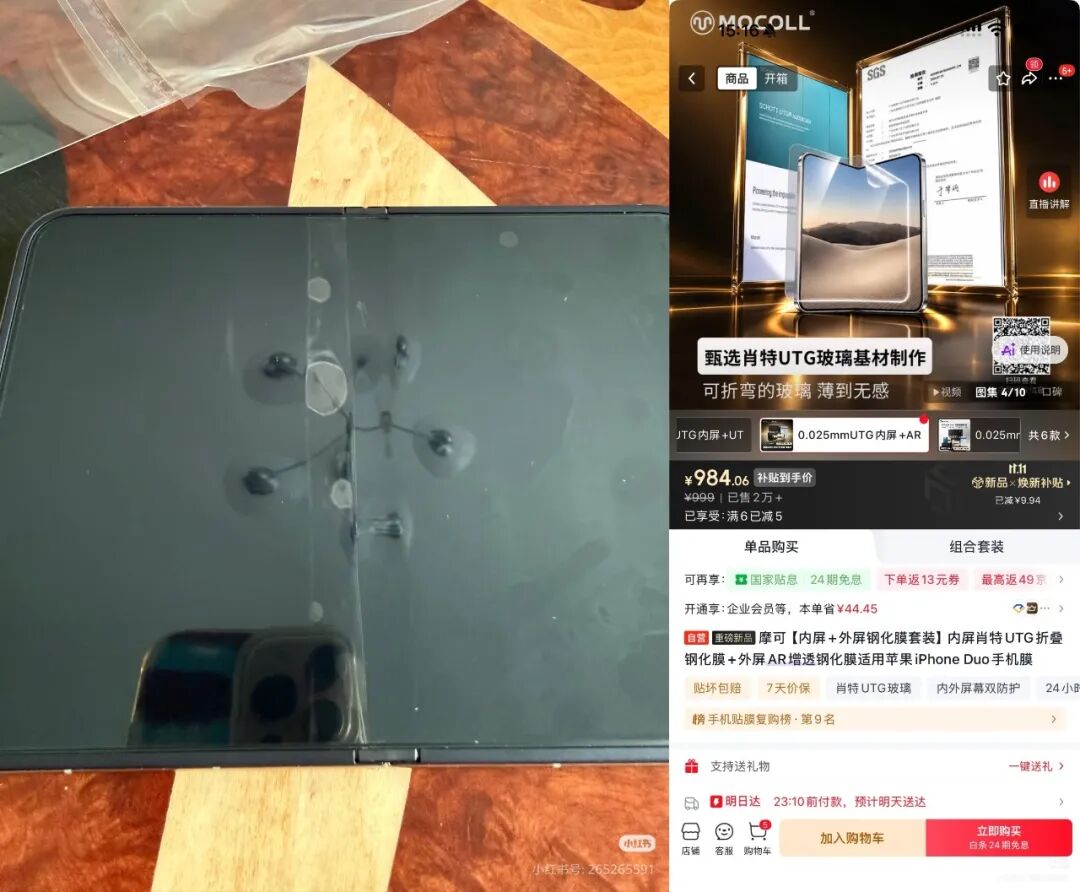
Photo from Xiaohongshu
The point is that the nanotextured surface layer of iPhone Duo, as a factory feature, endows iPhone Duo with a unique visual experience in the foldable screen market and an excellent "invisible" effect for the crease:
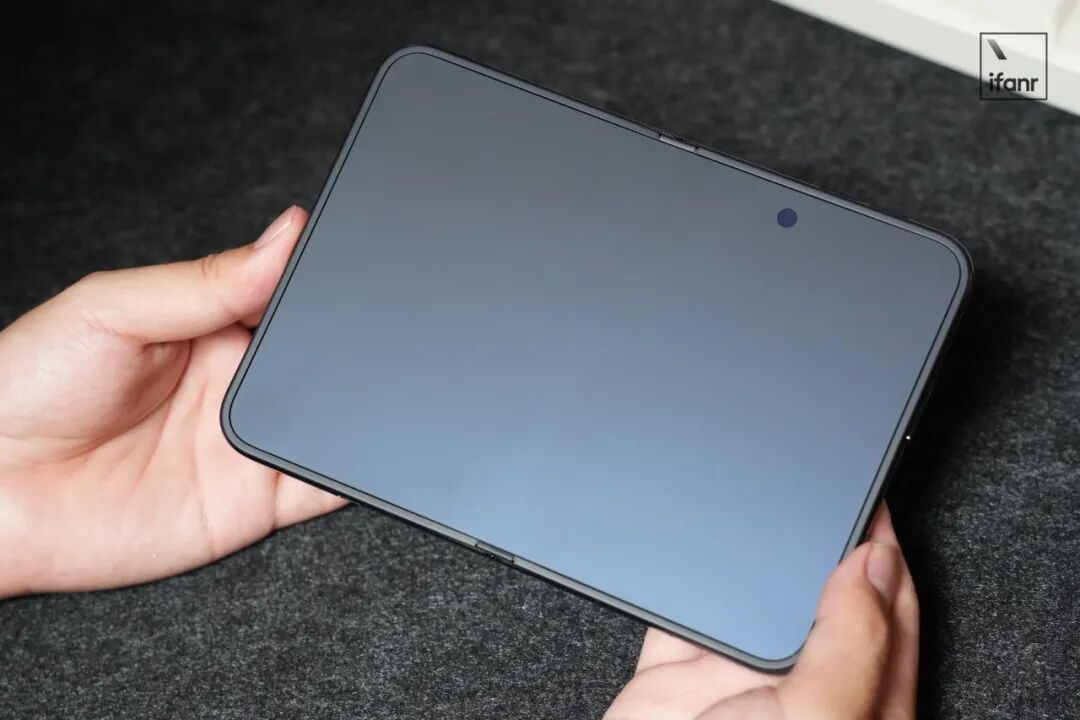
In most daily lighting environments, the nanotextured layer of iPhone Duo can provide an integrated visual experience with almost no reflection while hiding the fold crease well.
As we mentioned in an earlier article, the biggest significance of foldable screens is to provide an integrated large screen, rather than a split small window. Even with so many excellent precedent products, the frosted inner screen of iPhone Duo is still the one with the strongest "sense of integration" so far.
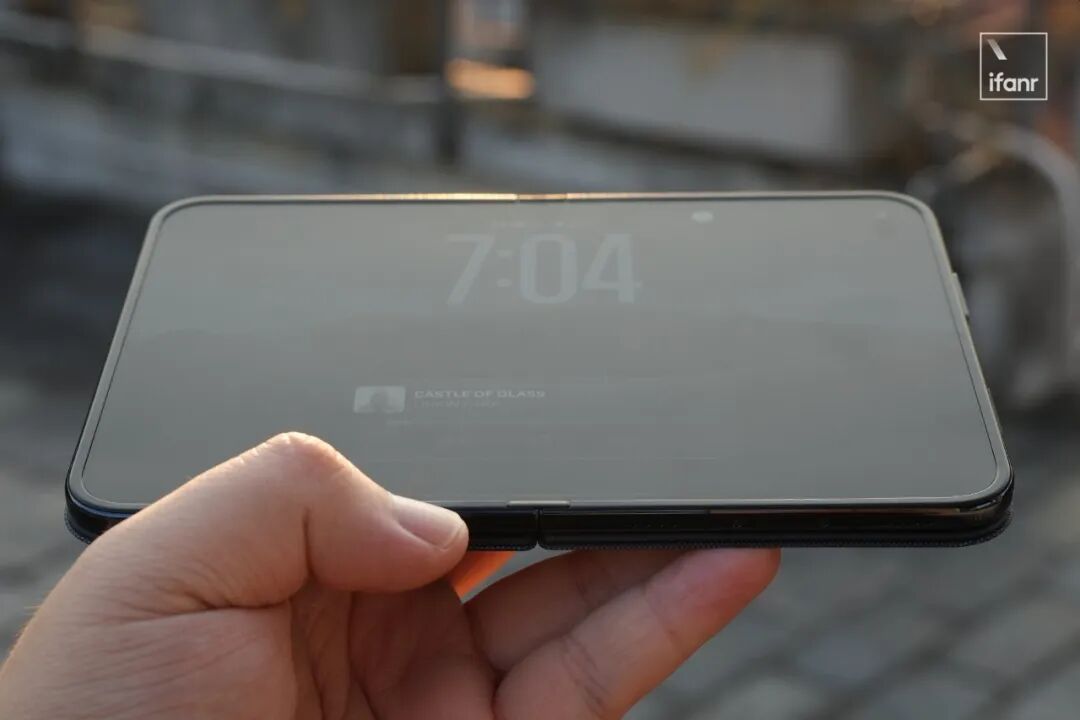
In addition to the outer screen, the steel-shell battery inside the iPhone Duo body is also very distinctive.
Since its debut on iPhone 16 Pro, the steel-shell battery has made quite significant progress in charge and discharge performance, durability and safety up to now.
But for iPhone Duo, the biggest advantage of the steel-shell battery lies in its space utilization:
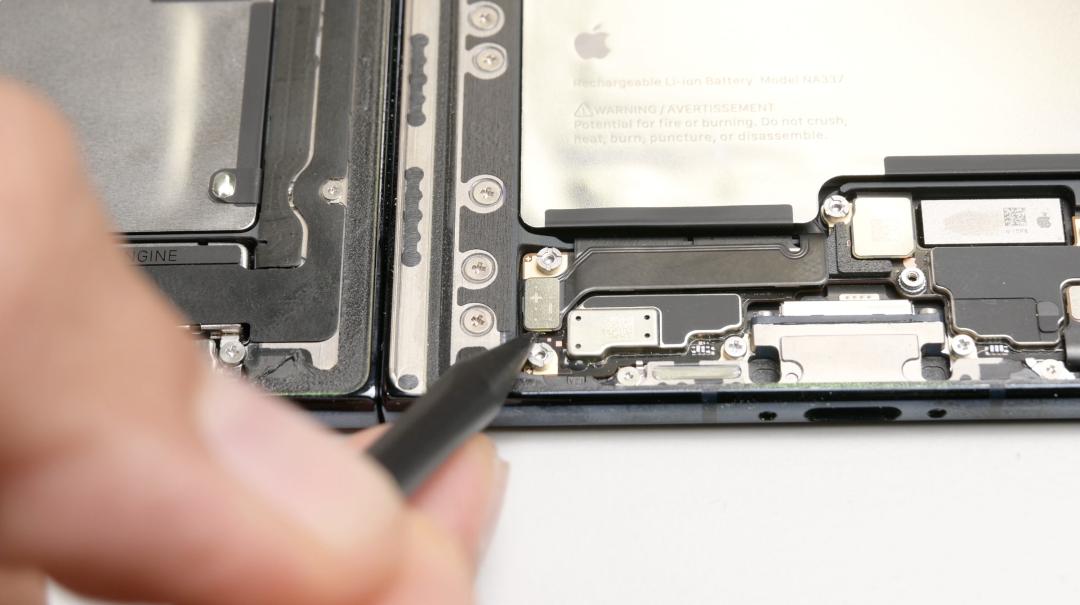
Photo from YouTube @iFixit
Since there is no need to reserve edge sealing space for the aluminum-plastic film and expansion space, and complex shapes can be realized through precision stamping and laser welding, the steel-shell battery used by iPhone can increase the overall space utilization of the battery compartment area by about 10% to 18%.
And in foldable phones where every cubic millimeter counts, this extra space is more important than ever before.
The total capacity of the two batteries in iPhone Duo is around 19Wh, which is almost close to the 21Wh battery of iPhone 18 Pro Max —
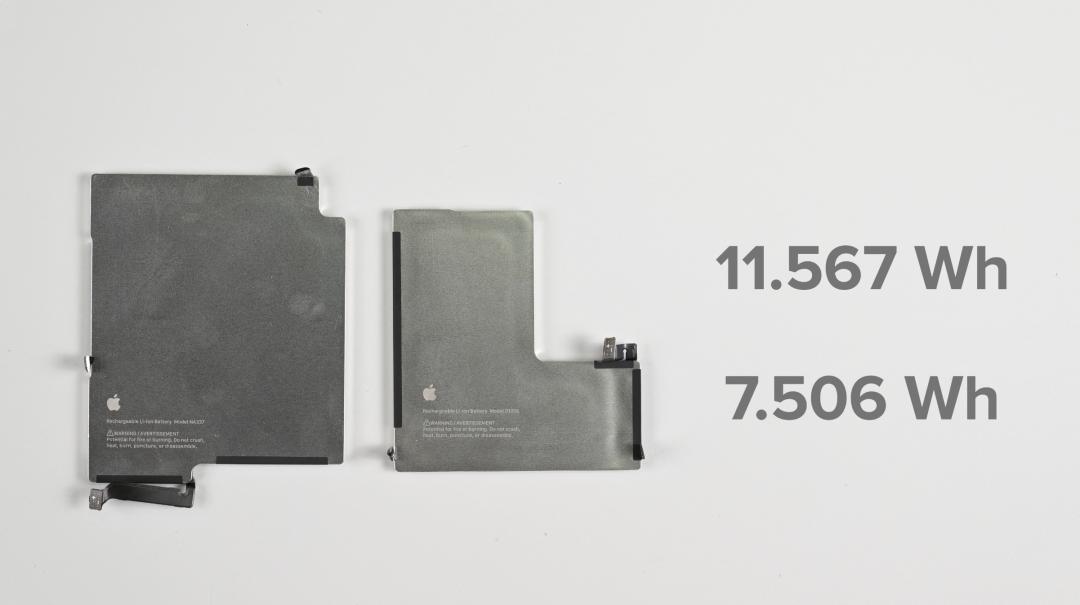
Photo from YouTube @iFixit
Besides, the Electrically Debondable Adhesive used by iPhone Duo is still the "most elegant" battery removal method in the entire foldable screen market.
After applying direct current to the battery adhesive and the grounding point for a short period of time, the battery adhesive will completely lose its viscosity. No heating or forced prying is required, and its safety and convenience are far better than traditional battery adhesives:
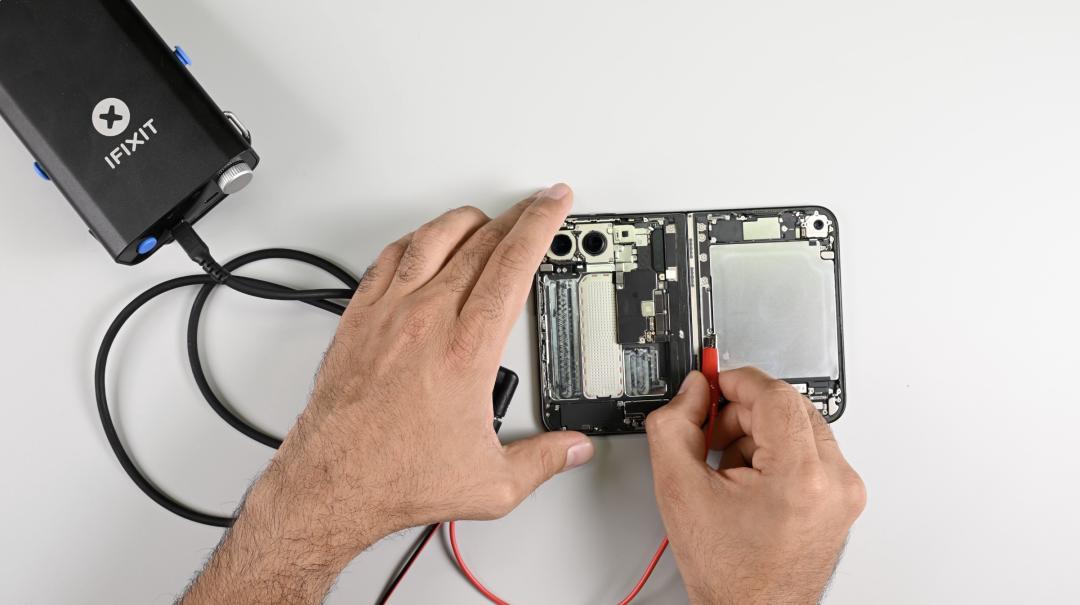
Photo from YouTube @iFixit
This electrically sensitive battery adhesive, which has received unanimous praise from teardown media at home and abroad, is not the only aspect that iPhone Duo has considered for repairability.
iFixit mentioned in its teardown that the screen adhesive used for the outer screen of iPhone Duo has very well controlled viscosity, which almost perfectly balances adhesion strength and disassembly difficulty:
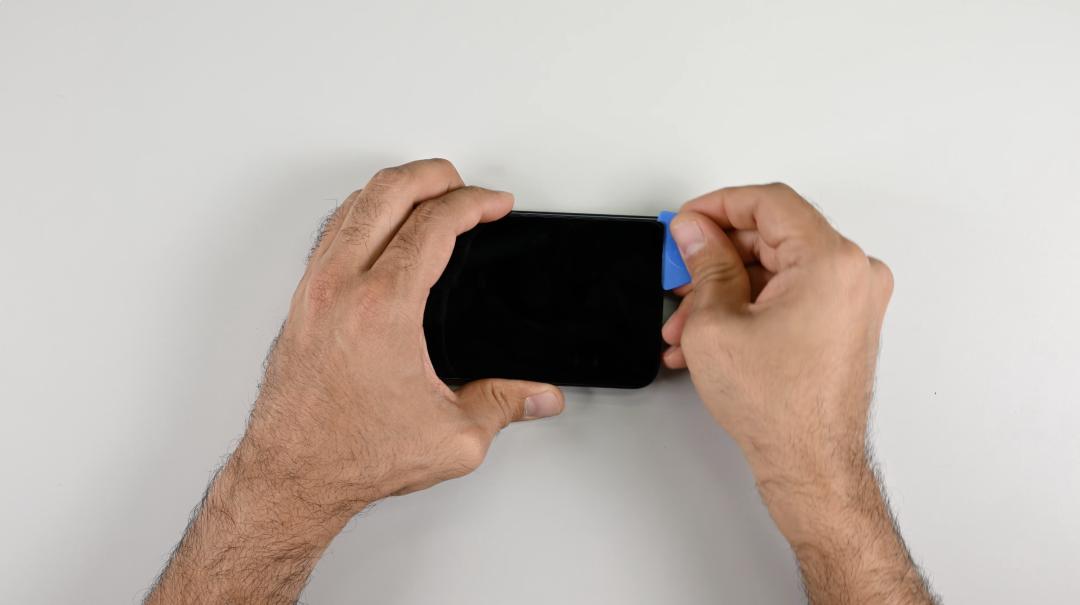
Photo from YouTube @iFixit
Shahram Mokhtari, Lead Teardown Engineer at iFixit, also commented: As a part that often needs repair and the starting point for all disassembly, an outer screen that is easy to take apart is of great significance.
In particular, Apple still insists on selling genuine parts and official repair tools (although they are very expensive). We can infer that genuine parts for iPhone Duo will also appear on the page of Apple's Self Service Repair store later:

Another interesting part inside iPhone Duo is its outer screen front camera.
Since there is no extra space to "steal" from the camera platform on the outer screen side, Apple customized a camera assembly with a thickness of only 1.91mm, and the total thickness including the lens group is only 3.29mm.
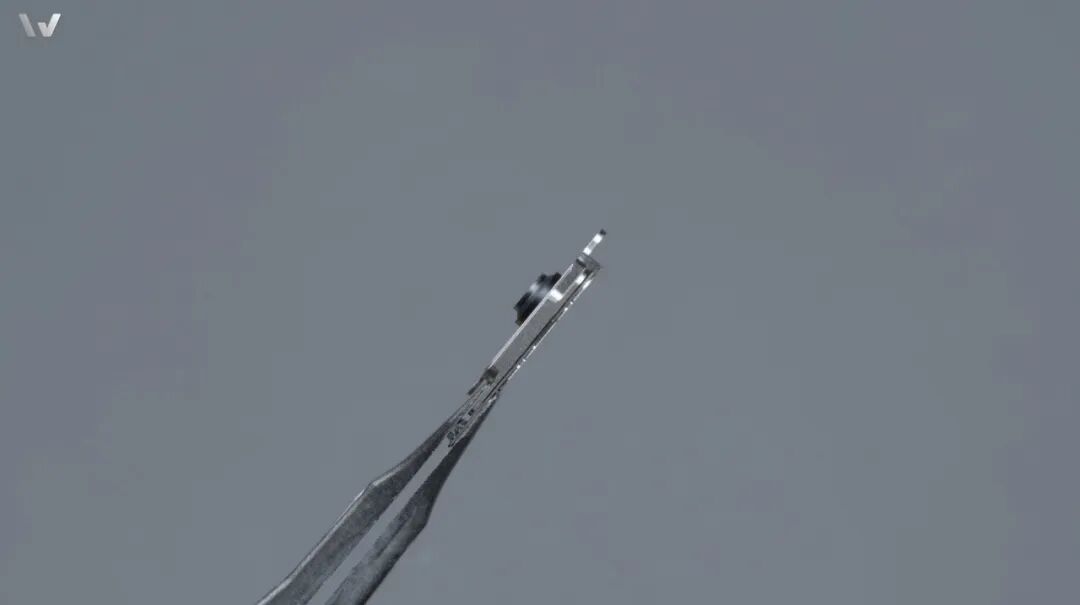
Photo from Bilibili @WekiHome
To achieve extreme thickness reduction, Apple adopted a process similar to the "sunken through-board" process used in mobile phone midframes, fixing the Sony IMX915 sensor in the middle of the hollowed-out substrate with gold wires, and the recording specifications remain full 4K 60fps Dolby Vision without any downgrade.
According to another teardown, the X-axis linear motor used in iPhone Duo has a volume of about 681.5 cubic millimeters.
This volume falls right between that of iPhone Air and iPhone 18 Pro, which can still provide excellent haptic feedback even for a body weighing more than 250 grams:
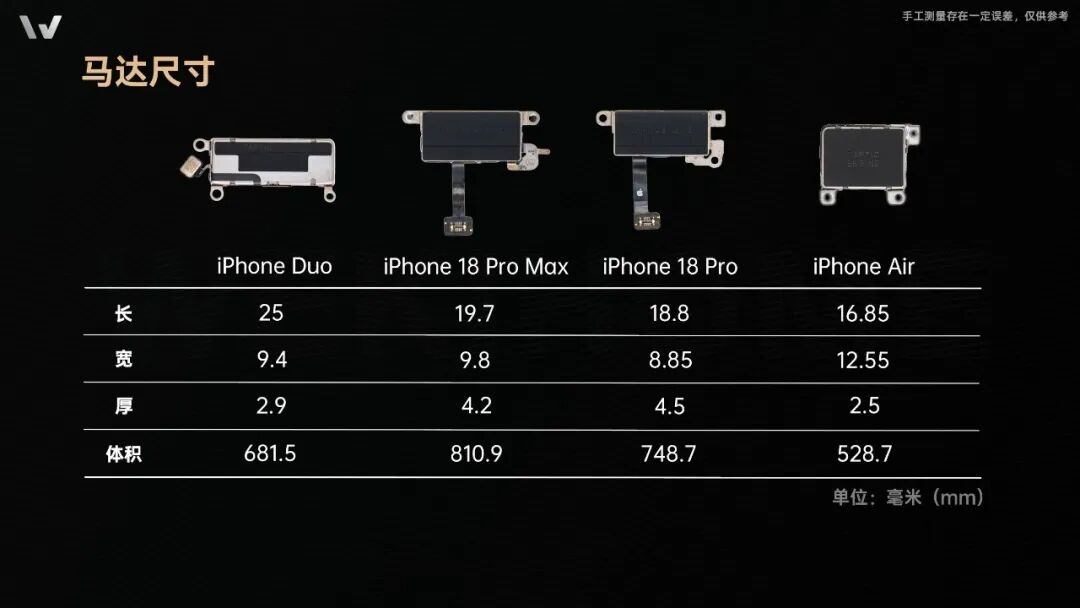
Photo from Bilibili @WekiHome
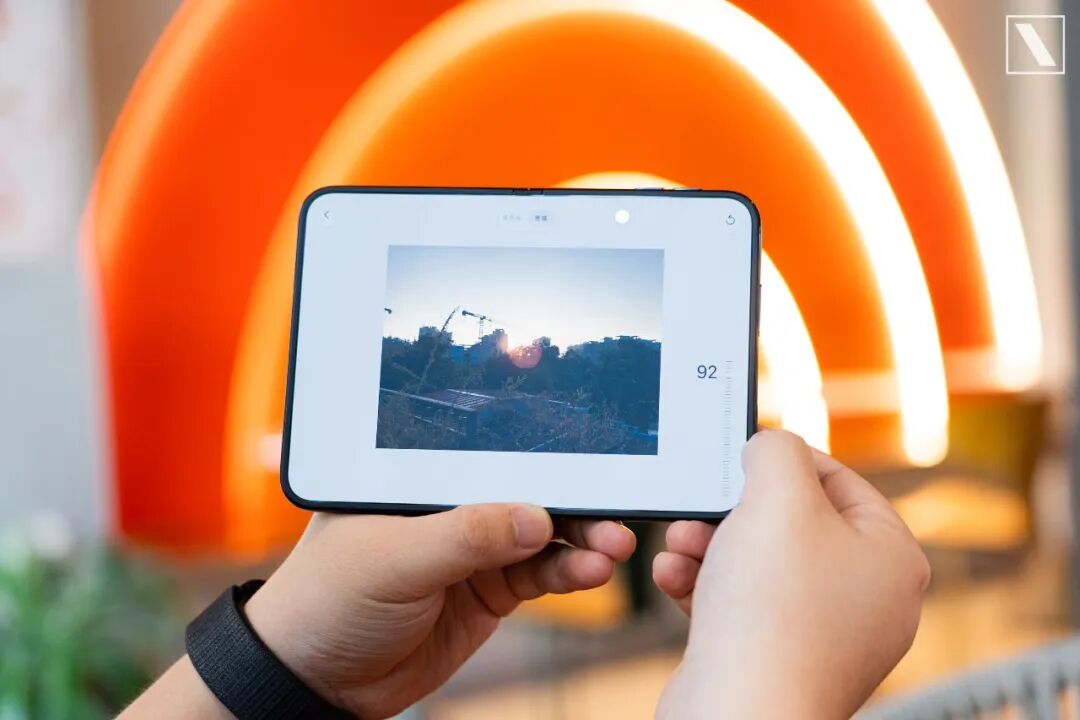
According to the experience of ifanr, the motor tuning of iPhone Duo is still among the best of all current foldable screen phones.
Not only does the iOS 27 system have rich haptic feedback, but it also inherits Apple's excellent start-stop control performance, so there is almost no "laggy feeling" even on such a large device:
But beyond all these details, on the key component of foldable phones — the hinge, iPhone Duo becomes very "mature" instead.
From iFixit's teardown, we can see that iPhone Duo uses four sets of springs as the torsion structure, two sets fewer than the Samsung Z Fold8, but its tuning on handfeel uniformity and resistance segmentation is still excellent:
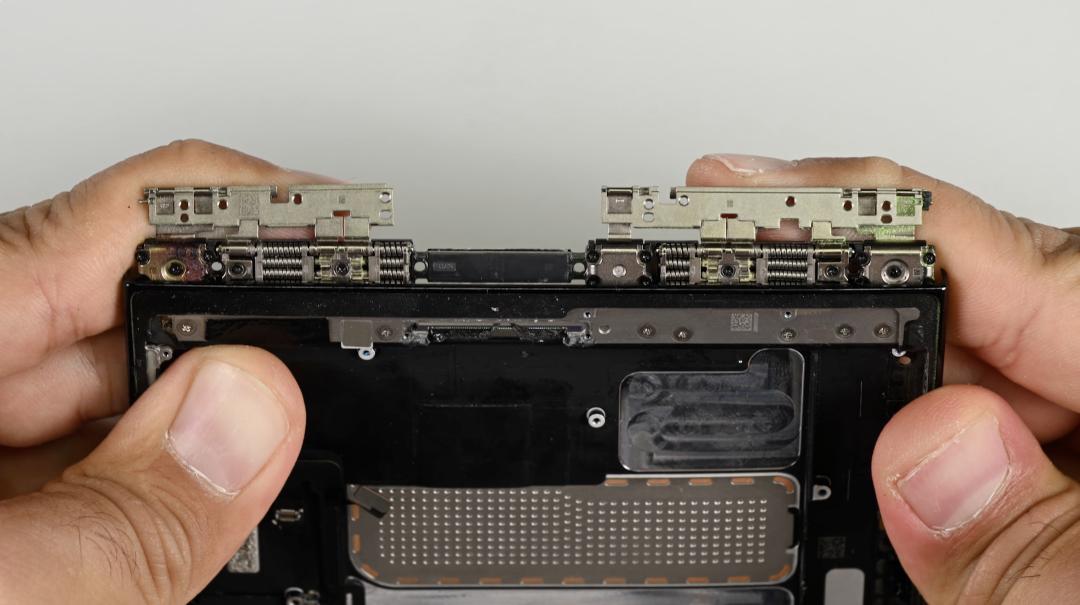
Photo from YouTube @iFixit
In addition, iPhone Duo supports many hover function scenarios that the Z Fold8 does not have, which also indicates that Apple has chosen a slightly different camshaft design solution, making some pre-launch comments that "iPhone Duo is roughly a rebranded Z Fold8" completely invalid:
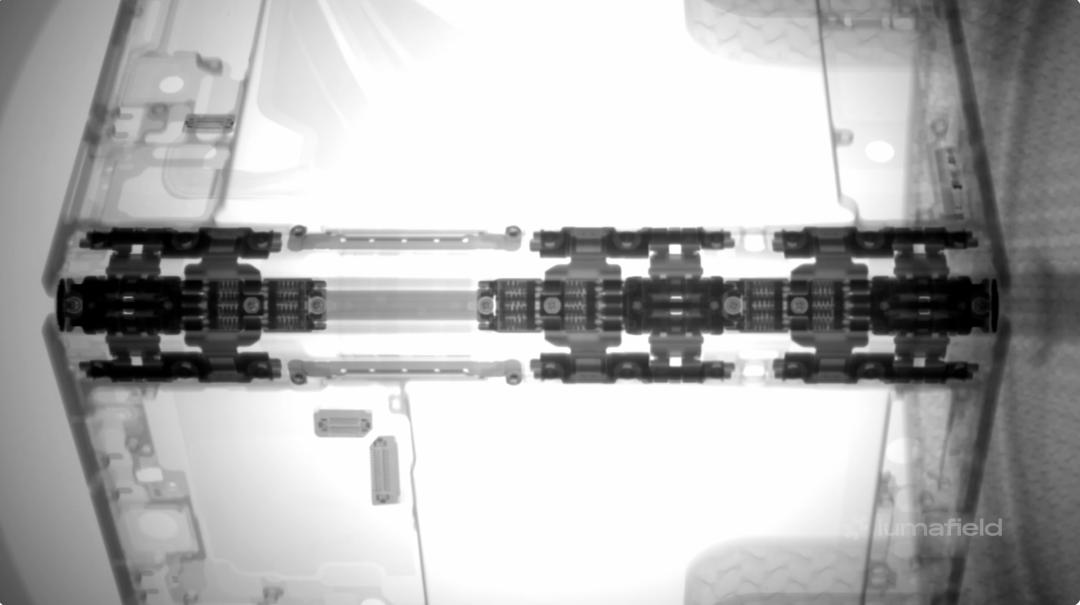
Photo from YouTube @iFixit
However, both iPhone Duo and Z Fold8