Stop learning to code. The CEO of Anthropic states bluntly that coding jobs are disappearing rapidly, and humans should learn to play the piano.
If there is anyone in today's world who can see clearly the direction of humanity in the next ten years, Dario Amodei is definitely one of them.
He once gave a very in-depth interview, in which he frankly shared his predictions for the future —
"The AI tsunami is rushing towards us, right at our doorstep. Yet the whole society pretends it is just a mirage."
Which industries will be completely disrupted in the next decade?
What majors should 25-year-olds choose to study today?
Is programming really at the end of its road? How can ordinary people keep their jobs amid this major reshuffle?
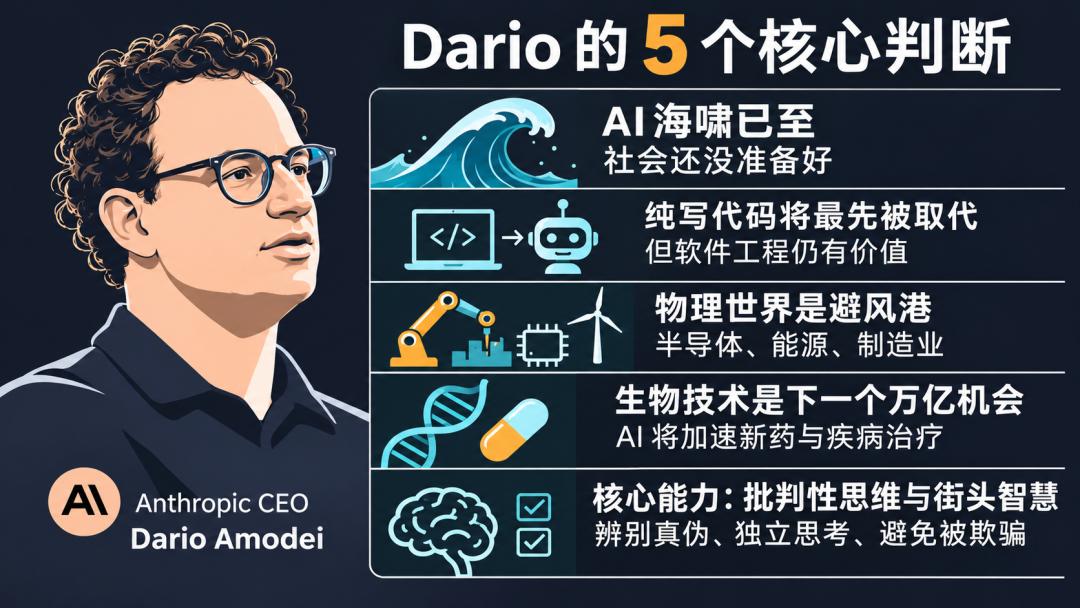
Jobs that only involve pure coding will be the first to disappear
During the interview, the host raised a question that makes everyone extremely anxious:
If I am 25 years old today and want to achieve financial success in the next ten years, what should I learn? Is programming still useful? Which industries still have bonus opportunities?
Dario's answer is very harsh.
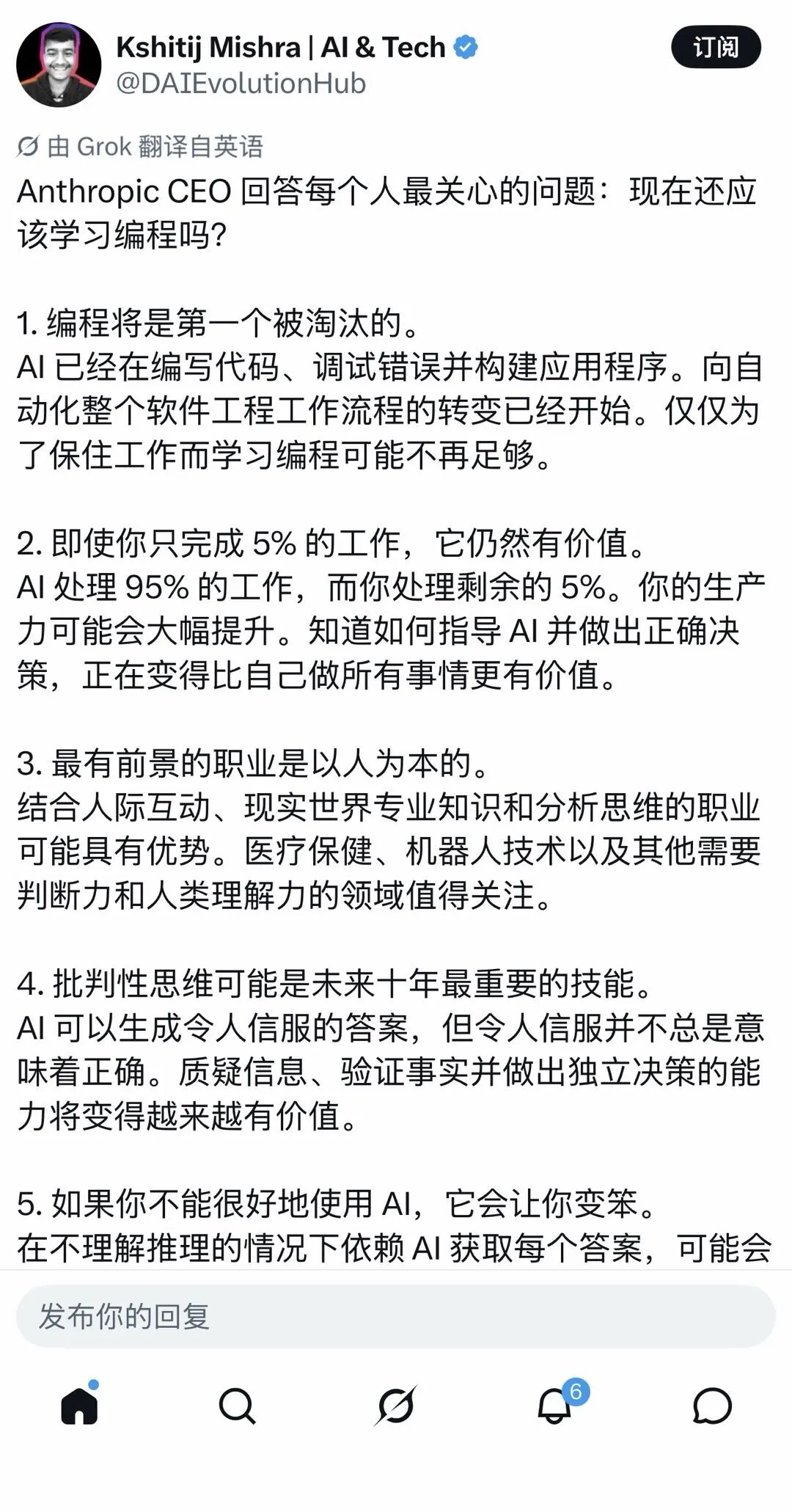
He said bluntly: "I believe that coding will be the first to disappear, or to be the first to be completely replaced by AI models."
Over the past two decades, "switching to coding" has almost been the fastest shortcut for ordinary people to move up the social ladder.
Countless young people poured into CS majors, just to land a well-paid "coder" job at big tech companies.
But Dario pointed out ruthlessly that the era of purely typing code is coming to an end! Inside Anthropic, Claude Code has been evolving exponentially.
However, please note that Dario has not sentenced the software industry to death.
He put forward a very critical distinction: Coding ≠ Software Engineering.
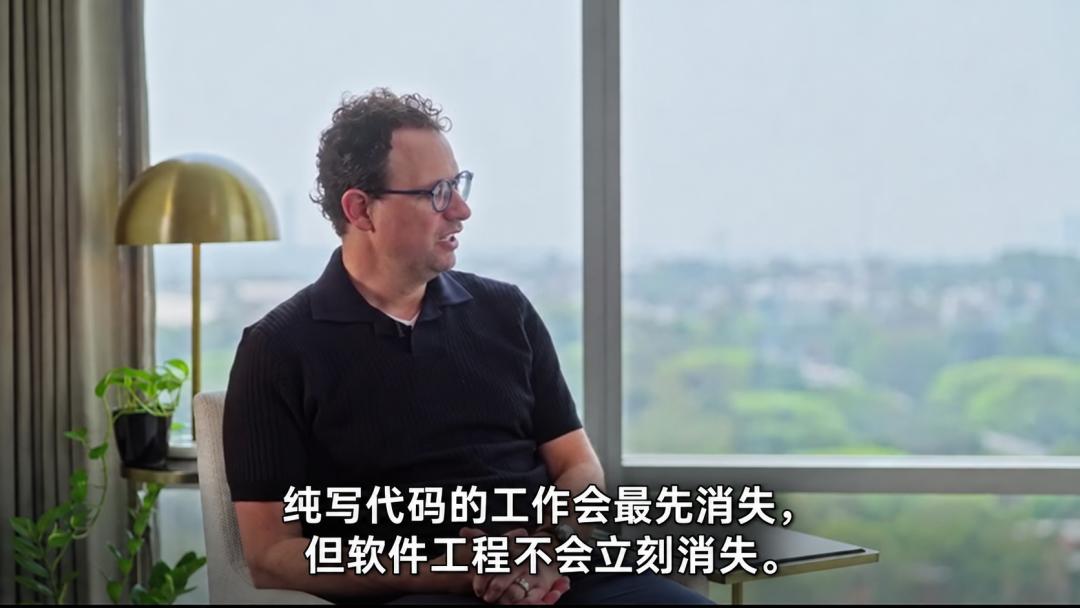
Writing specific lines of code will be taken over by AI, but "software engineering" — that is, as an architect, thinking about how to design a system, how to meet the real needs of users, and how to manage a team composed of multiple AI agents — this work will exist for a much longer time.
"This is an extremely powerful 'comparative advantage'," Dario explained.
Dario gave a very subversive mathematical formula: 5% + 95% = 20 times productivity.
Human comparative advantage has not disappeared, it has only undergone a drastic shift. In the future workflow, AI will take on 95% of the execution work. Humans only need to firmly hold the most critical 5%.
What is this 5%?
It is judgment. It is taste. It is the awareness of "knowing where we are going".
This means that your productivity will be amplified by 20 times! In the future, there is no need for a room full of junior programmers. Only one "super individual" who understands business and human nature, leading a group of tireless AIs, can outperform a traditional team of 100 people.
The AI tsunami has arrived, why are most people still pretending to be asleep?
Dario used a metaphor in the interview: a tsunami.
What surprises me is that current AI models are already so close to the level of human intelligence, but the whole society seems to be completely unaware of what is about to happen.
It is like a tsunami coming towards us, already clearly visible on the horizon, very close, but people are frantically looking for excuses to comfort themselves: "That is not a tsunami, it is just the refraction of light and shadow."
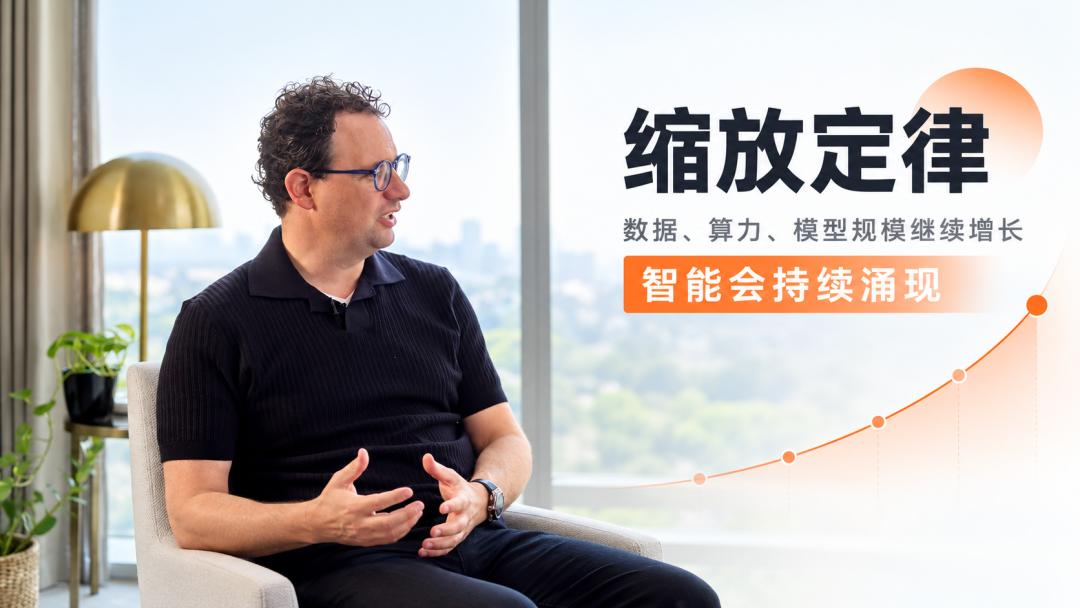
Why is Dario so certain about the evolution of AI? Because he is one of the first people to discover and firmly believe in the "Scaling Law".
For the Scaling Law, Dario used a very vivid metaphor: it is like a chemical reaction.
If you want to make a fire, you need different ingredients. If you put "data" and "computing power" into the reactor of "model scale" in the correct proportion, the final product of this chemical reaction is "intelligence".
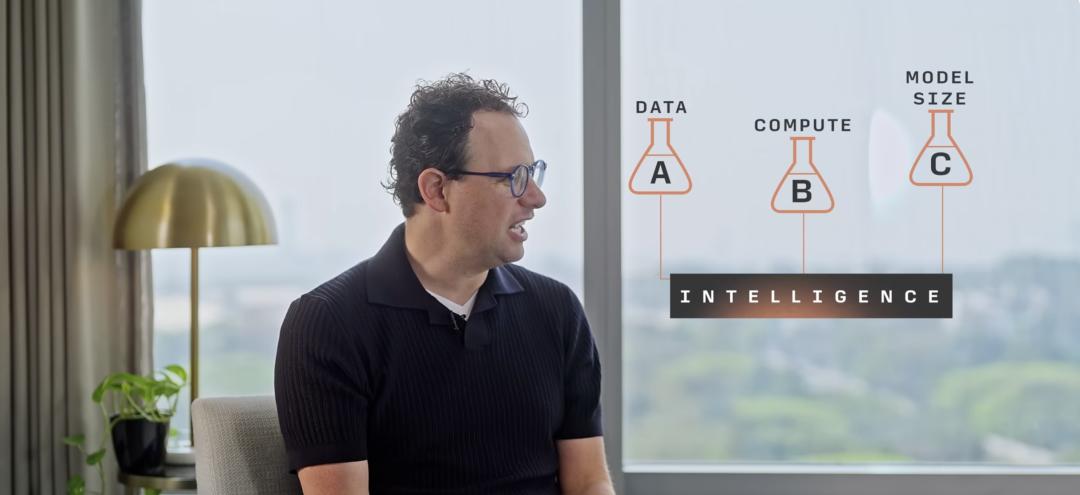
This is not metaphysics, but a cruel law of physics and mathematics. As long as computing power and data continue to increase, AI will become smarter and smarter.
Five years ago, computers could not even draw a decent picture of a cat; but today, you can send Claude a video of a monkey juggling, ask it "how many times the ball has changed hands in the monkey's hands", and it can give you an accurate answer.
This is the "sense of urgency" that Dario feels. People are always used to predicting the future with linear thinking, thinking that "this change is too big to happen", but technology is advancing at an exponential speed.
When the tsunami comes, if you are still standing on the beach picking up shells, the ending is destined to be destruction.
Where is the safe haven? In the next ten years, ordinary people only have these two fallback options
Since "intellectual labor" is being frantically devoured by AI, what on earth should we learn? What majors should our children choose?
Dario gave a "future survival guide". He believes that the future moat is deeply rooted in the following three areas:
The first fallback option: extremely "human-centric" jobs
AI can write a perfect business plan, but it cannot build trust with customers at the dinner table; AI can give the most accurate medical diagnosis, but it cannot hold the patient's hand.
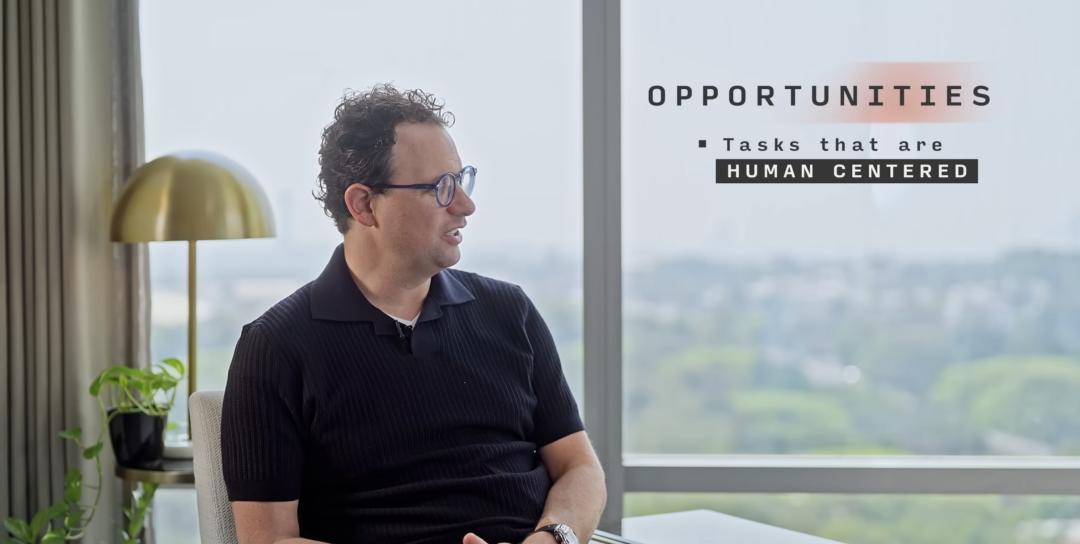
Dario mentioned the example of radiologists. Some people once predicted that AI would eliminate radiologists because AI reads films much more accurately than humans.
But the reality is that radiologists have not lost their jobs, because the most technically demanding part of their work "reading films" has been replaced by AI, but now they spend their time on "communicating with patients, explaining their conditions, and soothing their emotions".
Future high-paying careers will belong to roles that can connect people, understand people, and mobilize people. Emotional intelligence, empathy, and the ability to build complex social relationship networks will become the most expensive scarce resources.
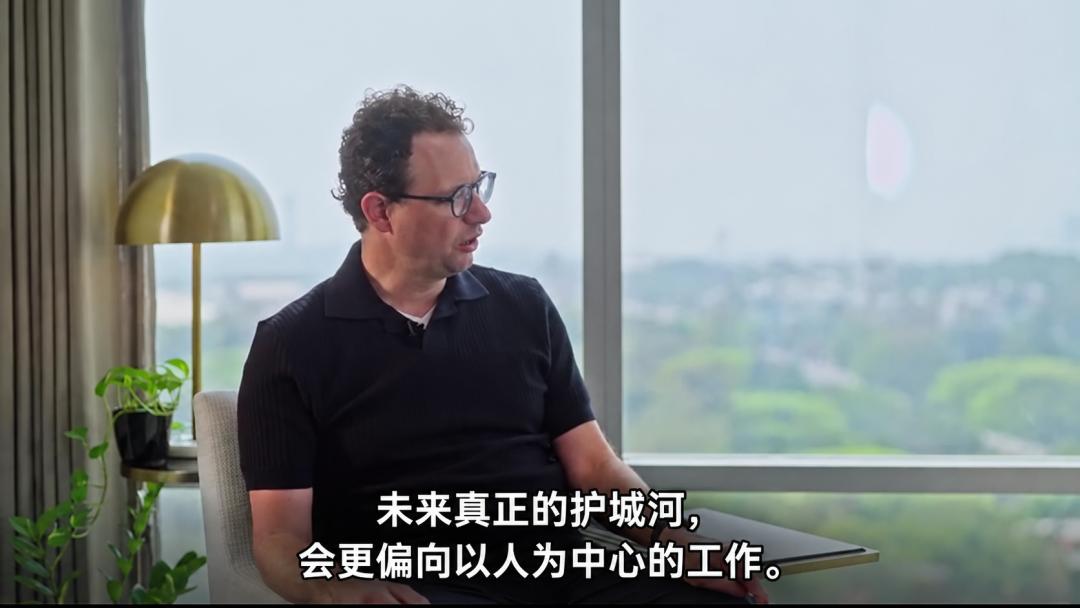
The second fallback option: go deep into the "physical world"
No matter how capable AI is in the virtual digital world, it is still very difficult for it to help you unclog a toilet or tighten a screw in the real world for now.
Dario strongly suggests that young people should pay attention to the areas where the "physical world" intersects with "traditional engineering", such as semiconductor manufacturing, new energy infrastructure, and high-end manufacturing.
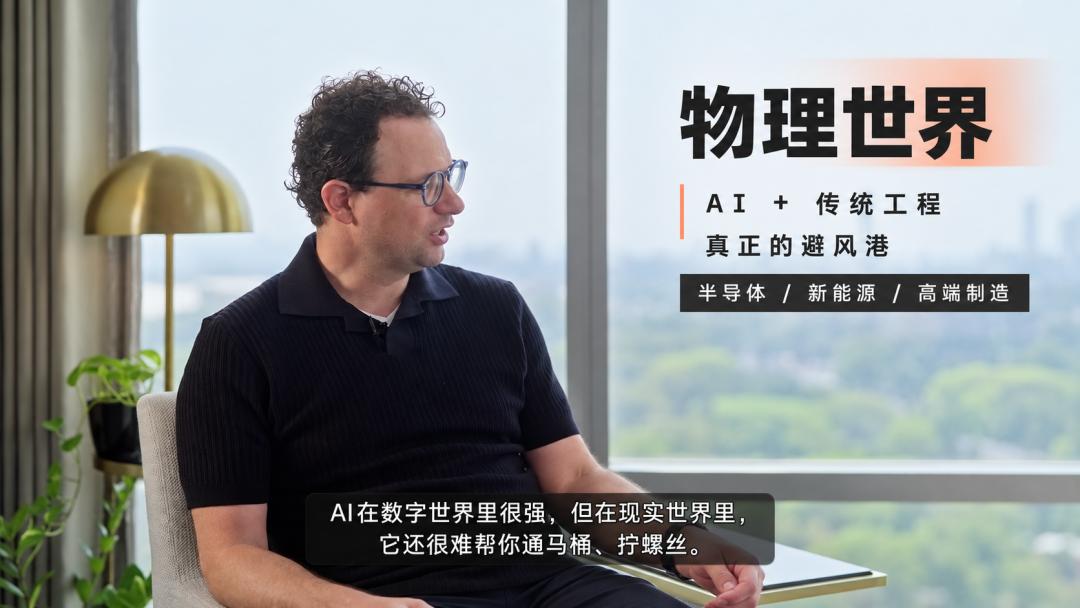
When the software world is crowded into a red ocean by AI, the construction of the physical world has become a safe haven because of its "cumbersomeness" and "need for real physical touch". If you can combine AI's analytical capabilities with the physical world, you will be invincible.
Core underlying capabilities: street smarts and critical thinking
In a world where AI can generate fake videos, fake images, and fake news at any time, what capabilities are the most important?
Dario believes that it is critical thinking and street smarts.
"You don't want to be deceived by false appearances, you don't want to hold wrong beliefs, and you certainly don't want to be defrauded."
In the future, distinguishing "truth from falsehood" will become a basic survival skill. Those who only memorize by rote and lack independent thinking ability will become the first group of victims in the AI era.
Wealth Code: Outside AI, where is the next trillion-dollar tuyere?
During this multi-hour interview, the host threw a very tricky question to Dario —
"If you are given 100 dollars now and can only buy one stock or bet on one industry (other than your own AI track), what would you choose?"
Dario smiled. He did not recommend Microsoft, nor did he recommend Nvidia.
He gave an unexpected but reasonable answer: biotechnology.
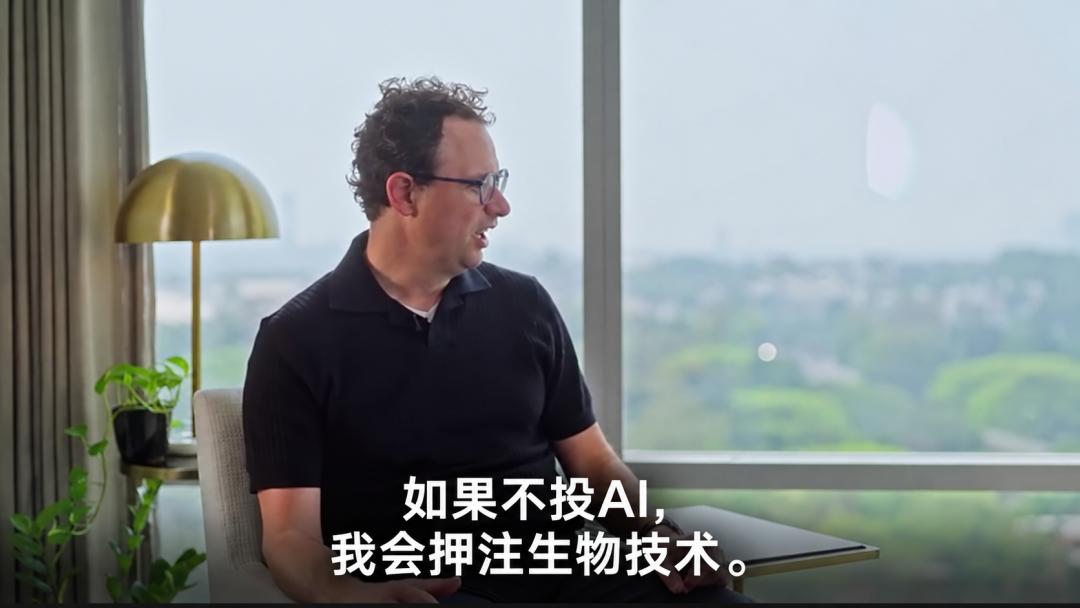
Don't forget that before founding the $40 billion valued AI empire, Dario was originally a top PhD in physics and biophysics, and did postdoctoral research at Stanford School of Medicine.
He initially got into AI because he thought the protein structures of biological systems were too complex for the human brain to handle, so he needed to invent AI to help him treat diseases.
Dario asserted: "Biotechnology is about to usher in an AI-driven Renaissance. We are about to cure a large number of desperate diseases."
He specifically pointed out a segmented track: peptide therapy and cell-based therapies (such as CAR-T).
Why? Because traditional small molecule chemical drugs are designed almost by chance; while new generation biotechnologies such as peptides and mRNA have "programmable" features. They are like computer codes in the biological world, which can be digitally calculated and continuously optimized by AI.
When AI's computing power collides with "programmable biology", humanity will achieve major breakthroughs in the battle against cancer, aging and incurable diseases.
If you are looking for a long-term investment tuyere, or your child is hesitating whether to study biomedicine, Dario's judgment is worth referring to.
Stop making "wrapper applications", go and learn to "play the piano"
As AI takes over more and more cognitive work, many people fear: are humans "outsourcing" their own brains? Will we become fools who can't even do arithmetic like in *WALL-E*?
Dario admitted frankly: If we use AI carelessly, humans will indeed become dumber.
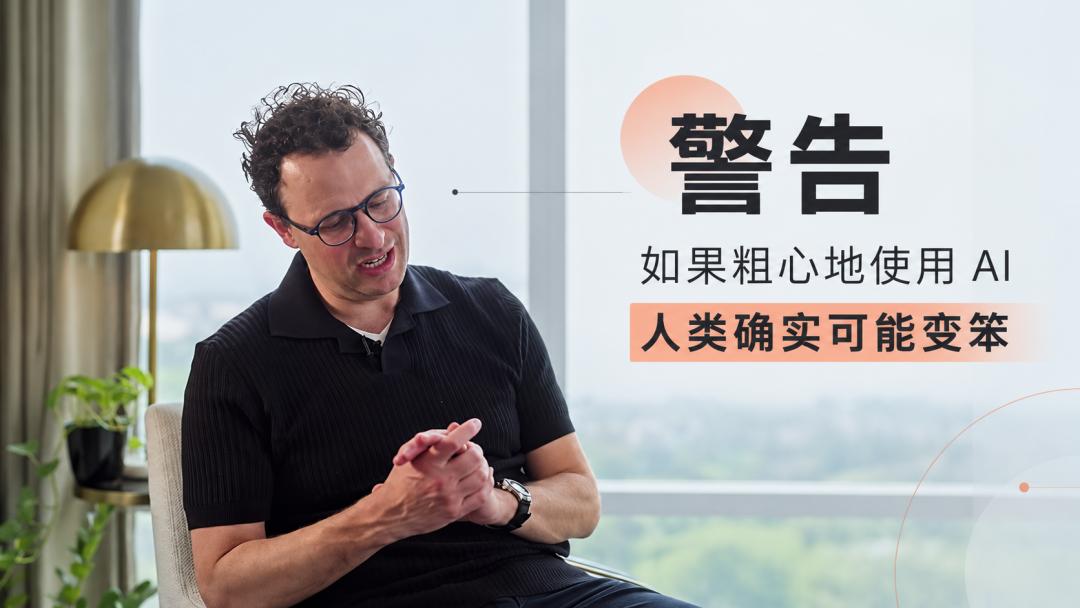
Their research found that if students only let AI help them with their homework, or programmers only blindly copy AI's code, their skills do degenerate.
However, the choice is in the hands of humans themselves. Just like after the invention of the calculator, humans did not lose their mathematical ability, but used calculators to calculate the parameters of the moon landing orbit. Dario himself still often does mental arithmetic in his head now, because "it allows mathematics to deeply integrate with my thinking process".
AI will always be smarter than you, but that doesn't mean you don't need to learn. The process of learning is the process of reshaping the neurons in your brain.
For ordinary people who want to start a business or become super individuals in the AI era, Dario gave the following suggestions —
1. Never make "wrapper products".
If you simply call the API of Claude or ChatGPT, make a beautiful UI interface, add some prompts and sell it for money. Dario warned: "Such things have no moat at all, anyone can eat into your income, you will die first before the AI giants even make a move."
2. Build an extremely deep vertical moat.
Anthropic will never touch those highly specialized vertical fields, such as cross-border AI for biomedicine, highly regulated financial services, etc. The dirty, tiring work and vertical know-how that the giants look down on or are too lazy to do are the survival soil for ordinary entrepreneurs.
3. Practice "prompt engineering" as if you are playing the piano.
Many people complain that AI is not easy to use, because they don't know how to use it at all. Dario quoted a famous saying: "Writing prompts is like playing the piano. You can't expect to sit down on the piano bench and play Beethoven immediately."
In order to make non-technical people use AI well, Anthropic has developed Claude Co-work that does not require coding. But no matter how simple the tool is, you need to spend time "practicing".
We need to make trial and error, set context for AI, and build AI agent mechanisms. Whoever learns to master this "steam engine" first will get a first-class ticket