The father of Claude Code Desktop has officially announced his resignation. He dropped out of high school and staged a remarkable counterattack to reach the pinnacle of the AI industry.
Two core members of Claude Code announced their departures on the very same day!
Following Thariq Shihipar's exit, Anthony Morris, lead developer of the Claude Code desktop version, has also released a farewell letter, officially announcing his departure from Anthropic.

When you open several sessions in the Claude desktop app, browse web previews while asking the AI to modify code, you are using the product he developed.
The desktop version was built by only a small team, yet it has impacted the lives of millions of people. He wrote in his letter that he created this product because he believes everyone can be a creator.
However, this very person did not even finish high school, and he created a dedicated section on his personal website to record all his failures over the years.
Eventually, after being shut out countless times, he spent 18 years building a product that he hopes will let everyone walk through the door.
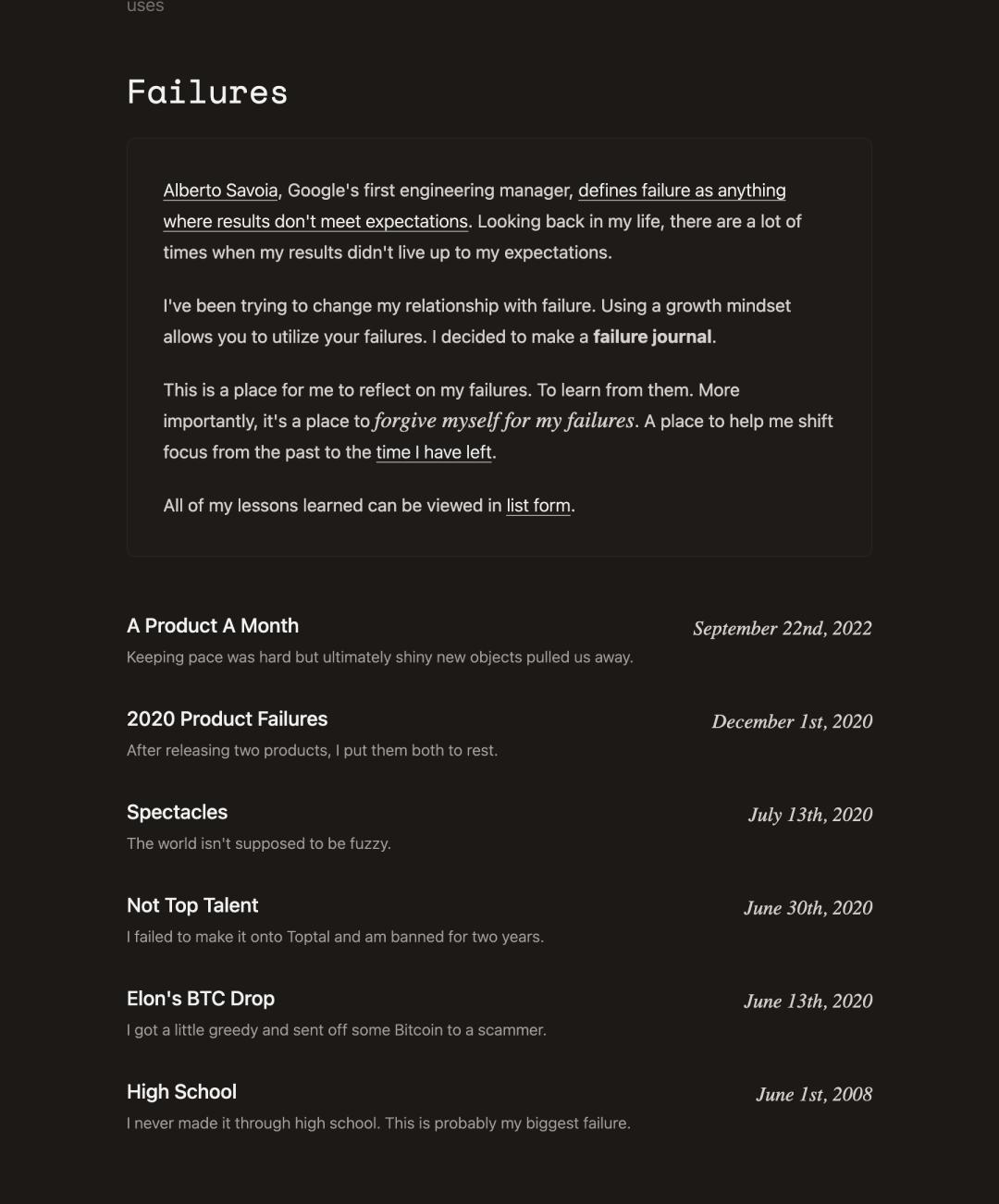
The "Failures" section on Anthony's personal website, the earliest entry records his high school dropout in 2008
Dropped out of high school, scored only 57 points in algorithm test, he wrote all his failures down as a diary
If Thariq is the person who introduced Claude Code to the whole world on X, then Anthony is the person who moved it out of the black terminal window and put it in the hands of ordinary people.
Their backgrounds are almost two extremes. Thariq graduated from MIT Media Lab and once joined YC, taking the path of a star geek; Anthony's life script is exactly the opposite.
In 2008, the teenager who thought he would not live past 21
At the age of 12, Anthony's parents got divorced. He lived with his father who worked away from home all year round, no one would supervise him when he skipped school, he even blacklisted the school's phone number to prevent the school from leaving messages on the home answering machine.
When he was in high school, severe depression overwhelmed him, and he could not even get out of bed for many days. At that time he was convinced he would not live past 21, so he dropped out of school directly in 2008.
Later, although he obtained a high school equivalent diploma, he always regarded dropping out of school as the biggest failure in his life. At the end of this diary entry, he wrote a sentence: "I forgive you for not finishing high school."
The IT guy who installed printers taught himself programming and got into Cisco
Without a diploma, he could only start from entry-level IT work, setting up servers, installing printers every day, and helping customers troubleshoot problems over the phone.
To get rid of trivial tasks, he used the script tool AutoHotKey to write his first piece of code in his life, and even built a graphical interface program with it. He learned everything by trial and error in the Linux terminal, and it took him a very long time to find out that there is a "man" command to check the usage of other commands.
After four years of self-study like this, he grew from zero foundation to a software engineer at Cisco with an annual salary of 120,000 US dollars, and paid off all his debts.
Quit his job to start a business, only got 57 points in the algorithm test
The stable job in the big company was draining his passion little by little.
In 2019, he took a week off to build the writing application Wrabit, and felt that he had regained his vitality, so in March 2020 he resigned from his job at Cisco to develop the writer platform Bard full-time.
At the end of June, he signed up for the algorithm test of Toptal. There were 3 questions in 90 minutes, he used up all the time, submitted 2 answers, and thought he was almost done with the third one.
When the result came out, the full score was 300, the passing line was 150, but he only got 57 points.
The most heartbreaking part was that the first two questions he thought he had finished almost all failed the hidden tests, the only unfinished one got the highest score instead, and he was banned from taking the test for two years.
By the end of the year, he shut down both Wrabit and Bard with his own hands.

Returned to university at 30, he turned down the interview invitation from Spotify
In the autumn of 2020, 30-year-old Anthony returned to university full-time to study computer science. Even though he had worked as an engineer for four years, he always thought he was not smart enough to attend university.
A few weeks after the semester started, Spotify and 1Password sent him interview invitations, but he politely rejected both out of inferiority.
Until a friend sent him Steve Jobs' 2005 Stanford speech, the line "You have to love what you do" woke him up, compared to studying at school, he prefers building things by hands.
When preparing for his first interview at Square, he got stuck on an algorithm problem that morning, he had his first panic attack in his life, so he had to cancel the interview.
But this time he did not flinch, in the following month he attended interviews at 10 companies for a total of 28 rounds, got 3 offers, and joined the learning platform Monthly in April 2021.
Only 3 out of 12 products were successfully built, and he was rejected by a 15-word email
In early 2022, he and his partner Alice made a plan, to build a new product every month for a whole year, live stream the coding process every week and open source all the code. 9 months later, they only finished 3 products, the plan ended in failure.

The thing that made him feel most guilty was the SMS application poke.
Once a user sent an email asking for help, saying there was a bug in the system that kept sending him text messages urging him to go to the gym for no reason. But because he was busy working on the new project for the next month, he did not even have time to fix the bug for the old user.
He confessed in his review that he is a craftsman at heart, making shoddy products is completely against his will.
In August 2025, after he finished the final interview at a dream company he had long admired, he received a rejection letter with only 15 English words:

He wrote that this short line of words crushed him instantly.
Judging only from the resume on paper, he really looks like someone who changes jobs frequently, but that thin piece of paper can not record all his experience of working hard in startups, nor can it record all the core tools he built for Cisco, Stripe and other companies.
He wrote at the end of the article, "My desire to build beautiful and influential software has never been stronger. I will not abandon myself just because of a stupid piece of paper."
Just the day before, he had just used AI ambient programming to build a permanently free mental care application called everbloom for his mother and sister. He wrote in the introduction, It has never been so easy to build a small software for the people you love around you.
He moved Claude Code from the terminal to the desktop
Four months later, in December 2025, Anthropic announced on X that the Claude desktop app had officially integrated Claude Code for users who do not like using terminals, and they named the creators at the end of the post, this was built by Alice and Anthony.
This Alice is exactly Alice Zhao, the partner who used to live stream coding with him. From the dozens of users of poke to today, the two of them spent four years on this journey.
Claude Code was originally a geek tool built by Boris Cherny that runs in the terminal, which naturally shut out a large number of people who do not know how to code. What Anthony and his team did was to push this door open, and behind this are four principles he embedded in the desktop version.
Principle 1: Hide the terminal in the background, even people who can not write code can get started easily
From the very beginning of the project, Anthony was very clear that the desktop version has far more non-technical users than the command line version. While simplifying the interface, he specially retained the permission confirmation protection before operations to prevent the AI from exceeding its authority and breaking the system.
In April this year, the desktop version was completely remade, multiple sessions can run at the same time, the terminal, editor, web preview and code diff are all placed in the same window, you can switch to check which one has finished running and where the modification went wrong.
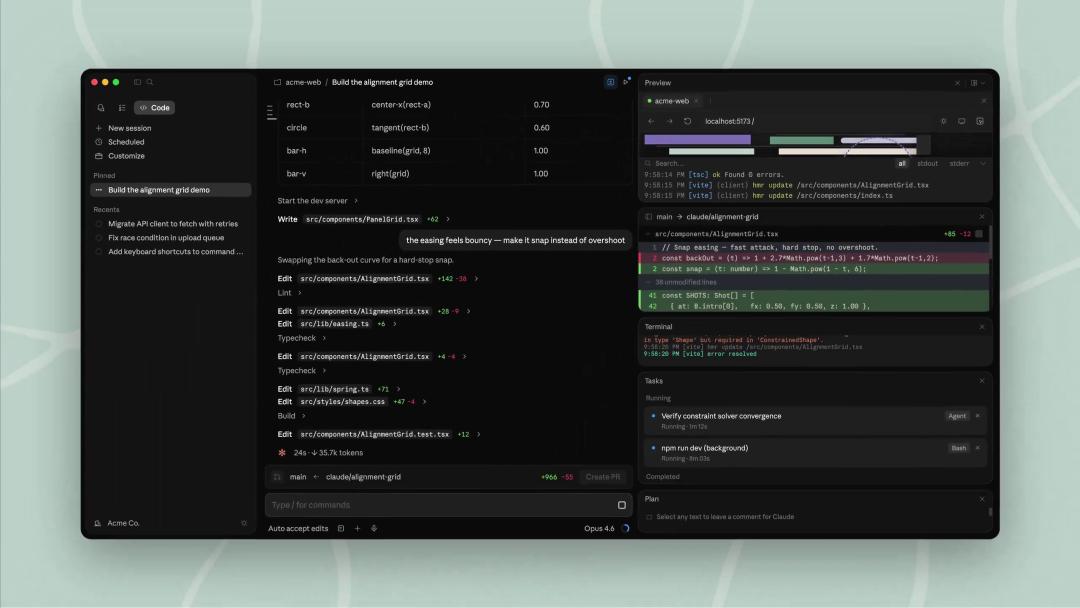
The remade desktop version, web preview, code diff and terminal are displayed next to the sessions at the same time
On the day of release, Anthony said he had not opened his IDE or terminal for several weeks. The self-taught teenager who ran into walls everywhere in the black terminal back then has now built a product that allows him to not open the terminal for weeks.

Principle 2: Modify exactly where you point, draw circles to replace long descriptions
In the past, if you wanted the AI to modify a button on a web page, you had to describe with great effort which button it was and which area it was in.
In August this year, Anthony launched a new usage for the browser panel. Press ⌘⇧S to select any element on the page, or directly draw a circle to mark the area on the page, Claude will read the corresponding DOM, React components and styles first, then start the modification.
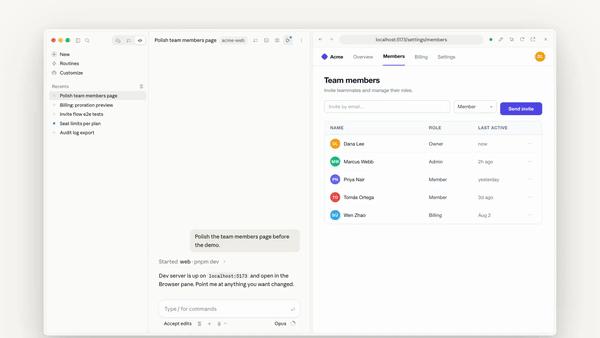
Select elements in the browser panel, mark areas by drawing circles, then hand them over to Claude for modification
Principle 3: No mess even when multiple tasks run at the same time, we optimize even for hundreds of milliseconds
In mid-October, the team further simplified the interface, sessions are grouped by in-progress, waiting for input and completed, it is not easy to get confused even when several tasks are running together.
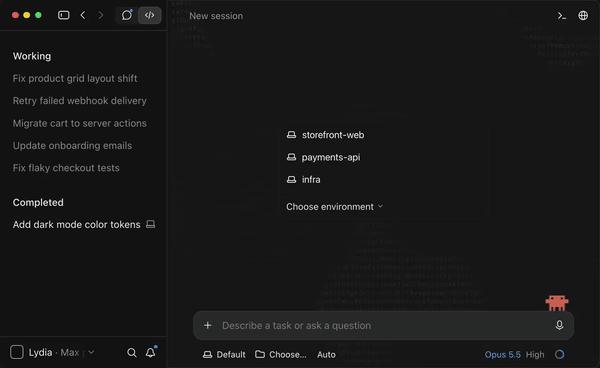
The session list after the October update, you can see at a glance which is running, which is waiting for input, and which is completed
The team is still working hard on speed optimization, they cut the time cost of creating a new session by more than half in two weeks, from 837 milliseconds down to 347 milliseconds.
Tech blogger Peter Yang posted a post specially to praise this, saying that the Claude Code app is much faster now, and even easier to use than ChatGPT.

Principle 4: Let users decide whether the product is good or not
When he was working on conversational products at Stripe in 2024, he suffered losses from <