What on earth is this thing that is only the size of a finger but determines the speed of AI?



Introduction
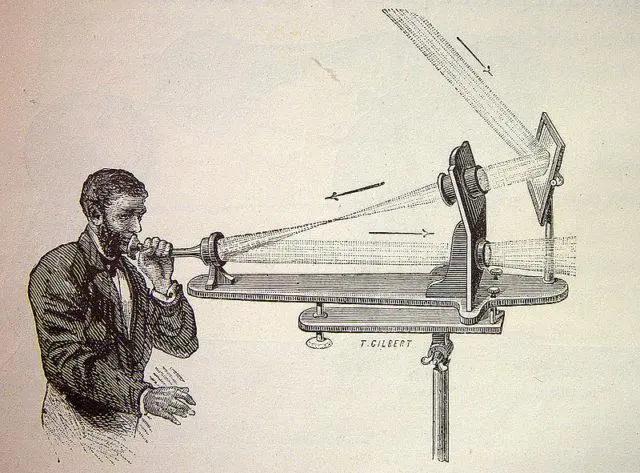
On June 3, 1880, Alexander Graham Bell, the inventor of the telephone, completed a special call experiment.
Bell made sound vibrate a mirror, so that the sunlight reflected by the mirror changed accordingly; the changed optical signal was transmitted through the atmosphere, received by a selenium photocell and converted into an electrical signal, and finally restored to voice through the receiver.
Although this "photophone" could realize communication, it was extremely dependent on the weather — once a cloud drifted by, the sound might disappear. Bell had found a way to transmit information with light, but lacked a path that could constrain and protect optical signals. Later, optical fiber filled this gap.
In the mid-to-late 19th century, people had begun to use the total reflection phenomenon of glass rods to guide light. Early applications mainly focused on lighting and imaging, but with obvious loss and interference, the transmission quality and distance were relatively limited.
The turning point came in 1966. Charles K. Kao, a physicist working at Standard Telecommunications Laboratories in the UK, proposed that the high loss of light in glass mainly came from impurities; as long as the glass was pure enough, light could achieve long-distance transmission with low attenuation. This theory laid the foundation for modern optical fiber communication, and Charles K. Kao won the 2009 Nobel Prize in Physics for this achievement.
In 1970, researchers at Corning in the United States developed the first optical fiber with a loss of less than 20 decibels per kilometer, which brought the theoretical vision into engineering practice. With the commercialization of low-loss optical fibers, light gradually entered telephones, cable TV and the Internet, connecting all corners of the world.
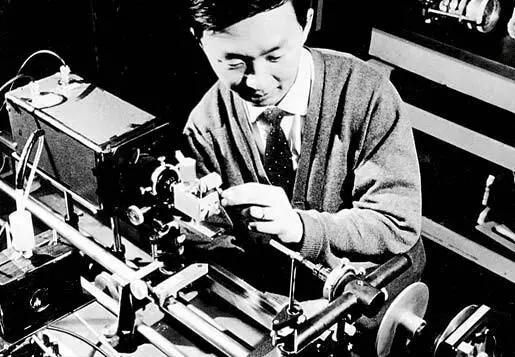
Physicist Charles K. Kao
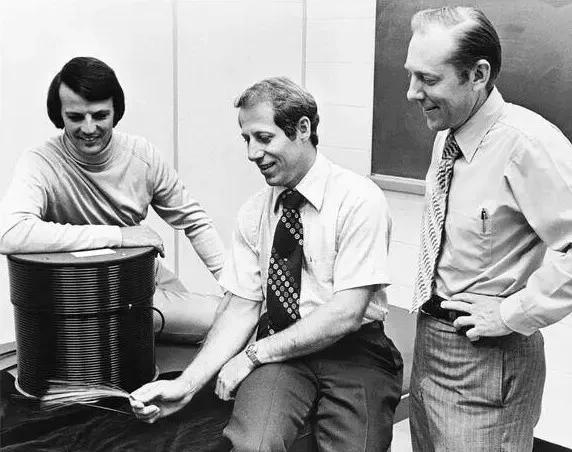
Researchers at Corning demonstrating optical fibers
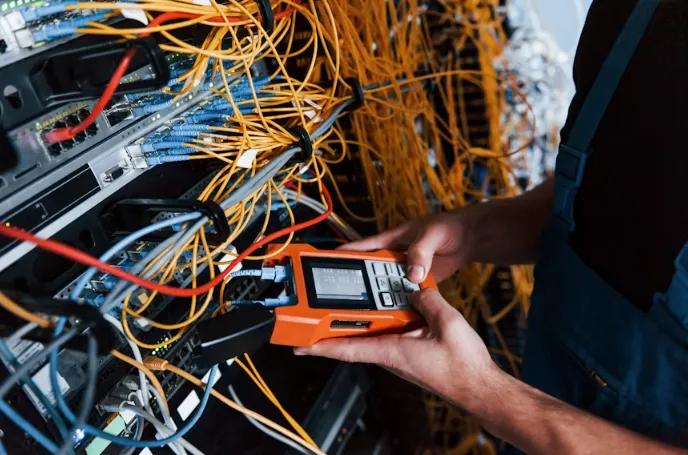
But in the final analysis, optical fiber is only a transmission path. Devices in computers and data centers process electrical signals, and cannot directly send data into optical fibers. To transmit electrical signals through optical fibers, electricity needs to be converted into light first; after reaching the receiving end, the light is converted back into electrical signals.
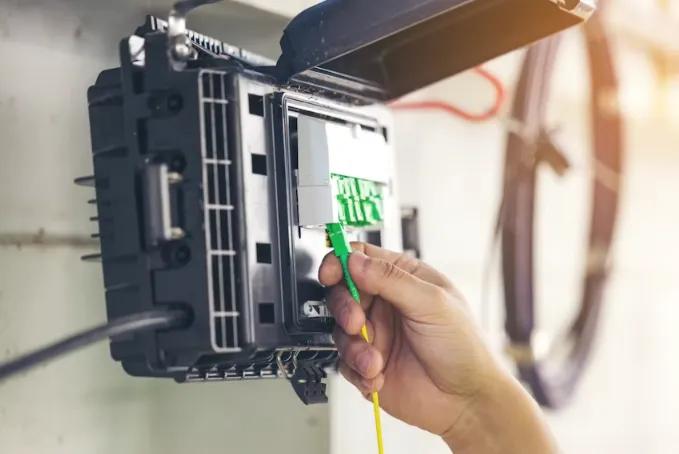
The small box the size of a finger that completes these two "translations" is the optical module.

Opto-electrical "Morse Code"
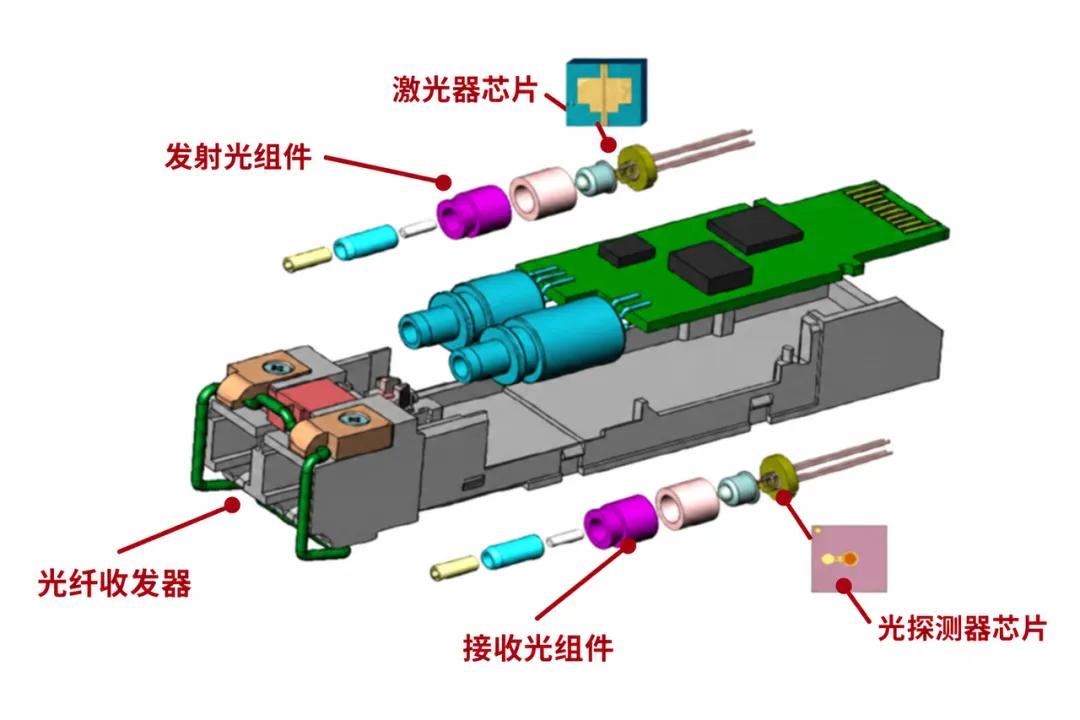
The optical module is mainly composed of optical transceivers, signal processing and control circuits, and opto-electrical interfaces.
When sending data, the circuit first processes and amplifies the electrical signal, and then drives the laser to generate light that changes with the data. Then the light is accurately sent into the optical fiber through optical devices such as lenses.
When receiving data, the process is reversed: the detector converts light into a weak current, and the circuit restores complete data from it and returns it to the chip of the device for processing. One optical module usually can complete both sending and receiving at the same time.
Here comes the question: how exactly do light and electricity realize the mutual exchange of information?
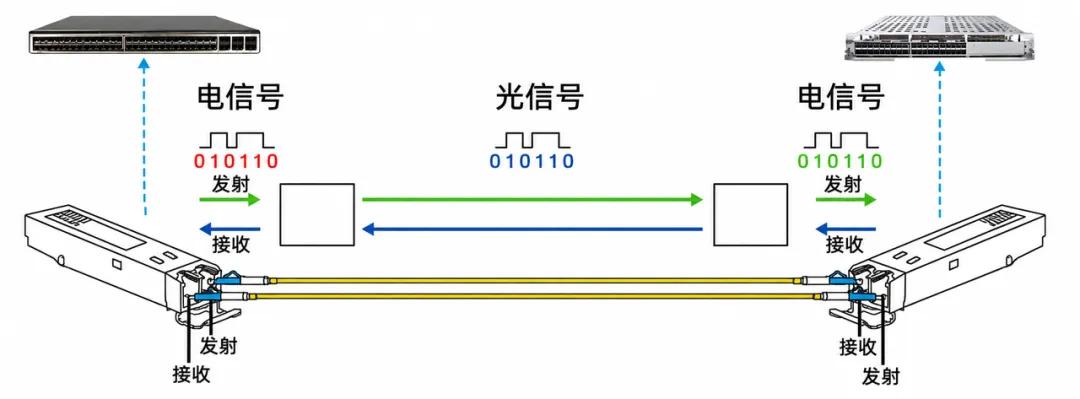
This process can be analogous to Morse code. Morse code uses combinations of long and short signals to represent different letters; optical communication also needs to agree on a set of rules for mapping information to optical signals, but it is more complex.
There is a basic premise for the whole process: the transmitting end and the receiving end must follow exactly the same coding rules. The transmitting end writes data into the optical signal in a certain way, and the receiving end reads it out in the same way.
Information in computers is represented in binary form. To take the simplest example, an optical module can use different light intensities to represent 0 and 1 of electrical signals: 0 corresponds to weaker light, and 1 corresponds to stronger light. The receiving end detects the change of light intensity and restores the data according to the same rule.
Long-distance optical communication can also use the phase and polarization changes of light to encode information, and can also transmit data in parallel through different wavelengths, so as to improve the transmission capacity of one optical fiber.

Optical in, copper out?
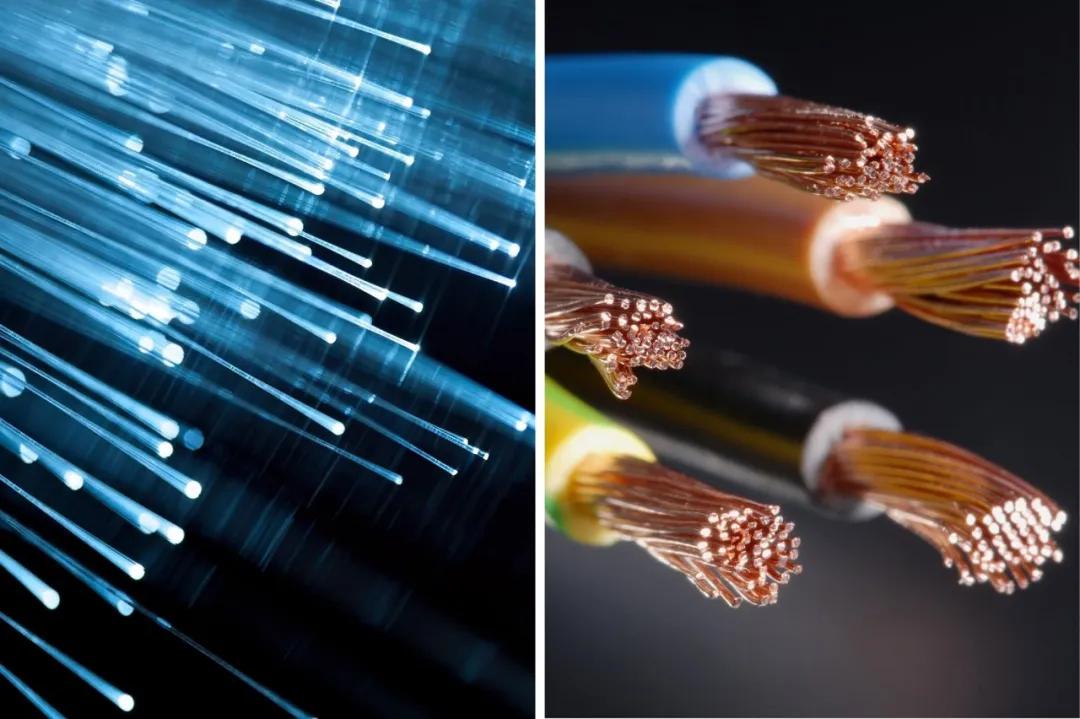
"Optical in, copper out" is a well-known saying in the optical communication industry. It is easy to give people an intuitive understanding: optical fiber transmits faster, and sooner or later it will completely replace copper cables and finally make copper exit the communication network. But the real situation is more interesting.
The speed of light in vacuum is about 300,000 kilometers per second, but it slows down after entering glass. The propagation speed of electrical signals along copper cables is actually at a similar magnitude to that of optical fibers.
A Cisco engineering document gives typical values: The propagation delay of both optical fiber and copper cable is about 5 to 5.5 microseconds per kilometer. The time it takes for a signal to travel from one end to the other is not as different as people imagine.
What really widens the gap is how much bandwidth a line can transmit over a certain distance, as well as the power consumption, space and cost required for this purpose.
In fact, copper cables have great advantages in short-distance transmission. They are low in price and simple to connect; copper cables are still an efficient choice in the interior of servers, between adjacent devices and part of the connections in racks.
Troubles arise when the rate is higher and the distance is longer. When high-speed electrical signals are transmitted along copper wires, the longer the distance, the easier the signal is to attenuate and distort. Adding signal processing can make a certain compensation, but this will bring additional power consumption; in addition, high-speed copper cables will also become thicker and heavier, further increasing the pressure of dense wiring and heat dissipation.

Optical communication is more comfortable in these scenarios. The loss of optical signals in optical fibers is low, and they are not affected by electromagnetic interference, so they can cross cabinets and data centers with thinner and lighter cables; the same optical fiber can also use multiple wavelengths to transmit data in parallel, making it easier to expand bandwidth.
NVIDIA's wiring guide clearly suggests that for short transmission distances inside cabinets that are cost-sensitive, passive copper cables can usually be used; for cross-cabinet connections, optical fibers are more widely used, because optical fibers can cover longer distances and have smaller wire diameters.
Therefore, "optical in, copper out" describes a structural change in the communication industry: with the growth of data volume and the improvement of transmission rate, the distance that copper cables can cover economically is constantly shortened, and the comprehensive advantages of optical fibers appear accordingly. When the distance is short enough, copper cables are still cheap and reliable.


A brief history of packaging evolution
When it comes to optical modules, the most common form people see is the pluggable shape like a USB flash drive. The compact small modules on the switch panel are very conspicuous.
Optical modules did not adopt the pluggable design from the very beginning. The transmitters and receivers in early optical communication devices could be directly fixed inside the devices.
As the network scale expanded, problems arose: some lines only connected devices in the building, some needed to cross the park, and some extended for several kilometers. With different transmission distances, the optical fibers and optical devices used might also be different.
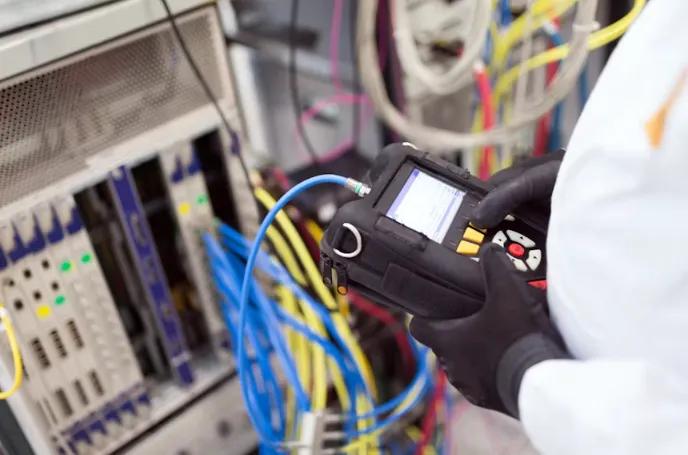
When the network needs to change the transmission distance, optical fiber type, communication rate, or the optical interface is damaged, the fixed design may need to replace the whole board or even the whole device together.
Therefore, engineers put the sending and receiving functions into the same shell to make a standardized pluggable and replaceable module. In this way, the optical module can be flexibly configured according to the distance