How do A3 people indulge in eating Shaxian snacks to their heart's content? The grand theory hyped up by netizens is not taken seriously by anyone.
In 2026, the Chinese internet, under the banner of the "Era of Grand Theories", has ushered in a landscape where countless internet memes and diverse viewpoints thrive side by side. Young people who once dismissed the advice of "drink more hot water" as meaningless nonsense have now taken the initiative to figure out what exactly counts as drinking the real "large quantity of water".
Right after they got familiar with the "Blonde Guy Theory" and "Lean Muscle Theory", new concepts like the A3 Life Guide and the "As Long As The Family Is Together" theory popped up. Almost every aspect of daily life, from eating and drinking to using the restroom and sleeping, has developed its own unique narrative.
If you haven't caught up with this wave of internet ideological enlightenment, you might as well start with the latest version of life guide.
Drink large quantities of water during the day, sleep long hours at night, work on lean muscle in your spare time, and carry the "blonde guy spirit" when you go out. As for your financial status, even if you are only at the A3 level for now, it doesn't matter — at least you have already mastered the A10 level of life wisdom.

No one can tell for sure whether theories create trends, or whether internet memes have turned these theories into prominent mainstream studies. (Photo/Screenshot from social media)
The so-called Asset A3 comes from a set of asset grading narratives circulating online.
The letter A stands for Asset, and the number indicates the number of digits of the asset value: A3 means owning assets worth the hundred-yuan level. After netizens applied this concept flexibly, it unexpectedly became a new way to mock one's own poverty — in the past, calling yourself poor only made you a "moonlight clan" who spends all salary before the next payday; now it's different: no matter how poor you are, you are an adult with an independent asset rating.
As for the recently popular "Not Dead Yet Doctrine" and the "As Long As The Family Is Together" concept, they have also joined this grand exhibition of life concepts. The former shares the fun of low-cost living with the Large Water Theory, while the latter wraps the simple wish that Chinese people are all too familiar with into a seemingly formal theory, bringing it back to the internet for discussion.
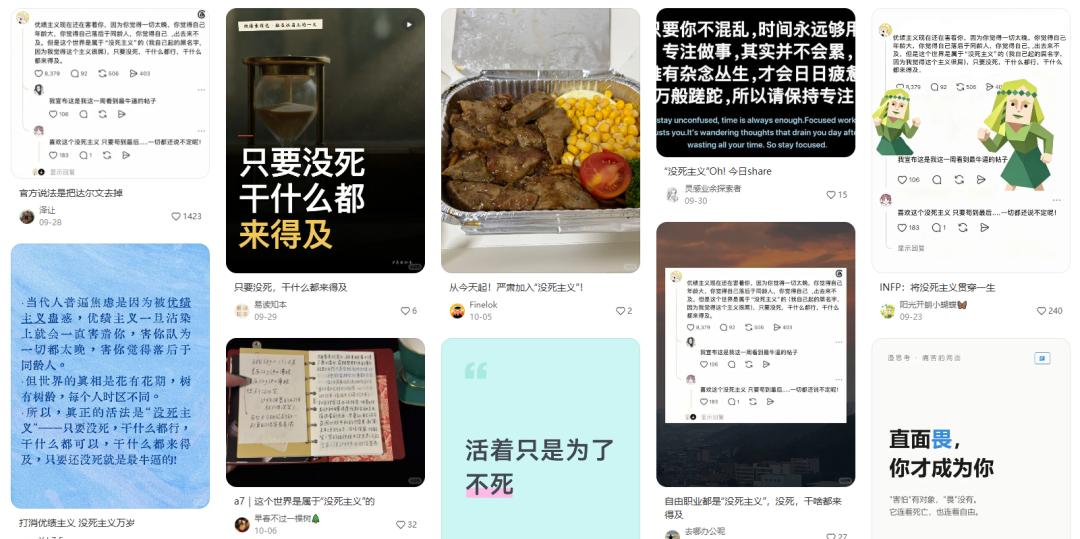
Let go of meritocracy, long live the Not Dead Yet Doctrine. (Photo/Screenshot from social media)
The living standards of contemporary young people may not have seen obvious progress, but their theoretical level has achieved leapfrog development.
Everything Can Be a Theory, Netizens Can Barely Keep Up
What first confused many people in this theoretical boom was the seemingly straightforward but confusing "Large Water Theory".
According to the popular narrative, real strong people should say goodbye to fancy sugary drinks, and directly carry 1.5-liter or 2-liter bottled mineral water when going out — it is affordable, convenient for hydration, and helps people stay away from sugar and consumerism at the same time.
Most importantly, when that huge bottle of mineral water is placed on the table, it brings a sense of relaxation that you don't need to explain yourself to the world at all.
Before that, we could hardly imagine that drinking plain boiled water would one day stand on the theoretical high ground of the internet. Some people have even started to build a snob hierarchy for this discipline: anyone who still drinks milk tea needs to upgrade their cognition. "The weak drink beverages, the strong drink large quantities of water" — this single sentence elevates the most common drink in convenience stores to a philosophical height.

Every tiny decision in daily life has a chance to be reinterpreted as a cognitive progress. As long as you master the tricks, anyone can become a theorist. (Photo/Screenshot from social media)
Many people suddenly realized after hearing this that they have been drinking large quantities of water for so many years, and have unknowingly practiced such an advanced concept. Others immediately joined in theoretical innovation, announcing that the Large Water Theory is outdated, and we should fully enter the "Era of Large Water Cups": when you finish the large bottle of mineral water, you still need to buy more, but bringing your own cup allows you to get water at the office, which is more economical and environmentally friendly in the long run.
The more advanced "Large Kettle Theory" emerged soon after: you don't even need to buy water at all, spend ten yuan to buy a kettle, and get free water everywhere, the money you save can even be used for investment. Netizens then created the "Large Kettle National Rejuvenation Theory", shouting "Put down the large water, become a kettle immediately".
This internet theory boom can be traced back to the "Lean Muscle Theory" a month ago.
Since September, the Lean Muscle Theory proposed by blogger Shao Allen has received widespread attention. The so-called lean muscle roughly refers to a physical state with obvious muscle lines, low body fat, but not overly bulky. To explain it in more common terms, it means looking slim in clothes but well-built when taking them off, preferably with a hint of the vibe Brad Pitt has in *Fight Club*.

(Photo/*Fight Club*)
At first glance, this is just a kind of fitness aesthetic. But in the process of spreading, lean muscle has gradually developed into a complete set of personal growth philosophy, and this aesthetic has gradually extended to self-discipline, sleep, diet, and even personal competitiveness.
Developing lean muscle is not only a kind of body management, but also endowed with the meaning of personal growth.
The adjacent prominent theory "Blonde Guy Theory" teaches people to let go of their burdens, get rid of the over-cautiousness of the "exam-taking expert" stereotype, and live freely and spontaneously. The "blonde guy" here does not strictly refer to people with dyed yellow hair, but a character prototype with internet stereotypes. According to explanations from some disseminators, the blonde guy may not be richer or more educated than you, but he is likely more daring to express himself and more action-oriented.
This set of narratives certainly cannot withstand much serious scrutiny, but it just responds to the long-popular anxiety of exam-taking experts: a person studies and works hard, how come he can't even get a date better than the blonde guy in the end?
A recent interview between Shao Allen and Sun Yuchen even further discussed the whole set of theories together with the so-called "Sun Studies", calling it the "version answer" for young people that can be obtained through cognitive upgrading.
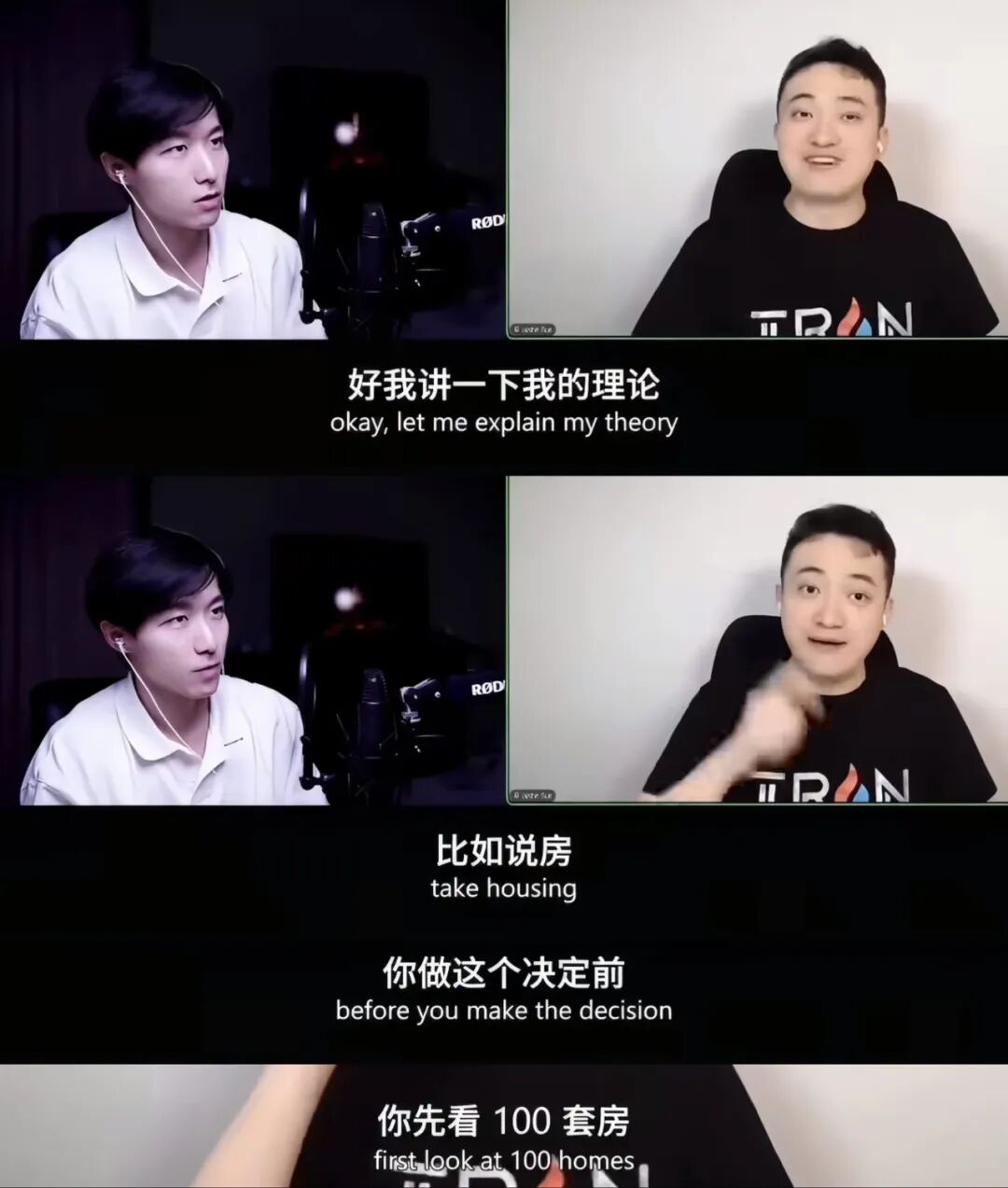
If you really can't feel the influence brought by the "lean muscle" discussion circle, it means you need to change to a new circle. (Photo/Social media)
At this point, young people's life philosophy has been quite complete: drink large quantities of water during the day, sleep long hours at night, take time to practice lean muscle, and maintain the blonde guy mindset when going out.
These narratives are full of excessive simplification of reality, but that doesn't stop netizens from continuing to invent new doctrines, and the research boundary of the so-called "theories" is constantly expanding.
Seeing that common sense of life has almost been divided up, the recently released A3 Life Guide, Not Dead Yet Doctrine, and the "As Long As The Family Is Together" concept have led this game to more trivial corners of daily life.

The universal response method. (Photo/Screenshot from social media)
For people who barely memorized the last round of popular internet memes, the speed of internet knowledge update can no longer be described as "fast".
The Internet Is Full of Theorists
Drink more water, sleep well, exercise moderately, be more confident — almost none of these suggestions are new.
When your parents tell you to drink more water and exercise more, you think they are nagging; but when internet people talk to you about large water and lean muscle, you listen with great interest.
This statement is a bit harsh, but it can't help making people wonder that what is scarcest today is no longer discovering new knowledge, but describing things that everyone is already familiar with as if they have just been discovered.
This is certainly a kind of skill. After all, being able to develop a complete set of life philosophy from a bottle of mineral water and successfully attract countless people to watch, its concept production capacity may be stronger than some large language models.

(Photo/Social media)
So the production methods of these theories are quite similar: first find something that everyone can do, preferably ordinary enough, and the cost can't be too high. Then endow it with some additional meaning, such as freedom, self-discipline, anti-burnout, anti-consumerism. Finally, introduce a set of identity distinction, and tell the audience why people who do this are more sober.
A brand new internet theory is born.
The theory does not necessarily need to be truly believed by anyone, as long as it is suitable enough for imitation, it can keep reproducing. From this point of view, the theoretical boom is more like a national concept creation competition: you invent large water, I invent large kettle; you promote long sleep, I propose grand dreams; you study exquisite life, I insist on studying how to live on A3 level assets with a daily meal of Shaxian snacks (note: peeled chicken leg rice).

A theory that can be understood and executed without any elaboration. (Photo/Screenshot from social media)
Although these discourses sometimes show resentment towards traditional success or exquisite middle-class life, they still retain familiar values, and the rebels ultimately need to prove that they are winners in a certain sense.
No wonder some scholars criticize that there is no other culture visible today except middle-class culture.
On one side are podcasts jokingly called "middle-class tea parties" by netizens, where several people sit together, talking from a cup of coffee to urban wandering, from intimate relationships to self-growth, and the subtle feelings in daily life can always find some sociological or psychological explanations; on the other side, the recently popular grand theory system sums up young people's judgments on daily life into a set of seemingly sophisticated strongman doctrines.
The two seem to belong to different internet circles, but they share a common expression habit: any life experience seems to obtain the qualification to be seriously discussed only after being summarized into some kind of spreadable concept or theory.
The internet is increasingly keen on producing "theories", for example, hating a certain behavior needs to be supported by psychology, and even your own living habits should better be classified into a certain personality type. People are increasingly relying on theories to prove the value of life, as if unnamed feelings are not enough to become an experience worthy of trust.
Mastering a new narrative means having a certain sense of superiority in understanding life, which is probably also a manifestation of the influence of middle-class culture. The intellectual fun and self-analysis it advocates have long penetrated into a wider range of expressions.
In the past, people thought that living a good life required a lot of love and a lot of money, but now it seems that you also need to master enough theories.
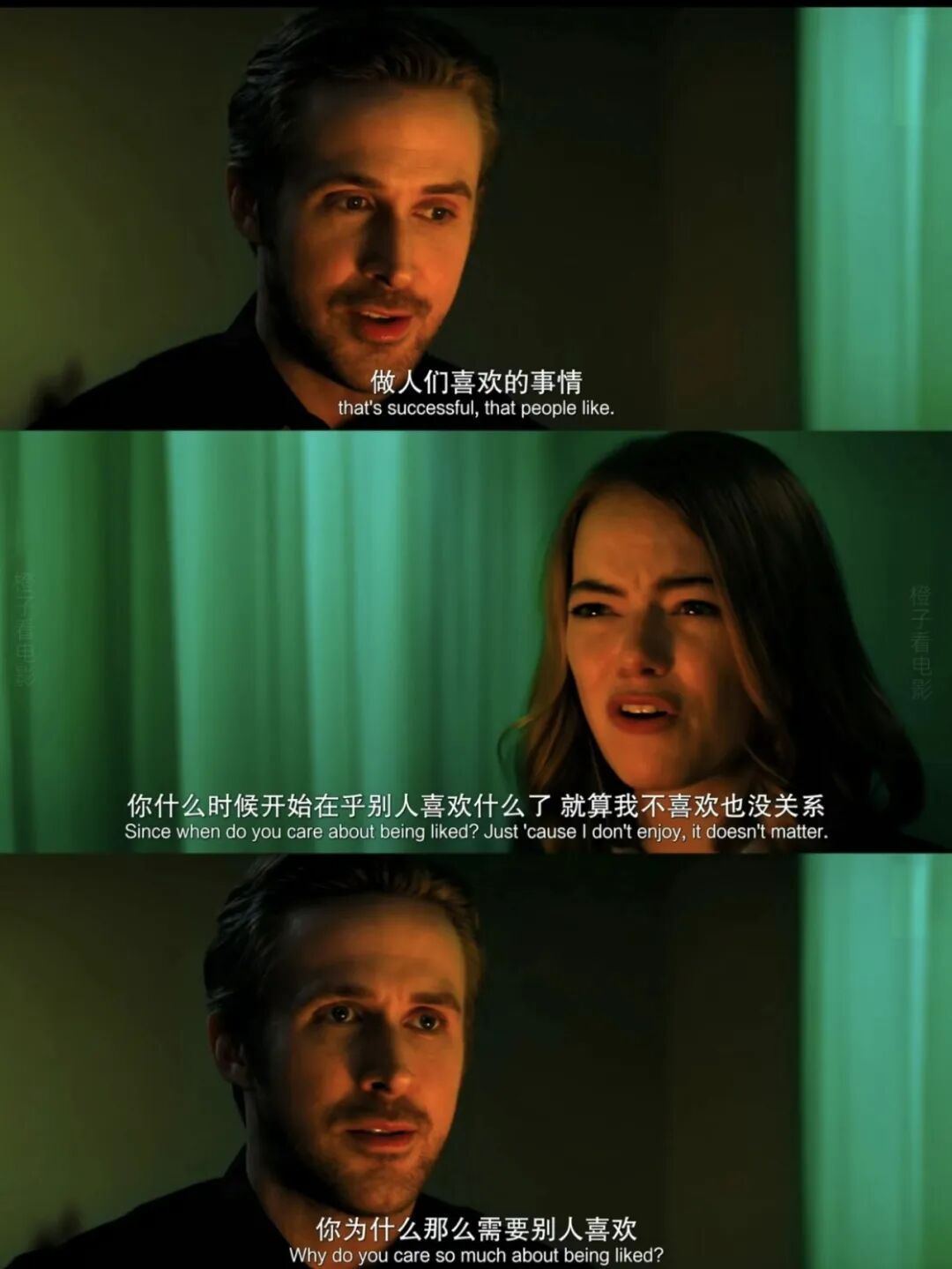
(Photo/*La La Land*)
Why Do People Buy Into The Idea of Packaging Common Sense As Theories
If someone says "drinking more water is good for health", it will probably not get much attention.
But if he says that milk tea is a trap created by consumerism, and mineral water is the version answer for contemporary young people, who can resist taking a few more glances?
You can certainly say this is nonsense, but nonsense usually does not have such strong communication power.
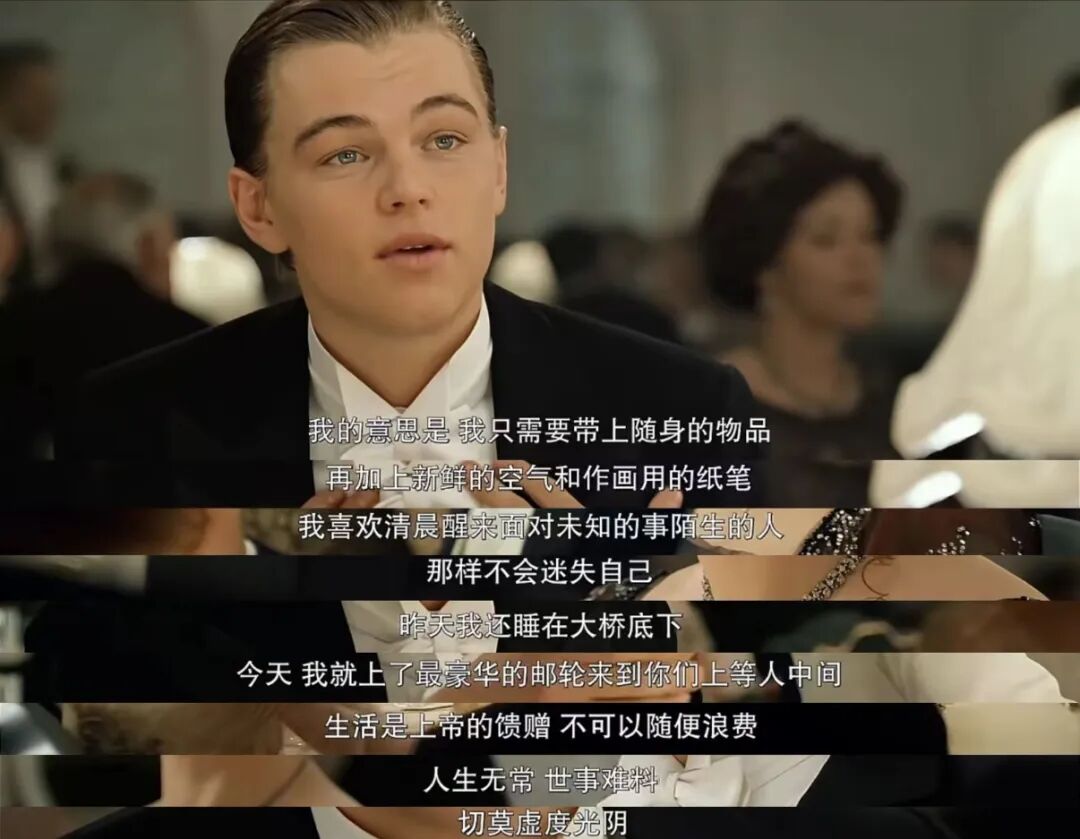
Jack is often called the ceiling of the blonde guy mindset. (Photo/*Titanic*)
People who find these theories ridiculous may have ignored their real audience.
We often overestimate the popularity of common sense: there are indeed people who have irregular three meals, rarely exercise, and have never seriously thought about improving their lives. These platitudes at least provide a guide that can be followed, even if it is just following the trend, it is not a