Psychiatric hospitals have renamed themselves to survive, but there are far too many people trying to make a living in the psychological counseling industry.
October 10 marks the 35th World Mental Health Day.
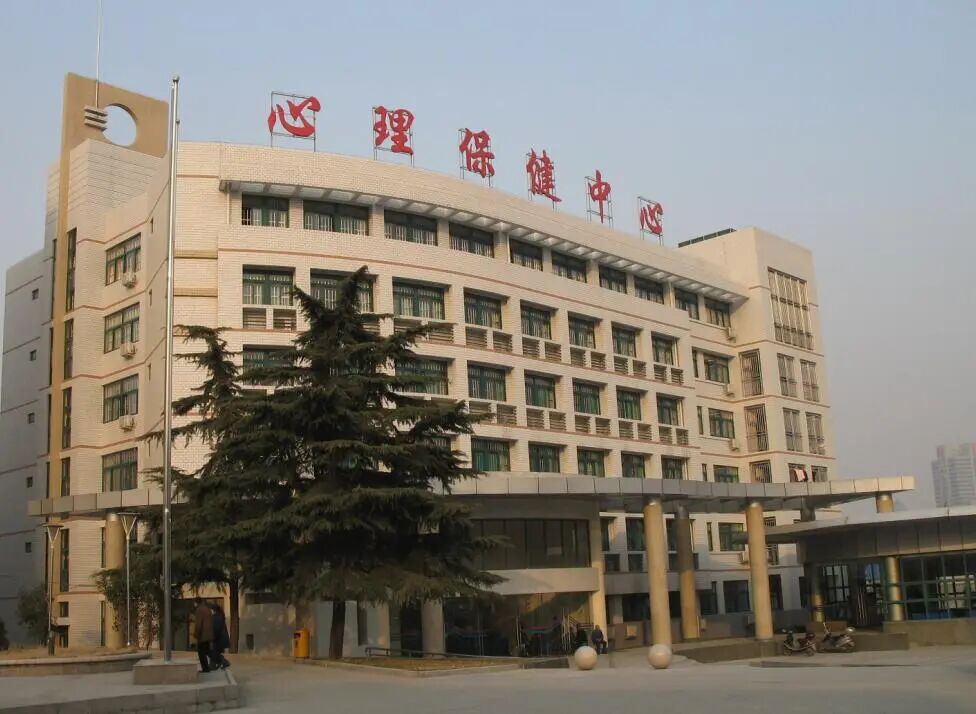
Some media reports note that many psychiatric hospitals across China are removing the harsh prefix "psychiatric" from their names, replacing it with more neutral terms such as psychological rehabilitation hospital, Nth hospital, and neurology hospital... Some hospitals have even put up signs for "sleep and anxiety clinic" and "adolescent psychology clinic".
Why the name change? Apart from lifting the public's psychological burden, the move also delivers popular science value.
Society still holds a large number of stereotypes about mental disorders. When it comes to psychiatric hospitals, many people's impression remains fixed on the scenes of high walls, power grids and iron windows in film and television works.
In fact, clinically common mental illnesses are mainly anxiety disorders and mood disorders. Data shows that the lifetime prevalence of mental disorders in China is 16.6%, of which anxiety disorders account for 7.6%, mood disorders account for 7.4%, while the horrifying schizophrenia has a prevalence rate of only 0.7%.
Of course, there is another reason: the revenue of psychiatric hospitals has encountered problems.
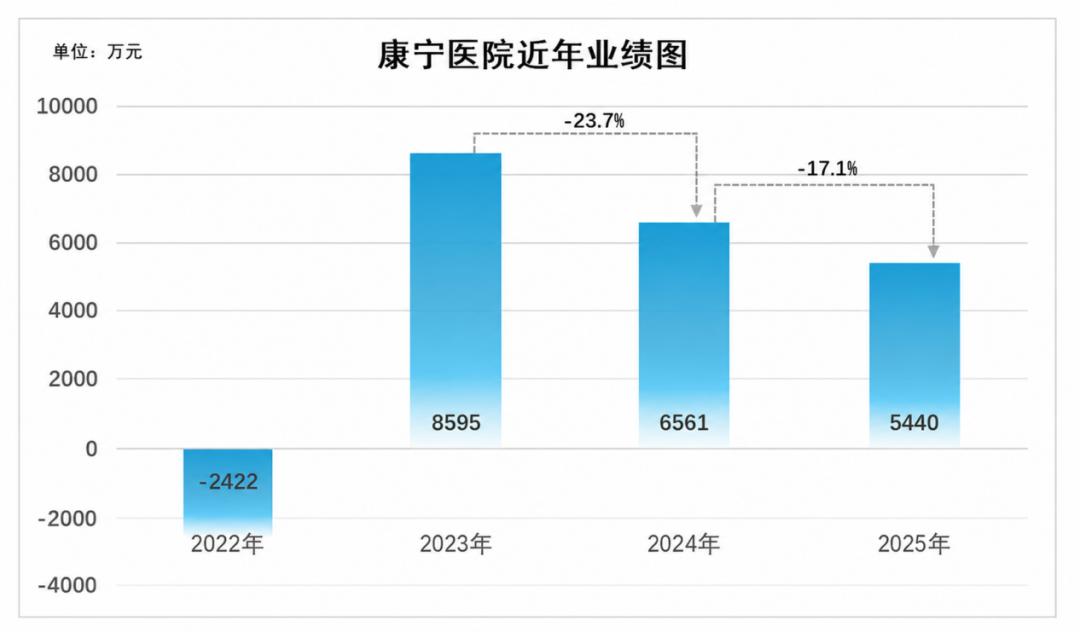
Taking Kangning Hospital, the first share of domestic psychiatric hospitals, as an example, in the first half of 2026, Kangning achieved an operating revenue of 829 million yuan; the net profit attributable to shareholders of the company was 33.77 million yuan, down 7.5% year-on-year. In the same period, the company's total profit was 23.71 million yuan, down 43.5% year-on-year.
This means that Kangning Hospital has not stopped its profit decline after two consecutive years of sliding performance.
The reason is no other than that a large number of competitors have already poured into the mental health track, including the expansion of public departments, online consulting platforms, independent psychological counseling studios, chat companion AI agents, and even all kinds of metaphysics on social platforms... In short, too many people want to make a living in the "psychologist" business.
It's not just peers that are stealing business from psychiatric hospitals
I don't know since when depression and anxiety disorders have become a kind of "epidemic disease", running through all walks of life and all age groups, with academic pressure, parent-child conflicts, emotional disputes, workplace involution... All kinds of emotional dilemmas stack up, eventually giving birth to a huge mental health market.
The Prospective Industry Research Report points out that as early as 2020, the market size of China's psychiatric hospitals reached 756 billion yuan, with an annual compound growth rate of about 16%. The Wenzhou Psychological Counseling Industry Survey Report shows that marriage and family counseling, adolescent psychological counseling, and workplace pressure relief are the three mainstream fields, accounting for 38%, 32% and 15% respectively.
At the same time, demands such as elderly psychological care, postpartum depression intervention, and trauma repair are also growing rapidly, with their proportions increasing year by year.
However, despite rising demand and expanding market, huge operating pressure still hangs over major psychiatric hospitals.
In addition to private players like Kangning Hospital, the situation of some public psychiatric specialized hospitals is also worrying. For example, the Second People's Hospital of Chun'an County was officially listed in July 2024, and its psychiatric ward was put into use in May 2025; during the 5-month trial operation by the end of September that year, a total of 60 patients were admitted (an average of 10.03 inpatients per day), with a calculated loss of about 850,000 yuan.
From private leading hospitals to grassroots public hospitals, they are clearly standing at the tuyere of rising demand, so why has making money become so difficult?
On the one hand, compared with the past when the public was "terrified at the mention of psychiatric hospitals", all kinds of psychiatric specialized hospitals have already blossomed everywhere. By the end of 2023, there were 2583 psychiatric specialized hospitals nationwide, an increase of 56.6% from 1650 in 2010, and the number will grow steadily in the following years.
At the same time, the capital side reacted sharply, and the mental health track has entered the capital vision many times in recent years.
Since 2020, nearly 60 financing events have taken place in the mental health field, with cumulative financing exceeding 1 billion US dollars. Since 2021 alone, brands including Flow Meditation, Haoxinqing, Yidianling, Xiaodong Health, hope... have completed financing one after another, and their backers include VC/PE institutions such as Matrix Partners China, Fosun Health, Decheng Capital, Tonghe Yucheng, KIP China, and Hetang Venture Capital.
In short, policy encouragement, capital pursuit, and favorable market conditions have led to a blowout growth of mental health medical institutions and platforms in China. In 2025, the total number of mental health medical institutions nationwide reached 5023, and it is expected that by the end of 2026, the number of psychiatric medical institutions nationwide will reach more than 5200.
In a huge market with complex formats, competition is intensifying, and revenue pressure naturally lingers like a lingering curse.
But it is thought-provoking that the real competitors of psychiatric hospitals are not necessarily the growing number of peers, but the expanding "emotion market". To put it more bluntly: to this day, the biggest variable in the mental health track is the substitution effect of "non-medical supply" on medical supply.
This substitution trend is particularly evident among the new generation of young people.
It is reported that compared with the rigid hospital diagnosis and treatment that comes with a disease label, this generation of young people is more willing to embrace lightweight psychological healing solutions. Around 2020, when the mental health track was highly favored by capital, "Xindao Diary", an emotional health community for Generation Z, gained more than one million users in a year.
To this day, in the cognition of young people, emotional distress does not necessarily require going to a medical institution.
Take the currently popular AI psychotherapy as an example, the research "Mobile Program Developed by the School of Medicine of the Chinese University of Hong Kong Can Effectively Evaluate Depression" mentions that in terms of stress management, as high as 55% of respondents said they would not or are not sure to seek help from professionals, and AI assistants have jumped to the sixth place in the list of public help options.
At the same time, there are metaphysics interpretation, tarot divination, online emotional tree holes, paid chat and cry companions... Even some temples want to take a share of the "psychologist" business. It is reported that Jingshan Temple in Hangzhou has specially set up a psychological counseling hotline, which is jointly on duty by licensed psychological counselors and monks.
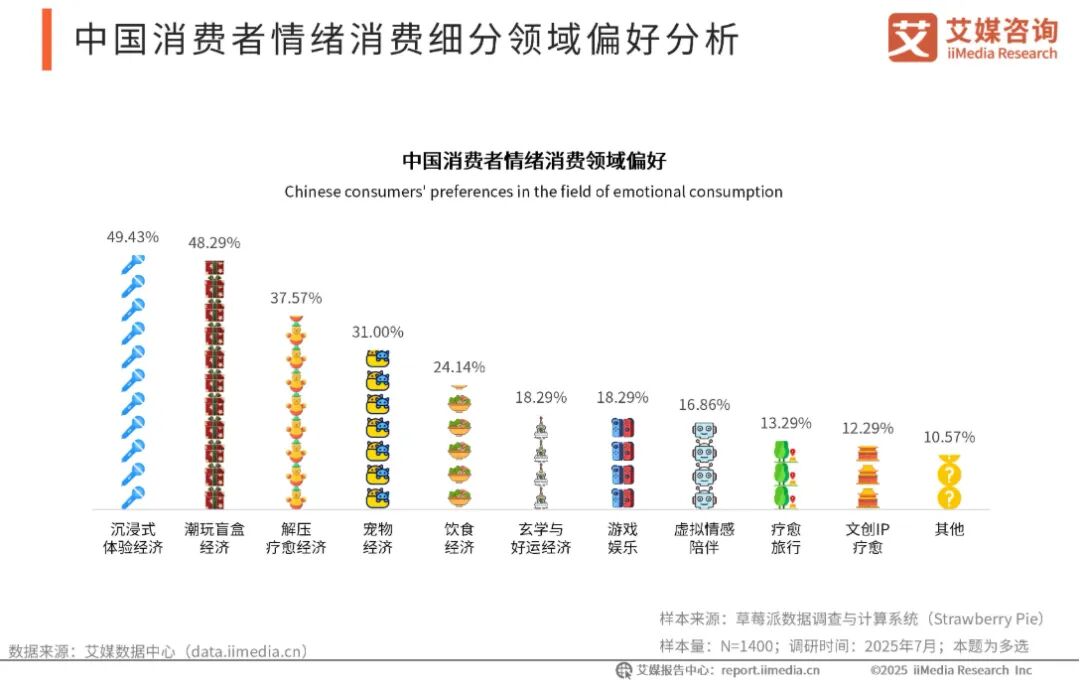
Anxiety-prone young people have spawned an immeasurable "emotion market". Data from iiMedia Research shows that China's emotion economy, including healing and emotional services, reached a market size of 2.3 trillion yuan in 2024. With 840 million psychologically sub-healthy urban residents plus 400 million middle-income groups, it is expected that this track will easily exceed 4.5 trillion yuan by 2029.
Hospitals are eager to tear off the heavy label of "psychiatric" to take over the emotional demands of ordinary people, but they never expected that the emotional digestion system forced to grow in this era is far larger than imagined. The signboard can be changed, departments can be added, and business models can be iterated, but most people with emotional distress still do not choose hospitals after all the twists and turns.
Why can metaphysics and AI steal business from hospitals?
Some people may say that those who bypass hospitals and turn to AI, tarot, and paid emotional tree holes are only suffering from mild emotional distress, far from being "terminally ill". But the opposite is true. The survey data from the Chinese University of Hong Kong confirms that people who actively seek help from AI have relatively high depression and anxiety scores.
This conclusion breaks the inherent cognition that "only mild patients will bypass hospitals".
The national survey led by Peking University Sixth Hospital further lays bare the current penetration rate of psychological diagnosis and treatment: only 9.5% of adult depression patients in China have received treatment, and the proportion of patients who have received sufficient treatment is as low as 0.5%. Tens of millions of patients have not entered the formal medical system, and most of their emotional demands flow to alternative channels outside hospitals.
Then why can non-professional and non-medical solutions such as metaphysics and AI grab a lot of business from psychiatric specialized hospitals?
The first national survey on mental disorders shows that as high as 31% of patients have "stigma", especially Asians generally do not like to admit that they suffer from a certain mental illness. Tarot and metaphysics divination can be done online, and AI companionship leaves no files, no diagnosis, and no subsequent identity burden.
At the same time, the Special Report on Emotion Economy from AVIC Securities shows that digital diagnosis and treatment can improve patients' medication compliance, reduce recurrence rate, and significantly improve patients' mental symptoms and social functions. For many people who just want to find an outlet to pour out their feelings, "not being defined by disease" is the greatest healing in itself.
Secondly, apart from personal privacy factors, convenience and extreme cost performance are actually the real reasons for "diversion".
Although the number of psychiatric hospitals has increased greatly compared with the past, the tedious process of appointment, queuing and commuting is far less convenient than AI that can start a conversation anytime and anywhere. With the popularization of large models, "AI psychology" diagnosis and treatment is not uncommon, and even vertical products in the mental health track have gathered in the market:
For example, JD Health's "Chat Healing Universe"; Xinyan Group's pan-psychological AI companion App "Cece"; iFlytek's AI psychological partner "Xiaoxing"; Lingxin Intelligence's "Lingxin AI Space"; the AI psychological service robot "Bei Xiaoliu" developed by Peking University Sixth Hospital...
And metaphysics has also derived an online model. Even the offline model dominated by incense burning and worship has been bound by young people with tourism and leisure. In the past two years, "temple" has once become a must-see destination for young people's travel check-in. Among nearly a million workplace topics on the Maimai platform, the frequency of the word "temple" has increased by 387% compared with three years ago; the cat petting decompression area of Xiyuan Temple in Suzhou receives more than 500 visitors per day on average, and the scripture copying room of Wenshu Temple in Chengdu needs to be booked two weeks in advance.
Of course, extreme cost performance is the fundamental reason why young people stay away from specialized hospitals.
For a long time, under the rendering of all kinds of film and television dramas, the medical activity of seeing a psychologist has more or less been tainted with a "middle class" color. Facts have also proved that the price of psychological counseling is really not cheap. According to the statistics of vcbeat, the general price of psychological counseling in first-tier cities is 500 to 1000 yuan per 50 minutes, and senior counselors charge more than 1500 yuan; 52% of patients do not consider psychotherapy, because the cost is too high.
At present, the charges of most private hospitals are very chaotic. The dean of Peking University Sixth Hospital publicly called for setting rules for psychotherapy pricing as early as 2022, because the charge of "nearly a thousand yuan per hour" makes most people flinch. Although there is medical insurance, it only provides sufficient security for the hospitalization of severe mental illness. Outpatient psychotherapy can be partially reimbursed, and most services of private institutions are self-paid.
In contrast, AI and metaphysics have much higher cost performance.
An online tarot card reading costs only tens of yuan, and a temple ticket also costs only tens of yuan. If you choose to talk to AI, it can even be free. AVIC Securities released a research report saying that the emotion economy has opened a trillion-level new consumption cycle. Due to the popularization of AI, the reasoning cost has dropped by more than 90% in two years, and the single cost of psychological counseling has dropped from 300-800 yuan to dozens of yuan.
At the beginning of 2026, an AI psychological product "MeetAda" was launched on the APP. It is reported that MeetAda currently adopts the pay-per-use mode and will switch to the subscription system in the future, with a monthly fee of only about 40 yuan, which is only 2% of the price of professional psychological counseling services. The internal test data shows that MeetAda has attracted tens of thousands of users to register with almost no promotion.
All kinds of signs show that millions of unsettled emotions have bypassed the door of the consulting room again in the new era, flowing to softer, cheaper and more burden-free corners. This is the dislocation of the entire mental health industry, and it is also the most sigh-worthy reality.
Hospitals are struggling under heavy pressure, and "AI consulting rooms" are also running out of money?
It should be noted that the price threshold and convenience difference are only superficial answers. Looking deeper into the commercial logic, the diversion of psychiatric specialized hospitals by metaphysics and AI is essentially the "overweight" of the hospital business model.
It is reported that China's mental health market has split into two tracks: medical-grade psychiatric diagnosis and treatment (medical insurance payment, strong supervision, heavy assets), and consumer-grade service track (self-payment, weak supervision, light assets). Traditional psychiatric hospitals rush into the huge mental health track with the heavy cost of the medical system, and are inherently at a disadvantage.
Take Kangning Hospital as an example. In 1996, Wenzhou Kangning Psychiatric Rehabilitation Hospital was officially established, with 25 mu of land, 300 beds, and the total investment at that time reached 28 million yuan. In recent years, its profit growth has gradually slowed down, which is inseparable from the increasing expenditure costs.
As early as 2020, Kangning Hospital was reported to have drug and consumable costs accounting for as high as 35.3%, and personnel expenditure accounting for as high as 34.3%. At the same time, Kangning Hospital's sales cost is also rising year by year, from 213 million yuan in 2015 to 729 million yuan in 2020, and increased to 454 million yuan in the first half of 2021.
To this day, the location and environmental advantages of physical hospital areas are rapidly diminishing for mental health medical institutions.
Because since 2019, more and more visitors and counselors have chosen the "video consultation" method. At present, 99.2% of counselors support video consultation. Among the psychological counseling cases that took place in Simple Psychology in the past 5 years, the proportion of video consultation is also increasing year by year, and 65.7% of psychological counseling in 2023 was carried out through video.
Under the industry background of service remotization, individual psychological clinics may complete the transformation in a short time, but the heavy asset model built by traditional hospitals relying on offline venues and bed volume has become a heavy burden instead.
At the same time, the emotional demands of modern people are becoming more and more fragmented, instantaneous and scenario-based:
It may be self-doubt when losing sleep in the early morning, a moment of collapse after setbacks in the workplace, grievance and internal friction after parent-child quarrels... Emotional demands break out at any time, but hospitals are trapped in a physical space, naturally missing most of the trigger moments of emotional demands.
In contrast, AI, metaphysics and various emotional services have been quietly embedded into the daily life scenarios of users.
Of course,