Appeared on the Spring Festival Gala, the 28-year-old young leader from Tsinghua has filed for an IPO on the Hong Kong Stock Exchange.
On October 22, overseas media cited sources familiar with the matter that Songyan Dynamics has submitted a confidential listing application to the Hong Kong Stock Exchange, planning to raise hundreds of millions of US dollars and list as early as 2027, with the issuance scale and pricing yet to be finalized. This means that this young tech innovation company that rose to fame with the 10,000-yuan humanoid robot Xiaobumi has officially entered the preparation cycle for its Hong Kong stock IPO.
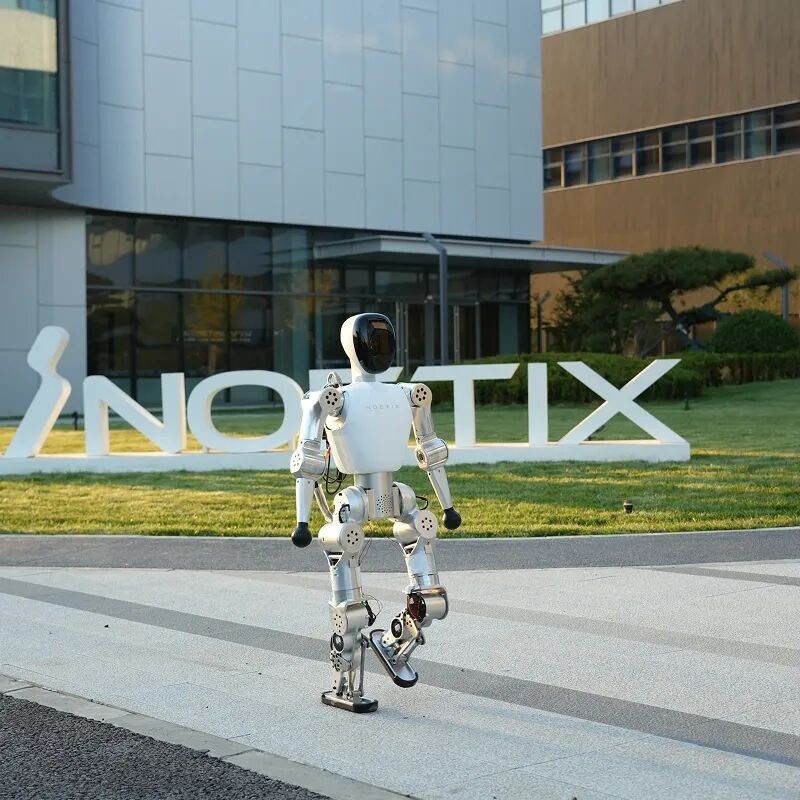
From the timeline perspective, Songyan Dynamics has long launched its preparatory moves for the listing.
The company was only established in September 2023, completed the shareholding system reform in February 2026, renamed Beijing Songyan Dynamics Technology Group Co., Ltd., and simultaneously adjusted its chief financial officer. The shareholding reform is a standard pre-requisite before Hong Kong stock listing application, and the nearly 1 billion yuan Series B financing was closed the next month, led by Chendao Capital, with participation from CAS Investment, Jing Guosheng Fund, and Jiuhe Venture Capital.
Most of the core members of the team graduated from Tsinghua University, Zhejiang University and the University of Hong Kong, with an average age of only 25, making it a typical young scientific research entrepreneurial team.
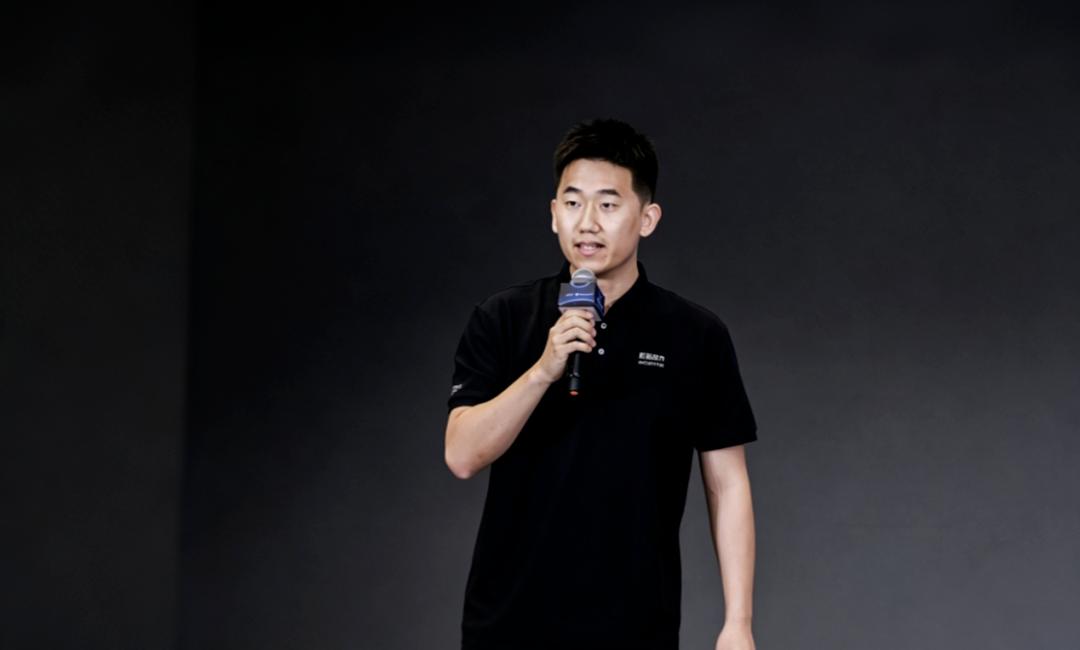
The leader of this young company is Jiang Zheyuan, the founder who was born in Beijing in 1998.
He ranked 28th in Beijing in the national college entrance examination, was admitted to the Department of Electronic Engineering of Tsinghua University, and later pursued his doctorate at the Institute for Interdisciplinary Information Sciences. He dropped out of school to start his business when he was in the third year of his doctoral program at the age of 25. The early stage of entrepreneurship was extremely difficult. Jiang Zheyuan once recalled publicly that the valuation of the project's first round of financing was only 50 million yuan, and he ran into obstacles everywhere when raising funds. His parents even proposed to sell their retirement house to support the project, which he politely declined. The turning point came at a dinner party: an entrepreneur classmate of his father heard his solution and decided to invest the next day, so the team had the funds to build the first prototype.
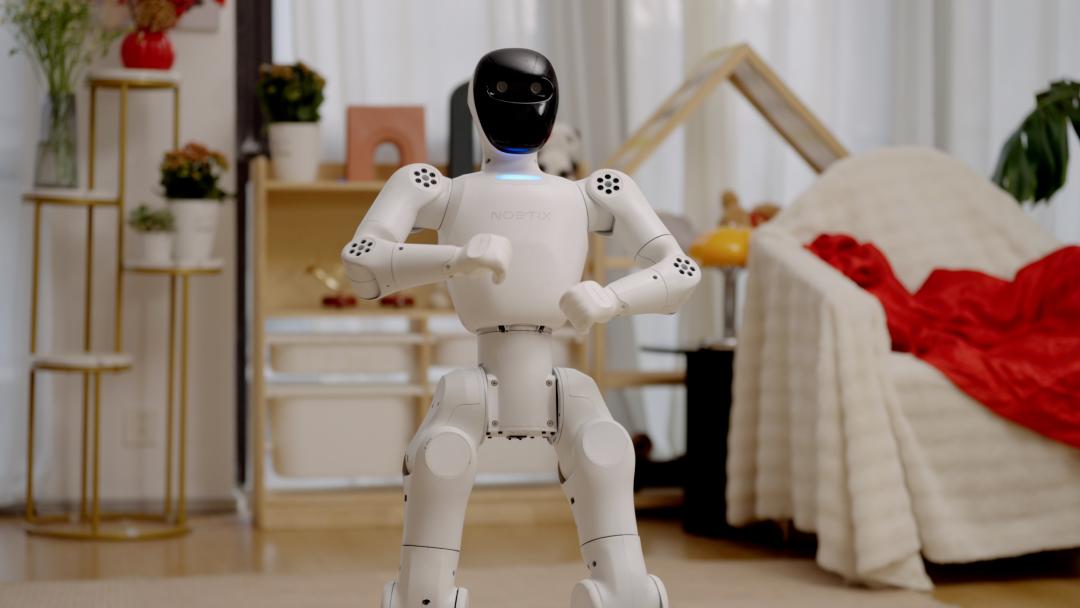
The core carrier that supports capital confidence is exactly the consumer-grade humanoid robot Xiaobumi priced at 9998 yuan.
In October 2025, Songyan Dynamics officially released this product, 200 units were sold within three hours on the night of the launch event. Compared with the retail price of the industry's benchmark product Unitree G1 starting from 99,000 yuan, the 10,000-yuan pricing directly creates a differentiated competitive space. Xiaobumi is 98 cm tall, weighs 17 kg, and is equipped with 21 degrees of freedom. The fuselage uses composite materials instead of traditional metal structures, which is the most critical design trade-off that enables it to keep the cost below 10,000 yuan.
In addition to Xiaobumi, the company has also built a complete product matrix, including biped humanoid robots N2 and E1, as well as the bionic head "Xiaoyue" launched in April 2026, which has 30 facial degrees of freedom and can generate hundreds of micro-expressions.
The breakout of the hit product quickly drove the growth of commercial data.
During the 2026 Spring Festival Gala of the Year of the Horse, the bionic robot Xiaobumi performed on the same stage as Cai Ming in the skit "Grandma's Favorite", quickly went viral with the traffic of the Spring Festival Gala, and won the first place in sales of humanoid robot category on JD.com. During the 618 shopping festival that year, Songyan Dynamics even topped the three lists of total sales revenue, unit sales volume, and best-selling rankings in this category, with sales revenue rising 254% month-on-month and unit sales volume increasing 160% month-on-month.
As of September 2026, the cumulative delivery of Xiaobumi has exceeded 5,000 units, and B-end orders are close to 2,000 units. In terms of revenue structure, B-end projects in education scenarios are the stable base, while C-end sales are mainly driven by Xiaobumi.
Behind the impressive commercial performance is the continuous and intensive capital injection.
Songyan Dynamics has completed a total of 9 rounds of financing, with the financing cycle extending from Series A in January 2025 to Series B in March 2026, among which the largest one is the nearly 1 billion yuan Series B round. The multiple rounds of financing in between were carried out at a fast pace: Series A+ in March 2025, 300 million yuan Pre-B round in October, and nearly 200 million yuan Pre-B+ round in November. The shareholder list is full of highlights: CAS Investment is backed by the Chinese Academy of Sciences, Jing Guosheng Fund is led by Beijing state-owned assets, Chendao Capital is backed by CATL, and industrial and state-owned institutions such as CICC Capital, CCTV Converged Media Fund, and CRRC Capital have also entered the market one after another.
While the industry is generally keen to hype the unlimited prospects of embodied intelligence, Jiang Zheyuan has a relatively restrained judgment on the technical boundary.
He admitted that at the current stage, humanoid robots are only suitable for performing designated tasks in fixed scenarios, and their adaptation ability after entering unfamiliar environments still has obvious shortcomings, with the bottleneck concentrated in the generalization ability of large models. According to his judgment, humanoid robots that can be used immediately after unboxing at home without separate tuning and training are not expected to be launched until at least 2029.
This caution just responds to the current controversy in the humanoid robot track. In September, Shao Tianlan, the founder of Mech-Mind, publicly issued a warning, questioning that some embodied intelligence enterprises package their revenue relying on data collection business to sprint for IPO. In response to this industry discussion, Jiang Zheyuan clearly responded publicly that Songyan Dynamics has not received any data collection-related orders this year.
Looking at the entire track, the capitalization of humanoid robot enterprises is collectively accelerating.
Data shows that in the first half of 2026, the global shipment of humanoid robots was about 19,100 units, and Chinese manufacturers accounted for more than 97% of the shipment. 18 domestic humanoid robot enterprises have promoted the IPO process, Unitree Technology has been listed on the Sci-Tech Innovation Board, while Songyan Dynamics has chosen another path to sprint for the Hong Kong stock market.
According to the rules of the Hong Kong Stock Exchange, the full version of the confidentially submitted application materials will not be disclosed to the public until after the hearing is passed. Before the prospectus is officially released, the market judges the quality of Songyan Dynamics mainly through two indicators: first, whether the annual delivery target of 10,000 units can be successfully achieved, and second, whether the robot ontology business can independently achieve profitability.
For this startup that became popular with a 10,000-yuan robot, IPO is only the starting point of a new stage, and the real test lies in the long-term race of mass production and profitability.
Source: Xinghe Commercial Review