A Little Genius watch wins over two generations.
Parents buy watches for their children, but the children end up deciding which brand to choose for the whole family.
A parent shared in an interview that to let their child add friends with classmates, they bought six children's watches over more than two years. The problem was not solved until they switched to Xiaotiancai.
Xiaotiancai's customer service later confirmed that functions such as "tap to add friends" and friend circles are only available for devices of the same brand. Basic calls can be realized across brands, but children's social relationships may be locked within the same product ecosystem.
A single watch serves two types of users at the same time: parents pay for safety and communication, while children choose based on peer relationships. Xiaotiancai's business is precisely located at the intersection of these two types of demands.
I. Disciple of Duan Yongping, Waiting for the Children's Watch Track
Jin Zhijiang, head of Xiaotiancai, is no newcomer in the consumer electronics sector.
When Duan Yongping founded BBK in 1995, Jin Zhijiang was one of the core founding members. After BBK was split by business segments, he was in charge of the educational electronics division for a long time, taking over businesses including repeaters, reading pens and learning machines.
Compared with the mass consumer markets targeted by OPPO and vivo, the market size and update frequency of children's educational electronics are not prominent. What makes this field special is that as users grow older, their demands remain continuous. As long as enterprises iterate products around children and families, they can continuously gain the trust of family consumers.
When Jin Zhijiang went to Shanxi in the early years to set up computer classrooms for poor schools, the principal once told him that student computers could help poor children learn to type and gain a foothold in the county town, and asked them to make high-quality products.
This experience from a character interview strengthened Jin Zhijiang's business positioning for children's tool products: this is a family consumer market with clear demands that will exist for a long time.
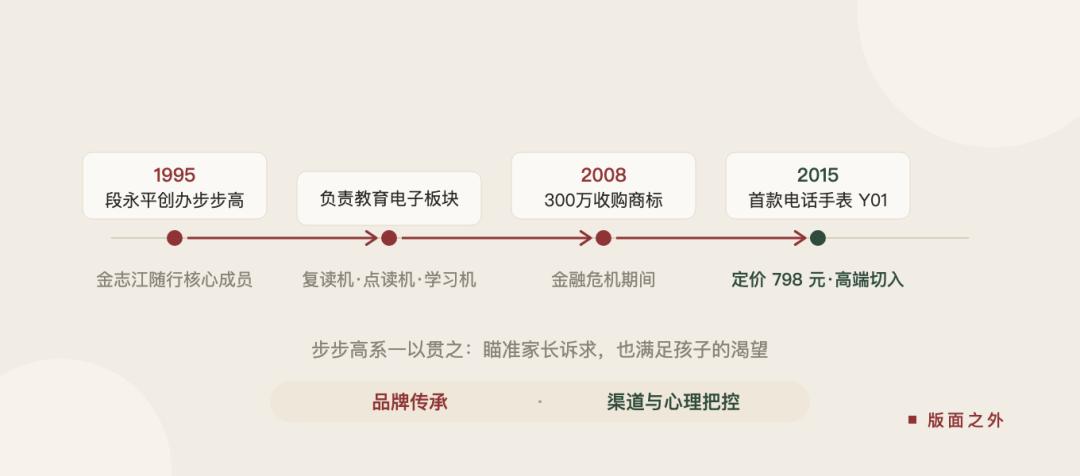
The birth of the Xiaotiancai brand also carries the consistent commercial color of the BBK ecosystem. During the 2008 financial crisis, BBK got the opportunity to acquire the "Xiaotiancai" trademark.
The trademark originally belonged to a Taiwanese enterprise, which initially asked for 3 million yuan. After the financial crisis, the other party cut the price to 300,000 yuan due to capital difficulties, but Duan Yongping still decided to pay the original price of 3 million yuan, and made up the difference to the original holder.
In Duan Yongping's business logic, a brand with a simple name that directly matches psychological expectations can greatly reduce consumers' cost of understanding and trust. The name "Xiaotiancai" naturally fits parents' expectations for their children. It can not only be used on early education machines and tablets, but also lay a cognitive foundation for subsequent expansion to children's watches.
However, owning the brand does not mean you can quickly capture the market.
After launching the early education machine in 2010, Jin Zhijiang did not blindly expand product categories. Even when children's anti-lost bracelets without independent call functions appeared in the industry around 2012, Jin Zhijiang's team still waited and watched for the maturity of the supply chain and the market, and did not release the first children's phone watch Y01 until June 2015.
At that time, manufacturers including 360, Sogou and Huawei had already laid out related products in the market. The Y01 was priced at 798 yuan, positioning it as a high-end product.
Xiaotiancai's entry point is not absolute technical barriers, but the channel resources and user psychological control capabilities that BBK has accumulated for many years.
It accurately captured parents' demands for safety, and quickly completed the accumulation of the first batch of users with the product category definition of children's phone watches.
II. Win Over Parents First, Then Win Over Children
Around 2015, the core selling point of children's watches was safety protection.
Parents were worried about children getting lost or the lack of contact after school, so positioning and two-way call became the most easily understood functions. Xiaotiancai directly named its product children's phone watch, avoiding complex smart hardware parameters, and intuitively told parents the practical value of the product.
After its launch, Xiaotiancai's sales growth was impressive, and the first-generation Y01 became a hit. The success at this stage did not rely on social networks, but on BBK's mature offline channels and TV advertising strategies, which quickly completed brand building at the family level.
However, as a device worn on the wrist, children's watches have unique dual attributes: parents are the funders, and children are the actual users.
Jin Zhijiang's team soon realized that pure safety protection is a low-frequency rigid demand, which is difficult to maintain high-frequency user stickiness.
Only by introducing communication and social interaction between peers can the device be transformed from a locator that children are forced to wear by their parents into a portable tool that children actively use.
Based on this judgment, Xiaotiancai introduced social functions such as "tap to add friends", group chat and friend circles in subsequent iterations.
This adjustment changed the usage scenarios of the product. Parents buy watches for safety confirmation, while children wear watches for peer interaction. This kind of social relationship spread rapidly on campus, making the product shift from traditional advertising-driven sales to mutual recommendation between users.
Every child wearing a Xiaotiancai watch has become a potential display node on campus, which in turn stimulates the purchase demand of peer groups.
III. From Hardware Functions to Social Access Tickets
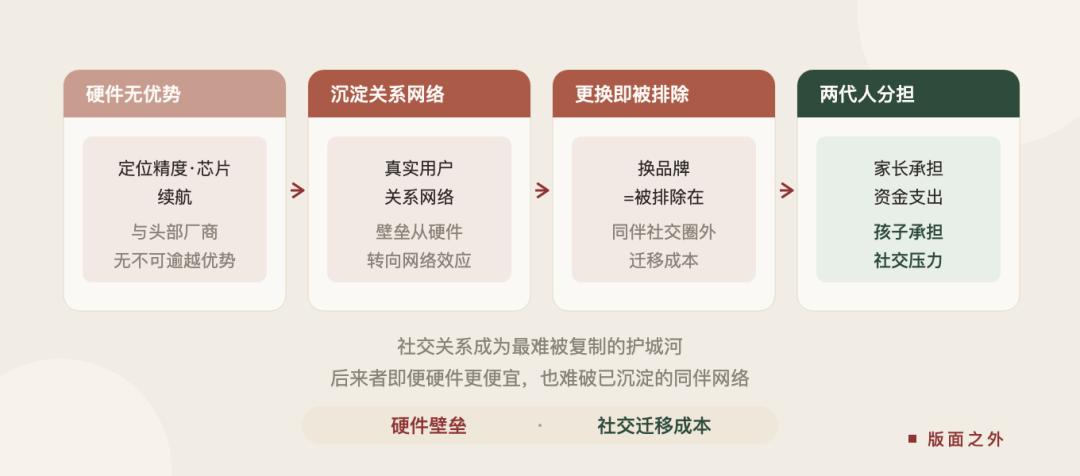
If you simply compare hardware parameters, Xiaotiancai has no insurmountable advantages over other leading mobile phone manufacturers in terms of positioning accuracy, chip performance or battery life.
But in the consumer electronics sector, once a product precipitates a real user relationship network, the competitive barrier will shift from hardware to network effects.
When most students in a class or grade are using the same brand, the network value of the watch will be amplified accordingly. The formation of social circles does not require enterprises to directly persuade parents, and children's demand for peer recognition will automatically translate into purchase demands.
Data from Runto Technology shows that in August 2026, Xiaotiancai's sales volume share in the online children's watch market was 27.8%, while its sales revenue share was as high as 52.6%.
This huge contrast between sales volume and sales revenue not only shows its dominance in the high-price segment, but also indicates that when the device carries the attribute of social access ticket, consumers' sensitivity to price is significantly reduced.
For families, refusing to buy or switching to other brands means that children have to bear the migration cost of being excluded from the existing peer social circle.
This migration cost is distributed between two generations: parents bear the capital expenditure, and children bear the social pressure.
After the superposition of long-term brand accumulation, channel penetration and hardware iteration, social relationship has become Xiaotiancai's most difficult-to-replicate moat. Even if latecomers launch hardware with higher cost performance, it is difficult to break through this precipitated real peer network.
But when this closed network effect becomes more and more stable, the conflict between business boundaries and public rights and interests also emerges.
IV. When Peer Relationship Becomes a Competitive Barrier
In the consumer electronics and internet industries, closed hardware ecosystems are not uncommon.
There are boundaries in mobile operating systems, game account systems and social platforms. But the particularity of children's watches is that they connect real campus peer relationships.
For adults, changing systems or platforms is an independent choice, but for children, due to the incompatibility of device social protocols, changing brands may directly cut off their daily contact with classmates.
This social estrangement brought by hardware closure has triggered public discussions on exclusive competition.
In addition, with the enrichment of device functions, the regulatory and ethical tests faced by Xiaotiancai have also extended from safe calls to the content ecosystem.
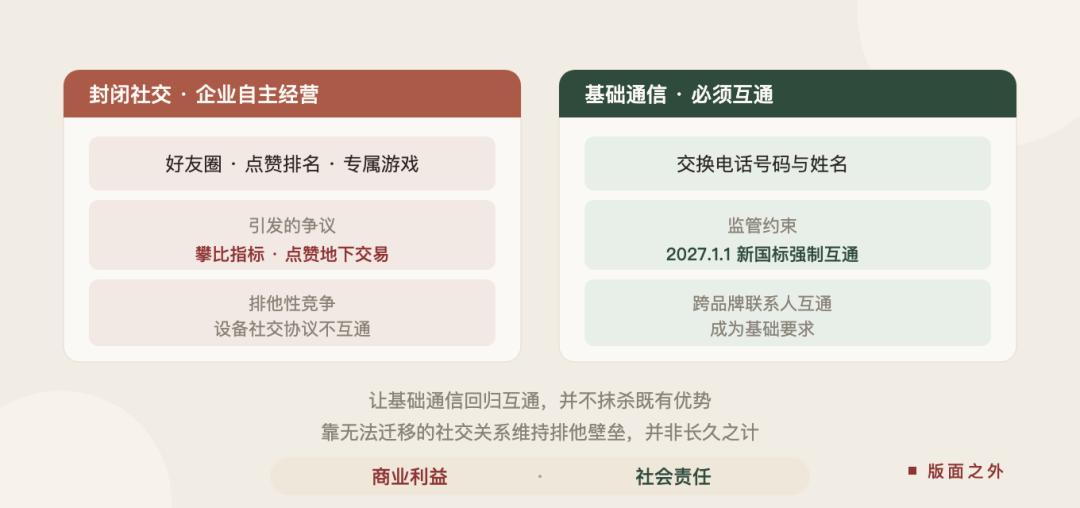
In 2022, Xiaotiancai's children's tablet once attracted regulatory attention due to application review problems. Since then, phenomena such as points, like rankings, account transactions and false interactions within the watch ecosystem have also been frequently reported in the press.
When children's watches introduce mechanisms such as likes in friend circles and sports step rankings, the functions originally designed to increase stickiness can easily evolve into comparison indicators among children.
In 2025, there was even an underground transaction targeting the like data of Xiaotiancai's friend circles. This shows that small changes in product design may lead to behavior deviations beyond the expectations of designers among the special group of children.
While enjoying the high stickiness and high premium brought by network effects, enterprises must also undertake the responsibility of guiding children's psychology and interaction mechanisms.
Whether the product should be purely used as a communication tool or as a platform carrying traffic and interaction directly determines the direction of its social evaluation.
V. Social Interaction Can Be Closed, What About Communication?
In response to the controversy over cross-brand interconnection, regulatory authorities and industry standards are giving clear constraints.
The mandatory national standard "Safety Technical Requirements for Children's Watches" will be officially implemented on January 1, 2027. The new standard regulates the basic information exchange between children's watches of different brands, and cross-brand contact interconnection has become a basic requirement that hardware manufacturers must implement.
This requires the industry to clarify the boundary between basic communication and value-added social functions.
Exchanging phone numbers and names is to guarantee basic communication rights, which should not be blocked by hardware brands, while value-added functions such as friend circle updates, exclusive games and advanced interactions belong to the independent business scope of enterprises.
Returning basic communication to interconnection will not erase Xiaotiancai's existing advantages in supply chain management, product industrial design, hardware reliability and parental management tools. Maintaining exclusive barriers by relying on non-migratable user social relationships is not a long-term and stable competitive method.
It is understandable for a commercial company to obtain business returns through more than ten years of product R&D and market cultivation. But when products are deeply involved in children's real social interactions, commercial competition needs to take into account the real communication needs of minors.
Children should not encounter artificially set technical obstacles in normal contact with classmates just because their parents chose a hardware device of a different brand. Businesses can compete for users, but they cannot take the relationships between users for granted as their own private assets.
Words Beyond the Page:
From the Subor learning machine in the era of Duan Yongping, to the BBK repeater, and then to the Xiaotiancai phone watch created by Jin Zhijiang, the core logic of this business system is consistent: it targets parents' demands for safety and education, and at the same time meets children's desires for entertainment and social interaction.
The subtlety of this business lies in transforming deep psychological needs into high-frequency hardware consumption.
However, when children's peer relationships become part of the product ecosystem, the boundaries of business are no longer only determined by financial statements and market share.
Whether a device worn on the wrist is a tool to help children explore the world or an access threshold to divide social circles depends on the choices enterprises make between commercial interests and social responsibilities.
Especially when the relationships are built between children.
This article is from WeChat official account "Beyond the Page", author: Huahua, published with authorization from 36Kr.