A Visit to the First Launch Sale of iPhone Duo: The Price Premium Plunged from 50,000 to 3,000, Who on Earth Is Using It?
"We buy iPhone Duo 256G with a RMB 2500 premium, 512G with a RMB 3000 premium, no color restrictions, contact us if you can deliver the devices today." At 8 a.m. on October 23, iPhone Duo, Apple's first foldable smartphone, officially went on sale, and an Apple reseller in Beijing was updating the recycling prices in a quotation group.
The reseller told DoNews that the 256GB version with an official launch price of RMB 15,999 currently has a recycling price of around RMB 18,500, while the top-tier 1/2TB version priced at RMB 26,499 has drawn many inquiries but very few people dare to take the order.
The current market situation is far from the "craze" seen a week ago. At 8 p.m. on October 16, pre-orders for the iPhone Duo opened, crashing the official website. All models sold out within 5 minutes, and the delivery schedule was once directly pushed to January 22, 2027. Apple immediately launched a purchase restriction, allowing a maximum of two units per person.
On the night of the pre-sale, the top 2TB version on second-hand platforms was bid up to RMB 79,999, with a premium of more than RMB 50,000 over the launch price. On the Dewu platform, the transaction price of the 1TB Night Sky color was close to RMB 29,000, and the premium of the 256GB black version once rose by nearly 40%.
But this hype only lasted for less than three days.
On October 18 and 19, the scalper quotations on second-hand platforms generally fell back to a premium of RMB 2,000 to RMB 3,000, and the offline collection premium dropped to around RMB 2,500. A reseller in Zhengzhou who had locked in 50 units in advance with a total payment of nearly RMB 1 million once had a floating loss of RMB 25,000 on the books. The reseller said, "I wanted to take a gamble, but I didn't expect Apple to release stock faster than expected, and the price dropped step by step every day."
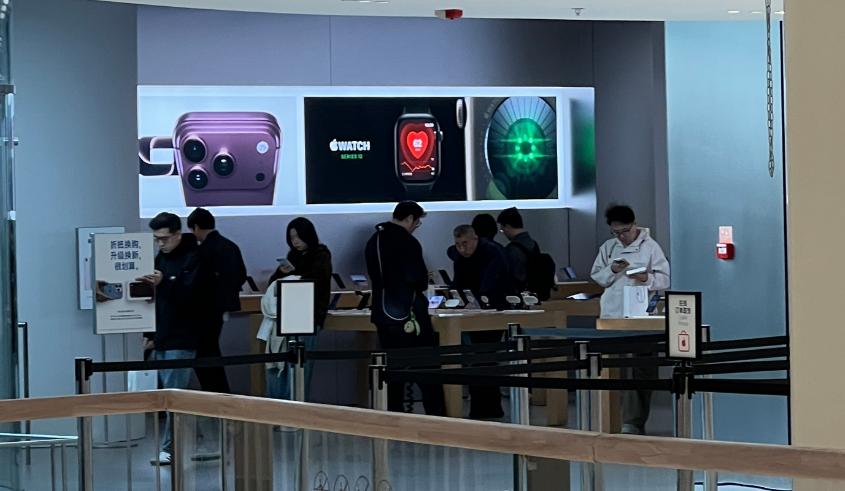
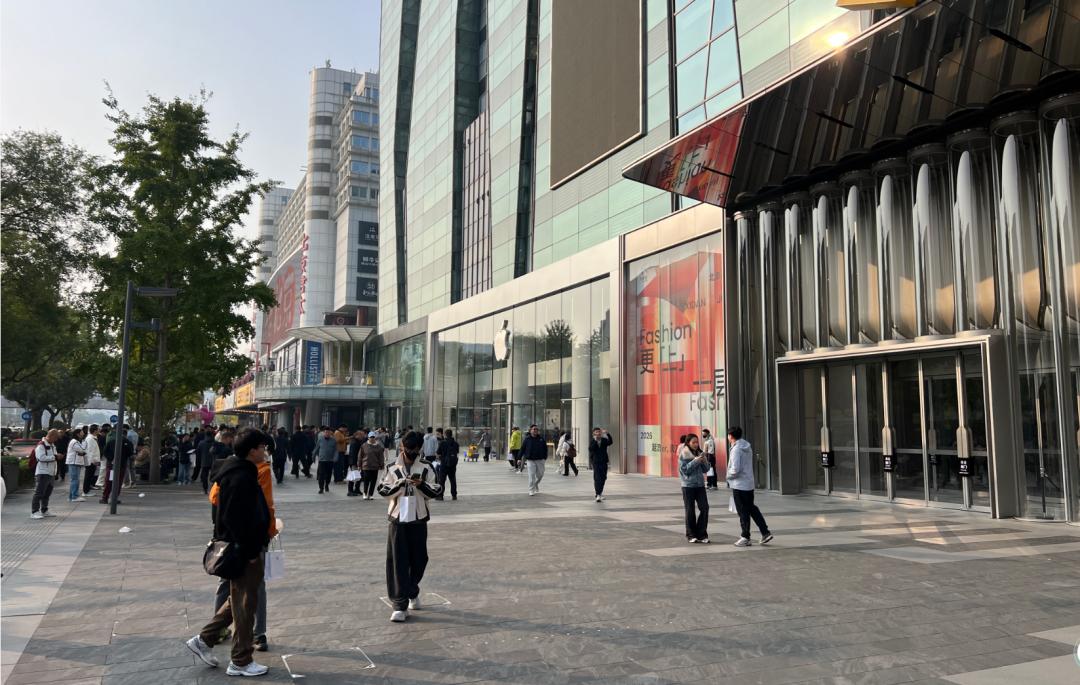
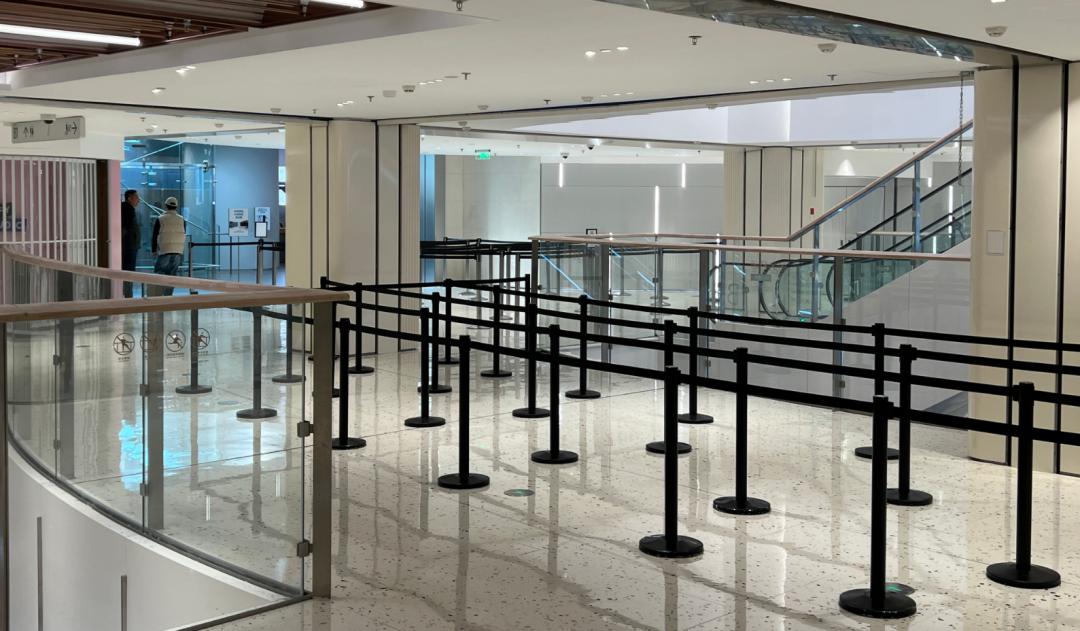
"The biggest fear when buying devices now is being stuck with unsold stock." A scalper outside the Apple Store at Xidan Joy City in Beijing told us, "We didn't make much money from the iPhone 18 Pro. Everyone was counting on the foldable phone to make a big profit, but now the premium is only three to four thousand yuan, and we have to see how much stock Apple releases later." DoNews saw at the scene that there were very few people queuing at the entrances of the first floor and the underground floor of the Apple store at 9 a.m., which was far from the long queue situation when the iPhone 18 Pro was first launched.
A store clerk said that the 256GB and 512GB versions are the most purchased, with the Starlight White color slightly more popular than the Night Sky color. We also randomly interviewed consumers who came to pick up their devices, and trying new tech, business office use, and Apple ecosystem integration were the three most frequently mentioned reasons for purchase.
"My phone, computer, and watch are all Apple products. I've been waiting for years for Apple to release a foldable phone, so I'm switching to it now." said a consumer who upgraded from an iPhone 13 Pro Max. There were also customers holding Android devices at the scene. One user with a Huawei Mate series phone admitted that he came to "see what Apple's foldable phone is like", but he will not replace his current device in the short term.
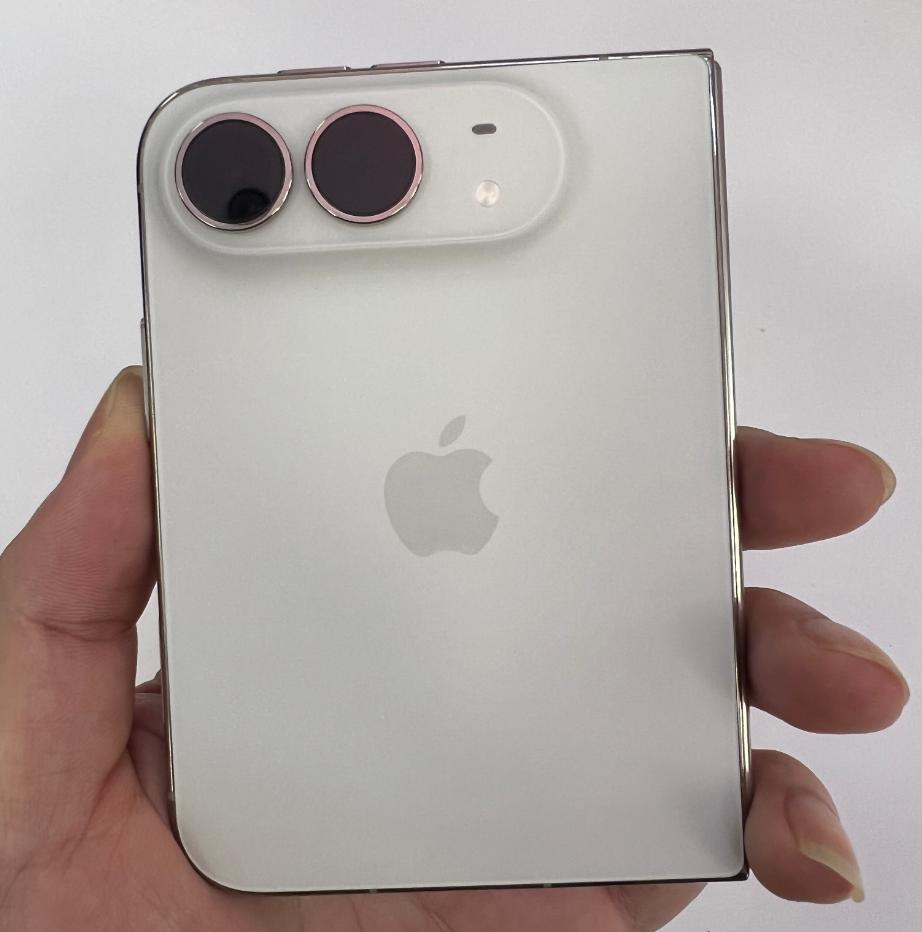
Beneath the buzz, the shortcomings of the iPhone Duo are also obvious. This phone has a closed thickness of 11.3mm and weighs 254g, making it thicker and heavier than similar products. Reviews released by some tech bloggers show that after testing 25 common apps, about 80% of them have not completed foldable screen adaptation, and can only be displayed in the center or scaled proportionally, failing to make full use of the 7.6-inch inner screen. WeChat is not included in the first batch of adapted apps, and WeChat responded that it is actively promoting the adaptation process.
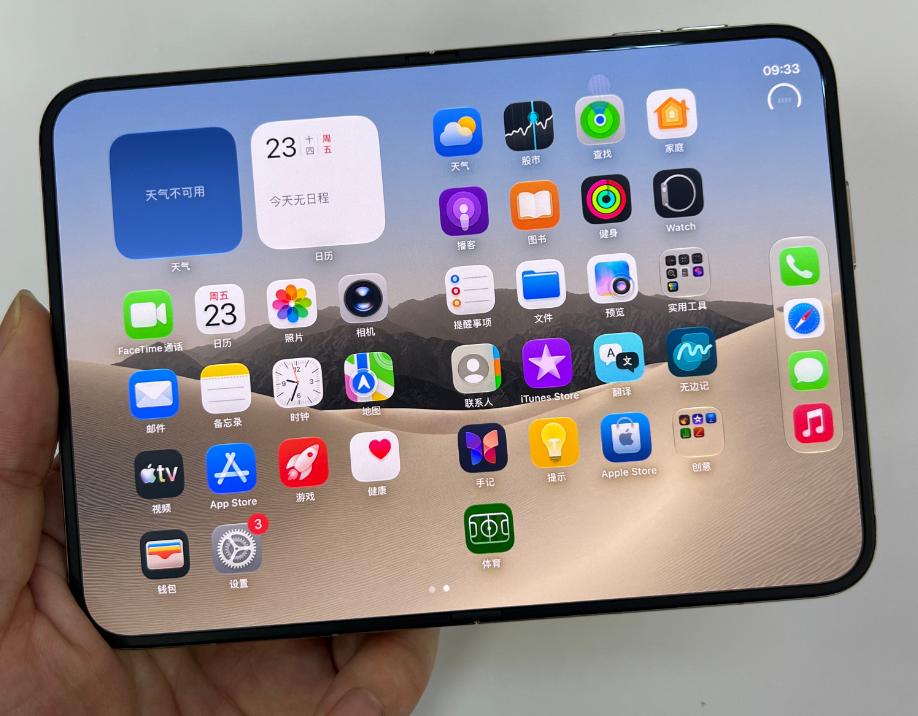
At the same time, the device heats up significantly under high load. Some tests show that when shooting 4K 60fps video, the camera area gets too hot to hold, the under-screen camera for selfies has obvious over-smoothed artifacts, and the crease deepens significantly after 3000 simulated folding cycles. To make space for the inner screen, Apple even removed the Face ID that it has used for many years.
Analyst Mark Gurman pointed out that Apple launched the iPhone Duo prematurely when the supply is not yet sufficient, and sufficient stock will not be available until November, which is also confirmed by the official website's delivery schedule. The "debut" of this foldable phone is more like a hasty entry into the market to seize a favorable position.
But this does not stop Apple's aggressive move. It is worth noting that Apple is eight years late to the foldable phone market, counting from the first appearance of foldable phones in the Android camp back in 2018.
It is reported that the R&D of the iPhone Duo's hinge took six years. It adopts a 3D-printed titanium metal hinge protective shell, the whole device is made of grade 5 titanium metal, supports IP68 water resistance, the inner screen is covered with a nano-texture coating to reduce reflections, and it is equipped with an A20 Pro chip, a VC vapor chamber, and a dual-battery architecture. It supports up to 31 hours of video playback on the inner screen, and 44 hours on the outer screen. In the reviews of this device, the hinge hover feel, the switching animation between the inner and outer screens, and the structural strength are all at the top tier of the industry.
Counterpoint predicts that with a sales window of only a few months, the iPhone Duo will capture about 25% of the global foldable phone market share in its first year on the market, ranking second in the industry, and the share is expected to further rise to 40% in 2027. According to IDC's calculation, with an average price of about USD 2,400, Apple is expected to take about 34% of the total market value of the foldable phone industry. TrendForce estimates that the global foldable phone shipment in 2026 will be about 20.2 million units, of which Samsung accounts for about 7.1 million units and Huawei accounts for about 5 million units.
Apple's aggressive move is precisely based on the barriers that the Android camp has already built. Omdia data shows that in the global book-style foldable phone market in the first half of 2026, Huawei leads by a wide margin with a 57% share, followed by Samsung with 18%; in the domestic Chinese market, Huawei's share is as high as 72.7%, followed by Honor, Samsung, vivo, OPPO, and Xiaomi. Huawei's Mate XT 2 starts at RMB 19,999 to bet on the tri-fold segment, Xiaomi's 18 Fold starts at RMB 10,999 to occupy the mid-to-high end position, and Samsung's "The World is My Heart" W27 launch event is scheduled for October 29, going head-to-head with Apple. Samsung has also been accused of using the phrase "reheating leftover rice" to implicitly mock Apple for entering the market too late.
The offensive and defensive relationship is more subtle at the industrial chain level. The foldable display panel of the iPhone Duo is exclusively supplied by Samsung Display, and the two parties have signed a three-year exclusive agreement. That means the more iPhones Duo Apple sells, the more revenue Samsung earns from the panels — the rival in the terminal market is also a partner in the supply chain.
A more thought-provoking question is: Will foldable phones become mainstream once Apple enters the market? The answer may not be that optimistic.
In the seven years since the birth of foldable phones, the global cumulative shipment will exceed 100 million units by the end of 2026, but the penetration rate in the overall smartphone market is only about 1.5% to 2%. Counterpoint points out that the average price of foldable phones is still about 3 times that of bar phones, and it will take several years for them to become popular among the mass market. The maintenance cost is also extremely high: replacing the inner screen of Huawei Mate XT 2 costs RMB 5,499, replacing the inner screen of Honor Magic V6 costs RMB 4,479, and the maintenance cost of one screen is almost equivalent to the price of a mid-range bar phone. Research from iiMedia Research shows that the top three improvements consumers most want to see are hinge technology, battery technology, and lower prices.
In the author's opinion, the real significance of Apple's entry into the market is not to immediately popularize foldable phones, but three things: first, with unified inner and outer screen standards and a huge developer ecosystem, it will force app developers to speed up adaptation, pushing forward to solve the long-standing ecosystem fragmentation problem that the Android camp has not been able to resolve for years; second, it will expand the overall market size, and Omdia predicts that the global foldable phone shipment will double to 36 million units by 2028; third, against the background of stagnating innovation on bar phones and extended device replacement cycles, it provides the industry with a new high-end growth narrative.
But before the price comes down, the device weight is reduced, and mainstream apps complete adaptation, foldable phones will still be a "niche flagship" for high-net-worth users and tech early adopters in the next three to five years. Apple is more like a "definer" of the foldable phone era, rather than a "popularizer".
When leaving Xidan Joy City, the scalpers at the entrance were still shouting to buy devices, and in the reseller's quotation group, the recycling price changed every few dozen minutes. "The foldable phone story has only just begun. Whether it can become mainstream depends on the second-generation model next year."
For the mobile phone industry that has not seen such a buzz for a long time, Apple's entry at least answers one question: the foldable phone track has finally welcomed the most influential player.
This article is from the WeChat official account "DoNews" (ID: ilovedonews), written by Yang Bocheng, and authorized for release by 36Kr.