How to make Apple's vice president feel extremely uncomfortable with only 10 yuan?
Some time ago, I did something that made Apple executives extremely uncomfortable: I put a screen protector on my new phone.
This 10-yuan tempered glass screen protector came with a dust sticker and a positioning tool as a free gift from the store, which also promised "free replacement if the protector is applied with defects". When I was squeezing the air bubbles between the screen and the protector under the desk lamp, I had no idea at all that this would make Apple's Vice President of Hardware Engineering feel uncomfortable.
Recently, this vice president, Tom Marieb, was interviewed by tech media outlet TechRadar. When talking about the new iPhone's screen, he said: "To be honest, every time I see someone put a screen protector on their iPhone, it makes my skin crawl, because we have put so much effort into creating this exquisite screen."
It turns out that Apple's vice president is the type of person who tears off all protective films on new devices.
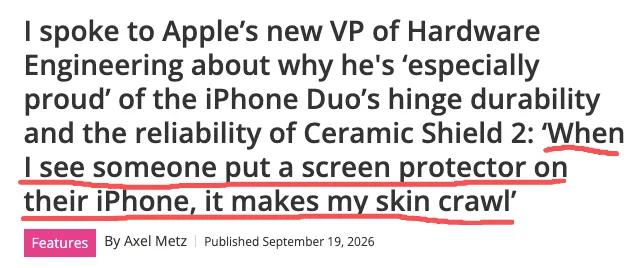
Photo | techradar
When I took a closer look at all the efforts Apple has put into this piece of glass, I can somewhat understand what makes this vice president so upset.
In a 2019 press release, Apple officially stated that since the launch of the iPhone in 2007, it has invested nearly 3 billion US dollars in glass procurement for iPhone, Apple Watch and iPad from glass supplier Corning. Moreover, on the basis of the previous 200 million US dollar investment, Apple added another 250 million US dollars in investment to Corning for the R&D of glass technology and materials.
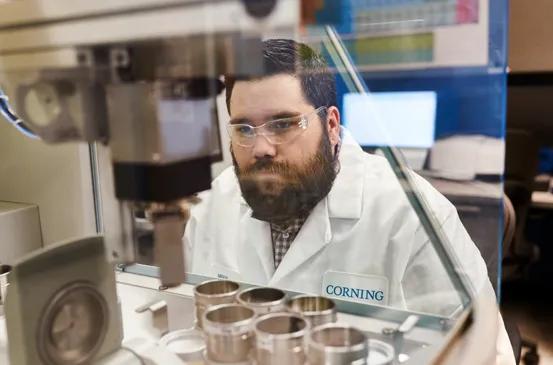
Corning is one of Apple's many suppliers | apple
Probably in the vice president's view, putting a screen protector on an iPhone is roughly equivalent to putting a peony-and-double-happiness patterned sofa cover on a minimalist solid wood sofa, which leaves you too speechless to say a word.
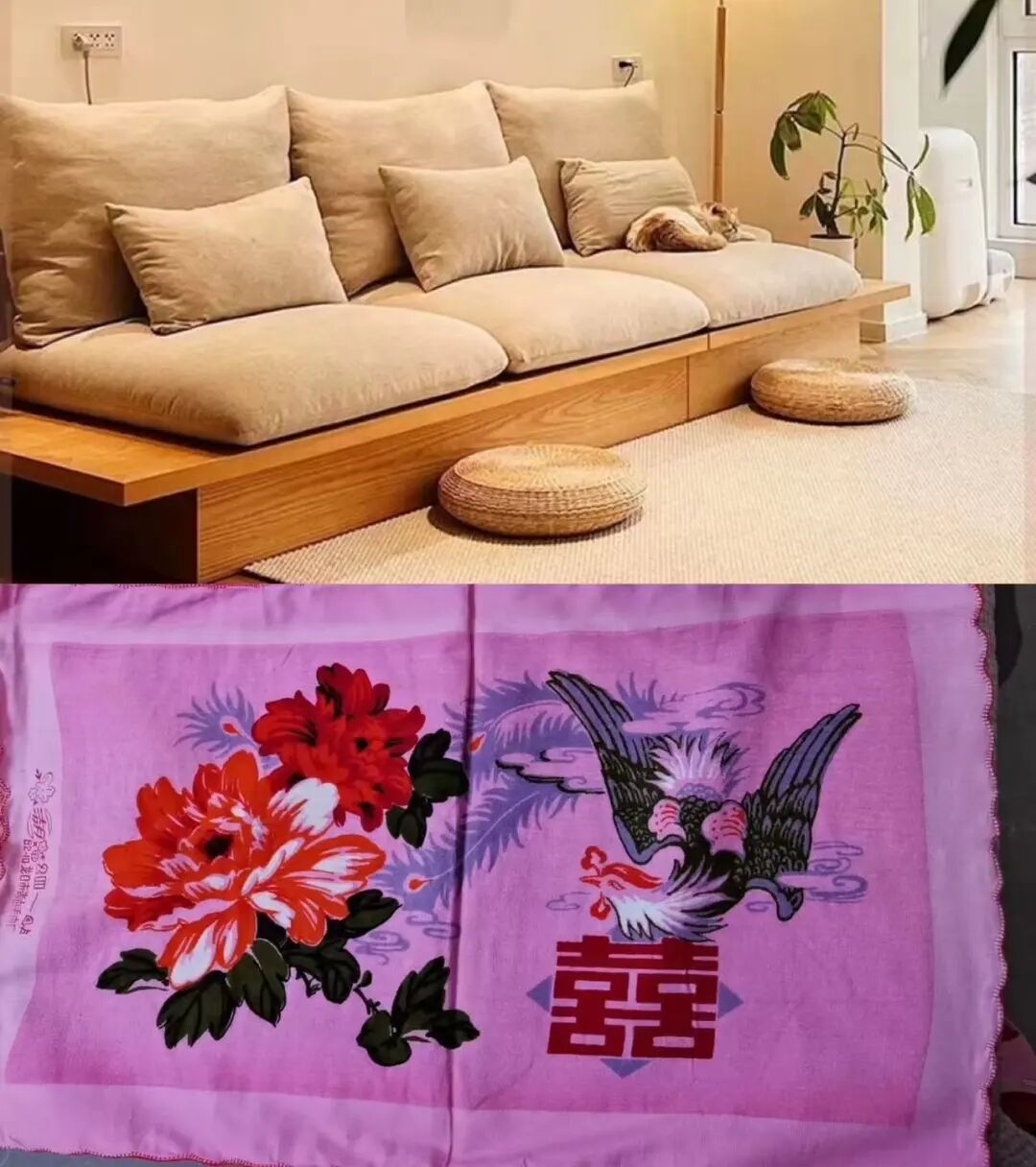
Just use your imagination | Xiaohongshu / Ziyun Loves Life, Xiaocao
But this is not the users' fault. After all, the habit of applying screen protectors is even older than the iPhone itself.
Screen Protector Application, an Old Craft
Back at the end of last century, touchscreen devices were already inseparable from screen protectors.
At that time, most of the Personal Digital Assistants (PDAs) used resistive screens, and users operated them with a stylus. The screen of the PDA was positioned by the pressure of the stylus, with a relatively soft surface material. If the stylus was used to write and draw on it every day, the screen would definitely get scratched before long.
This is exactly where screen protectors come in: a cheap soft film, so that the stylus scratches the film instead of the screen. When the film gets worn, you just replace it, and the original screen stays intact.
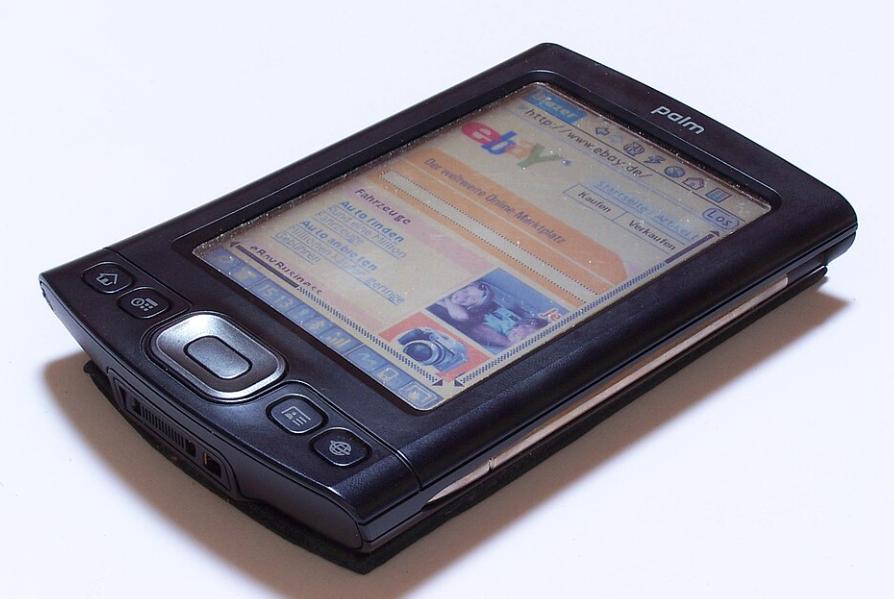
A PDA with a detachable stylus on its side | wikimedia commons/Stefano Palazzo
Later, the trend of applying screen protectors spread from PDAs to digital cameras. At that time, the LCD screens of cameras were small and soft, most of which were not even made of glass. Knocking against lens caps and keys in the camera bag, it was almost impossible for them not to get worn after a year of use.
On early photography forums, camera users were already seriously exchanging experiences of applying screen protectors. Some people suggested buying PDA protectors directly, cutting them to size and sticking them on cameras. In 2006, some media even mentioned in reports that "LCD protectors are one of the best-selling camera accessories".
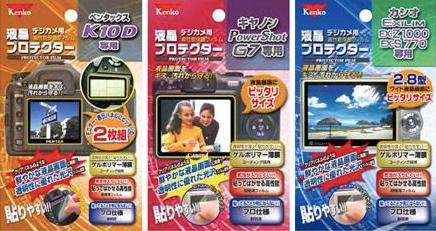
Has anyone ever used this?
What Has Apple Done to Get Rid of Screen Protectors
Steve Jobs also hated his screens getting scratched, but apparently he did not like screen protectors either.
Apple originally planned to use the same plastic screen on the first-generation iPhone as the one used on iPod. However, after Jobs used the iPhone prototype for a while, he rejected the plastic screen solution.
It is reported that at that time Jobs called several assistants to his office, angrily held up his iPhone, adjusted the angle specially so that everyone could see dozens of tiny scratches on the plastic screen, and said "I will not sell products that are easy to get scratched".
Before that, mobile phone manufacturers had been avoiding the use of glass, because the cutting and grinding of glass required extremely high precision which was very difficult to achieve. But Apple then started looking for strong and scratch-resistant glass, and finally found Corning.
As early as the 1960s, Corning had developed a method to produce "Gorilla Glass", but it was discontinued due to no market demand. Persuaded by Jobs, Corning decided to update the process and bring the long-discontinued "Gorilla Glass" to the iPhone.
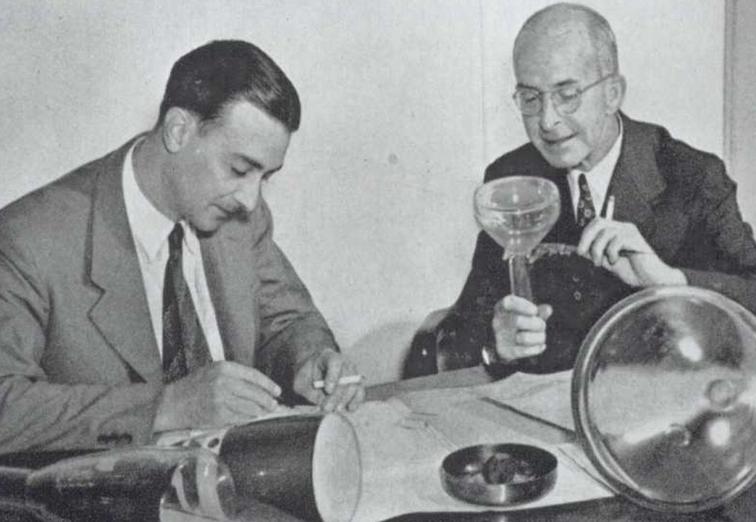
Corning is a time-honored enterprise specializing in glass manufacturing | corning
Glass is definitely much better than plastic, but this still cannot make users completely feel secure enough to give up screen protectors.
Scratch Resistance, Wear Resistance and Drop Resistance Cannot Be Achieved at the Same Time
In the interview mentioned at the very beginning, the vice president mentioned: Scratch resistance and wear resistance are conflicting properties in many materials. The new iPhone screen could have been made more scratch-resistant, but that would have made it far less wear-resistant.
For screens, "scratch" and "abrasion" are two different types of damage.
Scratch resistance prevents "sudden accidents": sharp objects press into the surface and leave a permanent groove. This property depends on the hardness of the material itself. For example, the Mohs hardness of keys and coins is about 5.5, which is not hard enough to scratch the glass with a hardness of 6 at all. On the contrary, it is sand particles and quartz with higher hardness that can scratch the glass.
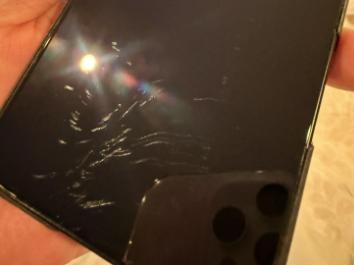
A scratched screen | Reddit
While wear resistance prevents "chronic consumption": the things that wear the screen are not necessarily hard — pocket linings, screen wiping cloths, paper towels, dust. A single friction is negligible, but the screen cannot withstand dozens of frictions every day, tens of thousands of times a year. Wear resistance depends on the toughness and smoothness of the material, which lets every tiny friction "slide" over instead of resisting it rigidly.
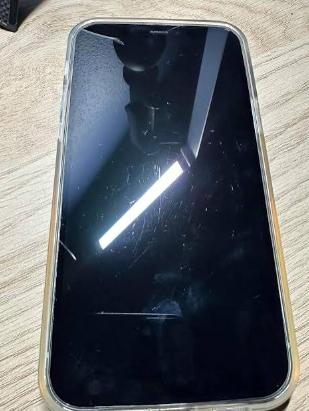
A worn-out scratched screen | Reddit
Moreover, mobile phones also have to face the test of dropping.
The moment the phone hits the ground, the body bends under force. When the metal frame is dented by impact, the internal atoms can slip and shift to absorb part of the impact energy. But for glass, only cracks can release this impact energy for it.
Of course, if you make the glass a little "softer", its drop resistance will be better, but the hardness will drop significantly at the same time.
So the screen glass in your hand is the product of repeated trade-offs by engineers among a bunch of "impossible trilemmas": scratch resistance, wear resistance and drop resistance.
Furthermore, to make this piece of glass "more user-friendly", engineers have come up with many other solutions, such as the "oleophobic coating". It is a composite coating attached to the surface of the phone glass, just like invisible "molecular villi". With this material, the screen can be both hydrophobic and oleophobic, so that the grease from fingerprints will not stay on the screen, and the sliding resistance is also reduced.
But in the end, engineers spent so much effort creating this piece of glass, only to have me stick a cheap protective film on it.
How Much Does a Protector Cost, How Much Does Screen Replacement Cost?
At the end of the day, the essence of applying a screen protector is the fear of breaking this precious glass.
If you check the current maintenance page, the price of replacing a broken phone screen is not cheap. A 10-yuan protector can take the scratches and abrasion for the glass, and even provide a certain buffering effect when the phone drops. Not to mention that if you want to sell the second-hand phone later, you can get a better price.
Doing the math, it is still a cost-effective choice.
However, while the protector protects the screen, it does sacrifice the user experience of using the phone. No matter the handfeel or the display effect of the screen, there will be more or less some discount due to the existence of the protector.
As for that vice president, I fully respect his discomfort: after all, no one wants to see the painstaking efforts his company has put in for years casually covered by a 10-yuan film.
Maybe in the near future, Apple will finally remove the officially sold screen protectors from its shelves!
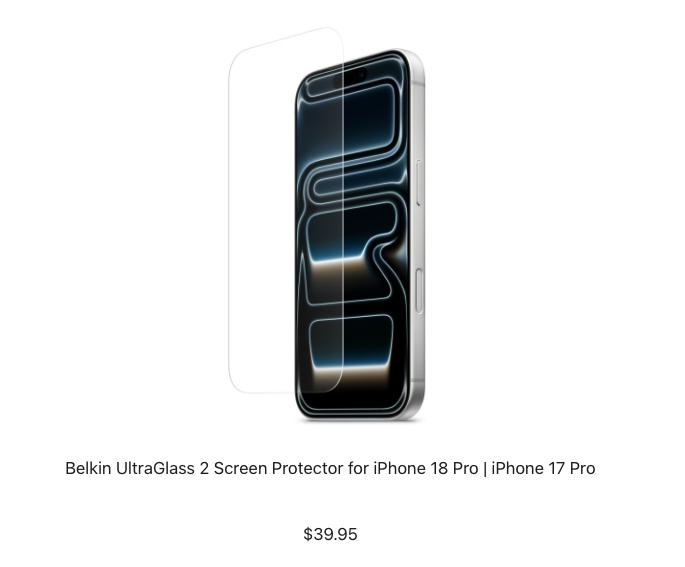
Apple has official screen protectors priced at nearly 40 US dollars — this is a little-known fact | apple
References
[1]https://www.techradar.com/phones/iphone/i-spoke-to-apples-new-vp-of-hardware-engineering-about-why-hes-especially-proud-of-the-iphone-duos-hinge-durability-and-the-reliability-of-ceramic-shield-2-when-i-see-someone-put-a-screen-protector-on-their-iphone-it-makes-my-skin-crawl
[2]https://www.apple.com/newsroom/2019/09/apple-awards-an-additional-250-million-from-advanced-manufacturing-fund-to-corning/
[3]https://www.nytimes.com/2012/01/22/business/apple-america-and-a-squeezed-middle-class.html
[4]https://www.apple.com/shop/iphone/accessories/cases-protection/films
This article is from the WeChat Official Account "Guokr" (ID: Guokr42), written by Plass G, edited by Li Xiaokui, published by 36Kr with authorization.