Eli Lilly, Merck & Co., AbbVie, Innovent Biologics, Hengrui Medicine and other players have all entered the market, and the ophthalmology sector is becoming a must-win battleground for global pharmaceutical companies.
In the final quarter of 2026, the global ophthalmology industry is waiting for a set of data.
The gene therapy Sura-vec co-developed by AbbVie and ReGenXBio is about to release top-line data from its two Phase III studies ATMOSPHERE and ASCENT — this is one of the world's largest registered fundus disease gene therapy programs, with the two Phase III studies enrolling a total of more than 1,200 patients across over 200 clinical centers.
Once the data is positive, the "one injection for five years" regimen will officially challenge the old treatment paradigm that requires "injections every ten years", and the valuation logic of the anti-VEGF market may be completely rewritten.
Pharmaceutical giants have already placed their bets in advance.
Merck & Co., which built its business on the blockbuster "Keytruda" (pembrolizumab), offered a transaction consideration of up to 3 billion US dollars for an ophthalmology Biotech; Eli Lilly successively acquired fundus gene therapy assets; Otsuka Pharmaceutical and Bayer have also made successive layouts with surprisingly consistent directions.
In this round of ophthalmology M&A and innovative drug layout by multinational pharmaceutical companies, retinal diseases with long-term treatment needs such as wet age-related macular degeneration (wAMD) and diabetic macular edema (DME) have become important investment directions.
At the same time, fields including dry eye disease, glaucoma and inherited retinal diseases are also continuously attracting investment from pharmaceutical companies.
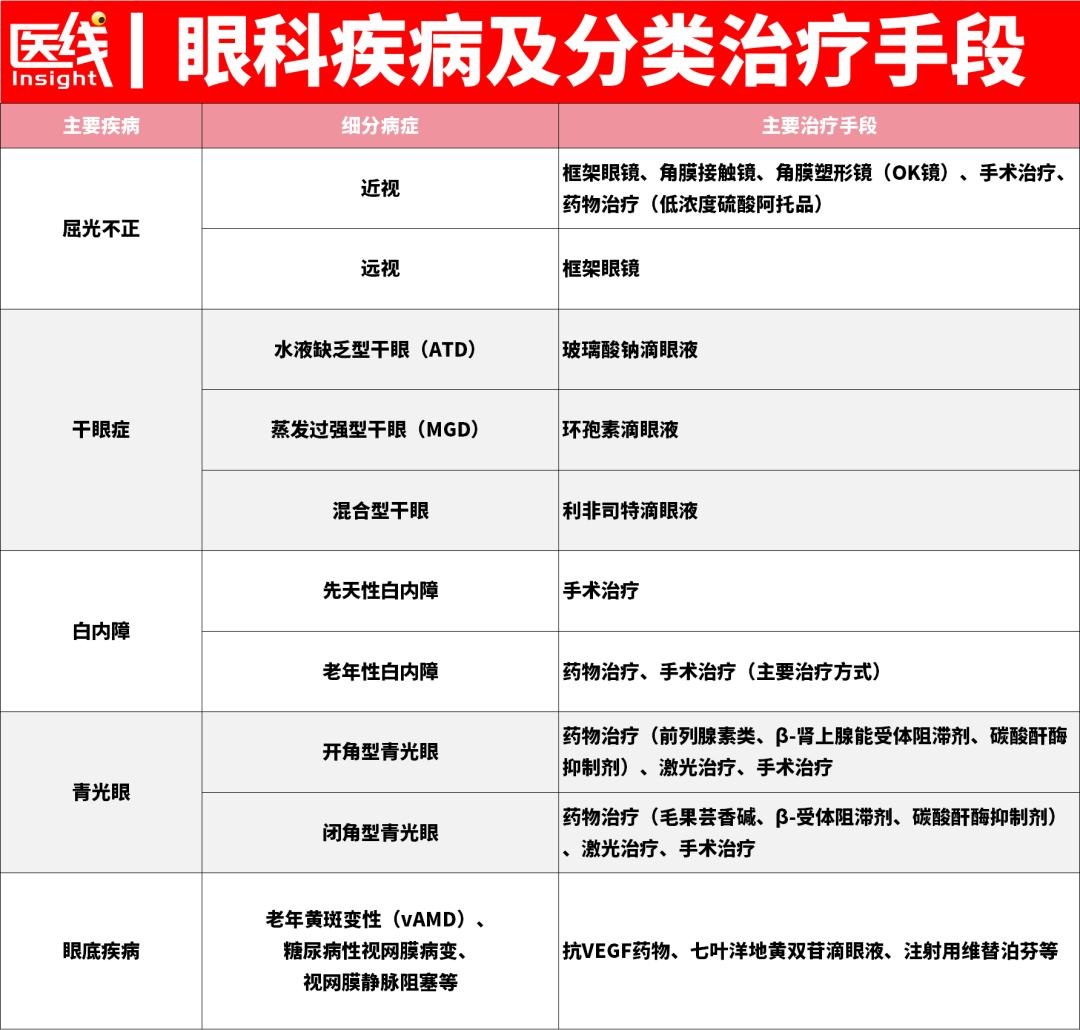
The successive success of Ranibizumab and Aflibercept has verified the commercialization potential of innovative fundus disease drugs, and both products reached billions of dollars in sales at their respective peak periods.
Meanwhile, population aging, increasing diabetes prevalence and the continuous development of long-acting innovative therapies are driving the expansion of the global ophthalmic drug market.
The once small specialized track has thus become a must-win battlefield for global pharmaceutical companies.
From dual-target antibodies to ophthalmic gene therapy, three groups of players are advancing in coordination, with some projects having entered the Phase III clinical stage or marketing application stage, forming synchronous competition with multinational pharmaceutical companies in some segmented fields.
As soon as the unblinding bell rings in the fourth quarter, the cards of all players at the table will be revealed.
01
Giants are rushing into the track:
From blockbuster drugs to technology M&A
Why does ophthalmology continue to attract capital?
The high value of the ophthalmology track is achieved through the relay run of three generations of blockbuster drugs.
The first-generation representative product is Ranibizumab, developed by Genentech and commercialized by Roche and Novartis in different markets respectively, which was once an important blockbuster drug in the global fundus disease treatment field.
The second-generation representative product is Aflibercept (Eylea), co-developed and commercialized by Regeneron and Bayer, which once set the record of blockbuster sales for global fundus disease drugs.
The third-generation Faricimab also comes from Roche, and its sales volume expanded rapidly in the early stage of launch: its global sales from 2022 to 2024 were 591 million, 2.357 billion and 3.864 billion Swiss francs respectively, reaching 4.102 billion Swiss francs in 2025, which is about 6.9 times of that in the first year of launch.
The indications of the three generations of blockbuster drugs are highly overlapping, mainly focusing on retinal diseases such as wet AMD and DME.
The common features of such diseases are high risk of vision loss, long-term treatment needs for some patients, and the burden of repeated administration under existing treatment regimens.
Sustained treatment demand supports the commercial value of anti-VEGF drugs, but its market space is also affected by drug pricing, medical insurance coverage, treatment compliance and competitive landscape.
The successive success of Ranibizumab, Aflibercept and Faricimab indicates that retinal diseases have become an important market for global innovative ophthalmic drugs.
The same story is also happening in the glaucoma field.
Glaucoma is one of the major irreversible blinding eye diseases in the world, which also constitutes an important market for ophthalmic drugs.
In 2019, AbbVie announced the acquisition of Allergan with an equity transaction value of about 63 billion US dollars to integrate the ophthalmology business into its portfolio; intraocular pressure lowering drugs such as bimatoprost, travoprost and latanoprost also witness the long-term layout of multinational pharmaceutical companies in the glaucoma field.
Giants are flocking to ophthalmology, half for growth and half out of anxiety.
As Aflibercept faces competition from biosimilars, Bayer has begun to look for next-generation ophthalmic solutions.
In May 2026, Bayer announced the acquisition of Perfuse Therapeutics with a 300 million US dollar upfront payment and a total potential transaction amount of up to 2.45 billion US dollars, and announced the completion of the transaction on June 17 of the same year.
Through this acquisition, Bayer obtained PER-001, which is in Phase II clinical development.
It is an endothelin receptor antagonist administered via intravitreal implant with sustained release characteristics, which is being studied for glaucoma and diabetic retinopathy, aiming to explore the potential of disease-modifying therapy.
Different from therapies that mainly control symptoms or disease-related indicators, disease-modifying therapies aim to delay, stop or even change the natural course of the disease.
If PER-001 can prove this value in subsequent clinical studies, it is expected to provide new treatment options for diseases such as glaucoma, but it is still uncertain whether it can replace existing intraocular pressure lowering therapies.
Merck's anxiety is more urgent.
Facing the upcoming patent competition of Keytruda, Merck acquired EyeBio with a 1.3 billion US dollar upfront payment and a total transaction amount of up to 3 billion US dollars, bringing two differentiated pipelines into its portfolio.
One is Tiespectus (MK-8748), which acts on both Tie-2 and VEGF pathways, and is advancing the Phase IIb/III pivotal study for wAMD (the MALBEC study launched in April 2026, head-to-head against Aflibercept).
The other is Remigromig, a trispecific antibody that activates the Wnt signaling pathway, whose two registrational Phase IIb/III studies for DME have completed enrollment.
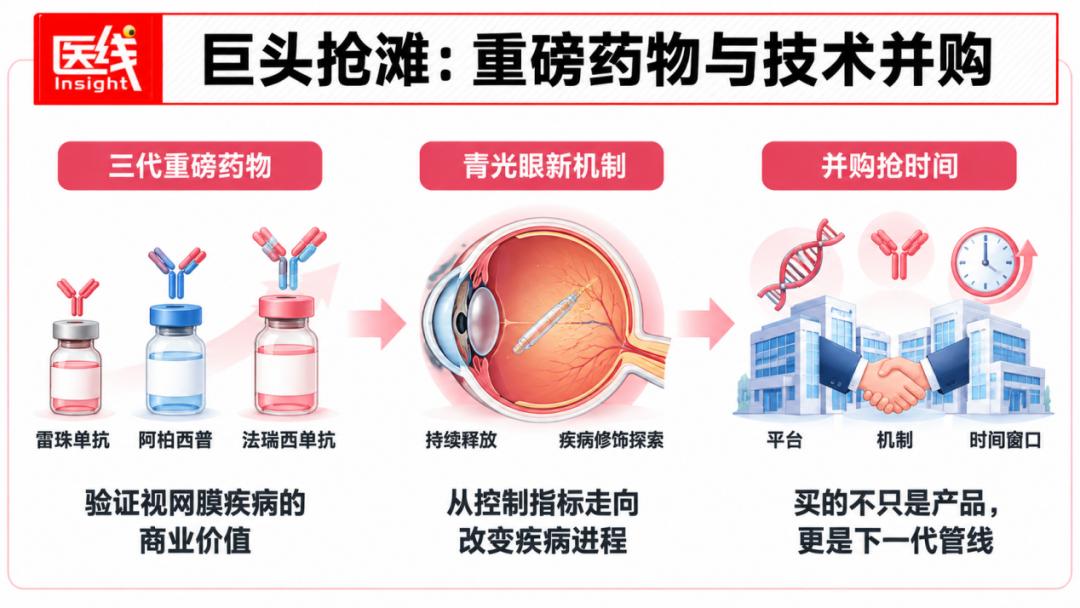
Looking back over a longer timeline, the layouts of MNCs in ophthalmology form a clear trajectory.
In 2019, Roche acquired Spark for 4.3 billion US dollars to obtain Luxturna, the world's first ophthalmic gene therapy.
In 2021, AbbVie reached a cooperation with ReGenXBio on the RGX-314 ophthalmic gene therapy: 370 million US dollars upfront payment, up to 1.38 billion US dollars in milestone payments, with a total potential transaction amount of up to 1.75 billion US dollars.
In October 2025, Otsuka Pharmaceutical reached an authorization cooperation with 4D Molecular Therapeutics for the 4D-150 in the Asia-Pacific region, paying 85 million US dollars upfront payment, up to 336 million US dollars in milestone payments, and undertaking at least 50 million US dollars in R&D expenses.
In the same month, Chinese Biotech StarMune Therapeutics reached an overseas right of option cooperation with AviadoBio on the optogenetics asset UGX202, adding another case of Chinese ophthalmic innovative technology going global.
At the end of 2025, Eli Lilly fully acquired Adverum, and then partnered with MeiraGTx with 75 million US dollars upfront payment and more than 400 million US dollars in milestones, fully deploying in fundus gene therapies.
The transaction density accelerated significantly from 2025 to 2026, and the strategic considerations behind it have also escalated: what the giants are buying is not only products, but also platforms, mechanisms, and the most scarce time window.
Facing the patent cliff, MNCs have many choices to supplement their pipelines, why did they specifically choose ophthalmology?
The first layer of certainty lies in the demand side.
Aging population pushes up the incidence of age-related macular degeneration, and the prevalence of diabetes expands the pool of DME patients, both of which are irreversible driving factors.
The second layer of certainty lies in the R&D side.
The biological mechanism of the VEGF pathway is clear, and the clinical endpoints are mature. All new drugs have a recognized reference anchor — Aflibercept, and the predictability of R&D risks is much higher than that in other fields.
The third layer is the competitive window.
The oncology track is already crowded with hundreds of drugs, while there are only a handful of approved players in the fundus disease field, which is still a "game for the few".
02
China is joining the competition:
Three groups of players, one table
Looking back at China's market, there is a distinct "scissor gap".
Multinational pharmaceutical companies still occupy important positions in multiple segmented ophthalmology markets, but local pharmaceutical companies are gradually changing the original competitive landscape through independent R&D, product introduction and commercial expansion.
From the perspective of competition pattern, multinational companies such as Novartis, Alcon, Santen Pharmaceutical and AbbVie have long-term accumulation in China's ophthalmology market, while local enterprises including Kanghong Pharmaceutical, Xingqi Eye Medicine and Ocumension Therapeutics have also formed a certain product foundation.
The R&D side presents a more diversified competition situation. According to the Insight database, domestic ophthalmology pipeline projects cover different stages including preclinical research, early clinical, pivotal clinical and marketing application, including not only traditional preparations and antibody drugs, but also new technology directions such as dual-target drugs and gene therapy.
In terms of indication distribution, diseases such as wet AMD, dry eye disease, DME and glaucoma are all important directions for current ophthalmic drug R&D. Among them, wet AMD and DME have gathered more pipeline products of different technical routes, reflecting the continuous attention of pharmaceutical companies to the treatment needs of retinal diseases.
R&D achievements are gradually entering the commercialization stage. In recent years, a number of domestic ophthalmic drugs have obtained marketing approval, and the innovation direction has gradually expanded from traditional ophthalmic preparations to new therapeutic mechanisms and technology platforms.
However, the number of approved drugs cannot fully represent the commercialization degree of R&D achievements, and subsequent observation is still needed on their clinical application, market access and sales performance.
The pipeline structure is also upgrading simultaneously, evolving rapidly from small molecule chemical drugs and first-generation antibodies to bispecific antibodies, in-vivo AAV gene therapy, CRISPR gene editing and siRNA.
Compared with multinational pharmaceutical companies, Chinese innovative ophthalmic drug enterprises have greater differences in resource endowments and development stages.
From the perspective of product acquisition methods, R&D investment capacity and commercialization foundation, the current market has roughly formed three representative competitive paths.
The first is the specialized pharmaceutical school: leveraging external resources to achieve breakthroughs at a single point.
This school is represented by Ocumension Therapeutics, Xingqi Eye Medicine and Zhaoke Ophthalmology.
Take Ocumension Therapeutics as an example. OT-401 (fluocinolone acetonide intravitreal implant) introduced by the company is the first FDA-approved chronic non-infectious uveitis therapy that can release the drug for 36 months with a single administration; the self-developed OT-202 is a new Class 1 new drug with a novel target (Syk/VEGFR-2 dual-target inhibitor) for dry eye disease, which has entered Phase III clinical stage.
The strategy is very clear — use license-in to quickly supplement the product line first, and then build differentiation through independent R&D at a single point.
The second is the comprehensive leading enterprise school: overwhelming advantages in channels and cash flow.
Innovent Biologics, Kanghong Pharmaceutical and Hengrui Medicine belong to this school.
Innovent's tezepelumab N01 is the first targeted biologic for thyroid eye disease (TED) in China; the globally first-in-class VEGF×C3b/C4b dual-target fusion protein emivimab-α (IBI302) has succeeded in Phase III and is planned to apply for marketing, making the domestic innovative ophthalmic drug reach the global leading position in the dual-target mechanism for the first time.
The two dry eye drugs SHR8058 (perfluorohexyloctane eye drops) and cyclosporine eye drops (IV) introduced by Hengrui are both developed based on the EyeSol waterless and preservative-free platform.
Among them, the drug "Hengqin" is priced at 468 yuan per box, and its sales volume exceeded 5000 boxes after being launched on JD Pharmacy for more than 3 months, ranking 8th in the best-selling list of "dry eye" medications — the commercial execution capability of comprehensive leading enterprises is evident.
The third is the cutting-edge Biotech school: bypass the red ocean and compete for the "world's first".
The third group of players choose to use cutting-edge technologies such as gene therapy to enter disease fields that are difficult for traditional drugs to cover.
ZVS101e independently developed by Zhongyin Biotechnology was accepted for marketing application in August 2026, targeting Bietti crystalline dystrophy (BCD), a rare inherited eye disease.
Tianzetian Biotech is also deploying BCD gene therapy, and its pipeline product VGR-R01 has also advanced to the marketing application stage.
The two Chinese enterprises are expected to take the lead in promoting the commercialization of gene therapy in this disease field.
New Vision's AAV2-ND4 is in Phase III clinical stage for the LHON indication.
BenDao Gene's BD111 is carrying out Phase II clinical study for recurrent herpes simplex virus stromal keratitis, exploring the use of in-vivo CRISPR gene editing technology to treat virus infection-related eye diseases.
Xunji Biotechnology's QBR202 has entered Phase I clinical stage, targeting fundus diseases such as wet AMD and DME, showing the continuous exploration of local Biotechs in the field of ophthalmic drugs with new mechanisms.
The common logic of this school is to avoid head-on competition in the anti-VEGF red ocean, and compete for the "world's first" in the no-man's-land of monogenic rare eye diseases and gene editing.
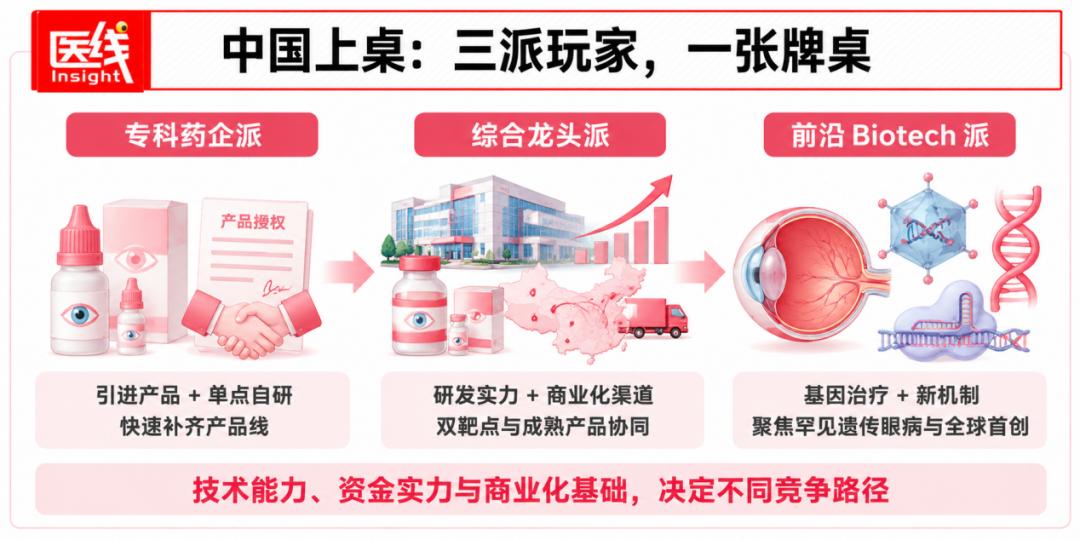
The differences between the three groups of players do not entirely depend on the anterior segment or posterior segment of the eye, but are more reflected in technical capabilities, financial strength and commercialization foundation.
Some enterprises quickly build revenue bases through product introduction and preparation innovation, while others invest in technical directions with longer R&D cycles and higher risks such as dual-target antibodies and gene therapy.
The two paths are not completely separated. Specialized pharmaceutical companies are strengthening independent R&D, comprehensive leading enterprises are also supplementing their product lines through overseas licensing, and cutting-edge Biotechs are trying to build competitive barriers with differentiated technologies.
However, the bustle on the R&D side forms a sharp contrast with the coldness on the capital side.
The pricing of these