Is the future full of red fruits an electronic antidote or a curse for contemporary people?
Spending more than two hours a day watching short dramas squeezes not only the time for long videos, socializing, games and sports, but even sleep time.
01
The Whole Nation Has Entered the Red Fruit Era
Xiaomin is a highly self-disciplined white-collar worker in Shanghai, and this trait even extends to her entertainment activities. For example, for her favorite anime IP, she would fly to Hong Kong to watch the *Demon Slayer* blockbuster, go on anime pilgrimages in Japan, and attend every anime exhibition held in Shanghai without missing a single one.
Everything changed this spring when she became addicted to short dramas. "I'm so busy and exhausted from work that all I want to do when I get home is watch rebirth-themed stories." She opens a certain Red Fruit APP, clicks on a rebirth short drama, turns on 2x playback speed, and all her spare time during commuting, cooking, doing housework and lying in bed is fully occupied by these contents.
Every time she sees the protagonist gain a sense of control brought by information asymmetry, know exactly at which point an accident will happen, take precautions in advance to avoid dangers, make up for the regrets of the previous life, and take the chance to take revenge on the villains, her sense of pleasure is greatly satisfied.
Short dramas have replaced all of Xiaomin's entertainment methods. Her previous hobbies, including indulging in the ACG subculture, cycling, playing tennis, and taking "special forces-style" weekend trips, have all been put aside.
She just feels comfortable in this pastime that "keeps her away from the real world".
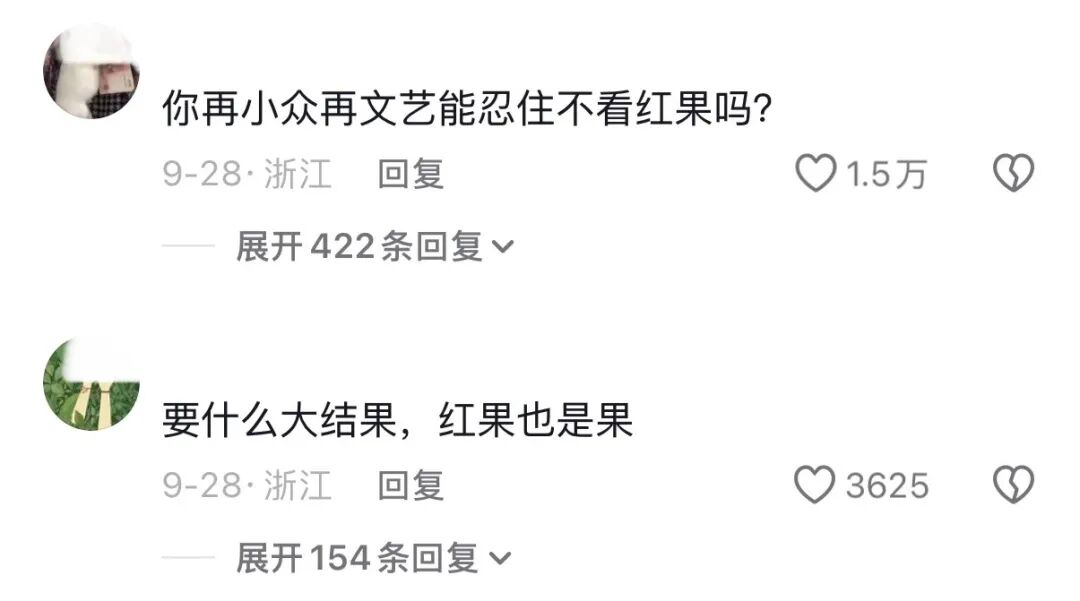
The current short dramas are no longer the novelty curiosities that shocked all literary youth on the internet when Jia Zhangke played the meme of the four major family names of short drama creators on Weibo.
During the just-passed National Day holiday, people scrolling through short dramas on their mobile phones can be seen everywhere on high-speed trains, in scenic spots and restaurants. When my cousin went traveling, she would seize every minute to open Red Fruit and catch up on dramas no matter when she was on the ride, doing makeup or having meals.
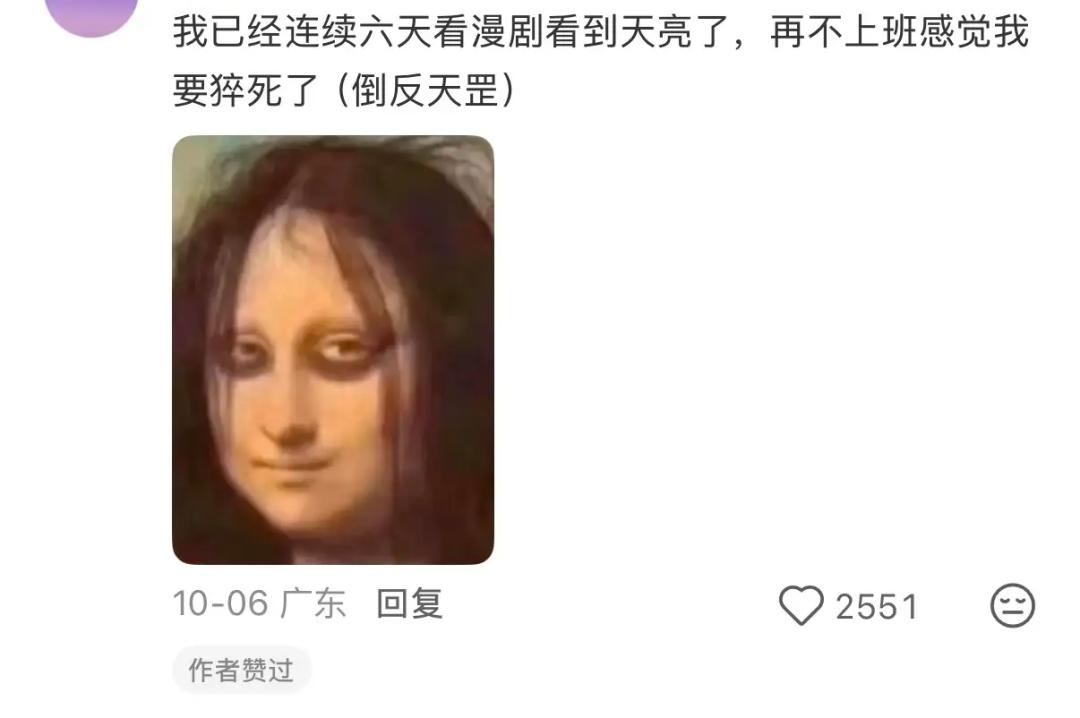
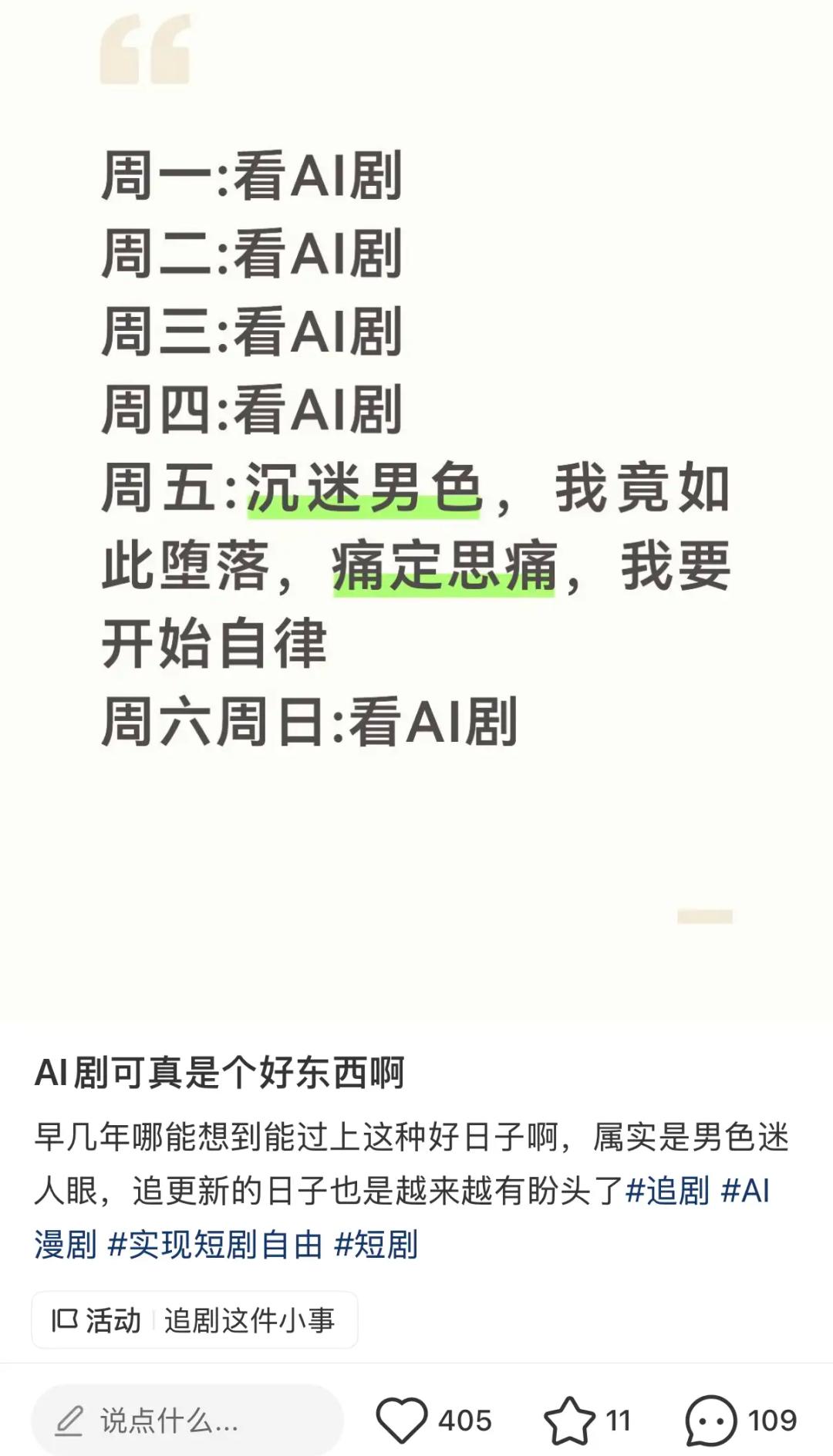
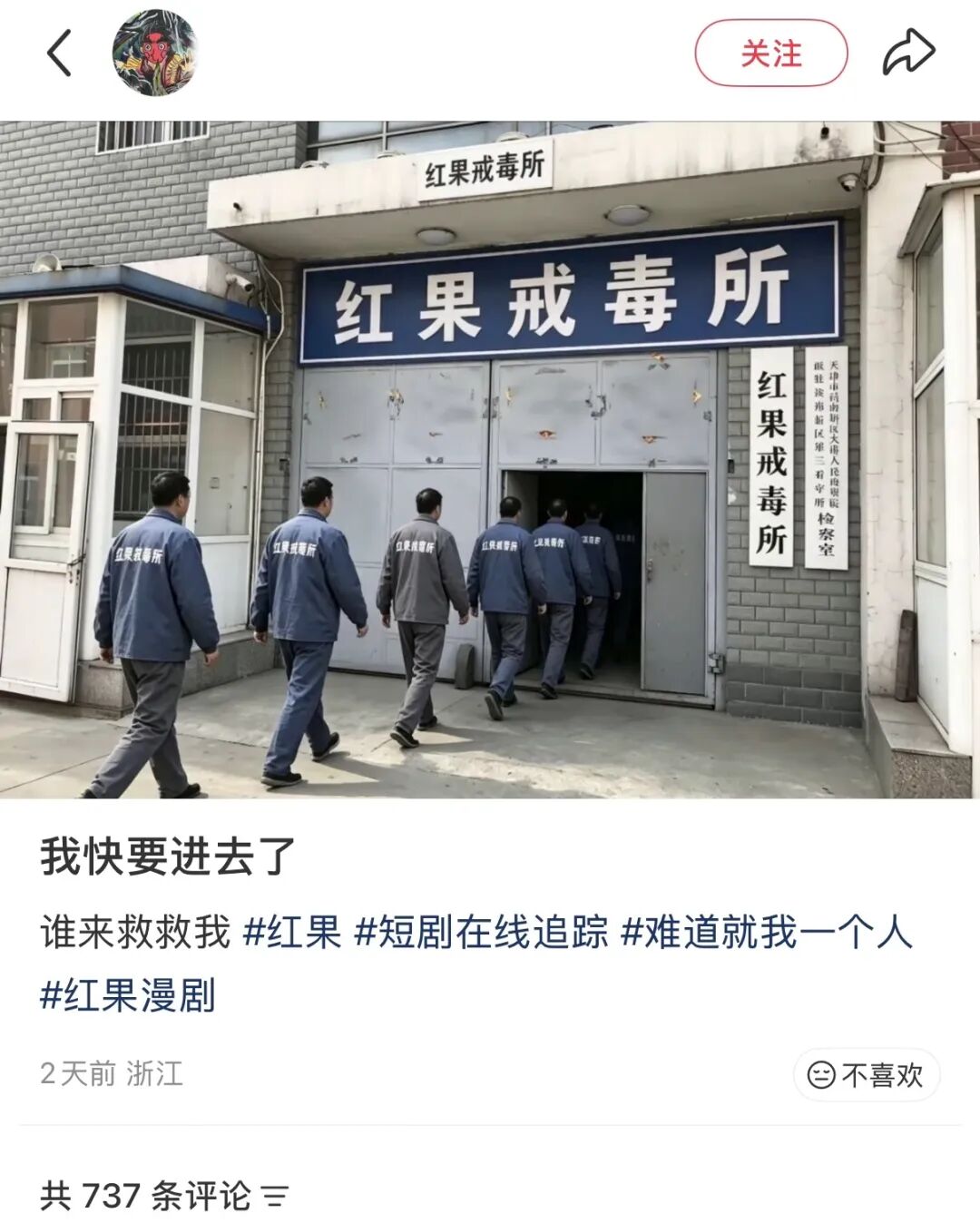
A netizen posted on Xiaohongshu: "I spent 6 days watching AI manhua dramas during the 7-day holiday, is there any way to save me?" The top comment goes: "You are saved, because I spent all 7 days watching them." Another netizen named Momo confessed that she spent 7 days staying up late and getting up late to browse Red Fruit, only had one meal a day, and even saved money on water and snacks, and the comment section was full of resonance from other users.
Some people are addicted to doomsday-themed dramas, while others have watched all the cute-kid dramas. The National Day performance report officially released by Red Fruit also shows that those Momo users who are addicted to short dramas are not individual cases: a total of 8 works exceeded 1 billion views in this year's National Day schedule. Some users found that many production teams updated a large number of new episodes intensively right before the National Day. There is no so-called "National Day schedule" for movies, but short dramas have their own.
Among them, the 13th season of *The Legend of Ten Thousand Demons* exceeded 1 billion views in less than three days after its launch, and the total views of the whole series have reached 6 billion. 19 out of the top 20 hit dramas on Red Fruit's popularity list are AI-generated dramas.
Short dramas not only swallow people's time, but also spill over the screen and become the social currency across the whole internet. The recently viral meme "no heartburn" originally came from the lines of a restaurant owner in an AI short drama launched at the end of September: "It's a bit expensive, but eating it won't cause heartburn", "I'd rather earn less, but the rules can't be broken", "I have to set the rules first". The same lines are copied and pasted by AI in different dramas, and the protagonist's identity changes from selling spicy hot pot to selling pork knuckle rice.
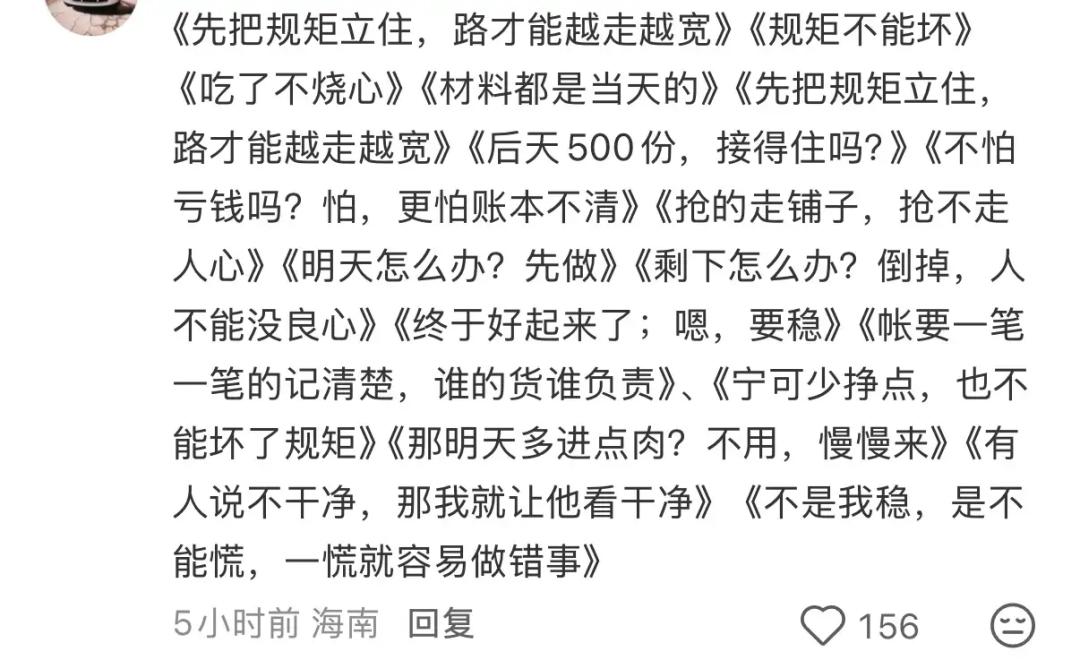
The "no heartburn literature" has even spread from online to offline, and physical restaurants directly paste those lines on their windows as advertisements.
What is more meme-like is the portable keychain printed with the BGM of male and female leads in Red Fruit dramas. In the mass production process of AI short dramas, there is a hidden code, which is to actively copy the successful routines. So *Drive Forever* always plays when the male lead of short dramas appears, *My Gaze Belongs to Me* is often used when the powerful female lead makes her comeback, *Life Struggle* accompanies the scene where the forbearing protagonist finally turns over, *Bite March* plays when the protagonist fights back, *Cage* is the classic track for the female lead to take revenge after turning dark, and the oppressive *Amazon* is used for tense standoff scenes...
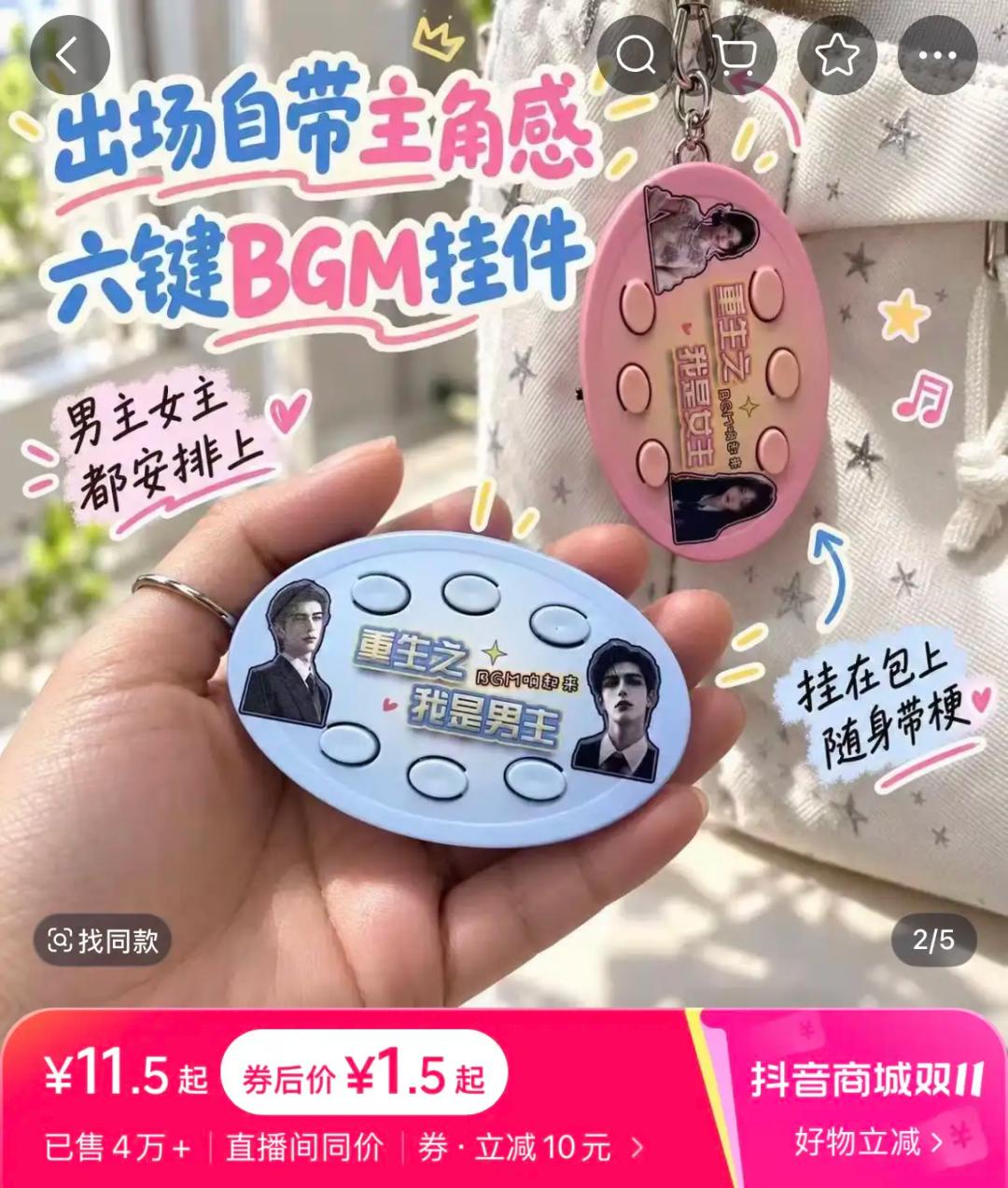
So much so that as soon as we hear those music, we will reflexively enter the corresponding scenario. The keychains that easily help you build the aura of a drama protagonist after hanging on your bag have achieved tens of thousands of sales on several shopping links.
I have never felt more deeply than at this moment how high the penetration rate of short dramas is in the daily life of the whole public. Short dramas are no longer a marginal pastime long ago. They have been embedded in contemporary people's content consumption, time allocation and social patterns just like water and air.
02
Why People Are Addicted While Confessing Their Guilt
The current audience of short dramas is just like Hu Shi who was addicted to playing cards (and writing diaries): they reflect on themselves many times a day, but they will still play cards as usual, and continue to watch short dramas as always.
For many people, it is not that short dramas provide extremely high doses of dopamine.
Xiaomin, who is addicted to rebirth-themed dramas, can't recall any impressive plot now. The routine stories that happen in ancient marquis mansions or factories in the 1980s slide across the cerebral cortex like white noise without leaving any traces. She has watched the dramas, but never really "got into" them.
At this time, it can be said that people have entered a state of flow. Many plots are too cliché and too routine, all the characters' emotions are unreasonably intense, and even AI roles often mispronounce lines when reading scripts... none of these will be delved into. The brain when watching short dramas seems to be a completely different one from that when watching big-budget long dramas or movies, and the "judgment switch" is selectively turned off.
After all, those overly stupid villains are not even qualified to be hated seriously. People just empty their mind and watch, and the plot reversal is completed in at most a few minutes, no thinking is needed, only emotions are fluctuating.
But this is exactly how the addiction mechanism is formed. You may not remember the names of the male and female leads, but your body remembers the roller-coaster-like emotional experience. Let the audience "hold their breath" (either angry or aggrieved) first, and then quickly "release the breath", which is the most basic part of the short drama addiction mechanism. Then this mechanism is nested in series. The speed and frequency of emotional rewards are even stronger than that of games.
For example, *Deep Love Invades the Rest of Life* we wrote about before, which is a hit drama on Red Fruit in recent months, is a variant of the "chase wife at crematorium" routine. The female lead Rong Jiqiao was born poor in her previous life, but she was vain and wayward to the male lead, and died in a hurry. The male lead Duan Yan is set to be sincere, powerful and in high position. After rebirth, the female lead lives in guilt, temptation and passivity to the perfect male lead, is misunderstood and looked down upon again and again, and then the male lead sees her grievance and sincerity every time.
This kind of sour feeling is complained by many people as "abusing the female lead" and cliché, but it just hits the common aesthetic of the public.
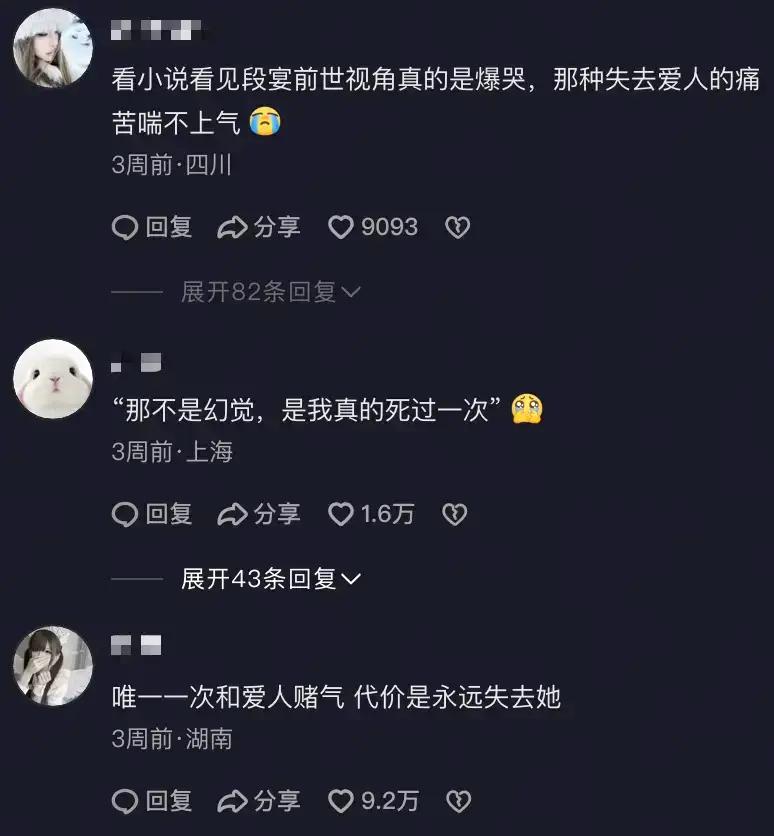
The early death of the female lead is exactly the "dead wife literature" that the public loves so much.
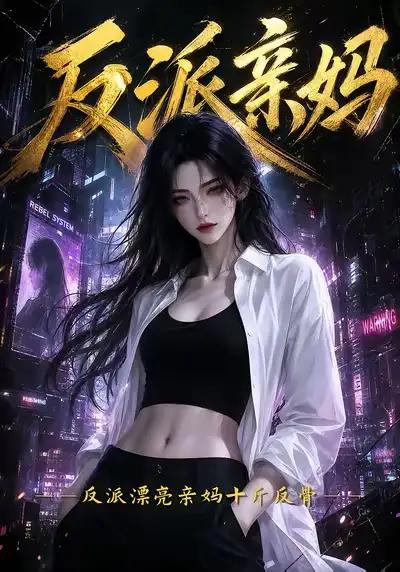
The drama *Villain's Own Mother: The Beautiful Mother of the Villain Has a Stubborn Bone* which ranked first on both Red Fruit's collection list and recommendation list in September, its core emotional mechanism is "relieving anger". The female lead Su Miao transmigrates to become the biological mother of the future big villain, she delivers takeout during the day and fights in underground boxing matches at night, she will fight back against anyone who bullies her son, and will not tolerate those annoying relatives at all, releasing all the pent-up grievance that people "can't vent" in real life.
A top comment says: "I just want to see her take down those people one by one and vent my anger for me."
For those cute-kid AI dramas that often top the ranking list in recent months, their emotional mechanism is softer.
For example, *The Youngest Junior Sister of Sword Sect*, *Maomao Arrives*, *Master of Baby Language*, and the new king in September *Nuonuo Goes Down the Mountain, All Senior Panics* whose popularity reached 94.43 million and topped the list by a large margin. The number of reservations before the launch of its second season exceeded 10 million, which is almost an unreachable data for long video platforms.
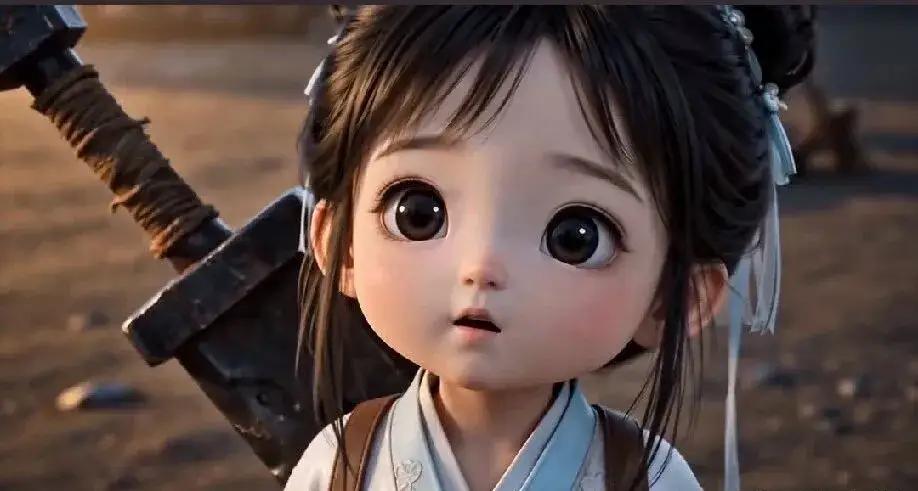
The main plot of "Nuonuo" is that the six-year-old youngest junior sister goes down the mountain to look for her senior brothers who have lost contact for hundreds of years. She thinks they are living a hard life, so she carries a bag of sugar beans and wants to "support" her senior brothers.
She has a cute kid's appearance but terrifying strength, carries a black iron giant sword taller than herself, is looked down upon by others, and then pretends to be weak to show her great power; when she finds her senior brothers, they turn out to be either immortal emperors or demon world emperors, and Nuonuo becomes the favorite of the whole group. Then she goes to look for the next senior brother. There are no overly cliché plots and complicated reversals, you just watch the cute kid wander around the world and be loved unconditionally.
As for the *The Legend of Ten Thousand Demons* series with the highest popularity recently, it follows the routines of traditional online novels. The protagonist Jiang Yueduan, whose soul is a man transmigrates into a female body, travels to the Tang Dynasty, binds the "Ten Thousand Demons Record" system, slays demons to seize treasures and upgrades by fighting monsters all the way. It is a female lead-centered drama, but has the core of male-oriented cool web novels. *Carry Weapons to the Song Dynasty* tells a story that five modern special forces soldiers travel to the Xuanhe period of the Northern Song Dynasty with full sets of equipment, trying to rewrite the historically known Jingkang Humiliation. All these contents are very suitable for the audience of traditional online novels.
Therefore, when people watch AI short dramas, they are not pursuing any innovation in narrative.
The stories and content created by human beings have long been saturated, and it is difficult to bring the freshness of "being hit for the first time". In the post-narrative era, stories are no longer scarce, what short dramas provide is customized emotional consumption. All kinds of themes including chasing wife at crematorium, group favorite, cultivating immortals, farming, doomsday, traveling through time to change history are all available, and people can choose whatever they like.
We don't need to have sufficient cultural energy, and the energy consumed for judgment, screening, analysis, appreciation and delayed satisfaction is also reduced a lot.
Slavoj Žižek who surfs the internet on the front line has already commented on this phenomenon (which is comparable to Jia Zhangke being addicted to short dramas, another dark moment for literary youth). He directly used the Chinese pinyin "duanju" on his blog to refer to this content, and believes that short dramas have a great relationship with the gig economy.
Freelance workers do not have real free time, they are in a state of continuous operation, their labor is cut into fragments, and their consumption is also cut into fragments. They are exactly the ideal audience of short dramas, who consume short dramas in the gaps when queuing, eating or delivering takeout. Yes, this