With an annual saving of 25,400 yuan and more than 60% of them having purchased insurance, the post-2000s generation is collectively building a sense of security | Post-2000s Sense of Security Report

Often labeled as the "live for the moment" generation, are Gen Z (people born after 2000) truly the "most secure" generation of all time?
They value experiences and are willing to pay for their interests, but they also have to face the changes in the economic environment, employment patterns, cost of living and the connection of social security.
From "fragile youth", "unhealthy involution" to "problem separation" and "deposit anxiety", internet buzzwords also reflect the unease of young people. The emerging trend of "simply living a plain life" also shows that many Gen Z people have put aside the urge to keep up with the Joneses and embraced the wish for a stable life.
For them, "sense of security" is no longer just an emotional term, but a cornerstone of life that needs to be built steadily. To live a stable life, savings and protection are the most specific keywords.
But the question arises: how to save money reasonably, how to plan expenses, whether to rely on savings or protection when encountering risks, and how to strike a balance between enjoying the present and feeling at ease in the future?
To understand the current state of Gen Z's sense of security, "OhYouth" launched the "Gen Z Sense of Security Survey", and a total of 908 valid questionnaires were collected. What are Gen Z people worrying about? How do they increase their sense of security? Many people have their own security plans hidden in their Alipay accounts.


When the sense of security falls into real life, sudden changes in income and expenditure are the first problem that Gen Z needs to guard against.
Broken down into different scenarios, 63.8% of Gen Z believe that "sudden illness/hospitalization of themselves or family members" is most likely to bring financial pressure; 62.0% worry about sudden unemployment or long periods without income.
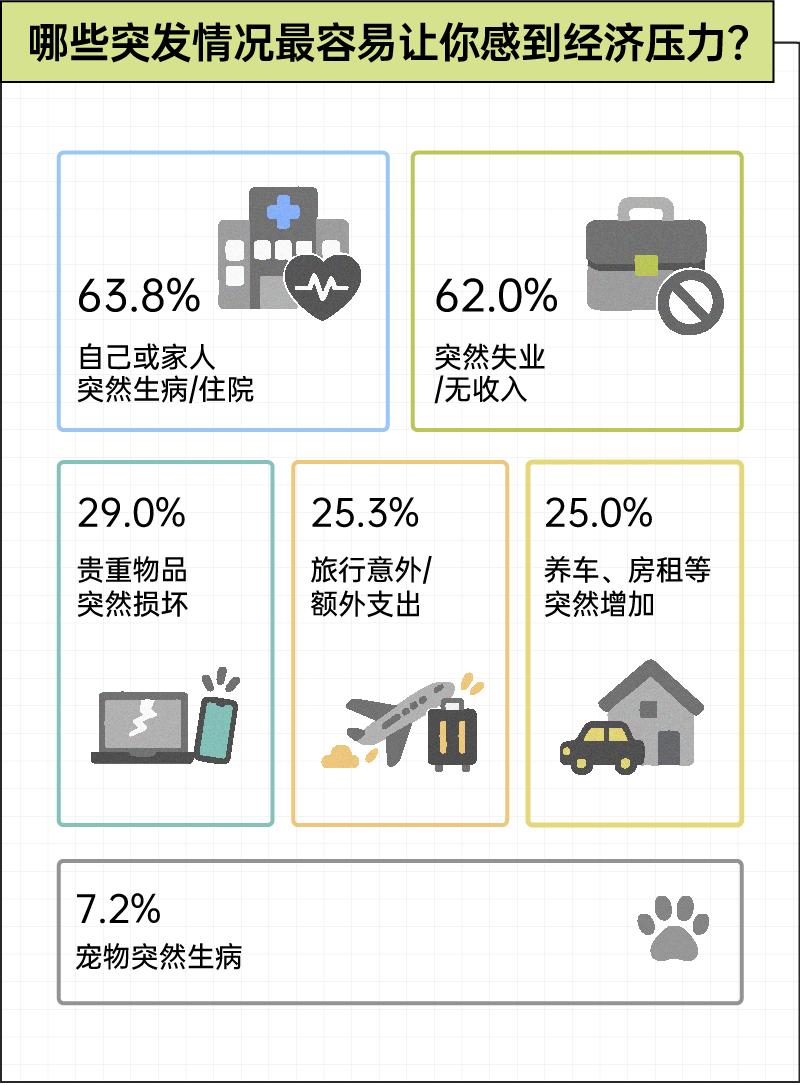
Both of these point to the same problem: the originally stable rhythm of income and expenditure may be suddenly interrupted at a certain moment. The first step that can be done in advance is often to save a sum of money first.
For Gen Z, the meaning of saving money is becoming "how many choices you can retain": saving money may not solve all problems, but it can give them more flexibility in the face of job changes or temporary expenses.
And this generation of young people started accumulating wealth earlier than expected.
The OhYouth survey shows that in the past year, Gen Z saved an average of about 25,400 yuan, among which the largest group saved 10,000 to 30,000 yuan, accounting for 25%; nearly 15% of people can save more than 50,000 yuan.
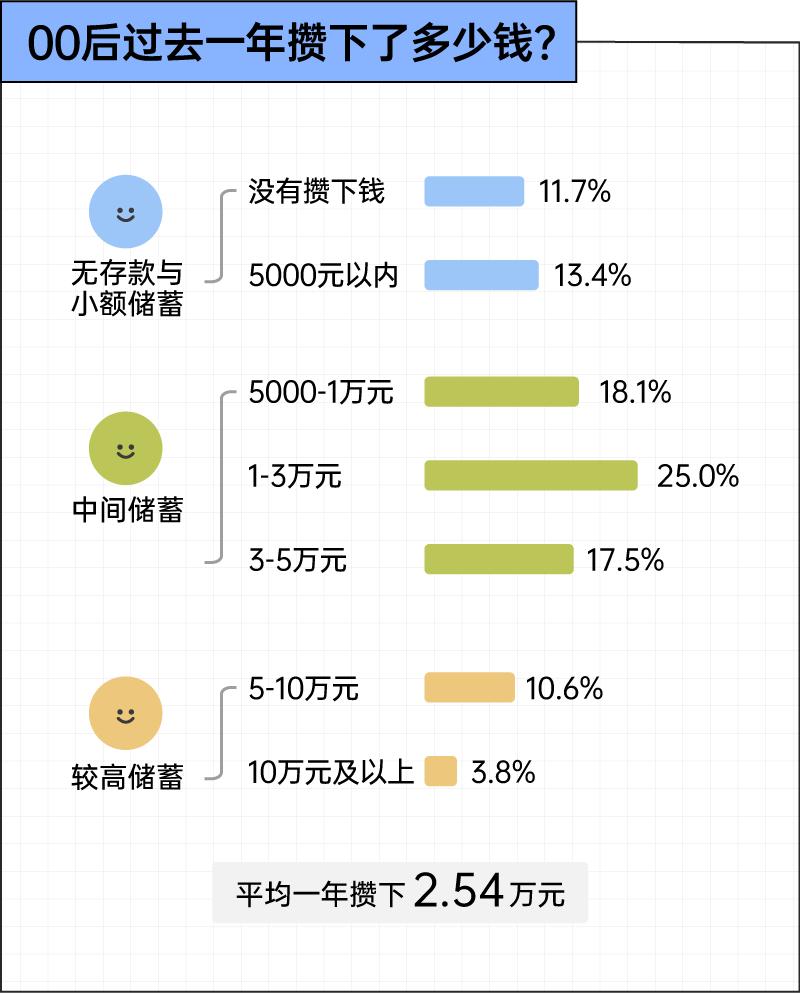
By gender, women are better at saving money than men. In the past year, Gen Z women saved an average of 27,800 yuan, about 6,000 yuan more than the 21,900 yuan saved by men.
For Gen Z who have just entered the workplace, although their savings are not much, saving money has become a daily way for them to increase their sense of security.
They also have their own preferences for how to save money.
In the survey, 55.1% of Gen Z will put their money "in accounts that can be withdrawn flexibly such as Yu'E Bao", which is also the most common way to save money; 43.6% and 39.2% choose to "directly deposit in bank cards" and "make time deposits in banks".
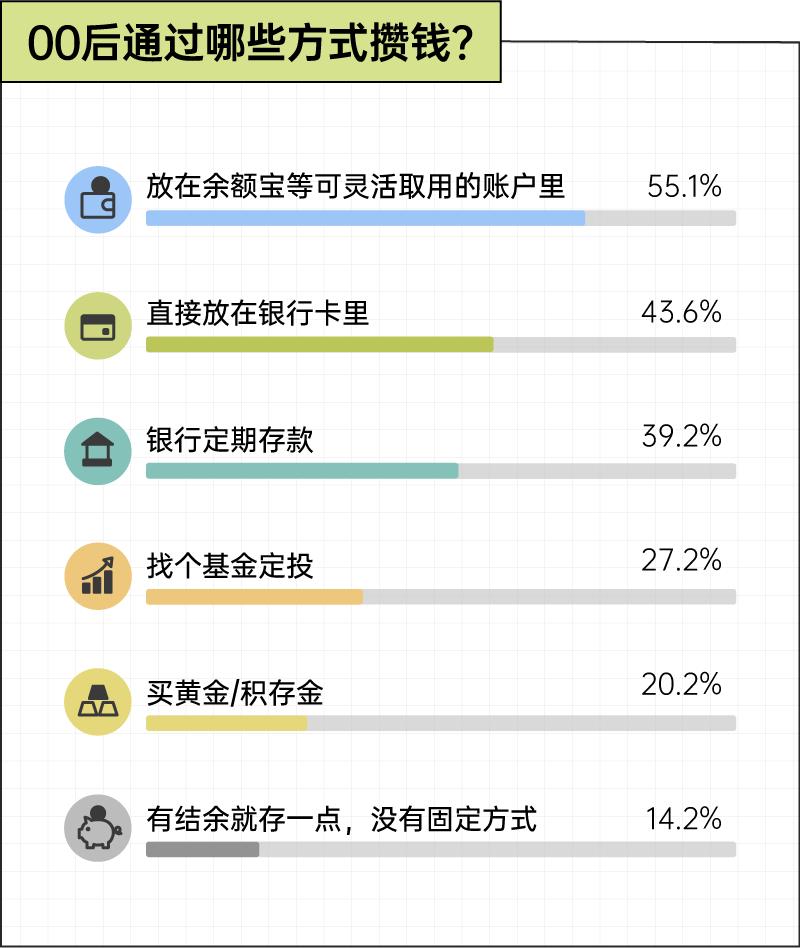
Behind this set of choices lies a clear tendency: what young people want is not "locking up their money", but retaining the flexibility of funds while accumulating wealth.
This flexibility to leave leeway for themselves is not only reflected in savings accounts, but also hidden in consumption bills.
From the consumption perspective, 52% of Gen Z will actively control their consumption budget on weekdays, 33.4% will regularly check bills or keep accounts to control overall expenditure, and 35.9% will set aside a fixed emergency fund every month. Compared with remedial measures after problems occur, Gen Z prefers to leave leeway for risks in daily consumption in advance.
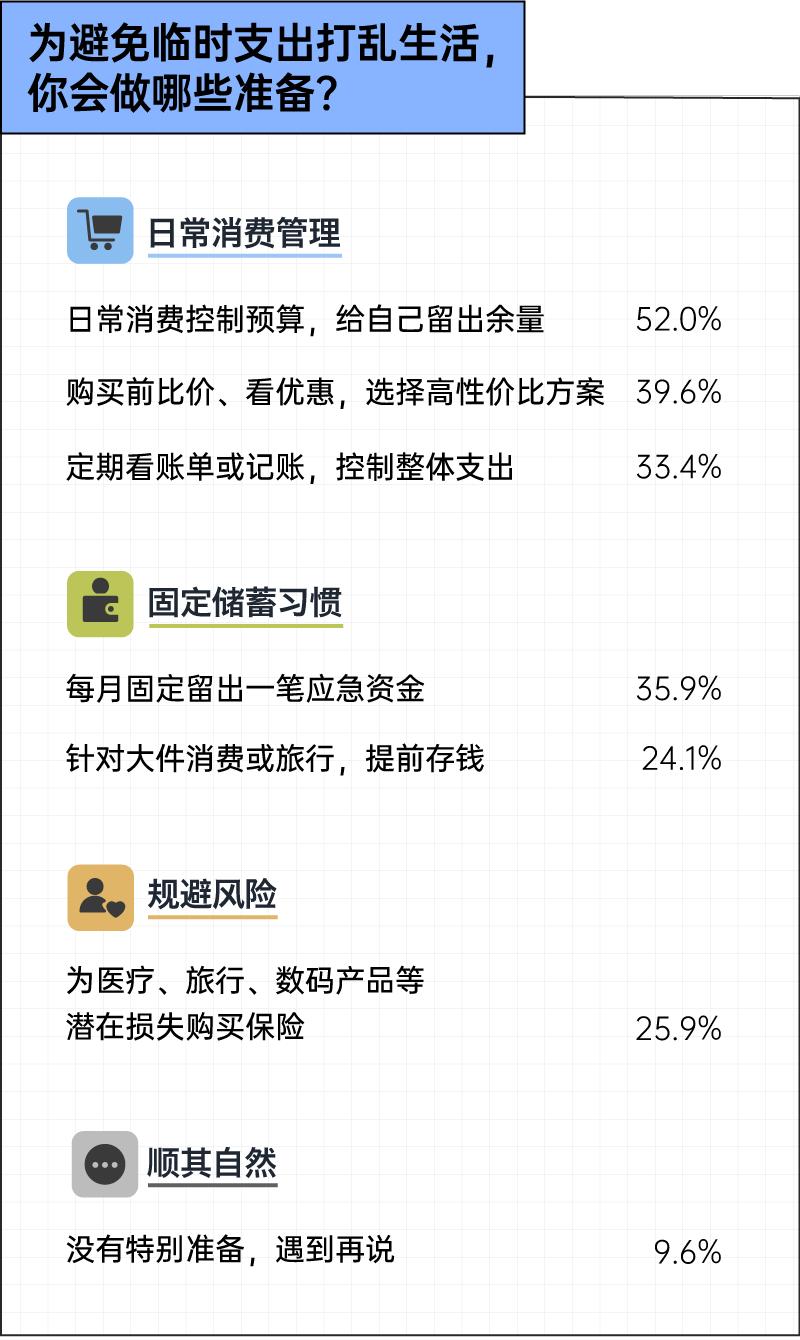
And their reasons for saving money are becoming clearer and clearer.
49.3% of Gen Z save money to leave leeway for themselves when their income is interrupted; 42.9% hope to use savings to cover medical expenses such as illness and hospitalization, and even 11.9% have already considered retirement in advance.
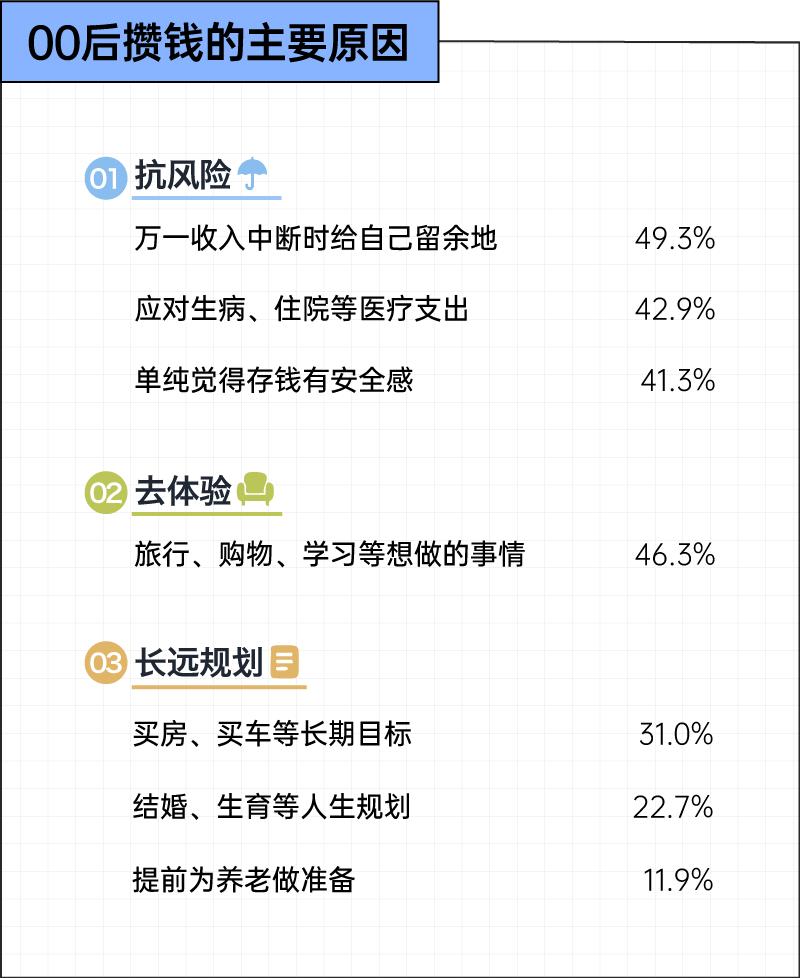
It is not difficult to see that for Gen Z, saving money is no longer just for large consumption such as houses and cars, but more for providing a safety net for themselves.
Some people only understand the meaning of this sum of money after experiencing a real out-of-control situation.
@Dami | Gen Z
The year before last, my mother suddenly had a cerebral infarction. A single hospitalization cost 20,000 to 30,000 yuan, and she needed a recovery period of three to four months after discharge. Without savings, I would never have gotten through those months. I spent all my savings on my mother's treatment, but I have no regrets, and I'm glad I had some savings. I will continue to save money to resist risks in the future.
@Diandian | Gen Z
I don't want to work until I'm old. I hope I can retire early and travel and experience more while I'm still healthy, so my biggest goal now is to make money and save money to make full preparations for my middle-aged and old life.

Savings can buffer unemployment and temporary expenses, but they may not be enough to cope with large risks, especially serious illnesses.
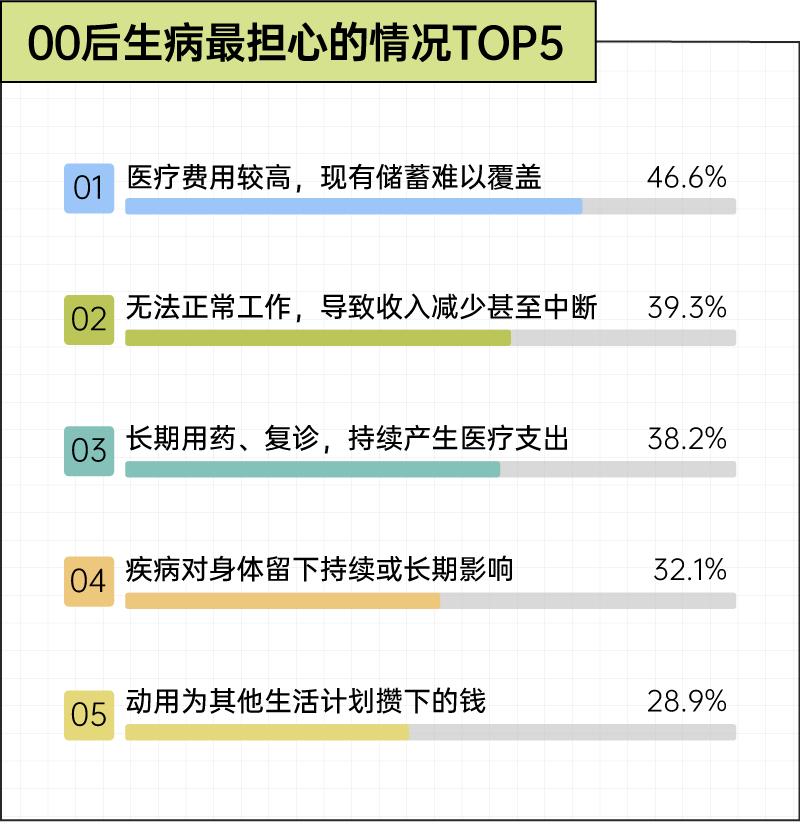
Faced with a sudden serious illness, 46.6% of Gen Z are most worried that "medical expenses are too high to be covered by existing savings"; 39.3% worry that they will not be able to work normally after getting sick, leading to reduced or even interrupted income, and 38.2% worry about the continuous expenses brought by long-term medication and return visits to the hospital.
Buying insurance has become the key guarantee for Gen Z to build a sense of security.
The OhYouth survey found that more and more Gen Z tend to buy insurance conveniently online, 64.9% of Gen Z have purchased commercial insurance for themselves through internet channels such as Alipay. Among them, 500,000 to 1 million yuan is the most common total coverage amount; 18.8% of Gen Z have a total coverage amount of 1 million yuan or more. According to a rough estimate based on existing data, the average total commercial insurance coverage per Gen Z person surveyed is about 1.34 million yuan.
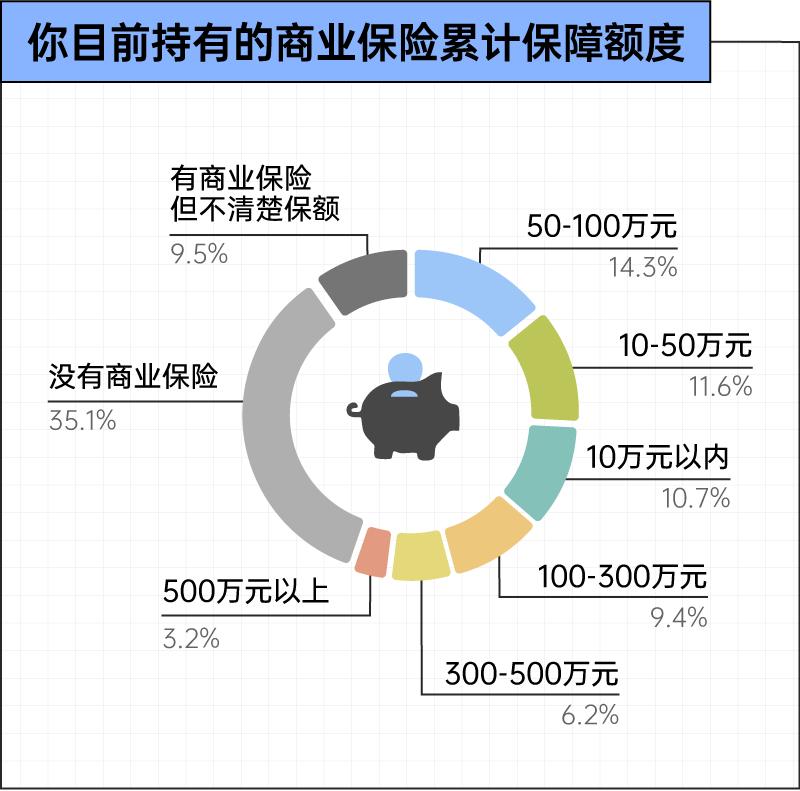
For a young person who can only save more than 20,000 yuan a year, coverage of hundreds of thousands or even millions of yuan seems to exceed the scale of daily life, but it responds to risks that savings cannot afford: savings accumulate incrementally, increasing year by year; but risks can multiply, once outpacing the accumulation speed of several years.
As long as the premium is within their acceptable range, nearly half of Gen Z are willing to consider buying additional insurance, and people who have experienced serious illnesses themselves or in their families attach more importance to the value of additional insurance.
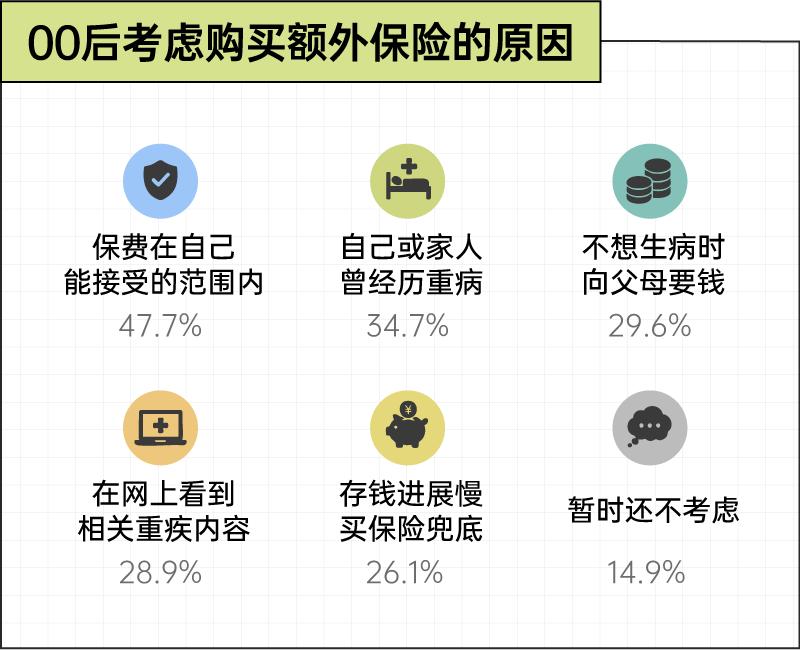
More interestingly, 26.1% of Gen Z will consider buying insurance because "the progress of saving money is slow, but the coverage still needs to be sufficient". Among Gen Z who saved less than 5,000 yuan in the past year, this proportion further rose to 35.6%, the highest among all savings groups.
This result seems rather thought-provoking.
Different from Gen X and Millennials who grew up in the golden period of economic growth and once confidently believed that the speed of saving money could catch up with the pace of risks, Gen Z grew up amid various changes, with accelerating industry iteration, and it is no longer certain that income will increase year by year. Therefore, in the early stage when their savings are not much, they pay more attention to potential risks. For them, protection is not a consideration that comes after they are wealthy, but a protective lock for their deposits within their limited income.
For people with different incomes, there are certain differences in whether they use insurance to cover unexpected expenses in life. The data shows that nearly half of Gen Z with an income of more than 20,000 yuan will buy insurance to resist the risks brought by large expenditures, while this proportion is 14% among people with an income of 3,000 yuan.
The demand for protection also extends to daily life.
Among Gen Z who have already purchased scenario-based insurance, travel insurance is the most common, followed by shopping consumption insurance and digital device insurance. In addition, outdoor sports, household property, pets, etc., have also become objects they will consider protecting.
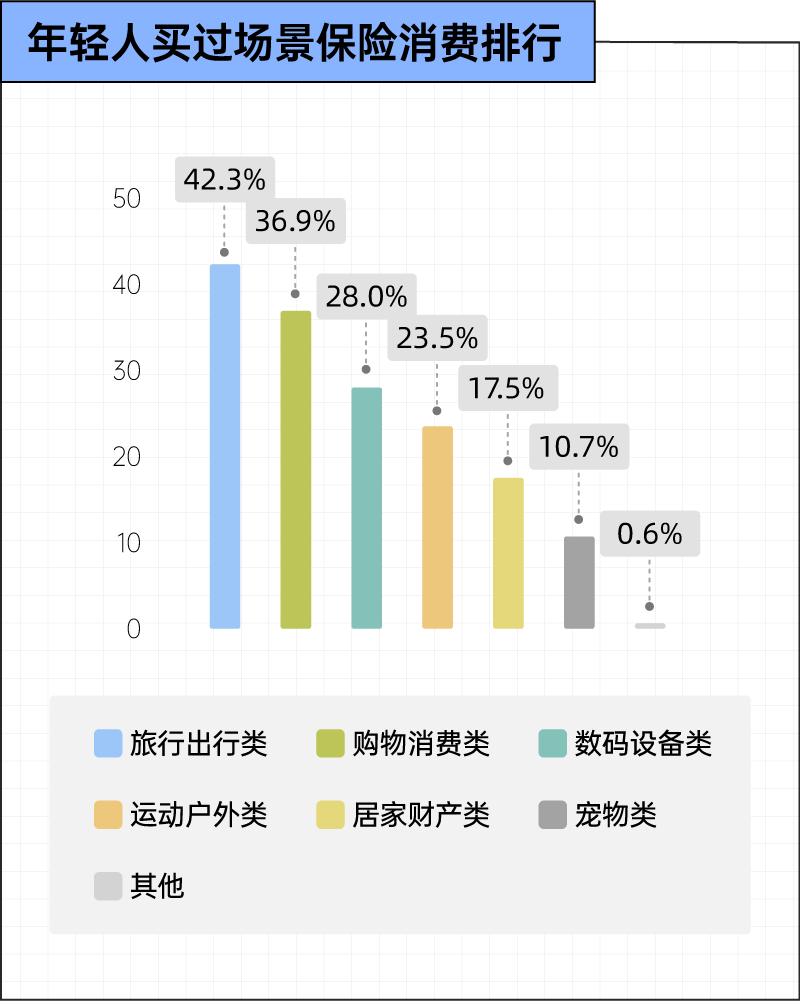
Flight delays, return shipping costs, broken phone screens, skiing injuries, pet illnesses — none of these are major life upheavals, but they