Defect-free rearrangement of 4000 qubits, a homegrown dark horse has emerged in the neutral atom track.
Recently, Nakai Quantum (Beijing) Technology Co., Ltd., a neutral-atom quantum computing company, has completed the full assembly of its general-purpose quantum computer "Qiyuan No.1", and achieved technical breakthroughs in 4000-qubit defect-free arrays and continuous loading technology. This is one of the early domestic practices in the neutral-atom quantum computing track that realizes both of these two indicators on a single complete machine.
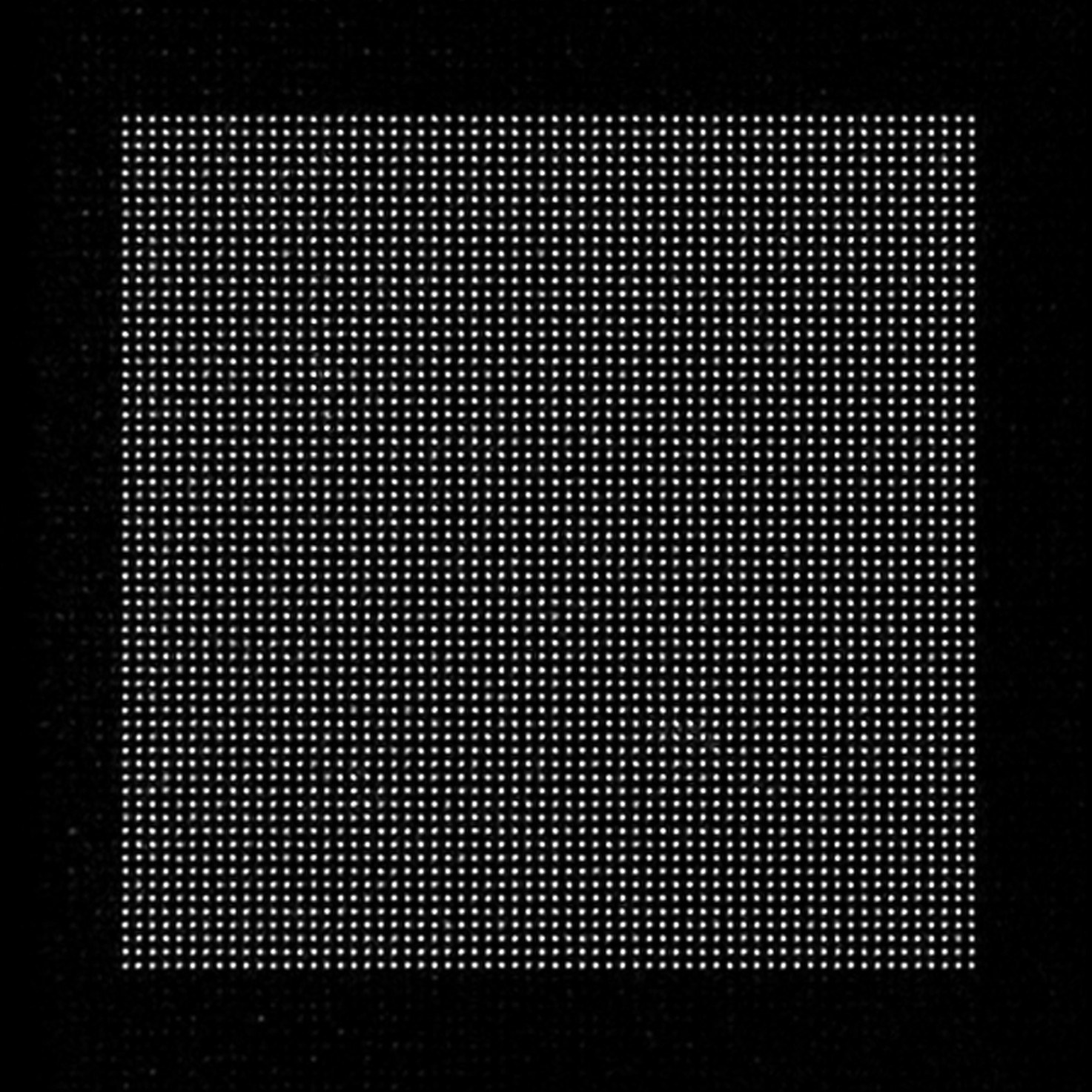
Figure: Demonstration of the large-scale defect-free array of 4096 (64×64) qubits of Qiyuan No.1
Walking into the Nakai Quantum laboratory, you can see that "Qiyuan No.1" is placed on two separate optical platforms. The main platform is divided into three layers: the middle layer houses the vacuum chamber and magnetic field system where atoms are trapped and manipulated; the upper and lower layers are equipped with optical paths. The second platform is also used for optical paths, which transmit lasers to the vacuum chamber. Connected next to the platforms are the circuit and measurement & control system, which is responsible for the timing control of the whole machine.
According to technical personnel, the whole machine has 853 optical components alone, including mirror mounts, wave plates, AOMs, PBS mounts, optical shields and other parts. The system uses a moving optical lattice conveyor belt to connect the cold atom reservoir with the qubit manipulation area. After being trapped by optical tweezers in the lattice transport area, atoms need to go through multiple rounds of handover between dynamic and static optical tweezers, and between the preparation area and storage area, to complete loading and rearrangement.
"The movement of atoms itself is not difficult, the difficulty lies in the sequence of movements," the technical lead introduced. Timing management is the biggest challenge for continuous loading — behind the 853 optical components is a set of time sequence measured in nanoseconds.
I. Why 4000 Qubits
In neutral-atom quantum computing, single atoms are usually trapped and manipulated by optical tweezers formed by highly focused lasers. However, there is randomness in the initial loading, and the obtained array often has vacancies, so it is necessary to move atoms to fill the target positions, and this process is called rearrangement. The term "defect-free" refers to the occupancy of the target array, which does not mean that there is no error in quantum operations.
Then, why 4000 qubits? The team's answer is straightforward: this figure is jointly determined by the target and engineering conditions.
When the scale expands to thousands of atoms, the number of optical tweezers increases, and the required laser power also grows accordingly. For an array scale of 60×60=3600, the total power under the condition of 3 milliwatts per single optical tweezer is close to 15 watts. Considering the diffraction efficiency and transmission loss of optical components, the total power at this point is already close to the available output upper limit of the existing optical path. This means that to further increase the number of atoms, the first challenge to face is the optical power budget.
Another constraint is the balance between scale and coherence. The solution adopted by Nakai Quantum requires merging the results of multiple rounds of loading into the same array: a 3000-qubit scale requires about 6 rounds of loading, and each round needs to form a defect-free array of about 500 qubits. Capacity expansion can increase the number of atoms loaded per round, or increase the number of loading rounds, but both options have costs — the former requires optical tweezers in a larger range to maintain uniformity and be able to move accurately; the latter means that the atoms loaded first have to wait for a longer time, which puts higher requirements on storage and coherence preservation.
In addition, there is the field of view issue of the acousto-optic deflector (AOD). The size of the AOD window directly determines the qubit scale that can be accommodated: the larger the AOD window, the larger the array range that can be covered in the end. However, both the preparation area and the storage area occupy space, and channels need to be reserved for atom movement. After the inter-atom distance and optical path conditions are determined, there is a practical boundary for the maximum array size that can be accommodated.
Therefore, combining the above practical conditions and the subsequent power demand for Raman light and Rydberg light, the team initially thought that 3000 qubits was a relatively appropriate engineering target at the current stage, and finally overfulfilled the target to reach 4000 qubits.
II. The Core is Continuous Loading
The challenge faced by neutral-atom systems is atom loss. Traditional neutral-atom systems need to cool and load atoms again after each calculation, so the system running time is often only a few hundred milliseconds. Continuous loading refers to continuously supplying new atoms during the operation of the system, while minimizing the interference of the replenishment process on existing qubits, so as to extend the continuous running time.
Video: Demonstration video of continuous loading and rearrangement of Qiyuan No.1
Internationally, this technology has just been verified not long ago. In 2025, the Lukin team at Harvard University first maintained an array of more than 3000 atoms for more than 2 hours through the division of labor of the optical lattice conveyor belt, preparation area and storage area, and verified that the coherence of qubits in the storage area can be maintained when replenishing atoms. In China, no team had publicly achieved a breakthrough in continuous loading before.
Compared with the Lukin team, "Qiyuan No.1" has made innovations in architectural design: foreign teams mainly use double lattices, while Nakai Quantum uses a single lattice to realize continuous loading, with a simpler architecture and the ability to implement two-qubit gates at the same time.
Continuous loading also has a more distant potential scenario: if heterogeneous integration with other tracks such as superconducting and ion trap is realized for neutral atoms in the future, the complete "Qiyuan No.1" machine can act as a quantum memory to receive the operation results of other tracks and realize long-term storage.
"The more people engaged in quantum computing, the faster the ecosystem can be built. We are very pleased to see the formation of a benign competitive atmosphere," said FAN Yaoyuan, founder and CEO of Nakai Quantum.
III. Dual-Drive Development of General-Purpose and Special-Purpose
Nakai Quantum does not put all its R&D efforts on general-purpose quantum computing, but adopts a dual-drive strategy of quantum simulation computing and general-purpose quantum computing.
The "Qiyuan" series oriented to general-purpose quantum computing solves mathematical and algorithmic problems such as password cracking and financial portfolio optimization. This capability is regarded as a long-term strategic reserve.
The "Nakai" series oriented to quantum simulation computing, namely special-purpose quantum computers, solves scenarios that are essentially quantum systems such as material R&D and biopharmaceuticals, by creating a controllable quantum system to simulate the uncontrollable quantum systems in nature.
As of now, the complete "Nakai No.1" quantum simulation machine has completed mass delivery and received commercial orders of tens of millions of yuan; the "Nakai No.2" quantum simulation commercial machine is expected to be launched in 2027, which will support plug-and-play operation.
Why cover both atomic systems of bosons and fermions at the same time? The technical lead of Nakai Quantum said straightforwardly: "There are only two types of atoms in nature: bosons and fermions. By deploying both systems at the same time, we aim to cover as many types of materials as possible."
From the perspective of technical foundation, the core team of Nakai Quantum comes from Peking University, and is one of the earliest teams in China to carry out research on ultracold atoms. After cooling atoms to a sufficiently low temperature, combined with optical lattices, the team can study controlled quantum many-body systems;
Combined with optical tweezers and related manipulation methods, the team can further develop the atomic array platform oriented to general-purpose computing. Basic capabilities such as atom preparation, laser control, vacuum and measurement & control systems can be reused on both product lines.
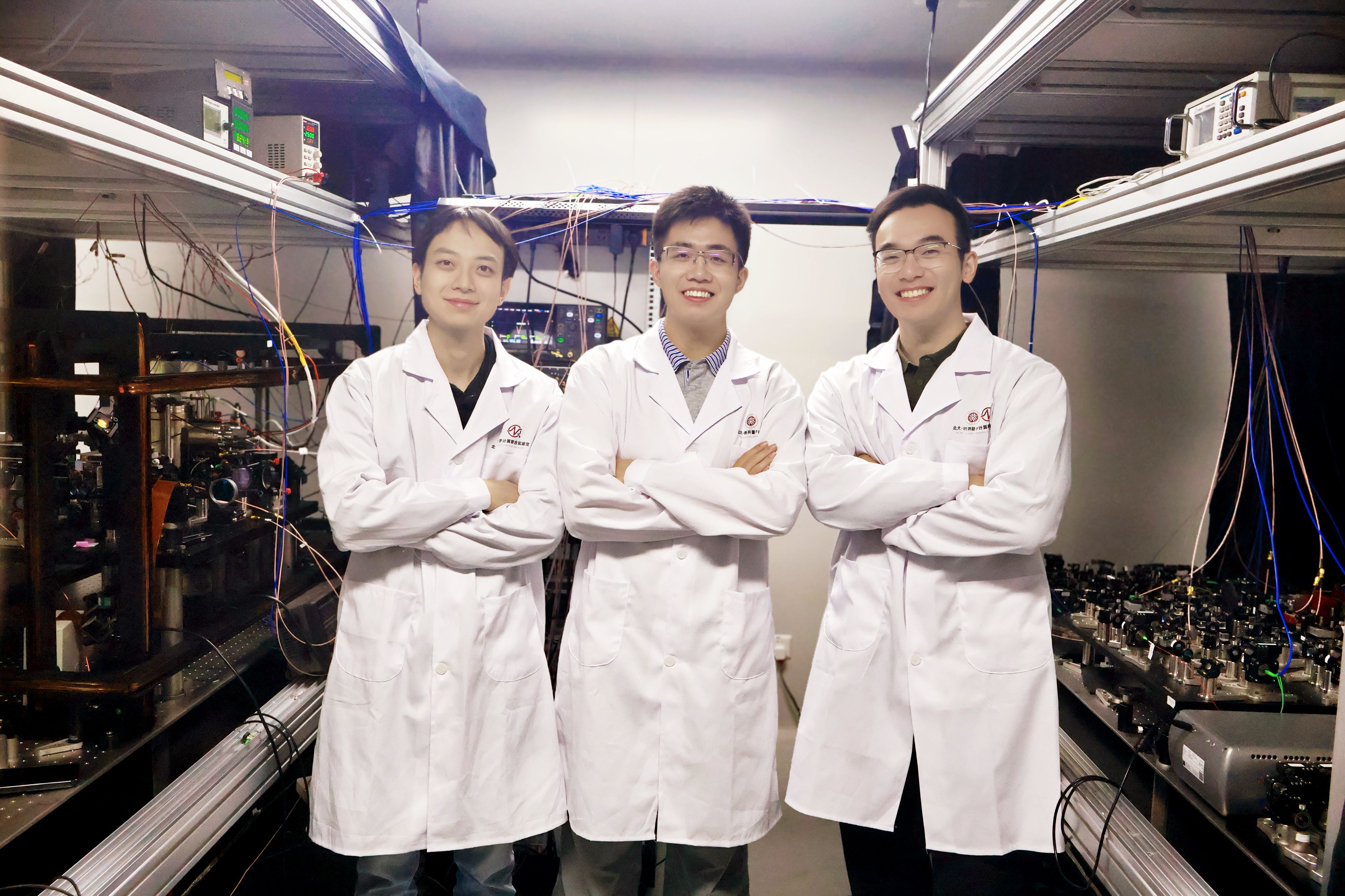
Figure: The core team of Nakai Quantum
Talking about the plan for the next one to two years, FAN Yaoyuan said that on the one hand, the team will continue to polish hard indicators such as gate fidelity and global independent addressing, and on the other hand, invest in cutting-edge explorations such as interconnection of complete machines — in his view, when the scale of neutral-atom arrays continues to expand, "how to connect multiple single machines" will become the next question that must be answered. At the same time, the quantum simulation product line will accelerate cooperation with industrial partners to promote commercial implementation.
It is reported that "Qiyuan No.1" is scheduled to be officially released in the fourth quarter of 2026, and more measured indicators and operation details will be disclosed at that time.