Young people are falling in love with fountain pens again? Why have fountain pens regained their popularity?
If we turn the timeline back to decades ago, back then having a fountain pen in your shirt pocket was a prized accessory that many people admired. However, with the rapid popularization of ballpoint pens and gel pens, the number of fountain pen users kept shrinking, and there were even claims that fountain pens would be phased out of the market. Yet the recent news that young people are falling for fountain pens again makes people can't help wondering how this writing tool has staged a revival?

1. Are young people falling in love with fountain pens again?
According to a report by Beijing Youth Daily, the nib of a fountain pen glides across the paper, leaving lines of words. For many young people who are used to typing on mobile phones and keyboards, there are few opportunities to pick up a pen and write in daily life. But recently, fountain pen writing has re-entered the vision of young people.
Some people visit stationery shops and collect fountain pens, while others meet like-minded people at offline events. Slowing down to write gives emotions a space to settle; a fountain pen has also become one of the bonds connecting youth groups...
On social platforms, young people's discussions about fountain pens have formed a unique ecosystem. Search for "fountain pen", and you will find tens of thousands of related notes, with video views ranging from hundreds of thousands to millions.
People have also come up with many new "ways to play" around fountain pens: dozens of bottles of colored ink are arranged by color gradient, with color codes and writing effects becoming hot topics; handwritten works are shared, with beautiful handwriting winning likes; writing tests compare different fountain pens, inks and paper, with topics ranging from color rendering, ink output to stroke thickness; in writing videos, the rustle of the nib gliding across the paper amplified by headphones makes many viewers exclaim that "it sounds so relaxing".
In the past two years, whether shopping in physical stores or communicating online, fountain pens are no longer just writing tools for many young people. For some netizens, writing with a fountain pen is a way to calm down; some are keen to try different combinations of pens, ink and paper; others explore craft details from fountain pen designs, and even take fountain pens as collectibles.
In an era where almost all information can be digitally recorded, why do people still insist on writing by hand? This is a question that almost every fountain pen enthusiast has thought about.

2. What on earth is the reason behind the comeback of fountain pens?
Fountain pens, which we once thought would be eliminated by the times, have unexpectedly become popular again. You can see fountain pens in the stationery sections of shopping malls, in unboxing videos on social platforms, and even on the desks of many young people. It makes people curious: in this era where even typing on a keyboard and voice input are considered too slow, how can fountain pens stage a comeback?
First of all, the rival of a fountain pen has never been another fountain pen. Over the past decade, the pen category as a whole has been shrinking. Gel pens and ballpoint pens are cheap and easily accessible, turning writing into a purely recording behavior. But it is precisely because this "easy accessibility" is so thorough that the physical sensation of writing itself has been emptied.
The rustle of the nib rubbing against the paper, the split second when ink bleeds into the paper fibers, and even the slight damping when you twist off the pen cap — these things are worthless in the efficiency-first context, but they turn into scarce resources in another context. When the functional attributes of a product category are completely covered by substitutes, its living space will shift to experience attributes and emotional attributes.
This is exactly the path that fountain pens are taking now. Young people spend hundreds of yuan on a fountain pen, and then spend a whole night filling it with ink, testing colors, and copying a few pages of poems. They are not just "writing", but finding an excuse to slow down for themselves. Whether you call it organizing thoughts or relieving anxiety, the essence is to fight against the pressure that "everything must be completed efficiently".

Secondly, the layered physical feedback of fountain pens is a rare advantage. The physical properties of fountain pens are inherently differentiated, which is not in the same track as ballpoint pens and gel pens. Ballpoint pens and gel pens are essentially standardized fast-moving consumer goods, with identical pen barrels, universal refills, priced at a few yuan each and disposable, which is a thoroughly homogenized business that competes on channels, costs and sales volume.
But what about fountain pens? They come with natural damping, flexible nibs, and variable ink density. If you apply more pressure when writing, the stroke will be thicker; if you write slower, the ink color will be darker. This kind of interaction with paper is something that ballpoint pens cannot provide. To put it plainly, fountain pens have personality, while gel pens do not. This difference in physical properties gives fountain pens inherent space for differentiation, and thus room for premium pricing. Is it expensive to sell a fountain pen for hundreds or thousands of yuan? Yes. But why do people still buy it? Because what it provides is not the function of "writing down words", but a personalized expression. The nib thickness you choose, the ink color you fill, and the unique handwriting you practice are all part of "you".
This is actually a typical candle economy effect: after the invention of electric lights, candles did not disappear, but instead became a symbol of candlelight dinners, romance and a sense of ritual. Because their functional value disappeared, their emotional value was amplified. The same goes for fountain pens: after the writing function is replaced by machines, their value as a carrier of hand feel, style and personality is stimulated, glowing with new vitality. So you see, it is not that fountain pens have become smarter, but that the market logic has changed. They have withdrawn from functional competition and entered a new track of emotional competition.
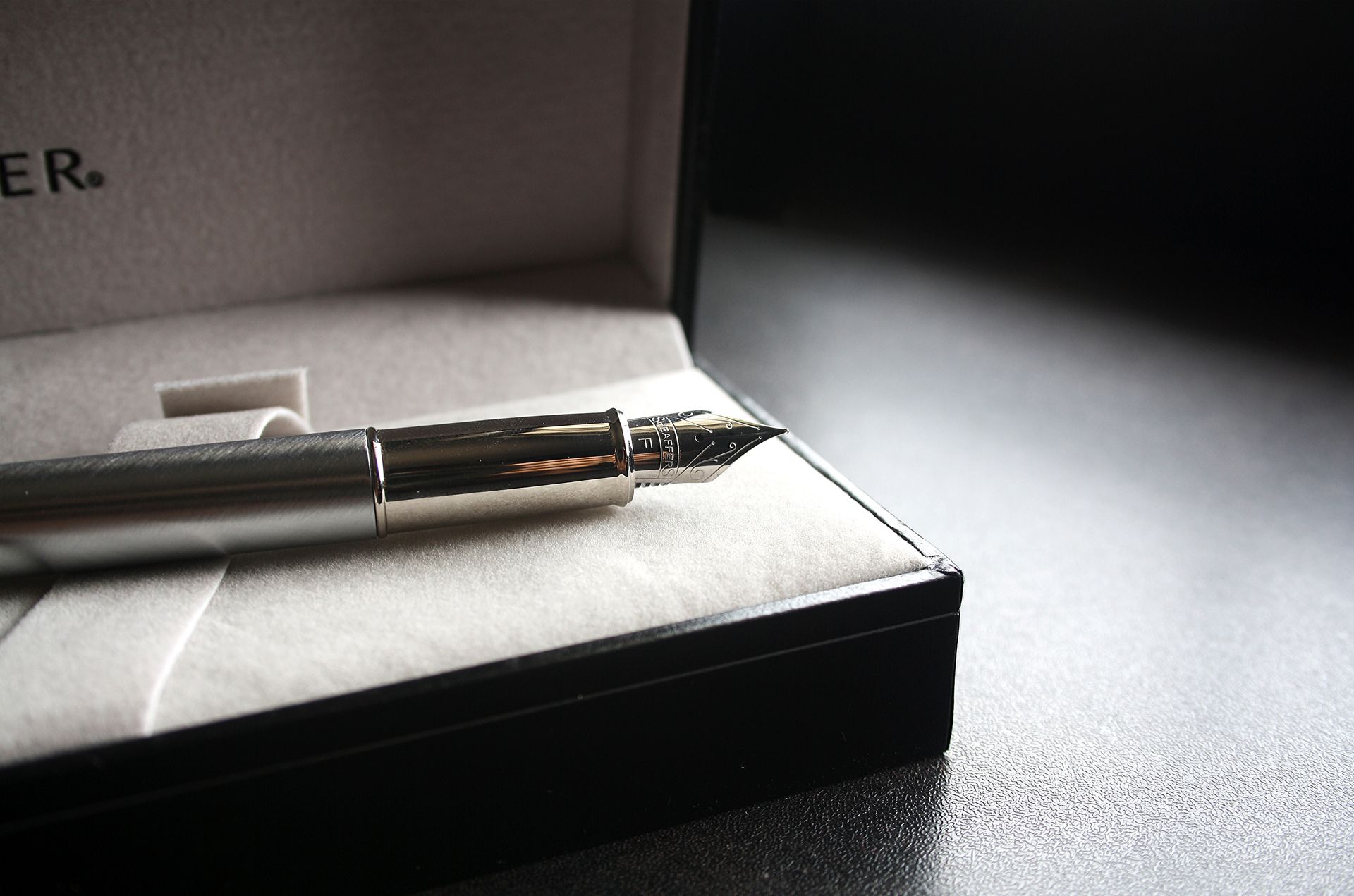
Third, the boost from social media has lowered the threshold for getting into fountain pens. What impression did fountain pens give people in the past? Expensive, fragile, and troublesome. After buying one, you have to figure out how to fill ink, how to clean the pen, and what kind of paper will not cause ink bleeding. These cognitive thresholds used to be taught slowly by shop assistants in traditional channels, but offline stationery shops have almost disappeared. It is social media that has taken over this part of the work.
Those unboxing videos, ink color tests and nib reviews on Xiaohongshu and Douyin are essentially doing an economic thing: reducing information asymmetry. A person who has never touched a fountain pen can know what price range, what nib type and what ink to choose to avoid clogging the pen after watching a few videos, which greatly reduces the trial and error cost. Moreover, these contents are inherently communicable: the visual impact of colored inks arranged by gradient, the aesthetic satisfaction of handwritten works, and the soothing effect of the rustling sound are all materials tailor-made for short videos. Whether you call it product seeding or circle socializing, the result is that fountain pens, which used to be a product that requires "professional knowledge" to get started, have become an interest option that you can get into just by scrolling through your phone.

Fourth, fountain pens carry richer cultural stories. Today's fountain pens are no longer the traditional writing tools, but carry more cultural attributes and emotional values. A fountain pen may hide a story, passed down from elders, given by a friend, or carefully selected by yourself. It can also be customized and engraved to become a unique gift. Giving a classmate a fountain pen engraved with their name at graduation, or giving a delicate fountain pen to a business partner in the workplace, is more thoughtful and can carry more emotions than giving ordinary fast-moving consumer goods. Compared with those disposable products, fountain pens undoubtedly bring more emotional sustenance, acting as items that can accompany you for a long time and carry memories and good wishes.
That is exactly why fountain pens have become an important carrier for young people's "reverse escape". In this era where everything is pursued to be fast, they prefer to slow down, write with fountain pens, feel the friction between the nib and the paper, and enjoy the rare tranquility. Fountain pens have evolved from outdated stationery to a new type of emotional consumer goods, which no longer meet the simple writing needs, but satisfy young people's pursuit of individuality, slow life and emotional sustenance.
In fact, this kind of "retro revival" phenomenon is not uncommon. From film cameras to vinyl records, from old-fashioned bicycles to retro fashion, many things that were once abandoned by the times are returning with new postures. Behind this trend is people's reflection on "standardization" and "fast pace", as well as the pursuit of individuality and unique experience. The comeback of fountain pens is just a microcosm of this trend.
Therefore, the revival of fountain pens is not because the pens themselves have changed, but because they have caught up with the new consumer era. In this era, what can touch people's hearts is never the cheapest product, but the most special one. Fountain pens are just special enough.
This article is from the WeChat Official Account "Jiang Han's Vision Observation", and is published with authorization from 36Kr.