Gasoline vehicle sales plummeted by 44% in September. Why are cars getting more and more expensive even when they are barely selling?
A bizarre scene has emerged in the automotive industry: while cars are getting increasingly difficult to sell, their average price keeps climbing. Would you believe that?
In September, the overall passenger vehicle market dropped by 28%, marking the largest decline so far this year. The long-awaited "Golden September, Silver October" sales peak is nowhere to be seen.
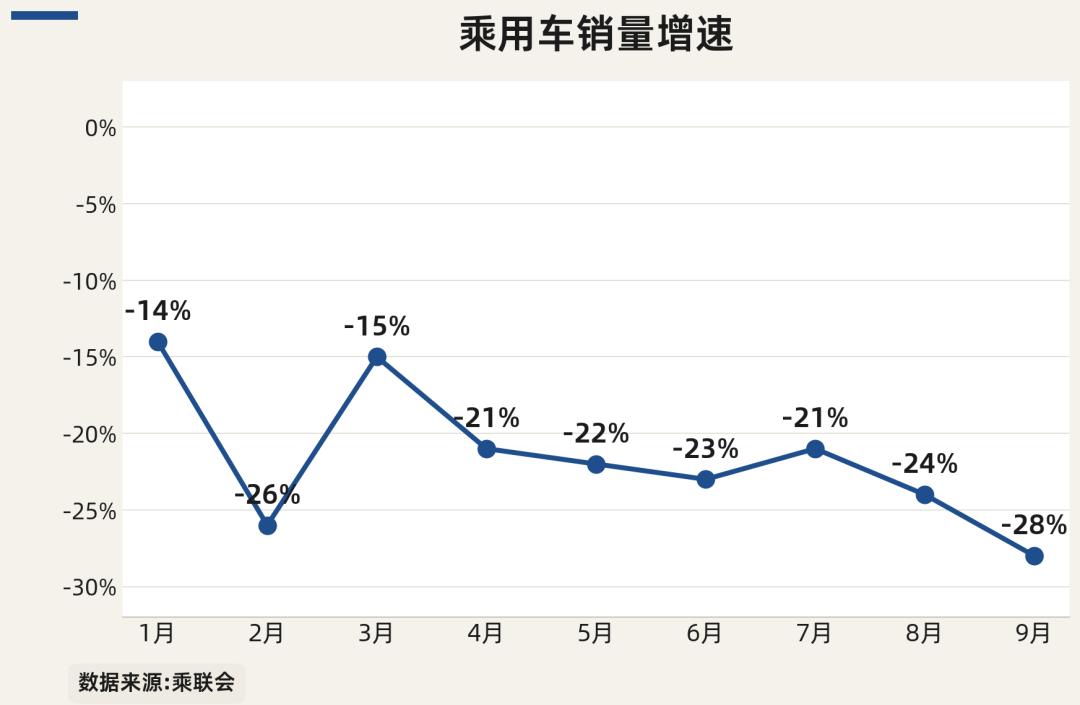
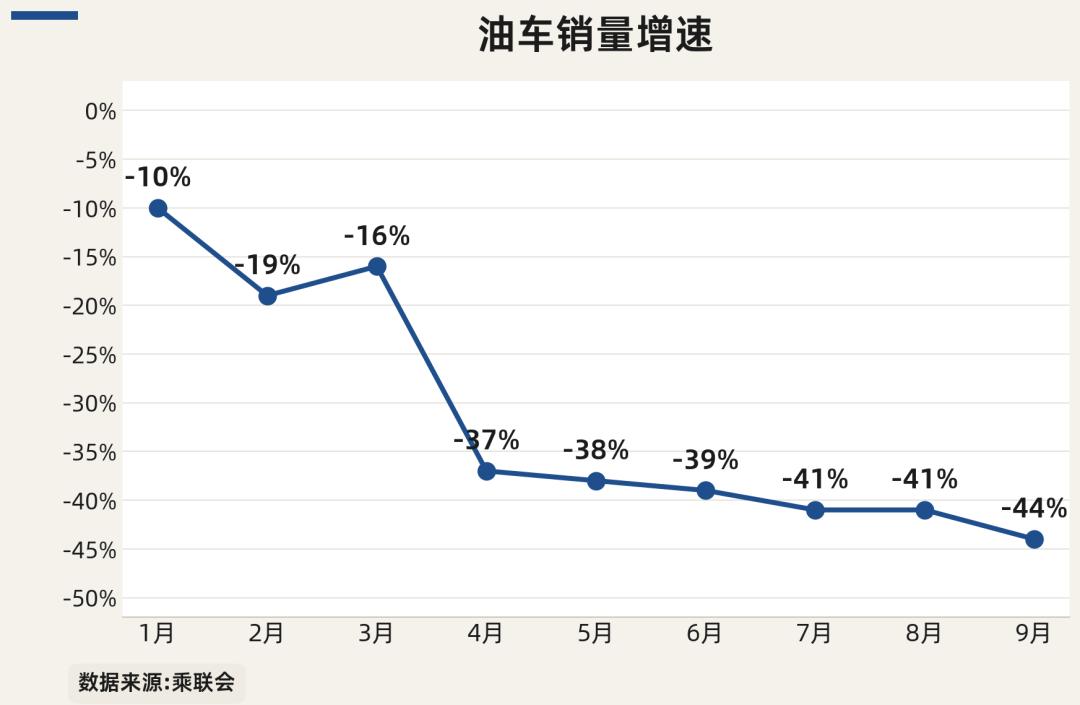
What's even more drastic is the fuel vehicle market, which plummeted directly by 44%, with the decline widening yet again.
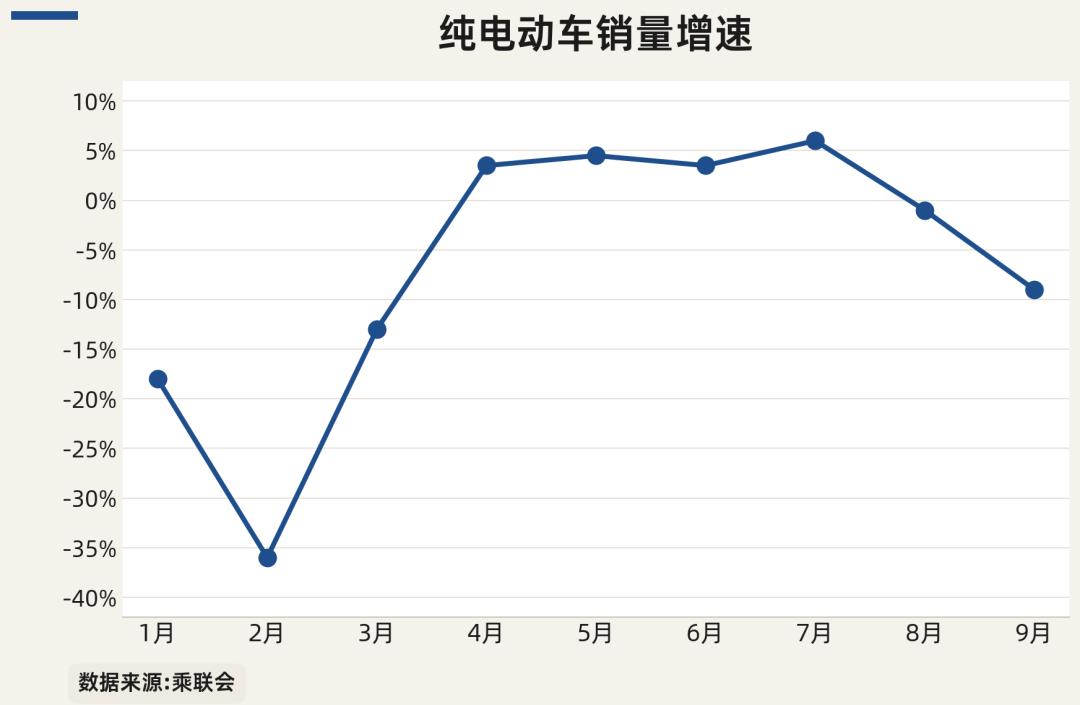
Even pure electric vehicles, which had posted slight sales growth between April and August, saw their September sales drop by 9%.
But oddly enough, the average price of passenger vehicles rose directly by 6,000 yuan, hitting 171,000 yuan in September this year.
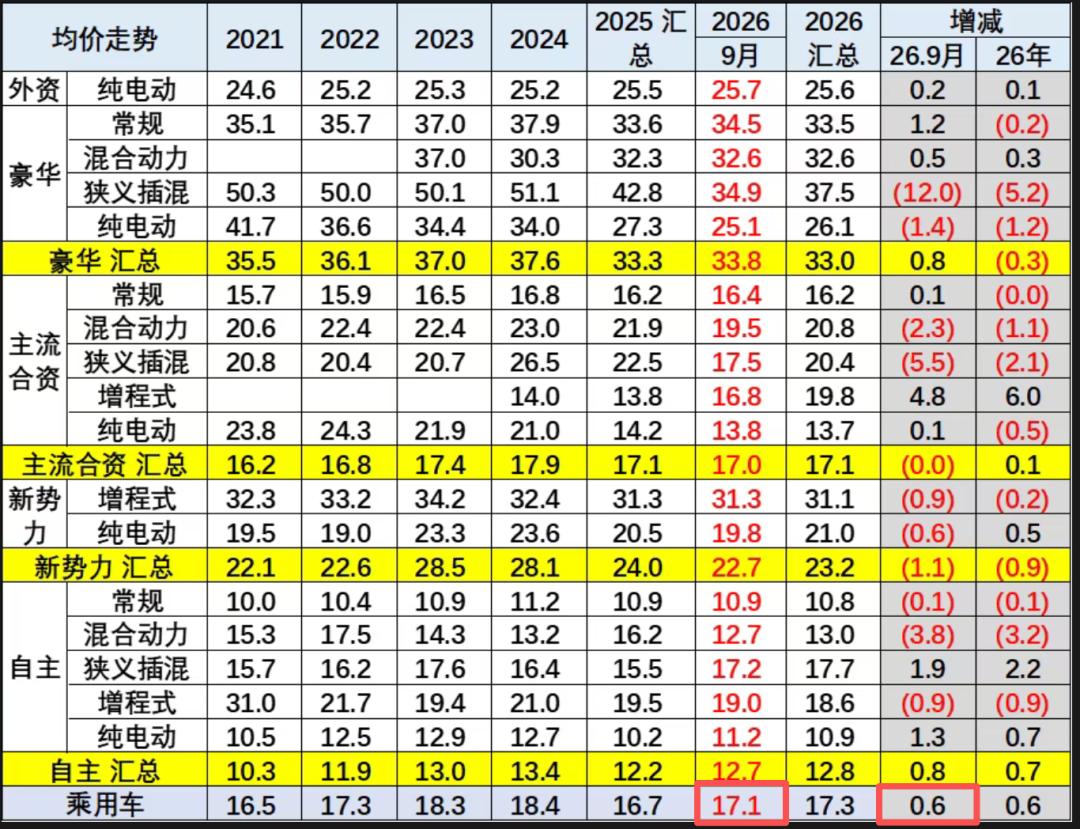
Data source: Cui Dongshu Official WeChat Account
Everyone is talking about consumption downgrade and the difficulty of finding jobs, so why is the automotive industry going against the trend? Are consumers really becoming more willing to spend more money on cars?
#01
Small cars are no longer selling!
On the surface, the 6,000-yuan rise in average price seems to indicate consumption upgrading. But if you dig deeper, you will find this is nothing but a "statistical illusion".
Why do we say so? Let's first look at a set of data.
Did you know that in September, the market segment for cars priced below 50,000 yuan saw its sales slump by 60% directly!
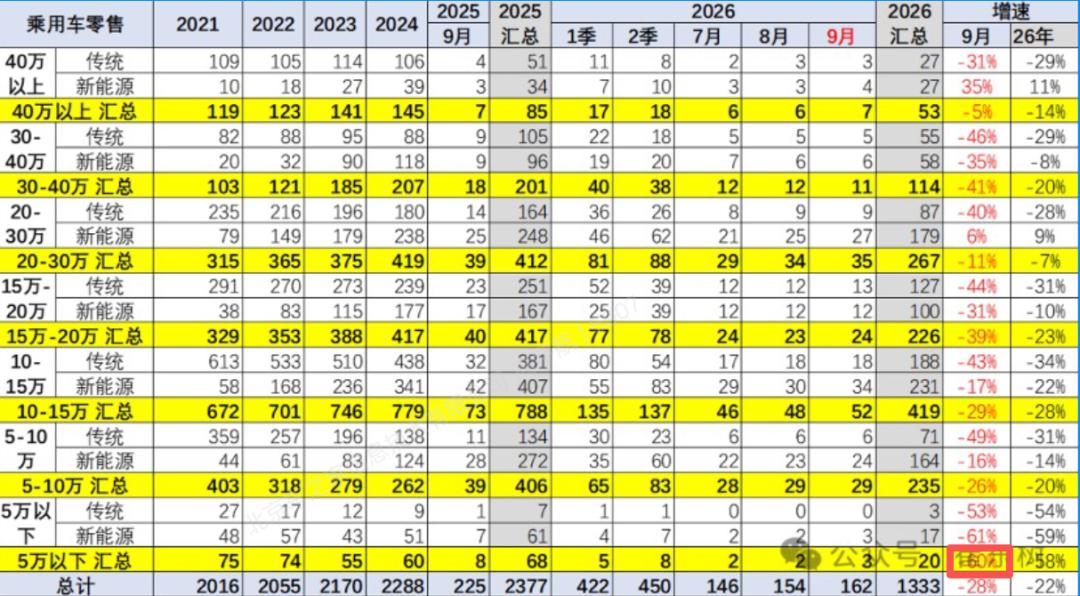
Data source: Cui Dongshu Official WeChat Account
What kinds of cars are priced below 50,000 yuan? They are mini vehicles, such as the well-known Wuling Hongguang MINIEV, Chery QQ Ice Cream, and Bestune Pony, all of which have suffered severe setbacks.
This is easy to understand. Last year, a mini EV priced at around 40,000 yuan was fully exempt from purchase tax, and with the scrapping and renewal subsidy added, consumers could take delivery of the car with almost no extra cost. But this year, the purchase tax exemption policy has been adjusted to a 50% reduction, meaning buyers of a 40,000-yuan car have to pay about 2,000 yuan more in purchase tax. Meanwhile, the trade-in subsidy has shrunk, and rising upstream raw material prices have further pushed up car prices. All these factors combined have significantly increased the actual cost of buying a car this year.
So many consumers, seeing such a big price hike, directly gave up their car purchase plans. That explains why cars priced below 50,000 yuan are indeed not selling well this year.
As the demand for cars under 50,000 yuan plummets, the sales volume of low-priced cars shrinks and their market share declines, which in turn pushes up the overall average car price.
In short, the fact that low-priced cars are no longer popular makes the average price look higher, which is by no means a sign of consumption upgrading.
#02
Fuel vehicle sales keep falling without any sign of rebound
Undoubtedly, the biggest highlight of the September sales data is the 44% plunge in fuel vehicle sales. Many joint-venture carmakers must have gasped in shock at this figure.
After all, initially most people expected the surge in oil prices to last for at most three to five months, and that once the conflict ended, oil prices would drop and fuel vehicle sales would gradually stabilize. However, oil prices have kept rising nonstop, hitting a staggering 110 US dollars per barrel by October 19.
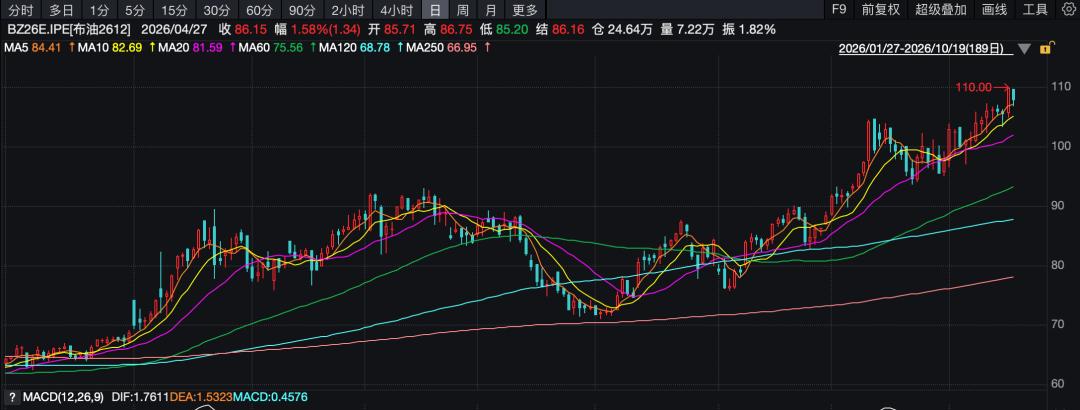
Source: Wind
As oil prices keep surging, fuel vehicle sales continue to decline, with the decline expanding month by month.
The 44% decline in September is no longer something that can be reversed by price wars. It points to a deeper issue: the elimination phase for fuel vehicles has been accelerated.
It is worth noting that in the first 9 months of this year, total fuel vehicle sales reached only 5.53 million units, 2.54 million units less than the same period last year.

If oil prices had not skyrocketed at the end of February, joint-venture brands would have had enough time to gain room for survival. But the cliff-like drop in sales has led dealers to start losing money, which will accelerate the wave of dealership closures, making channel contraction an inevitable trend.
Even if new energy technologies catch up in the future, the shrinking distribution channels will make it difficult to raise sales volume. The failure to achieve sufficient sales scale will further keep production costs from falling, and eventually their products will lose price competitiveness.
Therefore, the recent integration of Toyota's two joint ventures in China is exactly a response to the general trend of plummeting fuel vehicle sales.
Of course, many people believe that once oil prices fall back in the future, fuel vehicle sales will naturally bounce back. My view is that fuel vehicle sales may see a certain degree of recovery, but a sharp rebound is highly unlikely.
After all, with the continuous maturity of battery technology, plus the high level of intelligence and excellent driving comfort of new energy vehicles, consumers' acceptance of new energy vehicles will definitely keep rising.
#03
Drastic differentiation among new EV startups
After talking about fuel vehicles, let's finally turn to Chinese new EV startups. To describe their current situation in one phrase, it is "two extremes of ice and fire".
First, Leapmotor sold nearly 80,000 units in China in September, taking an absolute leading position far ahead of its peers. It is worth noting that the overall new energy vehicle market dropped by 13% in September, but Leapmotor's sales not only did not decline, but also posted a 31% year-on-year growth, rapidly seizing the 100,000-150,000 yuan price segment market with its "cost-effectiveness" strategy.
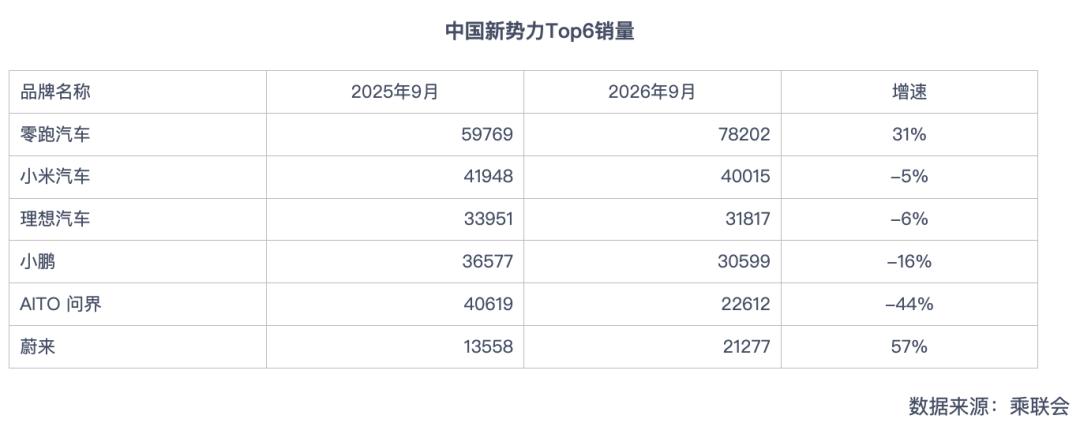
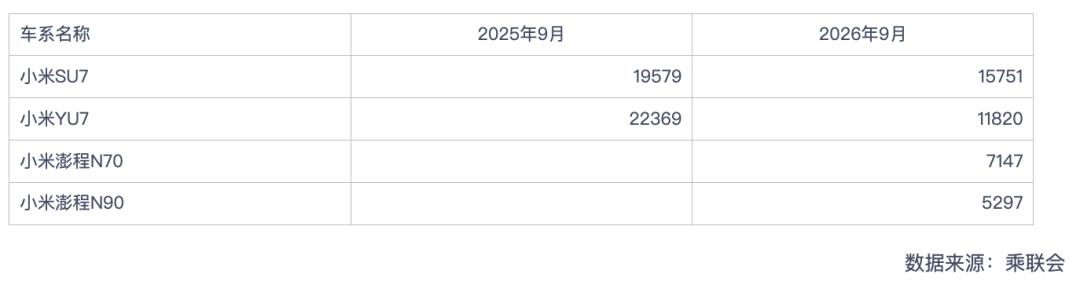
Xiaomi sold 40,000 units in September, with a slight 5% sales decline. This is mainly due to the sharp drop in sales of the YU7 model, which recorded about 22,000 units in sales last year but only 12,000 units this year. The main reason is that the YU7 was so popular after its launch last year that a large number of orders were backlogged, leading to a high base figure last year. At the same time, the Pengcheng model was launched in September this year, so part of the YU7's production capacity and marketing resources had to be allocated to Pengcheng.
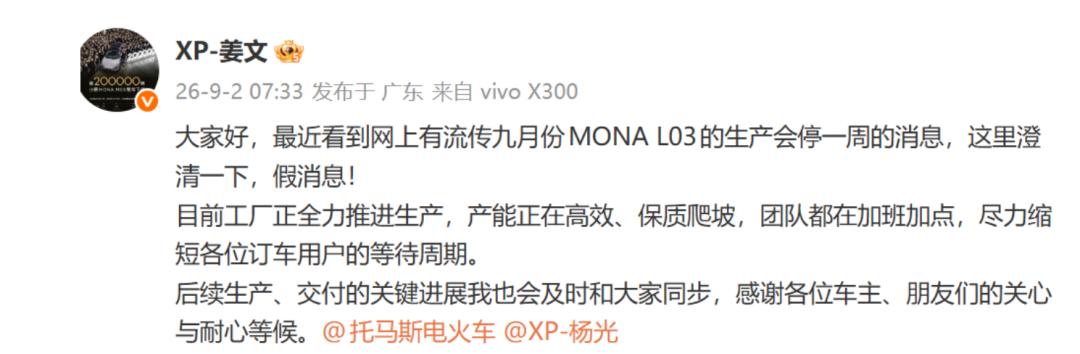
XPeng delivered 31,000 units in September, with a 13% year-on-year sales decline. Of course, XPeng's biggest problem is not poor sales, but that the production capacity of its MONA L03 model still needs to be further increased.
AITO delivered only 23,000 units in September, down 44% year on year. The adjustment of AITO's business model has led to short-term wait-and-see sentiment among consumers, which has also affected order conversion.
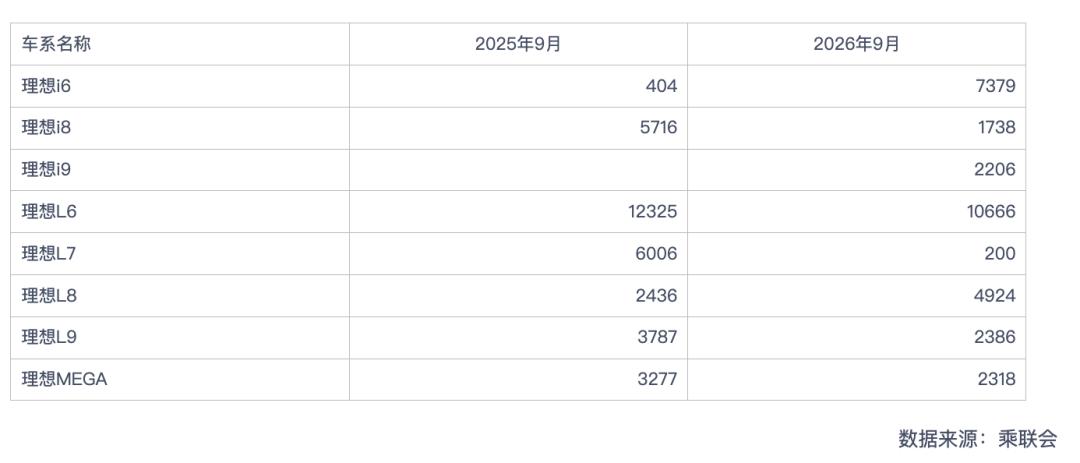
Li Auto delivered 32,000 units in September, down 6% year on year. By specific model, the growth of Li Auto in September this year mainly came from three models: Li Auto i6, i9, and L8.
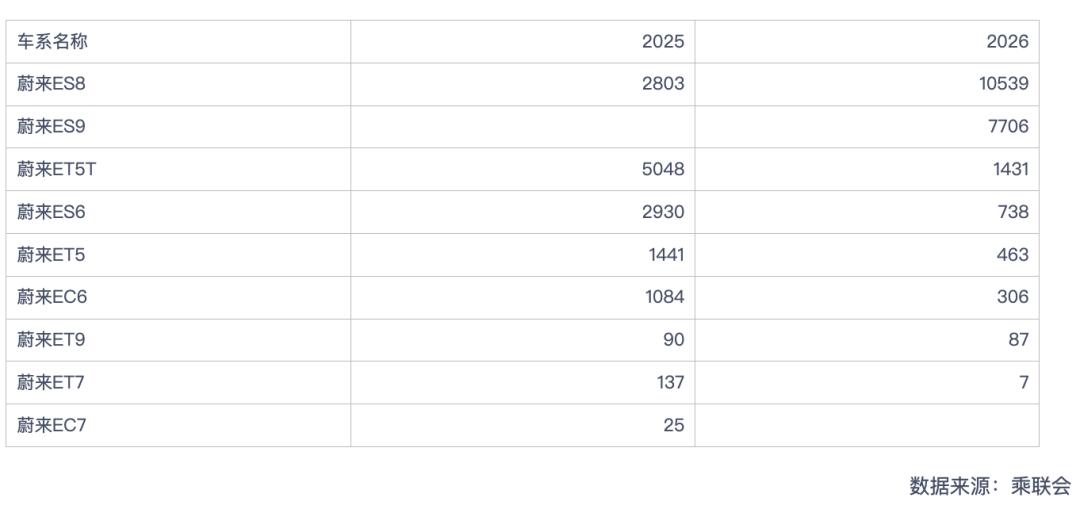
NIO sold 21,000 units in September, with a 57% year-on-year sales growth. The main growth engine for NIO is the ES8 and ES9 models, whose combined monthly sales have exceeded 18,000 units. It can be said that NIO's high-priced models are selling extremely well.
Finally, let's do a survey: do you think fuel vehicle sales will see a sharp rebound if oil prices return to the level at the beginning of this year?
This article is from the WeChat Official Account "Car Market Stories", written by Gao Yuhang, and published with authorization from 36Kr.