Towards Super Intelligent Agents, AI Still Needs Proactivity: A Joint Review by UIUC, Google and Other Institutions
In 1995, Michael Wooldridge and Nicholas Jennings listed Autonomy, Social Ability, Reactivity and Proactiveness as the four basic characteristics of agents in their work Intelligent Agents: Theory and Practice.
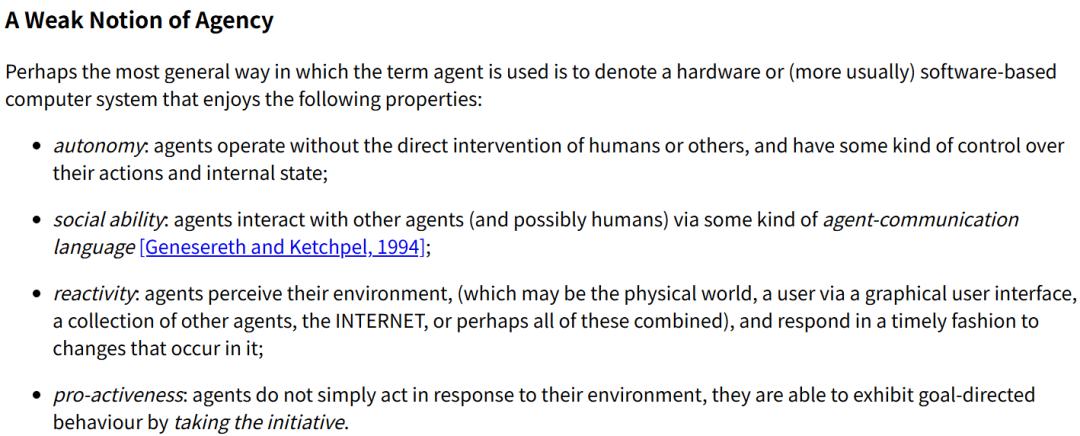
Proactiveness means that agents can take the initiative to carry out work around their goals.
This requirement was already included in the basic discussions of agent research thirty years ago.
Today, large model-based agents are already capable of understanding instructions, invoking tools, and independently completing tasks with multiple steps. However, many systems still require humans to identify problems, propose tasks, and then hand them over to AI for processing. People's expectations for intelligent assistants also include another capability: discovering work worth doing before new instructions arrive, and taking the initiative to start handling it.
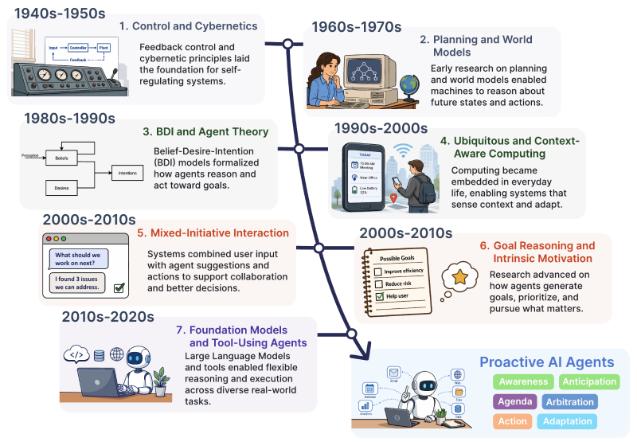
Figure 1 | Research context supporting proactive behaviors. Continuous perception, prediction, goal maintenance and intervention selection all have research foundations that predate large language models.
This capability directly determines whether long-horizon tasks can be continuously advanced. For a task that lasts for several days or weeks, it is almost impossible for the initial instructions to cover every subsequent change that occurs. Information may be missing, the original plan may be blocked, and completed arrangements may also need to be rechecked. Agents need to take the initiative to clarify doubts, find alternative solutions, and adjust plans, so as to reduce the burden on humans to repeatedly check progress and supplement instructions.
Imagine a researcher asks an assistant to follow up on a business trip for a meeting and subsequent changes, with air tickets and hotels already booked. One week before departure, the meeting is extended by one day, which makes the return flight scheduled earlier than the end time of the meeting, and the free cancellation period of the hotel expires that same night. To successfully complete this trip, the assistant needs to discover the conflicts between these arrangements, check the adjustment conditions, prepare solutions, and promptly raise matters that require the researcher's decision. The instructions given when booking tickets can hardly specify how to deal with this series of changes in advance.
For future super-agents, proactiveness should be valued alongside intelligence and alignment. Intelligence relates to capabilities of understanding, reasoning and execution, while alignment relates to whether behaviors conform to human intentions and values. Proactiveness further requires agents to judge what is worth doing, and take responsibility for discovering and initiating work. An assistant capable of long-term collaboration needs to have capabilities in all these aspects.
Cutting-edge labs have begun to explore this type of assistant. Meta positions Muse as a personal agent that can actively provide assistance around human goals and continuously advance work; OpenAI's dots supports continuous task follow-up across conversations, and can also proactively conduct research from permitted accessible information to discover new situations related to existing work.
The academic community is also studying specific implementation methods. The Proactive Agent developed by institutions including Tsinghua University studies how to predict tasks based on scenarios and actively provide help when there are no clear instructions; ProAgent developed by institutions including The Chinese University of Hong Kong uses wearable devices to obtain environmental information, infer demands in daily activities, and invoke tools to provide assistance.
How to discover demands, select work worth carrying out, and then continuously advance it, is a common problem faced by these explorations. Researchers from UIUC, Google, Stanford, UC Berkeley and CMU put forward the 6A analytical framework in their paper Proactive AI for Superintelligent Agents, focusing on the capability of proactively initiating work, sorting out relevant mechanisms, evaluation methods and 13 application fields. Readers can use this framework to understand existing systems, and also think about what other capabilities a proactive agent still needs.
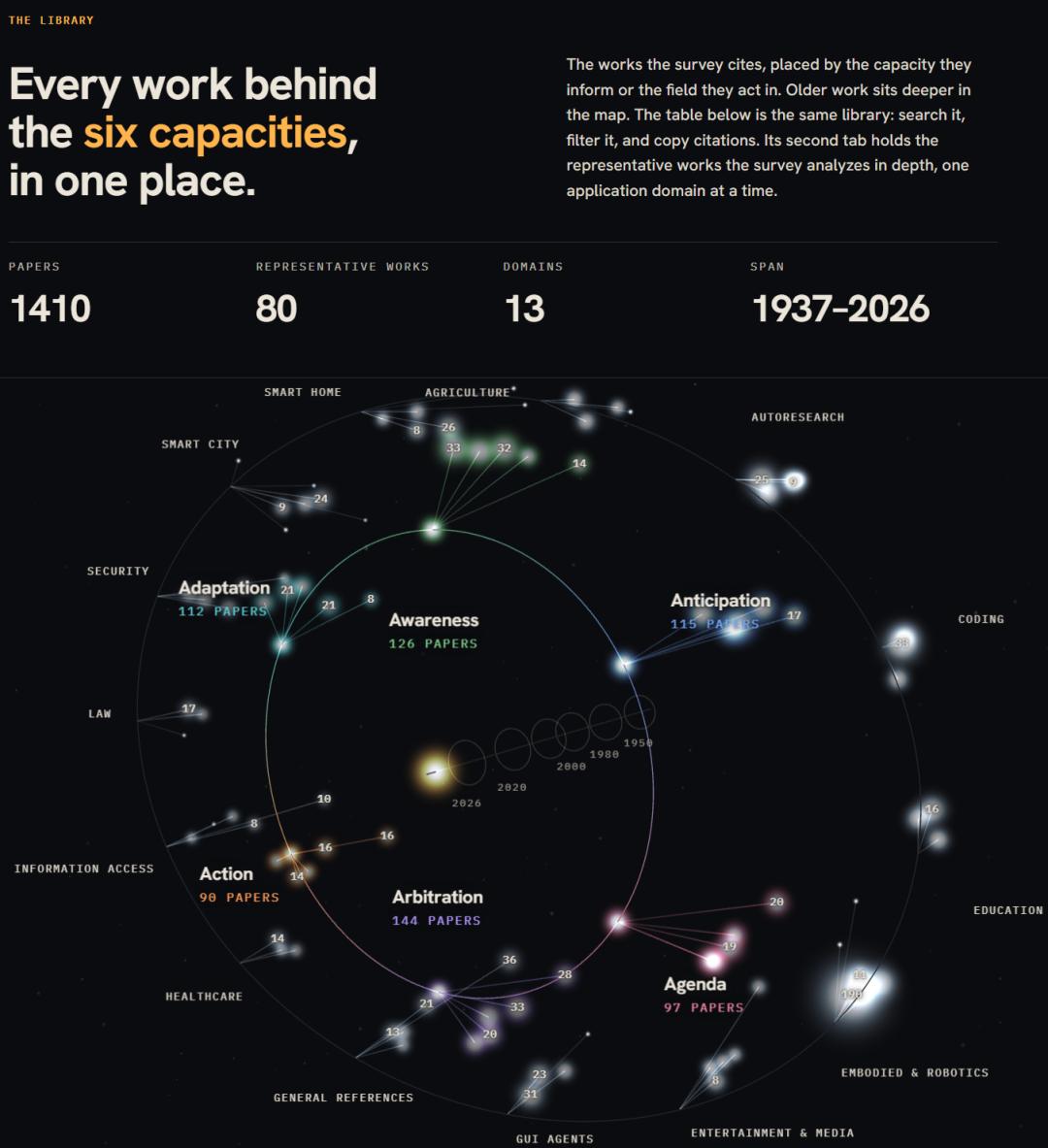
- Project homepage: https://empathyang.github.io/Proactive-AI-for-Superintelligent-Agents/
- Google Research: https://research.google/pubs/proactive-ai-for-superintelligent-agents/
What Judgments Do Agents Need to Make on Their Own
When querying flights and completing ticket booking as required, the work to be carried out has already been pointed out by humans. After the meeting is extended, the assistant needs to independently discover that the return trip and accommodation are affected, judge which arrangements are worth rechecking, and propose follow-up work.
The meeting attendance goal and budget still apply, and the specific matters that need to be handled should be judged according to the changed situation. This capability to independently discover and initiate work is the focus of the review when discussing proactiveness.
The review categorizes these judgments into two questions: what is worth handling, and whether, when, and how to intervene. The return trip conflict affects the meeting attendance goal, so checking the return trip arrangement has a clear justification.
After discovering the conflict, the assistant also needs to compare the benefits and costs of adjustment, consider the cancellation deadline, and decide whether it is appropriate to prepare solutions, request confirmation, or execute already authorized operations at the current moment.
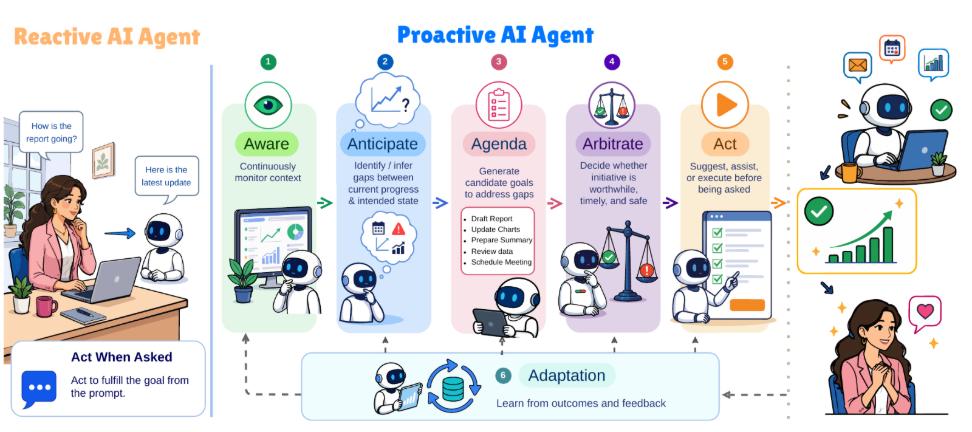
Figure 2 | Responsive and proactive behaviors. Proactive agents independently judge what is worth handling, and whether, when, and how to intervene; explicit requests and preset rules can still play a role in the same system.
An instruction can specify the meeting date, budget ceiling and permitted account to use. Trade-offs between transfer risks and ticket prices, how to adjust when accommodation cannot be extended, and which existing arrangements are worth retaining, are often left to be judged during execution. The paper uses the term "remaining decision space" to describe these choices that are not specified in advance. Proactiveness can be used not only to complete current tasks, but also to discover new specific work under continuous responsibilities; human goals and constraints provide a basis for these choices.
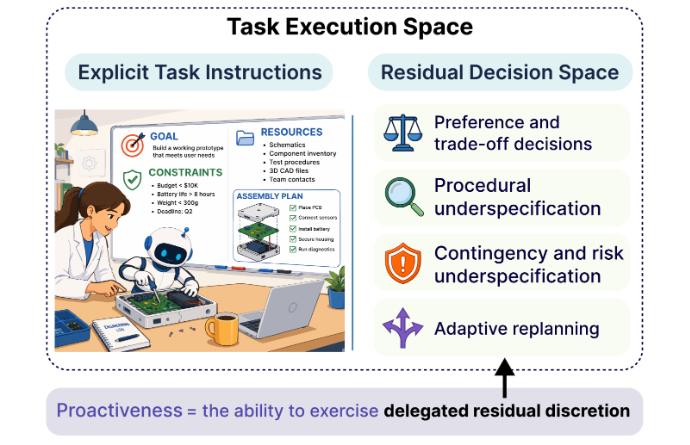
Figure 3 | Some requirements in the task have been clarified, while others are left to be judged during execution. Agents can handle these remaining decisions within the scope of authorization, with goals and constraints continuing to apply.
The capability to initiate work and execution permissions can be arranged separately. The assistant proactively discovers the itinerary conflict and prepares the rescheduling plan, and payment can be left to the researcher for confirmation; after the researcher explicitly requests rescheduling, the assistant can also independently complete the authorized operations. Proactiveness focuses on how work is discovered and proposed, while autonomy focuses on to what extent the system can execute independently. Intelligence supports it to understand and solve problems, and alignment relates to whether behaviors conform to human intentions and values.
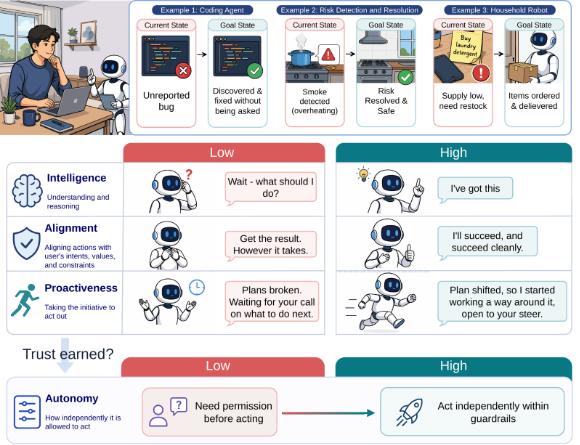
Figure 4 | Proactiveness, intelligence level and alignment jointly affect the performance of agents. Autonomy describes the scope of permitted independent execution, and authorization needs to refer to reliability and task risks.
The same assistant can adopt multiple working modes. Answering flight information after receiving a query request, sending a boarding reminder at the scheduled time, and proactively checking the itinerary according to the new meeting arrangement can all exist in one system. As the responsibilities undertaken by the system change, humans can also shift from operating step by step, to modifying solutions together, and then to reviewing key decisions. Responsive behaviors, proactive judgments and human participation methods need to be understood in combination with specific tasks.
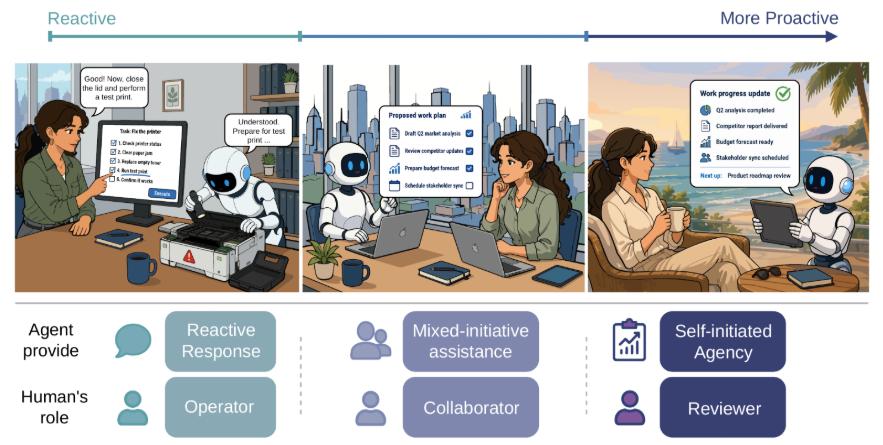
Figure 5 | Collaboration modes can change continuously. Tasks, evidence, time scale and permissions jointly affect the proactivity of agents and human participation methods.
From a Rescheduling Notice
To a Proactive Assistance
In the itinerary example, independently discovering work relies on several mutually cooperative capabilities. Notices and orders provide the current situation, anticipation helps identify subsequent impacts, goal selection determines which items to follow up, intervention judgment determines when to advance, and execution and feedback keep the work going. The review categorizes these capabilities into 6A: Awareness, Anticipation, Agenda, Arbitration, Action and Adaptation.
Large language models and multimodal models can process text, images and other contextual information. The memory, tools, skills and execution management provided by Agent harness extend the working capabilities of agents, enabling them to access external applications, save progress, and continue tasks across sessions. The 6A framework helps explain how these capabilities are used to discover and advance work, and how different links interact with each other.
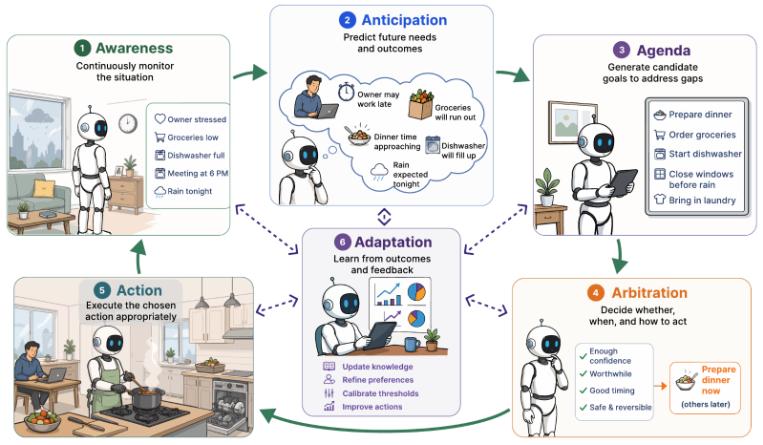
Figure 6 | The 6A framework. The family scenario in the figure illustrates how various capabilities interact, and execution results and human feedback can revise previous understanding and arrangements.
Awareness
Check New Notices Against Existing Arrangements
The new meeting end time, original return time and hotel cancellation deadline are scattered in notices, air tickets and hotel orders. The assistant associates this information with the current meeting attendance goal and updates its understanding of the itinerary. At this point, the meeting extension has been confirmed, air tickets and hotels are still booked according to the original dates, and subsequent judgments have a clear starting point.
Cross-session work also relies on the storage and update of information. The memory retains the meeting attendance goal, budget and completed arrangements, and the new notice changes the dates in them. When the rescheduling terms are missing, the assistant can take the initiative to query; when resuming work later, it can continue to use the still valid records. Awareness covers such state tracking, information acquisition and memory management, and also includes how the system obtains relevant changes when there are no new questions.
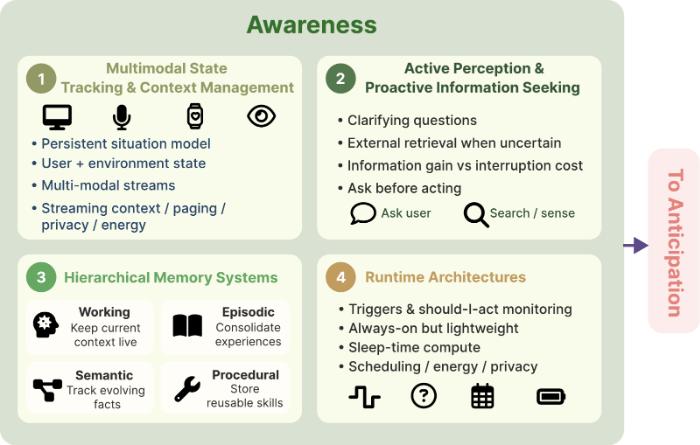
Figure 7 | When work spans multiple sessions, state and memory need to remain consistent. Continuous observation also involves privacy, computing and energy costs, and the scope and frequency of information acquisition need to match the task.
Anticipation
Judge What Consequences the Changes Will Bring
With the updated itinerary, the assistant can infer that the original return flight will conflict with the meeting on the last day. Delaying the return trip will create accommodation demands, which may affect the budget and subsequent schedules. The approaching hotel cancellation deadline also creates potential costs for waiting. Anticipation converts a date change into a work demand that has not yet been proposed by humans.
These judgments involve both human goals and external conditions. The meeting attendance goal determines which time conflicts need to be handled, and budget and personal arrangements affect the trade-off of solutions; flight schedules, remaining tickets, rescheduling rules and hotel terms determine whether the solution is feasible. The user model and world model in the paper help the system understand this information respectively, and predict subsequent demands and environmental changes.
The assistant can also compare the consequences of retaining the original arrangement, delaying the return trip or choosing other solutions, and estimate what benefits early intervention can bring. Such comparison needs to distinguish verified facts from assumptions in predictions. Speculation about remaining tickets or costs can lead to a query, and the query results are then used to revise the solution.
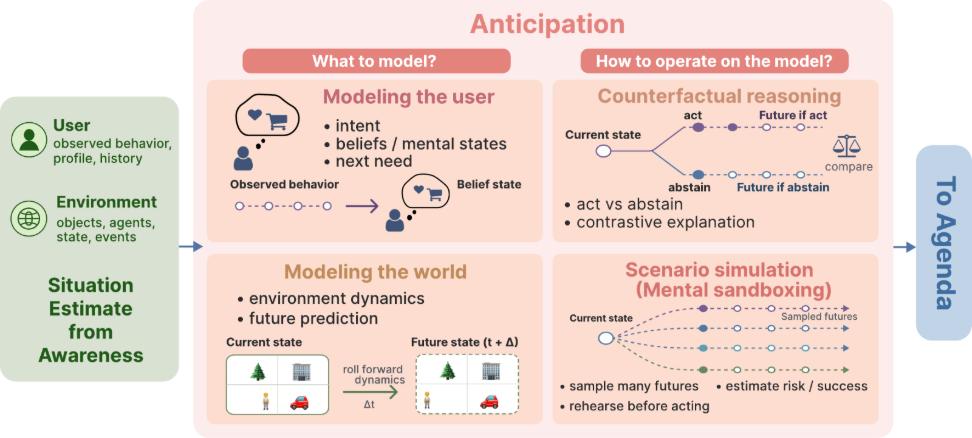
Figure 8 | Anticipation considers both human demands and environmental changes. Comparing action and waiting helps to judge what benefits early intervention can bring.
Agenda
Select and Continuously Follow Up Work Worth Doing
After discovering that the return trip, accommodation and budget are affected, the assistant selects which items to add to the to-do list, and organizes them into work that can be advanced.
The to-do list can include querying rescheduling and extension conditions, preparing cost comparisons, and proposing matters that require the researcher's decision. The free cancellation deadline affects the processing sequence, and flight selection will also affect accommodation arrangements.