Just now, Jensen Huang delivered a stunning speech in Berlin, declaring that the PC is dead and the era of AI agents has fully broken out.
A machine that required two people to carry upstairs ten years ago was lifted onto the stage single-handedly by Jensen Huang today!
Just now, on the stage of GTC Berlin, Jensen Huang held up a thin and light laptop RTX Spark with 128GB of memory.
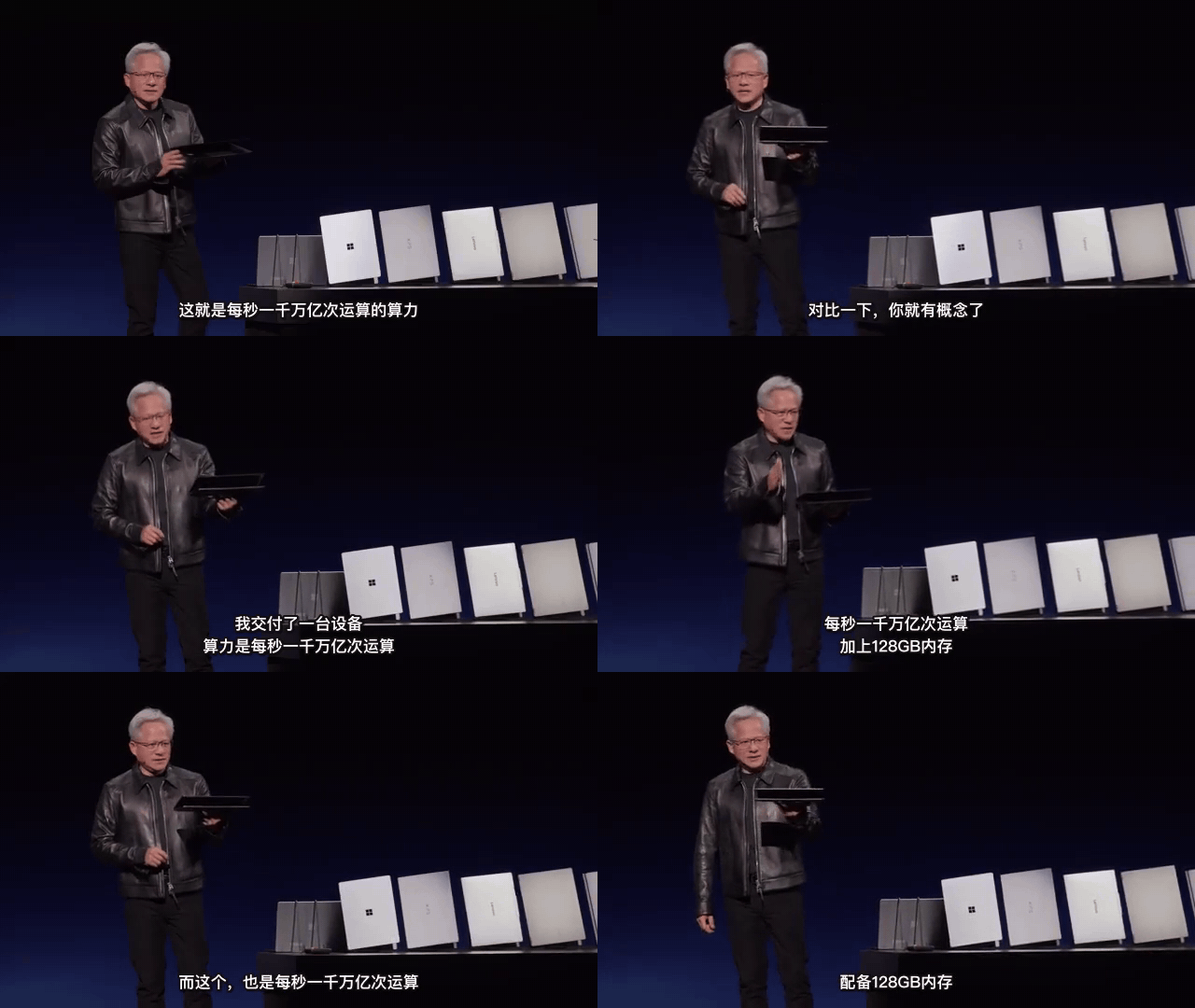
In August 2016, he delivered the newly released DGX-1 to OpenAI's San Francisco office. That machine also had 128GB of memory, but it took two people to carry it upstairs.
Jensen Huang said the only difference is that he can now hold it single-handedly like this.
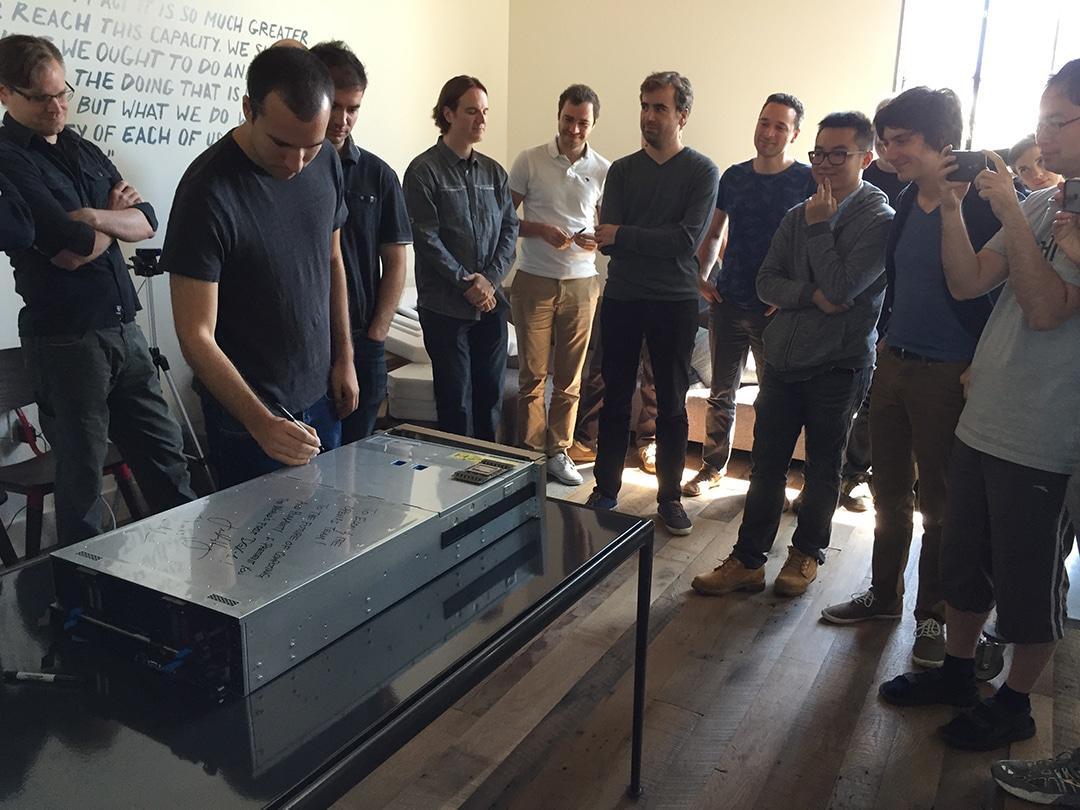
Ten years on, AI performance has increased by 1 million times, while Moore's Law has only grown by around 100 times over the same period.
The performance gap is driven by "ultimate co-design", where every layer of software, every computer, every new algorithm, and the underlying architecture are all iterated and optimized in sync.
This is a manifesto for a new industrial revolution.
Over this one and a half hours, Jensen Huang unveiled a full lineup of heavyweight new products:
- AI Factory Pre-integrated and Shippable: The DSX POD is fully assembled and tested in the factory. Once the on-site power and water supply are ready, the deployment cycle is shortened from around six months to a minimum of 14 days.
- Agents Equipped with Security Lock: The OpenShell reference architecture defines all operation rules outside the Agent program, any unauthorized access will be isolated by BlueField-4 at millisecond level.
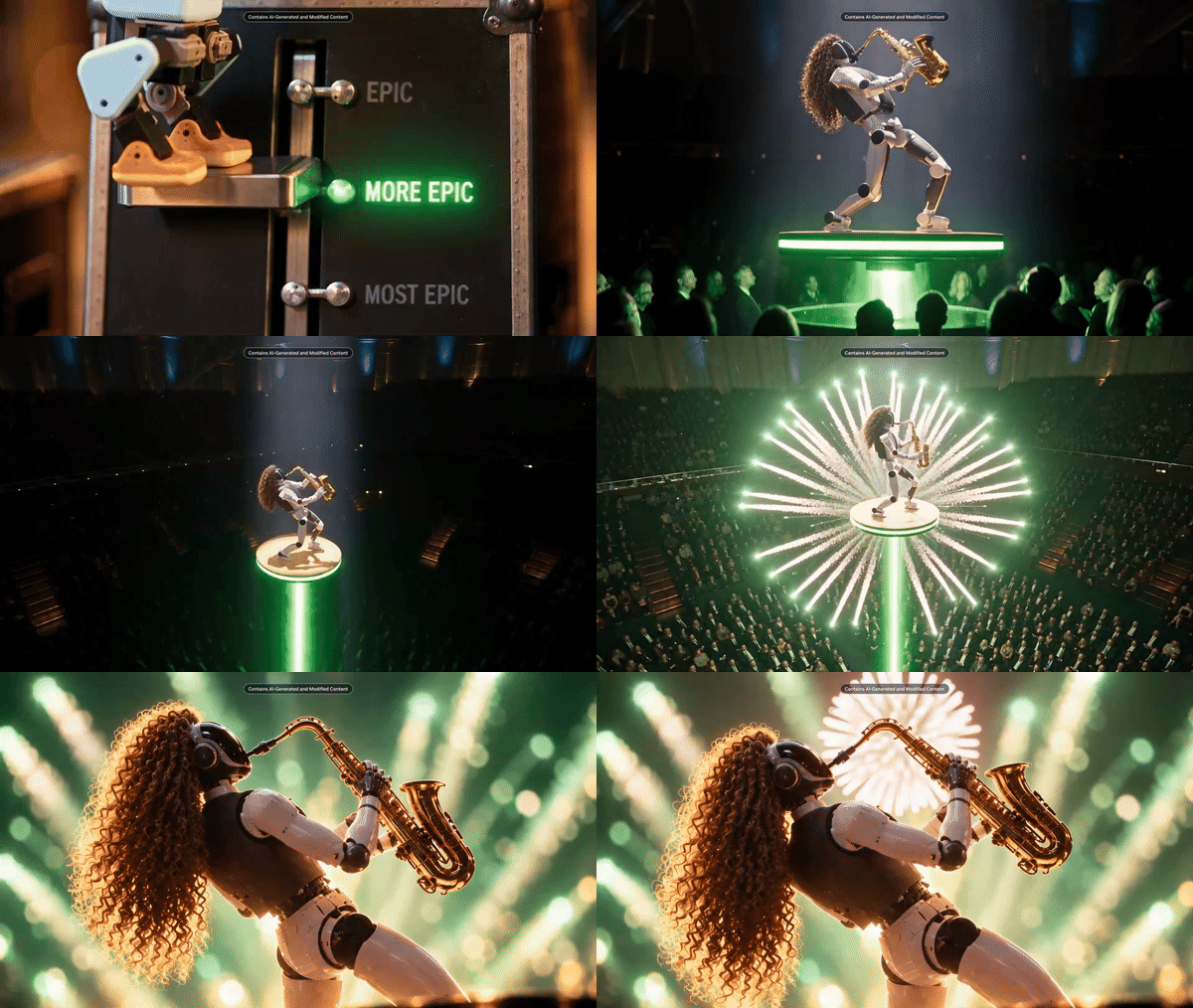
- Robotic Duck Takes the Stage: The MicroDuck is developed on RTX Spark, trained on the cloud, and walks onto the stage independently.
- CUDA Supports Communication Capabilities: NVIDIA and Nokia completed the world's first real-network AI-RAN call on the T-Mobile network.
- Humanoid Robot Gets Official Reference Design: NVIDIA and Agile Robots launched the Agile ONE SN, which is expected to be launched in early 2027.
A laptop is your personal Agent
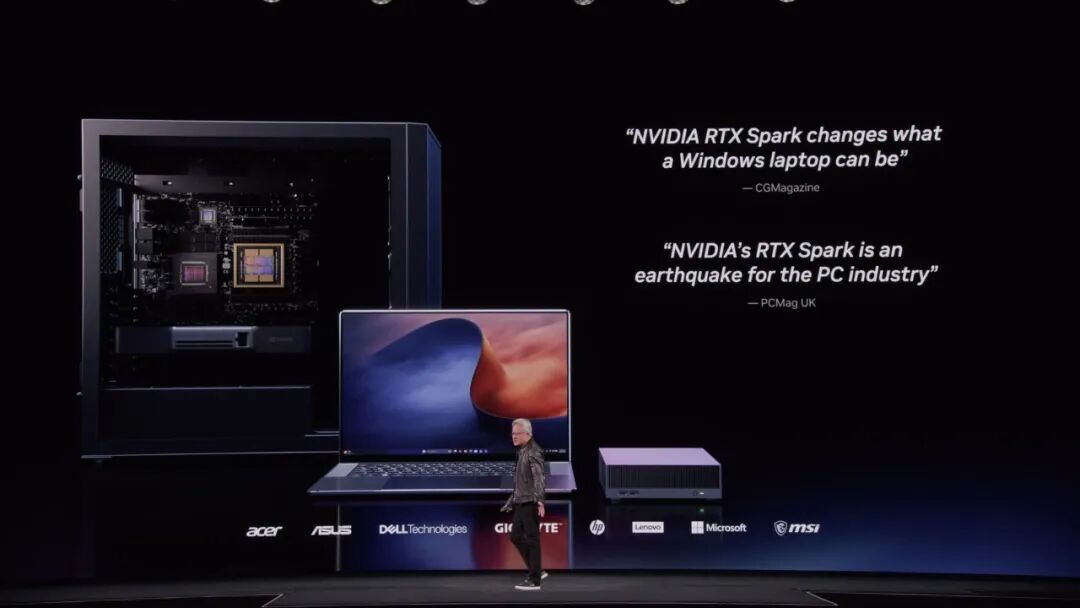
RTX Spark delivers up to 1 Petaflops of FP4 AI computing power and up to 128GB of unified memory.
It integrates the Blackwell RTX GPU and Grace CPU into one super chip, which Jensen Huang named N1X on stage. This laptop has been on sale since October 16.
Over the past decades, computers have always been tools: you input instructions, and they execute them accordingly. Now this definition has been completely overturned.
In Jensen Huang's view, RTX Spark is your "personal Agent", "personal assistant", and even "digital companion". Interacting with it is more like cooperating with a partner who helps you complete all kinds of tasks.
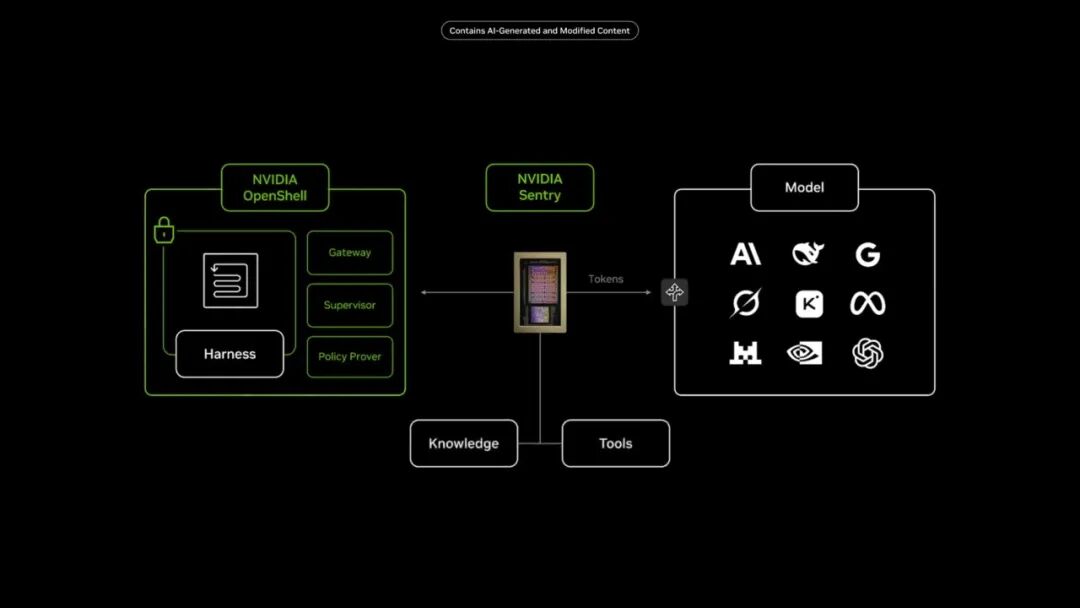
To function as a qualified personal Agent, it needs models, Harness, the secure runtime OpenShell, as well as knowledge base and tool sets. The model can run either locally or on the cloud.
NVIDIA already has a mature tool portfolio for this scenario. This laptop can accelerate OpenGL, DirectX and the full CUDA stack, so all software developed by NVIDIA can run on it smoothly.
To develop this laptop, NVIDIA and Microsoft have cooperated in secret for four years, investing thousands of engineer-years in total.
The entire PC industry has joined in full force, with desktops, laptops and workstations all embracing RTX Spark across the full product line.
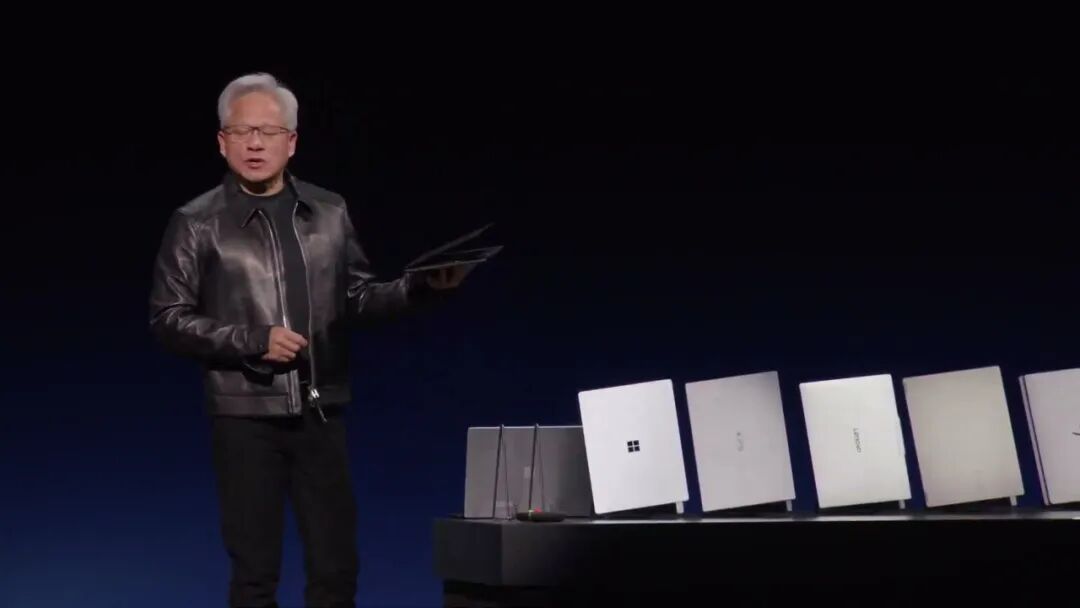
The future work scenario will be: you assign tasks to RTX Spark, it calls the corresponding software to help you finish the work. You no longer "use" software, you are "hiring" the computer to work for you.
Five core elements of Agent
In recent years, large language models have been widely discussed. But from Jensen Huang's perspective, relying only on the model is far from enough: the model is just the brain, and the one that can actually perform practical work is Agent.
Agent can think, reason, iterate and use various tools. The more reasoning it does, the more tokens it consumes, and the demand for GPU computing power will rise sharply accordingly.
A qualified Agent must have five core elements.
- Model: Responsible for perception, reasoning, planning and tool usage.
- Harness: Orchestrate tasks, schedule active memory, working memory and long-term memory, and activate available tools.
- Sandbox: Isolate Harness from other parts of the system.
- Knowledge: Enable Agent to read your enterprise data and personal files correctly.
- Tools: Enable Agent to use existing software developed by human beings.
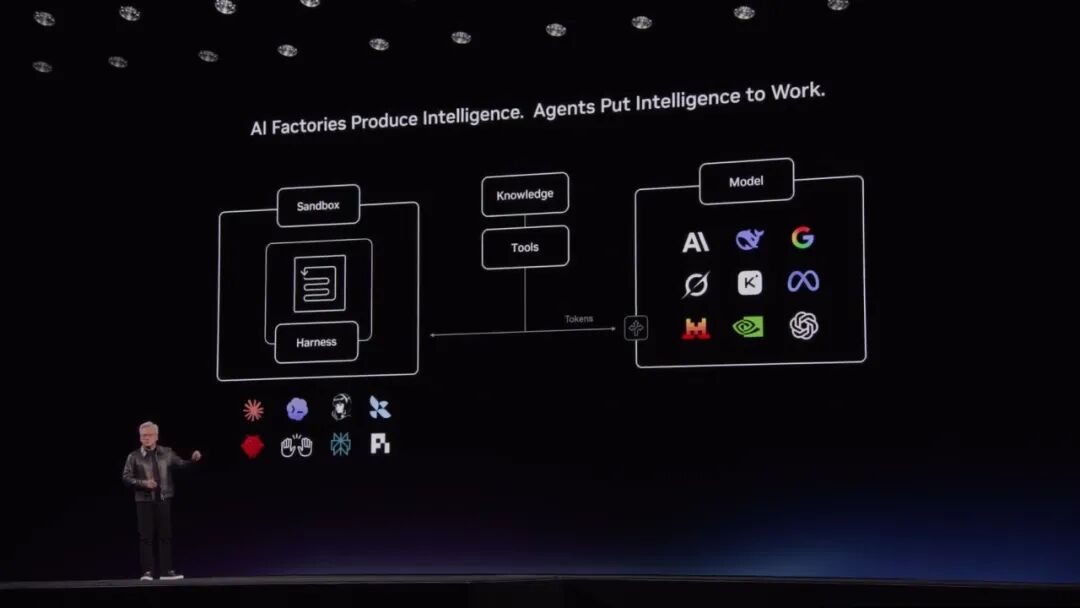
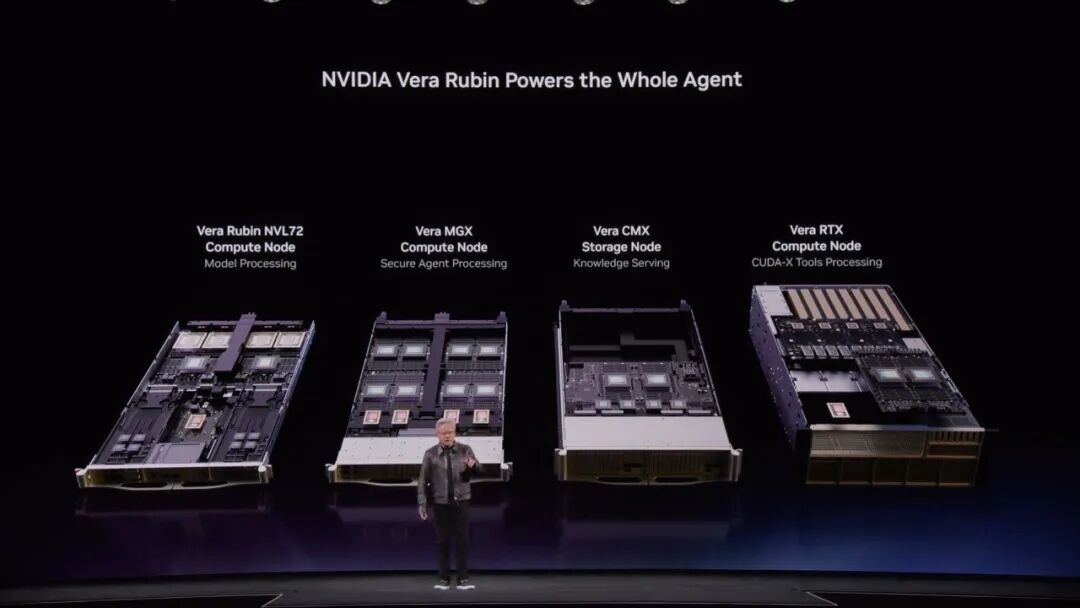
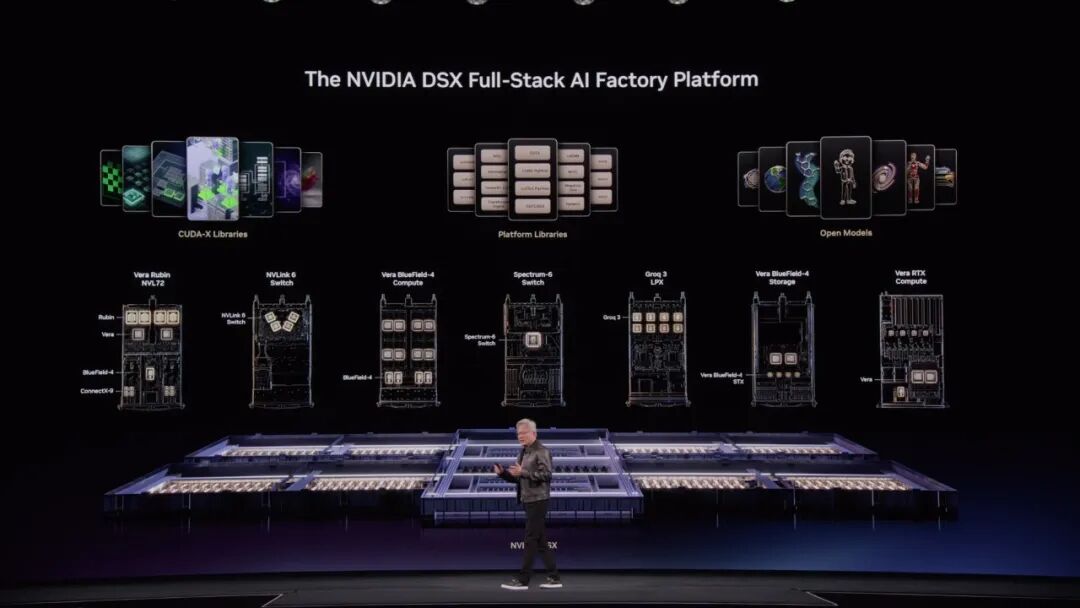
These five elements correspond to different hardware respectively: the model runs reasoning on Vera Rubin NVL72, Harness runs on the Vera MGX computing node, the knowledge base is provided by the Vera CMX storage node, and tools are handed over to the Vera RTX computing node dedicated to running CUDA-X libraries.
Therefore, Vera Rubin drives the entire Agent system.
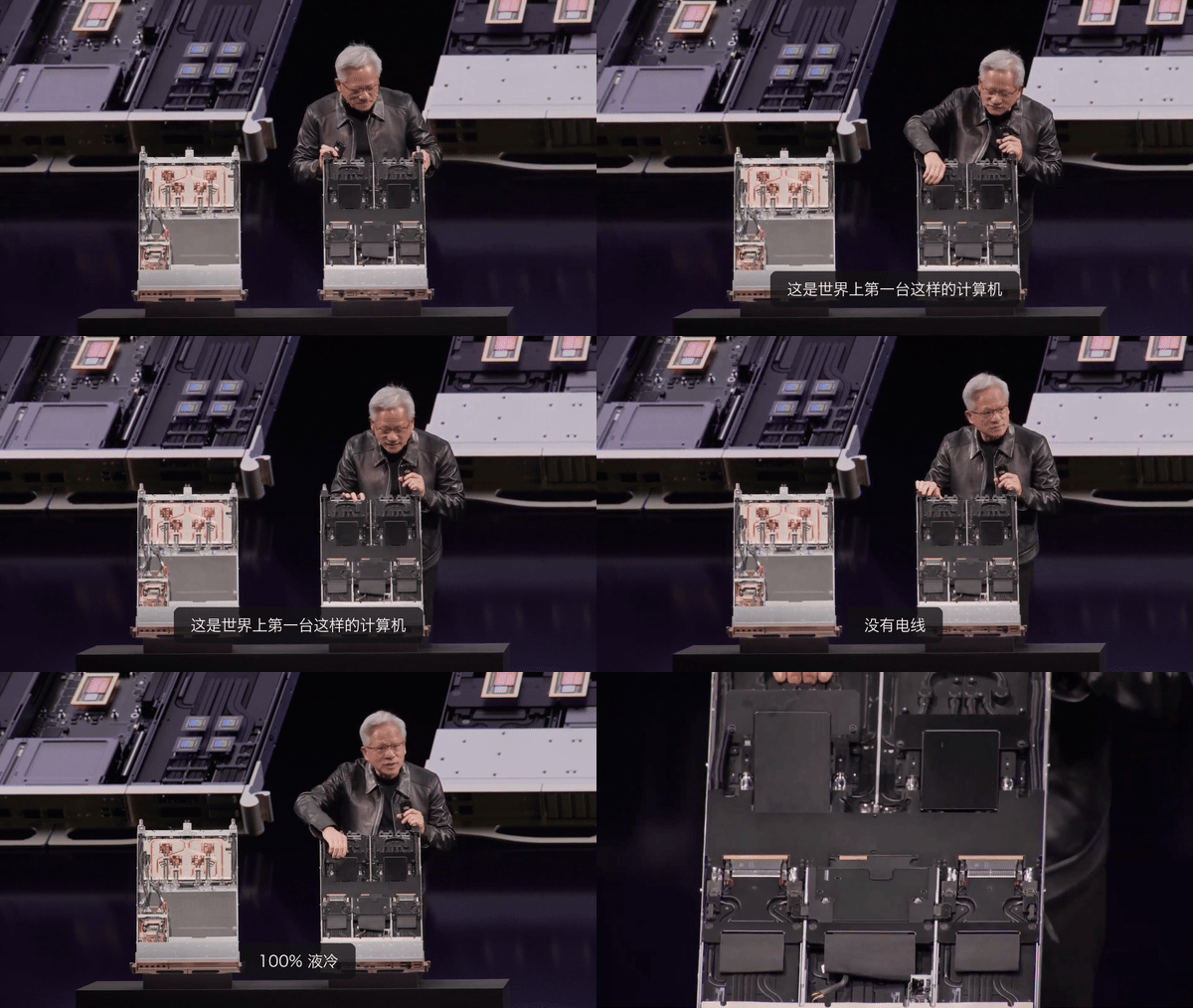
The hardware of Vera Rubin itself has also been upgraded. Jensen Huang pulled out a computing tray on stage, which has no cables or wires at all, and is 100% liquid-cooled.
It took two hours to assemble one unit of the previous generation Grace Blackwell product, with cables spread all over the device, while assembling one Vera Rubin unit takes less than 5 minutes.
As for how to build an Agent, Jensen Huang's answer is very simple: "Let another Agent help you build it." The subsequent robotic duck demonstration is driven by an Agent running on a personal computer.
Security is the lifeline of the Agent era.
Agent can modify files, access the Internet and call various tools automatically, so its permissions must be minimized, and its operation must be monitored all the time.
In the demo video introducing OpenShell, NVIDIA first made a self-deprecating joke, saying that currently the only way to stop an Agent from misbehaving is a polite line in the prompt that says "please don't delete anything".

To solve this problem, NVIDIA released the OpenShell reference architecture.
Its core idea is to write all operation rules outside the Agent process. Each Agent is locked in its own sandbox, and all rules about which files it can read and write, which networks it can connect to, down to every single system call, are determined by the policies outside the sandbox, and the secret keys are never handed over to the Agent.
An extra security lock is added at the hardware level. Sentry runs on BlueField-4, acting as a non-sleeping sentinel outside the host, keeping a close eye on every move of the Agent. Once it crosses the permission boundary, it will be isolated at millisecond level immediately.
AI Factory is packed into containers, deployment takes as short as 14 days
With Agents available, where should we run them?
The answer is: AI Factory.
Factories in the old era turn coal into electricity. AI Factories in the new era turn electricity into intelligence.
Jensen Huang emphasized a core judgment throughout the speech: AI is a form of manufacturing, not just software.
"To be part of this AI economy, you can't just be a consumer of AI, you also need to be a producer of AI," Jensen Huang said.
A 1GW AI Factory, when you count land, power supply, plant, computing, network, storage and heat dissipation, costs around 50 billion US dollars. Calculated by an annual revenue of 40 billion US dollars, a three-month delay in production will result in a loss of about 10 billion US dollars in revenue.
To help enterprises build factories faster, NVIDIA launched NVIDIA DSX POD.
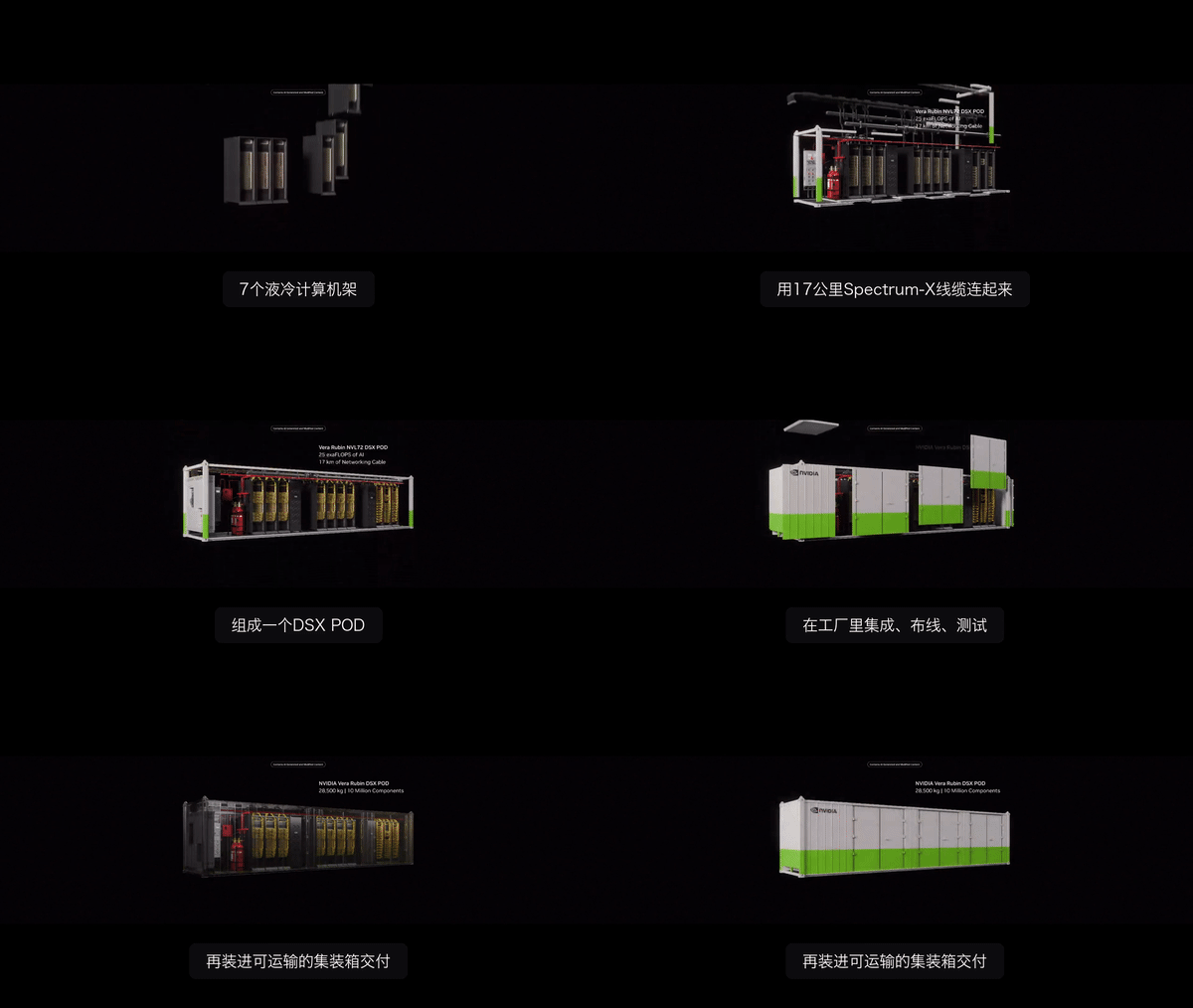
One POD consists of 7 liquid-cooled computer racks, and the racks are connected by 17 kilometers of Spectrum-X cables.
The entire set of equipment completes integration, wiring and testing in the factory, then is packed into a transportable container and delivered to the data center. On site, the dry cooler is used for heat dissipation, and 800V DC power is directly supplied to the racks.
As long as the on-site power and water supply are ready, the deployment time can be reduced from around six months to a minimum of 14 days.
The underlying logic behind this design is to move the on-site deployment process into the supply chain. Three years ago, the Grace Blackwell NVLink 72 moved the entire rack assembly process into the factory, but the racks still needed months of additional assembly work after being delivered to the site.
DSX POD moves the entire setup, power-on, verification and burn-in test process into the factory, so it can run right out of the factory. In Jensen Huang's view, this is a thorough transformation of the global supply chain.
It also saves power and water. For the same token output, DSX MaxLPS can reduce power consumption by up to 30%; the closed-loop liquid cooling system with dry cooler does not evaporate water. When scaled up to 2GW capacity, it can save about 54 million liters of water per day, which is equivalent to the daily water consumption of 180,000 households.
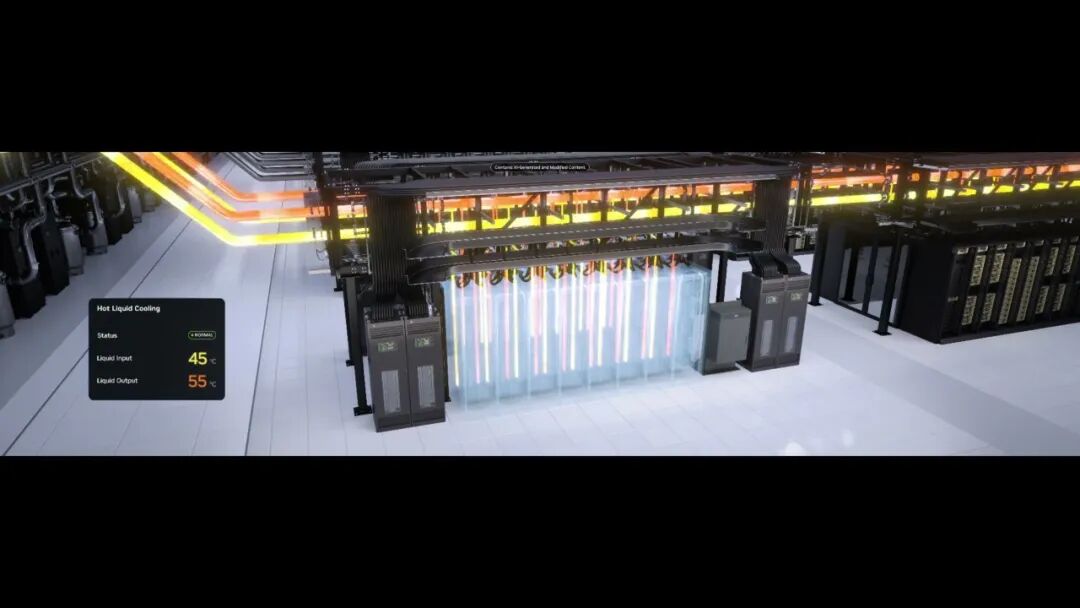
What enterprises get after purchasing it is an alchemy furnace that directly outputs