Elon Musk is making the pie-in-the-sky promise of "universal high income": AI has taken over my job, yet can it still share the earnings with me?
Recently, AI giants are either developing new models or busy distributing funds.
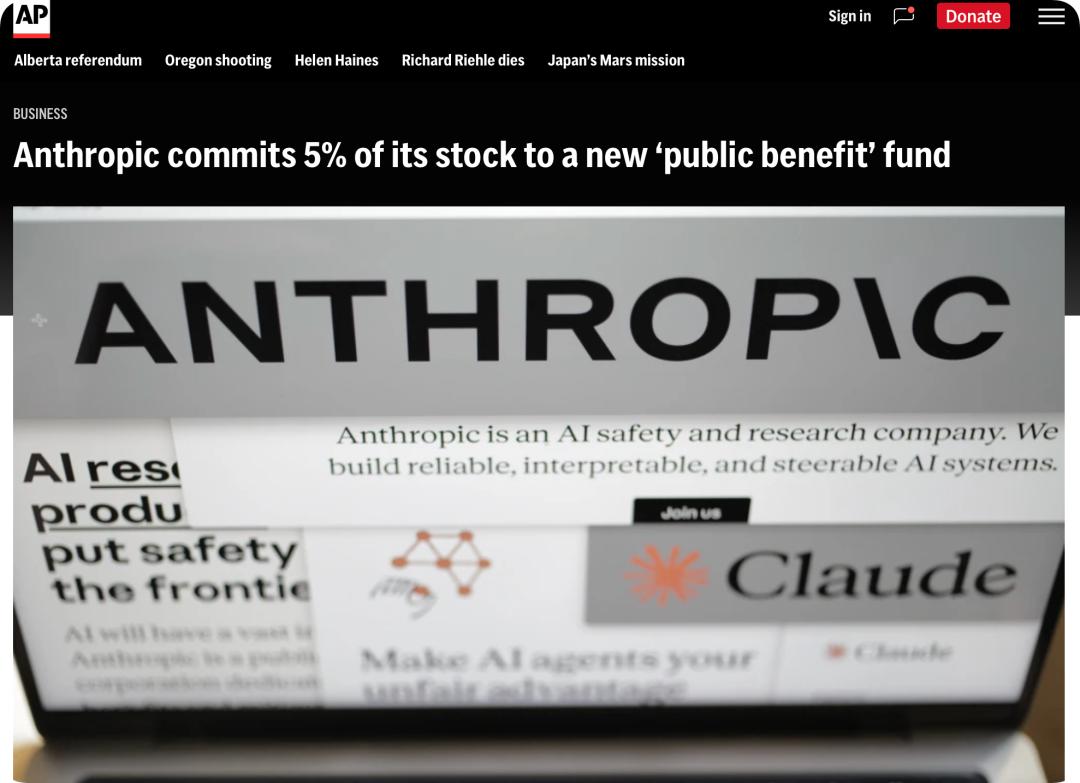
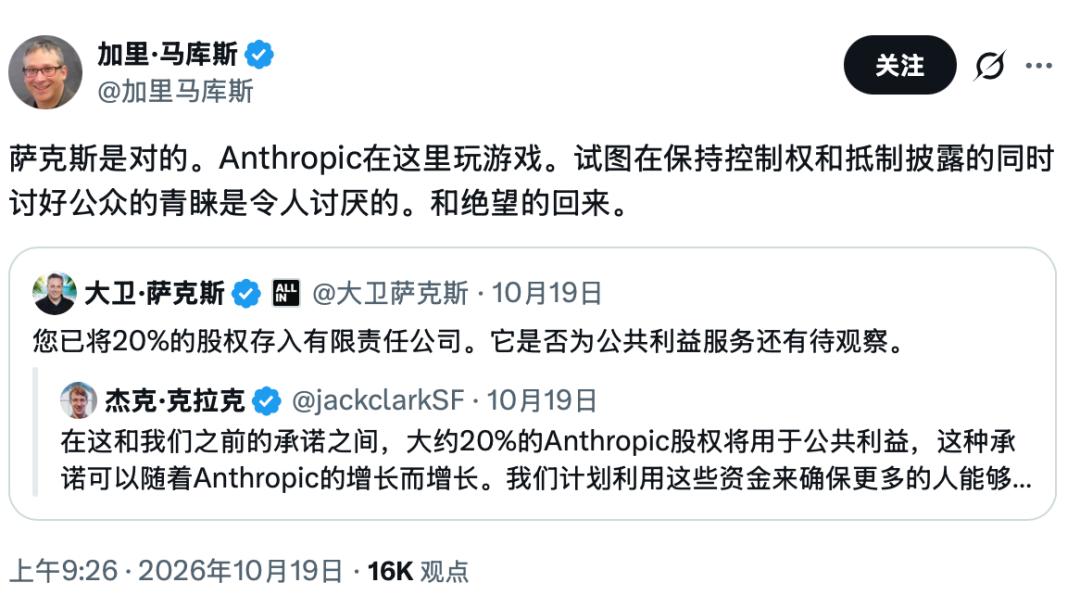
On October 18, Anthropic announced that it plans to set up a public welfare fund, which has been approved by its shareholders. On this basis, the company will inject shares equivalent to 5% of its total equity into this fund.
Elon Musk immediately echoed the announcement after seeing it, stating that instead of handing over shares to fund institutions, it is better to distribute them directly to the general public of investors.
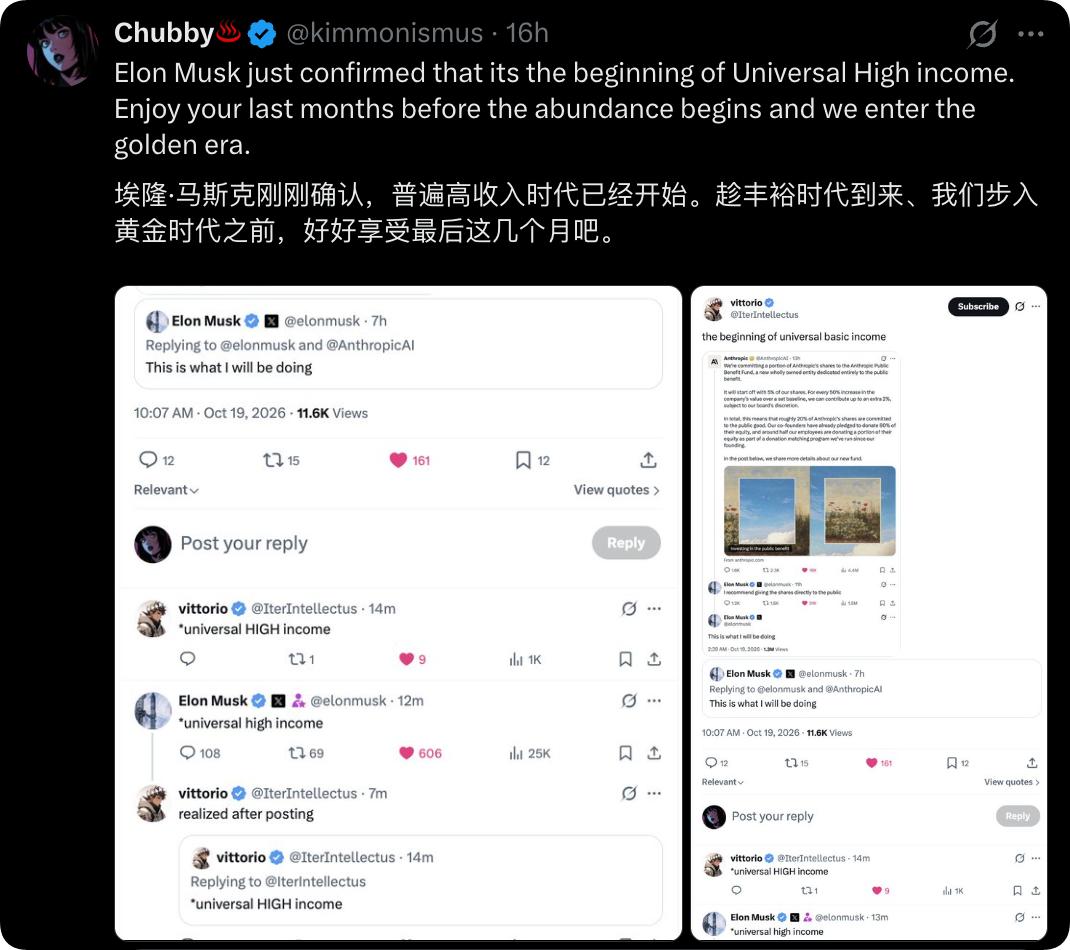
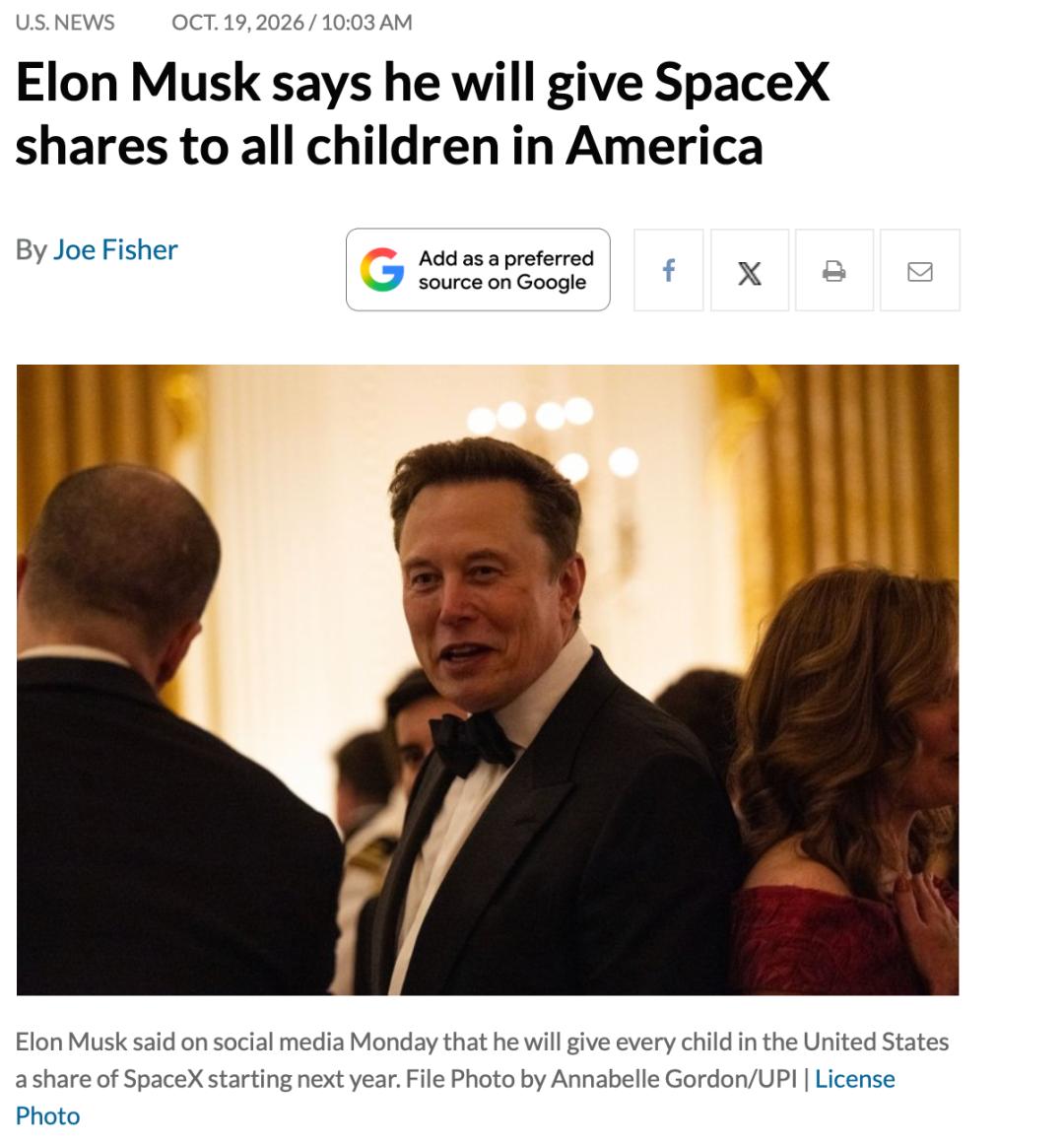
He actually followed through on his remarks: On October 19, Elon Musk stated that he plans to distribute one share of SpaceX stock to every child in the United States starting from 2027.
In addition, Musk also put forward the concept of "Universal High Income", which refers to a society with extremely strong production capacity and abundant material supply, rather than simply distributing a sum of money to every individual.
Wait a minute, the anxiety about AI's impact on employment has not faded yet, is the good day of "Universal High Income" coming soon?
Anthropic plans to distribute over 300 billion yuan to ordinary people
This is not an ordinary cash donation, and there are several noteworthy details in Anthropic's announcement.
Anthropic plans to establish the fund through a wholly-owned limited liability company (LLC), instead of adopting the traditional form of 501(c)(3) charitable organization in the United States. According to the company, this structure allows the fund to allocate resources more flexibly across various forms of public welfare initiatives.
In addition, the fund does not hold a one-off donation budget, but stocks linked to Anthropic's own value.
The company has also proposed a dynamic increase mechanism: based on a given valuation benchmark, when the market value of Anthropic rises by 50%, the board of directors can transfer about 2% of the company's shares to the fund at a certain proportion.
If Anthropic continues to grow larger in the future, the public welfare-related assets represented by the fund may also increase accordingly, linking the future returns of an AI company with public interests.
The 5% stake is not equivalent to cash that has already been received, nor does it mean that ordinary individuals can directly obtain shares of Anthropic.
How much public welfare resources the equity can be converted into depends on the company's valuation, the rights and liquidity of the shares, and how the fund ultimately uses these assets.
Previously, Anthropic stated that it would allocate 200 million US dollars to study and address the impact of artificial intelligence on the labor market. This new attempt is not simply a statement of "we are willing to donate", but to open up a path for the company's future returns to flow to public interests.
Using company shares to serve the public is not an original initiative of Anthropic.
Technology companies and entrepreneurs have made similar attempts before, but the asset holding forms, governance structures and beneficiaries they chose are all different.
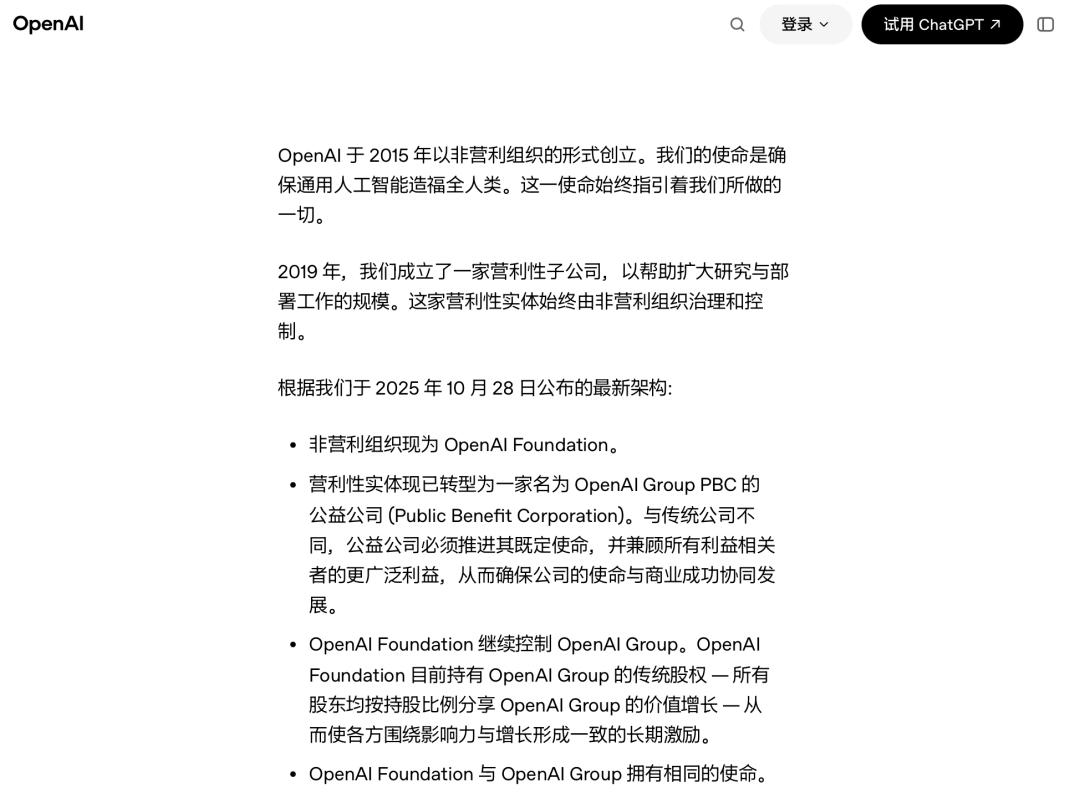
OpenAI is a direct example. After completing the organizational structure reform by 2025, the OpenAI Foundation holds 26% of the shares of OpenAI Group, which is approximately 1300 billion US dollars according to the company's valuation. OpenAI claims that the foundation will use these shares to help achieve its public welfare goals, and as the commercial company grows, the assets held by the foundation will also increase.
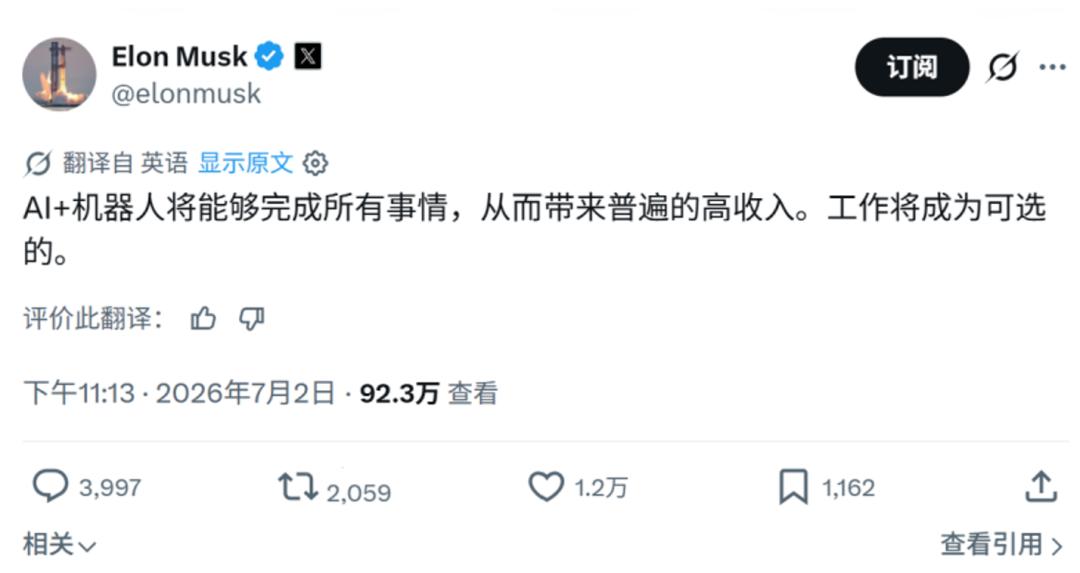
Musk has also put forward similar ideas. In April 2026, he stated that the government could distribute money to the public through the "Universal HIGH INCOME" policy to cope with the unemployment problem brought by artificial intelligence.
After Anthropic announced the plan, Musk immediately joined the discussion.
On October 19, Musk stated that he would distribute one share of SpaceX stock to every child in the United States. Different from Anthropic's way of allocating public welfare resources through a foundation, this method directly hands over the equity of the enterprise to a specific group of people.
The era of Universal High Income: the imagined utopia
The practice of AI companies bundling their corporate interests with public interests is not a random idea, and there is a basic common starting point behind it.
The Universal High Income (UHI) mentioned by Musk does not mean directly distributing money to everyone.
The future output of goods and services will far exceed the growth rate of money supply. When robots can manufacture more products and provide more services, while there is an upper limit on people's material needs, the economy will become extremely affluent, so that most people do not need to work for a living.
The last time such expression was used, it was used to describe utopia and the Land of Peach Blossoms.
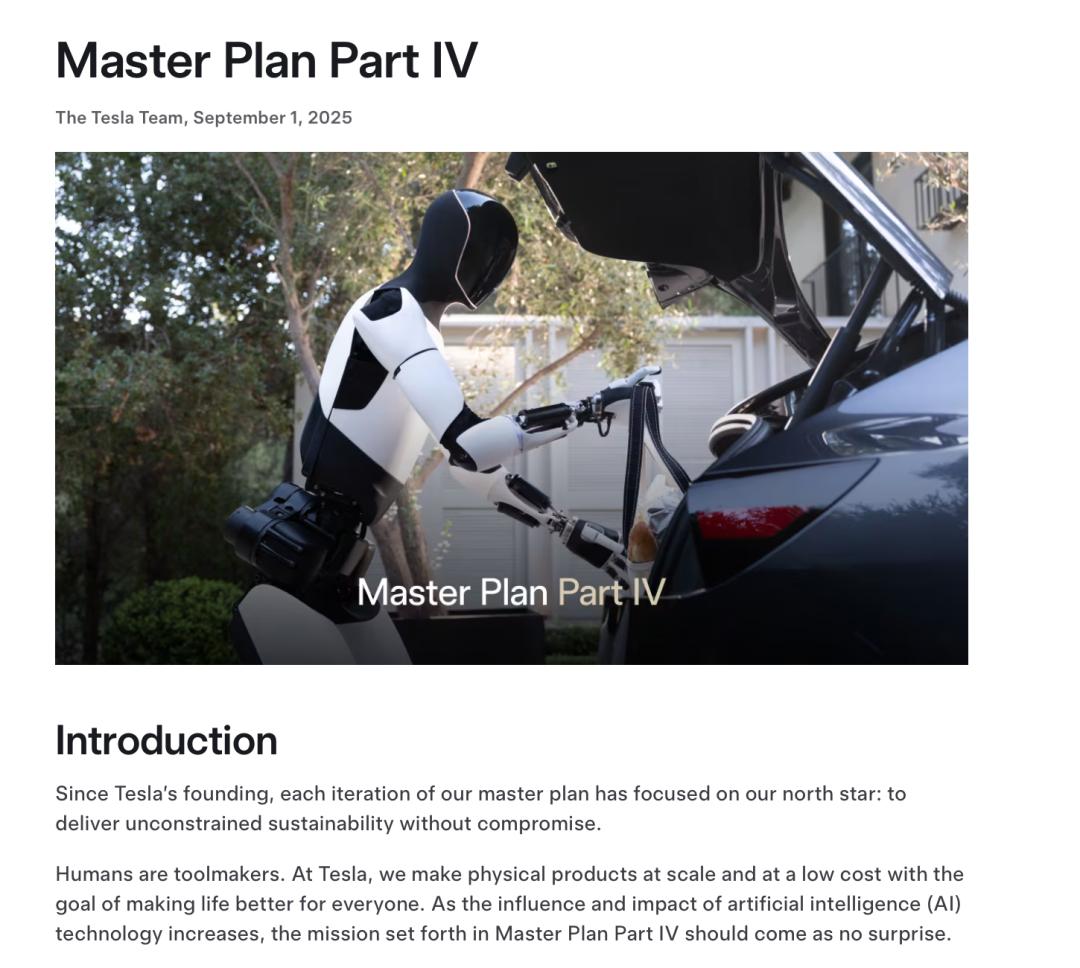
Tesla stated in the "Master Plan Part 3" that it hopes to turn the productivity created by advanced technologies including artificial intelligence, autonomous driving, robotics, manufacturing and energy technologies into greater social prosperity, which is the concept of "sustainable abundance" he proposed.
However, we need to distinguish between two different concepts: Universal Basic Income (UBI) and Universal High Income (UHI).
UBI is more like an income security system. No matter whether a person has a job or not, they can get some basic living expenses to solve the difficulties of unemployment, job transition or unstable income.
In addition to ensuring people's basic living needs, Universal High Income also believes that artificial intelligence and robots can greatly improve the productivity of the whole society, and enable ordinary people to benefit from the huge advantages brought by automation.
Steve Hanke, a professor of applied economics at Johns Hopkins University, questioned this statement. He criticized the claim that AI can eventually provide services for free or at extremely low cost, and pointed out that AI requires massive investment in electricity, water, chips and data centers.
This deduction is based on two important assumptions.
The first one is the technical issue. Artificial intelligence and robots can greatly improve social productivity, and drive the cost of some goods and services to drop to a very low level. That is, when the production cost is low enough, we will no longer need to spend a lot of money as we do now.
Musk also believes that the future output of goods and services will far exceed the growth rate of money supply. Money will still have value, but what it can buy, how long a person needs to work to make a living, and the cost people need to bear for some basic services will all change.
The second point is the macroeconomic issue. The output of goods and services will far exceed the money supply, which will actually lead to deflation.
Similar contradictions have appeared in history. During the Great Depression from 1929 to 1933, the unemployment rate in the United States reached around 25%, and industrial production also dropped significantly.
But this crisis was not caused by machines, but by multiple reasons such as financial collapse, bank failures and weakened consumption capacity.
Deflation is essentially the ratio of the output of goods and services to the money supply. The purpose of Anthropic establishing a public welfare fund and Tesla distributing stocks is to enrich people's pockets, to ensure that no link is missing in the chain of economic circulation, so as to continuously and steadily promote economic development and prevent the overall economic system from collapsing.
A bigger picture
While putting forward the discourse of "Universal High Income", Musk also incidentally put forward another view: "The number of humanoid robots will reach at least 1 billion units within 10 years".
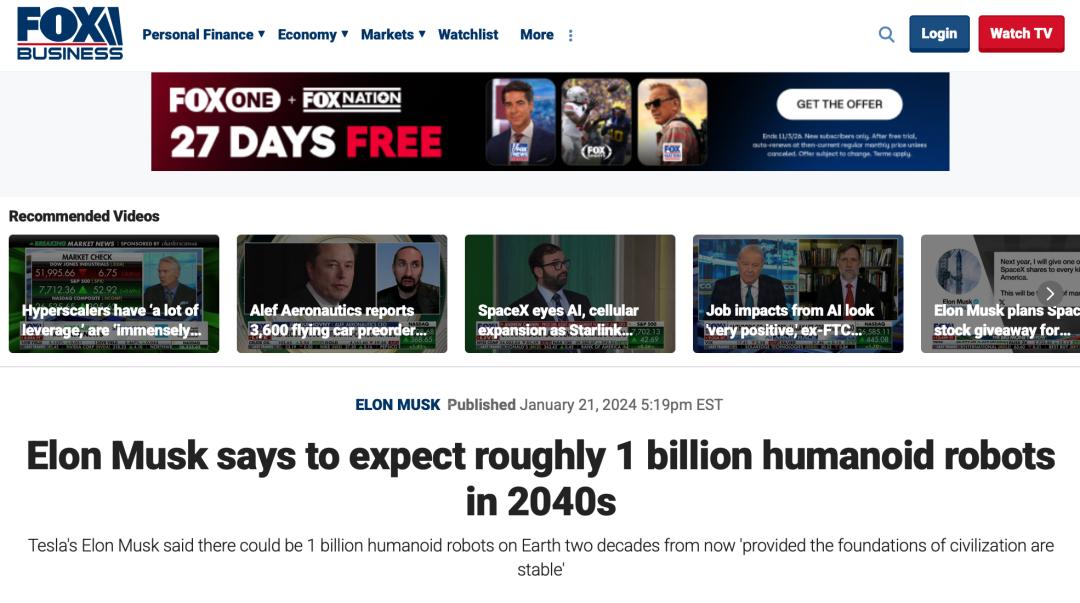
On the surface, this is promoting the humanoid robot he is about to release, but behind it is still the Silicon Valley logic that "the vision of the future world must be built on the substantial improvement of productivity and the reduction of production cost".
Humanoid robots can reduce the physical cost of labor, which is the first and most important step.
This prediction is also related to his layout in the robot industry. Musk hopes to reduce labor costs through mass production of robots.
Enterprises including Tesla Optimus, Google DeepMind and China's Unitree Robotics are all promoting the development of robot technology. They are trying to integrate perception, reasoning, motion control and practical tasks. Taking Tesla Optimus as an example, Tesla plans to deploy robots in its own factories to undertake some repetitive work.
The cost of intellectual labor has also been declining. Nowadays, models have gradually evolved from the initial functions of only answering questions and generating texts to being able to carry out programming, research, data processing and complex multi-step operations. Individuals or small teams can obtain the productivity and efficiency that previously only large companies had access to.
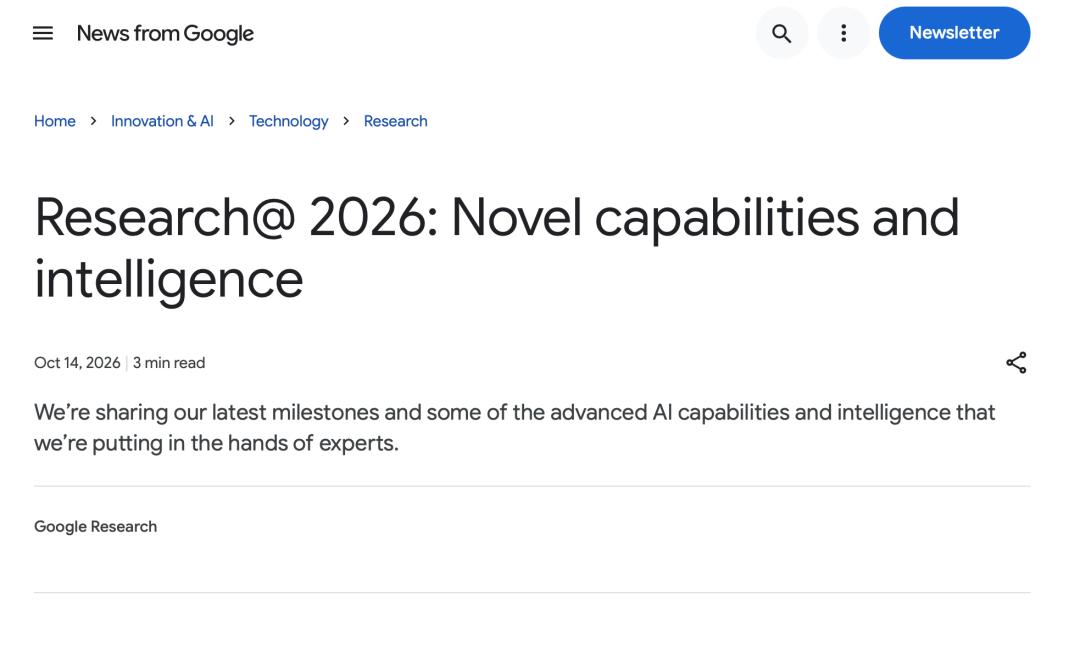
At the same time, in fields such as medical care, scientific research and education, AI companies are making more efforts to intervene in complex workflows. In the Research@ research progress released by Google in October 2026, it also mentioned that artificial intelligence will be applied to medical workflows, scientific research and other scenarios, so that more people can access research results and professional knowledge that were previously unavailable.
Putting all these changes together, we can find that the big companies are betting on the change of production methods that expand from the digital world to the real world.
Artificial intelligence is responsible for thinking, planning and processing information, robots are responsible for executing tasks in the real world, and computing power and energy provide support for the entire system.
This is the technical foundation required by the vision of "sustainable abundance". AI products have penetrated into all areas of our lives, but technological progress does not necessarily automatically improve everyone's life.
For all these moves of AI companies, most onlookers just choose to watch them draw empty pies quietly. After all, what is more relevant to us is that before the real vision comes true, we may still have to go through a not-so-short "historical garbage period".
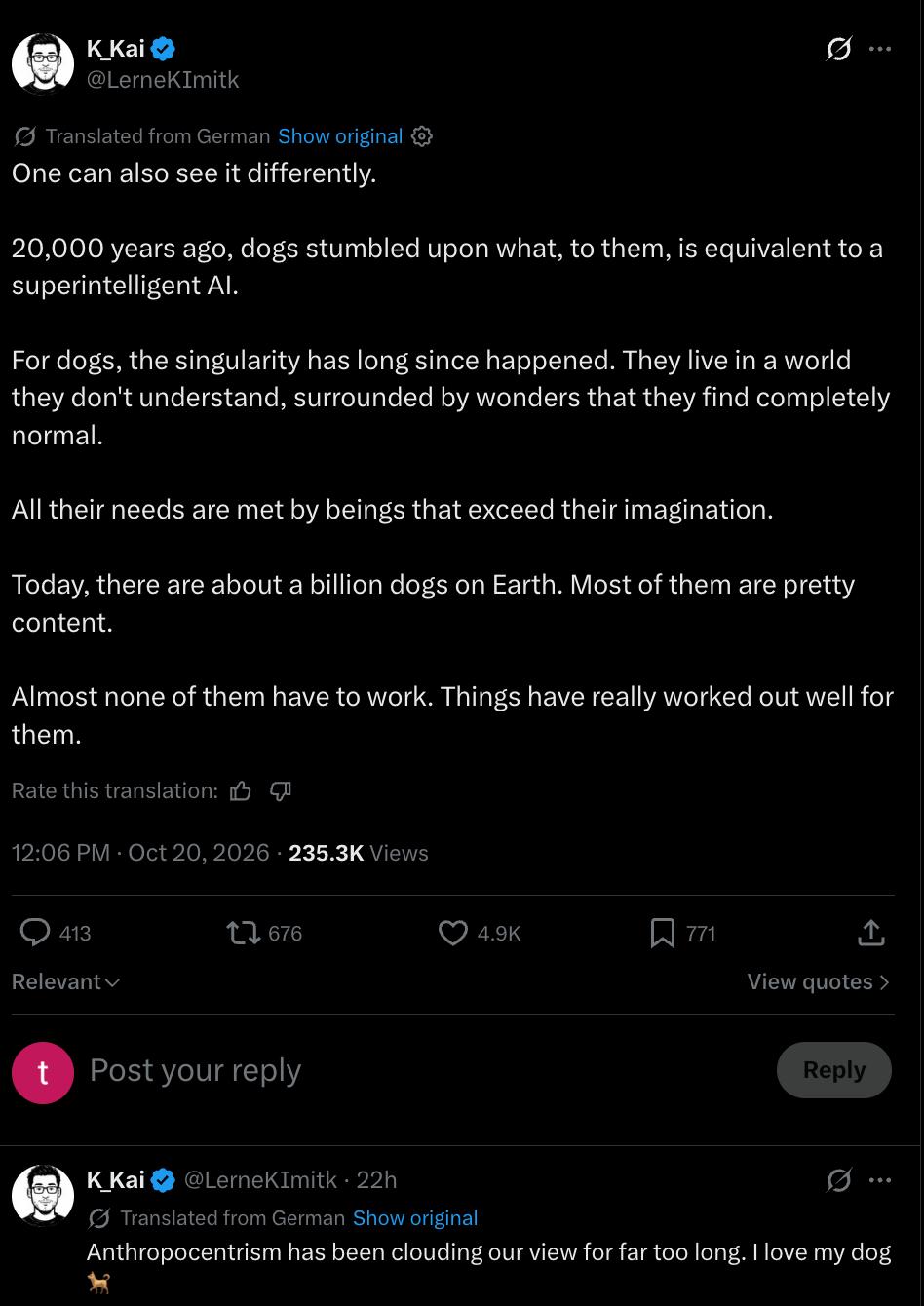
A post sparked some controversy yesterday, talking about a species that "enjoyed" the "Universal High Income" brought by superintelligence earlier than humans —
We can look at this from another angle.
20,000 years ago, dogs accidentally encountered an existence that was equivalent to superintelligent AI in their eyes.
For dogs, the singularity has long arrived. They live in a world they cannot understand, and all the wonders around them are commonplace to them.
All their needs are met by an existence beyond their imagination.
Nowadays, there are about one billion dogs on the earth, and most of them live quite satisfactorily.
Almost no dogs need to work, and they really live a good life.
Anthropocentrism has blinded our sight for too long.
This article is from the WeChat official account "APPSO", author: APPSO that discovers tomorrow's products, published with authorization from 36Kr.