From a scientist to a founder, Qiao Mu raised hundreds of millions of yuan in financing in less than two months.
In the past year, "neutral atom" has become a global buzzword, instantly emerging as the most eye-catching direction in the current quantum computing field. The competition in quantum computing is unfolding in all dimensions, including the number of physical qubits, fault tolerance capability, effective logical computing power, and long-term stable operation of the whole system.
This competition tests both cutting-edge scientific research capabilities and system engineering capabilities. Teams need to not only understand underlying physics and break through key experimental bottlenecks, but also integrate laser, vacuum, optics and control systems, and transform scientific research achievements into complete machine capabilities through continuous iteration. Teams that can connect both ends are one of the scarcest resources in quantum computing entrepreneurship.
In this fierce industry race, a company named FlipFlop is rising rapidly. This young and talented team has the scientific research breakthrough capability from top international laboratories and the industry-leading full-machine engineering implementation speed, boasting the most scarce team configuration in the industry.
ChinaVenture learned that FlipFlop has completed financing of several hundred million yuan less than two months after its establishment, and has received support from multiple institutions including a top dual-currency fund, a well-known early-stage investment institution, funds under CICC Capital, a top family office, Yongxing Materials, and Hanzhang Capital, with Gaohe Capital acting as the exclusive financial advisor.
Among them, the top dual-currency fund, the well-known early-stage investment institution and Hanzhang Capital are financial investment institutions, and Yongxing Materials is an A-share listed company, all of which are making their first layout in quantum computing. The funds under CICC Capital carry out layout of future industries such as quantum technology around the national science and technology innovation strategy. This participation in FlipFlop's financing is its continuous exploration and support for the core software and hardware technology route of quantum computing power. All investors are generally optimistic about the long-term potential of the neutral atom technology route in general-purpose quantum computing and industrial implementation.
Qiao Mu, founder of FlipFlop, is a PhD from Tsinghua University and a postdoctoral researcher at the French National Centre for Scientific Research (CNRS). After returning to China, he also received an AP faculty offer from the Department of Physics of Tsinghua University. Tsinghua University's popularity in China's hard technology primary market goes without saying, and the information and technical barriers of the quantum track are very strong. Qiao Mu's background is the top endorsement, and the mature Tsinghua hard technology alumni network can also continuously supply talents and industry-university-research resources.
In addition to Dr. Qiao Mu, FlipFlop's team avoids the common problems of many quantum computing companies. For example, many companies have chief scientists with strong scientific research capabilities, but the team lacks industrialization experience, as well as industrial talents in supply chain and implementation delivery, so they are easily trapped in the laboratory prototype stage. Ma Xiaobin, co-founder of FlipFlop, used to be the head of neutral atom computing at a leading domestic industrial enterprise, which perfectly complements the team's engineering implementation and commercialization capabilities.
Qiao Mu told ChinaVenture that there is a core judgment for him to return to China to start a business: the organizational model of universities is more suitable for open scientific research, but it is difficult to support the massive and continuous engineering iteration required by the quantum complete machine. The essence of entrepreneurship is to build a system that can run for a long time, not just to make a single amazing experiment in the laboratory. "To be a Founder, not just a scientist", Qiao Mu said.
Such a quantum start-up company with such team configuration and industrial cognition is even rarer, which can be called the "dream team" of quantum computing, so it is not surprising that investment institutions quickly lock in their share of the equity.
Build a truly useful quantum computer
Around the world, there are several pioneering neutral atom quantum computing research teams. Among them, Lukin's laboratory at Harvard University spun out QuEra, and the doctors and postdocs in the group co-founded Oratomic; the Browaeys laboratory of CNRS in France spun out Pasqal, which was listed on Nasdaq in August this year.
In 2022, Qiao Mu, who was studying for a doctorate in physics at Tsinghua University, realized the coherent manipulation of two-dimensional ion crystals for the first time. He advanced the ion trap quantum simulation that had not been broken through globally for ten years from a one-dimensional ion chain to two dimensions, creating a new paradigm for ion trap quantum computing and simulation. This breakthrough was also evaluated as "Heroic" by the editors of *Nature*.
For this successful breakthrough, Qiao Mu jumped out of the result itself, starting from the first principle of quantum computing, and thought about a series of more long-term problems: if the goal is not to complete the next beautiful physical experiment, but to truly build a useful quantum computer, how far can this technical route go?
This prompted Qiao Mu to finally join the Antoine Browaeys research group at the French National Centre for Scientific Research (CNRS) to carry out postdoctoral research, resolutely shifting from the familiar ion trap route to the neutral atom route.
During his postdoctoral research, Qiao Mu's original career plan was to return to China to continue engaging in quantum-related education and research, set up an independent laboratory in a university to continue basic research, and he also received top offers such as from the Department of Physics of Tsinghua University.
However, the leapfrog development of AI made Qiao Mu rethink this decision. In his spare time doing experiments in France, he has always had his own side project: to develop an independent scientific research Agent, hoping that AI can independently read literature, design computational experiments, analyze results, and even complete research reports around a scientific problem.
At first, this was more of an attempt out of interest. Although AI can complete many tasks, once it involves complex research processes, researchers still need to continuously intervene and correct.
However, with the capability leap of new generation models such as Claude, GPT and DeepSeek, Qiao Mu found that the situation has changed. Research tasks that originally required frequent manual intervention can now be continuously executed by AI. AI can not only understand professional papers, but also write calculation programs, analyze experimental results, and try to make independent corrections when encountering problems.
This change made Qiao Mu feel an unprecedented excitement.
Qiao Mu shared his attempts with colleagues at CNRS and Pasqal. Everyone gradually reached a similar judgment: AI can no longer be simply regarded as an auxiliary tool for scientific research, and it is beginning to undertake work that in the past could only be completed by professional researchers.
A more fundamental question then emerged: What positive changes will the continuous and rapid improvement of AI research capability bring to the human organization mode of scientific research?
In the past tradition, top scholars led research teams to read literature, design experiments, debug instruments, process data, and finally write papers. The core process of knowledge generation is highly dependent on the manual labor of researchers. This is a bit like a workshop before the advent of the steam engine. But the Industrial Revolution changed the entire mode of production.
Qiao Mu began to believe that scientific research is also standing at a similar historical inflection point, and scientific research also needs to embrace a brand new mode of production.
But in this change, Qiao Mu also noticed an obvious gap. For mathematics and programming, which are mainly carried out in the digital world, AI has shown strong reasoning and execution capabilities; but physics is different. It must ultimately be tested by the real world, directly facing laser drift, atom loss, experimental noise and a large number of unpredictable physical problems.
AI has become more and more good at thinking, but it still lacks a pair of hands that can touch the real world.
What will happen if AI can not only read papers and write code, but also independently manipulate instruments, complete experiments, and discover new physical laws? This question has become an important motivation for Qiao Mu to found FlipFlop.
What Qiao Mu hopes to build is not just a quantum computing laboratory with advanced equipment, but a set of scientific research systems that can run continuously and independently and iterate on their own. Let AI undertake the heavy experimental debugging, measurement and data analysis, and let human researchers focus on putting forward important questions, forming judgments and understanding physics. Let machines do the heavy work, and let scientists enjoy the pleasure of thinking and discovery.
Shifting from ion trap to neutral atom is Qiao Mu's choice of quantum computing technology route; and deciding to change from a scientist to a Founder, and co-found FlipFlop with team members such as Ma Xiaobin, is his choice of scientific research and engineering organization mode. Behind the two choices, there is always the same goal: to build a truly useful quantum computer.
In Qiao Mu's view, the development of quantum computing needs to cross three major hurdles: capture stably, correct accurately, and operate durably. "Capture stably" solves the problem of atomic scale; "Correct accurately" solves the problem of effective computing power; "Operate durably" solves the problem of engineering.
Capture stably: from one atom to a thousand atoms
In the history of the development of neutral atom quantum computing, 2016 is a key node. In this year, the Browaeys team of CNRS in France and the Lukin team of Harvard University almost simultaneously published a breakthrough in atom rearrangement technology in *Science*.
It is not easy to place atoms one by one at the desired position. Optical tweezers technology is an effective way to manipulate single atoms. Previously, the position of atoms directly captured by optical tweezers was random, and it was difficult to directly form a complete, defect-free array. Through atom rearrangement, researchers can first identify the position of atoms, and then use optical tweezers to move them to the designated position. In this way, the atom array can be freely arranged into various shapes.
Using Go as a metaphor, this is like changing from randomly scattering a handful of chess pieces to playing any game of chess.
This seemingly insignificant change officially kicked off the large-scale development of neutral atom quantum computing. In the following ten years, neutral atom quantum computing and quantum simulation have exploded, and the scale of manipulable atoms in experiments has increased from dozens to thousands. The neutral atom route has also become one of the three major quantum computing routes in the world.
The team that Qiao Mu later joined was exactly the Browaeys team that completed this breakthrough. During his time in France, he was deeply involved in the design and construction of a new generation of neutral atom experimental platform, exploring richer interatomic interactions and complex quantum many-body physics.
In 2025, as the first author and corresponding author, he published a study in the journal *Nature* on realizing doped quantum antiferromagnets using Rydberg atom arrays, which provided a new experimental platform for exploring strongly correlated physics related to high-temperature superconductivity. From two-dimensional ion crystals to reconfigurable neutral atom arrays, Qiao Mu has successively participated in cutting-edge experiments of two quantum computing systems, and also witnessed the rapid development of neutral atom technology.
But the breakthrough in the number of atoms is only the first step. Being able to capture a thousand atoms does not mean having a thousand truly available qubits. This leads to the second hurdle.
Correct accurately: from qubit quantity competition to effective computing power competition
Today's quantum computing industry is somewhat similar to the early computer industry. It is easy for people to compare how many transistors a chip has and how many cores it has, but what users really care about is how much work this computer can actually complete. Quantum computing is no exception.
Quantum states are very fragile. Even if the error probability of a single operation is very small, errors will continue to accumulate as the number of calculation steps increases. Therefore, researchers need to use multiple physical qubits to jointly encode a protected logical qubit, and then continuously detect and correct errors in the calculation process through quantum error correction.
The problem is that error correction itself also consumes a lot of resources. If protecting one logical qubit requires hundreds or thousands of physical qubits, then even if a quantum computer with one million physical qubits is built one day, the logical qubits that can actually be used for calculation may still be very limited.
Therefore, in the next stage of competition, simply stacking more physical qubits is far from enough; who can use fewer physical resources to complete more and more reliable logical operations will become the real winner in the FTQC (Fault-Tolerant Quantum Computing) era.
Qiao Mu believes that this may exactly trigger the second technological explosion of the neutral atom route.
Different from many hardware architectures limited to nearest-neighbor interaction, neutral atoms can not only form large-scale arrays, but also establish entanglement between qubits at different positions through atom movement and parallel Rydberg interaction.
For example, in the venue of a conference, originally, attendees could only communicate (entangle) with people next to them besides listening to the speech on the stage. Atom movement is equivalent to adjusting the position of attendees, and parallel Rydberg is equivalent to building many 1V1 small meeting rooms in the venue, so that attendees can not only communicate with people next to them, but also communicate on demand, and avoid disturbing each other.
This flexible and parallel non-local connection capability provides a very attractive hardware foundation for low-overhead error correction architectures such as quantum Low-Density Parity-Check code (qLDPC).
In the past, quantum error correction often required a large number of additional physical qubits; combining the new coding method with the hardware architecture has the opportunity to significantly reduce this cost. In Qiao Mu's view, the importance of this round of technological transition is no less than that of atom rearrangement in 2016.
The breakthrough in 2016 gave scientists the ability to arrange more and more atoms; the new generation of low-overhead quantum error correction has the opportunity to make these atoms truly form a reliable computer.
This is also the reason why FlipFlop chooses to design the complete machine architecture starting from the requirements of fault-tolerant computing, and takes the 100 logical qubit system as an important R&D goal.
But even if you cross the door of quantum error correction, there is still the last step to go before reaching a real computer.
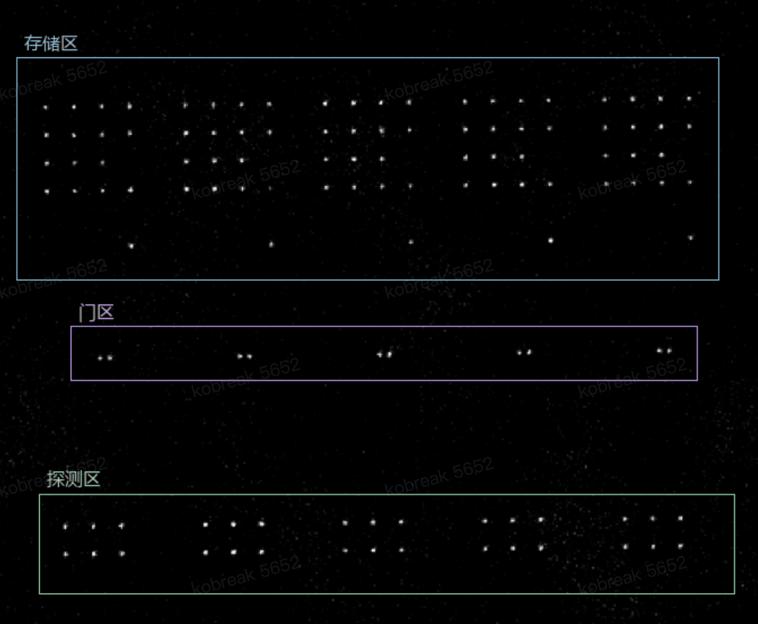
Demonstration of the neutral atom partitioned computing architecture completed by the team
Operate durably: from laboratory Demo to a real machine
In the laboratory, getting a beautiful experimental result once and making a machine work continuously are two completely different things. Today, an advanced neutral atom experimental device may have dozens of interrelated laser optical paths, hundreds of control parameters, as well as complex vacuum, optical and electronic systems. Scientists can precisely control thousands of atoms to arrange and evolve in a predetermined way, but making the whole system work stably day after day is still a huge engineering challenge.
Imagine such a scenario. At two o'clock in the morning, a running quantum computer suddenly cannot capture atoms normally. The problem may lie in laser polarization, fiber coupling, or two lasers that originally need to be precisely overlapped are shifted due to tiny deformation of the mechanical structure. Any tiny error may cause the neutral atom quantum computer to fail to operate continuously.
In the vast majority of laboratories today, troubleshooting quantum computing systems still requires researchers to come to the site in person. They need to troubleshoot problems along the complex optical path, check the light spot and optical power, even open the protective cover, and manually adjust the mirror, wave plate and fiber coupler. After finding the problem, it is necessary to re-verify whether the capture, manipulation and readout of atoms return to normal. This series of operations sometimes only takes more than ten minutes, but sometimes it may take a whole day.
A real quantum computer cannot always rely on physicists standing next to the optical platform to tighten screws.
Qiao Mu believes that to cross this threshold, we must rethink the design method of the experimental system. Traditional automation mainly relies on feedback control to maintain parameters such as laser frequency, power and magnetic field at set values. But the future autonomous laboratory, in addition to automatic parameter adjustment, also needs to be able to judge which physical link the fault occurs in, and actively intervene in the real experimental device through precision actuators and even robots.
This means that the quantum computing laboratory needs to gradually change from a set of equipment passively operated by humans to a physical system that can independently perceive, diagnose, execute and verify.
As mentioned earlier, the rapid development of AI is an important motivation for Qiao Mu to found FlipFlop, but Qiao Mu has his own in-depth thinking about what AI can do and how to use AI.
At the beginning of its establishment, FlipFlop chose the AI-native R&D method. In Qiao Mu's view, equipping researchers with several AI assistants is not real AI-Native; centering on "AI + researcher" and redesigning the R&D process and organizational mode of the enterprise can make a truly great hard technology enterprise in the next era.
In the past, the production capacity of scientific research organizations mainly depended on how many researchers and how many experimental equipments there were; in the future, it may also depend on how much machine intelligence researchers can call, and the efficiency of converting these intelligences into effective scientific research results.
Qiao Mu hopes to turn these two things into FlipFl