Just now, Claude designed 310,000 kinds of proteins within 64 hours, 17 of which have been verified by experiments.
The story of AI-driven pharmaceutical R&D has finally moved from molecular structures in computers to test tubes in real laboratories...
Just recently, Anthropic released a biological research result: Claude generated 318484 protein designs within 64 hours, in an attempt to find candidate molecules that can bind to scorpion venom neurotoxins.
Anthropic stated that around 1.2 million people worldwide suffer scorpion stings every year, while antivenom serums are often either highly priced or in short supply. Designing scorpion venom neurotoxin-binding proteins with Claude may represent an early step on the path to exploring new treatment methods.
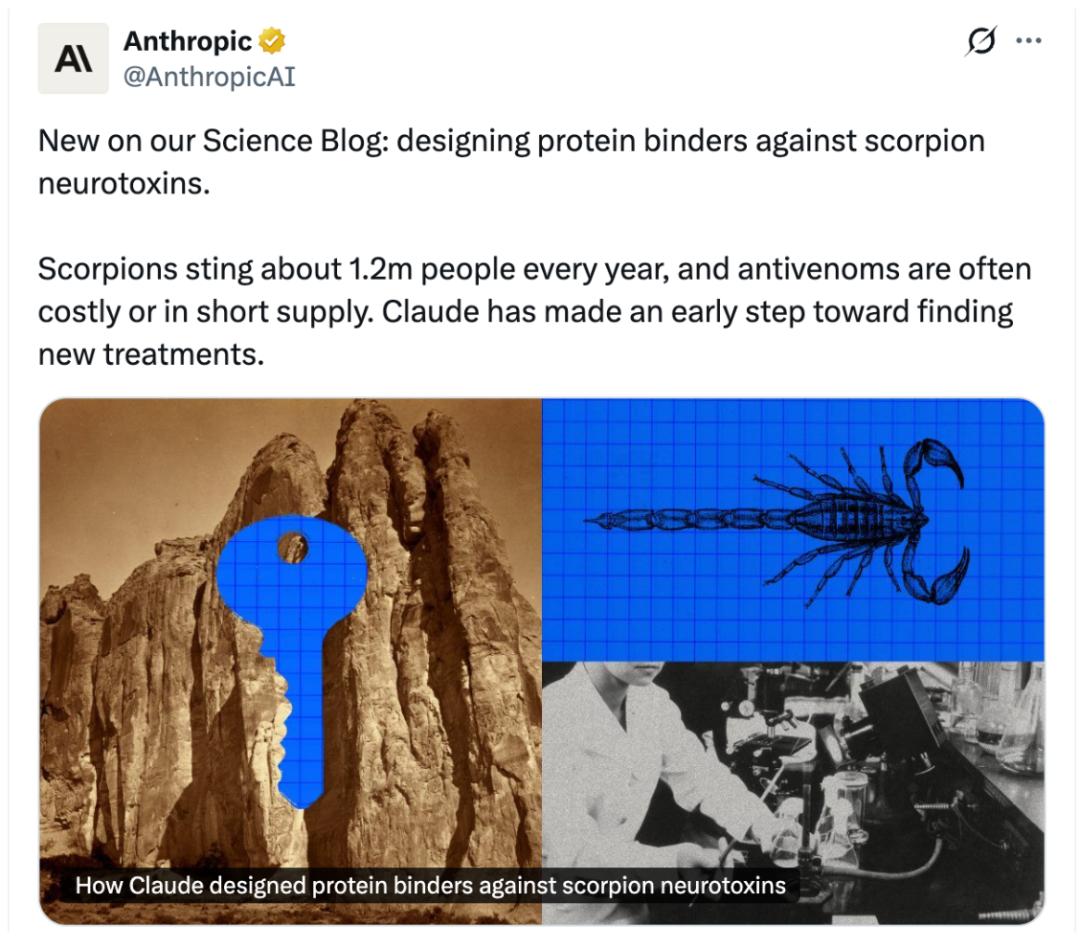
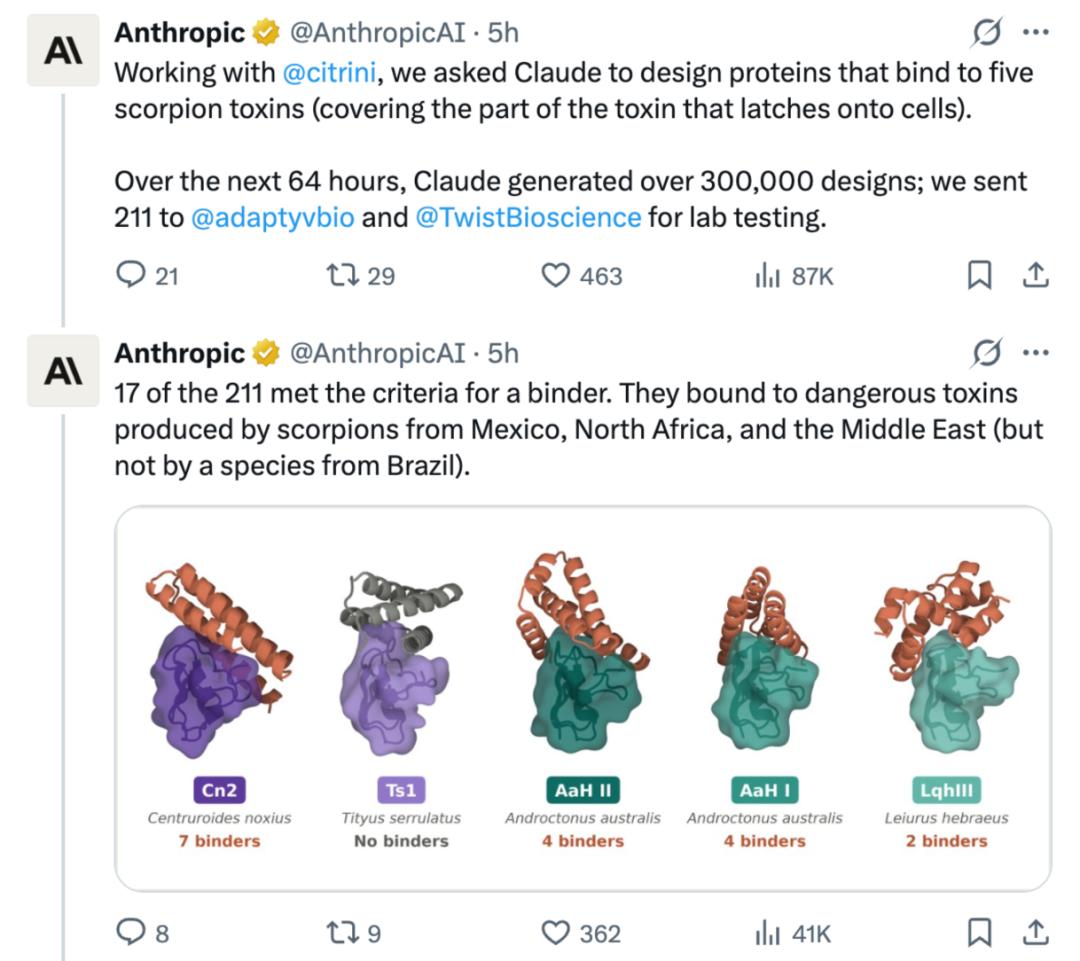
Data shows that the research team screened 211 candidate proteins from the 318484 generated protein designs and sent them for laboratory testing, with 17 of them finally meeting the preset binding criteria, and these molecules are expected to provide clues for the R&D of new anti-scorpion venom drugs.
Certainly, current experiments only verified their binding capacity to the target toxins, and have not yet proved that they can neutralize toxins or provide protection in living organisms. But the truly notable part of this research is that Claude not only participated in protein design, but also assisted in multiple links such as candidate solution screening. From molecular generation to laboratory verification, AI has begun to participate in a more complete scientific research workflow...
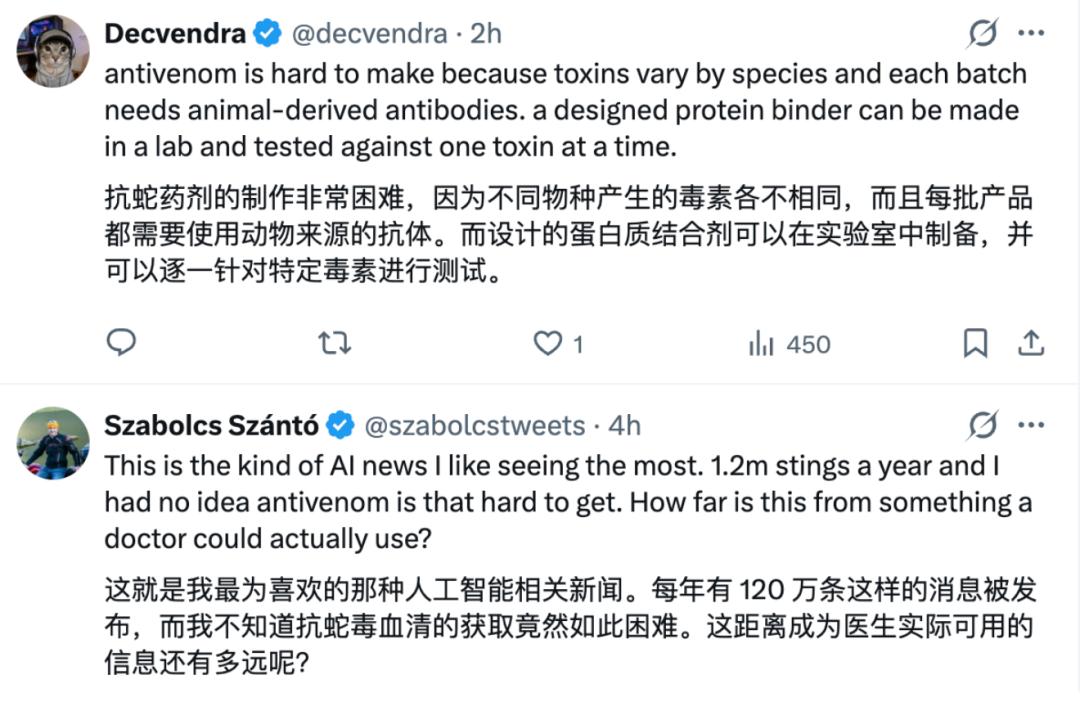
Let's learn the details below.
318,000 Protein Designs, 17 Pass Experimental Screening
Why was scorpion venom chosen specifically?
More than 1.2 million scorpion sting incidents occur globally every year, causing more than 3,250 deaths. Traditional antivenom serums are produced relying on animal immunization, with high costs and limited types of covered toxins, making scorpion venom poisoning a public health issue that has long lacked sufficient R&D investment.
Anthropic cooperated with investment research institution Citrini Research, hoping to use AI to design small proteins that can bind to scorpion venom neurotoxins from scratch, namely minibinders.
In simple terms, some neurotoxins in scorpion venom bind to sodium ion channels on nerve cell membranes, interfering with nerve signal transmission, and in severe cases may lead to consequences such as heart failure and pulmonary edema.
The researchers' assumption is that if sufficiently precise proteins can be designed to preemptively bind to the part where toxins interact with sodium ion channels, it is possible to prevent toxins from functioning.
In this experiment, 5 scorpion venom neurotoxins from Mexico, Brazil, North Africa and the Middle East were selected, namely Cn2, Ts1, AaH I, AaH II and LqhIII.
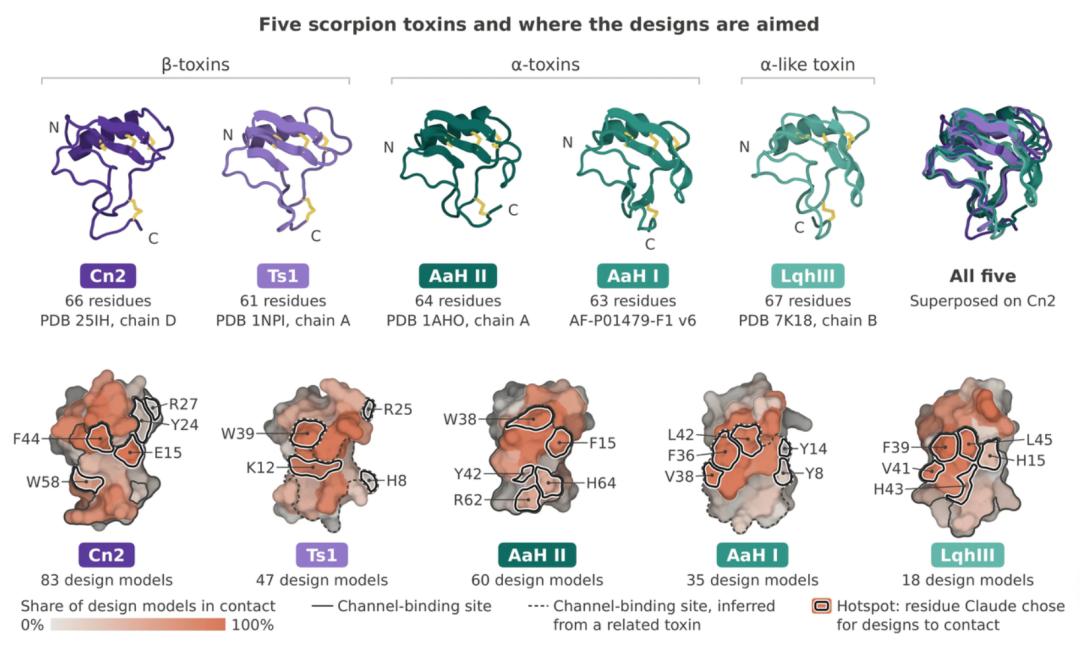
Claude analyzed the protein structures and key binding sites of the five scorpion venom neurotoxins, and designed candidate binding proteins accordingly. The 3D structures of the toxins are shown above, and the potential binding regions selected by Claude are marked below.
Claude generated 318484 candidate protein designs, and finally selected 180 of them. The research team then supplemented 31 more with Claude's help, totaling 211 candidate proteins, which were sent to two laboratories, Adaptyv Bio and Twist Bioscience, for verification.
Finally, 17 designs met the protein binding criteria set by the research team.
Specifically, 7 of them can bind to Cn2, 4 bind to AaH I, 4 bind to AaH II, and the other 2 bind to LqhIII. Designs targeting Ts1 failed to pass the screening.
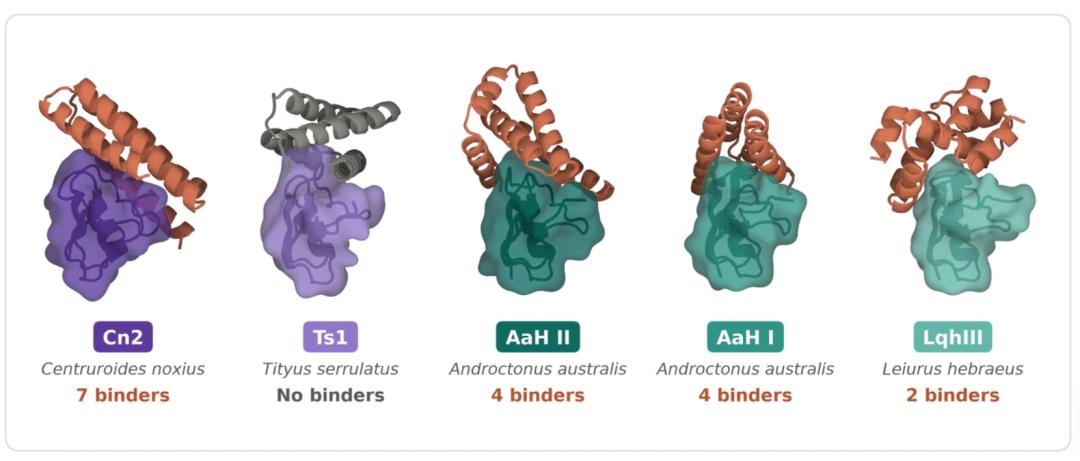
Candidate proteins designed by Claude for the five scorpion venom neurotoxins and experimental screening results. 7 effective binding proteins were obtained for Cn2, 4 for AaH I and AaH II respectively, 2 for LqhIII, and no effective binding protein was screened out for Ts1.
The most notable candidates in the study are two proteins targeting the Cn2 toxin, Cn2-B1 and Cn2-B2.
Both showed strong binding capacity in experiments, with the dissociation constant KD reaching the single-digit nanomolar level. A lower KD usually means that the molecule binds more tightly to the target protein.
The research team also conducted competitive binding experiments.
They found that these two proteins may bind to the same or adjacent positions as a known neutralizing antibody called LR, and previous studies have proved that LR can neutralize the Cn2 toxin in mouse experiments.
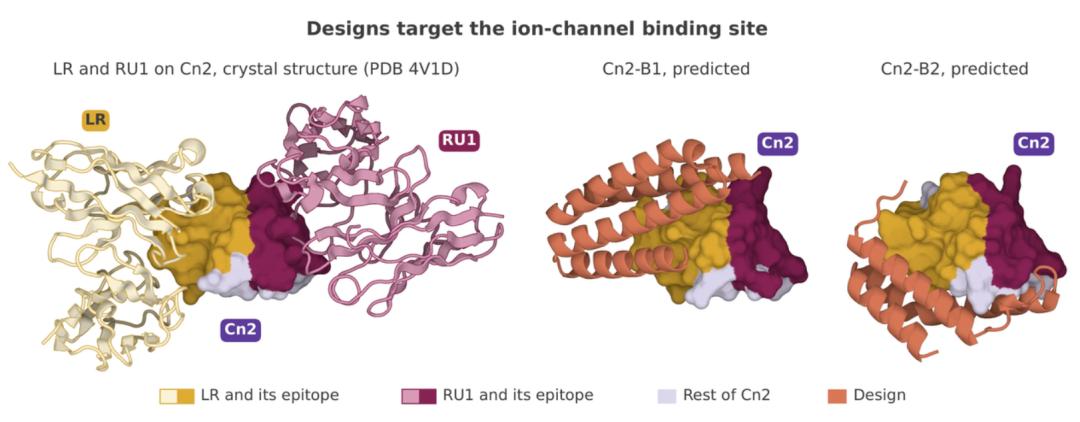
Predicted binding structures of the Cn2-B1 and Cn2-B2 candidate proteins designed by Claude to the scorpion venom neurotoxin Cn2. Both target the key region where the toxin binds to ion channels, and the binding sites are compared with those of the known antibodies LR and RU1.
This means that the two candidate proteins designed by Claude may have research value for further studies.
However, it should be noted that this round of experimental verification only confirmed the binding capacity of the proteins to the toxins, and did not actually prove that these proteins can neutralize scorpion venom.
The researchers have not yet conducted cell-level toxin neutralization tests, nor have they verified the protective effects in living animals.
Another interesting result is that Claude encountered difficulties when designing proteins that target multiple toxins at the same time.
The research team originally hoped to find universal proteins that can bind to multiple scorpion venoms, to reduce the number of molecules that need to be used in combination in future antivenom preparations.
But among the 17 proteins that finally passed the screening, each was only proven to bind to one toxin, and no design met the criteria of binding to multiple toxins at the same time.
From the perspective of single-toxin binding protein design, 11 out of 60 specially designed candidates targeting a single toxin passed the screening, with a success rate of about 18%.
Anthropic stated that this level is basically consistent with the performance of common protein design research.
Although there is still a clear gap from a universal antivenom drug, this study at least proves that Claude can propose a large number of candidate designs in a relatively short time, and screen out proteins that actually have experimental binding capacity.
Behind the 64 Hours, How Much Work Has Claude Actually Completed
Traditional protein design requires researchers to use multiple tools to complete tasks such as structural analysis, candidate molecule generation, binding prediction and screening. This time, Anthropic tried to let Claude organize these links independently.
The research team first specified the target toxins, available tools and screening rules, then Claude retrieved protein structures independently, selected design tools, formulated screening criteria, and continuously adjusted the design schemes.
Throughout the process, Claude called 12 protein design tools, generated 318,484 candidate designs, and performed structural prediction on more than 550,000 groups of candidate protein-toxin combinations.
After receiving the initial prompt, Claude ran continuously and autonomously for 24 hours. The researchers then added 4 more prompts to guide it to further optimize the designs. The entire computational design phase lasted 64 hours, and Claude finally screened out 180 candidate proteins.
Even the work of sending the protein sequences to the laboratory was completed by Claude according to the requirements of the researchers.
This means that Claude is already capable of undertaking a large number of scientific research tasks involving planning, analysis and tool coordination, and continuously adjusting research schemes based on intermediate results.
However, humans are still involved in the experiments. Researchers are responsible for setting goals, adding prompts and supplementing designs, and subsequent protein synthesis and verification are also completed by professional laboratories. In addition, the 64 hours only include the computational design phase, during which about 10,000 GPU hours were consumed.
This is not the first time Claude has attempted protein design. Back in August this year, Anthropic announced a research result: Claude carried out design for 15 protein targets, and 14 of them successfully obtained experimentally verified binding proteins.
Blog link: https://www.anthropic.com/research/Claude-accelerates-protein-design
Compared with previous studies, this experiment further demonstrates Claude's ability to coordinate complex scientific research workflows in specific biomedical issues.
But there is still a lot of work to do before we get a real antivenom drug. At present, Anthropic has made all 211 candidate designs and related experimental data public, for other researchers to continue verification.
From Protein Design to Drug R&D,
AI May Be Entering a More Complete Biomedical Workflow
If what Anthropic demonstrated is the ability of AI to design biomolecules, then another bio-AI company, Radical Numerics, has pushed the story to the human treatment scenario.
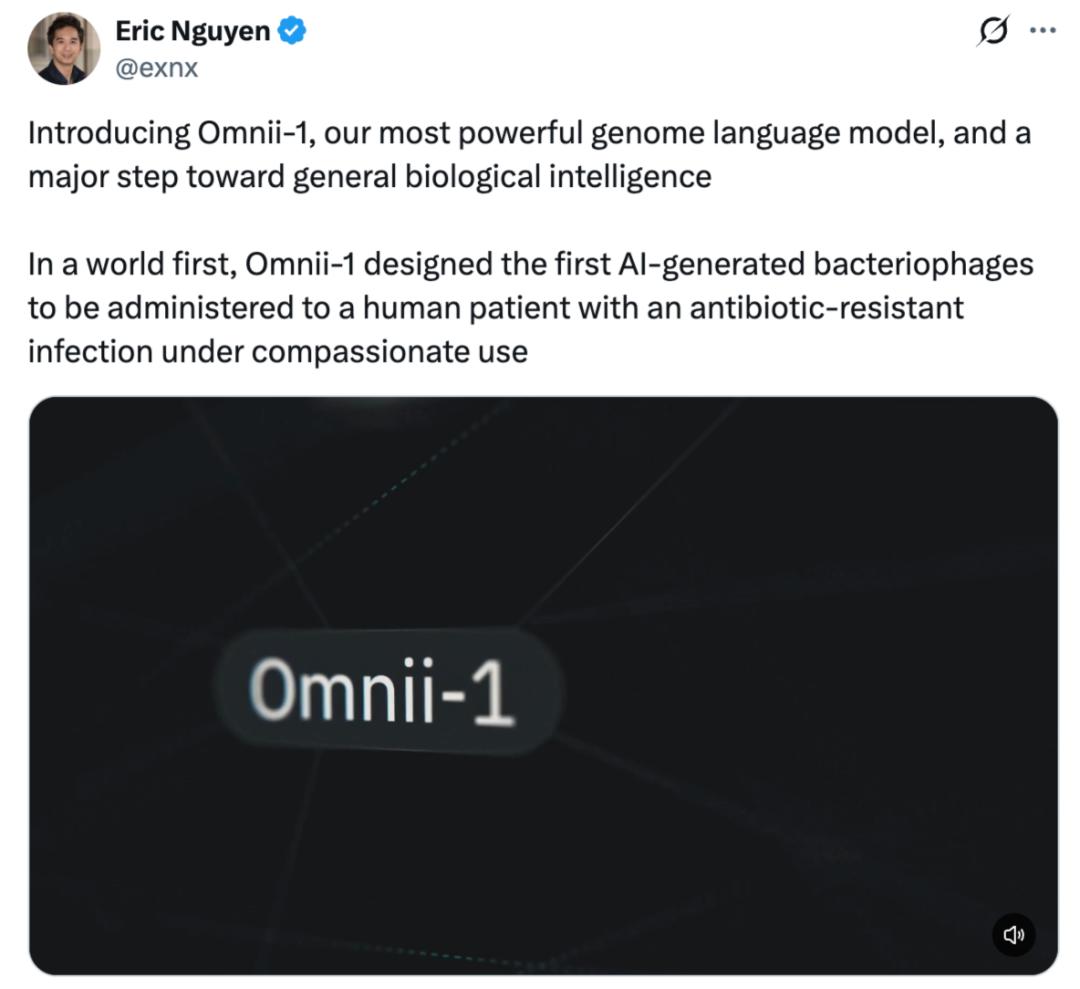
Just now, Radical Numerics released the genome large model Omnii-1, and announced that its AI-designed phage has been approved for compassionate use in a patient with drug-resistant bacterial infection. The company stated that the relevant phage has passed laboratory bactericidal tests and obtained authorization for patient treatment.
Phages are a type of virus that can infect bacteria. Under specific conditions, they can be used for therapeutic research targeting bacterial infections, especially in scenarios where conventional treatment options are limited, such as drug-resistant bacterial infections.
Compared with designing proteins that can bind to toxins, the phage case further touches on how AI-designed biological agents can enter real medical workflows.
At the same time, OpenAI announced the acquisition of biomedical AI company Orchestra Bio, and plans to integrate its team and technology into its life science platform Rosalind.

Different from Anthropic's focus on demonstrating AI's protein design capabilities, OpenAI's acquisition this time targets another complex task in the drug R&D process: coordination and management of scientific research projects.
In April this year, OpenAI had already launched GPT-Rosalind, which is dedicated to life science research, to help researchers deal with complex problems in fields such as biology, drug R&D and translational medicine. Rosalind Workbench further connects scientific tools and data, helping researchers analyze results and plan experiments.
The newly acquired Orchestra Bio mainly helps biomedical teams coordinate cross-department R&D work, track experimental progress, and identify dependencies between different R&D tasks.
For example, in the drug R&D process, a failed production batch may affect the start time of subsequent clinical trials. Orchestra's Agent can assist in tracking affected tasks, collecting relevant information, and comparing different response plans for researchers and project leaders to make decisions.
For OpenAI, this is also a step to extend AI from scientific research problem analysis to the entire drug development process.
From Anthropic designing anti-scorpion venom candidate proteins, to Radical Numerics applying AI-designed biotherapeutic candidates to patients, to OpenAI trying to coordinate drug R&D workflows, the explorations of the three companies are covering different links in biomedical R&D.
The next step is to figure out how to make these designs and discoveries go through the long verification process smoothly, and finally become safe, effective treatment solutions that can truly help patients.
After all, finding a potentially effective molecule in a computer is only the beginning of new drug R&D.
References:
https://x.com/AnthropicAI/status/2112579251555721573
https://www.anthropic.com/research/claude-scorpion-toxin-binder-design
https://x.com/ChrisGPT/status/2112616867303178701
https://x.com/exnx/status/2112580926651904379
https://openai.com/index/openai-to-acquire-orchestra-bio/
https://x.com/OpenAI/status/2112607347688583586