NVIDIA officially announced a major breakthrough. With the support of more than 8,000 GPUs, the number of physical qubits required for the record-setting quantum fault-tolerant computing simulation has been reduced by 90%.
NVIDIA has set a new record in quantum computing simulation on Europe's largest supercomputer, completing fault-tolerant quantum computing simulation of 104 qubits using 8192 GPUs, and verifying a technical route that is expected to reduce the number of physical qubits required for relevant solutions by about 90%.
This breakthrough is expected to help researchers reduce the resource overhead of quantum error correction and accelerate the R&D of practical quantum computing systems.
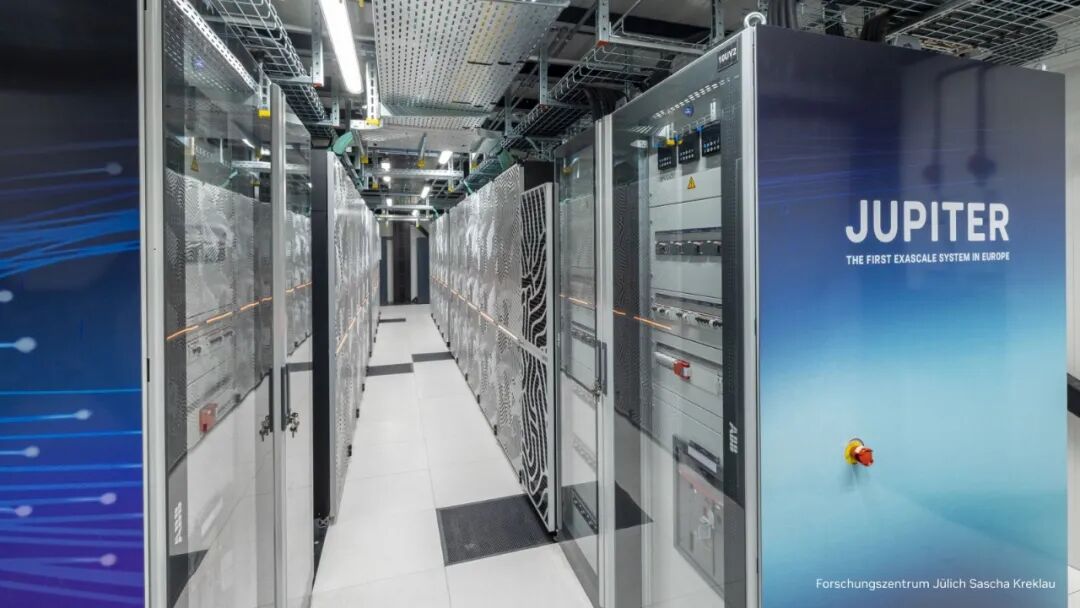
On Monday, October 19 Eastern Time, NVIDIA announced that its researchers have carried out a record-breaking fault-tolerant quantum computing simulation based on the "JUPITER" supercomputer at the Jülich Supercomputing Centre in Germany. The focus of this research work is not only to raise the simulation scale to a record 104 qubits, but also to model the process of quantum processors performing fault-tolerant computing in a real noisy environment, helping researchers evaluate and optimize designs before actually manufacturing hardware.
This research also highlights another layout path of NVIDIA in the quantum computing industry: in addition to providing GPU infrastructure for artificial intelligence (AI) and high-performance computing, the company is also promoting the collaborative work of GPU supercomputers and quantum processors, using classical computing systems to simulate, verify and optimize future quantum hardware.
Jensen Huang, CEO of NVIDIA, said that understanding the performance of complex fault-tolerant systems when operating at scale is the key to achieving practical quantum computing, and GPU supercomputers can help researchers tackle research problems that were previously out of reach.
01
Moving from ideal environment to real noise, further expanding simulation scale
The potential of quantum computing lies in leveraging the properties of qubits such as superposition and entanglement to process certain problems that classical computers cannot solve efficiently. However, qubits are extremely vulnerable to external interference, and noise generated during control and operation processes will cause errors. To enable quantum computers to truly perform complex and long-term computing tasks, the problem of error accumulation must be solved.
Fault-tolerant quantum computing is exactly the key path to meet this challenge. Its core is to reduce the impact of physical qubit errors on the computing results through technologies such as quantum error correction, so that the system can reliably perform more complex operations.
The significance of NVIDIA's simulation this time is that it is no longer limited to quantum computing in an ideal, noiseless environment, but simulates the impact of real hardware noise on the fault-tolerant computing process.
According to the company's announcement, the German Jülich research team previously completed a complete simulation of a 50-qubit general-purpose quantum computer on JUPITER, but it was carried out under ideal, noiseless conditions. This 104-qubit simulation is carried out for the key links in fault-tolerant computing, and the research scale and simulation scenarios are further expanded.
This difference has practical significance: a theoretically feasible quantum computing solution does not necessarily operate stably in the noise environment of real hardware. By simulating the behavior of quantum processors in advance through classical supercomputers, researchers can discover error sources earlier, evaluate the performance of error correction solutions, and screen more promising designs before investing in costly quantum hardware manufacturing and experiments.
02
Magic state cultivation challenges traditional solutions and reduces quantum error correction resource overhead
Another core achievement of this research is the verification of a fault-tolerant quantum computing technical route called "magic state cultivation".
In fault-tolerant quantum computing, magic states are a special class of quantum states required to perform general-purpose quantum computing. Since related computing processes continuously consume magic states, the system must continuously prepare new magic states. Therefore, how to generate magic states at lower resource costs directly affects the hardware scale required to build a practical quantum computer.
Traditional solutions usually adopt "magic state distillation" to prepare high-quality magic states through a series of quantum operations, but this process may consume a large number of physical qubits. NVIDIA said that magic state cultivation is an alternative solution that is expected to significantly reduce resource requirements, and the technical route verified in this simulation requires about 90% fewer physical qubits than previous methods.
It should be noted that the 90% reduction refers to the physical qubit requirement of the relevant magic state preparation scheme, which does not mean that all hardware requirements of the entire quantum computing system can be reduced by 90% uniformly, nor does it mean that practical quantum computers have been commercialized.
But if this technical route can be continuously verified under different quantum hardware architectures and actual operating conditions, its potential value should not be underestimated. The more sufficient physical qubit resources are, the more opportunities the system will have to build a sufficient number of logical qubits and run more complex algorithms. Reducing the resource overhead of magic state preparation means that more hardware resources can be used for actual computing, rather than just for error correction and maintaining the quantum states required for computing.
03
8192 GPUs work in synergy, compressing weeks of simulation to days
Behind this achievement is the collaboration of NVIDIA's accelerated computing software and hardware system and European supercomputing infrastructure.
NVIDIA disclosed that this simulation runs on 8192 NVIDIA GH200 GPUs of the JUPITER supercomputer. Located at the Jülich Supercomputing Centre in Germany, this system is the first exascale supercomputer in Europe.
The research team did not directly carry out all development work on the entire supercomputer. In the early stage of the project, tests were first conducted on the NVIDIA GB200 NVL72 system at the NVIDIA Accelerated Quantum Research Center (NVAQC), gradually expanding the scale from 4 GPUs to hundreds of GPUs, verifying the relationship between simulation methods, accuracy and computing resources, and then extending the task to the 8192 GPU configuration of JUPITER.
NVIDIA said that this phased development process has compressed the simulation work that originally took several weeks to several days.
In terms of software, the research uses NVIDIA's cuQuantum software, as well as the fault-tolerant logical computing layer in the CUDA-Q platform. The former provides acceleration tools for quantum computing simulation, and the latter supports researchers to model and develop fault-tolerant quantum computing systems.
This also reflects NVIDIA's differentiated positioning in the quantum computing field: the company does not need to compete only by self-developed quantum processors, but can become an important infrastructure provider for quantum computing research and future hardware design by virtue of GPUs, interconnection networks, simulation software and development platforms.
As the complexity of quantum systems increases, the memory and computing requirements for classical computers to simulate quantum systems will grow rapidly, and it is increasingly difficult to cover larger-scale and higher-precision simulations solely by relying on traditional computing resources. The combination of GPU-accelerated computing and supercomputers is expected to help researchers complete more verification work before real quantum hardware is built.
04
Applications such as drug R&D and materials science still await hardware verification
NVIDIA said that higher-fidelity simulations can help researchers predict the performance of future quantum processors before manufacturing hardware, reduce reliance on repeated hardware tests, and are expected to shorten the R&D cycle of practical quantum computing systems.
Potential applications include fields such as drug discovery, financial modeling and materials science. These fields involve complex molecules, physical systems or optimization problems, which is one of the reasons why quantum computing has long attracted attention.
However, there is still a distance between the breakthrough in simulation and the real commercial value of quantum computing. The achievement verifies the performance of the specific fault-tolerant computing technical route in the simulation environment, which is not equivalent to the manufacture of a quantum computer that can stably run general-purpose algorithms of corresponding scale. In the future, it is still necessary to combine hardware experiments of actual quantum processors to test the applicability of relevant methods in different devices, noise levels and computing tasks.
Kristel Michielsen, Director of the Jülich Supercomputing Centre, said that JUPITER enables researchers to explore previously inaccessible problems, and the cooperation with NVIDIA helps scientists make more informed judgments about which designs are most likely to achieve practical applications.
From an industrial perspective, this breakthrough also shows that the development of quantum computing is not a simple substitution relationship between classical computing and quantum computing. At least in the R&D stage, GPU supercomputers can be an important collaboration tool for quantum hardware: classical computing is responsible for simulation, verification and optimization, and quantum processors will undertake specific computing tasks after gradually maturing.
For NVIDIA, this layout is expected to further extend the company's competitive boundary from AI training and inference, high-performance computing to quantum computing R&D infrastructure. However, its long-term commercial value still depends on the maturity speed of the quantum computing industry, the adoption of tools such as CUDA-Q and cuQuantum, and whether these technologies can be continuously transformed into practical applications.
This article is from the WeChat Official Account "Wall Street News Max", author: Li Dan, published with authorization from 36Kr.