How does the flying Tesla brake? Chinese enterprises have achieved breakthroughs in this technology, the price is 80% lower, and the blue ocean market is in the stage of explosive growth.
On October 15, Tesla unveiled its second-generation Roadster at the SpaceX test site in Texas, USA. This electric sports car, dubbed by Tesla founder Elon Musk as "the ultimate masterpiece of the human driving era", completed a series of jaw-dropping stunts including driving on an inverted ramp, mid-air rolls, and flying over a convoy of vehicles.
Judging from the released footage, the current "flying" duration of the Roadster is relatively short, but its performance indicators still deserve attention: a top speed at the 400km/h level, and a wheel torque of up to 10,000 N·m. This means that a braking system that can withstand extreme working conditions has become one of the key bottlenecks restricting the flying car from truly "taking off". In this regard, industry insiders analyzed to the reporter of *National Business Daily* (hereinafter referred to as NBD reporter) that carbon-ceramic brake discs will most likely appear in the Roadster's configuration list.
This has also heated up the originally low-key carbon-ceramic brake disc track. In the past, overseas giants such as Brembo have long monopolized the global market, while at present, domestic enterprises are accelerating their breakthrough. According to public information sorting, many companies in the A-share market including Golden Broad Corporation, Changhua Group, Beimo High-Tech, and Aofu Technology have laid out the carbon-ceramic brake disc sector, cutting in from different paths such as full disc manufacturing and metal component supporting, trying to seize a share in this blue ocean market that is still in the "0 to 1" stage.
1
Tesla "takes to the sky"
Why do carbon-ceramic discs become the ideal choice?
The full name of carbon-ceramic brake disc is carbon fiber reinforced ceramic matrix composite brake disc, which is a high-performance braking part composited by carbon fiber reinforcement and silicon carbide ceramic matrix. It is not a new thing, and it previously mainly appeared on million-yuan level supercars such as high-end configurations of Lamborghini, Ferrari and Porsche. The reason why it is favored by supercars highly overlaps with the requirements of flying cars for braking systems.
According to public reports, Tesla's second-generation Roadster offers three versions: Performance, Thrust and Rocket. Among them, the Performance version is a two-seater road-legal model equipped with an active negative pressure adsorption fan system, with 0-96km/h acceleration in less than 1.6 seconds and is legally allowed on public roads; the Thrust version is a two-seater track model with a thruster added at the rear, with 0-96km/h acceleration in less than 0.9 seconds and is not allowed on public roads; the Rocket version is a single-seater flight specification with 10 thrusters all over the body, with 0-96km/h acceleration as fast as less than 0.59 seconds and a top speed of over 370km/h, but the official has made it clear that this version is only for use in closed venues and is not allowed to drive on public roads.
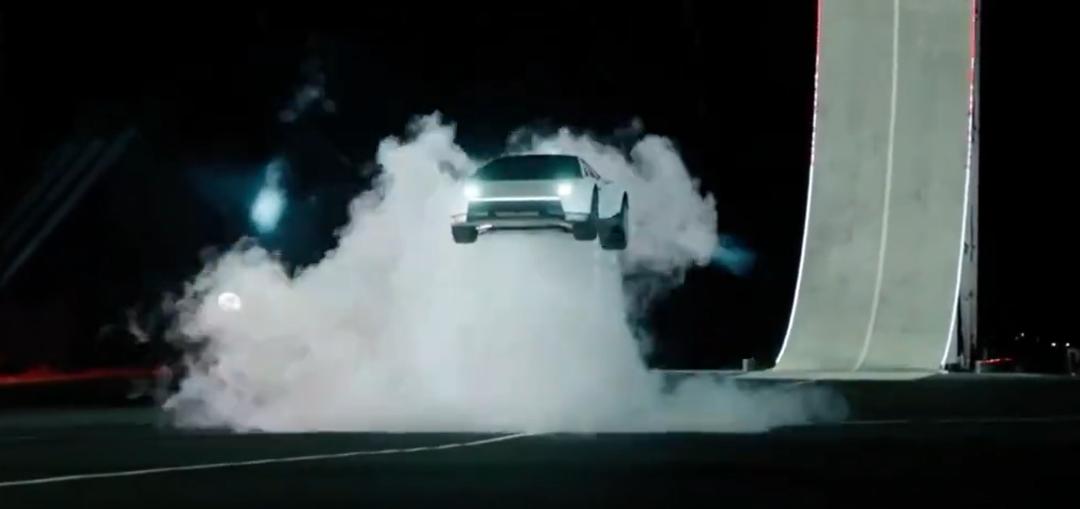
Image source: Tesla official live broadcast
According to analysis by industry insiders, among the three versions mentioned above, carbon-ceramic brake discs are not necessarily standard across the entire lineup, but they will most likely be on the configuration list. "This project will definitely be equipped with carbon-ceramic brake discs. Which version is configured, whether it is standard or optional, has not been disclosed by the official for the time being, and the official release shall prevail."
The person said that in the selection of braking solutions, lightweight and braking safety under extreme working conditions are the core considerations. In addition, for such high-end vehicles, carbon-ceramic brake discs will also bring higher brand premium.
"First, the lightweight requirement. For Tesla's flying car to achieve catapult takeoff from the ground and mid-air rolls, the weight requirement for the whole vehicle must be lighter, so that the safety redundancy is large and the burden is smaller. Second, according to public reports, the maximum speed of Tesla's flying car is above 350km/h, and the braking safety with carbon-ceramic discs will be better."
In addition, the person also said that models equipped with carbon-ceramic brake discs will also have higher brand premium. "Carbon-ceramic discs are also a selling point. Both at home and abroad, generally only high-end models of luxury cars are equipped with carbon-ceramic discs. (After adding carbon-ceramic discs) it will greatly enhance the brand of the whole vehicle."
The person also introduced that at present, the industry's research on brake discs also includes aluminum-ceramic brake discs and laser cladding brake discs. "But these two types of brake discs will not be applied to this model."
2
Weight less than 1/3 of cast iron discs
Carbon-ceramic discs meet the "lightweight rigid demand" of flying cars
"If you want to fly into the sky, weight is definitely a key factor. The result of pushing different weights into the air, and how to control and adjust the attitude in the air is different, which is the embodiment of the value of lightweight." On the afternoon of the day the Roadster was released, NBD reporter exchanged views with Wang Hua, General Manager of the Composite Materials Division of Golden Broad Corporation, as he put it. Wang Hua also introduced that in addition to lightweight, flying cars also have extremely high requirements for brake response speed and high temperature resistance in scenarios such as landing and emergency braking, far exceeding traditional cars.
One of the core products of Golden Broad Corporation is exactly carbon-ceramic brake disc. As early as June 2024, the company announced that its wholly-owned subsidiary Hunan Golden Broad Carbon-Ceramic Technology Co., Ltd. (hereinafter referred to as Golden Broad Carbon-Ceramic) had received a fixed-point development notice from a well-known domestic flying car company, and the customer selected Golden Broad Carbon-Ceramic as its designated supplier of carbon-ceramic brake discs to develop and supply carbon-ceramic brake disc products for it.
"The customer's designation marks the successful application of the company's carbon-ceramic brake disc products in the field of flying cars, which is another important achievement of the company in expanding the application market of carbon-ceramic brake disc products." Golden Broad Corporation said at the time.
There is no doubt that low-altitude equipment including flying cars and eVTOL (electric vertical takeoff and landing aircraft) are extremely sensitive to weight. The *2026 China Low-altitude Equipment Industry Development Status and Trend Forecast Report* released by China Investment Consulting analyzes that the selection of lightweight materials directly determines the range and load capacity of the aircraft. The fuselage and internal structure of low-altitude aircraft account for 1/5 to 1/3 of the total value of the whole machine, among which the consumption of carbon fiber composite materials is the highest.
This is why carbon-ceramic brake discs have attracted widespread attention — compared with traditional cast iron discs, the weight of carbon-ceramic discs is only 1/3 of that, and they also have the characteristics of high temperature resistance and thermal fade resistance, which exactly meet the composite requirements of flying cars for braking systems of "light, stable and durable".
In August this year, when NBD reporter followed the "Vibrant China Research Tour" team to conduct in-depth interviews at Golden Broad Corporation, it was learned that compared with traditional cast iron brake discs, carbon-ceramic brake discs have three major advantages: first, lightweight — a carbon-ceramic disc with a diameter of 430mm weighs only 8kg, while a cast iron disc of the same size weighs about 30kg; second, high temperature resistance — a carbon-ceramic disc needs to be put into the furnace 6 times in total to complete the quenching process, can work stably above 1000℃, and its thermal fade resistance is far better than that of cast iron discs (600℃). This means that even under high-intensity braking conditions, brake failure is unlikely to occur; third, long service life — it can cover a service life of more than 500,000 kilometers, with low wear emission. Academic research shows that carbon-ceramic friction materials have low density (≤2.5 g/cm³) and high temperature resistance (up to 1600℃), and have broad application prospects in the braking field of high-speed and heavy-load equipment.
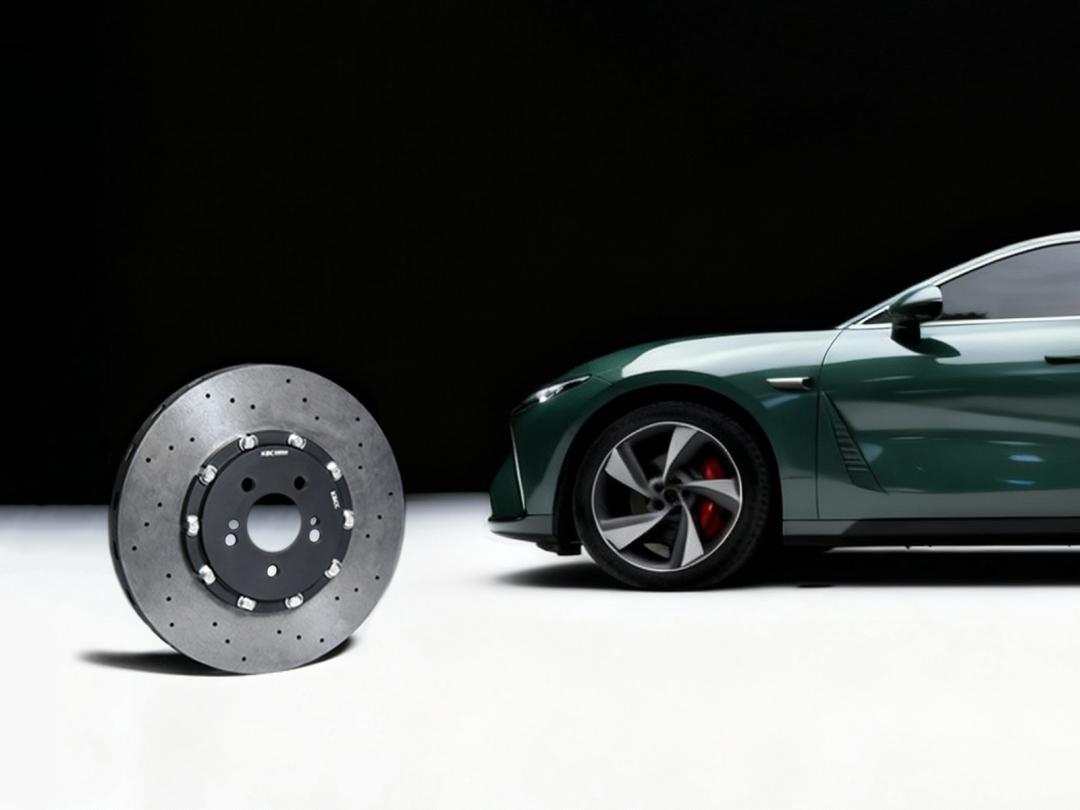
Carbon-ceramic brake disc Image source: Official website of Golden Broad Corporation
"An iron disc weighs about 30kg, while our single carbon-ceramic disc only weighs 8kg. For a car with four discs, the unsprung mass is reduced by dozens of kilograms at once." Wang Hua introduced during the survey. At that time, the reporter also tried to pick it up by hand, and found that one carbon-ceramic disc could be easily lifted with one hand.
For the second advantage (high temperature resistance), Wang Hua explained that carbon-ceramic discs can withstand a service temperature close to 2000 degrees Celsius in an oxygen-free environment, "the thermal fade under continuous braking basically does not exist, and the scenario of brake failure caused by overheating of iron discs can be avoided on this type of product".
3
Price is only 1/5 of imported products
Domestic carbon-ceramic discs expand from supercars to 300,000-yuan class vehicles
However, it is not performance but price that really makes carbon-ceramic discs move from "exclusive to supercars" to a larger market. NBD reporter learned that the unit price of carbon-ceramic discs of overseas leaders has long remained above 10,000 yuan, and the price of a set of four discs is very high; after the promotion of localization, the price of long-fiber single discs has dropped to the level of 2000 yuan, and short-fiber single discs are expected to enter the range below 1000 yuan.
The comparison given by Golden Broad Corporation in the communication with reporters is more intuitive: "Our price is only about 1/5 of theirs (overseas leaders). One of their discs costs more than 10,000 yuan, and the total price of four discs for one of our cars is only more than 10,000 yuan."
The direct result of the price drop is the spread of equipped models. According to the calculation of Aijian Securities, the number of listed models equipped with carbon-ceramic discs in 2024 jumped from less than 15 previously to 54. The market size of China's carbon-ceramic brake discs in 2026 is expected to be between 7.3 billion yuan and 11.5 billion yuan, and the industry is at the starting point of volume growth from "0 to 1". The penetration rate of carbon-ceramic discs in new energy vehicles above 300,000 yuan has moved from about 5% to 10%, and is testing the range below 300,000 yuan.
Taking Golden Broad Corporation as an example, its carbon-ceramic brake discs have been matched with many high-end models such as Xiaomi SU7 Ultra and Yangwang U9, and have entered the supply chain system of Mercedes-AMG. Wang Hua predicts that with further cost reduction and the increase of applicable models, the applicable models in the future can be reduced to the 300,000-yuan level or even lower.
The reporter learned that the manufacturing threshold of carbon-ceramic brake discs lies not only in the process itself, but also in the full-chain capability from materials to equipment. In March 2005, the team of Academician Huang Boyun of Central South University won the first prize of the 2004 National Technology Invention Award for "Preparation Technology of High-performance Carbon/Carbon Aviation Brake Materials" — this award had been vacant for 6 consecutive years before that.
Also in 2005, this achievement was implemented and transformed in Yiyang. At that time, carbon/carbon composite materials were only mastered by the United States, France and Russia in the world, with a price of 6000 yuan per kilogram and a production cycle of 6 months, which was exclusively for aerospace, and the market was small. By 2007, Golden Broad Corporation transferred the carbon/carbon composite material technology to the field of photovoltaic monocrystalline silicon drawing, as the thermal field component of the monocrystalline silicon drawing furnace, to replace the imported isostatic graphite. This is the first large-scale civilian scenario of carbon/carbon composite materials in China, and Golden Broad Corporation has accumulated the foundation of high-temperature equipment and mass production from then on. It was not until 2018 that this technology was transferred to automotive brake discs.
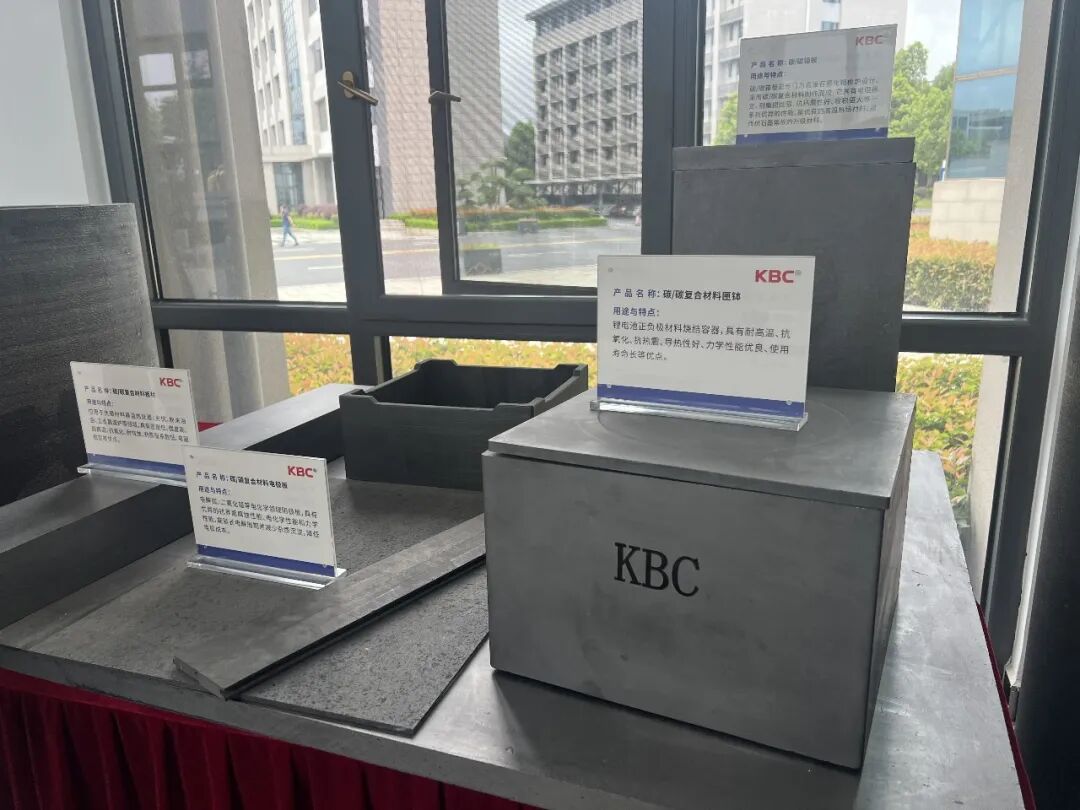
Carbon/carbon composite materials of Golden Broad Corporation Image source: NBD reporter Wu Zepeng photo
After the technology is mature, mass production is the "ghost gate". "In the initial stage of mass production, there were 500 blanks, and only 50 qualified ones, with a yield of only 10%." Wang Hua said that from lab test to pilot test and then to mass production, most products failed at the mass production stage. Golden Broad Corporation's solution is to independently develop all processes and equipment. For more than 20 years, from the first generation to the fifth generation, all five types of furnaces and processes are self-developed. Today, Golden Broad Corporation has built an annual production capacity of 400,000 discs, which is the largest put-into-production carbon-ceramic brake disc production line in China, with a high market share.
It should be pointed out that the dual leading position in market share and production capacity has not automatically translated into advantages on the income statement — this is exactly the most real situation of domestic carbon-ceramic brake discs at present.
The reporter found through inquiry that in 2025, the gross profit margin of Golden Broad Corporation's carbon-ceramic brake discs was only 0.64%. Relevant persons of the company revealed that under the current annual production capacity of 400,000 discs, the company is in a state of "slight profit or even possible loss"; it is expected that when the annual application volume reaches 800,000 to 1 million pieces, "the industry will truly enter a relatively positive development".
4
This is not a battle for a single company
Panoramic scan of A-share companies' layout of carbon-ceramic discs
NBD reporter learned that domestic long-fiber discs have been close to overseas long-fiber products in braking performance, and the gap is more reflected in brand premium and long-term verification accumulation of OEMs, rather than the materials themselves. At the same time, the localization of carbon-ceramic discs is not a one-man show of Golden Broad Corporation. Judging from the layout rhythm of A-share companies, multiple technical routes and commercial paths are advancing in parallel.
Aofu Technology lists carbon-ceramic brake discs as one of the key development directions. The enterprise established its holding subsidiary Anhui Aofu Auto Parts Co., Ltd. in December 2025, and the construction of the pilot production line is advancing as planned. The infrastructure construction in the first half of the year and the selection and procurement of main equipment have been basically completed. The company judges that carbon-ceramic brake discs are "penetrating from racing cars and supercars to high-end passenger cars and even ordinary performance cars".
Beimo High-Tech disclosed in its 2026 semi-annual report that in the first half of the year, it continued to carry out R&D and application of carbon-carbon and carbon-ceramic brake discs. The preform production line has