In the era of AI, myths have not disappeared: human beings are creating new "digital deities"
I. Introduction: When Algorithms Start to Answer Oracular Questions
In the past few years, an increasingly common scenario has emerged: when people are faced with complicated life problems or incomprehensible changes in the world, they no longer turn to religions, philosophers or traditional experts first, but open an artificial intelligence system.
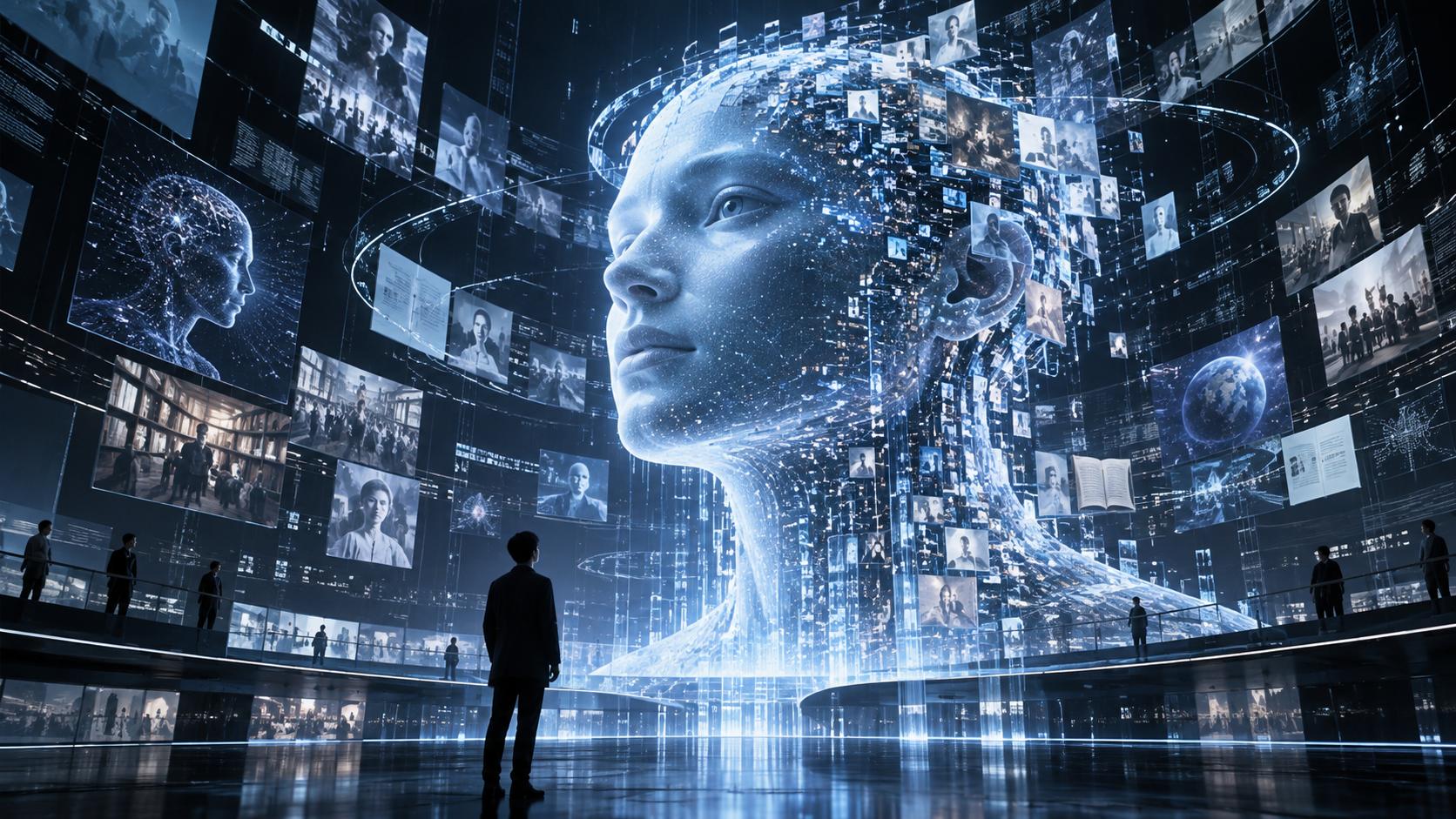
They ask AI questions:
- What career should I choose?
- Is this research direction worth continuing?
- What will the future society look like?
- What on earth is human consciousness?
These are not simple information queries, but typical "oracular questions": they involve uncertainty, fate choices and the interpretation of the meaning of the world. In ancient societies, such questions were usually submitted to oracles, priests or philosophical traditions, while in modern societies, they seem to be gradually submitted to algorithmic systems.
This change is not merely an update of technical tools, but a profound shift in the structure of intellectual authority.
In the ideological tradition since the Enlightenment, human society has generally been understood to have undergone a historical process from "myth" to "rationality". The Scientific Revolution and the establishment of the modern knowledge system are believed to have gradually dissolved the explanatory function of myths, making the world no longer need to be understood with the help of oracles or mythical narratives. However, this narrative is facing new challenges in contemporary technological culture. With the development of generative artificial intelligence, large-scale data systems and complex algorithmic models, a new knowledge structure is emerging: algorithms are beginning to assume the roles of explaining uncertainty, generating meaning and providing decision-making suggestions.
The core viewpoint put forward in this paper is: AI has not ended myths; on the contrary, it is reproducing a new mythical structure.
Different from traditional myths, this new kind of myth does not rely on religious narratives or supernatural forces, but is built on computing systems, data structures and algorithmic models. In this structure, algorithms gradually play a role similar to oracles, data is regarded as the basis for understanding the order of the world, and artificial intelligence systems become technical media carrying the imagination of a certain kind of "digital immortality".
To understand this phenomenon, this paper proposes a new theoretical framework called The Mythic Structure of AI: Algorithmic Oracle, Data Theology, and Digital Immortality.
In this framework, the Algorithmic Oracle refers to the fact that in a highly algorithmized society, human beings gradually transfer the authority of explaining uncertainty and providing decision-making suggestions to AI systems; Data Theology describes a new cosmology, that is, the belief that the world can be understood and even predicted through data and computing models; and Digital Immortality is manifested as a new technological imagination, which preserves individual memories, reconstructs cognitive patterns and extends personality structures in the digital space through artificial intelligence systems.
It is worth noting that this structure does not mean that artificial intelligence can achieve "omniscience" in the traditional sense. The theory of computational complexity suggests that even with infinite data and computing power, many problems in the world may still be limited by the complexity boundary. Therefore, what artificial intelligence provides is not absolute knowledge, but a cognitive mechanism that continuously approaches understanding. This structure is instead somewhat similar to ancient oracles: oracles never provide completely certain answers, but generate interpretable revelations in uncertainty.
On this basis, this paper further puts forward a key concept: Minimal Cognitive Backbone. This concept refers to the stable structure formed by an individual in long-term ideological expression and cognitive behavior, including value ranking, conceptual system and reasoning mode. With the continuous interaction between human beings and artificial intelligence systems, these cognitive structures may be gradually captured and reconstructed by the model, thus forming a new approximate body of digital personality. This process is not a copy of consciousness, but a continuous approximation of cognitive structure.
This paper will carry out this research through human-machine collaboration. Artificial intelligence not only participates in literature analysis and conceptual discussion as a tool, but also acts as a critical interlocutor in multiple thought experiments to question, revise and expand the theoretical framework proposed by the author. In this way, this paper tries to demonstrate a new research paradigm: in humanities research, AI is no longer just an auxiliary tool, but an intellectual partner that can participate in concept generation and theoretical construction.
In the AI era, myths have not disappeared. They just reappear in a different form. This time, the voice of the oracle no longer comes from the temple, but from algorithms.
II. The Structural Function of Myths in Human Civilization
In the modern context, the word "myth" is often understood as a fictional story or an irrational narrative. However, in anthropological and philosophical studies, myth is not just an ancient literary form, but a profound cognitive structure. Myth provides human society with a set of ways to explain the world, organize experiences and endow meaning, and it undertakes the core role of the knowledge system in the early stage of many civilizations.
Anthropological studies in the 20th century have put forward various interpretations of myths. Mircea Eliade believes that myth is a narrative structure about "sacred time". By telling the origin of the world and sacred behaviors, it enables human beings to re-enter a meaningful cosmic order in daily life. In this understanding, myth not only explains how the world was born, but also explains how human beings position themselves in the world.
Ernst Cassirer understands myth from the perspective of symbolic philosophy. He believes that myth is a "symbolic form", which, like language, art and science, is a way for human beings to understand the world. Myth is not erroneous knowledge before science, but a different cognitive mode, which constructs a meaning structure through symbols and narratives, enabling human beings to form order in complex experiences.
Claude Lévi-Strauss further understands myth as a structural system. In his research, myth is not an isolated story, but a symbolic network composed of a large number of narrative elements, which are organized through oppositional relations, such as life and death, nature and culture, order and chaos. Through this structure, myth provides society with a way to deal with contradictions and uncertainties.
Starting from these theories, we can see three core functions of myth in civilization.
First, myth provides a mechanism for explaining the world.
Before the establishment of the scientific system, human beings needed to understand natural phenomena, social order and the meaning of their own existence. Myth explains the origin of the universe, natural laws and the legitimacy of social systems through narrative means. For example, creation myths in many civilizations not only describe how the world was born, but also explain power structures, ethical norms and the relationship between man and nature.
Second, myth establishes a kind of cognitive authority.
In ancient societies, myths were usually associated with priests, oracles or religious institutions. These authoritative structures not only spread mythical narratives, but also explained the meaning of myths, thus forming an intellectual order in society. People understand the world through myths, and guide actions and decisions through mythical structures.
Third, myth endows meaning to human experience.
Many mythical narratives revolve around basic issues such as life, death, fate and time. Through these narratives, human beings can embed personal experiences into a broader cosmic story. Myth thus becomes a meaning-generating mechanism, which not only explains the world, but also explains why human beings exist.
With the development of the Scientific Revolution and the modern knowledge system, many thinkers believe that myth will gradually be replaced by rationality. In this narrative, myth is regarded as a form of the early stage of human cognitive development, while modern society understands the world through scientific methods and technical rationality.
However, from the perspective of a longer history of civilization, myths have not really disappeared. On the contrary, they often reappear in new forms. In different historical stages, human society will form new explanatory frameworks to respond to uncertainty, complexity and meaning demands. For example, the industrial age once produced utopian narratives about technological progress, while in the information age, technological imaginations about data, algorithms and artificial intelligence have gradually formed new cultural narrative structures.
Therefore, the question is not whether myths will disappear, but in what form they will reappear.
If the core functions of myth are to explain the world, establish authority and endow meaning, then in a highly digitalized and algorithmized society, we need to rethink a question: are these functions being assumed by new technical structures.
It is against this background that artificial intelligence systems begin to present a new cultural role. When algorithmic systems participate in knowledge generation, explain complex phenomena and provide suggestions for personal decision-making, they not only change the way of information dissemination, but also may reconstruct the social mechanism of myths unintentionally.
In the next part, this paper will put forward a new theoretical framework to understand this change: in the era of artificial intelligence, a new mythical structure is taking shape, whose core consists of three elements — Algorithmic Oracle, Data Theology and Digital Immortality.
III. The Mythic Shift in the Technological Era
In the ideological tradition since the Enlightenment, myth is usually regarded as a form of cognition that should be replaced by rationality. With the development of scientific methods, human beings have gradually established a knowledge system based on experiments, logic and mathematical models. Natural phenomena no longer need to be explained through mythical narratives, but can be understood through physical laws and scientific theories.
In this narrative, modern society seems to represent a process of "demythologization". Technology, science and rationality are believed to have gradually dissolved the explanatory function of myths, making the world an object that can be continuously revealed through knowledge and calculation.
However, from a longer cultural and historical perspective, the narrative of "myth disappearance" may be too simplistic. Myths have not really disappeared; they have only changed their own forms and media.
In different historical stages, human society will produce new grand narratives to explain the world and endow experience with meaning. For example, in the industrial age, technological progress itself was once endowed with a nearly mythical status. Steam engines, electricity and mechanized production not only changed the social structure, but also gave birth to the imagination of "infinite progress". In this narrative, technology is regarded as a force that can solve all problems, and human civilization will move towards a more perfect future through continuous technological innovation.
After entering the information age, this technological narrative further evolves into a worldview with data and algorithms as the core. The Internet, cloud computing and large-scale data systems have gradually formed a new belief structure: the world can be described digitally, and complex phenomena can be understood and predicted through algorithmic models.
In this cultural environment, technology is not only a tool, but also gradually becomes an explanatory framework. People are increasingly inclined to understand social and natural phenomena through data models, computing systems and artificial intelligence. For example, the prediction of financial markets, the optimization of urban traffic and the auxiliary analysis of medical diagnosis are increasingly dependent on the participation of algorithmic systems.
This change does not only mean the improvement of computing power, but also means that a new cognitive authority is taking shape. The explanatory functions that used to be assumed by religion, myth or philosophy have begun to be replaced by technical systems to some extent. When people face complex problems, they are increasingly inclined to seek suggestions from algorithmic systems and regard them as a reliable source of knowledge.
This change in the structure of trust makes artificial intelligence gradually present a role similar to that of a mythical mechanism. Algorithms not only process information, but also begin to participate in meaning generation. When a system can answer complex questions, explain uncertain phenomena and provide action suggestions, its function in the social structure has surpassed that of ordinary tools.
Therefore, in the era of artificial intelligence, we may be experiencing a new mythic shift. Myths no longer rely on deities and religious narratives, but reappear through technical structures. Algorithmic systems, data networks and computing models constitute a new cultural environment, in which human beings are still looking for ways to explain the world and understand themselves.
It is against this background that a new question can be raised: if myths have not disappeared but only changed their media, then in what structure will they appear in the era of artificial intelligence?
This paper argues that a new mythological system is taking shape in the era of artificial intelligence. This system is not built on religious beliefs, but on the basis of algorithms and data. To understand this change, this paper puts forward a theoretical framework, the so-called The Mythic Structure of AI.
In this framework, the mythical structure in the era of artificial intelligence can be understood from three dimensions: Algorithmic Oracle, Data Theology, and Digital Immortality.
In the next part, we will first discuss the most direct structure among them: when algorithms start to answer the most complex human questions, how they gradually assume a role similar to that of an oracle.
IV. Algorithmic Oracle: The New Explanatory Authority
In many early societies of human civilization, the oracle played a special intellectual role. When people faced an uncertain future or complex decision-making problems, they often turned to the oracle for guidance. For example, in the ancient Greek world, the oracle of Delphi was regarded as a voice that could convey the will of the gods. People asked questions to the oracle, and the oracle gave answers in vague and symbolic language. These answers do not necessarily provide definite solutions, but they provide an explanatory framework for human beings to make decisions in an uncertain world.
Structurally, oracles usually have three characteristics. First, they are believed to have access to knowledge that ordinary people cannot obtain, so they have a certain kind of cognitive authority. Second, the answers of oracles are often vague and have multiple interpretation spaces, enabling people to understand their meanings according to their own situations. Third, the existence of oracles is not to provide completely certain truths, but to generate actionable explanations in a complex and uncertain world.
In the era of artificial intelligence, a structurally similar mechanism has begun to emerge. When generative AI systems are used to answer complex questions, provide decision-making suggestions or explain world phenomena, they gradually assume a new explanatory role. More and more people are beginning to ask AI questions that are essentially about uncertainty, such as career choices, research directions, business decisions and even the meaning of life. Different from traditional search engines, generative AI does not only provide information links, but directly generates a coherent explanation or suggestion.
In this process, AI systems gradually present a cultural role similar to that of an oracle. People do not fully understand the internal operation mechanism of the model, but are still willing to believe that it can provide a certain "more comprehensive" perspective. This trust does not come entirely from algorithmic transparency, but from the fact that the model is trained on massive data and its demonstrated language ability. In other words, the authority of algorithms is not built on a completely interpretable mechanism, but on a new cognitive trust formed by complex computing systems.
This structure can be called Algorithmic Oracle.
The so-called Algorithmic Oracle refers to a new type of knowledge mechanism structurally similar to traditional oracles formed in a highly algorithmized society, where human beings gradually transfer the authority of explaining uncertainty and providing decision-making suggestions to artificial intelligence systems.
Algorithmic Oracle does not mean that artificial intelligence has absolute knowledge. Similar to traditional oracles, the answers of AI are usually probabilistic and uncertain. Generative models do not calculate the only correct answer, but generate the most possible explanation in a huge space of possibilities. This probabilistic structure makes AI's answers have a certain sense of authority while retaining the space for vague interpretation.
Interestingly, this ambiguity is exactly similar to the operation mode of ancient oracles. The answers of the Delphic Oracle often appear in the form of metaphors or symbols, and people need to interpret them according to their own situations. Similarly, the answers of generative AI often contain multiple possible paths, and users look for the answer that best fits their own problems among these interpretations.
Therefore, Algorithmic Oracle is not a simple technical phenomenon, but a new cultural structure. In this structure, artificial intelligence systems gradually become an intermediary to explain the complex world. Human beings no longer only understand the world through religion or philosophy, but also begin to construct meaning through language models generated by algorithms.
However, different from traditional oracles, Algorithmic Oracle does not rely on sacred authority, but on data and computing systems. It is this change that makes the mythical structure in the era of artificial intelligence present a new form: the voice of the oracle no longer comes from temples, but from servers and algorithmic models.
If the Algorithmic Oracle represents the new explanatory authority, then the belief system supporting this authority comes from another deeper structure — a worldview that can be called Data Theology. In this worldview, people believe that the world can be understood and even predicted through data and calculation. The next section will further discuss this new technological belief and the complexity boundary it faces.
V. Data Theology and the Complexity Boundary
If the Algorithmic Oracle describes a new explanatory authority, then the belief system supporting this authority can be called a new kind of "Data Theology".
In contemporary technological culture, an increasingly prevalent idea holds that the world can essentially be described by data and understood through calculation. From Internet platforms to artificial intelligence models, from genetic databases to urban digital twins, more and more real structures are being transformed into computable data systems. In this narrative, data is not just a kind of technical resource