Quantitative private equity firms are scrambling to seize the market in Ulanqab
A fifth-tier city in central Inner Mongolia, famous for its potato production, has suddenly come into the sight of Wall Street.
According to a Goldman Sachs report, Ulanqab has become one of the largest and fastest-growing AI computing power clusters in the Asia-Pacific region. This grassland city dotted with volcanic relics is home to data centers of tech giants including Alibaba, ByteDance and Apple.
According to Bloomberg, DeepSeek plans to build an ultra-large AI data center of about 1GW in Ulanqab, deploying at least 160,000 Huawei Ascend 950DT chips.
Just as DeepSeek itself has a mixed identity, this bustling city is now not only crowded with model developers, but also home to many quantitative private equity firms.
In addition to DeepSeek/High-Flyer, quantitative private equity firms including Jiukun and Lingjun have also settled in Ulanqab. Lingjun is one of the first private equity firms to enter Inner Mongolia. It started the construction of the Ulanqab supercomputing center in 2020, which now has more than 100,000 CPU cores, over 1,000 GPUs and a storage capacity of over 10PB. Lingjun told Yuancuan that the commercial electricity and operation costs in Ulanqab are far lower than those in Beijing.
A quantitative fund manager calculated that building a computer room in an office building costs 80,000 yuan in electricity and 15,000 yuan in water per month. "The weather in Shanghai is getting hotter from July to August. When our scale expands further, we will also move the computer room to Ulanqab where electricity is cheaper."
Since June, the scale of quantitative private equity funds has expanded unprecedentedly. The number of quantitative private equity firms with a scale of over 80 billion yuan has increased to 6, and that with a scale of over 50 billion yuan has risen to 13. The construction of computing power clusters has also turned into an arms race.
As computer rooms are built larger and larger and graphics cards are bought more and more expensively, wealthy quantitative private equity firms have become sensitive to computing power costs.
Surging Graphics Card Prices
In recent years, few fixed asset investments can match the return on high-end graphics cards.
A quantitative fund manager revealed to Yuancuan that graphics card prices have risen by about 3 times since last year. A complete machine with 8 A100 cards cost about 400,000 yuan last year, but now it costs more than 1.2 million yuan, which is 200,000 yuan more expensive than a Zunjie V800 Pilot Edition.
"Graphics cards are just one part of the cost. The prices of high-end switches like Mellanox, CPUs and memory have roughly doubled. Of course, many high-quality products are unavailable on the market despite high prices due to various restrictions."
For example, the ex-factory price of the high-end B300 AI server in the US is about 550,000 US dollars. After being resold through multiple channels, the quotation for one unit has risen to 25 million yuan. There was previously news that an intermediary made a profit of 140 million yuan by reselling 74 B300 servers. But in his view, high-end products like B300 are rare in the quantitative industry.
For quantitative private equity firms, although the A100 is an old card, with its large video memory, high bandwidth, and support for NVIDIA's high-speed interconnection technologies NVLink and NVSwitch, it has 8-10 times the communication advantage over consumer-grade 4090 graphics cards. Even with skyrocketing prices, it still delivers high cost-effectiveness.
The scramble for graphics cards among quantitative private equity firms reflects the first-mover advantage of leading players. Back in 2021, Feng Xin from Quadrant Investment said, "The computing power of Quadrant's GPU cluster is 10 Peta FLOPS, while the computing power of the Tianhe-1 supercomputer is about 2.56 Peta FLOPS[1]."
In the same year, High-Flyer invested 1 billion yuan in "Firefly No.2", which was equipped with nearly 10,000 A100 cards. In January last year, SemiAnalysis statistics showed that DeepSeek/High-Flyer had a total of 50,000 Hopper series GPUs, including 10,000 H100, 10,000 H800, 30,000 H20, plus 10,000 A100.
Quantitative private equity firms completed the construction of supercomputing centers in 2021, which is just like a man in love buying all the wedding hardware supplies in 2022.
Quantitative private equity firms that have not completed the initial accumulation of graphics cards can only turn to scalpers and suppliers. Some private equity firms even specially send people to smuggle graphics cards back from Hong Kong in person.
A common approach now is to dismantle cards from complete machines of manufacturers such as Dell and Lenovo.
High-end Rubin cards usually only appear in NVIDIA's own complete machines, while RTX 4500 can be found in Dell's machines. Quantitative private equity firms buy RTX 4500 because of its lower power consumption, which is more power-saving and has lower heat dissipation cost when used in office buildings in Lujiazui.
After getting the complete machines, suppliers usually disassemble them and sell the parts separately, which brings much higher profits than selling the whole machine. Quantitative private equity firms do not care whether the complete machine is a famous brand, and they value the one-stop customized service more.
The logic of building a computer room is similar to that of buying a computer. Just like a Macbook air is suitable for office workers to type on the keyboard in Starbucks, computer city can assemble a performance beast with built-in water cooling, dazzling lights, and full ray tracing to run Cyberpunk 2077.
"The solid-state drive uses a PCIe direct-insert interface. What if all eight card slots are filled with graphics cards? How should the fans be arranged, laid flat or staggered?" This industrial chain is so mature that to meet all kinds of niche requirements of private equity firms, some suppliers specially use Bambu Lab 3D printers to print fans.
A person in the quantitative industry told Yuancuan that many new private equity firms are rushing to build large-scale computing power clusters, but they have not developed AI like High-Flyer and Jiukun, which inevitably leads to redundant computing power. Anyway, as prices rise, they can stock them as fixed assets and rent out the unused part. "The monthly rent for a complete machine with 8 A100 cards was 30,000 to 40,000 yuan last year, and has now risen to 80,000 yuan this year."
Since July, the quantitative excess return has started to pull back, but the stocked GPUs are getting more and more valuable, which seems to have become a second growth curve for quantitative private equity firms. If they cannot sell Alpha products to C-end investors, they can sell some redundant computing power to B-end peers. Walking on two legs is originally part of the meaning of asset allocation.
But the reality is harsh. Suppliers can easily get three or four cards, but it is a different story for three or four hundred cards. In a market with limited supply, the more you order, the more bargaining power the seller has. That's why it is called "strangulation" of the supply chain.
Unlimited Cost Reduction
Different from trading computer rooms that are better to be as close to the exchange as possible, quantitative training computer rooms are large in scale, and the core consideration is operation and maintenance cost.
Maoyuan's computer room is located in Heyuan, Guangdong, and the original supercomputing center of Mingshi is located in Nanchang, Jiangxi. Both Nanchang and Heyuan have policy support for the construction of computing power centers.
However, Mingshi told Yuancuan that their supercomputing cluster has been moved to Pudong, Shanghai, and will be further built in Hangzhou later, mainly for the convenience of nearby operation and maintenance.
A quantitative computing power purchaser shared with Yuancuan that the capacity of data centers in Jiading, Qingpu and Lingang in Shanghai is limited, industrial land in core areas is even more scarce, and the land acquisition cost is high. The most troublesome thing is the energy consumption index. Without the index, even if the computer room is built, it cannot pass the acceptance and be put into use.
In his view, as an established quantitative firm, their data center migration cost is very high. The new private equity firms that have risen in recent years do not need to compete with large Internet companies for computer rooms in Shanghai and Beijing.
For the sake of cost reduction, more and more quantitative private equity firms have set their sights on Ulanqab.
In the data center industry, there has always been a saying of "South Guizhou, North Ulan". A quantitative fund manager compared Guizhou and Inner Mongolia respectively, and found that the hydropower price in Guizhou is not cheap, not as economical as the wind power and thermal power in Ulanqab. In addition, the average temperature in Ulanqab is 4.3℃, and natural wind can be used to cool the servers for nearly 10 months a year. The cold wind on the grassland is far more effective than the air conditioner in office buildings.
He revealed to Yuancuan: "If you negotiate directly with private coal mine owners in Ulanqab, the electricity price is even less than 0.1 yuan per kWh, which is 10 times the price difference compared with commercial electricity in Shanghai."
Fierce industry competition has made quantitative private equity firms count every penny. Finding places with cheaper electricity prices can, to a certain extent, hedge the rising cost of GPU acquisition.
However, building a self-owned supercomputing center in Ulanqab is not as easy as imagined: first of all, the land acquisition problem needs to be solved. If the capacity exceeds 7.5 megawatts, it will also be subject to window guidance. After passing the review, the energy evaluation index can be applied for, and then the construction can start. The whole process has a complicated approval procedure, and the construction period is generally more than 18 months. By the time it is completed, the bull market will be over.
For most quantitative firms, leasing is a more cost-effective way. In the past, quantitative firms rented UCloud's computer rooms in Ulanqab to enjoy the one-stop end-to-end services of cloud vendors. Now as the scale grows and the demand for computing power increases, they begin to pay attention to the proportion of green power.
Envision Energy, which was named by Goldman Sachs and started its business in new energy, calculated an account for Yuancuan: taking the existing Envision Xinghe Base in Ulanqab as an example, the proportion of green power is as high as 80%, and the cost of power supplied by its own wind turbines is more than 20% lower than the local electricity price.
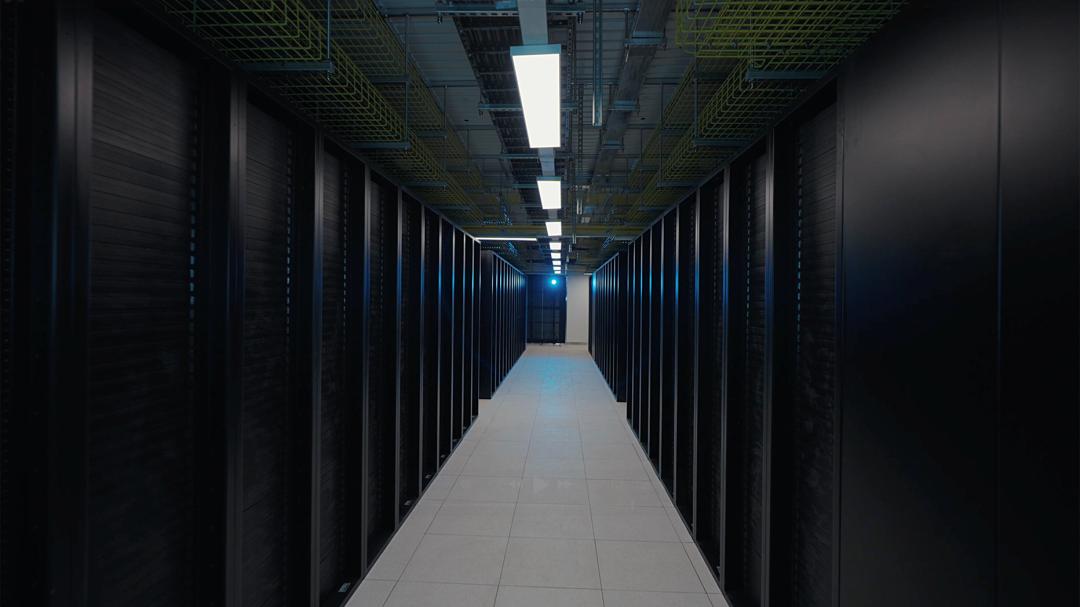
As of October 2026, all the air-cooled computer rooms in Envision Xinghe Base have been fully reserved.
When a fast-growing industry starts to cut costs, it means that the competition has reached a white-hot stage. The question is, leading quantitative firms have built their supercomputing centers on the grassland, what should small and medium-sized quantitative firms do?
Another solution is similar to DeepSeek's experience of developing a model that shocked Wall Street with a training cost of only 5.576 million US dollars -- don't complain that you have too few cards in hand, but squeeze every card to the extreme.
For example, at the end of 2025, a small private equity firm suddenly purchased several Apple computers, which was once difficult for sales staff to understand. Later, it was found that the boss was using a low-cost way to deploy large language models locally.
Generally speaking, to obtain 500GB of video memory, you need a complete machine with RTX Pro 6000 or A100. Apple's chips integrate memory and video memory. By connecting multiple laptops through the Thunderbolt interface, you can get 512G of video memory at about 1/10 of the cost. This solution became their transition plan before adopting NVIDIA Spark later.
Wei Mingsan from Diewei Quantitative told Yuancuan, "Compared with whether you can buy graphics cards, I pay more attention to how to optimize existing resources. Some institutions spend 16 million yuan on a 2PB storage cluster, and through engineering and algorithm optimization, we can spend 1/5 of the money to achieve 80% of their effect."
After all, no matter how expensive GPUs are, Chinese manufacturing can always create the magic that brings deflation to computing power.
Epilogue
For many quantitative private equity firms with high trading frequency, just like American cloud vendors, no one dares to stop because competitors are all increasing their computing power expenditure.
As the "Red Queen Effect" says: You have to keep running just to stay in place.
I once asked a quantitative fund manager: Spending so much money to build computer rooms, can the input really cover the output?
He told me that the quantitative industry also follows the Scaling Law. The input will not produce effects regularly, but just like alchemy, the effect will emerge one day when the accumulation reaches a certain level.
From a more practical perspective, compared with the fluctuating excess return, the number of graphics cards and the scale of computing power are more stable, which can intuitively perceive the arms reserve of a quantitative private equity firm from the physical level. In addition to developing large models, the computing power center is also one of the few marketable publicity assets of quantitative private equity firms that can be linked to the "Six Networks" narrative.
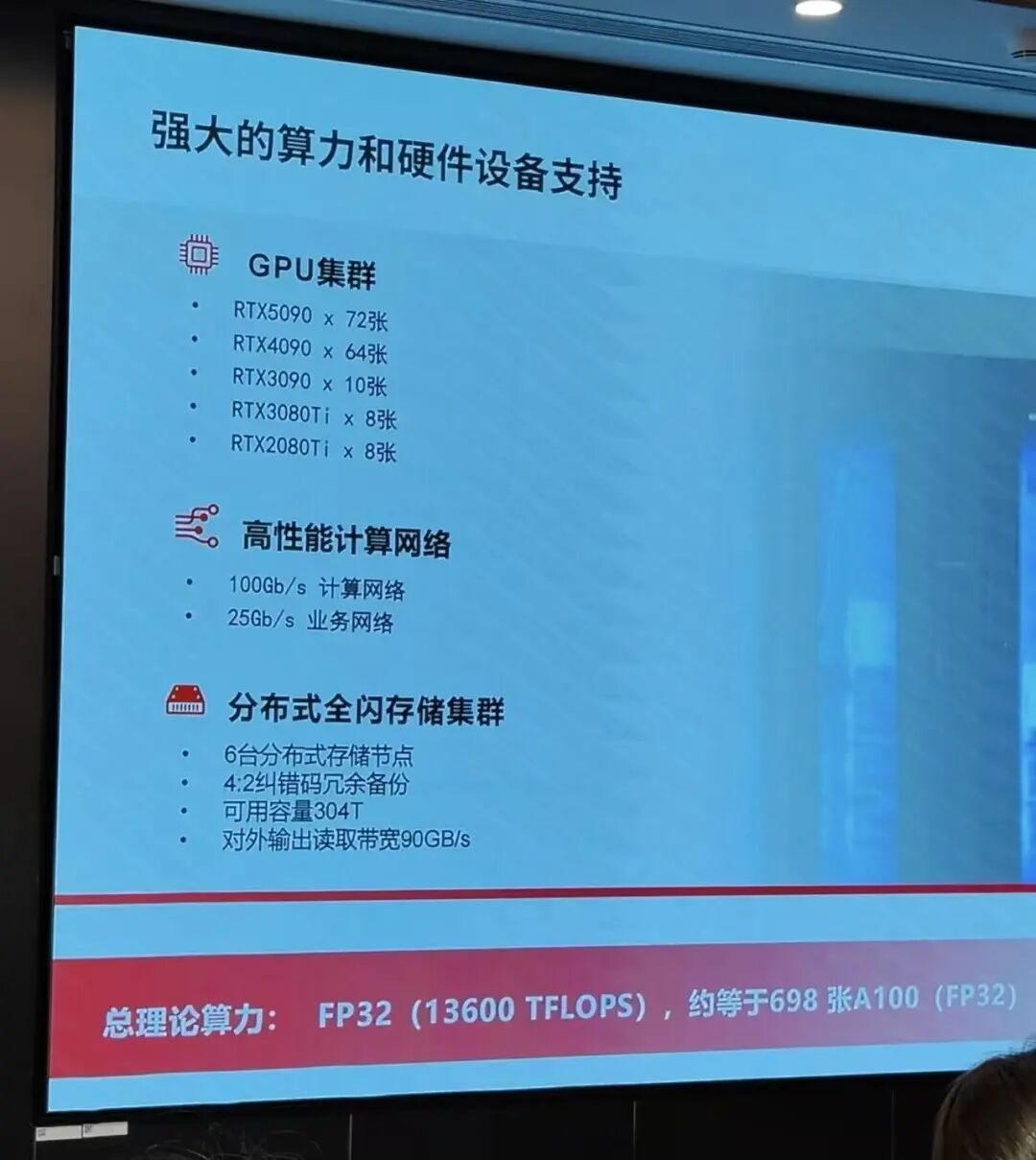
Previously, the GPU cluster shown in a private equity firm's PPT was full of enthusiasm: 72 RTX5090, 64 RTX4090, 10 RTX3090, 8 RTX3080Ti, 8 RTX2080Ti. Five generations of consumer-grade graphics cards gathered together.
"The total theoretical computing power is equivalent to about 698 A100 graphics cards."
So inside and outside the quantitative circle, the situation is often completely different. Outsiders only think that in recent years, any quantitative firm can make easy profits, but those who watch the rise and fall of the names of various quantitative private equity firms at all levels know how hard it is to obtain excess returns and how short-lived the victory is.
Capital expenditure can never guarantee that quantitative private equity firms can maintain their existing scale, but if you don't spend the money and do these things, you will be further and further away from the core narrative of the core circle in the endless escalation of the arms race.
In this dimension, it can indeed be said that the scale of quantitative private equity firms in recent years is not accumulated slowly by compound interest, but won through cutthroat competition.
References
[1] Feng Xin from Quadrant Investment: Discussing the New Direction of Quantitative Investment
This article is from WeChat Official Account "Yuancuan Investment Review" (ID: caituandzd), Author: Shen Hui, authorized for release by 36Kr.