Before spending money, people first hold meetings with netizens, how did "consumption approval" become such a viral trend?
A 5-yuan starch sausage is anxiously waiting for netizens to decide its fate.
This is a mini-program called "Wait a Second, Wallet". According to the rules, the applicant must clearly state the price, reason for purchase, and whether there is a substitute at home, then submit the request to the vast number of reviewers. If more than half of the people choose "Approve", the owner of this approval can justifiably buy the starch sausage; otherwise, this consumption will be ruthlessly rejected, and they will not buy it.
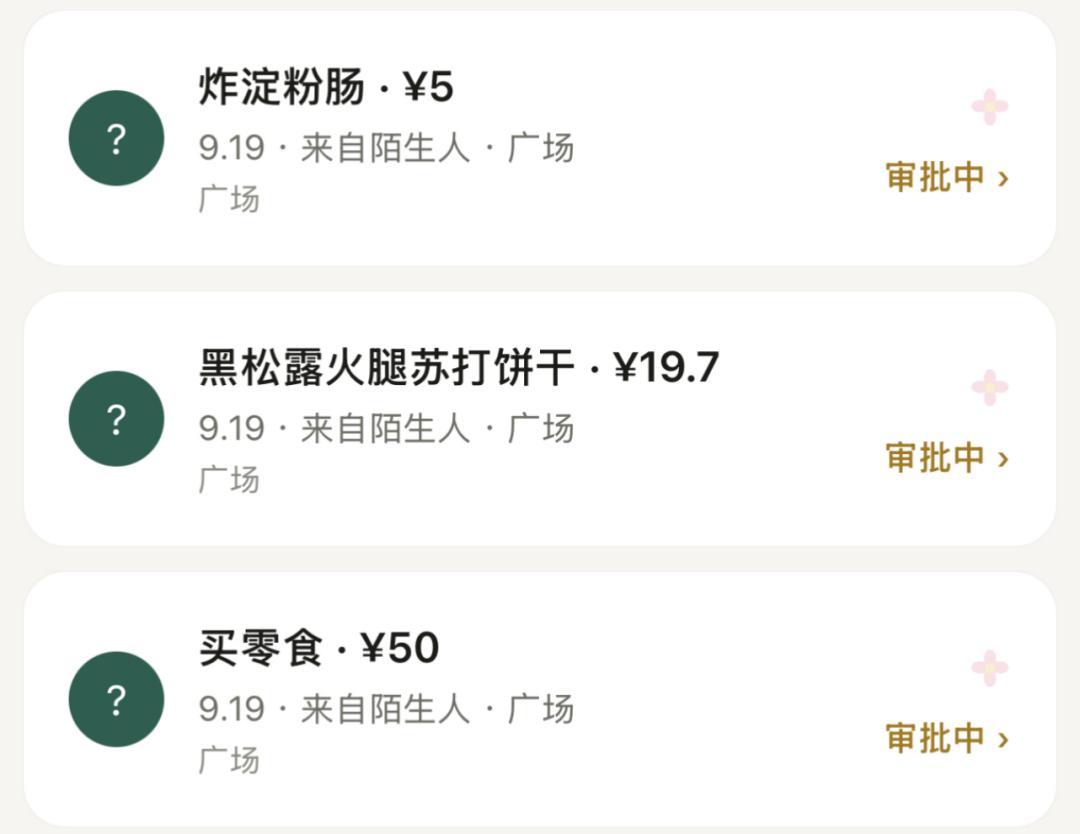
The young people who hate going through OA processes the most are fed up with filling out forms and waiting for signatures at work. When it comes to spending their own money, they don't need to ask for anyone's permission by nature, but they voluntarily hand over their wallets, asking a room full of strangers to act as gatekeepers for them.
So what on earth are they looking for?
01. Ask Netizens for Advice Before Spending Money
You can experience the feeling of an emperor reviewing memorials without time travel. Open the square of "Wait a Second, Wallet", and consumption applications from all over the country will continuously be delivered to you: some people want to spend 15 yuan on a piece of Black Forest cake, some are hesitating whether to buy a 22.5-yuan milk tea, and others convert the loss of taking a day off into 500 yuan, asking netizens to judge whether this day of rest is worth it.
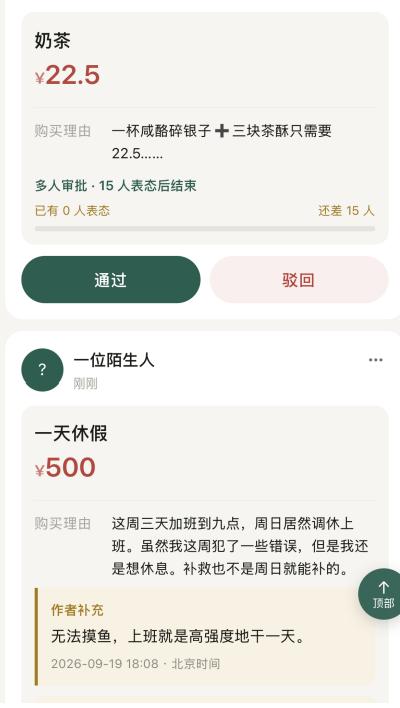
These approvals range from trivial matters like whether to participate in this week's Crazy Thursday, which is very similar to the trivial greeting memorials in ancient times, to major decisions like whether to replace an electric car worth hundreds of thousands of yuan. Clicking the electronic imperial seal of "Approve" or "Reject" is roughly equivalent to participating in the asset allocation of a family for the next few years.
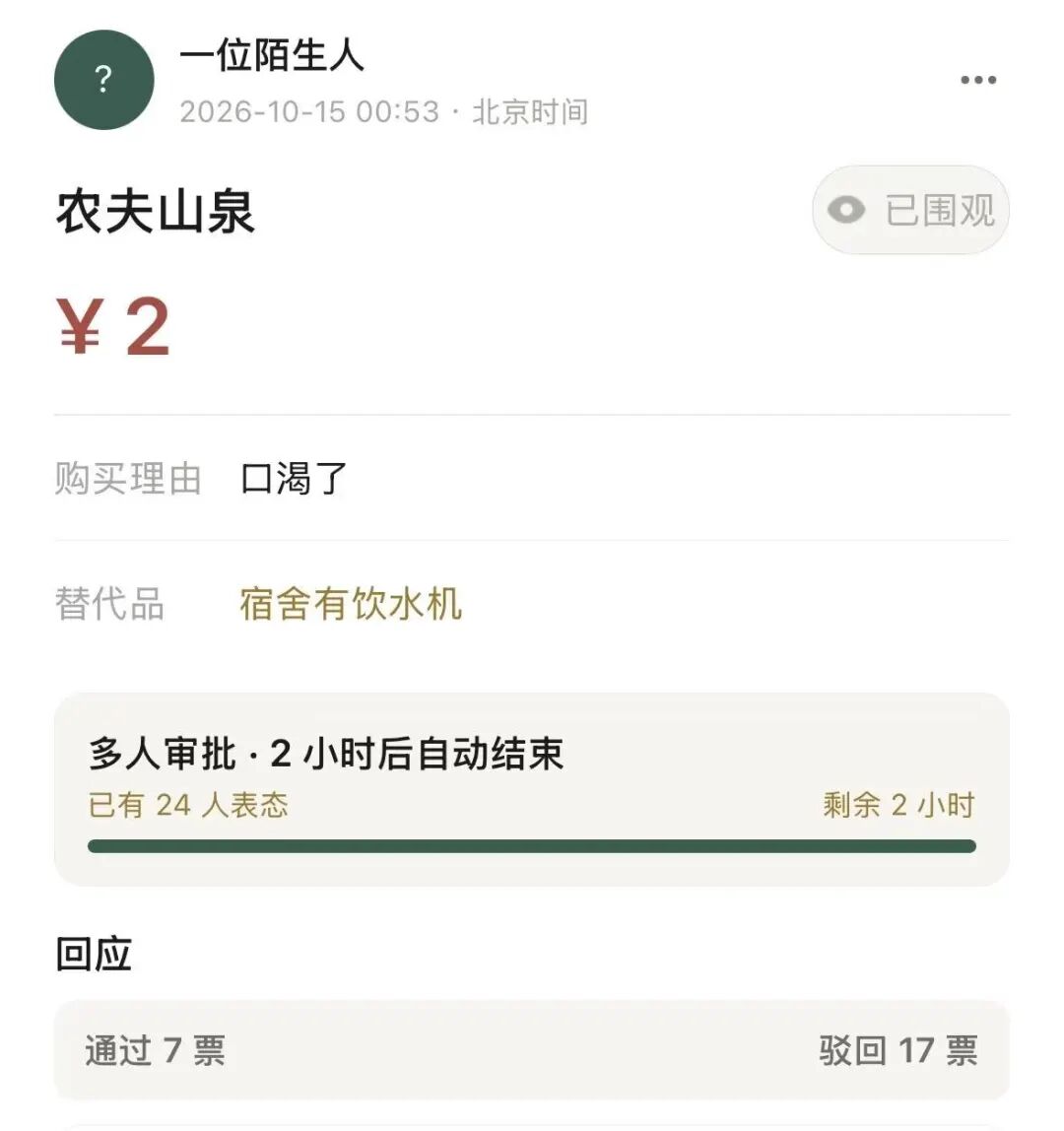
The applicant states their demand, and netizens form a temporary finance department on the spot: a 2-yuan bottle of Nongfu Spring got a crushing score of 7 to 17, and most people only advised him one thing — go drink the water from the water dispenser.
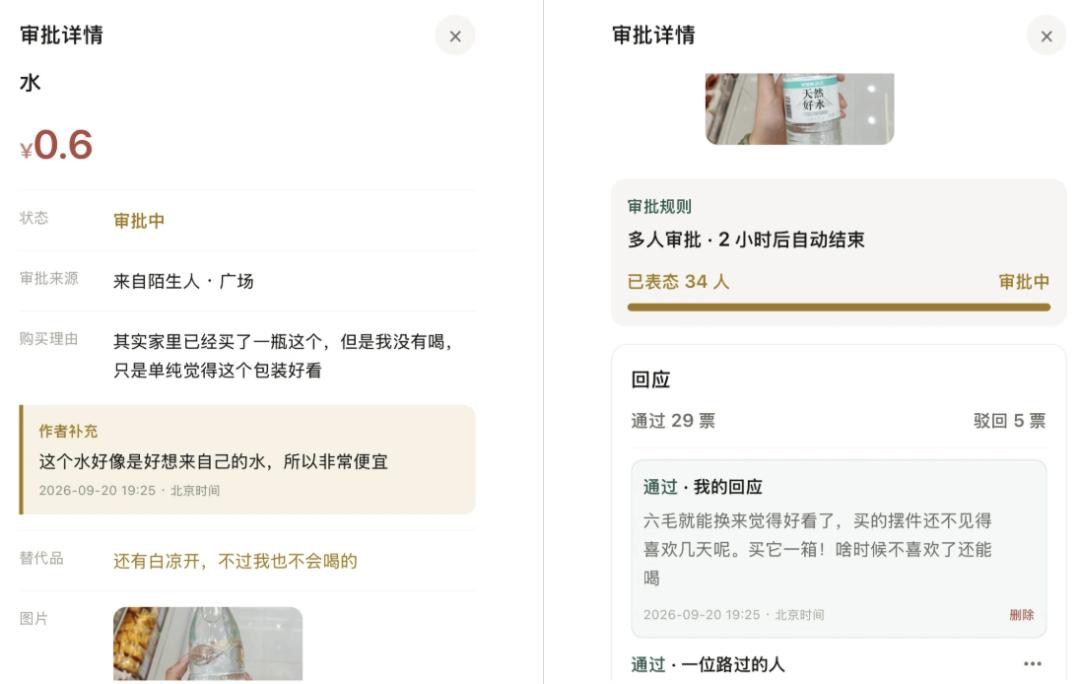
Even for bottled water, if its price is only 60 cents, even if the application reason is "the package looks nice", it is easy to get the support of the review panel.
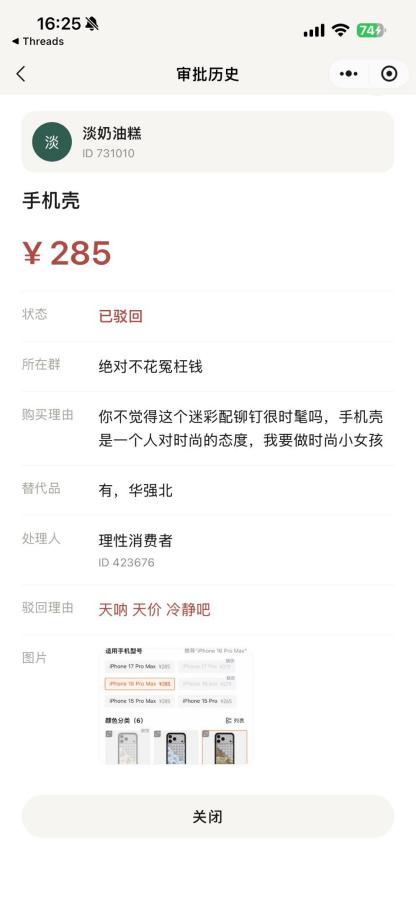
Of course, no matter how elaborate the purchase reason is, people will never support buying a 285-yuan phone case.
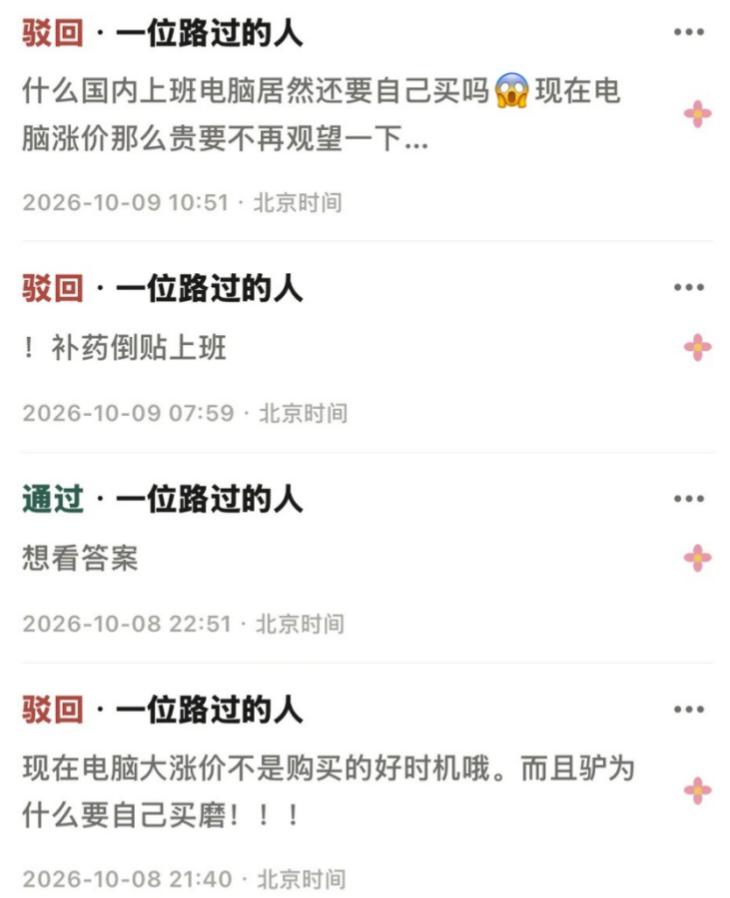
The application to spend 8000 yuan out of pocket to replace a work computer was also rejected, because everyone unanimously believed that "you should not pay to go to work".
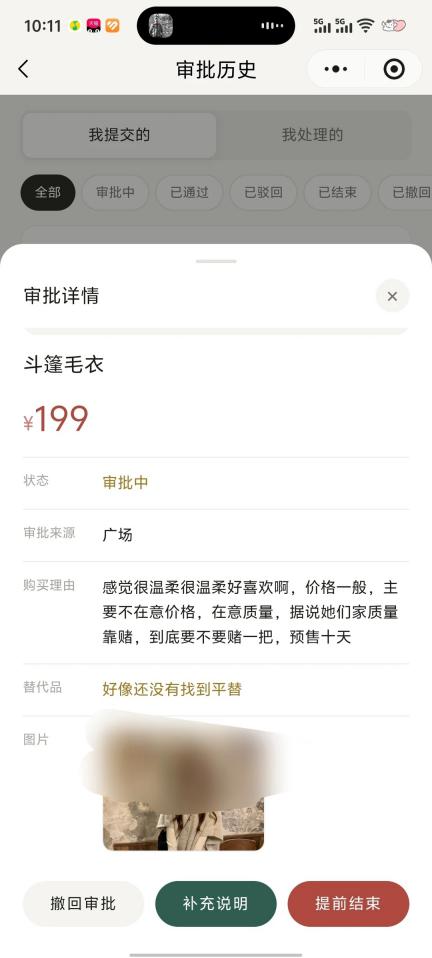
Someone posted a 199-yuan pre-sale cloak sweater on the square. The review panel quickly helped her dispel the unrealistic expectation: avoid pre-sale products first, be cautious about buying from internet-famous stores on Xiaohongshu, block the model's face before looking at the style; there are also comments saying "if this dress is not posed properly, it is very likely to look like a beige fat bat".
Price is never the only criterion. In this folk financial system, physical health and learning usually come with a green channel by default.
Someone applied to spend 18 yuan buying a cup of hot milk tea on the first day of dysmenorrhea. 49 netizens participated in the review, and this cup of milk tea finally passed smoothly. The review opinions quickly changed from financial suggestions to life guidance: eat something first; add more milk and less tea; make sure to drink it warm.

Another netizen was hesitating whether to pay 30 yuan to sign up for the CET-6 English test. She failed last time, and was worried that she would delay reviewing until the last minute again this time, wasting the registration fee for nothing. Just one minute after the application was sent out, 15 people had already stated their positions. "Sign up, I order you to study hard this time!"
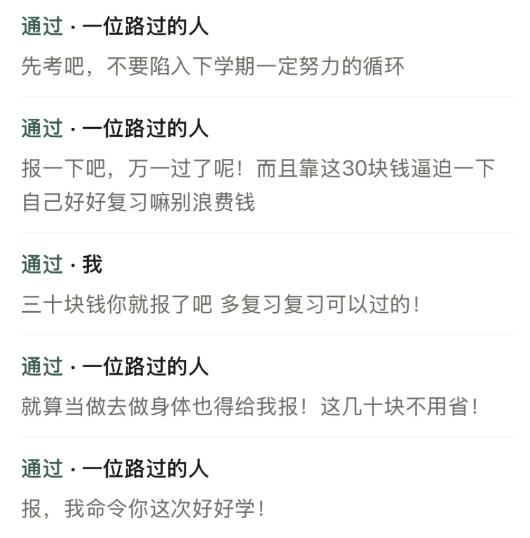
If it can make you feel a little more comfortable, or win you one more chance in the future, these few dozen yuan are not within the scope that everyone focuses on cracking down.
Sometimes, what is written on the platform is a product, but what is being reviewed in the comment section is a relationship.
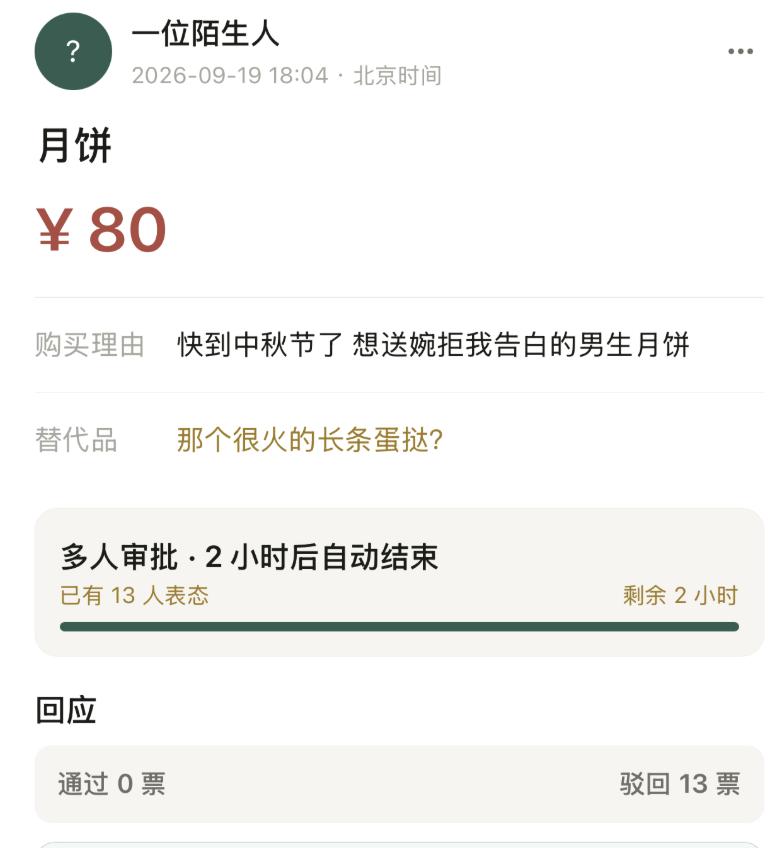
"I want to give mooncakes to the boy who rejected my confession", an 80-yuan mooncake application, was quickly rejected by all 13 votes. Reviewers rushed to the scene one after another, advising her not to rush to please him, it is better to buy the mooncakes for herself.
The review panel are not heartless, because another 82-yuan gift application got a large number of approvals, which says "I want to send a bouquet of eustoma to my stepmother".
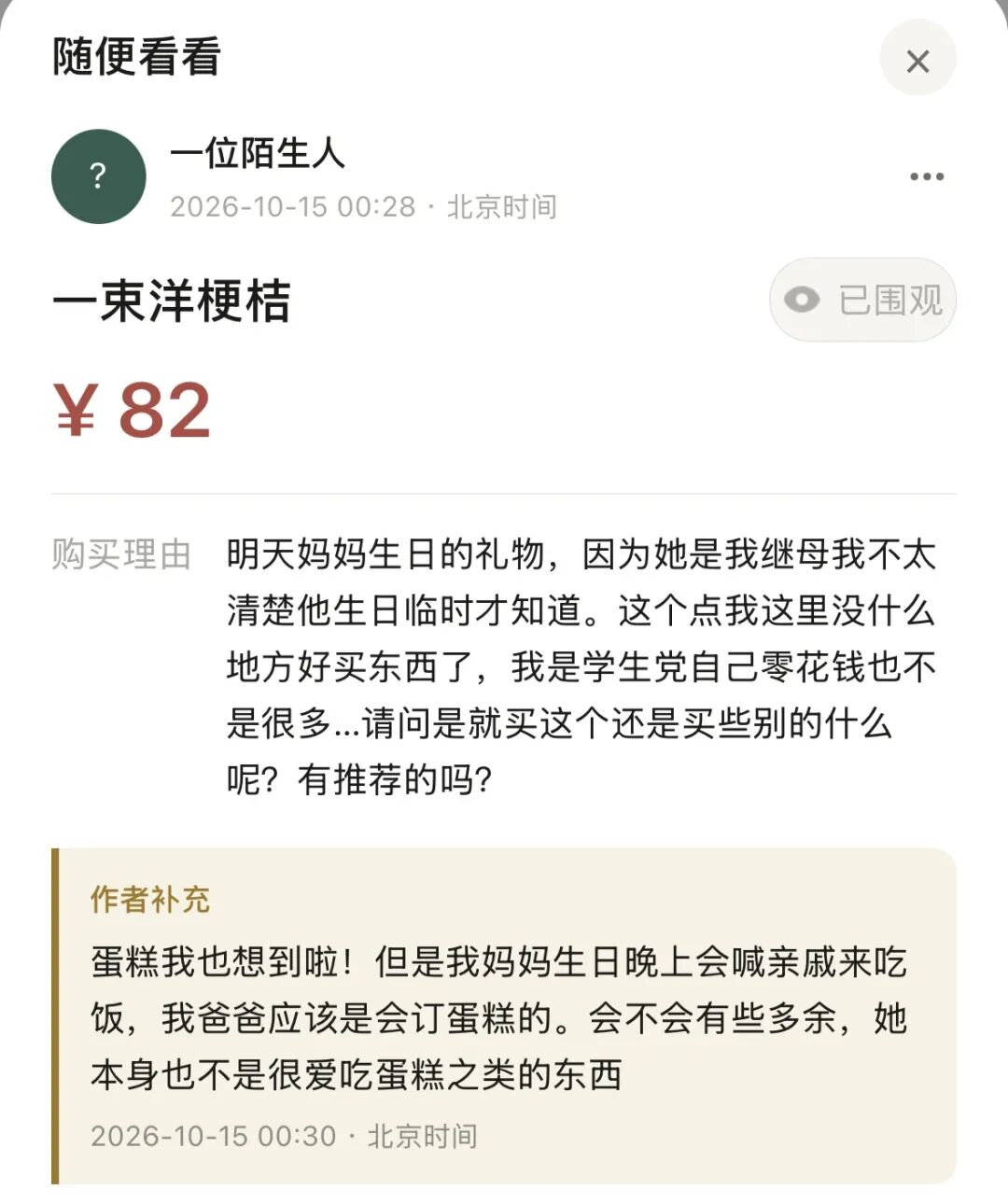
The two gifts only differ by 2 yuan, but their fates are completely opposite. The boy who just rejected you is not worth 80-yuan mooncakes; the stepmother who takes care of you on a daily basis fully deserves to receive 82-yuan flowers.
There are also many abstract approvals. The price column of "Legally Purchase a Spaceship" is filled with an endless string of zeros, the purchase reason is "Conquer the Universe". 45 netizens participated in the vote, 41 voted to approve, and the comment section says "Help every dream come true", many netizens suggested "Conquer your own company first".
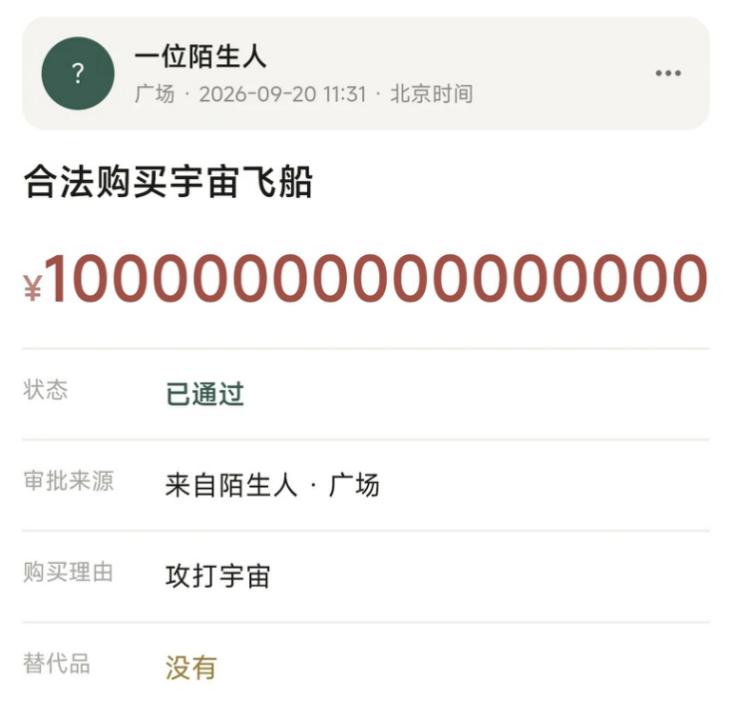
From spaceships to cheap sugary sausages, both applicants and reviewers are having a great time.
However, this finance department has no real power. The mini-program cannot take over your payment account, nor will it freeze your bank card after rejecting your application. If approved, the applicant can place the order with the authorization from the masses; if rejected, no one will come to question you even if you secretly place the order.
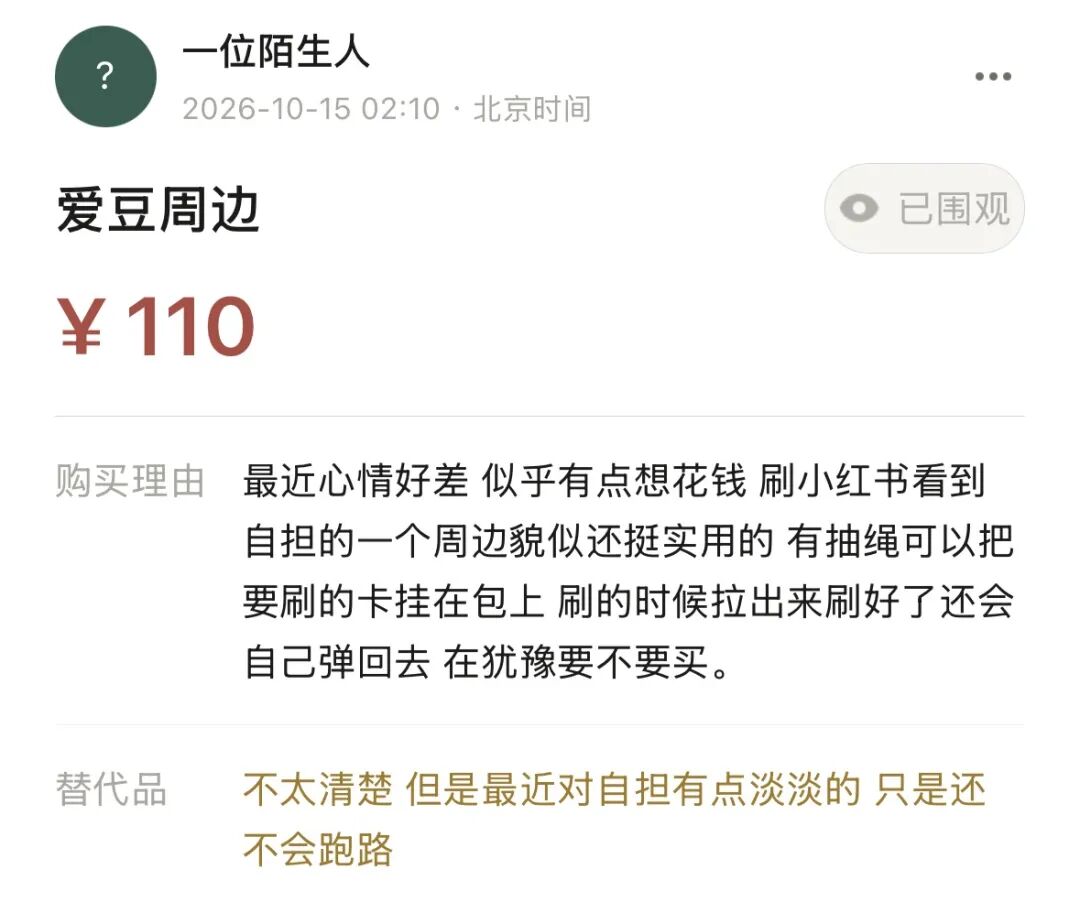
Then why do people still take it so seriously to ask for advice? Most of the time, people already know deep down that they shouldn't buy it, but they just lack someone who is willing to say "no" for them.
A set of eight experiments published in the Journal of Consumer Research found that when facing difficult choices that may lead to regret, people are more willing to leave the decision to others. Researchers believe that what people mainly want to avoid is the feeling that "if I choose wrong, the responsibility is all mine". In the context of consumption approval, the same request form has exactly two sets of lines ready: if you fail to buy it, it's because the organization didn't approve it; if you bring it home, it's because the masses all approved it.
However, the standards of netizens are sometimes loose and sometimes strict. When you meet a review panel that advocates "helping every dream come true", even a plan to conquer the Earth can get approved. If you really want to control your spending, relying solely on public opinion is obviously not enough.
So some people start to set up stricter processes for themselves.
02. Young People Have Tried Every Means to Stop Themselves From Impulse Buying
Suppose you fancy an 899-yuan coat late at night. In the past, you only needed to select the size and make the payment. Now, to protect your wallet, you can choose to add a little more difficulty to shopping. The first step to buy less is to make the act of "buying" very troublesome.
First of all, you can throw it into an app called "Don't Buy It Yet", put it in the "Shopping Fridge", and set a cooling-off period. The app will also pop up a reminder when you open apps like Taobao and food delivery platforms; if your shopping desire is already overwhelming, users can follow the on-screen guidance to breathe for 20 seconds.
Still no use after deep breathing? Go chat with the AI coach first, it will pour a basin of cold water on you and ask you a soul-searching question: Do you really need it, or are you just in a bad mood today?

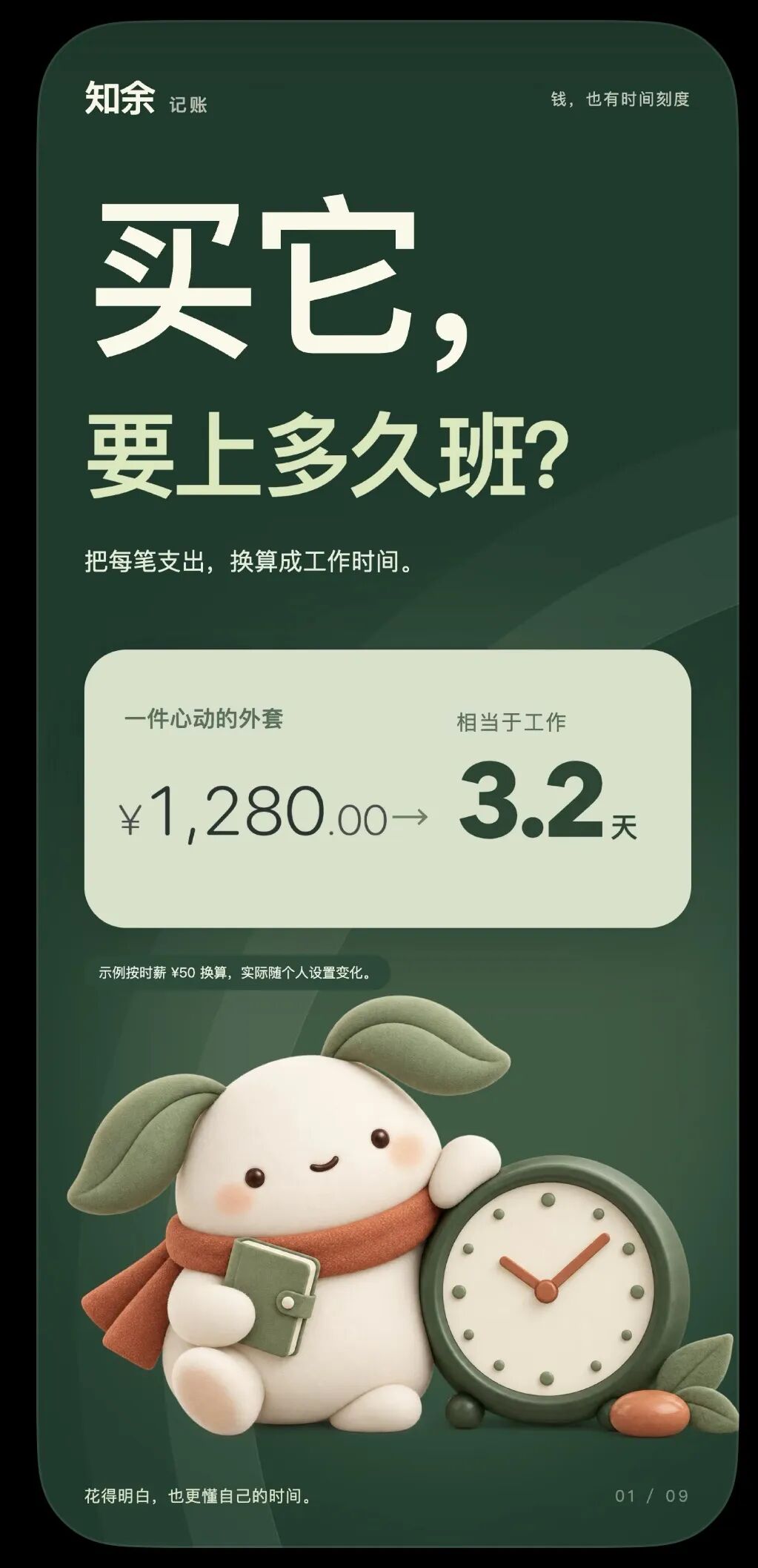
Then, another tool called "Zhiyu" can convert the 899-yuan coat into 2.5 working hours of labor — if you work hard for 2.5 days, and your boss pays you this coat as your salary, would you like that?
In this app, users enter their take-home salary, number of working days per month, and daily working hours, and another type of price will appear next to each consumption record. For example, based on a monthly income of 8800 yuan, 22 working days per month, and 8 hours of work per day, a 35-yuan cup of Starbucks is equivalent to about 42 minutes of labor. Before you want to drink it, ask yourself first: is it worth working an extra 42 minutes for it?
The "No-Spending Challenge" divides the calendar into "No-Spending" and "Spent" sections, allowing users to check in every day; "Still Want to Buy It?" displays the products you have given up and the amount of money you saved this month on the homepage.
