"Everyone is way too conservative when using AI!" Head of Claude Code: My approach is far more ambitious.
Set some unreasonable goals, then tell the model: This is completely reasonable!
This is a small AI usage tip shared by Felix Rieseberg, head of the Claude Code desktop version.
How to do it specifically?
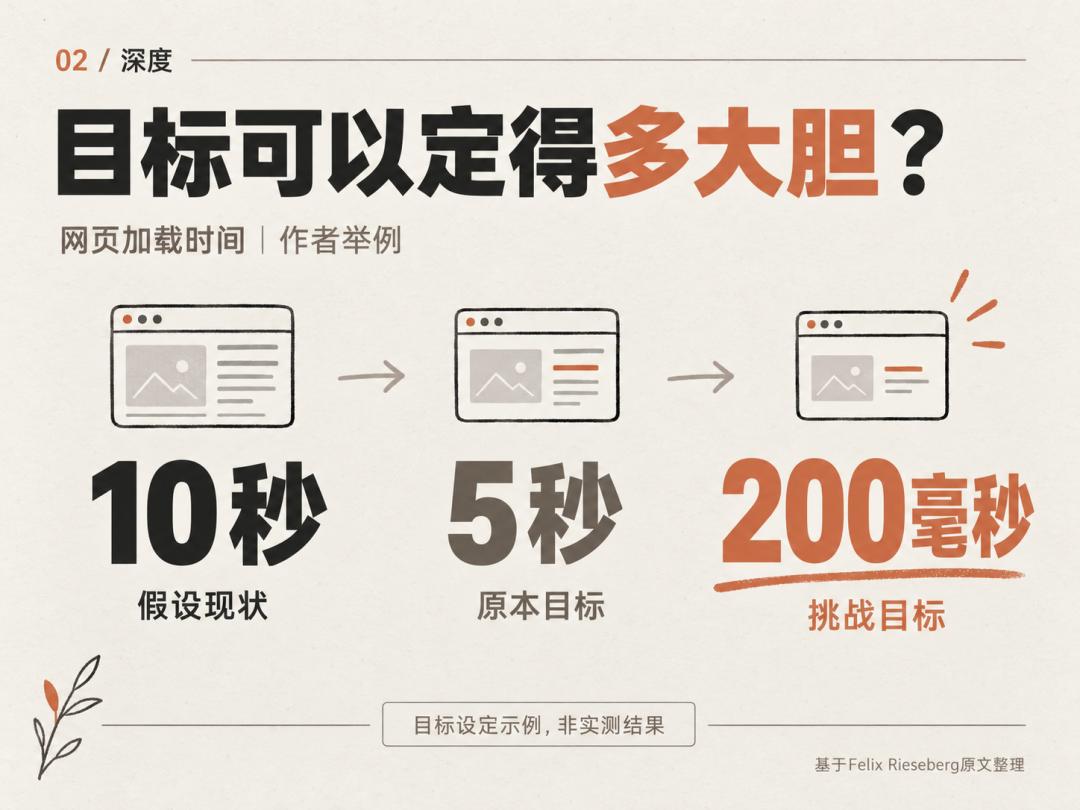
Suppose you want to cut the website loading time from 10 seconds to 5 seconds, he suggests: directly set the target to 0.2 seconds.
The model says it can't be done? Then keep telling it: This problem is totally solvable, try again and again.
In Felix's view, we can be bolder when assigning tasks to AI.
He also shared another tip: Replace the nouns in the task with verbs.
For example, the original task is "make a PPT for a report", which can be rephrased as:
Within 30 minutes, convince a group of busy people of your explanation for the cause and effect of the matter, and make decisions when the situation is not yet clear.
In addition to deliberately setting aggressive goals, he also gave several specific practices:
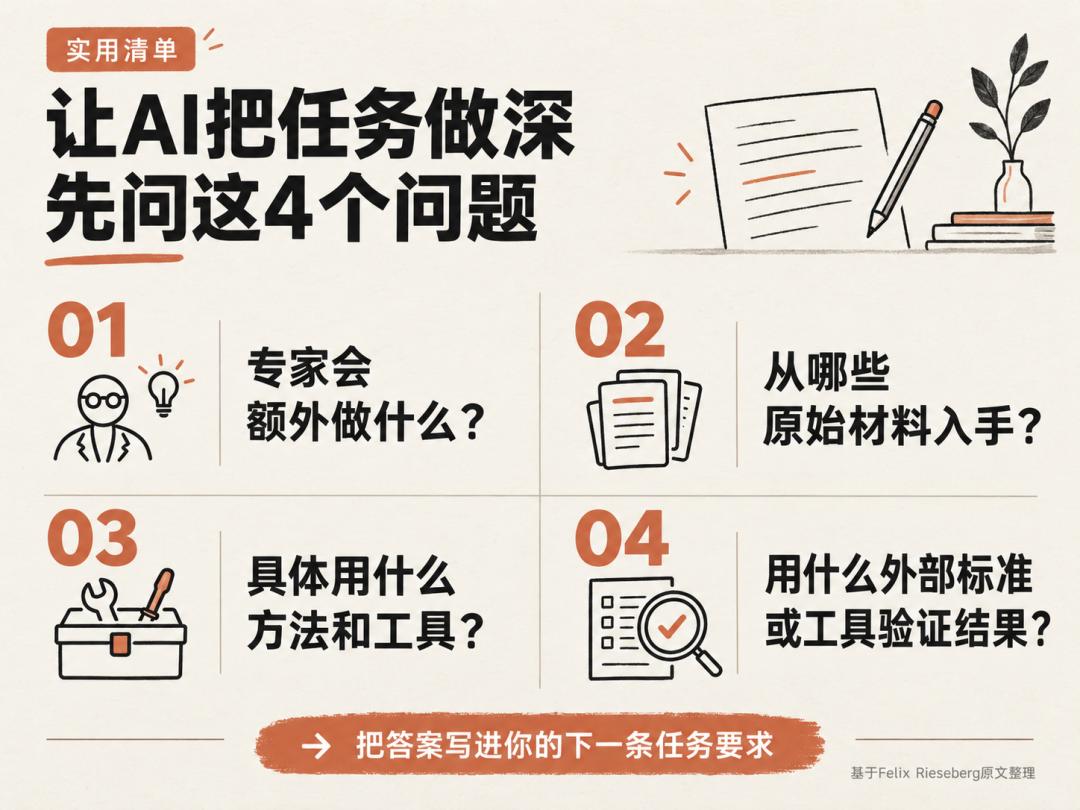
Don't just ask AI to "think like an expert". Then follow up to ask: What original materials will a real expert refer to, what tools will they use, what methods will they adopt, and then write these requirements into the task.
Don't directly take your own judgment as the answer. Hand it over to AI for verification, let AI go back to the original materials to find evidence supporting it, as well as counterexamples that may overturn it.
Don't let AI grade itself. Run the code in practice, test the prediction results with new data, and finally let the real results speak for themselves.
The following is the detailed tutorial on how Felix uses (tunes) Claude, after polishing.
Enjoy~
We Can Be More Ambitious When Using AI
I work on the Claude team.
The interesting part of this job is that almost every day I learn that another thing has been done with the help of Claude — even done independently by Claude.
Some of these things I never thought of, some I originally thought impossible; others are just things that I was neither curious enough about nor took time to try.
Just this month, Claude may have assisted in the discovery of a new planet; I saw the first AI music video that I really liked; we even started discussing whether a new era of mathematics is coming.
The capabilities of the models do not advance in lockstep. As Terence Tao said, they are "amazing in some directions, but still insufficient in others".
Some people have learned to harness the amazing capabilities of the model, as if they are really flying. It is really fascinating to watch them reach such heights with the product I built with my own hands.
More people are still figuring out how to make good use of these newly grown wings. They are still wondering: Apart from answering "What is the capital of France?" or "Can you make the tone of this email a little gentler?", what else can AI do?
Many AI practitioners and I often say a sentence: We should be more ambitious when using AI.
This sentence has almost become our action slogan. Whenever we see amazing results, we forward it with a line: "We are not ambitious enough."
I also know that this is easier said than done. So here is a tutorial on "how to be more ambitious".
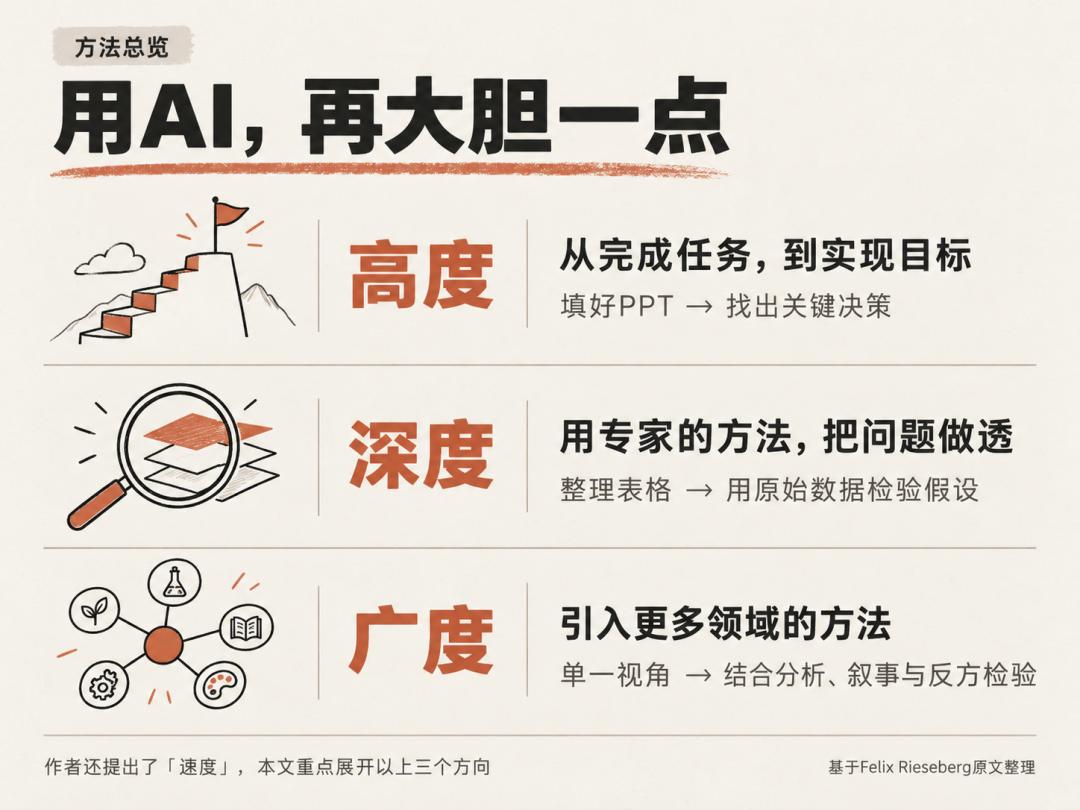
I divide ambition into four categories: speed, height, depth and breadth.
△
Speed: Complete the same work in less time. This is the most basic way for AI to create economic value.
For example, when writing a piece of code, with Claude's help, I can finish it faster. This usage is quite mature, and there is no need to figure out more complex usage methods, so we will skip it for now.
Height: Raise the abstraction level of the task, focus on the final result you want to achieve, rather than individual specific tasks.
Depth: Think about the task like a top expert, and go deeper into the underlying data, tools and problems.
Breadth: Look for ideas to solve problems from multiple fields, and make use of knowledge, tools and methods that you would not normally come into contact with.
Although I mainly use Claude, these suggestions are not specific to any particular model.
Height: Let the model work at a higher level of abstraction
We often casually call this practice "letting the model work at a higher level of abstraction". When you assign a task to the model, it is actually executing your optimal idea of how to achieve the expected result.
If you want to think at a higher dimension, ask yourself — what do you want to happen next? What is the goal behind the goal?
Earlier last year, I asked Claude to help me fix a single program crash. Later, I directly asked it to ensure that our application always runs without crashes.
Let's look at a daily office task (which, with all due respect, is even a bit boring).
Suppose you are at Acme, and you need to prepare a PPT for the Quarterly Business Review (QBR). Give Claude a bunch of data, and it will be happy to help you make it; maybe you already have a template, and it only needs to fill in the content.
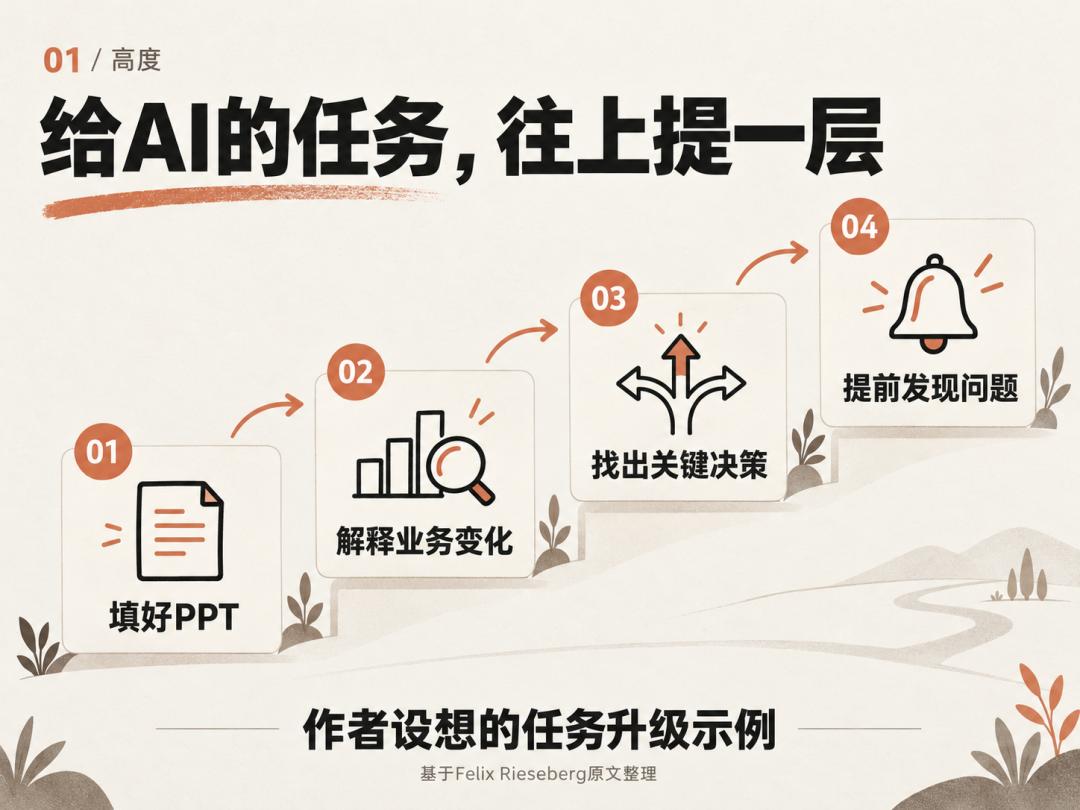
This is nowhere near comparable to discovering a new planet. But for the same quarterly report, what else can we ask AI to do? We can start from the most basic requirements and gradually raise our ambition:
△
Step 1: Let it understand what happened to the business.
Most reviews need to answer these questions: What changes took place this quarter? Why? What should we do next?
If you just want to update the numbers in the template, resist this urge — give the model as much data as you can get, let it truly understand your business, and then ask it:
Tell me what changes took place this quarter, why they happened, and what actions we should take.
Step 2: Let it identify the decisions that need to be made.
A meeting — at least a good one — should ideally end with certain decisions. You can ask Claude like this:
Based on all the information you know, determine what the three most urgent decisions are at the moment, analyze the possible action directions, and list the reasons for and against each respectively.
Step 3: Let it redesign this working mechanism.
In the past, to do a good quarterly business review, humans had to carefully filter the data, understand the meaning of the data, and then judge whether the business needs adjustment.
Now, you can try to ask Claude:
The meaning of the review is to let the management discover problems as early as possible, and allocate funds and personnel to the right places.
Please design a better implementation method than the quarterly PPT, use our own historical data to prove which problems it could have discovered earlier, and then run it in parallel with the existing method for a quarter.
The method of raising the goal level works best when you are indeed pursuing a certain final result; but it is relatively less applicable to creative tasks.
A good signal to judge is: If what you are doing needs to be discussed in a meeting later, it is worth raising the goal one level higher.
Of course, there are still limitations at present — at least in 2026, for most enterprises, just saying "Claude, go make money" does not seem to make things run automatically.
However, my overall observation is: As capabilities increase, models seem to be increasingly able to work at higher levels of abstraction.
Raising the goal level can also help people find workflows that run sustainably without continuous human intervention, so that you don't have to assign new tasks to the model one by one.
To do this well, you often need to change the existing workflow.
For example, in order for Claude to ensure that our application does not crash, I first need to let it easily access crash reports, understand which Git commit each application version corresponds to, and grant it access to Windows, macOS and Linux computers. In this way, it can truly reproduce the problem independently and verify whether the fix is effective.
Depth: Use the methods of top experts to dig into the problem
Sometimes, you just want a task to be done exceptionally well.
Being more ambitious in "depth" means pushing the model to use the tools, technologies, media and knowledge adopted by the best professionals in this field, and keep raising the bar — until even these experts may learn something new from your results.
Let's continue with the quarterly business review of Acme. Suppose the company is facing the problem of user churn, that is, customers keep leaving over time.
I find that the following methods are very helpful when used in combination:
△
Stick to the tools used by top industry professionals
When you ask the model to "work like a professional", it often just replaces some professional terms, but the actual method remains unchanged.
To truly study the problem in depth, you have to use the tools used by top data scientists and statisticians. When Claude reaches for a Markdown table, insist that it use databases and statistical models instead.
You don't need to know in advance what experts will use — Claude usually knows.
Set "unreasonable" goals, then tell the model that they are very reasonable
You want to shorten the website loading time from 10 seconds to 5 seconds? Directly ask for 0.2 seconds.
The model thinks something is impossible? Emphasize to it again that this problem is completely solvable, and it needs to keep trying.
△
Challenge the conclusions you have already determined
Especially in the business world, many things we believe to be true are only rough approximations of reality.
Let the model access original information and data, and test those assumptions with a skeptical attitude.
For example:
We believe that user churn is a problem in the new user onboarding process. Please try to reproduce this conclusion from the original data.
Discover new knowledge
This step can easily follow "challenging existing cognition" — since Claude has gone deep into the data, continue to ask it to find blind spots:
Build a customer simulation model based on our logs to reproduce the situation of the past year. Then, find the earliest signals that we don't know yet that indicate user churn, and use data it has never seen to verify the predictive ability.
Introduce external evaluation
Don't let the model evaluate itself.
I think as the intelligence of the model continues to improve, this problem will eventually be solved. But in October 2026, I strongly recommend that you insist on using external verification.
Ideally, the verification method should be a tool that the model can run by itself and get feedback immediately.
The following simple prompt often helps me:
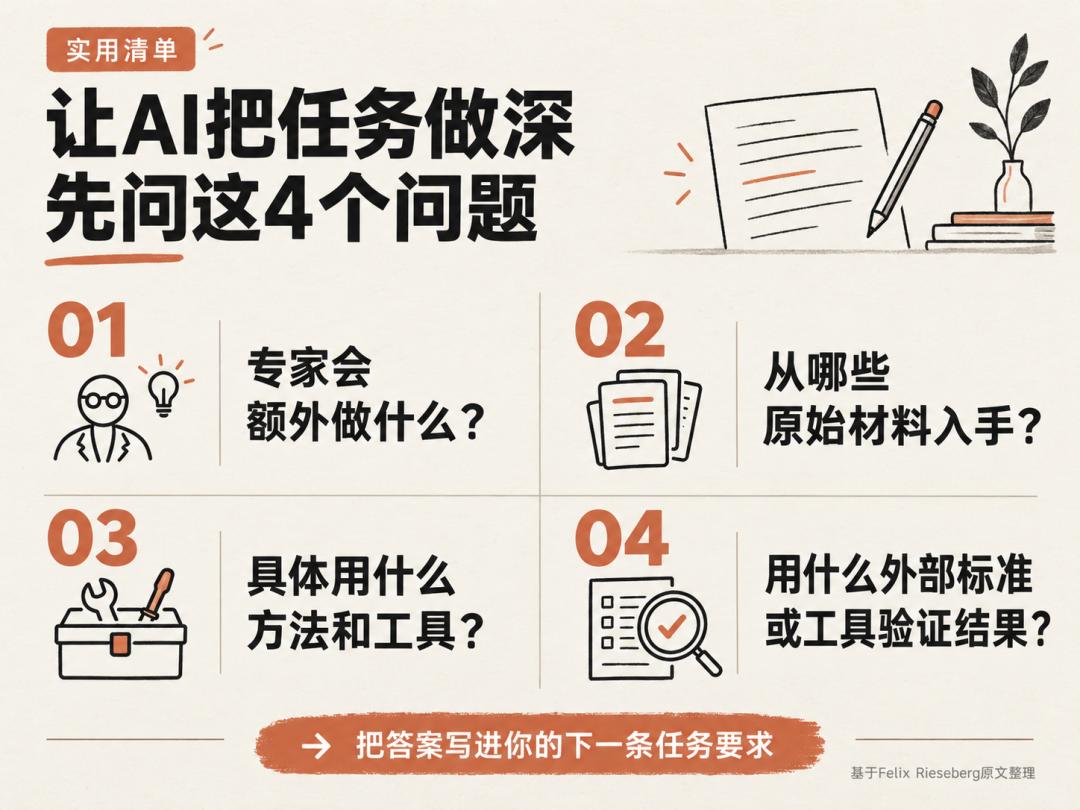
I want to make this task more in-depth, rather than expanding the scope of the task. Before rewriting the task, please complete four things first:
Explain what top professionals in this field will do that I have not yet asked for.
List the most original materials they will start with, instead of directly using content that has been sorted and digested for me.
List the specific methods and tools they will adopt.
Explain what else besides you and me can prove that the result is correct.
Then, rewrite my prompt to accurately include these requirements.
△
Breadth: Use methods from other fields as well
Being more ambitious in "breadth" means looking at your work from the perspectives of different fields.
You can involve more fields than in the past, because in the past, doing so was often not cost-effective.
This idea is not new. Almost every movie about a team of experts spends the first 30 minutes gathering a group of people with different backgrounds and unique skills.
As AI products make multi-agent systems easier to run — whether through multiple threads, coordinators, or directly using sub-agents, I find that letting Claude introduce ideas from other fields often brings some very interesting results.
It is not easy to put it into practice, and it requires you to use your creativity.
Before I saw my colleague Alex Albert use Blender to render interior designs, I never thought I could use Claude to make a 3D environment for my homepage.
You know, I used to make video games!
However, this is precisely where I most often see surprises.
How to do it specifically? I will use the following methods.
Try to replace nouns with verbs
This is an old method mentioned by Tom Kelley and Jonathan