Major breakthrough in quantum computing: Google has for the first time successfully run "magic state cultivation" on a real chip.
If the machines in *The Matrix* really existed, they would likely face a very realistic trouble: before the computing power can even start working, a huge amount of resources have to be spent to prepare "fuel" for themselves.
This sounds a bit absurd, but it is precisely the problem that future quantum computers may encounter.
Recently, Google Quantum AI published a paper titled *Magic state cultivation on a superconducting quantum processor* in *Science*, announcing that it has for the first time realized Magic State Cultivation on the real quantum processor Willow.
What it targets is an expensive special "fuel" in quantum computing — the magic state.
The "Magic State" That Works Like Magic
Don't be intimidated by this name first.
Magic State is no mysterious thing. In the field of quantum computing, it refers to a class of quantum states with special quantum resources.
If we compare a quantum computer to a factory, ordinary quantum error correction operations are more like relatively mature basic equipment, while the magic state is an expensive, scarce and indispensable special consumable.
It is not used to complete all calculations, but it is one of the important resources for quantum computers to move towards general-purpose, fault-tolerant computing.
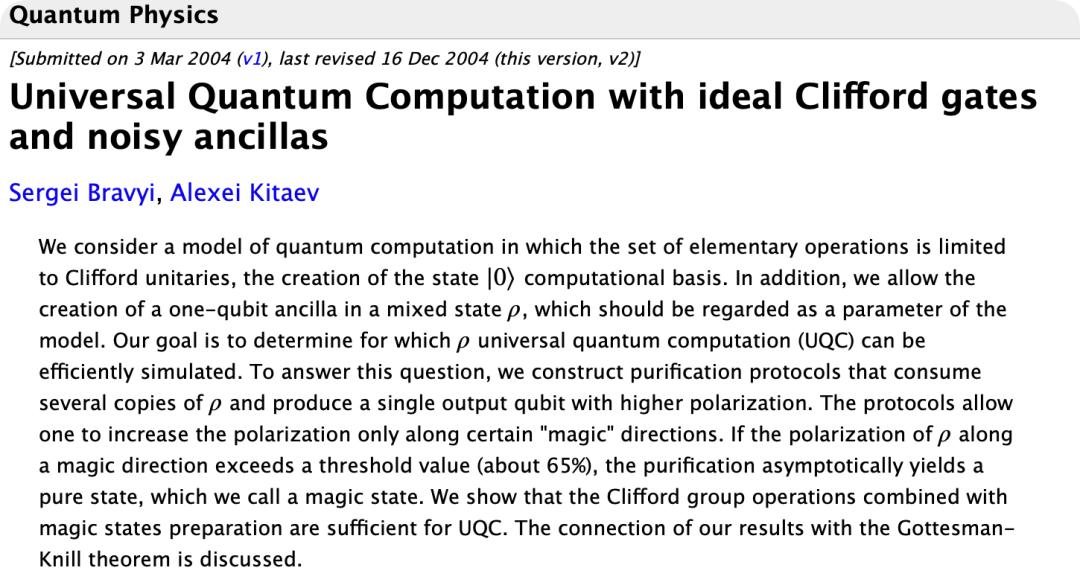
As early as 2004, researchers already knew that to make quantum computers perform general calculations, high-quality non-Clifford quantum resources are required.
Magic State Distillation is a method used to solve this problem in the past two decades.
The method and idea it adopts are the same as that of "purification".
First prepare some magic states of relatively poor quality, then put them together through the process of quantum error correction, measurement and screening to remove the error parts inside, and finally get a small number of magic states with good quality.
This is just like the process of brewing wine.
If the quality of grapes in the initial stage is inconsistent, a series of processes such as fermentation, filtering, detection and purification are required to remove the unqualified parts. However, in a quantum computer, every "filtering" action is not free.
Some resource estimates even suggest that future fault-tolerant quantum computers may need to use up to 95% of their computing capacity for magic state production.
In other words, quantum computers will be in a very awkward situation: most of the resources consumed by the machine are not directly used to solve practical problems, but to generate the energy required to solve these problems.
Moreover, the magic state is a kind of consumable. Once it is used to implement the corresponding non-Clifford operation, it cannot be reused like ordinary qubits.
Over the past two decades, researchers have been working hard to reduce the "magic state tax", and this time Google has found another way.
Raise the "Seed"
This time Google did not propose a new quantum error correction technology. It applied the idea that previously only existed in theory or simulation to a real quantum chip for the first time.
This method is called Magic State Cultivation.
In 2024, Craig Gidney, Noah Shutty and Cody Jones have proposed this concept theoretically.
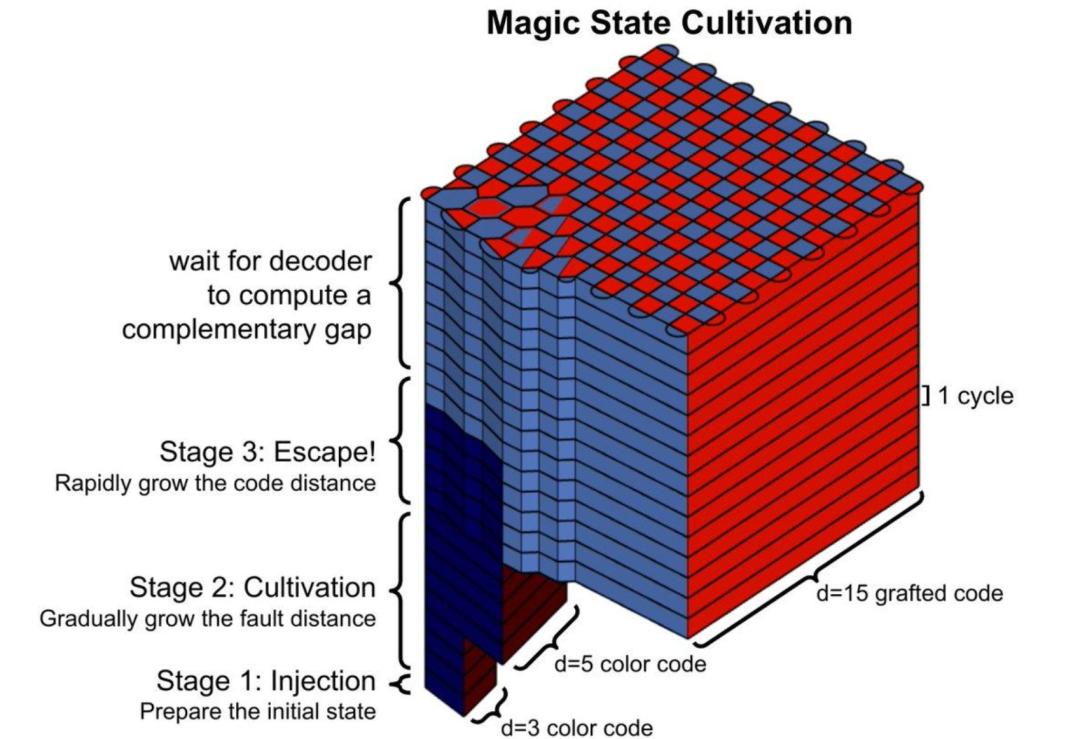
Traditional magic state distillation is a process of continuously refining batch after batch of raw materials, while magic state cultivation is a process of selecting a high-quality seed and then cultivating it slowly.
Researchers first create error-prone T-states with a certain probability, and place them in a carefully designed quantum error correction area, during which the surrounding qubits will be continuously used for measurement.
Errors are found and eliminated, and after inspection, the process is allowed to continue. As error correction codes are continuously added, the remaining states become more and more reliable. By 2024, theoretical research has used methods such as state vector simulation, stabilizer simulation, error enumeration and Monte Carlo to estimate the resources of this scheme.
What magic state cultivation really changes is not simply stacking more qubits, but finding ways to make the same number of qubits do more truly useful calculations.
This time Google ran this scheme for the first time on the Willow quantum processor.
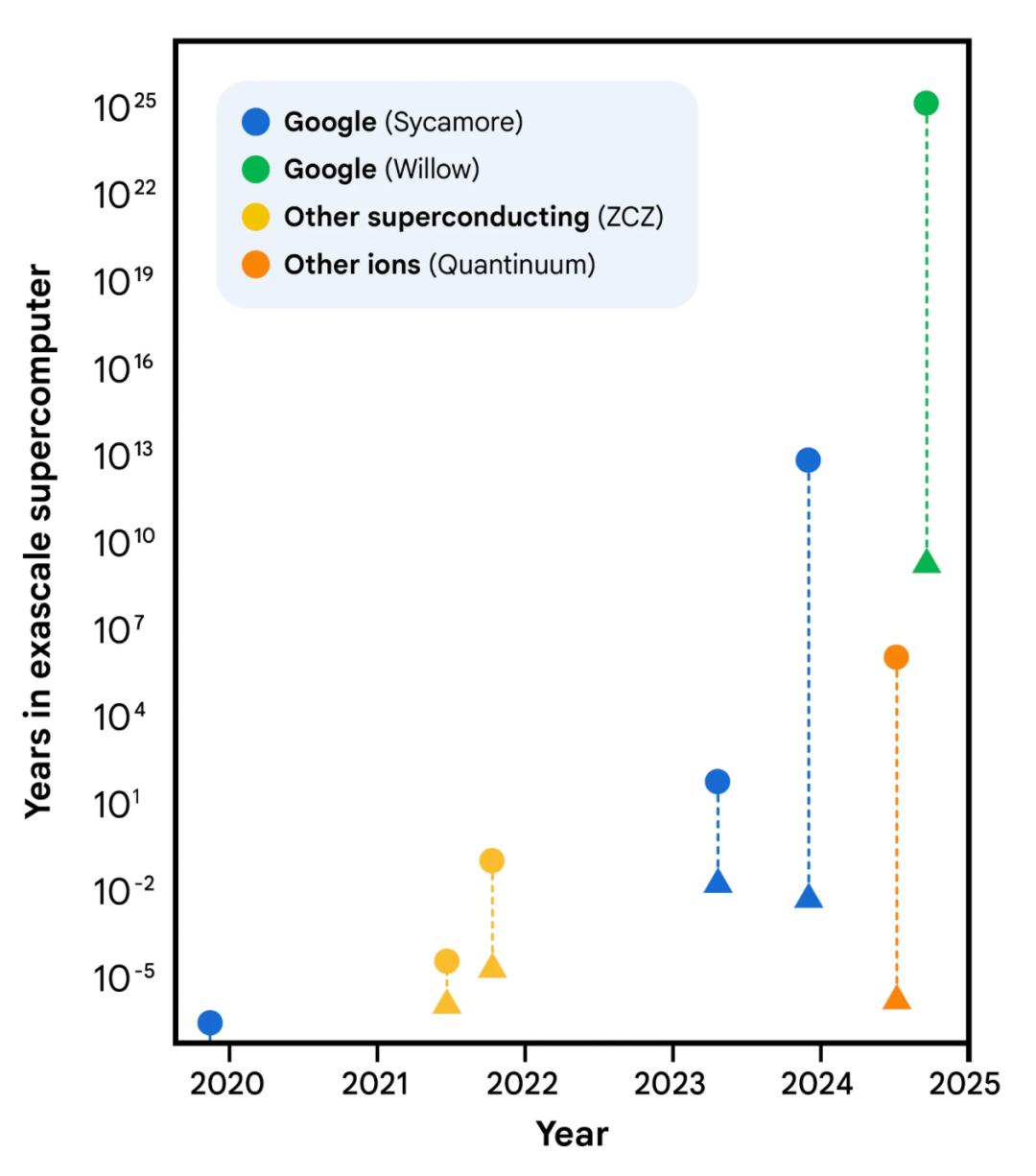
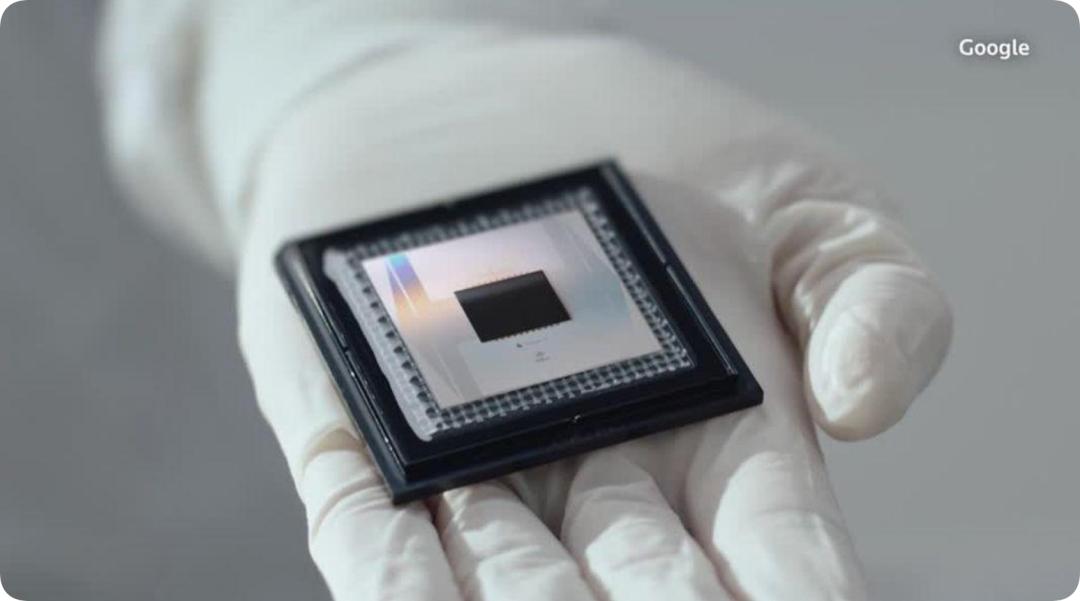
The processor used is the Willow processor produced by Google. Researchers injected noisy quantum states into a very small area on the chip, and found and eliminated these errors through a large number of highly synchronized measurements.
The logical fidelity of the final retained T-state is 99.99%, the error rate is more than 40 times lower than that without training, and only about 8% of the attempts are left after the experiment.
A logical fidelity of 99.99% means that after a series of error corrections, the quantum resources are very close to the ideal state and can be used as a reliable part in future fault-tolerant quantum computing.
If magic state cultivation can finally be scaled up, what it saves is not an experimental indicator, but a large area of computing space originally occupied by error correction operations.
Google has also completed the code conversion from Color Code to Surface Code, and transferred the quantum state in a distance-3 Color Code to a distance-5 Surface Code.
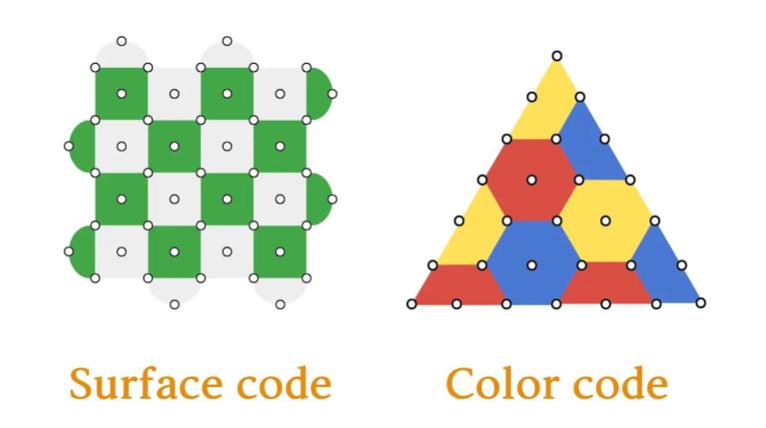
The "distance" here can be roughly understood as the resistance of quantum error correction codes to errors. Generally speaking, the larger the code distance, the stronger the error protection capability, but at the same time, it will consume more physical qubits and operation resources.
Google's method is to use Color Code to cultivate magic states, and then connect the cultivated quantum states to Surface Code through code switching.
A previously theoretical low-cost method for manufacturing high-quality magic states has been successfully run on a real quantum chip for the first time.
Distance from the Industry
Don't get excited too soon.
There is still a long way to go for this achievement to move from the laboratory to industrial practice.
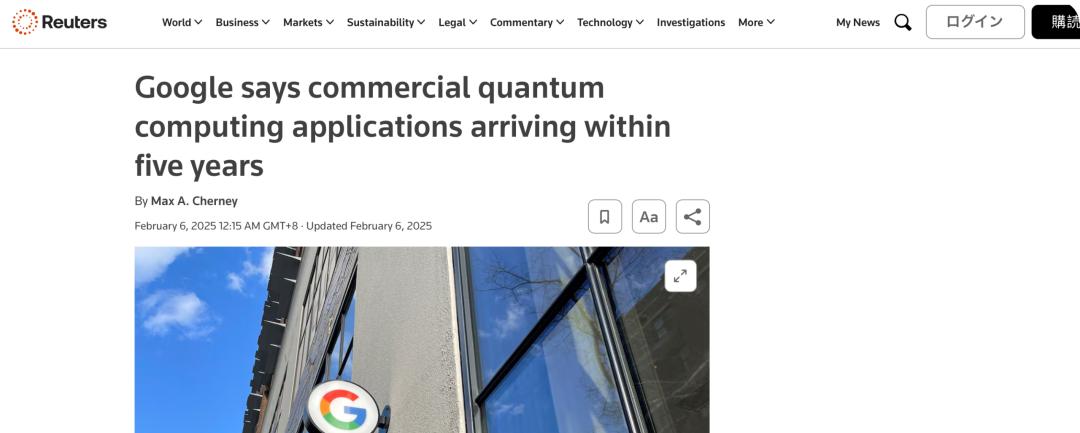
Hartmut Neven, head of Google Quantum AI, predicted earlier that in the next five years, we will see real commercial quantum computing applications, and he specifically mentioned applications in fields such as drug R&D, batteries and new energy materials. Google also regards chemistry, drug discovery, optimization and cryptography as important potential application fields for quantum computing.
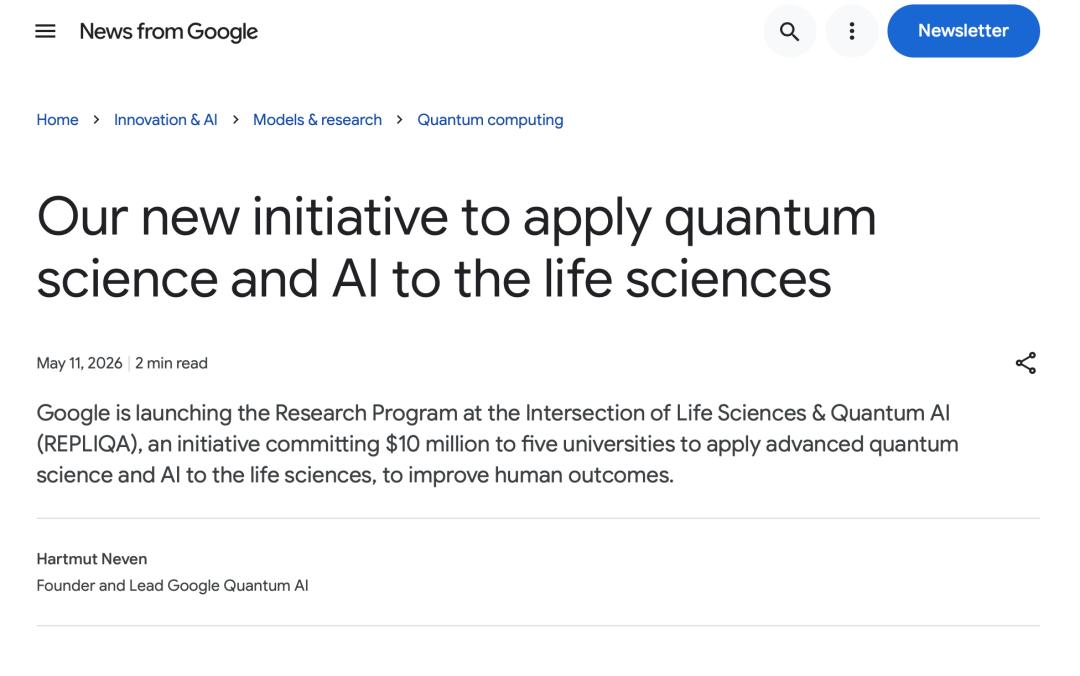
Google has teamed up with pharmaceutical company Boehringer Ingelheim to try to use quantum computing to simulate Cytochrome P450, an important enzyme in the human body. This enzyme can affect the metabolic process of drugs in the human body. Studies have shown that future fault-tolerant quantum computers are expected to deal with the key electronic structure problems of P450 with higher accuracy.
Hartmut Neven, head of Google Quantum AI, is quite optimistic about this. In an interview with Reuters in 2025, he said that Google hopes to see practical applications that "can only be realized by quantum computers" in the next five years, and named new drugs, advanced batteries and new energy as the fields.
However, in the field of artificial intelligence, the application of quantum computing may be much farther from the daily life of ordinary people than today's generative AI. In the short term, you will not find GPT or Gemini suddenly twice as fast just because of the breakthrough of Magic State Cultivation.
What it can change is something at a deeper level, that is, to reduce the operating cost of future fault-tolerant quantum computers, including solving some problems that are difficult for traditional computers to handle, such as complex quantum system simulation, materials and chemistry problems, and some combinatorial optimization problems, etc.
This is also why the artificial intelligence industry has higher demand for computing power, and the more people pay attention to quantum computing.
Jensen Huang, CEO of NVIDIA, has a relatively cautious view on the future application of practical quantum computing, believing that it may take 15 to 30 years to realize.
As for how long this road will take, there is no definite answer at present.
This article is from the WeChat official account "APPSO", author: APPSO that discovers tomorrow's products, published with authorization from 36Kr.