Wang Teng, a trusted long-time lieutenant of Lei Jun, has launched his own startup, and this time his new project focuses on developing AI-powered solutions to help people learn to sleep better.
Back in his days at Xiaomi, Wang Teng was busy selling mobile phones every day. Now that he has started his own business, he has unexpectedly begun researching ways to help people put down their phones and get a good night's sleep.
This shift in focus is more than a little comical.
On October 17, Wang Teng, former General Manager of the REDMI brand, revealed that after nearly a year of preparation, the first-generation products of "Today's Rest", his AI sleep technology company, will soon be available to the public. Starting from October 19, the company will introduce new products one after another.
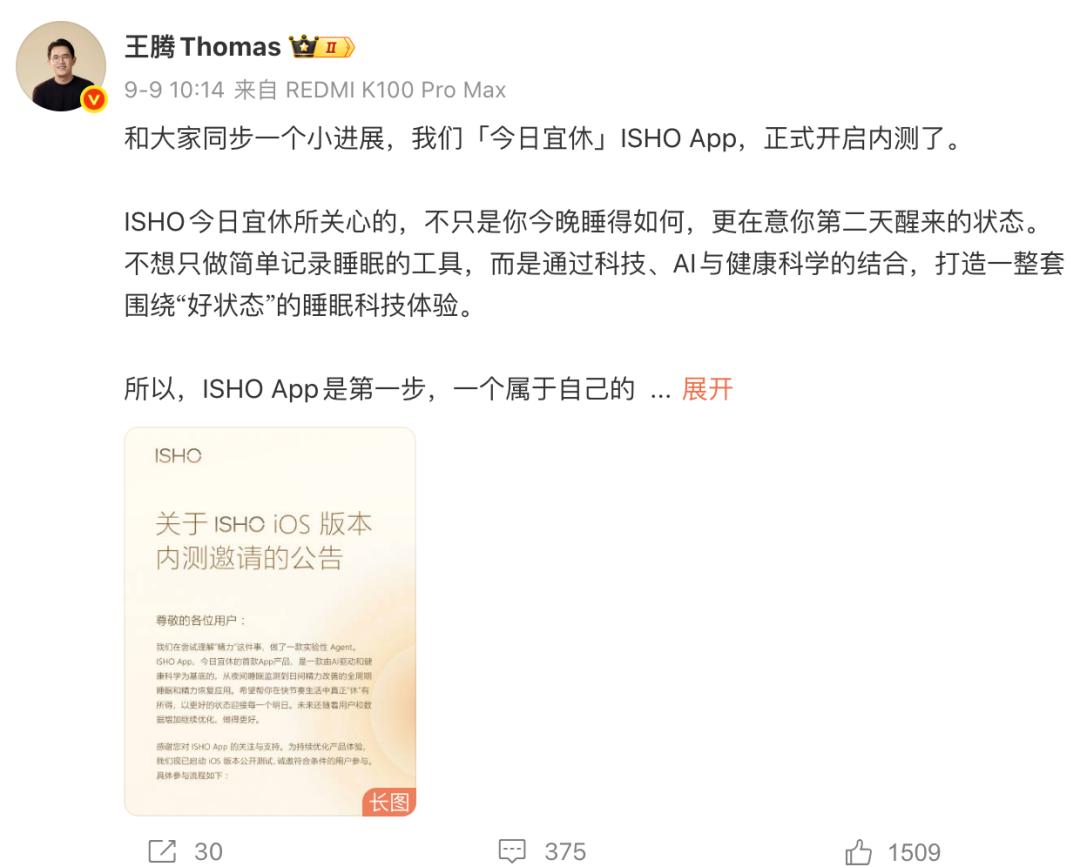
Wang Teng has also set a very ambitious goal for himself: he hopes to build Today's Rest into the world's leading AI sleep technology brand within 5 to 10 years, so that people will think of them as soon as sleep technology is mentioned.
If you only look at this entrepreneurial direction, many people may find it strange. How could someone who worked at Xiaomi for nine years and rose from product manager all the way to brand manager suddenly switch to researching sleep?
What's more interesting is that this company has already received investments from institutions including GL Ventures, CMC Capital, Agibot, and Xilinmen, with a team size of more than 100 people. Its first sleep app has already launched internal testing, and smart hardware is also being prepared for launch.
From leaving Xiaomi to establishing the company, securing financing, building a 100-person team, and about to launch the first batch of products, Wang Teng's experiences over the past year have truly been remarkable.
01
From Product Manager to Xiaomi Executive, Wang Teng Was Once Lei Jun's Right-hand Man
People who are familiar with Xiaomi should be no strangers to Wang Teng. Back when he was at Xiaomi, he was an executive who came with his own traffic. Especially during his tenure in charge of REDMI, he often interacted with netizens on Weibo, and from time to time leaked some new product information in advance, so he was teased by netizens as the "King of Leaks", and some even gave him the nickname "Emperor Wang Teng".
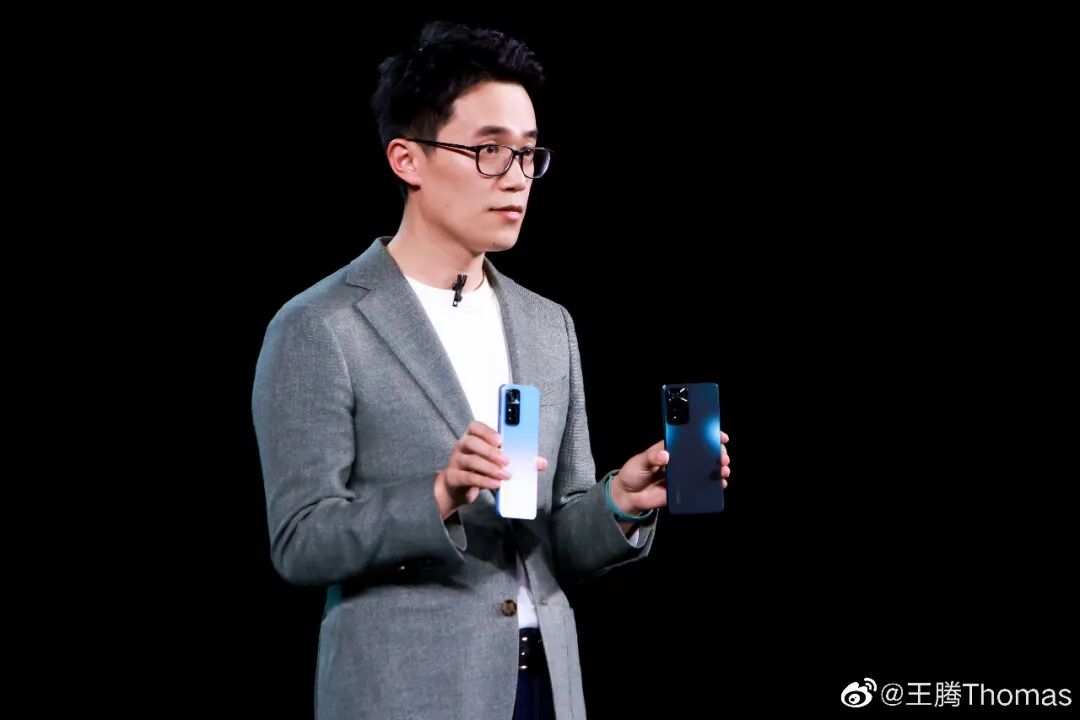
Although he was often teased by netizens, if you take a closer look at his resume, you will find that he has accumulated a lot of experience in product and business operation.
Wang Teng was born in 1987, graduated from Huazhong University of Science and Technology, majoring in bio-information technology. After graduation, he first joined OPPO and served as Product Strategy Manager. In 2016, 29-year-old Wang Teng joined Xiaomi. According to media reports, Lei Jun personally interviewed him back then.
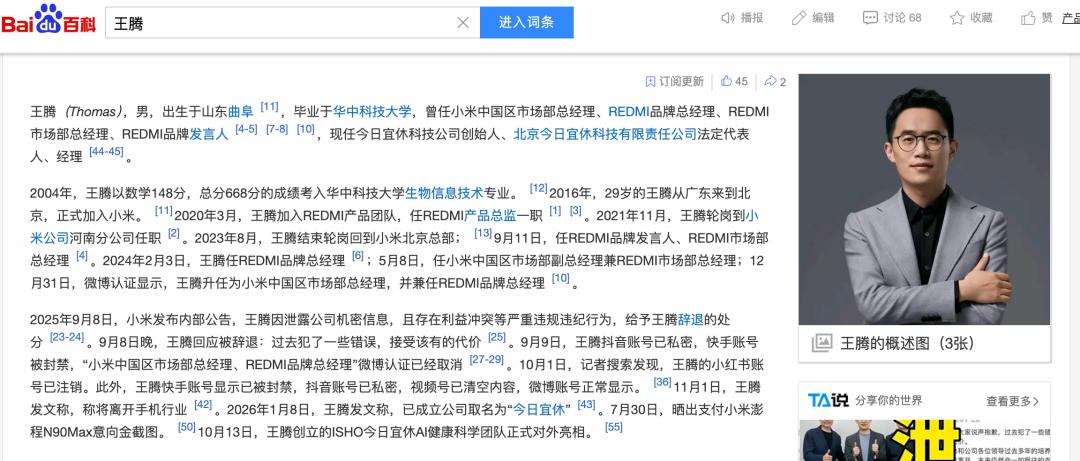
When he first joined Xiaomi, Wang Teng started as a product manager in the mobile phone department, and later gradually participated in the planning and management of REDMI series products. In 2020, he joined the REDMI team as Product Director, participating in the planning and marketing of products such as the REDMI K series. In 2021, Xiaomi arranged for him to take a rotational post in Henan, in charge of local business.
This rotational experience was actually very valuable. Because product managers usually pay more attention to user needs, product planning and functional experience, but when they are on the front line of the market, facing channel distributors, sales targets, inventory and user feedback, they will find that whether a product can be sold is sometimes completely different from whether the product is easy to use.
In 2023, Wang Teng returned to the Beijing headquarters and served as REDMI Brand Spokesperson and General Manager of the Marketing Department. In February 2024, he succeeded Lu Weibing and officially became the General Manager of the REDMI brand. In December of the same year, he was further promoted to General Manager of the Marketing Department of Xiaomi China Region, while concurrently serving as General Manager of the REDMI brand.
From joining Xiaomi in 2016 to becoming a dual-position general manager in 2024, Wang Teng only took about eight years. For a professional manager who grew up from a product manager, this resume is already quite impressive.
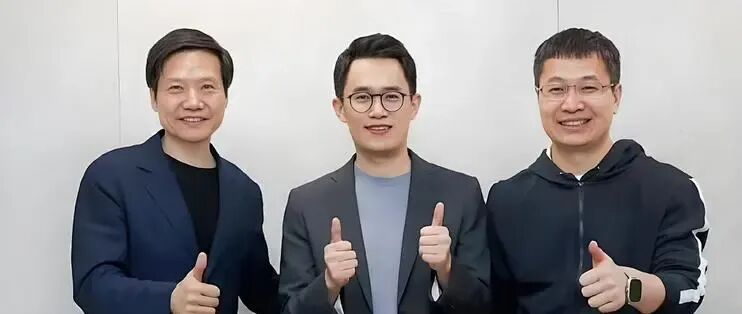
More importantly, over these eight years, he has accumulated complete experience from product definition, R&D collaboration, supply chain, brand marketing to channel sales. Especially at Xiaomi, a company that is good at consumer electronics products and internet marketing, these experiences are obviously of great help to his later entrepreneurship.
However, when his career was developing very smoothly, an accident happened.
02
An Internal Notice Brought His 9-year Career at Xiaomi to an Abrupt End
On September 8, 2025, an internal notice from Xiaomi Group suddenly detonated the tech circle.
The notice came from the Xiaomi Group Professional Ethics Committee, and the content was very direct: Wang Teng was dismissed by the company for serious violations of rules and disciplines such as leaking confidential company information and conflict of interest.
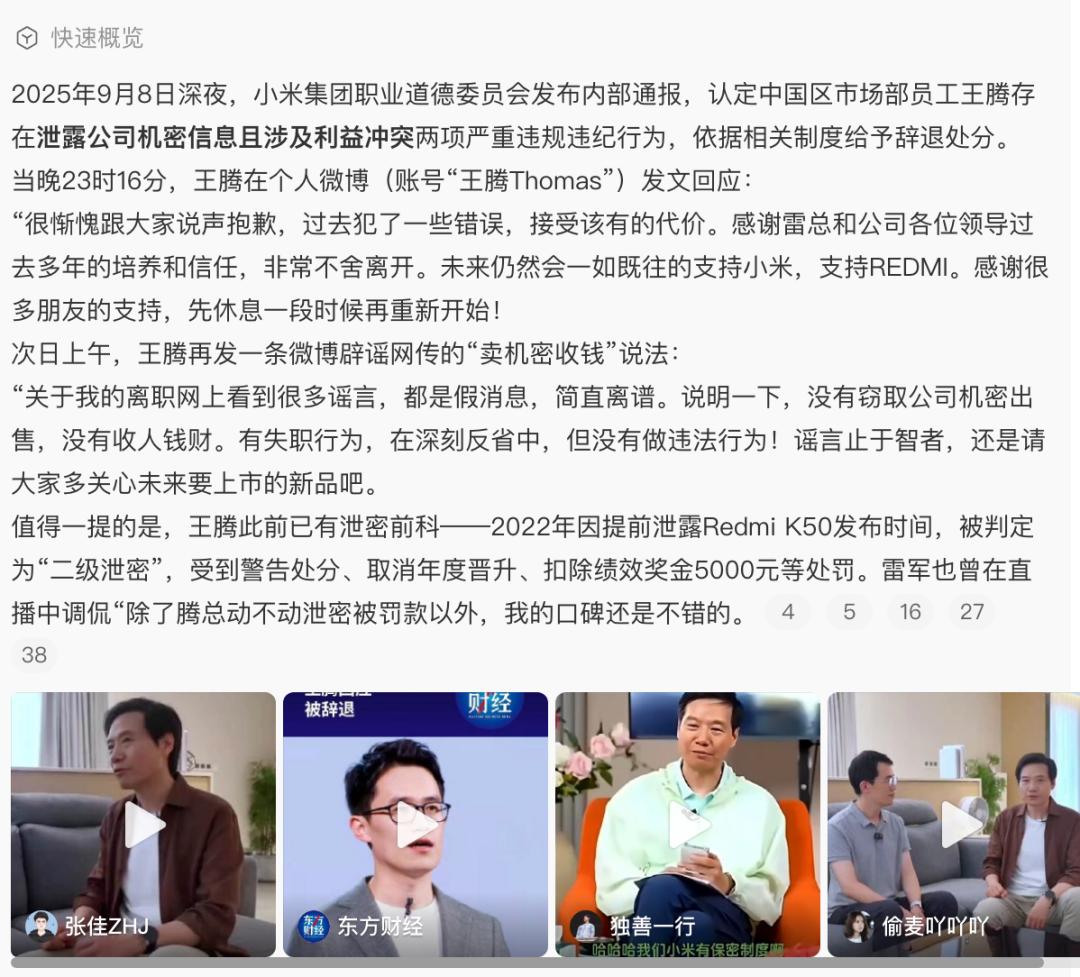
At that time, Wang Teng was still the General Manager of Xiaomi China Marketing Department and General Manager of the REDMI brand. This way of leaving naturally attracted widespread public attention.
The reason why this incident caused so much discussion is not only because Wang Teng himself has a certain popularity, but also because the incident happened quite suddenly. Not long before that, he was still promoting Xiaomi products normally on social media and interacting with netizens, but the news of his resignation spread in the blink of an eye.
Later, various rumors about this resignation storm appeared on the Internet. One of the widely spread messages claimed that Wang Teng provided external institutions with materials such as Xiaomi's car pricing strategy and supply chain costs, and received a consulting fee of 1.87 million yuan.
However, this statement has not been confirmed, and the relevant rumors were later denied by insiders. Wang Teng himself also specifically posted a clarification, clearly stating that he did not steal company secrets for sale, nor did he accept money from others. He admitted that he had dereliction of duty, but denied breaking the law. Xiaomi's public notice did not disclose the specific details of the violation, so what the outside world can confirm so far is still the violation items and the final handling result mentioned in the notice.
On the day of his resignation, Wang Teng also publicly apologized, thanked Lei Jun and Xiaomi for their years of cultivation and trust, saying that he would accept the corresponding consequences.
In this way, a nine-year career at Xiaomi came to an abrupt end.
In October this year, Wang Teng talked about this experience in an interview with Jiemian News. He admitted that it was a low point in his life at that time, and it was the first time he had been on the hot search for many consecutive days due to a negative incident. After two or three weeks of adjustment, he gradually accepted the reality and began to think about what to do next.
During this period, some leading companies also offered him job offers, but Wang Teng finally chose to start his own business.
This is quite in line with the current trend in the tech circle. In the past, when a senior executive from a large factory left, everyone first cared about which big company he would go to, Alibaba, Tencent, Huawei, or other competitors. Now that AI entrepreneurship is so hot, more and more people are choosing to start their own businesses.
Of course, starting a business is much more complicated than being a professional manager. In the past, when making products at Xiaomi, he had Lei Jun, the brand, the supply chain, and a huge sales channel behind him. Now that he is starting his own business, he has to find investment himself, recruit the team himself, make the products himself, and be responsible for whether the products can be sold out in the end.
In the past, he worried about REDMI's sales, but now he worries about the survival of the entire company.
03
With Multiple Rounds of Financing Secured, Wang Teng Plans to Help Office Workers Sleep Better With AI
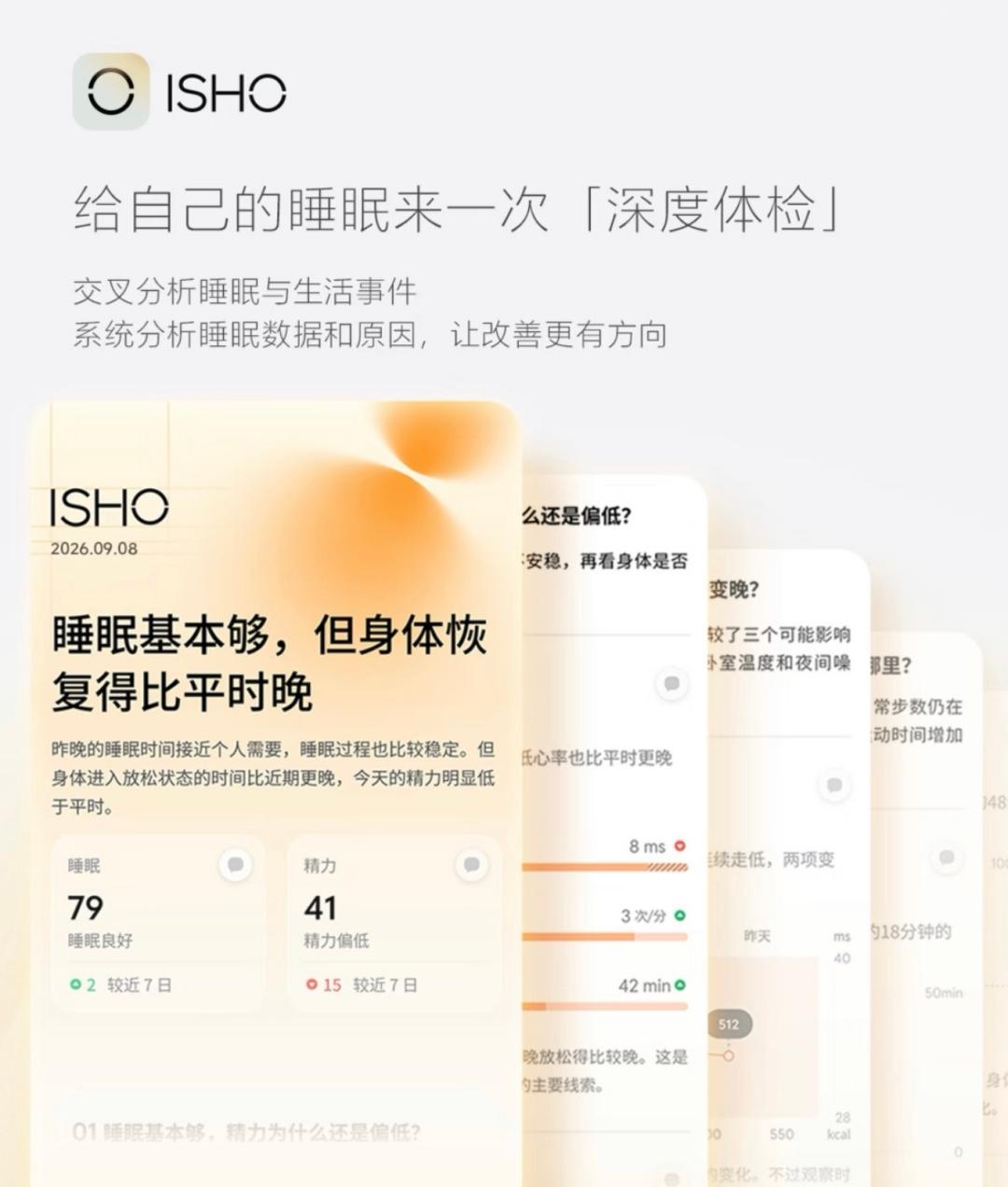
In January 2026, Wang Teng officially announced the establishment of a new company called "Today's Rest", with the English brand name ISHO, which is taken from "Inner Strength High Output", roughly conveying the concept of accumulating energy and improving efficiency.
This name is quite interesting. Back at Xiaomi, he thought about how to get users to buy and use mobile phones every day. Now that he has started his own business, he has unexpectedly begun researching ways to help everyone rest properly.
In fact, Wang Teng's choice of the sleep health track is also related to his past experiences. He once publicly mentioned that his work intensity was relatively high in the past few years, and he often slept poorly. Especially during the period after leaving Xiaomi, the pressure was even greater, and the sleep problem became more obvious.
It is estimated that many internet practitioners can understand this feeling. Meetings during the day, overtime at night, and it's already 11 or 12 o'clock when you get home. You finally lie in bed, but your brain is still thinking about tomorrow's work. You scroll through your phone for a while, and before you know it, it's 2 a.m. When the alarm clock goes off the next morning, the biggest wish in life is to sleep for another five minutes.
Wang Teng obviously feels that there is a market opportunity worth exploring here. He has studied bio-information technology himself, and has worked in the consumer electronics industry for more than ten years. Smart hardware, data analysis and health management can just combine all these experiences.
According to the information disclosed so far, Today's Rest plans to build a sleep health management system through AI algorithms, smart hardware, human physiological data and sleep science.
Specifically, it uses wearable devices to monitor users' physiological data such as sleep duration, heart rate and blood oxygen, and then uses AI to analyze the sleep state, providing users with improvement suggestions. In the future, it also hopes to combine environmental factors such as light, temperature and sound in the bedroom to achieve more active sleep management.
At present, this company already has its first product.
In September this year, the ISHO sleep app under Today's Rest launched internal testing, initially supporting the iOS system. Users need to wear an Apple Watch, collect sleep and physiological data, analyze the user's sleep quality and energy state, and give corresponding suggestions.
There is a very interesting detail here: Wang Teng used to be the General Manager of the REDMI brand, but his first app after starting his own business supports the Apple Watch first. I wonder if old Xiaomi fans will urge him to adapt to the Xiaomi Mi Band in the comment section after seeing it.
Of course, the app is just the first step. According to the plan disclosed by the previous financiers, Today's Rest also plans to launch a smart sleep ring. Wang Teng also revealed that the first batch of products are expected to reach consumers before Christmas this year. As for the first-generation new products that will be warmed up starting from October 19, what product form they will adopt and what functions they will have, further official announcement is still needed at present.
In addition to the products, the financing lineup of Today's Rest is also quite notable.
In January this year, the company completed tens of millions of yuan in seed round financing, led by GL Ventures, with participation from institutions such as Agibot, Xilinmen, and Yunjiu Capital. In May, the company received a new round of investment from institutions including CMC Capital.
Several investors here are worth paying attention to. GL Ventures has experience in consumer technology investment; Agibot has deep layout in the field of embodied intelligence; Xilinmen is a well-known domestic mattress enterprise, which is directly related to the sleep health industry.
Especially for Xilinmen, if Today's Rest wants to expand from smart rings and sleep apps to fields such as smart mattresses and bedroom environment management in the future, such industrial investors may bring certain supply chain and business cooperation resources.
At the same time, Wang Teng is also rapidly expanding his team. As of October this year, the number of employees of Today's Rest has exceeded 100, of which more than half are from tech enterprises such as Xiaomi and Huawei. In addition to talents in hardware R&D and product design, the company has also introduced professionals in fields such as AI algorithms, sleep science, and clinical medicine. According to Wang Teng, the company has invested more than 10 million yuan in health science research and clinical medical verification.
From financing and recruiting to product R&D, the progress speed of this entrepreneurial project is really not slow. After all, being able to form a 100-person team in less than a year since its establishment is already a considerable investment for a consumer technology startup.
04
I Think the AI Sleep Business Has Opportunities, But It's Not Easy
Seeing Wang Teng choose the AI sleep direction, I actually have two judgments.
First of all, sleep health is indeed a track with real demand and a considerable market size. Especially for young people nowadays, they are busy working during the day, reluctant to sleep at night, and rely on coffee to stay alive the next day. People stay up late while researching how to improve sleep quality, and are even willing to spend money on various sleep-aiding products.
Since people are willing to pay for mattresses, pillows and melatonin, naturally they may also be willing to pay for truly effective smart sleep products.
But another problem is equally obvious: Sleep monitoring is by no means a new business, and there are already many players in the AI sleep field.
Manufacturers such as Apple, Huawei, Xiaomi, and Samsung all provide sleep monitoring functions in devices such as smart watches and bands. Overseas, there are smart ring brands like Oura that have been deeply engaged in the field of sleep health and human state monitoring for many years. Samsung's Galaxy Ring also has capabilities such as sleep monitoring and health analysis.
Therefore, if Today's Rest eventually only launches a smart ring to record heart rate, blood oxygen and sleep duration, and then connects to a large model to generate a sleep analysis report, I think its competitiveness will probably be limited. After all, many existing smart wearable products can already achieve these functions.
Moreover, there is an awkward problem in the sleep field: most people actually do not lack sleep advice.
Don't stay up late, drink less coffee, don't play with your phone before going to bed, keep a regular schedule, even primary school students probably know these truths. The problem is that knowing it is one thing, but being able to do it is