In 2026, AI product managers begin to fail to keep up with the development of AI skills.
Now it is October 2026, and you can feel that in the work scenarios of product managers and IT companies, ordinary product managers can not only fail to keep up with the development of AI, but also lag behind in skill application.
Not only is the speed of technological progress exceeding the cognition of ordinary people, but the singularity between science fiction movies and real life is getting closer and closer.
At the same time, let's conduct a survey here: How much do you spend on AI-related services every month?
Based on my expected survey results, it is estimated that more than 99% of people are still using free AI, treating AI as an ordinary free software. In the AI product manager circle, most practitioners use AI tokens and tools provided by their companies.
The cost-effectiveness of working in large tech companies is getting lower and lower
I recently talked to a product manager from Alibaba, and I asked if it is allowed to use more advanced models and develop my own local applications?
"For more advanced models such as the current Astra, you have to submit a separate application and cannot use them casually. What is available for ordinary use now are only primary or intermediate models, or you have to pay for them out of your own pocket."
At the same time, the usage of tokens for invoking models is monitored by the company's traffic system. If you use it to develop software privately, the company will be aware of it. So it is almost impossible to do any side business, and you don't even have spare time to run a personal blog.
You know that back when we worked at Tencent, no one would restrict you from running WeChat Official Accounts or shooting videos for Video Channels? Now things are completely different. In large tech companies, you are almost reduced to a replaceable screw: you get paid to output your work value, you will lose your position if you don't perform well, and even if you do excellent work, the credit will not belong to you.
The technological singularity: flying cars
Tesla's latest Tesla Roadster can not only run on roads, but also fly in the sky, equipped with an air-cooled compressor. Looking back at early interview archives, Elon Musk once revealed that he would apply the SpaceX rocket engine to Tesla vehicles.
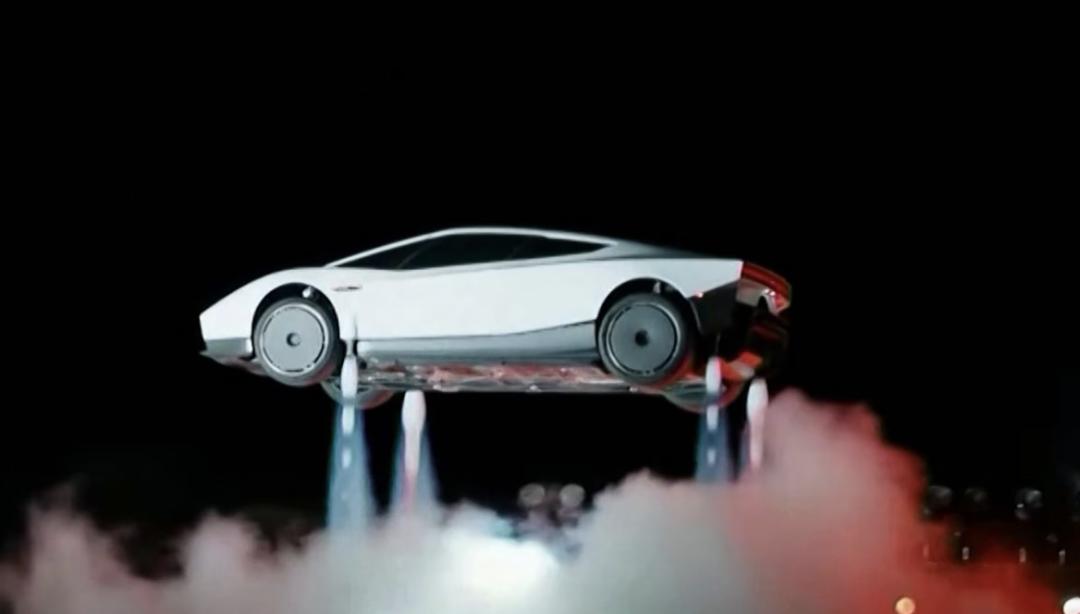
It was mentioned in the blog at that time that this function can be realized by using an air compressor, and that interview was held several years ago. It can be seen that it took almost 9 years of continuous efforts to achieve this achievement. So a good product can only reach this performance after 9 years of technical iteration. Although the vehicle can only perform flight demonstrations for a limited number of times at each press conference, this is a mass-producible car, not a prototype.
We can imagine that if we get some related patents, the technology can be applied to some life-saving scenarios in daily life. Of course, which countries allow it to be used on public roads and where it is allowed to fly are still unknown for now.
The persistence of product managers is actually contrary to the achievements of working as a full-time employee
At the current moment, I think being a product manager is the career with the highest cost-effectiveness, income value and happiness level without exception, but the premise is that you are working on your own products. If you are still working on marketing tools, general software applications or ordinary tools for other companies, it will be difficult to get a sense of achievement, and what you will get more is the powerless feeling of being replaced easily.
When working in a company, the investment return of every project is strictly required. If a product cannot generate continuous benefits, even if it has a large user base, it will be shut down directly. Many incubated products will be cut off if they fail to reach the standard daily active users, growth rate or even payment rate within a certain cycle under the given resource input.
Which means you don't even have the resources to iterate the product anymore.
What is quite thought-provoking is that those products that are looked down upon by large tech companies, if spun off and placed in any small company, are enough for the small company to support its whole team to survive. Even with only hundreds of thousands of users, the small company can operate steadily and make profits slowly, and support the salaries of the small team through advertising, membership services and value-added services.
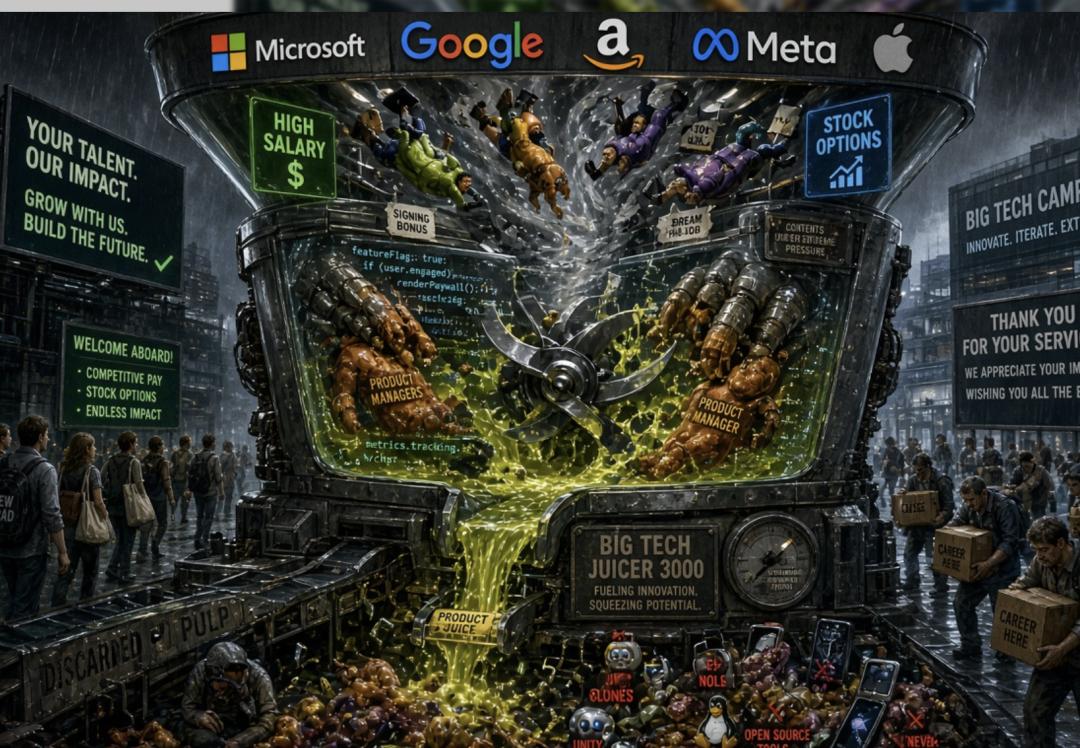
But large tech companies think it is unnecessary to keep these small products and shut them down directly. Of course, there are countless products that have not even been launched in large tech companies. So there is a popular saying that product managers in large tech companies are bought with high salary and benefits to be trained, drained of all their value, and then dismissed.
After the emergence of ChatGPT 6,
RSI is emphasized in October, and scientific research costs are getting lower and lower
After ChatGPT 6 came out, as a PhD student majoring in Computing, I clearly feel that the scientific research work around me is gradually being simplified, and the demand for local GPUs will only become stronger. No matter for the needs of security and confidentiality, or the protection of paper data and patents, local GPUs have become a must for every scientific research team now. If you don't even have a local GPU, you are not qualified to call yourself a professional PhD research team.
Therefore, the price of GPUs will get higher and higher. You know that 99% of people have not used local offline AI yet, and this will be a rigid demand in the future.
The most popular RSI theory now allows AI to perform self-recursion, and this point is gradually reaching the singularity. But now it is still in the L1 and L2 stage, which is the optimization strategy stage. However, it is still impossible to cross the border and turn LLM into a complete world model, because overfitting will occur in the current stage.
The biggest shortcoming of the strongest model gradient is still spatial computing.
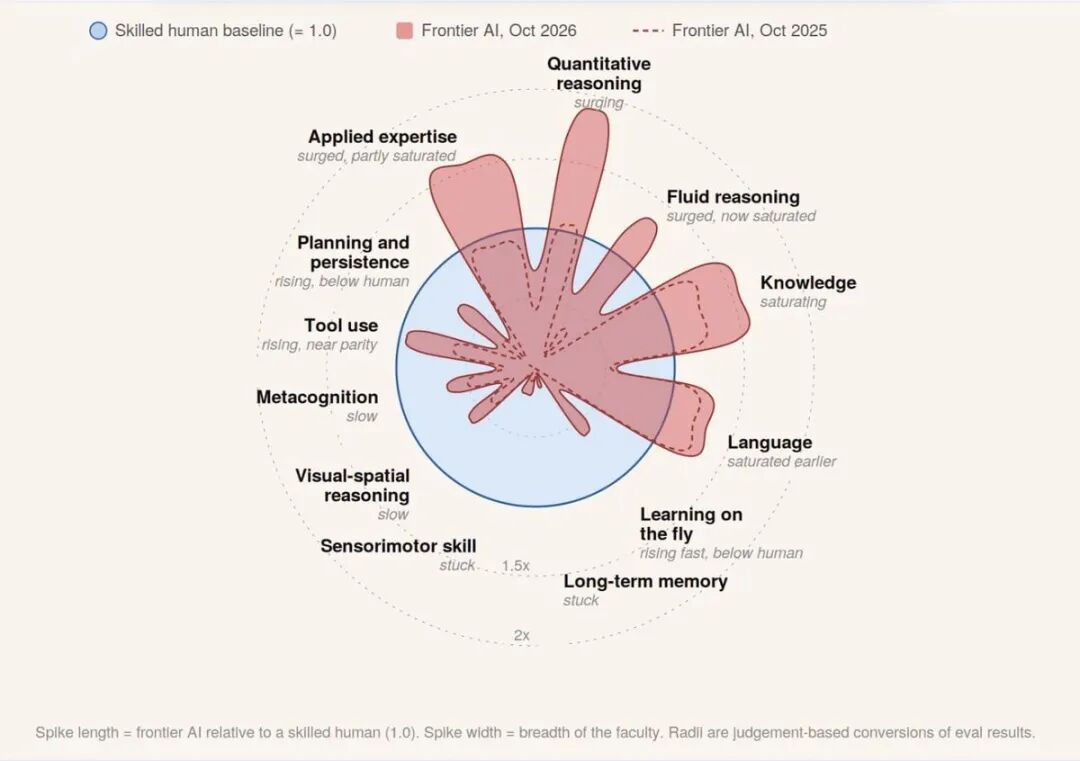
Users in Chinese mainland may not be able to use Claude due to account ban restrictions, so they are forced to use the strongest model Astra, but the payment cost is close to 800 RMB per month, and many people may still stay at the 6.1 version stage.
Ordinary users in Chinese mainland are now almost still using domestic models at the level of Doubao or DeepSeek. With the popularization of WorkBuddy, ordinary people can turn model conversations into real productivity, but complex tasks and professional proofreading still require stronger models, which cannot be achieved by the domestic version of WorkBuddy.
This creates the AI model black hole effect:
AI product managers need to invest money, energy and time outside of work
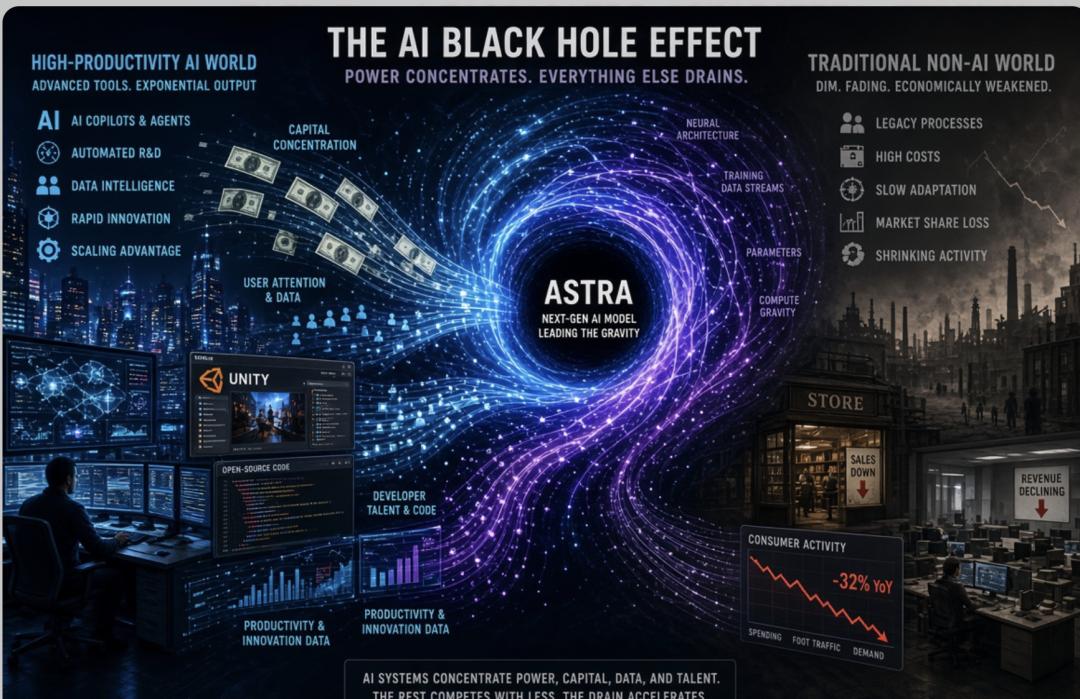
After the real productivity is improved, it is difficult to reduce the output quality of your work. For example, Astra can now operate Unity software and open source solutions. If you are developing 3D games, you will not choose those models that cannot operate Blender.
You need a powerful model to achieve at least the basic capability of outputting Unity applications, which leads to the formation of a black hole effect in AI: the better the model, the higher the revenue of its manufacturer, and at the same time the more data users provide, the stronger the model will become.
But AI absorbs all these data and resources, and does not give feedback to other industries. So you can see that for industries that do not use AI, the economic consumption power is getting weaker and weaker now.
In 2026, users are being attracted by short videos,
Long-form content and focused attention have become scarce resources
Compared with 2016, you can hardly see a viral long article now, because people no longer like reading long texts. Most long texts can be easily converted into a video, and people prefer to watch easy-to-understand videos. Although the difficulty of creating videos and the cost of text and even comics are getting lower and lower, it is getting harder to create content with depth.
The core skill of product managers: insight into and tap potential user needs
The most important work skill now is to return to how to deeply dig into user behavior habits and the needs of different user groups to complete product planning. Even if the cost of AI-generated software and development is reduced, the ability to capture the latest optimization requirements for products to maintain continuous vitality is very critical.
The viral REA, a magic tool for product managers' work, is a must-have for collection
REA, a recently popular reverse engineering tool, can reverse almost any software on the market. Now it has been extended to support APP packages of iOS and Android, all of which can be used for reverse engineering to complete software development, so the development cost of software and games has dropped rapidly.
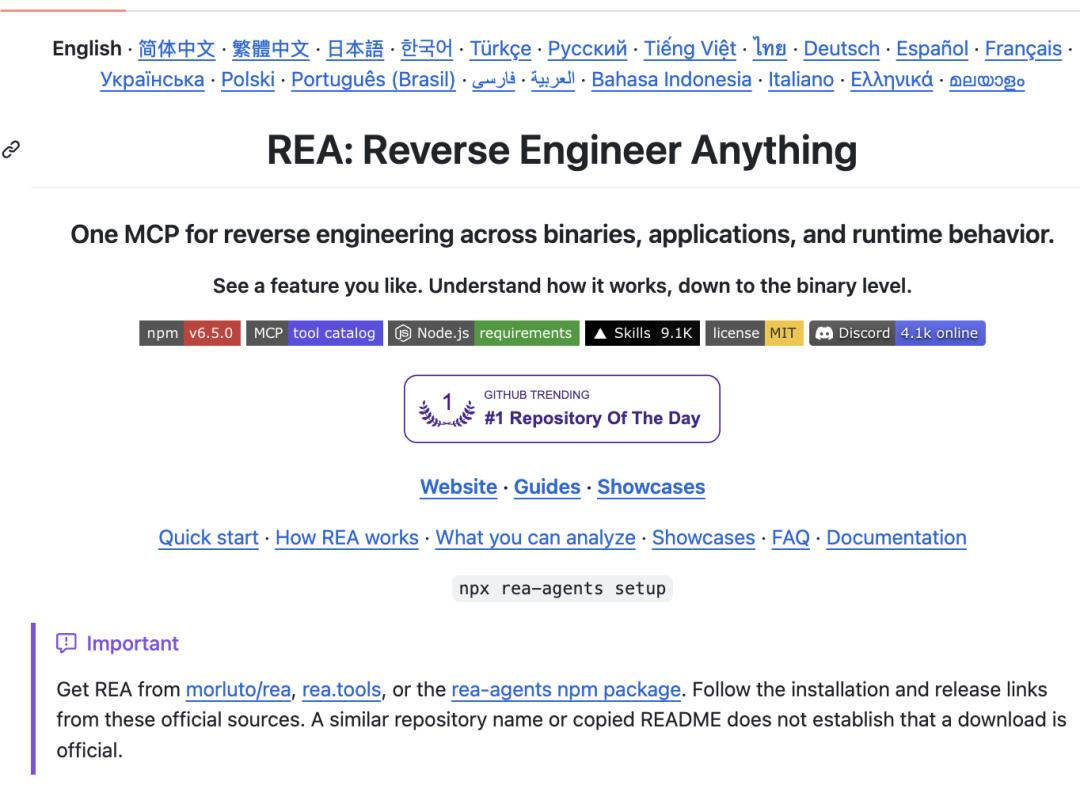
Coarse models can complete some basic work, but delicate models still require product managers to use other third-party tool models to complete the sorting and generation of assets.
For example, the following is a tool that can output 3D character asset materials of high-precision models, and these functions are still extended based on LLM. The development of world models is still in progress, especially the Transformer structure can also train special vertical domain models, such as DICOM file reading in the medical field and image processing in daily life scenarios.
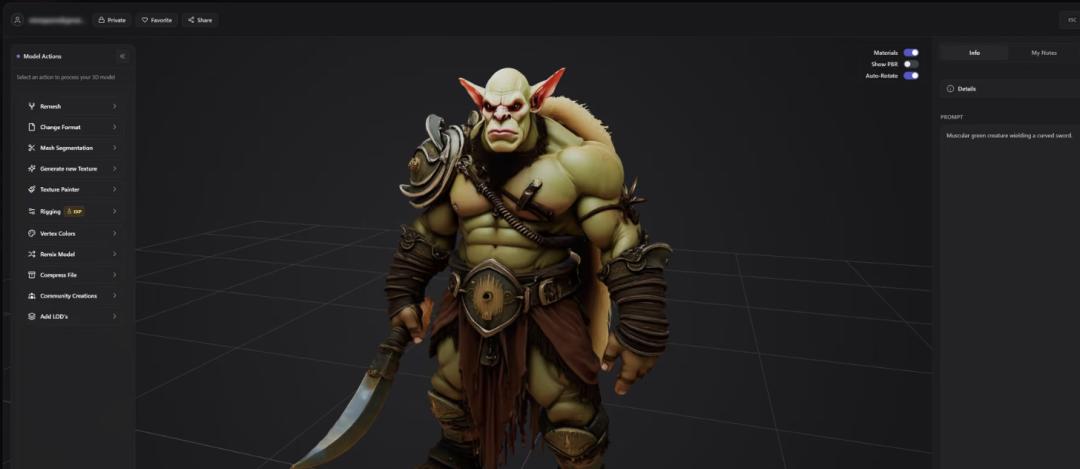
In short, as for what AI can finally achieve at the current speed of technological development, we need to keep tracking its progress. If you don't follow up for more than 2 months, you may be eliminated by the industry.
One month in 2026 is equivalent to one year in the past
The development speed that one month equals one year is the most intuitive feeling in the current AI circle.
Just like this official account article today, I finally used my self-developed Jinyi APP to complete it. It has expanded from an initial note software to an offline writing tool for writing official account articles, editing videos, and creating graphic content. My demand is very simple: to make a tool that allows me to write articles and blogs on high-speed rails or planes when I am on a business trip, and also record my daily check-in tasks, diet and exercise status.
At the same time, converting a long note into an official account article and then a short video is a very reasonable demand, which is very valuable at least for me, a self-media blogger in the product manager circle. So I developed this product, the most important feature of which is local offline support. And I believe that the capability of local offline models in image and video processing will get closer and closer to the real world to the point that they cannot be distinguished by human eyes.
Of course, for stronger image and video generation capabilities in the future, online APIs are still an inevitable path. My team and I will focus on researching the relevant Router idea, so that the system can automatically switch to the most appropriate model according to the field, specific topic and even data type of the generated content. In this way, users do not need to subscribe to multiple memberships separately, and can flexibly call different capabilities.
At least in the next stage, we will develop this set of routing capabilities. At the current stage, we focus more on serving the internal team, as well as users who, like us, travel frequently and have offline usage needs.
The overall idea is somewhat similar to Manus's product logic, but I will test this product for a long time by myself first, and then systematically publish articles to share after my writing habits are stabilized.
This article is from the WeChat Official Account "Kevin's Bits of Changing the World" (ID: Kevingbsjddd), the author is Kevin's Stories, and 36Kr is authorized to publish it.