The lobster craze has faded, so why is Muse such a smash hit? Was the exorbitant poaching of talents back then reasonable? Alexander Wang addressed all these issues in his latest interview.
Recently, Meta has pulled off a remarkable turnaround, with its brand-new personal AI agent Muse rapidly becoming a phenomenal product since its launch.
According to estimates from Sensor Tower, after Meta Muse launched on September 8, it reached 5 million downloads in the U.S. in about 22 days, faster than the historical estimated figures of ChatGPT, Grok and Claude. It once topped the free app chart on the U.S. App Store and remained No.1 for multiple consecutive days. In addition, its growth rate and retention rate are also very impressive.
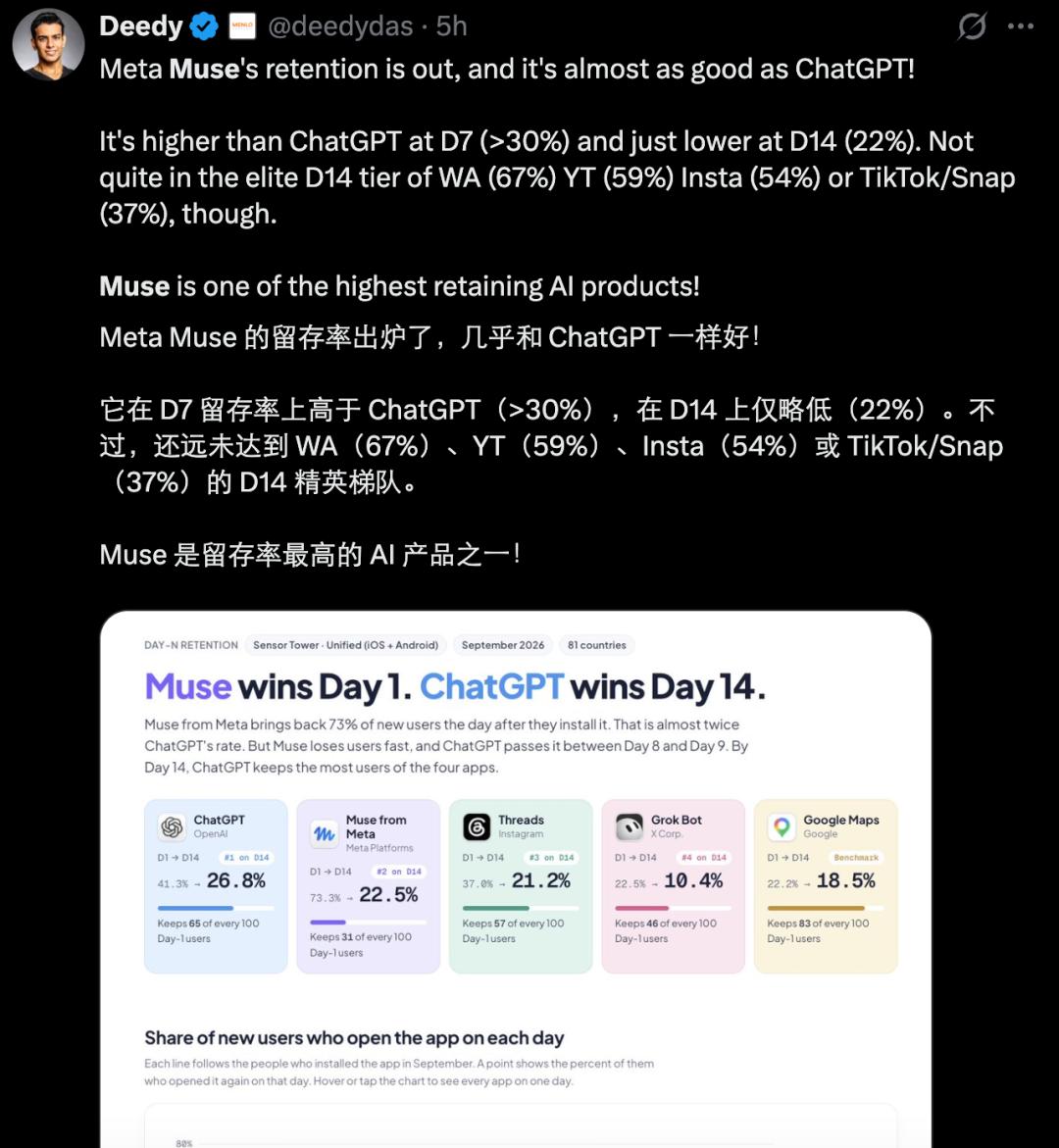
The mastermind behind this turnaround, Alexandr Wang, head of Meta's Superintelligence Lab, has gained even more public attention than the product itself recently. After Muse launched, he entered a somewhat "uninhibited" state on X: posting meme images at a high frequency, and personally participating in meme trends.
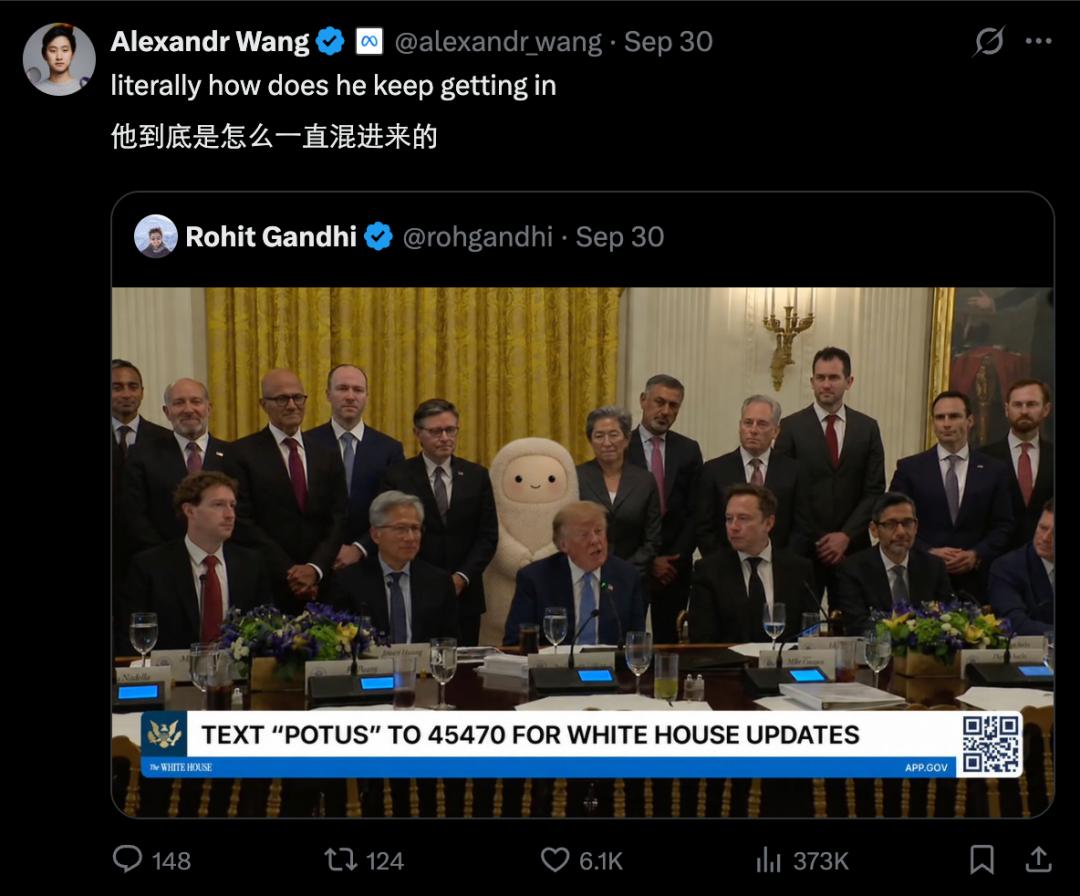
Just recently, Wang accepted an in-depth long interview, fully reviewing the entire birth process of Muse for the first time. The interview is highly informative, and many of his statements are quite counterintuitive:
At the start of the year, when the whole industry was crowding into the coding agent track and everyone was convinced that "this is the only thing that matters", why did Meta turn around and focus on personal scenarios?
OpenClaw became a viral hit at the start of the year but quickly faded, with most users churning out after experiencing it. Why did Wang believe that it hides "the ultimate consumer product", and what makes him think Muse can be the exception?
Regarding the widely discussed "sky-high poaching" rumors, he said that for many top researchers, the compensation is actually "not much higher" — so what is the real bait?
For a product deemed by the entire company as "the most important product this year", why was the team deliberately kept under 200 people?
With the distribution network covering 3.5 billion users already in hand, why did Wang personally post memes to drive the cold start?
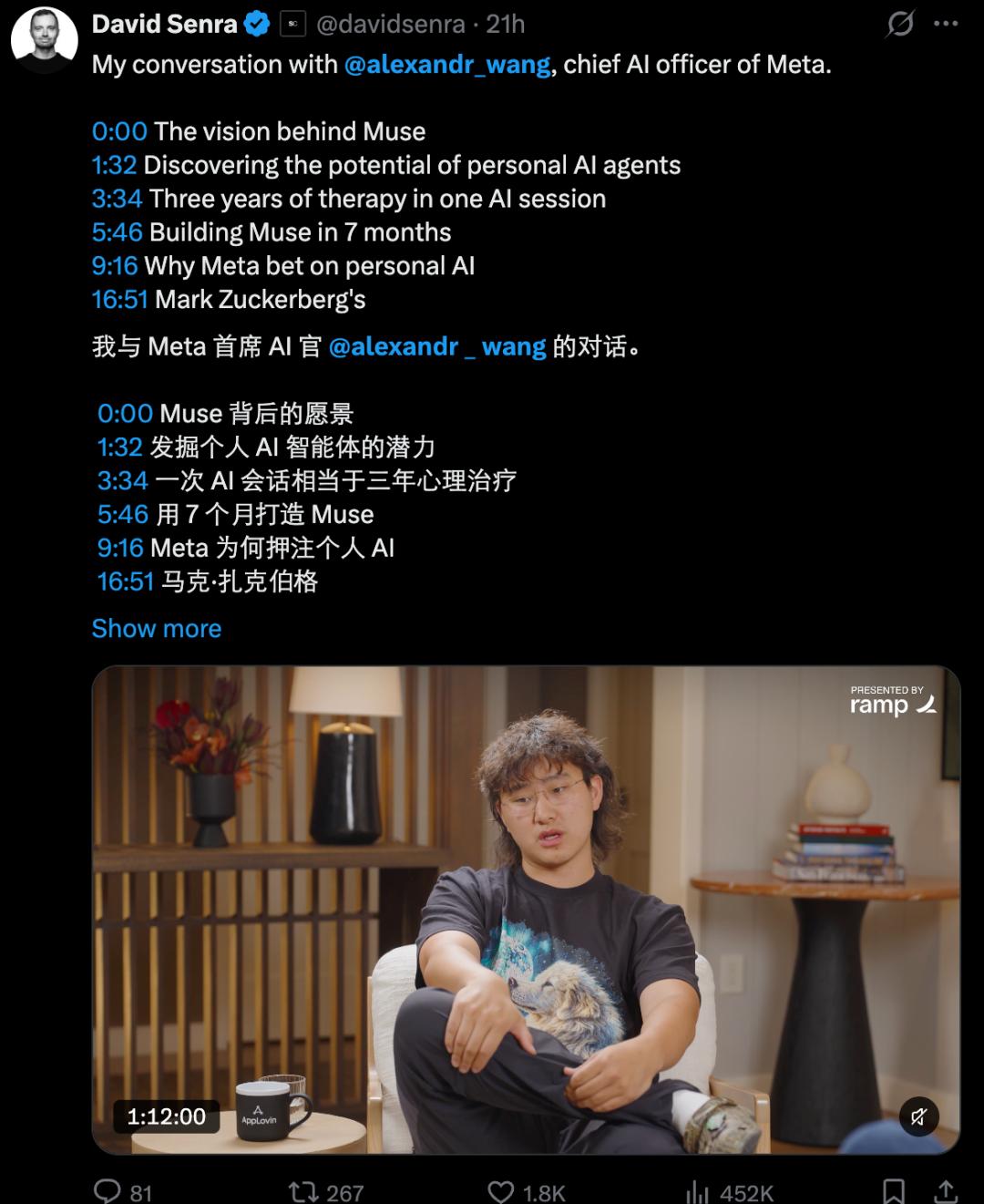
Video link: https://www.youtube.com/watch?v=S6l3aRsecuE
The following is part of the content we sorted out:
When Everyone Rushed to Coding Agents, They Spotted Another Signal
Back to the start of this year. In Wang's words, that was "the beginning of Anthropic taking over the industry": Opus 4.5 and Claude took a huge lead in programming, and the entire industry reached a consensus that coding agent is the only important form, even the only important capability.
At this very node, Nat Friedman from MSL became the first person inside the team to use OpenClaw in depth. Wang described his experience as "between fear and ecstasy": he told his OpenClaw that he wanted to drink more water, and the agent then monitored him drinking water through the home surveillance camera, and praised him for "doing a great job" after he finished drinking.
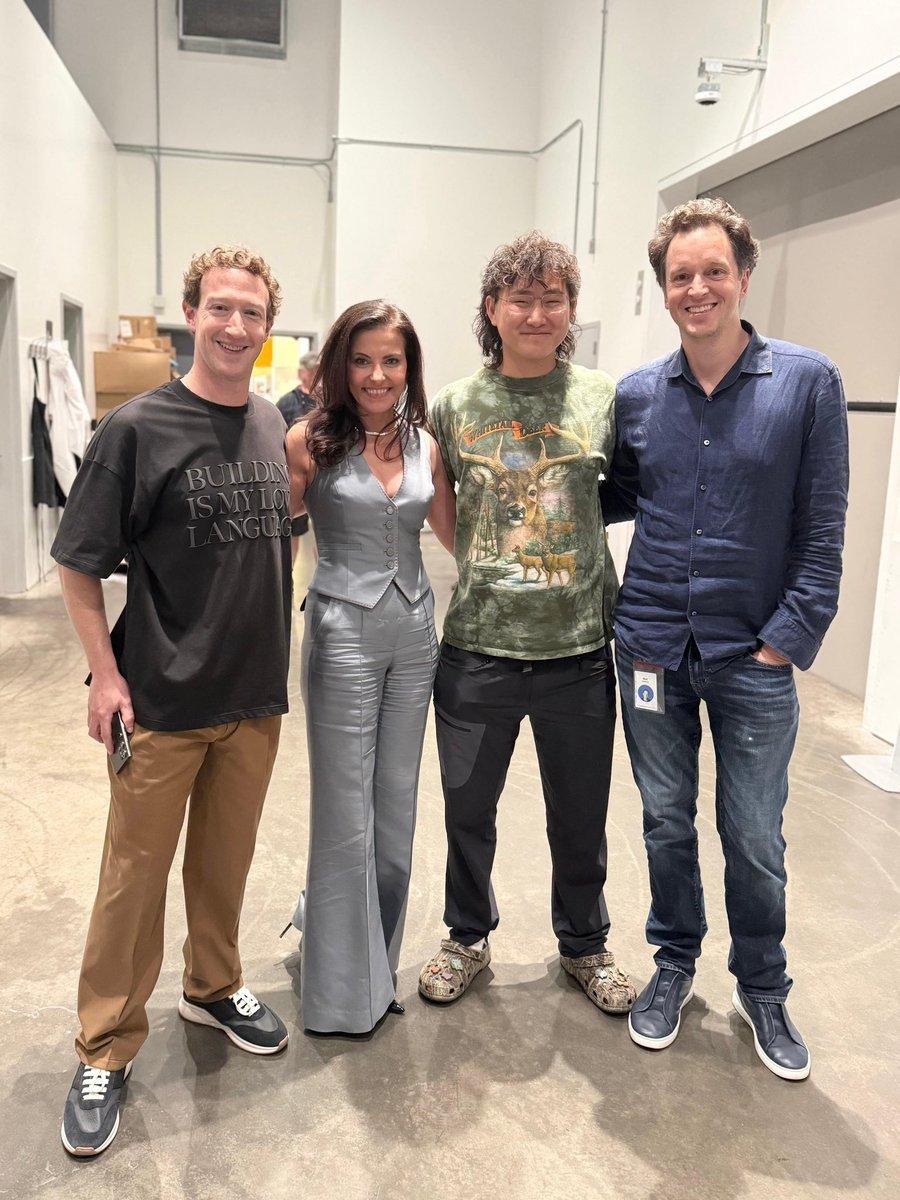
The person on the far right is Nat Friedman, former CEO of GitHub, one of the key figures behind Muse.
Wang himself quickly got hooked as well. The first thing he did was run a "psychological analysis" prompt written by Nat — since the agent could access his emails, photos, and even browse the internet for information on its own, after several rounds of in-depth questioning, in his own words, "it was like compressing three years of psychotherapy into a single moment".
The key point lies in the "weather vane" attribute of Nat Friedman: he was one of the earliest customers of Stripe, one of the creators of GitHub Copilot, and has long stood at the forefront of the developer wave. So when he said "there is really something here", Wang took it as a clear signal.
In February this year, the two each wrote a memo and submitted it to the Meta board of directors. The core point in Wang's memo was quite bold: the personal super agent is very likely to be the "end form" of consumer products. One or two weeks later, the prototype was completed, and was directly demoed to the board of directors. Moreover, many core decisions in the final version of Muse already existed in that prototype rushed out within a week.
The inspiration here is: where consensus is the most crowded, signals are most likely to be submerged. When everyone is staring at the coding leaderboard, the real opportunity hides in the very moment when "ordinary people hand over their lives to AI for the first time".
OpenClaw Blown Up Then Faded, Why Does Muse Think It Can Be the Exception?
This is the sharpest question in the interview: the OpenClaw phenomenon came fast and went fast, most users churned after experiencing a few "magic moments", what makes you different?
Wang's answer did not evade the point: OpenClaw is a masterpiece, and they have great respect for Peter Steinberger. But Muse's success relies on polishing every single detail of the model and product to the extreme.
To what extreme exactly? They created a spreadsheet with hundreds of lines, listing more than 100 specific behaviors and capabilities that an ideal personal agent must have, then built evaluations and conducted training for each of them, and held regular meetings to go through the sheet: if several lines are still marked red, they keep working on them. The release standards are also digital, with a "launch blocking" threshold set for each line. There were several checkpoints where "80 lines were green and 20 lines were red", and they knew it was not enough. It was not until the MuseSpark 1.3 version specially trained for Muse turned all green for the first time, and the team's hands-on experience showed it was "obviously better than all previous iterations", that the product was approved for launch.
Behind this is essentially the judgment on the essence of this category: personal agent is a "category that lives on the edge of a knife". If it can stably deliver magical experiences, it will become one of the greatest consumer products in history. But models are non-deterministic, agents can make mistakes and crash, once users continuously encounter unreliable experiences, they will directly judge the product as garbage. This is the exact cause of the collective churn of those agent products launched at the start of the year.
Therefore, the gap between OpenClaw and Muse has never been "whether there are magic moments or not", but the yield rate of magic moments. Inspiration ignites the spark, while engineering sustains the vitality.
Why Choose Personal Scenario? An Arithmetic Problem About "Things You Want to Do"
Avoiding the coding track and choosing personal scenario is not just a product judgment, but also Wang's strategic judgment on Meta as a company.
His logical chain is very clear: the promise of AI is to let everyone hardly spend time on "things they have to do", and leave all the time to "things they want to do". And Meta's product matrix — Instagram, WhatsApp, Facebook — is exactly the collection of people's "things they want to do": interests, hobbies, friends, and people they care about.
In other words, if AGI really arrives, where will the time freed from "things people have to do" flow to? It will flow into Meta's territory. Adding the commercial perspective: Meta's apps reach 3.5 billion people every day, its natural home field is consumer-grade AI, not work, not programming.
This judgment reminds all AI product practitioners: instead of fighting to the death in others' home field, you should first think clearly about which battlefield belongs to you determined by your own genes and distribution advantages. The legacy of tech giants is not a burden, but a map.
The Most Important Product of the Entire Company Only Has a Team of Less Than 200 People
From the prototype in February to the launch in September, Muse was polished for seven months. Wang himself complained: "Seven months does not sound long, but seven months in the AI industry is equivalent to ten years in the outside world." During this period, the mainstream narrative on Wall Street was that "Meta is burning money" and "Zuckerberg can't win the AI race", and the internal atmosphere of the company was also full of doubts.
Zuckerberg's role was to hold back: he never hid the fact that they were developing personal agents on earnings calls, and withstood all the doubts, waiting for the team to polish the product out.
But what is even more unexpected is the organizational mode: the model team plus the product team has less than 200 people in total. And this is deliberate restraint — everyone in the whole company knows that this is probably the most important product of Meta this year, but precisely because it is important, we cannot let it expand into a project where "most of the company is pouring in demands".
Wang used a very sharp term: Muse must be "a single work of art". He sarcastically pointed out the common problem of large company products — Frankenstein-style patchwork, or in his own words, "some kind of Cronenbergian hybrid" (the flesh fusion of living and non-living things, the distorted body with dissolved boundaries): every PM wants to add their own features to the product, and finally stir it into a milkshake. Users can taste that. You will know immediately when you start using a product that it is developed by a group of people with different goals each adding their own features.
The day the interview was recorded happened to be the 15th anniversary of Steve Jobs' passing, and the host added a comment: "Apple is Steve Jobs with ten thousand lives." And the "single perspective" of Muse, according to Wang, largely comes from Nat Friedman's taste.
The most common mistake big companies make when doing innovation is to kill the integrity of the work with the sincerity of scale. For important things, you should send a small team to do it.
The Truth About Sky-high Poaching: Money Is Only the Admission Ticket
Before, the news that Meta poached AI researchers with sky-high compensation went viral, and the public's first reaction was basically "they are rich and foolish". Wang gave a very counterintuitive interpretation in the interview.
First of all, about the money. He thinks the public ignored a background: the valuations of OpenAI and Anthropic have risen so sharply that if these top researchers stay in their original companies, the equity in their hands would already be an astronomical figure. So the "sky-high price" offered by Meta is actually just a "net neutral" compensation for many of them, it is the market price, not a foolish premium.
So what really moves these talents? Wang listed three points: first, the opportunity to build a lab from scratch, the team is small enough, so individuals can really leave their own mark; second, a clear North Star — personal super intelligence. In his own words, almost everyone working in AI hopes that this technology will eventually be meaningful to their mothers and grandparents; third, no restrictions — sufficient computing power, sufficient infrastructure, sufficient distribution resources, which are exactly what startups lack the most.
As for why Zuckerberg is willing to spend seemingly ridiculous money on a small group of people, the host summarized the logic for him: top talents will attract more top talents in turn, but you have to have that "spark" first. Wang agreed with this point.
How to make good use of these talents after poaching them is the key point. The organizational design of MSL almost breaks all the common sense of large companies:
More than 200 direct reports. Wang directly manages more than 200 people under him, which is called "anti-bureaucracy". All the recruited people have proved that they can deliver brilliant work, so "they don't need managers, they need a good environment", and "room to cook". The technical direction is arbitrated by the technical lead in each pod, and major issues are opened for group debate. Since everyone in the room is a top talent, the conclusion must be something that everyone really believes in.
A coach, not the protagonist. Wang compared his two different roles: at Scale, he was the founder who "must reflect his own will in every detail", and as a result he himself became the bottleneck; at MSL, his job is to set the North Star, identify the special talents in the team, and then provide sufficient environment and resources to maximize the expression of their gifts.
Conduct research in the way of "diamond mining". He divided business operations into two paradigms: one is "skyscraper building", the return is linear, the goal is to squeeze 1% or 2% more efficiency from every link — data labeling belongs to this type; the other is "diamond mining", which follows the power-law distribution, most attempts will fail, but a few successes "can pay back all the investment at once". AI research is obviously the latter, because humans do not even know where the capability boundary of these models is, so it is not operational engineering, it is real research, and we must tolerate trial and error.
The host quoted a sentence from Bezos: There is no lack of top talents in large companies, but if these talents cannot build things with their own hands, they will leave. Wang fully agrees with this point, which is also the starting point for all designs of MSL.
3.5 Billion Users' Distribution Is Not Enough, So We Have to Post Memes Personally
Muse's cold start is probably the most interesting marketing case this year.
Wang admitted frankly that Meta's distribution capability can ensure "everyone knows Muse", but cannot ensure that it "explodes in a culturally penetrating way". Nowadays users are bombarded with new models, new products and new features every day, and attention is the scarcest resource.
That's why Wang had that "uninhibited" period on X. Several things are very interesting.
Muse has a small mascot called Jolly. One day on his way to work, Wang generated an image of Jolly carrying a briefcase, with the caption "Me on Monday morning at work". After posting it, he realized: this little thing can be put into countless scenarios. He can't remember anyone who ever used racy memes to market an AI product before.
For a period of time, he couldn't even concentrate on meetings, because a meme idea would pop up in his mind suddenly, and he "had to post it right away". Once he was having dinner with colleagues, halfway through the meal he said "wait a second, I got an idea", and posted the tweet on the spot. His experience is: the internet rewards adventure, rewards unexpected ideas. And many posts he "posted without even thinking" performed the best. The time spent on thinking is often inversely proportional to the possibility of going viral.
He said he couldn't understand the ads of Anthropic and OpenAI: just an icon with two people sitting in front of the desk, "what the hell does that mean?" (original quote). You have millions of real use cases in hand, the only thing ads need to do is to show what the product can bring to users — it's that simple, but