What trump cards do the eight major computing power centers in China hold?
The emergence of large AI models has completely transformed the entire digital world, and the competition for computing power has long gone far beyond the competition for chips alone.
Chips determine what tasks a single computing device can complete, software determines whether these devices can work efficiently, networks determine whether a large number of devices can collaborate, while power supply, heat dissipation, site and operation and maintenance determine whether the entire system can run stably.
A data center can host a large number of servers, but only when these servers can stably undertake training, inference or other computing tasks can they truly form deliverable computing power services. The value of computing power infrastructure is ultimately reflected through computing tasks, model capabilities and industrial applications.
If you spread out the map of China's AI computing power, you may find a very interesting phenomenon: places that are truly close to AI demand do not necessarily have the most sufficient and cost-effective energy, while places with rich energy resources do not necessarily gather enough AI enterprises.
Obviously, AI computing power requires a national-level layout.
In 2022, China officially launched the construction of national computing power hub nodes, finalized the construction of eight national computing power hubs covering Beijing-Tianjin-Hebei, Yangtze River Delta, Guangdong-Hong Kong-Macao Greater Bay Area, Chengdu-Chongqing, Inner Mongolia, Guizhou, Gansu and Ningxia, and planned to build ten national data center clusters. According to Tianyancha, there are about 168,000 existing data center-related enterprises in China, and about 21,000 new related enterprises have been registered since 2026.
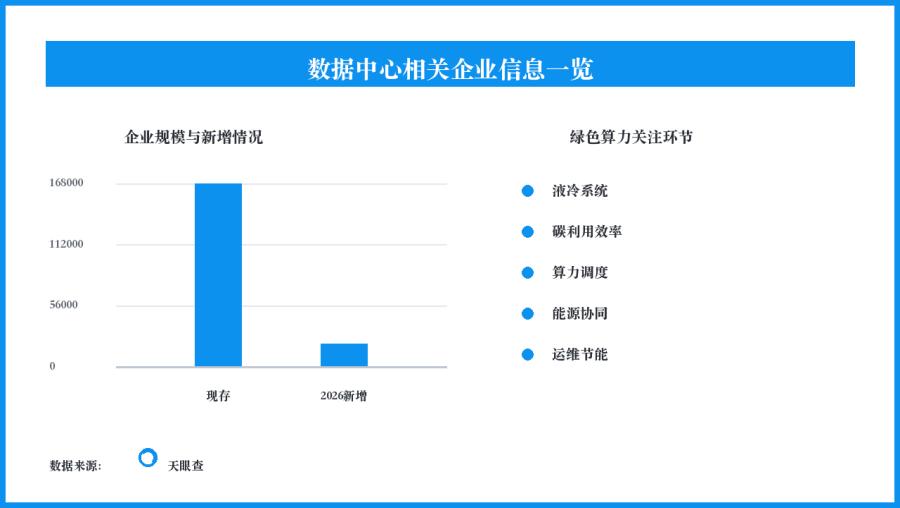
The eight major "computing power centers" have their own advantages: some regions are closer to technological innovation and application demands, some are more suitable for carrying large-scale computing, and others can rely on existing industrial accumulation to develop cloud services and intelligent computing power. At the same time, the eight hubs do not mean that each hub only undertakes one type of task. The business layouts in different regions may overlap, and the actual capabilities will continue to change with project construction, equipment deployment and customer demands. Only by understanding this can we fully grasp the situation of the eight major computing power hubs that follow.
1. Beijing-Tianjin-Hebei: With AI innovation demands and scientific research resources in hand
If energy is the foundation of computing power operation, then talents, R&D and customers are important conditions for computing power to create higher value. The unique advantage of Beijing-Tianjin-Hebei lies in its regional foundation that connects these resources.
The ace of Beijing-Tianjin-Hebei is the connection between computing power and the source of innovation.
Universities, scientific research institutions, technology enterprises, cloud computing service providers and large industrial customers jointly form the industrial foundation of this region. Large model R&D requires computing resources, scientific research experiments require high-performance computing, and enterprise AI deployment requires stable cloud services, all of which are closely linked to technical talents and R&D institutions.
The layout of the Beijing-Tianjin-Hebei National Computing Power Hub aims to combine the market, technology and talent advantages of Beijing with the data center carrying capacity of surrounding regions. Among them, Zhangjiakou is an important entry point to understand the computing power layout of Beijing-Tianjin-Hebei.
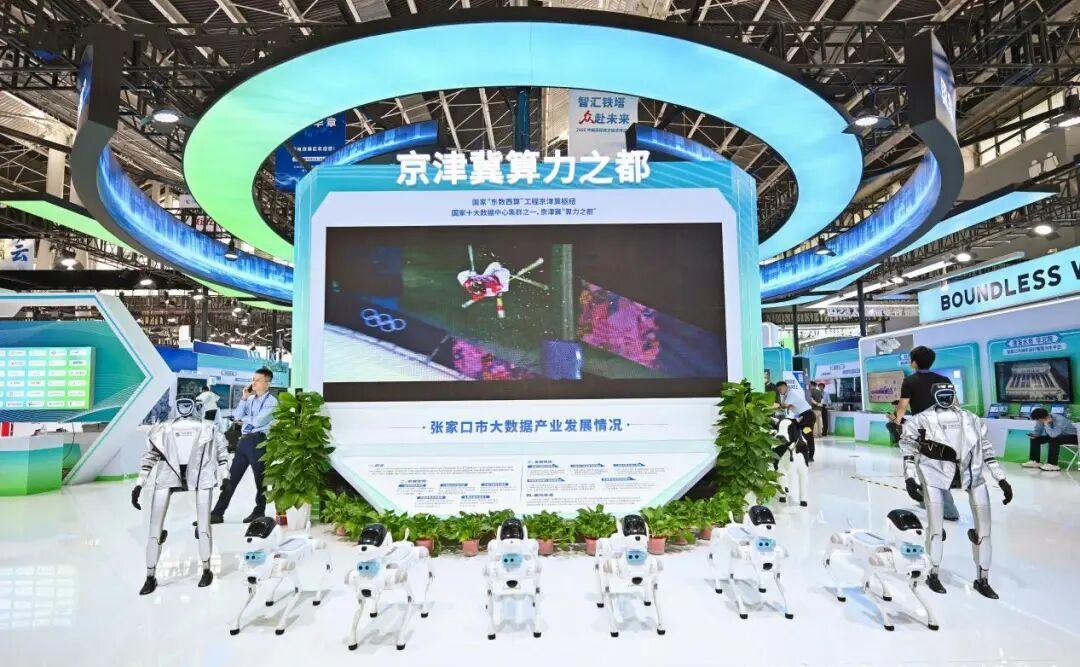
For computing power centers, site selection is not simply finding a piece of land. Power supply conditions, climate, network connectivity, supporting infrastructure, and the distance to customers all have important impacts on project construction and operation.
Zhangjiakou can provide carrying space for large-scale data centers under the framework of Beijing-Tianjin-Hebei regional coordination, and connect computing demands in Beijing and other regions through networks. Computing power centers do not necessarily place all servers in the urban area of Beijing. Instead, they allow computing resources suitable for centralized deployment to operate in surrounding regions, and then provide support for scientific research, enterprises and cloud services through networks.
From an industrial perspective, the highlight of Beijing-Tianjin-Hebei is not only the data centers themselves. The connection between computing power facilities, scientific research institutions, cloud platforms and artificial intelligence enterprises determines whether it can better serve model R&D, scientific computing, government and enterprise digitalization and other high-value applications.
Of course, we cannot count all AI demands in Beijing as the actual business of Zhangjiakou, nor can we judge the customer structure of a certain data center only by the geographical proximity. What deserves more attention is what kind of business connections specific projects have established with scientific research institutions, cloud service providers and enterprise customers.
2. Yangtze River Delta: Computing power resonates with industrial clusters
If the story of Beijing-Tianjin-Hebei starts from scientific research and innovation demands, the Yangtze River Delta is more suitable to be interpreted from the perspective of the industrial chain. Because the distance between computing power centers and manufacturing industries is not only the distance on the map, but also the distance that determines whether technical solutions can enter the production process.
The ace of the Yangtze River Delta is that the industrial chain itself is the application field of computing power.
Shanghai has resources in finance, technology, R&D and enterprise services, while Jiangsu, Zhejiang and other regions have a dense foundation of manufacturing, electronic information industry and private economy. Anhui is also continuing to develop in fields such as new energy vehicles, integrated circuits and advanced manufacturing.
The computing power demand in the Yangtze River Delta does not only come from Internet companies.
Manufacturing enterprises may need to use AI to analyze production line data, automobile enterprises may need to train and verify autonomous driving models, scientific research institutions may need to run complex simulations, and financial institutions need more computing resources to support risk management, data analysis and intelligent services.
The computing power demands of these scenarios are not exactly the same: some require large-scale offline computing, some require low latency, and some pay more attention to data security, system stability and integration capability with existing enterprise software.
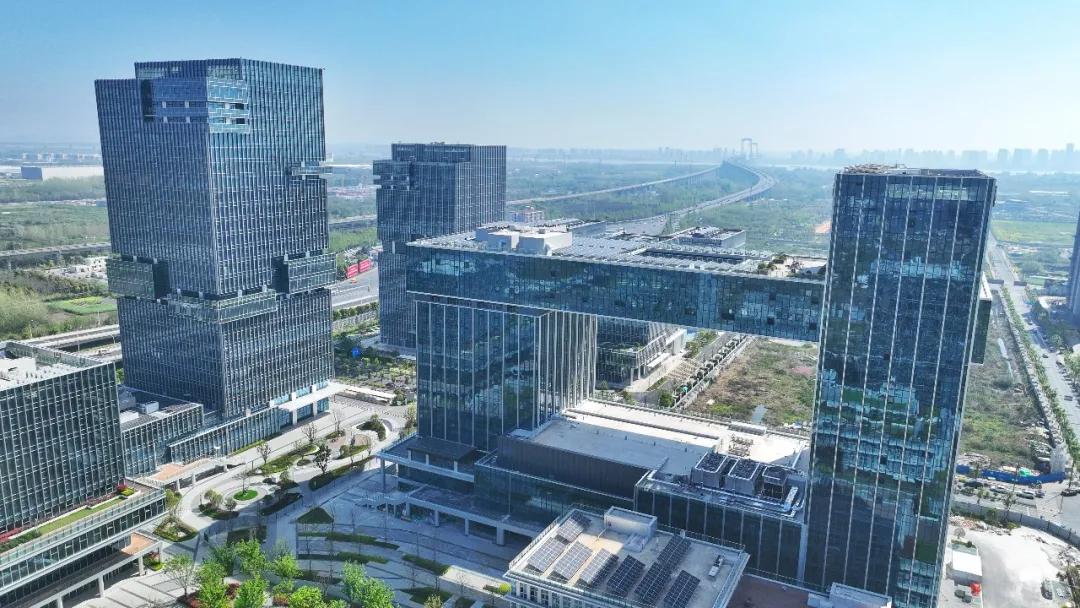
(Wuhu Intelligent Computing Economic Industrial Park)
In the Yangtze River Delta, the state has laid out two national data center clusters: the Yangtze River Delta Ecological and Green Integrated Development Demonstration Zone and Wuhu.
Among them, the value of Wuhu cannot be simply understood as "Shanghai has insufficient computing power, so servers are moved to Anhui". A more accurate understanding is that the Yangtze River Delta needs to coordinate computing resources, industrial demands and infrastructure conditions within the regional scope.
Shanghai and surrounding cities have a large number of enterprise customers and R&D demands, while the construction of large-scale data centers also requires comprehensive consideration of land, power supply and long-term operation conditions. Through regional coordination, different cities can form a division of labor in industrial services, computing power carrying and infrastructure construction.
Therefore, what is really worth paying attention to in the Yangtze River Delta is not just how many racks have been built, but whether computing power resources can go deep into the manufacturing, scientific research and enterprise service systems.
3. Guangdong-Hong Kong-Macao Greater Bay Area: AI moves from models to products
Among the major domestic technology industrial clusters, the Guangdong-Hong Kong-Macao Greater Bay Area has distinct hardware and application characteristics, so its ace is the industrial foundation for transforming computing power into products and applications.
For an AI function to finally become a product, it often needs to go through multiple links such as model R&D, software development, hardware integration, test and verification, manufacturing and market sales.
Shenzhen has a large number of electronic information, intelligent terminal and technology enterprises, Dongguan is an important manufacturing base, and Guangzhou has resources in automobiles, scientific research and industrial services. Industries such as robots, intelligent vehicles, consumer electronics and industrial equipment also provide rich application scenarios for AI technology.
Different from observing AI purely from the perspective of model training, one of the advantages of the Greater Bay Area is that it can integrate algorithms, chips, sensors, terminal devices and manufacturing capabilities into the same industrial map for understanding.
The industrial chain density of the Greater Bay Area provides a foundation for the coordination between these links.
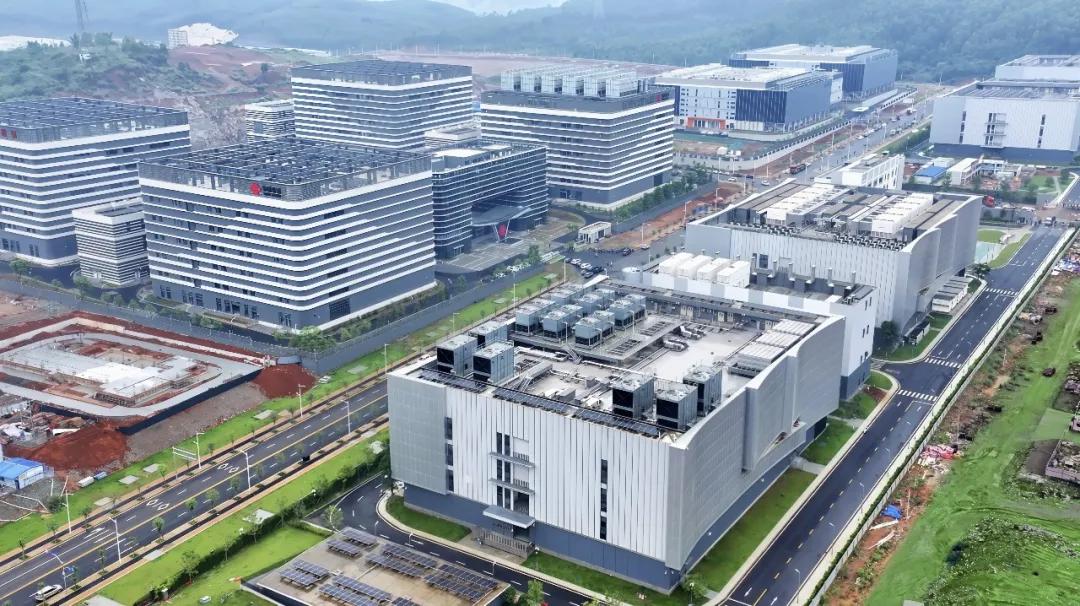
(Shaoguan Intelligent Computing Center Project of the three major telecom operators)
Among them, Shaoguan is an important carrying area for the national computing power hub of Guangdong-Hong Kong-Macao Greater Bay Area, and it is also one of the ten data center clusters planned by the state.
This also reflects the division of labor between different cities in the region: the core cities of the Greater Bay Area have rich technology enterprises and application demands, while Shaoguan undertakes the role of building large-scale data center clusters.
From the perspective of business logic, the computing power demand in the Greater Bay Area can come from multiple directions. For different tasks, the requirements for computing locations are also different. Large-scale model training and some cloud-side reasoning suitable for centralized deployment can be coordinated within the region. For latency-sensitive industrial control and terminal response, more attention needs to be paid to network and edge computing capabilities.
Therefore, the value of the Shaoguan cluster needs to be judged in combination with the actual construction progress, network connection and customer business, and the industrial scale of core cities such as Shenzhen cannot be used to replace the operation data of the cluster itself.
In general, one direction worth observing in the Greater Bay Area in the future is the coordination between cloud computing power and terminal intelligence. Here, the story of computing power can extend from data centers to robots, automobiles, intelligent terminals and factories. Its value lies not only in the calculation itself, but also in that the calculation results can enter the real market through the industrial chain.
4. Chengdu-Chongqing: Bring computing power into the western industrial hinterland
Chengdu and Chongqing are two important cities in the industrial map of western China. The ace of Chengdu-Chongqing is the combination of regional industries and computing power networks.
When computing power can connect Chengdu, Chongqing and the wider western region, its value comes not only from a single data center, but also from the more efficient matching between computing resources and industrial demands.
Chengdu has the industrial foundation of electronic information, software, scientific research and digital industry, while Chongqing has strong industrial characteristics in fields such as automobiles, electronic information and equipment manufacturing.
When approving the construction of the Chengdu-Chongqing National Computing Power Hub, the state proposed to give full play to the advantages of local markets, technologies, talents and funds, develop high-density, high-energy-efficiency and low-carbon data center clusters, and strengthen the construction of interconnected networks between the eastern and western regions and direct connection networks between hub nodes.
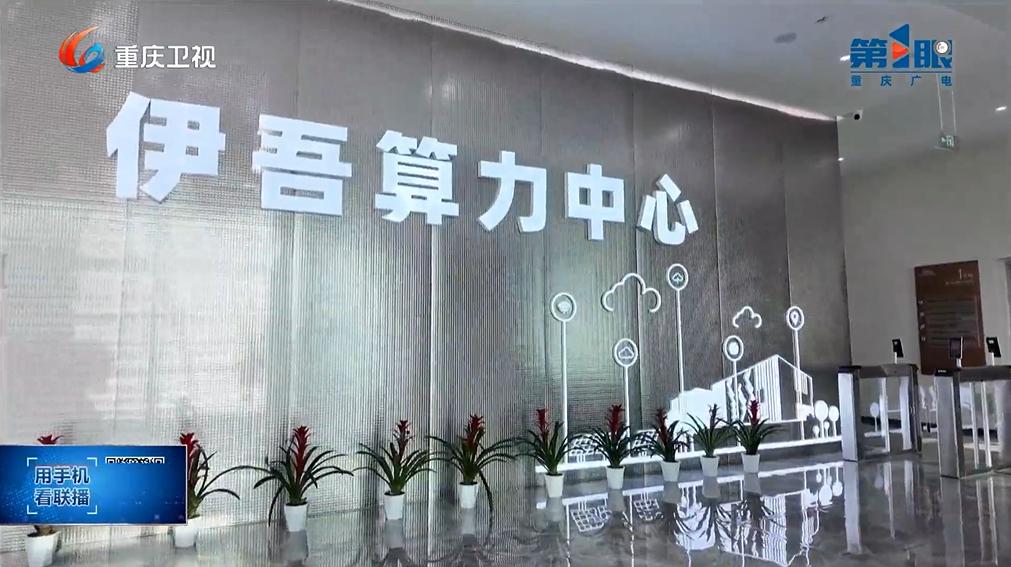
This means that the role of Chengdu-Chongqing is not simply to replicate the eastern computing power centers, but to develop computing power infrastructure in combination with regional industrial characteristics, and serve the industrial and digital economic demands of the western region.
In August this year, Chongqing was selected into the list of national computing power interconnection regional node construction. Such nodes aim to promote standardized interconnection and efficient flow of computing resources in different regions, different entities and different architectures.
In the past, computing power services were often closely associated with specific cloud platforms, specific data centers or specific equipment systems. When choosing services, customers need to consider equipment architecture, software compatibility, data transmission and deployment methods. With the advancement of computing power network construction, cross-entity resource discovery, supply-demand matching and standardized access are expected to become new development directions.
For regional hubs like Chengdu-Chongqing, network connection capability will become an important part of infrastructure competitiveness.
Moreover, Chengdu-Chongqing also has application spaces related to automobiles, electronic information and equipment manufacturing. These scenarios make the computing power layout of Chengdu-Chongqing not only a nationwide-oriented infrastructure, but also connected with regional industrial development.
5. Inner Mongolia: AI meets green power, energy becomes competitiveness
The stories of the eastern computing power hubs are more focused on industries, talents and application demands, while Inner Mongolia provides another perspective for observation.
In the AI era, energy is not only a supporting condition for infrastructure, but also may become an important competitive advantage for the regional computing power industry. The ace of Inner Mongolia is exactly the synergy potential of energy resources and large-scale computing power infrastructure.
In the past, when people chose the location of a data center, they usually considered the network, land, customer distance and operation and maintenance conditions.
However, with the increase of computing density of AI accelerators, the importance of power supply, heat dissipation, power distribution facilities and energy scheduling has also risen, and the site selection logic of data centers has changed.
Today, energy resources and their comprehensive costs are getting more and more attention, especially for large-scale computing tasks that can be deployed centrally. Energy supply and infrastructure conditions may affect the economy of long-term operation.
Inner Mongolia is rich in wind energy and solar energy resources, and also has the space conditions to develop large-scale data center clusters. Regions such as Helingeer and Ulanqab have become important windows to observe the development of Inner Mongolia's computing power industry.
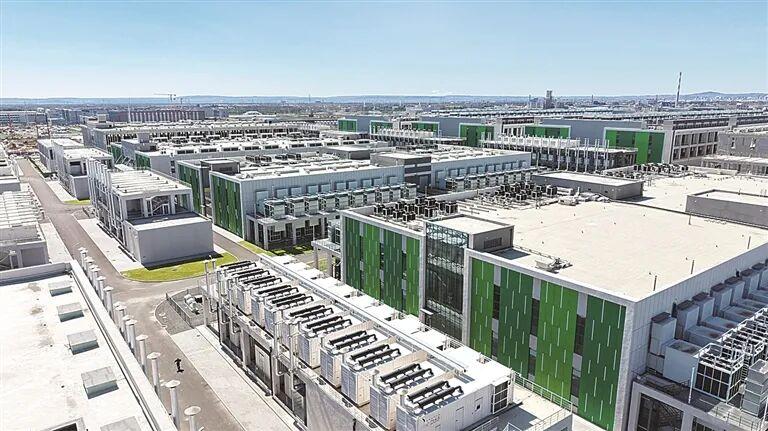
(China Data Ulanqab Zero-Carbon Computing Power Industrial Park)
The core proposition here is how to combine energy advantages with computing demands. The advantages of Helingeer and Ulanqab are not only the vast land, but also the so-called "computing-power synergy".
What we are talking about here is not simply building a wind farm or photovoltaic power station next to the data center, but coordinating power sources, power grids, energy storage, power loads and computing tasks.
Wind power and photovoltaic have certain volatility. To make new energy better serve computing power facilities, it is necessary to combine power grid guarantee, energy storage capacity, power consumption plan and data center load management to establish a power supply system suitable for actual operation conditions.
Inner Mongolia is suitable for developing large-scale data center clusters. Large clusters can form certain scale effects in power supply, cooling, network and operation and maintenance, and are also conducive to developing supporting services around computing power facilities. Therefore, to analyze the computing power advantages of Inner Mongolia, we need to pay attention to combining resource endowments with the operation conditions of specific projects.
Under the background of continuous expansion of AI computing demand, whoever can stably and economically convert energy into available computing power may gain an important competitive advantage in the field of large-scale computing infrastructure.