It is extremely satisfying! This quirky company deploys AI to impersonate elderly people and voluntarily walk into scam traps, completely leaving the scammers utterly flustered and at a loss what to do.
2.5 million conversations have chewed up 17 years of scammers' "youth" against their will.
Australian startup Apate.ai has recently made a name for itself in a somewhat "unscrupulous" business — deploying a fleet of AI agents to pose as victims and chat with scammers on purpose.
It may be a little underhanded, but it is satisfyingly so.
It answers scam calls and responds to suspicious messages. While scammers are busy explaining how to transfer money, it is busy collecting their receiving accounts. Scammers think they have finally met a patient potential victim, but after chatting for a long time, their own bank accounts, crypto wallets and fake websites may be sent to the anti-fraud system first.
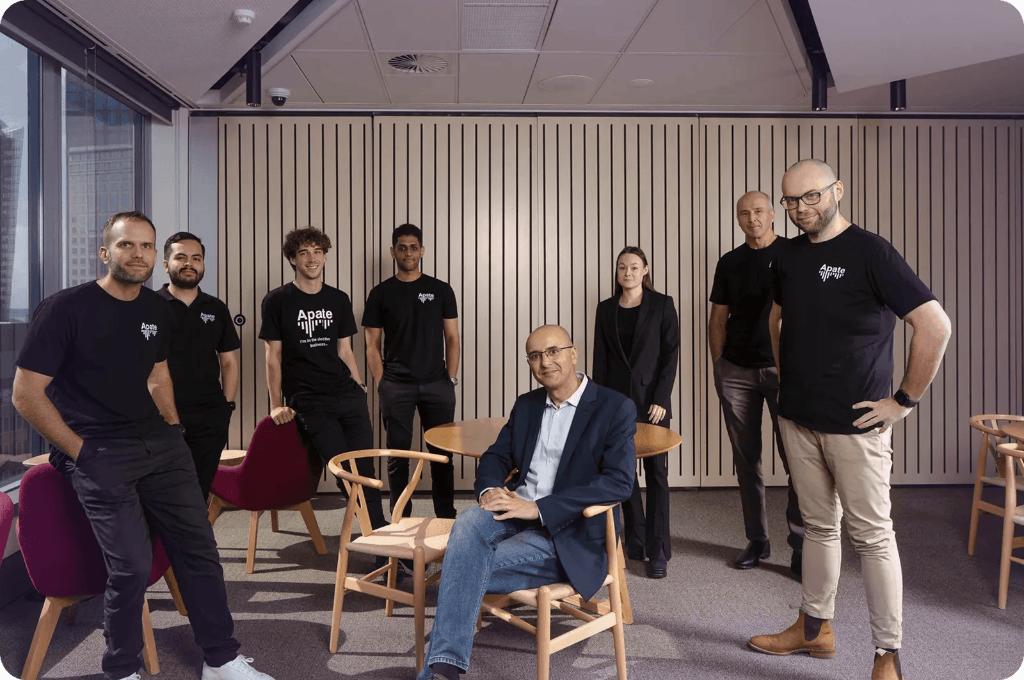
Image source: Apate
This "fight fraud with fraud" business has already secured $8.15 million in seed round financing. Commonwealth Bank of Australia and TPG Telecom have partnered with it, and telecom analytics provider Mobileum is preparing to bring this capability to operators in more countries.
According to data disclosed by the company to TechCrunch, its AI agents have completed approximately 2.5 million conversations, cumulatively consuming the equivalent of 17 years of scammers' time.
Netizens are thrilled to see this, and banks do have good reasons to be interested. However, the reason why banks are willing to pay for it lies in those seemingly endless casual chats.
Keep the scammers' little game going
Scammers usually need a lot of patience.
To convince a stranger of their fake identity, guide them to operate on the computer, open a website and finally transfer money, there is no lack of explanation, urging and repeated confirmation in the whole process.
Apate is making a fuss in this very process.
According to a 2024 report by The Guardian, an elderly bot named Malcolm with a British accent asked the scammer in reply: "What kind of business are you talking about?"
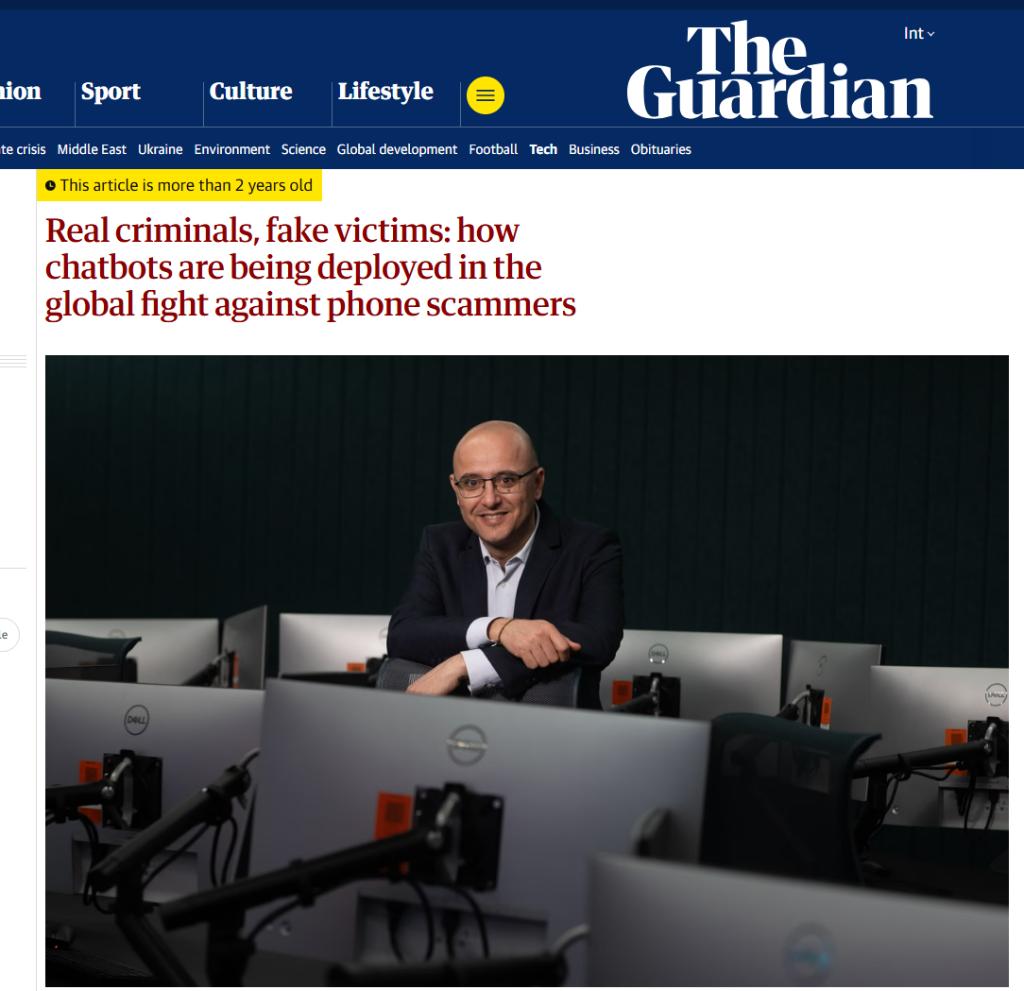
Such questions are perfect for getting scammers to keep talking. After all, failing to understand does not mean the scam cannot succeed. As long as the call is not hung up and the other party is still willing to listen, scammers have reason to be a little more patient and explain again. It is not easy to find a "prospective customer" who is willing to cooperate, so they will never give up easily.
Apate's bots are designed to keep this false hope alive.
These virtual characters have different ages, genders, tones and cultural backgrounds, and they also use Australian slang and humor. They communicate with scammers through voice and text, trying their best to make the other party believe that they are talking to a real human being.
As the conversation proceeds, scammers will sooner or later reveal specific information. If they ask for a money transfer, they have to provide the receiving destination; if they ask the victim to log in to a website, they have to send a link; if they pose as bank or government staff, they will expose the fake identity and tactics they are using.
The company has two channels to reach scammers: operators directly forward identified high-risk incoming calls, or set up dedicated "honeypot" numbers in the communication network for scammers to call and send messages to voluntarily. As the conversation goes on, scammers will inevitably provide receiving accounts, wallet addresses or malicious URLs to facilitate transfers or login operations.
Apate extracts this information from conversations and delivers it to institutional customers through its products Apate Voice, Apate Text and Apate Insights.
The TPG cooperation case released by GSMA shows that during the pilot period, more than 280,000 scam calls were forwarded in total, cumulatively consuming over 100 days of scammers' time, with the longest single conversation lasting 54 minutes, and the reported detection accuracy of scam traffic reached 98%.
Scammers think they are getting closer and closer to the victim's wallet, while the bots are gradually piecing together the full picture of the scam operation.

AI vs. Scams targeting Amazon account security and debit cards
Scammers contribute materials, banks purchase intelligence
This business has a very special arrangement: the people who interact with the products usually do not pay; the real paying customers care about what is left after the interaction.
According to statements from investor Investible, Apate provides scam intelligence to financial institutions, telecom companies and government departments through its software platform and real-time alerts, and has established commercial partnerships with institutions such as Commonwealth Bank and TPG Telecom. Ordinary users do not need to download an app to "annoy scammers", and Apate does not have a mobile app at all, its technology is mainly integrated into institutional systems and communication networks.
The core logic why banks are willing to make the purchase lies in the time difference. It is often very passive to trace the funds after the victim has completed the transfer. If the bot has obtained the relevant account or URL in the previous conversation, banks will have an extra chance to verify and intervene in advance.
Commonwealth Bank confirmed that the intelligence obtained by Apate will be used in its anti-fraud control system in near real time, helping to identify new trends, strengthen detection, and support cross-institutional collaboration.
Regulatory pressure also affects institutions' willingness to purchase. The UK has implemented a mandatory reimbursement scheme for eligible authorized push payment scams since October 2024, and most obligations under Australia's anti-fraud framework will take effect on March 31, 2027, covering banks, telecom companies and digital platforms. Whoever bears the scam losses will have more reasons to invest in prevention.
Commonwealth Bank's total investment in preventing fraud, scams, financial crime and cyber threats in the 2025 fiscal year exceeded 900 million Australian dollars. The bank also disclosed that customer scam losses in the second half of FY2025 fell by 76% compared to the peak in the first half of FY2023 — but the bank implemented multiple protective measures in the same period, so this decline cannot be solely attributed to Apate.
A father's 44-minute call that eventually turned into a product
The origin of Apate traces back to a family picnic interrupted by a phone call.
According to the account of founder and CEO Dali Kaafar, a few years ago, he was with his family when he received a strange incoming call. The caller posed as a well-known tech company and started to commit a scam.
Kaafar decided to play along to give his kids some fun.
He deliberately stalled the scammer and kept the call going for 44 minutes. His kids had a great laugh, and he also realized that those 44 minutes at least kept the scammer busy and prevented them from scamming other people.
Then he thought of another thing: his own 44 minutes were also wasted. Teasing a scammer once can be counted as entertainment, but if you do it every day, it is hard to tell who is wasting whose time.
That's when he came up with the idea: could a large number of tireless bots do this job instead, and collect useful information during the chats?
This idea later became a research project at Macquarie University. According to the university's 2023 introduction, the team analyzed social engineering tactics in scams, used scam call transcripts, email texts and chat records from social platforms to train the bots, so that they could maintain their assigned identities and give credible responses.
The system was named Apate, after the Greek goddess of deception.
It is quite a fitting name for an anti-fraud company to take the "goddess of deception" as its brand sign, which perfectly matches the way it works.
In 2024, Apate was spun out from the university. In August the same year, the university, the company and Commonwealth Bank announced a cooperative pilot. In 2025, the company secured another A$2.5 million financing round led by OIF Ventures with participation from Investible.
The $8.15 million seed round announced this September was led by Lobby Capital. The company stated that it will continue product development, expand its international business, plan to set up an office in London and strengthen its presence in the US market.
At the same time, Mobileum integrates its own network analytics platform with Apate's conversational AI. According to reports from ARN, the related capability will be provided to communication service providers under the name of "Scam Intelligent Defense".
For a startup, this is a realistic path to expand the market: leverage the channels and systems of existing suppliers to reach more operators.
In the existing public materials, Apate has not yet disclosed its revenue, contract prices or gross profit margin. This story is already attractive enough for investors to place their bets, but its operating performance still needs more data to prove.
In the end, both sides may be using AI to "work overtime"
On X, some netizens gave this company a nickname: "Strict Father from Northern Myanmar".

Some others have realized that scammers can also use models to drive a large number of AI agents, which will eventually "evolve into a proxy war".

For Apate, the importance of its intelligence business will rise further. As long as scam operations still need receiving accounts, wallets, URLs and distribution channels, identifying these clues will remain valuable. The company needs to prove that the information it obtains is new enough, accurate enough, and can help customers take action.
Kaafar talked about the possibility that both sides are bots as early as 2023. He said that if all scam bots end up talking to anti-scam bots and real humans are protected from losses, he would like to see it as a kind of victory.
This article is from WeChat official account "Wall Street CN", author: ZHANG Yaqi, published with authorization from 36Kr.