We have taken stock of 74 educational products, what are the fastest-growing companies doing?
Recently, Feifan Industry Research released the global education product traffic ranking for September 2026 based on Similarweb statistics, covering categories including education, homework assistants, AI tutoring and language learning, with a total of 74 products included, and the total monthly visits reaching approximately 216 million.
Judging from the ranking, the global education product market presents three distinct characteristics.
First, traffic is highly concentrated. Quizlet and Duolingo firmly occupy the top two positions, together contributing over 60% of total visits, and mature learning platforms still hold a large market share.
Second, emerging AI products are growing rapidly. Among the 71 products with month-on-month data, 56 have achieved an increase in visits. Among them, Solvely, Astra AI and Class Companion all recorded a month-on-month increase of over 100% in both visits and unique visitors.
Third, AI education products are further penetrating into segmented scenarios. Learning notes, memory training and intelligent problem-solving have become the main application directions, and products with rapid growth have also emerged in fields such as teacher assistance, language learning and vocational skill training. In addition to leading US enterprises, Chinese overseas-oriented products and European start-ups have also secured a place in the global educational AI market.
Combining the traffic performance in September, as well as financing, product updates and business layouts since 2026, Duojing has sorted out several most noteworthy edtech companies.
Quizlet: Acquired AI note-taking company to expand one-stop learning services
In September, US online learning platform Quizlet topped the list with approximately 71.95 million monthly visits, representing a month-on-month increase of 70.79%.
Founded in 2005, Quizlet initially started with digital flashcards and memory training, and is currently accelerating its transformation into a comprehensive AI learning platform. In February this year, the company acquired Coconote, an AI note-taking application that can convert class recordings and videos into learning materials such as notes, flashcards and quizzes. Coconote is a wildly popular AI note-taking tool among overseas students, with total content views exceeding 1 billion across all platforms in the 18 months before the acquisition, and it is deeply loved by college students. Its core capability is to automatically organize class recordings and online course videos into structured notes, flashcards, quiz questions and learning podcasts.
Meanwhile, Quizlet launched an AI conversational learning function, which supports students to get explanations by asking questions and generate practice content.
After that, Quizlet continued to expand external cooperation. In March, the company officially integrated ChatGPT, allowing users to generate learning flashcards during conversations; in June, it launched the Google Classroom plug-in to help teachers assign learning tasks and track students' completion status.
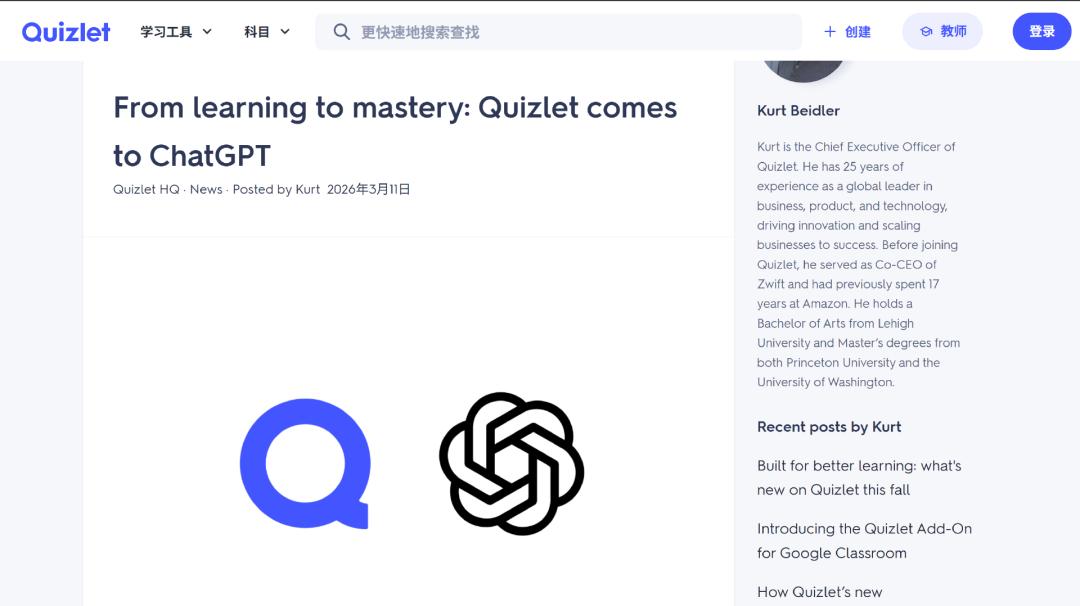
Through acquisition and product integration, Quizlet is extending its original knowledge memory services to links such as class recording, learning material generation and teaching management, expanding its coverage in students' autonomous learning and school teaching scenarios.
Solvely: Expanding from AI problem-solving to vocational qualification examination training
Solvely, which started with photo-based problem-solving, is extending its business to a wider range of learning and vocational training scenarios.
In April this year, Solvely announced that it was selected into the first Prosumer AI 40 list jointly launched by Notable Capital and Nasdaq. The company disclosed at the same time that its platform has covered more than 150 countries and regions. In addition to AI problem-solving, it also provides functions such as learning notes, flashcards and mock exams, and has extended its services to vocational qualification examination fields including the US nurse license exam, nursing school entrance exam and commercial driving license exam.
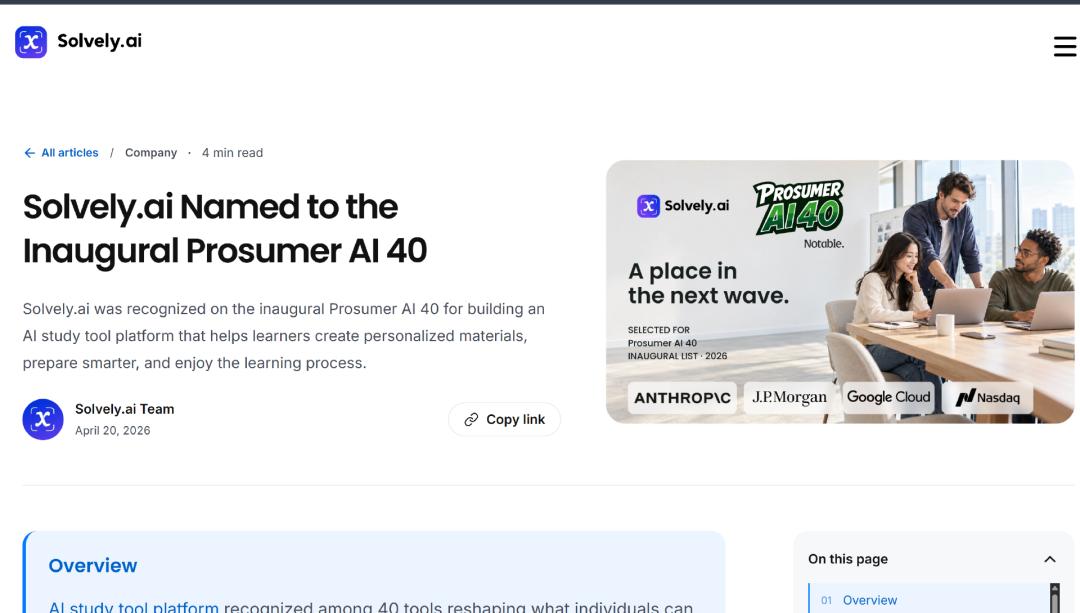
This expansion is also accompanied by traffic growth. In September, Solvely recorded approximately 1.93 million monthly visits, with a month-on-month increase of 246.04%, ranking first in the growth rate of this education product ranking.
On October 10, Solvely further disclosed its technical layout of educational AI agents. Through models optimized for educational tasks, combined with step-by-step explanations, interactive visualization and practice tools, it helps students understand knowledge. Its product positioning is extending from a single problem-solving tool to a comprehensive AI learning platform.
Astra AI: Building a global AI tutor platform without external financing
Astra AI, an edtech company from Slovenia, is expanding the global market through subscription-based AI tutoring services.
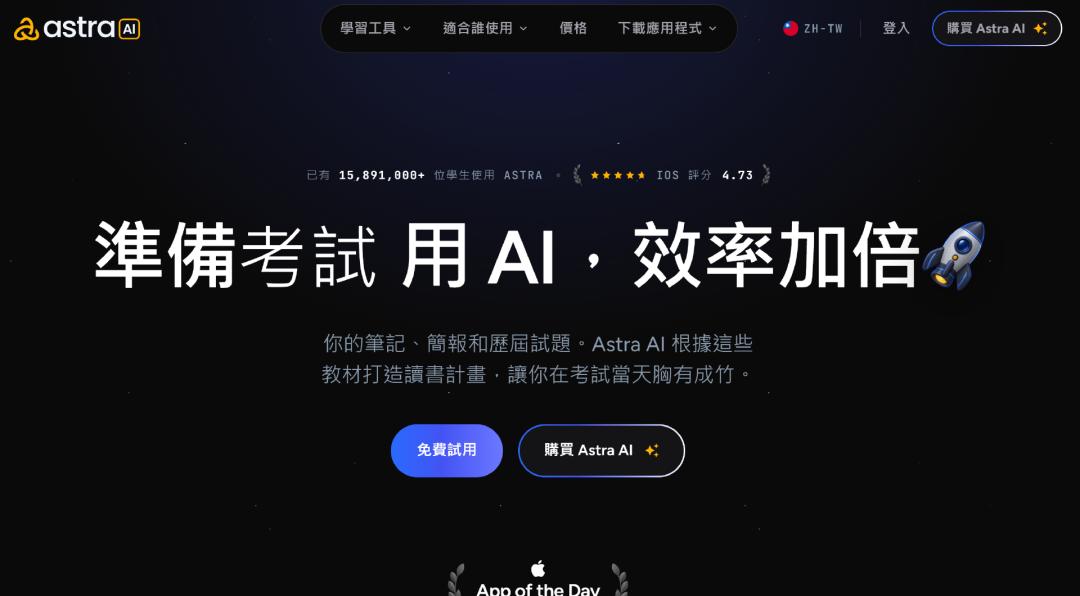
Co-founded by Andrej P. Škraba and Klemen Selakovič, Astra AI initially focused on math tutoring and now covers multiple subjects including physics, chemistry and languages. Students can upload notes, courseware and past exam papers, and the AI will generate personalized learning plans, and complete review through course explanations, flashcards, quizzes and other methods.
This year, the founders of Astra AI publicly disclosed that the company's total registered users have exceeded 10 million, with annual recurring revenue (ARR) reaching 25 million US dollars, representing a roughly 25-fold increase over the past year. It is particularly noteworthy that the company stated that its business growth mainly relies on its own operating income and has not introduced venture capital.
This growth is also reflected in the September ranking. Astra AI reached 5.242 million monthly visits, with a month-on-month increase of 204.75%, ranking 7th on the list. Compared with educational AI startups that rely on financing to expand their scale, Astra AI provides another development sample: supporting product R&D with subscription revenue and expanding to overseas markets through multilingual localization.
Gizmo: Completed a new round of financing to step up gamified AI learning
In April this year, British AI learning platform Gizmo announced the completion of a 22 million US dollars Series A financing round, led by Shine Capital, with participation from institutions including Ada Ventures, GSV and NFX. At the time of financing, the company's total users had exceeded 13 million, covering more than 120 countries, while its team only had 7 employees at that time.
Founded in 2021 by three University of Cambridge graduates, Gizmo focuses on gamified learning. After students upload notes, documents or web links, the AI can automatically generate learning materials such as flashcards and interactive quizzes, and improve learning engagement through mechanisms such as consecutive learning rewards, leaderboards and friend challenges.
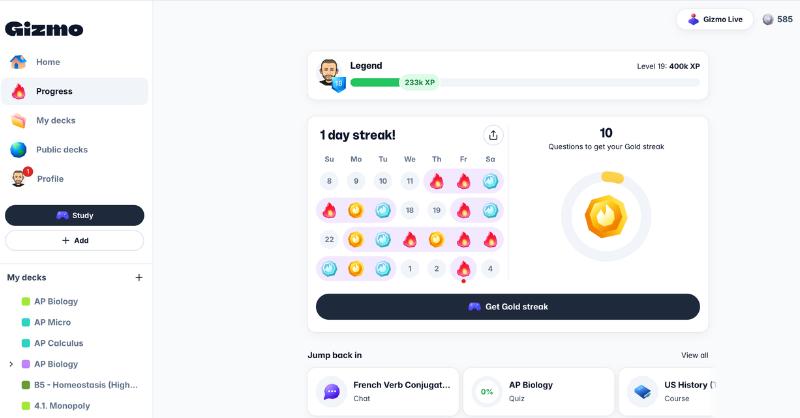
This model also brings rapid user growth. In 2023, Gizmo had approximately 300,000 cumulative users, which had exceeded 13 million by April this year. In September, Gizmo ranked 3rd in the education product ranking with approximately 7.85 million monthly visits, with a month-on-month increase of 73.28%.
After the new round of financing, Gizmo plans to expand its AI and engineering teams, focus on expanding the US college student market, and continuously improve its learning products. The development path of this company also provides a case for how AI education products can acquire and retain users through gamified design.
Gauth: Moving from AI problem-solving to AI course generation
Gauth, an overseas education app under ByteDance, began to shift its business focus from photo-based problem-solving to AI courses this year.
On September 1, Gauth announced the full launch of AI Course, adding more than 200 new math courses covering content such as US high school algebra, geometry and AP Calculus. Different from traditional pre-recorded courses, Gauth uses AI to generate course explanations, visual content and quizzes. Students can also independently input learning topics to generate courses that meet their personal needs and share them with other users.
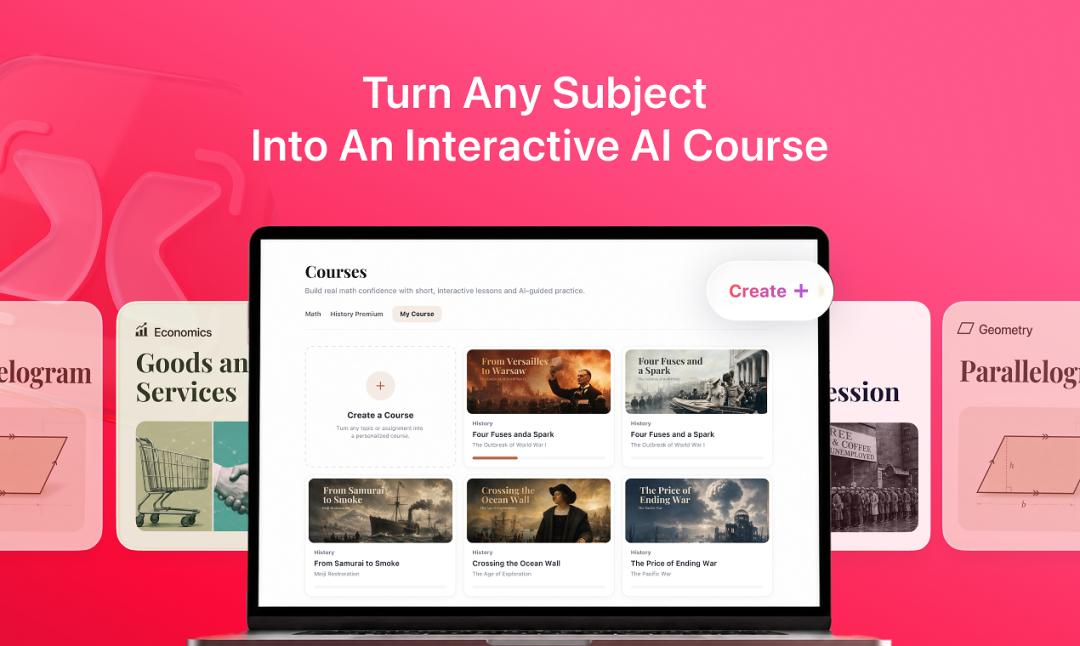
While launching new features, Gauth continued to maintain growth. According to Similarweb data, its monthly visits in September were approximately 4.7 million, with a month-on-month increase of 40.88%, ranking 9th in the education product ranking. The company disclosed at the same time that since its launch in 2020, Gauth's total global downloads have exceeded 200 million.
In October, Gauth further launched the "Infinite Digital Canvas" feature, allowing students and AI tutors to explain, write and solve problems on the same interactive whiteboard, reducing the fragmentation between traditional video courses and chat-based Q&A.
From providing answers to questions to generating complete courses, and then to interactive teaching, Gauth is trying to apply AI to course content production and personalized teaching to further expand the overseas education market.
Class Companion: AI grading tool integrated into school teaching management system
In the September education product ranking, Class Companion is one of the fastest-growing teacher-side AI products. Its monthly visits increased by 136.76% month-on-month, and monthly unique visitors increased by 119.56% month-on-month. Both growth rates ranked top 3 among the 74 products, outperforming similar platforms such as MagicSchool AI.
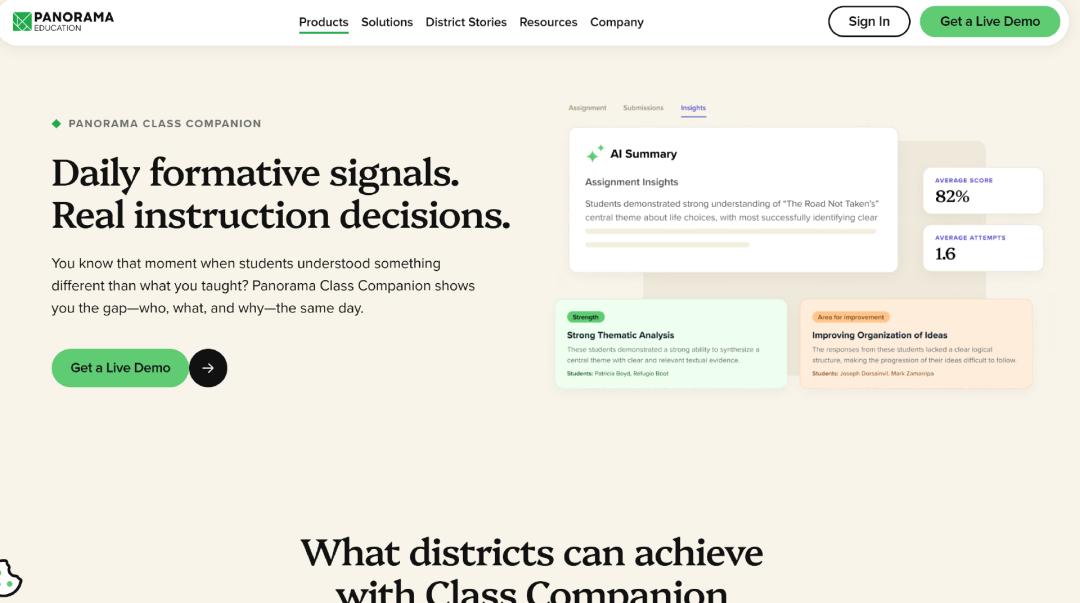
Class Companion is an AI teaching tool for K12 schools in the US, mainly helping teachers grade essays, provide personalized feedback, and analyze students' knowledge mastery. In April 2025, the company was acquired by edtech enterprise Panorama Education, and then gradually integrated into Solara, an AI platform for schools and school districts.
This year, Panorama continued to promote product integration. In May, the company demonstrated teaching analysis and system integration functions for school administrators; the product documentation updated in September shows that teachers can now call the AI assistant on the homework result page to analyze students' weak points in learning and get teaching suggestions.
With the gradual combination of AI grading and teaching analysis functions, the application scope of Class Companion is extending from single homework feedback to school teaching management, further exploring paid services for schools and school districts.
Flashka: AI flashcard platform with millions of users secured million-euro financing
In the September education product ranking, Flashka from Estonia only ranked 25th, but its user growth performance is outstanding. Its monthly visits are approximately 790,000, with a month-on-month increase of 61.37%; monthly unique visitors increased by 94.94% month-on-month, nearly doubling.
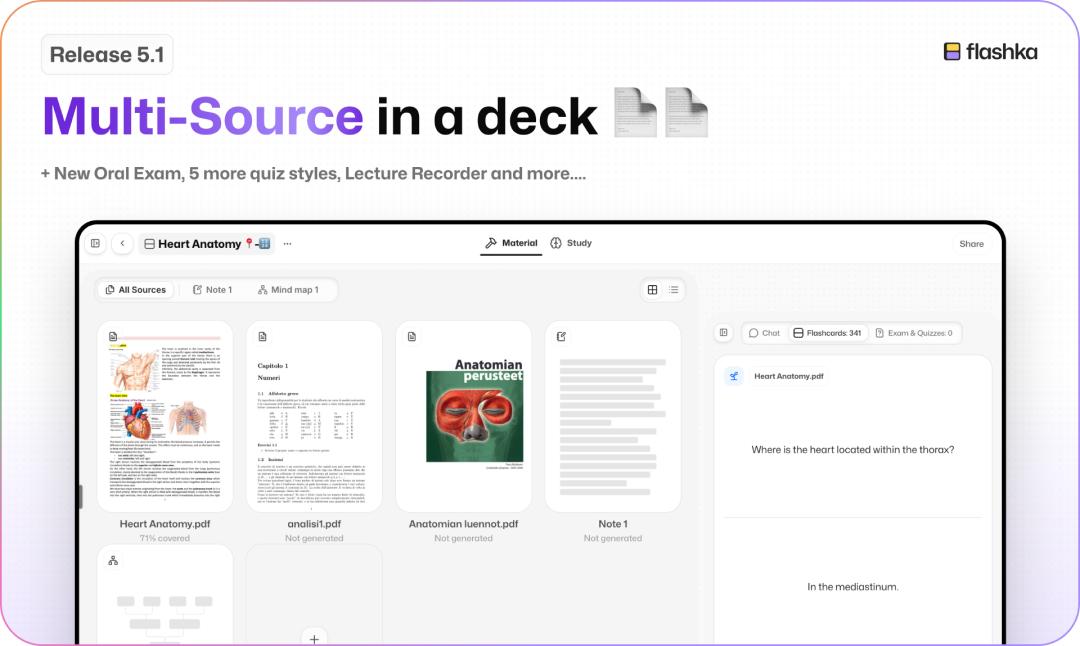
Flashka is mainly for college students, using AI to convert textbooks, class notes and PDF files into review materials such as flashcards and quizzes. In January this year, the company announced the completion of a 1 million euro pre-seed financing round, led by Outlast Fund, with participation from UCP and Vento Ventures. At the time of financing, the company disclosed that it had accumulated 1 million users less than a year after the product was launched, once topped the App Store rankings in Italy and Spain, and its recurring revenue tripled in the last three months.
After obtaining financing, Flashka continued to expand product functions. On October 15, the company launched a new version of learning tools, supporting the integration of class recordings, YouTube videos and multiple learning materials into the same learning material set, and added AI voice mock exams and more quiz formats. From flashcard generation to course material organization and exam training, Flashka is evolving into an AI learning platform covering the complete review process.
StudyFetch: Launched AI enterprise training platform to expand vocational education business
An AI learning company serving students has begun to apply its technology to enterprise employee training.
In May this year, US edtech company StudyFetch officially launched Honen, an AI training platform for enterprises. Enterprises can upload internal training documents and connect to the knowledge base, and the AI will automatically generate courses, interactive exercises and assessment content, and adjust teaching arrangements according to employees' learning performance. The company disclosed that some early courses can be created and deployed within 30 minutes.

StudyFetch originally mainly provided students with services such as AI notes, flashcards, mock tests and intelligent tutoring. In September, its monthly visits were approximately 1.72 million, with a month-on-month increase of 79.86%, ranking 19th in the education product ranking.
Vocational training is also a key direction for StudyFetch to expand this year. In March, the company announced that it would provide Nvidia-related vocational skill training courses for students in grades 9 to 12 in the US through Honen, covering AI technology and practical applications. The company disclosed in May that its learning platform has served more than 8 million students in total.
From student autonomous learning to enterprise training, StudyFetch is applying its original AI tutoring and course generation capabilities to the vocational education market, expanding services for schools and enterprises.
Judging from the September ranking, the growth of the global educational AI market has extended to multiple segmented fields. Emerging products quickly accumulate users through problem-solving tutoring, memory training and personalized learning, while mature platforms further expand their service scope through acquisitions, function upgrades and external cooperation.
The full ranking is as follows: