AI is starting to take over the "major life events" of fur babies.
"Just throw it away, I'll give you a new one."
When Zhang Yu, a new pet owner and head of Companion Pet Lightyear, went to the seller to demand an explanation for the newly bought puppy that had been diagnosed with canine distemper, pneumonia and more than four other diseases, the shop owner nonchalantly threw out this sentence.
A life, treated as trivial as a returned or exchanged product.
He rushed to the hospital where the doctor quoted a treatment fee of 30,000 yuan, with no guarantee of a cure. In the end, he bit the bullet to look up information, ask friends for advice on dispensing medicine and giving injections, and spent less than 8,000 yuan to pull the dog back from the jaws of death.
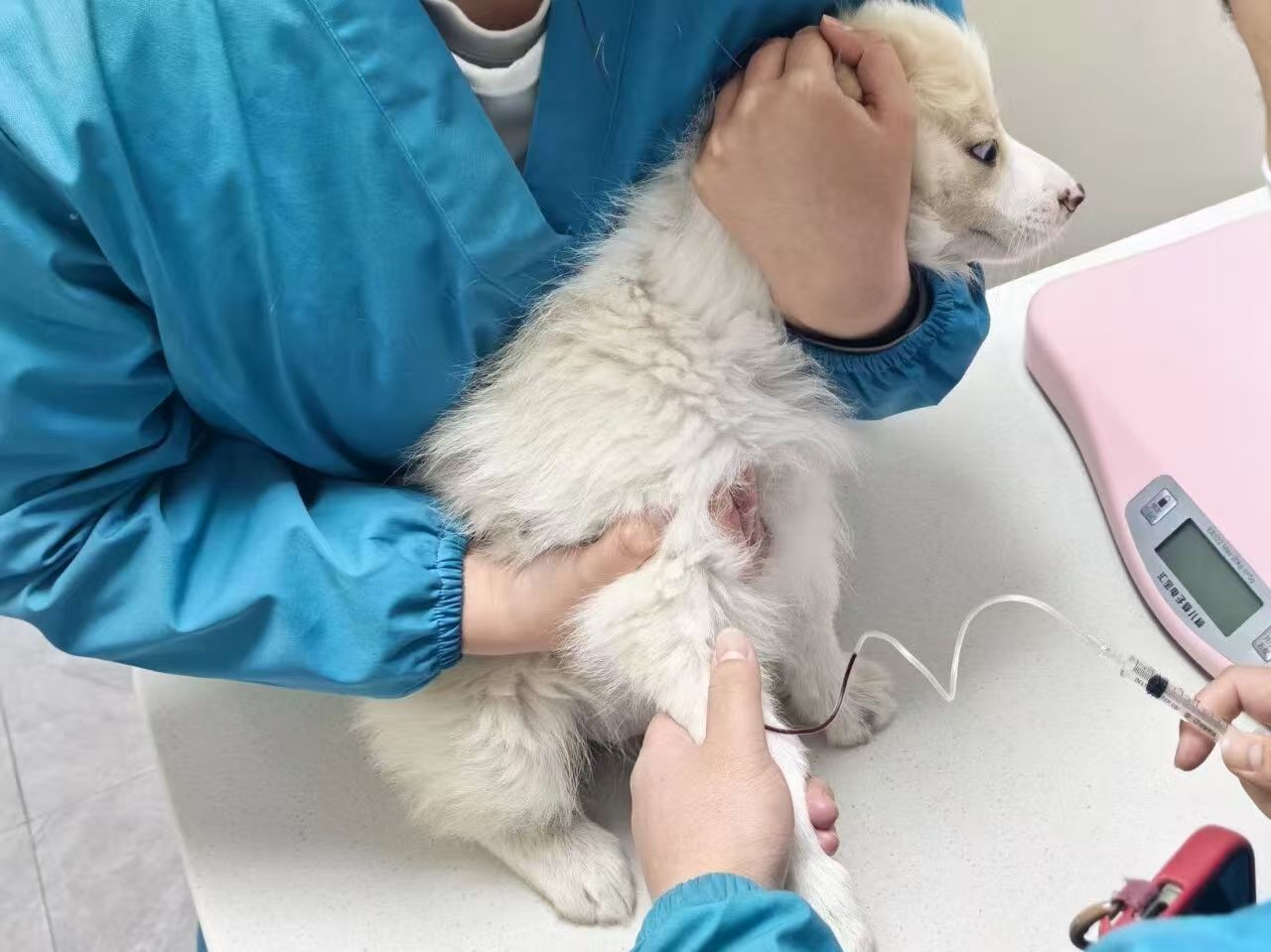
Zhang Yu taking his dog for an injection, photo provided by the interviewee
This absurd scenario is nothing new in China's pet circle.
Buying a pet is entirely a matter of luck, and the price at pet hospitals is anyone's guess. The services across the whole industry are clumsy and fragmented, most players only care about "making the sale" but rarely pay attention to "helping pets live well".
On the other hand, however, pet owners' emotional investment and spending power have long stepped into a whole new track.
Against the backdrop of the intertwined trends of population aging and rising number of people living alone, cats and dogs have quickly been positioned as "core family members". People's health anxiety about their furry companions and desire for their company have been amplified infinitely, pushing the whole industry to step on the gas pedal of intelligent transformation.
Raising pets is now shifting from "relying on feelings" to "backed by solid evidence" with the help of AI.
The pet economy has entered the AI era
Looking at the cross-section of global pet intelligence, the development trajectories of different markets reflect completely different industry backgrounds and development stages.
Let's start with the Chinese market first.
With the growing number of people living alone and the explosive demand for emotional companionship, China's pet economy has achieved rapid growth. Data from the *2026 White Paper on China's Pet Industry* shows that the consumption market size of dogs and cats in Chinese urban areas has exceeded 310 billion yuan, the number of urban dogs and cats has surpassed 126 million, and the penetration rate of pet-owning households has reached around 24%.
In the process of rapid industrial expansion, China's manufacturing sector has also demonstrated extremely strong advantages in intelligent hardware manufacturing and global market expansion.
Hardware categories represented by automatic feeders and smart litter boxes are popular at home and abroad. For example, PETKIT, a brand focusing on smart pet supplies and health management devices, has an annual revenue exceeding 1.1 billion yuan, with products sold to more than 60 countries and regions around the world. Homerunpet, a brand that focuses on premium pet-raising hardware, has its products exported to more than 40 countries and regions worldwide, and consistently ranks top in the segmented lists of smart pet drying boxes and smart water fountains on cross-border e-commerce platforms such as Amazon.
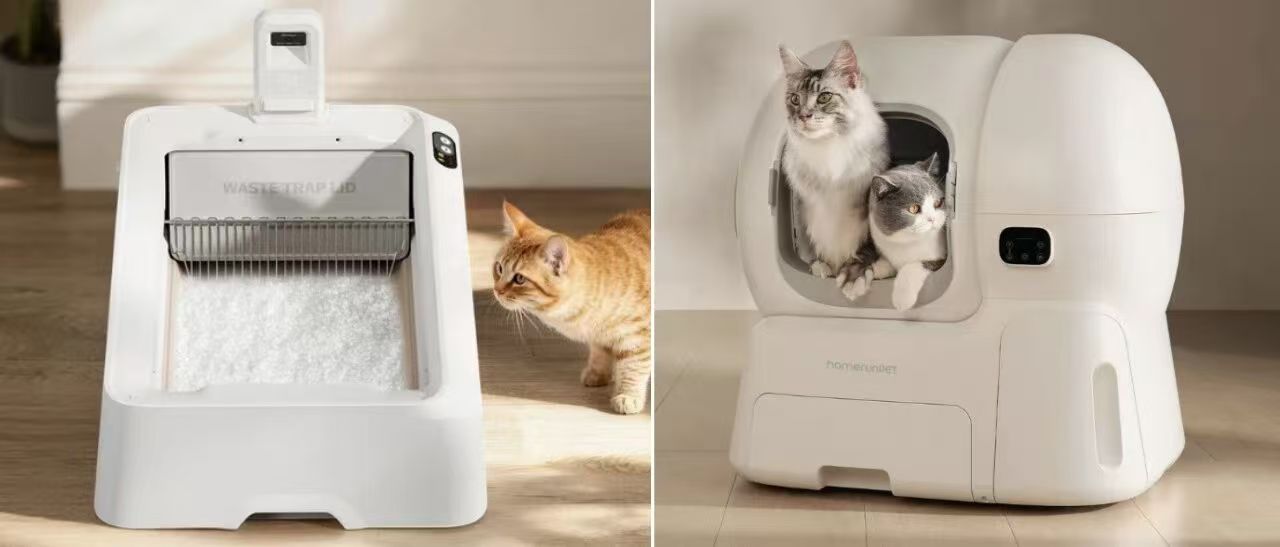
Left: PETKIT automatic cat litter box, Right: Homerunpet automatic cat sand washer
However, serious industry chaos has also been exposed behind the rapid development.
"China has spent 20 years completing a journey that took other countries 50 years. Pets have changed from 'livestock' to 'pets' and then to 'family members', and the emotional relationship has shifted, but industry norms and supervision have not kept up," Zhang Yu lamented.
The rapid leap in emotional cognition has encountered a lagging trust infrastructure.
There are no trusted national leading brands in the pet store sector, and people choose pet stores entirely based on Meituan searches, Xiaohongshu recommendations, or luck on Xianyu. The "one-week sick pets" phenomenon remains rampant, over-medical treatment and inflated prices are frequent, and scattered medical records in different clinics leave pet owners stuck in anxiety caused by information asymmetry.
At the same time, smart hardware that only saves labor for humans can no longer meet pet owners' deep demands for health management and risk warning.
To break the chaos and information asymmetry, the market is accelerating its transformation towards the "smart hardware + AI software" model:
Moonback has launched a health monitoring system integrating multi-modal AI, smart harnesses and AI vision cameras. Xichong Technology chooses to add AI vision modules to traditional home devices such as litter boxes to capture and analyze pets' excretion and toilet behavior in real time... All of them are trying to improve the long-term value of products by adding in-depth software algorithms and AI capabilities to traditional hardware.
Turning our attention to the US market on the other side of the Pacific, it presents a completely different picture.
The market there is relatively mature, with a pet ownership household penetration rate as high as 67%.
In 2025, the market size of pet technology reached 3.17 billion US dollars, and it is expected to reach 7.59 billion US dollars by 2030, with a compound annual growth rate of 11.6%.
The penetration rate of pet insurance is also rising rapidly, local users show extremely strong willingness to pay for "preventive health management", and they also have very high acceptance of the software subscription model.
However, under the appearance of high development, there are also non-negligible blind spots.
On the one hand, although insurance companies are constantly promoting veterinary clinics to adopt standardized electronic records to speed up the claim settlement process, the popularization rate of veterinary electronic medical record systems is only about 55% at present, and health data is severely fragmented. On the other hand, pets stay at home for most of their time, and veterinarians only see them a few times a year, there is an obvious gap between households and pet hospitals.
To solve these structural pain points, the market has evolved a variety of breakthrough paths:
Wearable health monitoring products represented by Fi, Marley Health and Tether focus on seizing the high ground of "detecting abnormalities at the earliest time", but their hardware forms are almost all limited to collars.
AI companion interactive products such as Traini, which focuses on two-way dog language translation, try to make pets "speak" through interesting semantic interaction.
There are also home non-wearable monitoring products such as Petrics and WoafyPet that combine orthopedic comfortable support with long-term health monitoring...
Looking at the overall situation, although China and the United States are in different development coordinates, they are both pointing to the same direction at this stage:
Hardware is responsible for providing physical support, while software and AI algorithms are responsible for long-term understanding and interaction - a revolution driven by the coordinated development of software and hardware to enable products to truly "understand" furry companions is kicking off.
Iris recognition + AI Agent: Give every pet a exclusive memory
Pets cannot speak, and all hidden health risks are hidden in extremely subtle and hard-to-notice physical signs.
Breathing that speeds up and slows down unexpectedly, a dry nose, sudden runny nose - when the furry companion is lying in the nest, the owner often falls into endless doubt: Is it just being lazy, or is it a precursor to illness?
This "unpredictability" often leads to irreversible tragedies at critical moments.
Not long ago, there was a distressing news story: a dog accidentally ate a Snickers bar. The owner only saw an empty packaging bag on the table, but was not sure whether the dog had eaten it or not, and whether it needed to be sent to the hospital overnight. Due to hesitation and delay for two days, by the time the dog was sent to the hospital, the best treatment window had been missed, and the dog unfortunately passed away.
If there had been a clear risk warning and initial screening suggestion at that time, the tragedy might have been avoided.
But in the current domestic market, pet owners are not only faced with unknown conditions, but also high barriers in the medical sector.
A common drug that only costs five or six yuan per injection can be sold for hundreds of yuan in a pet hospital. What makes people more uncertain is that the qualifications of many pet doctors are uneven. Faced with a long list of test sheets, ordinary people have no way to tell which are necessary life-saving tests and which are disguised over-treatment.
In such an industry with extremely asymmetric information, what role can AI play?
In Zhang Yu's view, in the current domestic market, AI is by no means a pseudo-concept used to show off skills at product launches, nor can it completely replace offline clinical veterinarians.
Its real positioning is first and foremost a close "signal translator".
It translates pets' postures, behaviors and breathing fluctuations that are hard to distinguish with the naked eye into health prompts that owners can understand in real time. Before a crisis occurs, it provides graded suggestions on the priority of different situations, acting as the first line of initial screening for daily decision-making.
When facing the choice of seeking medical treatment, AI can act as a "diagnosis and treatment preliminary reviewer" to help owners sort out the situation and eliminate unnecessary anxiety during the medical process.
To truly implement this "understanding", a clear technical solution is required. In the current practice of Zhang Yu's team, this solution is clearly broken down into a complete "integrated software and hardware" framework:
On the one hand, hardware iris ID recognition acts as the underlying B-end infrastructure anchor point.
The traditional method of subcutaneous chip implantation is invasive, which makes many pet owners resist, leading to an extremely low pet identity filing rate in China, which is less than 5% even in first-tier cities. Through technological innovation, Companion Pet Lightyear uses non-contact iris scanning to generate an unalterable unique digital ID for each pet - just like the ID card for human beings.
This iris technology is mainly oriented to supervision certificate processing, pet hospitals and community access ports, connecting public service links such as pet travel and insurance claim settlement. It allows medical treatment and vaccination records that were originally scattered in different hospitals and institutions to be truly connected together.
On the other hand, the software Agent serves as the core brain and memory center for C-end owners.
Relying on the unique digital identity identified by iris ID, the Agent can carry out long-term data recording and continuous recognition, so as to have exclusive memory of this specific pet, and can better translate the signals sent by the pet.
When the underlying identity anchor point is closely intertwined with the upper-layer intelligent Agent, from B-end medical data interconnection to C-end daily care, the originally fragmented industry chain is gradually stitched together.
AI is no longer just a concept, but has become a practical antidote for pet owners to fight against the anxiety of raising pets.
Enjoy a comfortable old age: How much imagination can AI support?
"More and more people regard pets as irreplaceable family members, and they not only hope that their pets can live longer, but also hope that they can live comfortably in their later years," observed Robert (Robert Luo, founder of WoafyPet), who has long lived in Los Angeles. He has noticed that the concepts of pet owners around him are undergoing very clear changes.
This emphasis on the quality of life of pets in old age stems from many owners' personal experiences of helplessness and sadness when their pets grow old.
Robert also has a unforgettable regret about this. His dog Bobby, who once accompanied him, was initially misdiagnosed as arthritis when he got sick, and was not diagnosed with bone cancer until it was too late.
"By the time we realized it, it was already too late." Dogs cannot express pain, and owners often can only wait passively, until the symptoms are extremely obvious before they realize the problem.
This experience made him focus on the health management of elderly pets, and he began to think about whether the combination of hardware products and AI technology could help pet owners notice the subtle changes of pets in advance.
In the past few years, many smart collars have emerged on the market and have been recognized by the capital market. For example, Fi, a smart health monitoring collar with GPS function, has raised a total of 45 million US dollars; Halo, which integrates GPS positioning, virtual electronic fence and behavior training into a smart collar, has raised 20 million US dollars.

Left: Fi smart collar, Right: Halo smart collar
But the ideal is full, while the reality is harsh.
Not every pet is willing to wear a foreign object at all times, especially during sleep when they need deep relaxation. Wearing an extra device on the neck is very uncomfortable for elderly dogs or dogs in the post-operative recovery period.
This also drives the evolution direction of products, shifting from the single and rigid "external wearable pendant" to "home non-wearable monitoring" integrated into the rest environment.
The smart dog bed WoafyPet developed by Robert's team tries to find a balance between extreme comfort and health monitoring. The sensors are built into the bed, so that the dog can lie down naturally without changing their living habits, and continuously record sleep, weight, nighttime activity, resting breathing and heart rate trends.

WoafyPet smart dog bed, photo provided by the interviewee
"No matter how powerful the monitoring function is, it is useless if the dog is not willing to stay on the bed," Robert emphasized.
Under this logic, comfort is no longer an incidental add-on, but the top priority rigid demand. Only when the hardware form does not add any burden to pets, can long-term health data accumulation be truly realized.
Compared with the non-inductive perception on the hardware side, the software and AI algorithms behind it are the soul that connects all these data.
In the past, many devices easily fell into "indicator worship", pushing a bunch of cold numbers such as heart rate and breathing to the owner. But what the owner needs is not a complicated digital report, what they really want to buy is peace of mind.
"Pet owners don't want to know how many numbers are recorded today, but want to know whether the dog has any health signals worth paying attention to, and whether they need to go to the hospital."
Therefore, the core value of AI is not to apply general standards, but to "establish a unique health baseline for each dog".
Each dog has different breed, age, body shape and medical history, so it is not appropriate to apply a fixed set of standards to all dogs. The algorithm should establish a unique health baseline for this pet, and then continuously compare whether it deviates from its usual normal state.
For example, if a dog's breathing rate at night has been slowly increasing recently, or the number of times it wakes up at night is increasing, these subtle changes may not be obvious when viewed alone for one day, but after being recorded and compared by the system, they become a very valuable health trend, and AI can convert it into straightforward prompts that the owner can understand and act on.
This exploration of using "non-inductive hardware + home-side data" to fill the gap in diagnosis and treatment is also redefining the underlying logic of smart pet raising.