The Era of Mass Open Source? AI Reverse Engineering Makes All Software Free
In the past week, GitHub's trending list has been almost completely dominated by "AI reverse engineering" projects.
First up is a project called REA (Reverse Engineer Anything), which connects professional reverse engineering tools including Ghidra, Hopper, IDA to coding agents via the MCP protocol. Users do not need to understand assembly language at all — they only need to say to Claude "help me figure out a certain feature of this software", and it will disassemble the program on its own, even produce a full replica version for you.
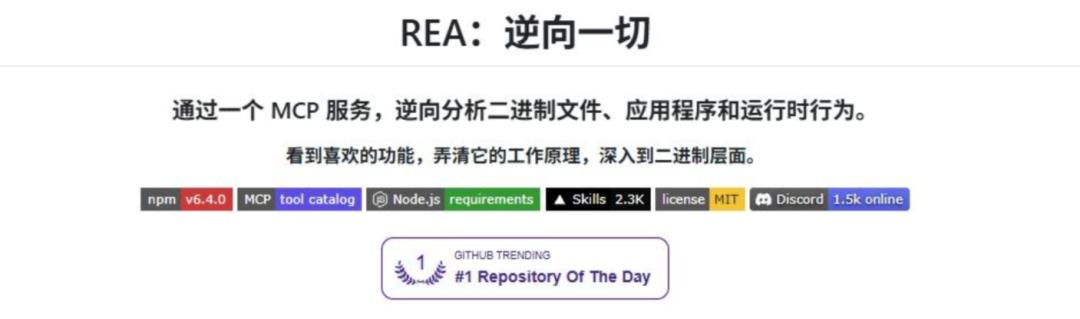
Less than a week after its release, REA has gained more than 120,000 stars, topping the trending list.
Almost at the same time, former Square engineer Brandon Thomas used Claude Opus 5.5 and Rust to create a full open-source replica of the entire 7-piece Adobe Creative Suite. The motivation behind this project was his frustration with Adobe's early cancellation penalty for subscriptions, and the rewritten Rust version of the Adobe Creative Suite is completely free of charge.
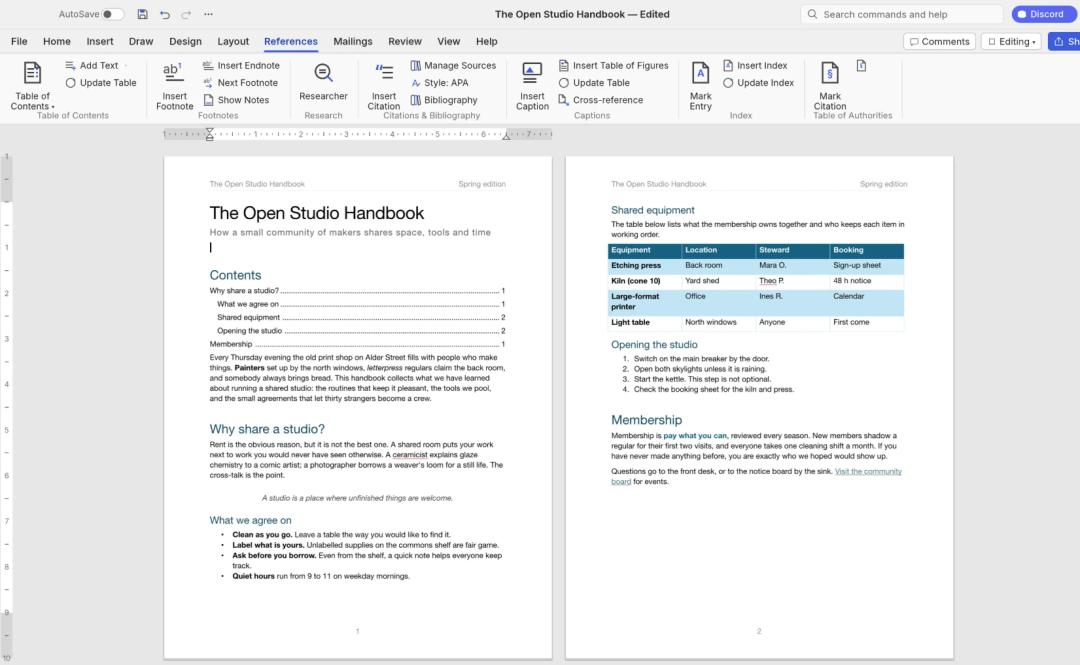
Interestingly, his team ArtCraft then went on to rewrite Microsoft Word, named the new project WordCraft, which gained over 6,000 stars within five days after being uploaded to GitHub.
It did not touch a single line of Word's original code, and completed the full replica solely based on public specifications.
Reverse engineering software is not a new concept, but traditional methods are extremely difficult. After a program is compiled, the original variable names, comments and code structure of the software are all altered, leaving only unreadable machine instructions. Following traditional methods, practitioners need to undergo professional and systematic learning, then operate line by line with the help of professional tools.
The reason why the REA project shocked the entire software industry is that the involvement of AI has lowered the threshold to the minimum, and the efficiency can be described as "skyrocketing". This project connects existing professional tools to the AI agent via MCP, allowing the agent to check the target, trace the code, finally realize decompilation and run tests in a loop, and every step returns verifiable evidence.
In terms of specific implementation methods, REA provides two solutions.
The first method can be called the comparison method: first, write a detailed manual documenting all features of the original software, let the AI implement all the features from scratch against the manual, then check and revise the work iteration by iteration. The Rust version of the Adobe Creative Suite was developed with exactly this method.
The other solution is the black-box experiment: if you cannot find the binary corresponding to a certain feature, it does not matter. The AI can first operate on one variable, and if it finds that the value of another variable changes accordingly, it can deduce which feature this variable corresponds to.
These two tasks can also be done manually, but the cost is ridiculously high. As software keeps updating and launching new features, a single upgrade may make all previous efforts go to waste.
AI is exactly good at this kind of complex but mechanical work. With the support of existing decompilation tools, reverse engineering work can be carried out with only one prompt. That's why some people compare REA to the "loom" in the Industrial Revolution era: everyone can replicate an App overnight, the ability to write code that you own is also accessible to others, so it is no longer a rare valuable skill.
Of course, AI reverse engineering may make the craft of manual coding obsolete, but the moat of high-quality software services itself is very difficult to break through.
At present, most AI reverse-engineered software online are tool products with single functions, high prices and low user satisfaction, such as system cleaning tools, PDF converters, screen recorders, which will be quickly overwhelmed by waves of free alternatives. Just like the 1:1 replica of the Adobe Creative Suite this time, the root cause is that consumers have long complained about Adobe's expensive subscription fees.
In other words, while AI reverse engineering lowers the programming threshold to an extremely low level, it also increases the value of high-quality software at the same time, requiring software developers to provide better and clearer services for users.
This article is from the WeChat official account "Meku", author: Meku, published with authorization from 36Kr.