Even AI female idols cannot escape the lousy script of "quitting the group due to pregnancy".
The whole situation is absurd, how could holding it together be a punishment.
Yesterday, BABYQUEEN, a domestic private AI K-pop girl group, released an official announcement, stating in the persona of member Mity that she had confirmed her pregnancy. After discussion, the group decided that Mity would temporarily leave the team to rest and recuperate. The announcement quickly went viral after being released.
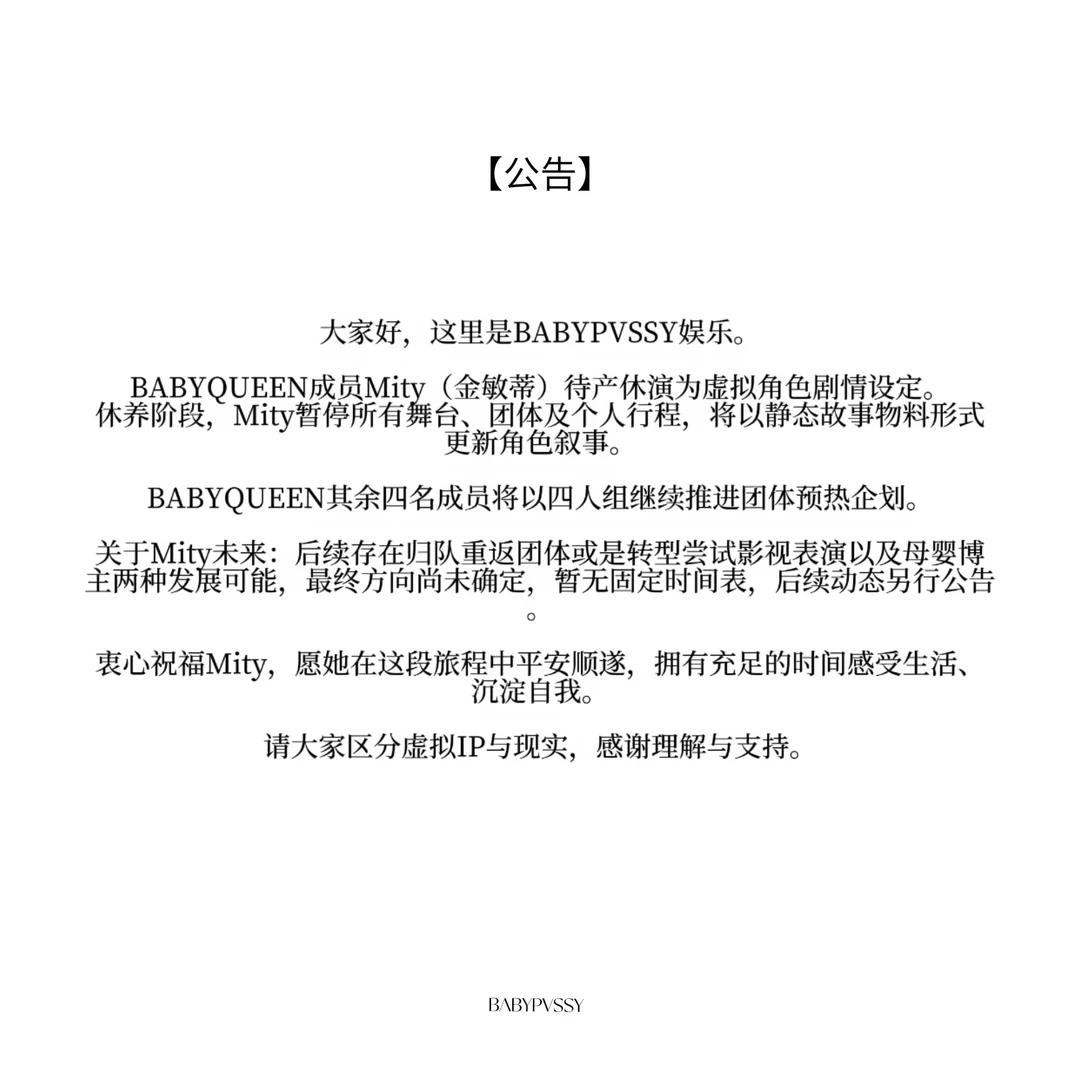

Xiaohongshu @Xiaoxiaxia by Daming Lake
We originally thought that AI idols could free people from the constraints of age, physical conditions, romantic relationships and childbirth.
However, when humans start to write life stories for AI, they move all the pressures, prejudices and conflicts that belong to the real world into the virtual world without any modification.
Why is pregnancy the exact reason for leaving the group
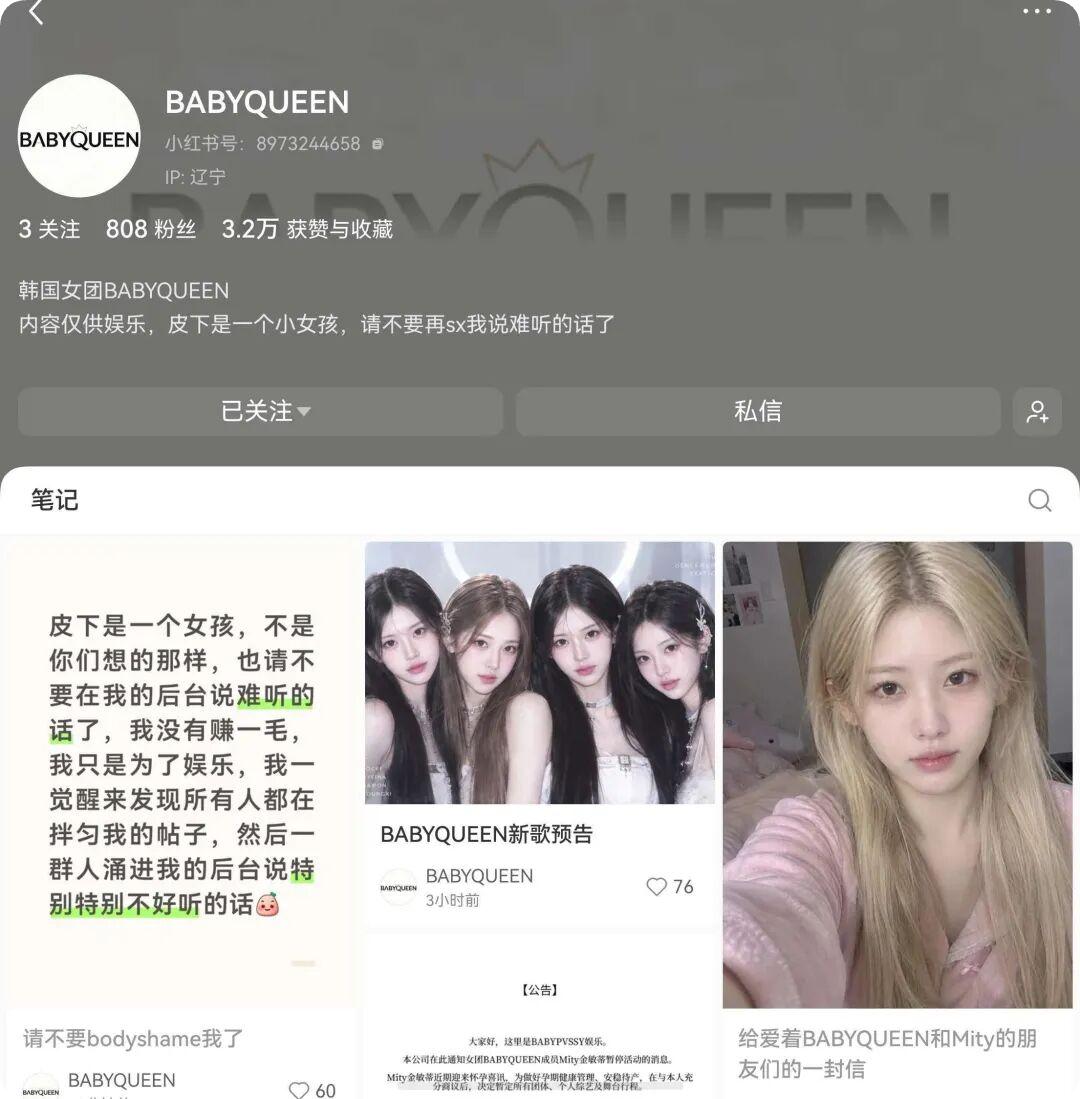
The virtual girl group BABYQUEEN was initially a fairly ordinary hobby project. According to reports, several K-pop-loving girls did not have the conditions for real-life performances, so they used AI to design five members, gave them names, and arranged works and activities for them.
The five members of BABYQUEEN are Hyeina, Kim Nawon, Youngxi, Jocee and Mity respectively, and their debut track "BangBang" shares the same name as the song by IVE.

Later, as the pressure of operating multiple AI characters at the same time grew, the team wanted to reduce their workload. To write the character Mity out of the group, the team released a letter written in Mity's tone, saying that she had confirmed her pregnancy, and after discussion, decided to temporarily leave the group to rest and recuperate.
They admitted that the reason they chose was inappropriate, emphasizing that the entire story was fictional and they did not profit from it. They later apologized again in Mity's persona, but still failed to calm the controversy. As the discussion expanded, the creators said they were subjected to body shaming and malicious attacks, and even their family members were harassed.
On October 14, right after Mity left the group, BABYQUEEN returned as a four-member group, announcing that their first official comeback single would be "Next Level", which shares the same name as the song by aespa.

Why did the creators subconsciously choose pregnancy as the reason to write a character out of the story?
In reality, the core of the K-pop idol business model is "selling fantasy" and "emotional value". Idols maintain a single status and keep a distance from fans to provide a sense of exclusivity and companionship for fans (especially fan-girls / fan-boys), who pay for this fantasy with real money by buying albums, voting for their idols, and organizing support events.

South Korean media (such as paparazzi) pay extremely close attention to the private lives of idols. Once a relationship is exposed, it will not only trigger fierce backlash from fans, but also may cause public opinion crises, leading to the idol's "career collapse" and a cliff-like decline in their career.
Take the "April 13 Airport Pig Hunting Operation" as an example. Lee Haechan, a member of the South Korean boy group NCT, was surrounded by a large number of fans at Incheon Airport after rumors spread that he was secretly dating a woman. Some netizens tried to track his private itinerary through clues such as flight numbers and hotel information.
It was later rumored that his team spent about 300,000 RMB booking and canceling multiple flights to create chaotic itineraries in order to avoid being followed.
Some fans then organized a "pig hunting group" to wait at the airport overnight, and even mistook other artists for their target for a while. After Lee Haechan appeared at Incheon Airport, he was verbally abused and questioned by some fans at close range.

Therefore, while a member leaving the group may seem abrupt, a private life crisis gives the story more room for public discussion.
However, for real women, pregnancy means real physical risks, long-term physiological changes, and may also be accompanied by career interruptions, shifts in life priorities, and decades of parenting responsibilities afterwards.
A virtual character that has no real body and does not need to bear any cost of childbirth is rashly given the experience of pregnancy, and even uses it as a dramatic setting to create topics and attract onlookers. The real difficulties and struggles that real women face are seemingly reduced to a trivial plot.
Virtual character creation can have storylines, but childbirth should never be used as a plot device, turning women's pregnancy experiences into a tool to attract traffic, and provoking public emotions to create topics.
Even if it is just a self-entertaining idea of the team, once the announcement is released to the public, it is improper consumption of the childbirth issue.
The internet celebrity that never gets sick borrowed a medical history
Mity's pregnancy plot looks more like a hastily designed storyline, while the leukemia story of American virtual internet celebrity Lil Miquela has a clear communication purpose.
On May 6, 2025, Lil Miquela, a virtual internet celebrity with about 5 million followers on social platforms, released a video on TikTok. In the video, she said she had a nosebleed again on the shooting site, and did not know whether she should worry about it.
23 days later, she updated her status again. Sitting on a chair in the hospital, she told her fans that because of repeated nosebleeds and physical fatigue, she went to the hospital for a checkup and was finally diagnosed with leukemia.
The news quickly sparked controversy. Because Lil Miquela is not a real human at all, she is a virtual internet celebrity created by computer technology, has no real body, and naturally cannot suffer from leukemia.
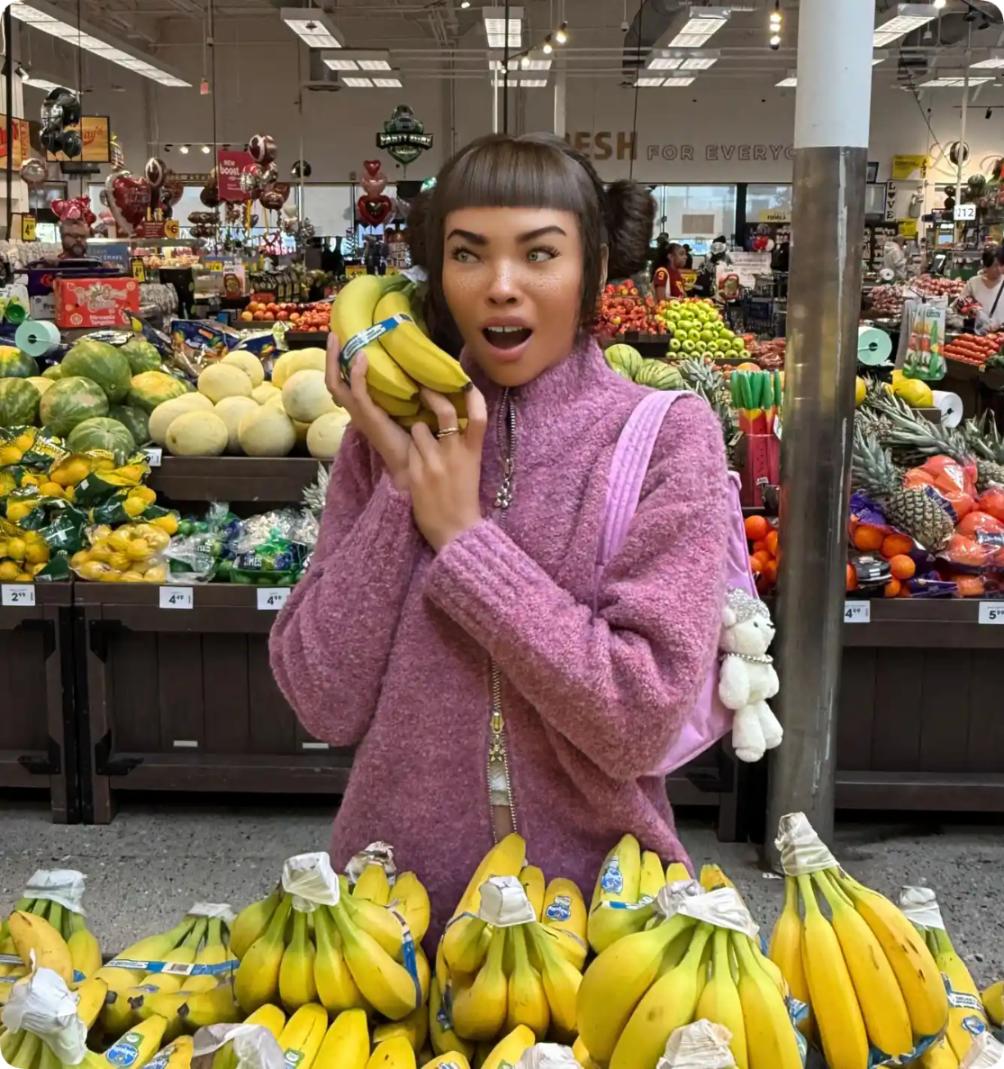
Virtual internet celebrity Lil Miquela
In fact, this is a public welfare promotion in cooperation with NMDP, a non-profit bone marrow donation organization in the United States. The video marked the commercial partnership, and explained that her symptoms were dramatized to reflect the experiences of real patients.
However, many netizens still felt uncomfortable, thinking that it is disrespectful to real cancer patients for a virtual character who will never actually get sick to tell the experience of having cancer, receiving treatment and asking for help in the first person.
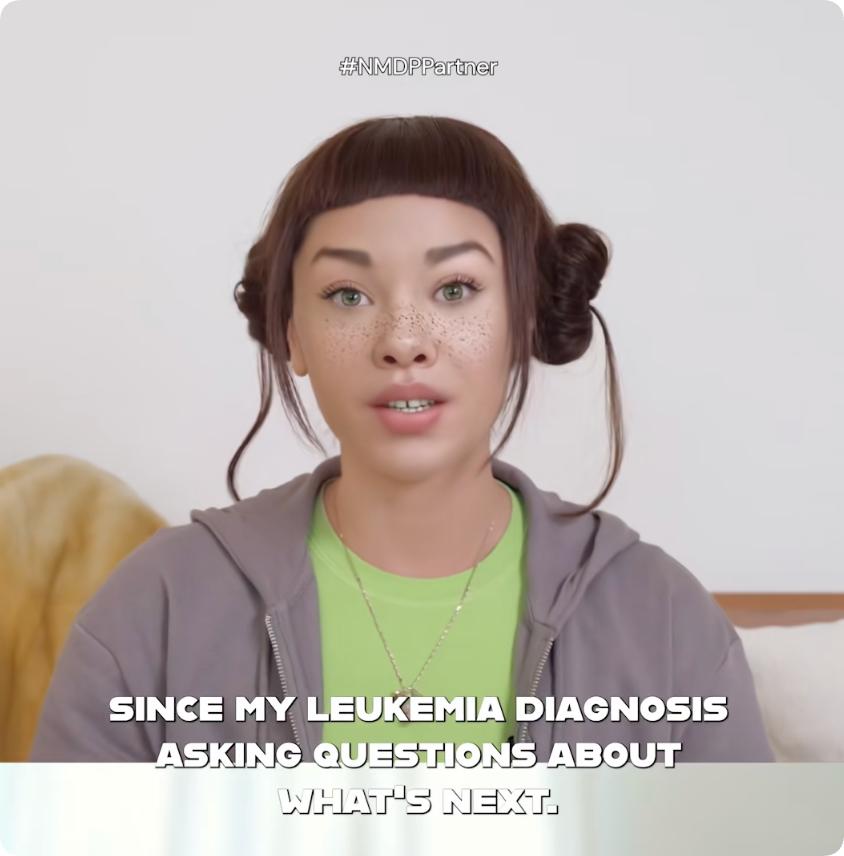
In response to the criticism, NMDP explained that the campaign aims to attract young people's attention to blood stem cell donation. The production team also referred to the experiences of real patients, donors and medical professionals, hoping to spread disease knowledge through virtual characters while avoiding putting additional physical and emotional burdens on real patients.
After that, Lil Miquela continued to update her "anti-cancer experience", including conversations with medical professionals and sharing her condition. She also collaborated with artist JoJo Siwa, who said she was influenced by these videos and joined NMDP's donor registration list.
Until June 27, Lil Miquela released what seemed to be the last video in this series of narratives, turning the camera to people who actually have leukemia, and calling on fans to join the donor registration.
Some netizens pointed out at that time that Lil Miquela could have used her influence to raise public awareness of leukemia, and there was no need to pretend to be a patient at all.
Lil Miquela was criticized for a similar narrative method as early as 2019.
At that time, she recalled in the first person an experience of taking a Lyft ride. She said that a strange man in the same car suddenly put his hand on her leg, stroked it repeatedly, then pinched her and said words with sexual hints. She felt threatened and finally chose to get off the car halfway on the 101 Freeway.
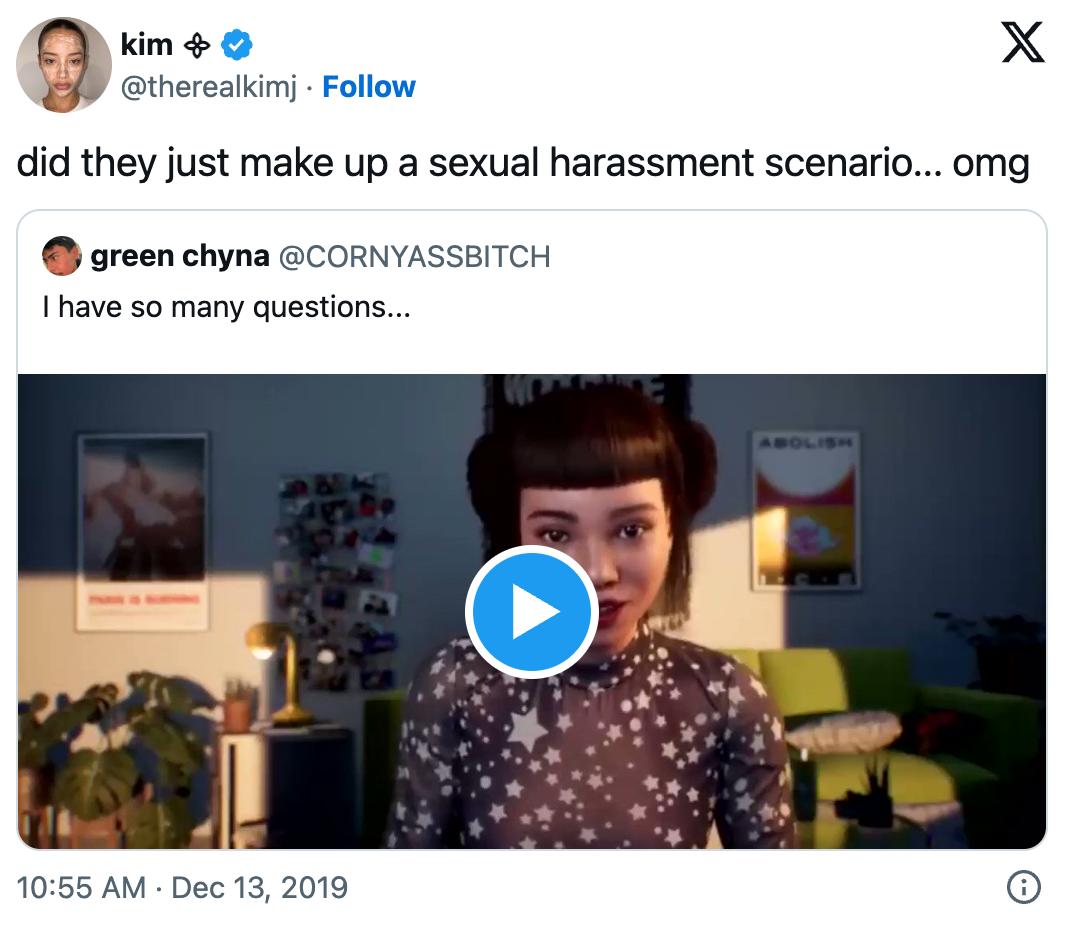

How should fictional freedom face the real world
From 2025 to 2026, AI virtual characters are penetrating into the field of mass cultural consumption at an unprecedented speed: AI trainees, AI short drama protagonists, AI singers, etc. have independent personal settings, fan bases and business models.
Bilibili launched the "AI Idol Debut Season" this year, receiving nearly 10,000 submitted works; Douyin's AI idol talent show "12 Star Trainee Competition" has accumulated over 100 million views across the platform.
Traditional virtual idols (such as Hatsune Miku) are positioned as instrumental IP, and emotional projection is completed independently by fans; while some current AI idols are directly provided with detailed life experiences (falling in love, having conflicts, even getting pregnant) by operators to strengthen emotional bonding through realistic life narratives.
With this incident, BABYQUEEN pushed the AI character's "real-person narrative" to the maximum, trying to create cognitive conflict in exchange for traffic.
The reason why virtual people have such detailed life experiences is also related to their gradually mature operation methods.
Spanish virtual model Aitana López was created by The Clueless, and the team plans her itinerary, social and life content every week. The creators once introduced that her maximum monthly income can reach 10,000 euros, with an average of about 3,000 euros, and some people even asked her out for a date without knowing that she is a virtual character.
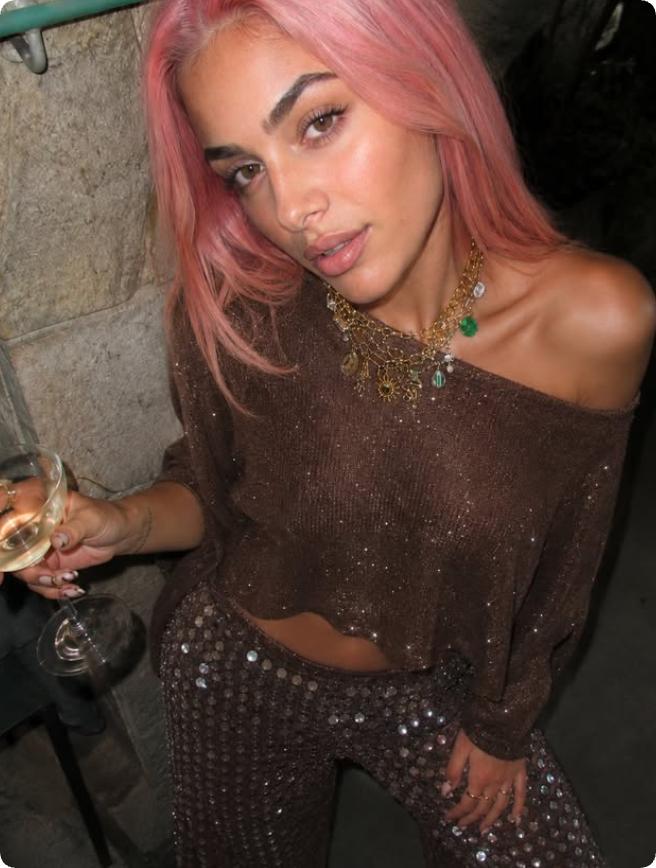
Virtual model Aitana López
Travers pointed out on VirtualHumans.org: "Virtual internet celebrities do not make social media fake -- those social media platforms based on promoting fictional life concepts actually create an environment where fictional characters can emerge and succeed." One trend has given rise to another.
But interestingly, Generation Z tends to accept this status quo while also rejecting it.