Chasing Electricity: Speed, Game and Ledger
When the price of one kilowatt-hour of electricity surges a hundredfold to be valued as a Token, how should the new accounts for the frantically sought electricity and computing power be calculated?
Drive 240 kilometers northwest from Beijing, the outline of the city recedes to the horizon, and wind takes the leading role.
This is Ulanqab: with an average annual temperature of 4.3℃, an average annual wind speed of 7.2~8.8 m/s at 70 meters high, and 7300 to 8100 hours of annual effective wind duration. Cold and wind used to be the only "specialty" of this sandy wasteland, but now they have become the most sought-after industrial raw materials.
People on the construction site are working intensively before the frozen soil seals the ground. In the office buildings in Beijing, the infrastructure departments of major tech companies are all asking the same question: Can the computer room be delivered faster?
This is also the question that Ruan Jianbin has been asked most frequently in the past year.

Ruan Jianbin, Project Manager of Broad Data in Ulanqab Source: Interviewee
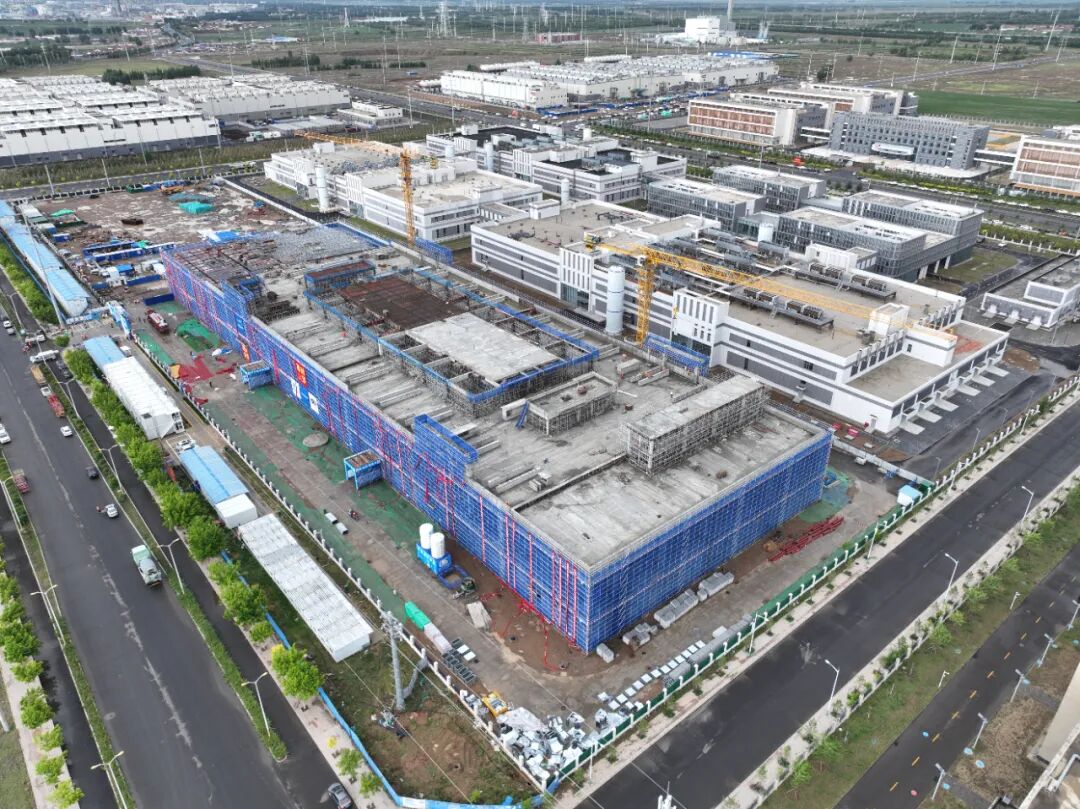
He is the Ulanqab Project Manager of Broad Data. When he first came to survey the site in July 2025, the surrounding area was still flat land, "there was only one 'shell' with civil works completed in front of my eyes", which was the main structure of the intelligent computing center. The electromechanical construction team officially entered the site in August that year, and the delivery was completed by the end of the year, taking 4 months.
This is already the limit speed, which is based on the completion of land and energy indicators and the capping of the civil shell. If the whole process from civil construction to electromechanical installation is to be completed, "it will basically take a year", said Ruan Jianbin.
One year is a luxury figure in today's computing power competition. Zhao Xuefei, head of UCloud Intelligent Computing Center, said bluntly, "If you don't build the building in advance and finalize the plan, you won't be able to get large customers."

Zhao Xuefei, Head of UCloud Intelligent Computing Center Source: Interviewee
Why is there such urgency? It can be summed up in one sentence: What is expensive is not the house, but the "cards" inside the house — and the "cards" cannot wait for the house.
On the market, a mainstream server has been speculated to be worth tens of millions of yuan, while the construction cost of the intelligent computing center that hosts it may only be hundreds of thousands. The service life of the chip is generally only 3 to 5 years. When the chip is bought back, the cabinet is empty, and the high-priced equipment can only wait for depreciation.
"From the ordering of server equipment to the delivery of the intelligent computing center, the cycle is basically required to be 3 to 4 months, and large customers cannot afford to wait," said Ruan Jianbin.
The model competition is still in the window period. If computing power lags behind for a quarter, you may miss an expensive ticket. On the output side, Token demand is growing exponentially. After one kilowatt-hour of electricity passes through the computer room, its value surges a hundredfold.
Zhao Bin, Dean of AIDC Strategic Research Institute of GCL Energy Technology, did the math: "The on-grid price of one kilowatt-hour of electricity is about 30 to 50 cents, and it is about 60 to 70 cents at the industrial end. After being converted into Token, it can be as high as 100 to 200 yuan, and the value is amplified by nearly a hundred times."
While waiting for the "money printer" to be delivered, everyone is pushed to full throttle. "We have a building scheduled for delivery from October to December this year. The design was completed last year, construction started in March this year, and all the cabinets were booked up in May," Zhao Xuefei revealed, adding that there are still many customers queuing up. Some people even asked, "As long as I finalize the server, can you deliver the computer room within two months?"
Leading enterprises face even greater pressure. Yang Yu, President of China Data Group, revealed that the company's Zhongwei project took only one year from signing, design, construction to delivery, and the Ulanqab Phase II project has been under construction throughout the winter, resulting in significantly higher costs. "The customer's delivery timeline is very tight, and we must ensure project delivery."
A new industrial chain priced in Token is quietly taking shape in the game of all parties.
Recently, *China Entrepreneur* visited computing power hubs including Ulanqab, and interviewed computing power demanders, infrastructure operators, energy suppliers, power supply sides, upstream equipment suppliers, local governments, industry scholars and industry-education integration institutions. In this competition, major tech companies are urging delivery, data centers are chasing electricity, power supply companies are chasing planning, local governments are competing for projects, and vocational colleges are chasing talents.
We try to answer five questions:
1. When the cabinet power jumps from 5kW to 100kW or even 1000kW, how is AI rewriting the rules of data centers?
2. One kilowatt-hour of electricity costs 30 cents, why can it be sold for 100 to 200 yuan after being converted into Token, and how to calculate this new account for electricity and computing power?
3. Why are electricity, land, capital, talents and equipment all being competed for, and none of them can keep up with the speed of demand?
4. Self-built or leased, cross-border or stick to one's own field, pursue speed or pursue stability, how does the game at the gaming table rewrite the pattern of the industrial chain?
5. Is the Token factory the final destination of computing power, and where is the next Ulanqab?
Computer Rooms Rewritten by AI
From 5kW to 100kW, the jump in power density is subverting the experience accumulated by the data center industry over the past 30 years.
Wang Zhaoyang, General Manager of Alibaba Cloud Global Data Center, used a set of figures to explain how the surge in power has overturned the industry experience and restarted everything.
He divided data centers into four eras. The first generation of EDC (enterprise self-built data center) has a single cabinet power of 3 to 5kW, and each enterprise builds its own data center. The second generation of IDC (Internet Data Center) is a data center shared by multiple tenants. The third generation of CDC (Cloud Data Center) has changed from hosting to super-large-scale customization. The fourth generation of AIDC (AI Intelligent Computing Data Center) is the form of today.
"EDC single cabinet is 3 to 5kW, IDC is 5 to 8kW, CDC is 10 to 15kW, and AIDC suddenly reaches 100kW. Within two years, there will definitely be a cabinet with 1000kW."
What does 1000kW mean? From the perspective of space first, there is an electric stove in a space of 1 square meter, and the heat it emits is exactly the heat of one cabinet.
Ruan Jianbin has a more direct perception of the change in power density. "In the past 5 to 6 years, one mu of land was basically planned for 1MW, and this figure now needs to be multiplied by 1.5. In the past, our cabinets of 10kW and 12kW, the single cabinet power next may reach 20 to 30kW, or even higher. If liquid cooling is adopted, 100kW cabinets are also available," he said, adding that these changes all happened within one year.
The time scale is also compressed. Ruan Jianbin explained that in the past, the design life of a data center was about 10 to 15 years, and power supply, heat dissipation and load-bearing were planned according to this cycle. But now GPUs iterate so fast that a batch of equipment needs to be replaced every 3 to 5 years. "This means that 3 years later, the current design may no longer be applicable. The power supply architecture, heat dissipation scheme, and cabinet load-bearing must all have sufficient flexibility."
What is more troublesome is the fluctuation. The power curve of GPU is completely different from that of CPU.
"The normal power of CPU is 800W, and the fluctuation curve is between 750 and 850W. A mainstream server with GPU has a peak power of 18kW, an average of 15kW, and may only have 6kW at low load," Zhao Xuefei said. When the power of one server jumps from 6kW to 18kW, other servers often do the same thing at the same moment. He emphasized that this synchronous shock poses a huge impact on the power distribution system, and sufficient technical means must be used to smooth it out, "otherwise the power distribution facilities are prone to failure."
Cooling is also a brand new challenge. "In the past, for a cabinet of 15kW with 50U space, if you put an 8U server into the cabinet, the total cooling capacity is sufficient. But suddenly one device needs to concentrate all the cooling capacity together, and the air distribution will change."
Liquid cooling is replacing air cooling, but it is still in the transition period. Zhao Xuefei from UCloud said: "In the past, most of the cooling methods were air cooling, and now liquid cooling is gradually rising." At present, UCloud adopts the technical direction of "same source for air cooling and liquid cooling".
Source: Interviewee
Ulanqab also has a special constraint: water shortage. The low temperature in winter makes the traditional water cooling scheme of data centers even more unfeasible here — "if there is water in the pipeline, it will definitely freeze and burst the pipeline," Ruan Jianbin explained. The pipelines here use fluorine, ethylene glycol solution, etc., and then fans are used to take away the heat.
Water shortage brings another constraint. Traditional data centers use water evaporation for heat dissipation, and PUE (Power Usage Effectiveness) can be made very low. In the eastern region, due to the warm climate, the PUE of data centers is usually between 1.5 and 1.8. With an average annual temperature of 4.3℃, Ulanqab can theoretically achieve a lower PUE.
However, Ulanqab prohibits the use of water evaporation for heat dissipation, which means that the ceiling of PUE is higher instead. Zhao Xuefei explained: "If the traditional air cooling scheme and non-evaporative type are used, the maximum cooling capacity can only reach 1.2 to 1.25, which is the limit. If you want to lower it further, you have to use liquid cooling."
An Account for Electricity and Computing Power
A building with full load of 30MW costs 100 million yuan in electricity bills a year. In the computing power business, electricity price is the hardest hard currency.
Ruan Jianbin from Broad Data did the math. Among the operating costs of the intelligent computing center, "electricity bills account for more than 60%".
An operator insider gave the electricity price ladder for industrial electricity in Ulanqab: the benchmark of West Inner Mongolia Power Grid is more than 40 cents, the market-oriented transaction can be reduced to 37 to 38 cents, the direct connection of green power can reach just over 30 cents, and the early subsidy projects are 29 to 30 cents.
The electricity price difference directly determines the computing power cost difference. Zheng Zihao, General Manager of Envision AIDC Product Line, told *China Entrepreneur* that the Token price in the west may be 10% to 20% lower than that in the east. The electricity price in Ulanqab is more than half of that in the east, which means that the cost of producing the same Token in Ulanqab is much lower than that in the east.

Zheng Zihao, General Manager of Envision AIDC Product Line Source: Interviewee
How specific is this cost advantage for large-scale intelligent computing centers? Ruan Jianbin said that even if the cost per kilowatt-hour changes by only a few cents, as the scale of electricity consumption expands, it will form a significant cost difference after accumulating throughout the year.
Cost pressure is global. A research report released by Morgan Stanley points out that by 2030, the global power demand of data centers will reach more than 3 times the current level, and electricity cost will become the largest single cost item for data center operators.
Looking at the investment structure again, the heavy asset attribute of this business is clear at a glance.
"Different from traditional construction projects, the bulk of investment in intelligent computing centers is not in civil engineering, but in electromechanical systems such as power supply and distribution, cooling and related infrastructure. As the power density increases, the upfront capital investment further increases, and the project investment recovery cycle is relatively long. Therefore, financing capacity and continuous capital investment capacity have become one of our important capabilities," Ruan Jianbin said.
An unnamed operator insider did another calculation: civil engineering investment accounts for the lowest proportion. A building can be built with more than 100 million yuan, but electromechanical investment may need 1 billion yuan. Plus the substation, the overall electromechanical investment may be 10 times that of civil engineering. "Customers sign long-term contracts with you, and we need a lot of upfront capital to advance the project. If the financing capacity is not enough, we may fall into a passive position."
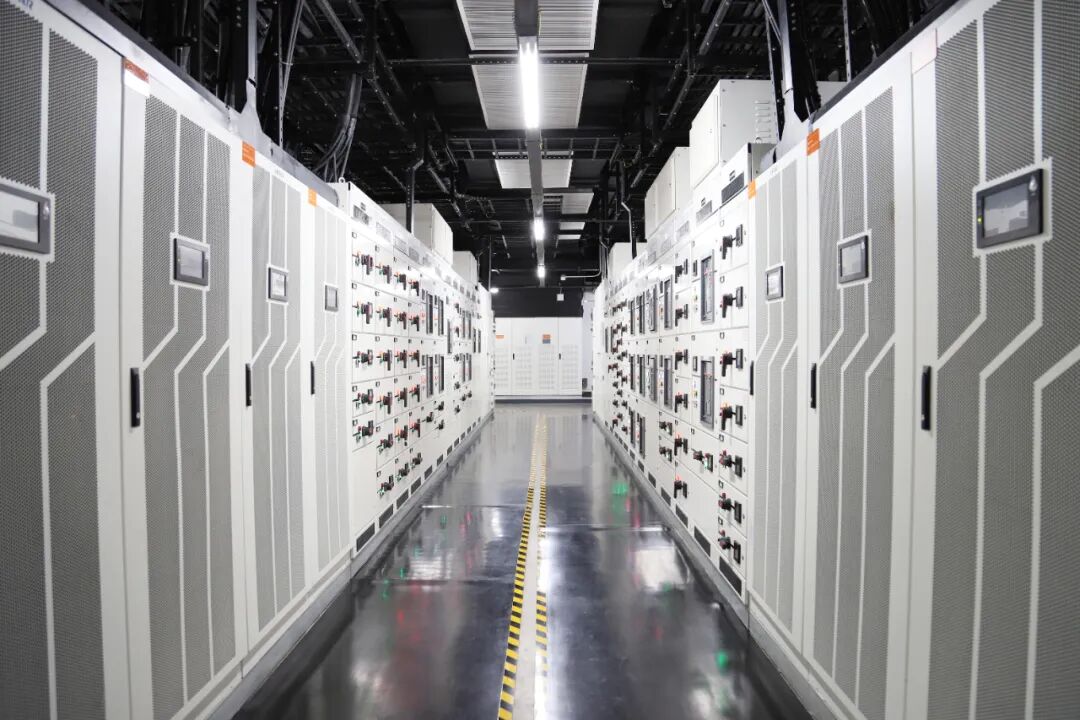
Electromechanical equipment includes transformers, distribution cabinets, air conditioners, cabinets, etc. Ruan Jianbin said that at Broad Data, "most of these equipment are customized by customers, and customers have clear requirements for brands, models and parameters."
Source: Interviewee
Zhao Bin's account is even more astonishing: IT side equipment (including servers, networks, storage) accounts for about 80%~90% of the total capital expenditure, of which GPU server cost accounts for the highest proportion on the IT side, close to 80%; civil engineering and electromechanical supporting facilities account for about 10%~20% of the capital expenditure.
Zhao Xuefei also calculated the investment ratio between servers and data centers: in the past, the