Embodied capital has begun to "soar into the sky and dive into the sea"
If the capital invested in embodied intelligence in the first half of the cycle was all spent on hunting for "mega-valuation targets", then the second half will belong to "vertical hardcore players".
Not long ago, Tide AI published a series of reports on capital pouring into the "underwater Unitree" track, and recently, the "space Unitree" track has also become a new battlefield.
On October 12, Anhui Xianyin Future Technology Co., Ltd. announced its financing progress. Since May 2026, it has successively completed three rounds of financing: Angel round, Pre-A round and A round in four months, raising a total of several hundred million RMB. Founded in September 2025, the company develops cable-driven flexible space robots, namely robots that can repair and refuel satellites in space.
Looking at this news alone, it is nothing more than a financing announcement of an early-stage company.
But when we put it into the financing map of China's robotics track over the past year, the signal becomes clear: the capital in the embodied intelligence sector is flowing in batches from the most crowded ground humanoid robot track to places that humans cannot reach at all, and these places are starting to become "valuable".
The first movers in the underwater track have already secured tangible orders
Underwater robots are the first batch of players that have achieved a closed commercial loop on this path.
Tide AI previously reported in Capital is Concentrated "Going Underwater", Betting on the Next "Underwater Unitree" that: for a cargo ship fully covered with barnacles, manual hull cleaning takes two weeks, while the "Orca" robot from Sino-Ocean Intelligence can finish the work in 10 hours, with an efficiency 50 times that of manual labor.
Sino-Ocean Intelligence has already completed cleaning services for more than a thousand such ships, with the order value obtained in the first half of 2026 exceeding 1 billion RMB. In June 2026, Sino-Ocean Intelligence completed a Series A financing of over 1 billion RMB, setting a single-round financing record for global marine robots. Zhu Xiaohu, Managing Partner of GSR Ventures, followed up his investment in five consecutive rounds.
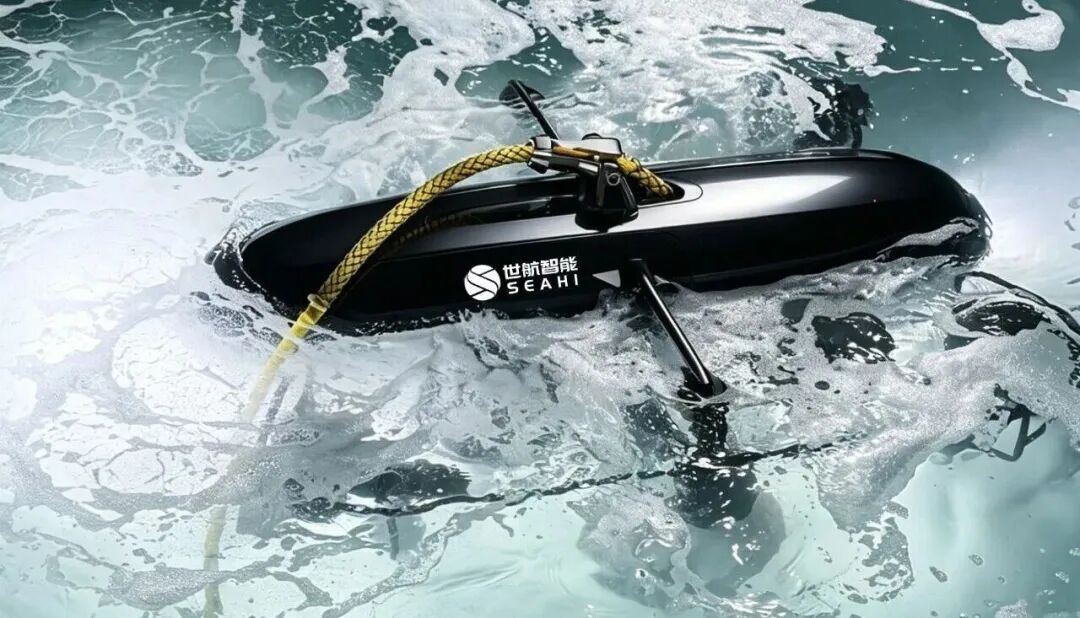
Sino-Ocean Intelligence's "Orca" robot
This track has far more players than Sino-Ocean Intelligence. In Top 10 Underwater Robots: Who Can Finally Deserve the Title of "Underwater Unitree", Tide AI sorted out a number of capital-backed players in this sector.
For example, Shandong Future Robot is a representative enterprise with a domestic market share of about 60% in deep-sea robots. Its core components of 3500-meter deep-sea operation robots are all domestically produced. It recorded a revenue of 276 million RMB and a net profit of 97.18 million RMB in 2024. In May 2025, it completed a Series A financing of several hundred million RMB led by PetroChina Kunlun Capital, and completed a Series B financing of several hundred million RMB in January 2026. Its application scenarios go far beyond ship cleaning: 3000-meter deep-sea oil and gas engineering, offshore wind power, deep-sea mining, and submarine communication are all typical operations beyond the limits of human physical capability.
Another example is Shenzhen-based Chasing-Innovation, which completed a Series C financing of nearly 100 million RMB in March 2026, with its products sold to many countries around the world...
Capital is continuously pouring into the underwater track, but more importantly, the scenarios are gradually narrowing down and the demands are becoming increasingly rigid. The problem to be solved has shifted from the laboratory question of "what can robots do" to the engineering problem of "this task cannot be done or is too difficult for human workers to handle".
The logic of the space track is more extreme than that of the underwater track
Space robots may be the next stop of this trend.
There are thousands of active satellites in Earth orbit at present, but traditional satellites are "one-time consumables" that become useless scrap iron once their fuel runs out, and have to be abandoned once they break down.
On-orbit refueling, assisted deorbiting, and on-orbit maintenance are all highly lucrative businesses.
The expected market size of the global on-orbit service market is at the level of trillions of RMB.
But why no one has achieved results in the past few decades? Because the technology was stuck at a key link.
Precise operations in space require a mechanical structure that can not only extend over a large range, but also safely avoid obstacles. Traditional rigid robotic arms lack collision buffering capacity in a microgravity environment, and a slight collision may cause damage to the fuel pipeline.
The cable-driven flexible route chosen by Xianyin Future essentially replaces rigid connecting rods with flexible "tentacles" that can absorb impact during collisions.
This technical route is rooted in more than 20 years of accumulation of the team led by Professor Liang Bin from Tsinghua University, and it is one of the very few space robot teams in China that have been verified by multiple real on-orbit missions.
The investment view of Huaying Capital is also very straightforward. They believe that the best scenario for the embodied intelligence track is not to replace human labor, but to achieve operation capabilities from scratch in places that are difficult for humans to reach, and "space" is exactly the most representative, high-value, and high-barrier scenario.
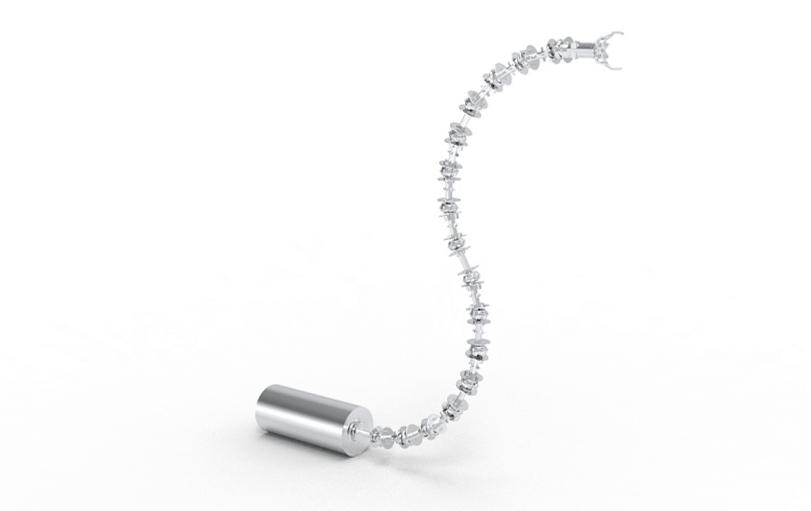
Xianyin Future's cable-driven flexible robot
The space track has far more outstanding players than Xianyin Future.
Ellipse SpaceTime, another player in the same track, completed a Series C1 financing of several hundred million RMB in December 2025, and its core strategic project "Star Pool Plan" is clearly targeted at the "space embodied intelligence" system.
Of course, the barrier of "space" is the highest for the "going to space" mission, but capital still has full imagination for airborne embodied intelligence.
Tide AI previously reported in Airborne Embodied Intelligence Star Enterprise Weifen Intelligent Completes Several Hundred Million Yuan Series A2 Financing that Weifen Intelligent is led by Gao Fei, a post-90s doctoral supervisor from Zhejiang University, focusing on the R&D and application of flying embodied intelligence. Its P300 intelligent exploration flying robot can operate autonomously in complex environments such as mines and underground tunnels without GPS and manual control. In September 2026, Weifen Intelligent completed a Series A2 financing of several hundred million RMB with a valuation of several billion RMB, led by Puhua Capital, with all existing shareholders including Honghui Fund, Wuyuan Capital, and Shenzhen Venture Capital making additional investments.
Capital is turning "going to space" from a distant narrative concept into an investment map that is being filled in.
The flow of capital has changed, and the underlying logic has also changed
Looking at the underwater, space and airborne tracks together, we can find a common feature: in these scenarios, the positions replaced by robots are either completely unreachable for humans, or cannot be handled or sustained even if humans arrive there.
Below 200 meters underwater, the operation window for saturation divers is only a few minutes, and 300 meters is the physiological limit. The same is true in the air: drones can hardly operate stably in GPS-denied environments such as mines, underground tunnels and canyons. Signal occlusion, airflow disturbance, endurance bottlenecks and airspace regulations make it easy to "fly" but extremely difficult to "complete the operation successfully". Not to mention space: the cost, risk and window limit of astronauts' extravehicular activities are the core bottlenecks restricting the operation of space assets.
These scenarios are not just a cost calculation of "whether robots can be cheaper than humans", but also a supply calculation of "no human can do this job".
The humanoid robot track has been developing for several years, but its progress is exactly stuck in the cost calculation problem.
When Zhu Xiaohu announced "exiting humanoid robot companies in batches" in March 2025, the reason he gave was that the commercialization path was unclear: "Who would spend hundreds of thousands of yuan on a robot to do these jobs?" But he immediately led the investment in Sino-Ocean Intelligence, the underwater robot developer.
This shift itself speaks for itself: capital has not left the robotics sector, but has shifted from "story-telling scenarios" to "scenarios with clear and calculable returns".
The financing density of the special-purpose robot track is also confirming this point.
Tide AI previously reported in The Solution of Embodied Intelligence for Special Hazardous Chemical Industrial Scenarios Is Hidden in Xuanchuang Robot's Tens of Millions of Yuan Series A1 Financing that Xuanchuang Robot, a startup founded by the team from Harbin Institute of Technology that develops special embodied intelligence robots for petrochemical and nuclear power scenarios, obtained tens of millions of RMB Pre-A round from Oriental Fortune Capital in August 2025, completed Pre-A+ round in February 2026, and completed tens of millions of RMB Series A1 in September 2026, completing three rounds of financing in less than a year. It has delivered 25 out of 125 ordered units for PetroChina Xinjiang Oilfield, with 20 units delivered monthly, and its backlog of orders exceeds 100 million RMB.
On the other hand, Boqing Technology, an intelligent special-purpose robot company with the background of the team led by Academician Pan Jiluan from Tsinghua University, completed a Series B financing of several hundred million RMB in December 2025...
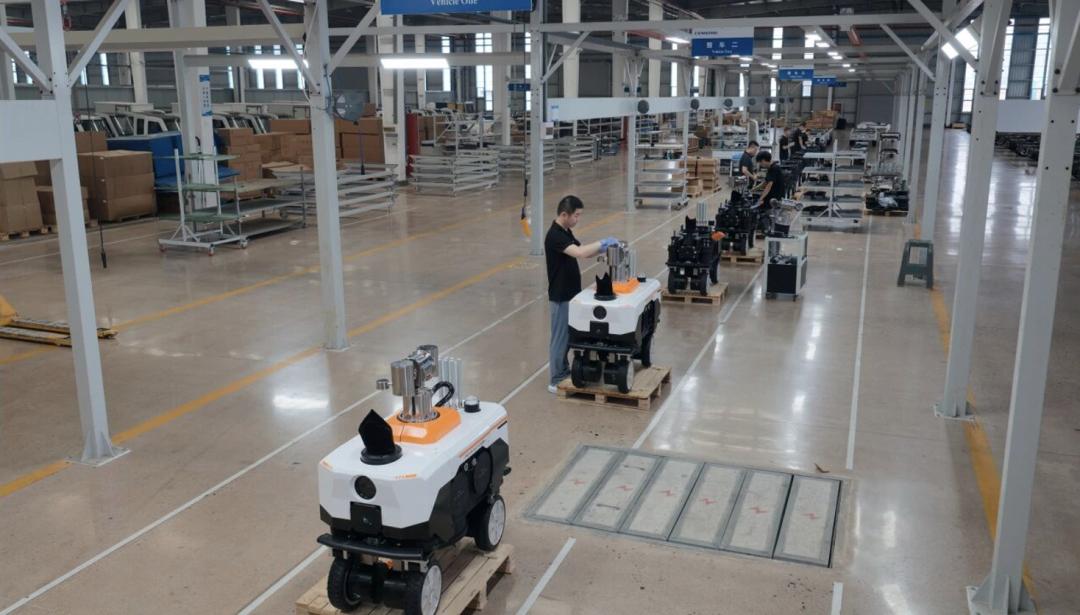
Xuanchuang Robot
All these companies have one thing in common: they have clear customers, rigid scenario demands, and their products have already been put into operation in real industrial environments.
Tide AI's Viewpoints
"Going to space and diving into the sea" is not a romantic imagination, but the result of capital betting after embodied intelligence enters the profit-calculation stage from the concept stage.
In the next year, a clearer hierarchy may emerge in China's robotics track.
The first tier is special-purpose embodied intelligence companies that can clearly calculate returns in real scenarios, including underwater cleaning, deep-sea operation and maintenance, chemical plant inspection, space on-orbit service, etc. These scenarios have the most rigid demand and the most solid substitution logic, and will be the first to produce companies with actual revenue;
The second tier is general-purpose humanoid robots. Although they have a higher technical ceiling, their commercialization pace will be much slower, and the patience of capital will also be tested more strictly.
The underwater track has passed its inflection point.
The business growth data of Sino-Ocean Intelligence, the entry of industrial capital into Shandong Future Robot, and the global sales of Chasing-Innovation all indicate that this track is not waiting for an outbreak, but is already in an outbreak, though it is far from the public view.
The space track will develop slower, but its barriers are also higher.
The on-orbit service market is not a "first-come, first-served" market, but a market where "you are only eligible to participate after you have passed verification". Xianyin Future completing three consecutive rounds of financing in four months is essentially capital scrambling for a scarce spot: one of the very few space robot teams in China that have passed real on-orbit verification. The window period of this track will not be too short, but the admission tickets are very limited.
The airborne track is an underestimated part in the "going to space" narrative.
Weifen Intelligent's valuation reached several billion RMB in the Series A2 round, led by Puhua Capital with all existing shareholders making additional investments, which shows that capital's imagination for "airborne embodied intelligence" is not limited to the low-altitude economy concept, but has seen the real demand for flying robots to replace manual labor in GPS-denied complex environments such as mines and underground tunnels.
The true meaning of "going to space and diving into the sea" is that embodied intelligence is going to the places where it most deserves to go, the places that humans cannot reach, cannot stay for long, and cannot work in, and the revenue from these places may come earlier than the revenue from consumer scenarios like living rooms.