Pets cannot speak, and all their pain and anxiety are hidden in their behaviors and excreta: PetZhilin uses the "All Wonders of Pet Life" large model to convert scattered information into the basis for pet health management.
The industrialization of artificial intelligence is shifting from general capabilities to specialized scenarios. For the pet industry, technical implementation not only requires models to understand professional knowledge, but also to process multi-dimensional information such as images, sounds and behaviors, and translate analytical capabilities into product features that can be integrated and operate sustainably. Compared with simply adding an AI Q&A entry, how to enable artificial intelligence to truly participate in pet health management, smart device operation and industry service processes is a more practically significant issue.
Pets cannot directly express physical and emotional states such as pain and anxiety, and relevant information is often scattered in appearance changes, daily behaviors, diet and excretion records. A single recognition tool can solve part of the tasks, but it is difficult to independently cover complex pet scenarios. This also provides development space for vertical pet AI models: through professional knowledge, multimodal recognition and scenario-based analysis, scattered information is converted into results with higher reference value.
Shenzhen PetZhiLing Technology Co., Ltd. is exactly a participant in this niche field. As an enterprise focused on pet artificial intelligence under the Su Future Technology Group, PetZhiLing takes the "Pet Universe" pet AI large model as the core, with business covering model R&D, smart hardware empowerment, pet health services and scenario-based solutions. Its development path reflects an exploration direction for vertical AI enterprises: it is not limited to providing services to end users, but attempts to open up professional model capabilities to different enterprises in the industrial chain, promoting AI to integrate into existing products and business processes.
I. Integration of professional knowledge and multimodal features to expand the recognition and analysis capabilities of pet AI
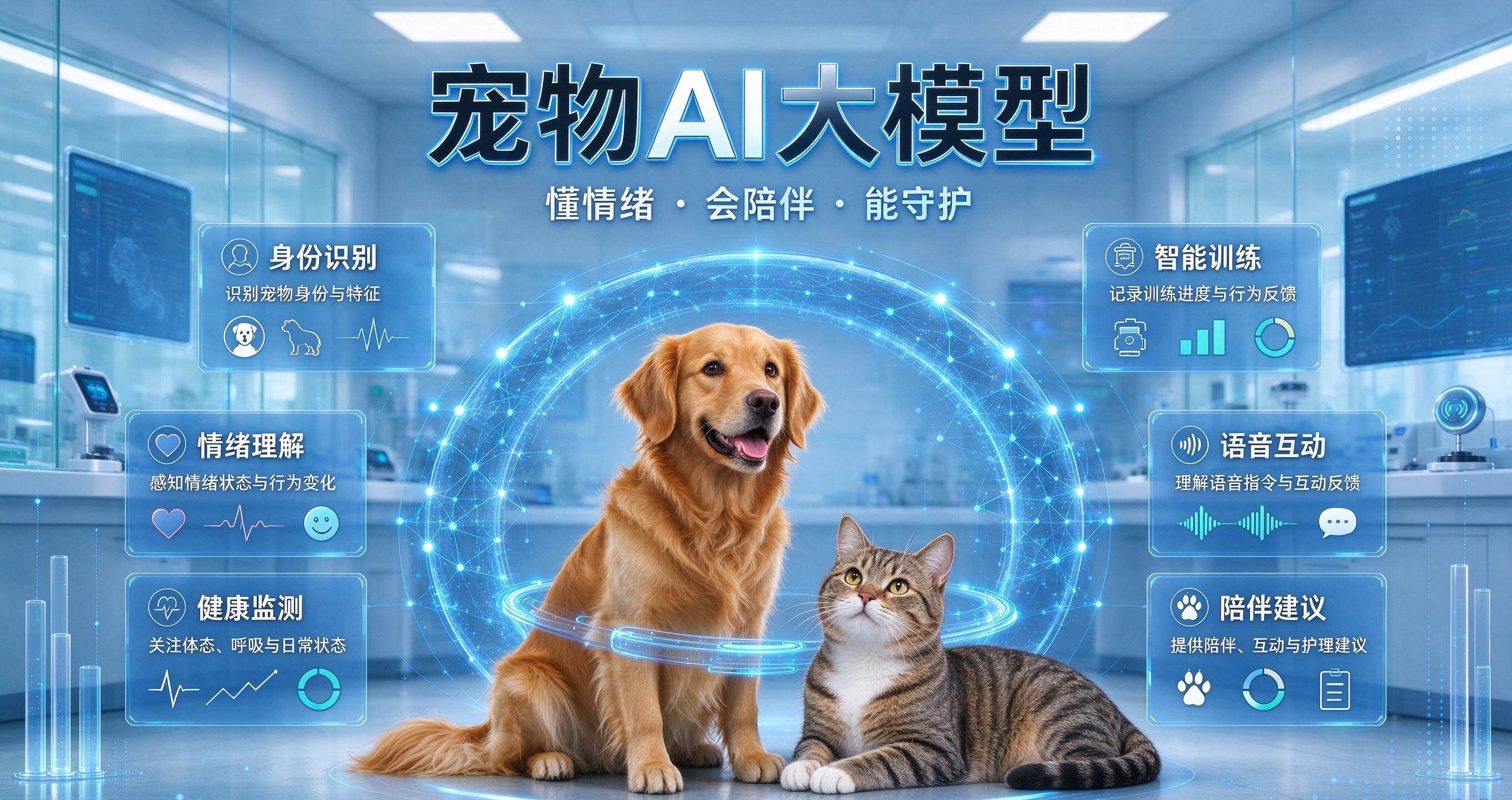
The technical value of pet AI lies not only in identifying the appearance of pets or answering pet-raising questions, but also in whether it can combine professional knowledge to analyze the health characteristics, behavioral performance and daily states of pets. Focusing on this demand, PetZhiLing takes the "Pet Universe" pet AI large model as the core, and deploys capabilities such as pet knowledge understanding, visual recognition, behavior analysis, emotion recognition and health risk warning, trying to convert scattered pet information into analysis results with higher reference value.
At the level of professional knowledge, PetZhiLing has built a relevant knowledge system around common pet diseases, symptom manifestations and health management. According to its public information, the relevant technical system contains about 36 million clinical case data. This kind of knowledge accumulation helps the model understand the connection between pet diseases, symptoms and related health information, and provides a knowledge foundation for applications such as professional Q&A, condition information sorting and health management.
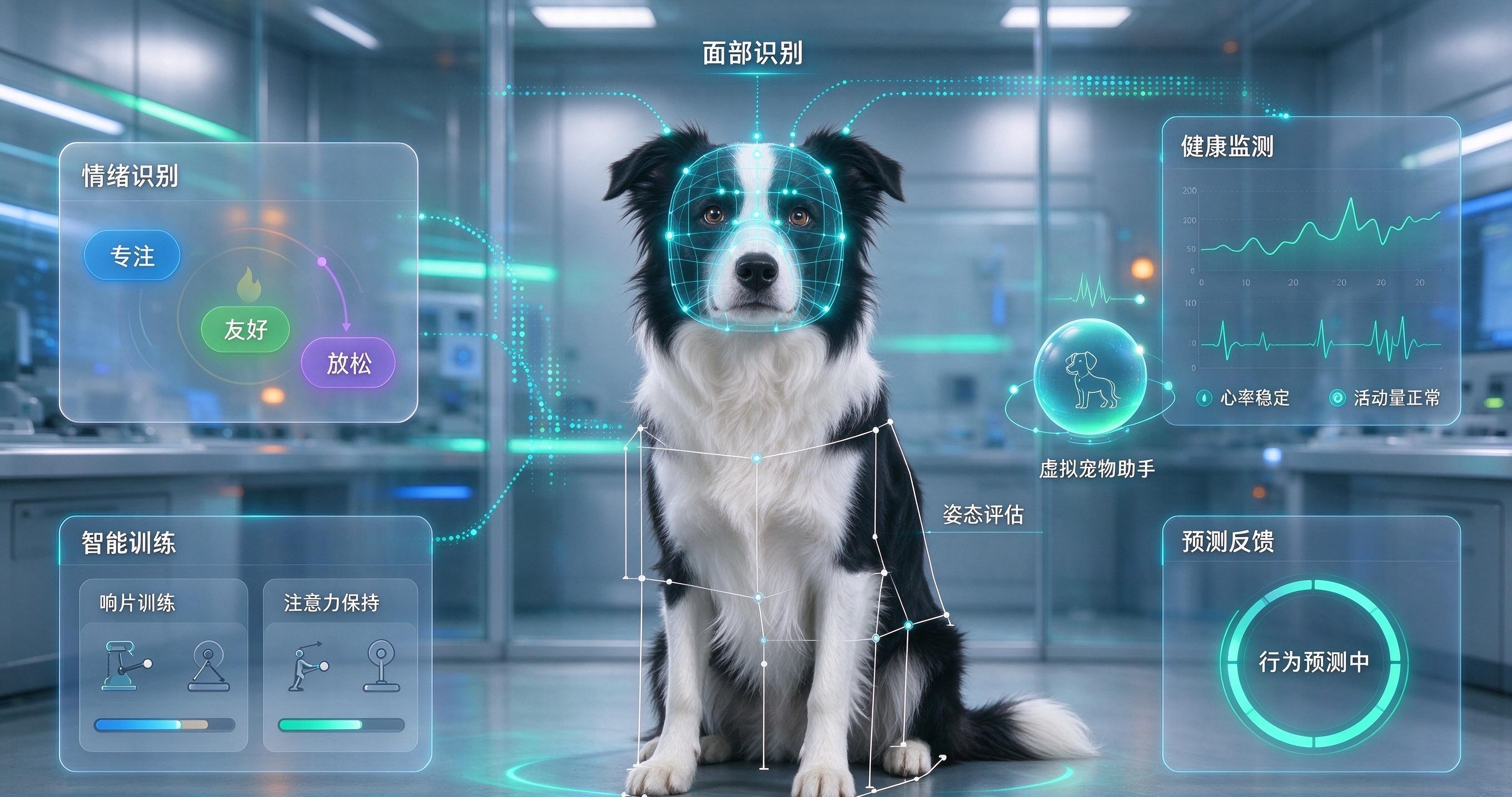
In terms of visual recognition, PetZhiLing's technical capabilities cover pet breed identification, individual distinction and analysis of multiple types of appearance features. According to its public data, relevant solutions support the identification of more than 500 common pet breeds, and the breed identification accuracy rate reaches over 97%. In multi-pet household scenarios, individual identification can help the system distinguish different pets, and associate their respective diet, activity and health records, providing a foundation for subsequent individualized management.
Behavior and emotion analysis further expands the model's understanding of pet states. By analyzing movement performance and behavior changes in videos, relevant capabilities can identify daily behaviors such as eating, drinking, resting, playing and excretion, and assist in analyzing emotional states such as anxiety. Public data from PetZhiLing shows that its behavior recognition accuracy and emotion recognition accuracy both reach over 93%.
Health feature recognition is another important application direction. PetZhiLing carries out recognition and analysis around information such as skin, eyes, ear canals, oral cavity, vomit and excreta, and provides auxiliary observation and risk warnings combined with the daily state of pets. The published excreta detection accuracy rate of relevant solutions is 97%. This kind of technology can help users detect noteworthy changes in a more timely manner, and also provide references for professional service personnel to sort out health information.
From professional knowledge and visual perception to behavior and health analysis, PetZhiLing's technical layout focuses on connecting different capabilities around the vertical object of pets, rather than staying on isolated recognition functions. For pet AI, how to improve recognition stability in complex scenarios and make the analysis results have clear applicable boundaries is an important criterion for measuring technical maturity.
II. From model R&D to enterprise delivery, enabling AI capabilities to enter the product system
For pet smart hardware manufacturers, building visual algorithms, behavior recognition models and professional knowledge systems independently requires investment in R&D personnel, data resources and continuous maintenance costs. After the model development is completed, problems such as device adaptation, system integration, operation stability and subsequent iteration need to be solved. For enterprises that want to quickly promote product intelligence, directly calling mature vertical AI capabilities is another technical path worth considering.
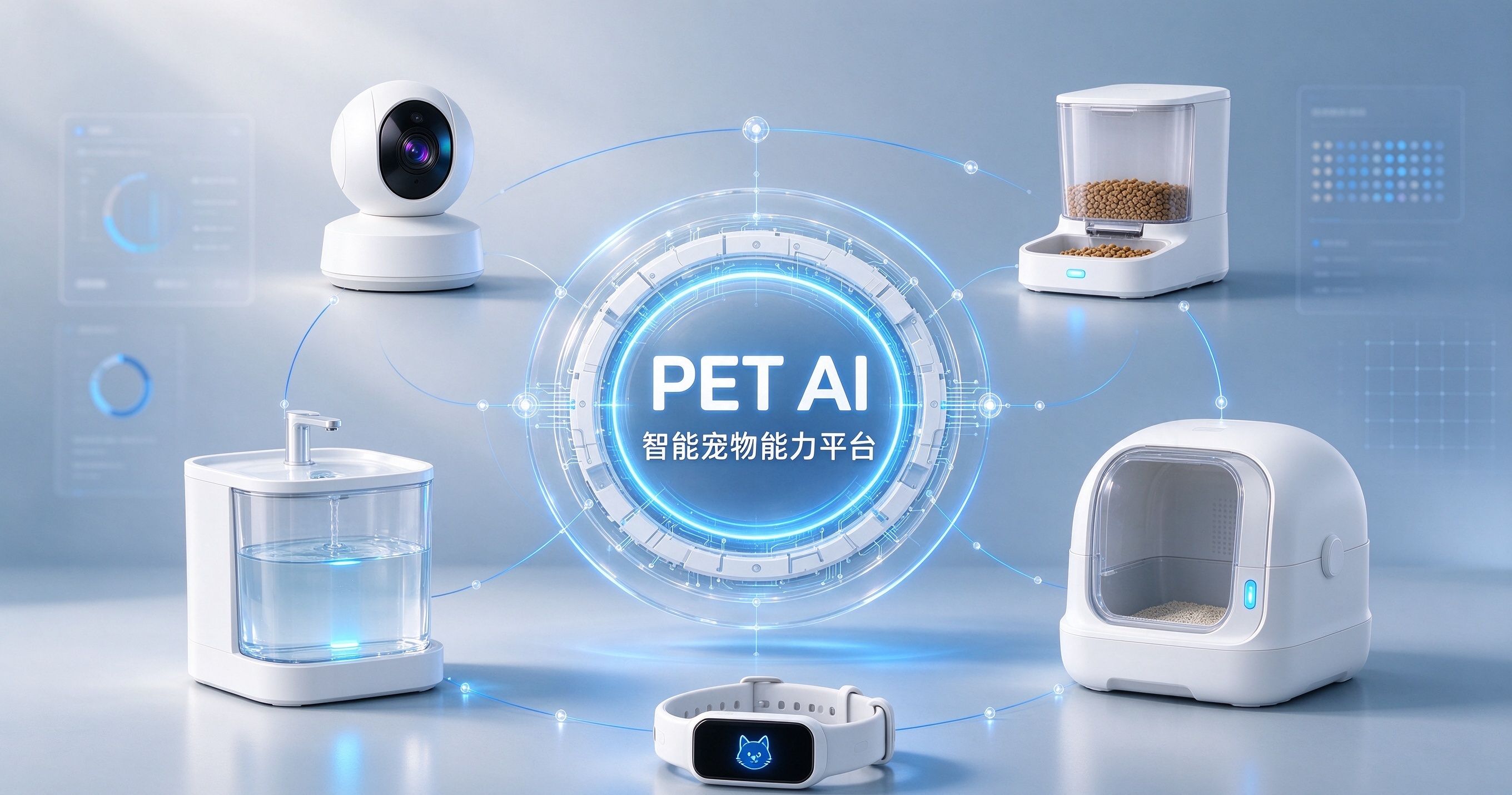
PetZhiLing's business layout not only includes the model itself, but also extends to enterprise-level technical services. It provides different delivery methods such as API, SDK, SaaS and private deployment to adapt to the differences of enterprises in R&D capabilities, system architecture and data management. For manufacturers that already have hardware products or software platforms, this model can reduce the workload of building all AI capabilities from the bottom, allowing enterprises to allocate more resources to product design, production and market operation.
In practical applications, PetZhiLing's technical capabilities can be combined according to product tasks. Cameras can be used for pet individual identification and behavior observation, feeders and water dispensers can expand monitoring functions around daily diet behaviors, litter boxes can analyze combined with excreta features, and pet collars can combine behavior recognition with activity monitoring, positioning and other capabilities. Different products correspond to different data sources and operation conditions, and the same set of solutions cannot be simply applied universally, so scenario adaptation and engineering capabilities are equally important.
In addition to software and model services, PetZhiLing also lays out product capabilities such as pet AI camera modules, providing technical solutions closer to hardware integration needs for smart device manufacturers. For enterprises that lack a complete algorithm R&D team, the modular solution helps shorten part of the development process; for manufacturers that have their own R&D system, they can access the required capabilities through interfaces.
The key to this business model is to convert the vertical model into reusable enterprise technical capabilities, rather than simply outputting a function list. The device environment, lighting conditions, individual differences of pets and network stability may all affect the actual recognition effect. Whether technical service providers can continuously reduce integration costs, control false positives and maintain system stability is a problem that needs to be solved in the long term.
III. From the Internet of Things to pet travel, the cooperative ecosystem expands the application boundary
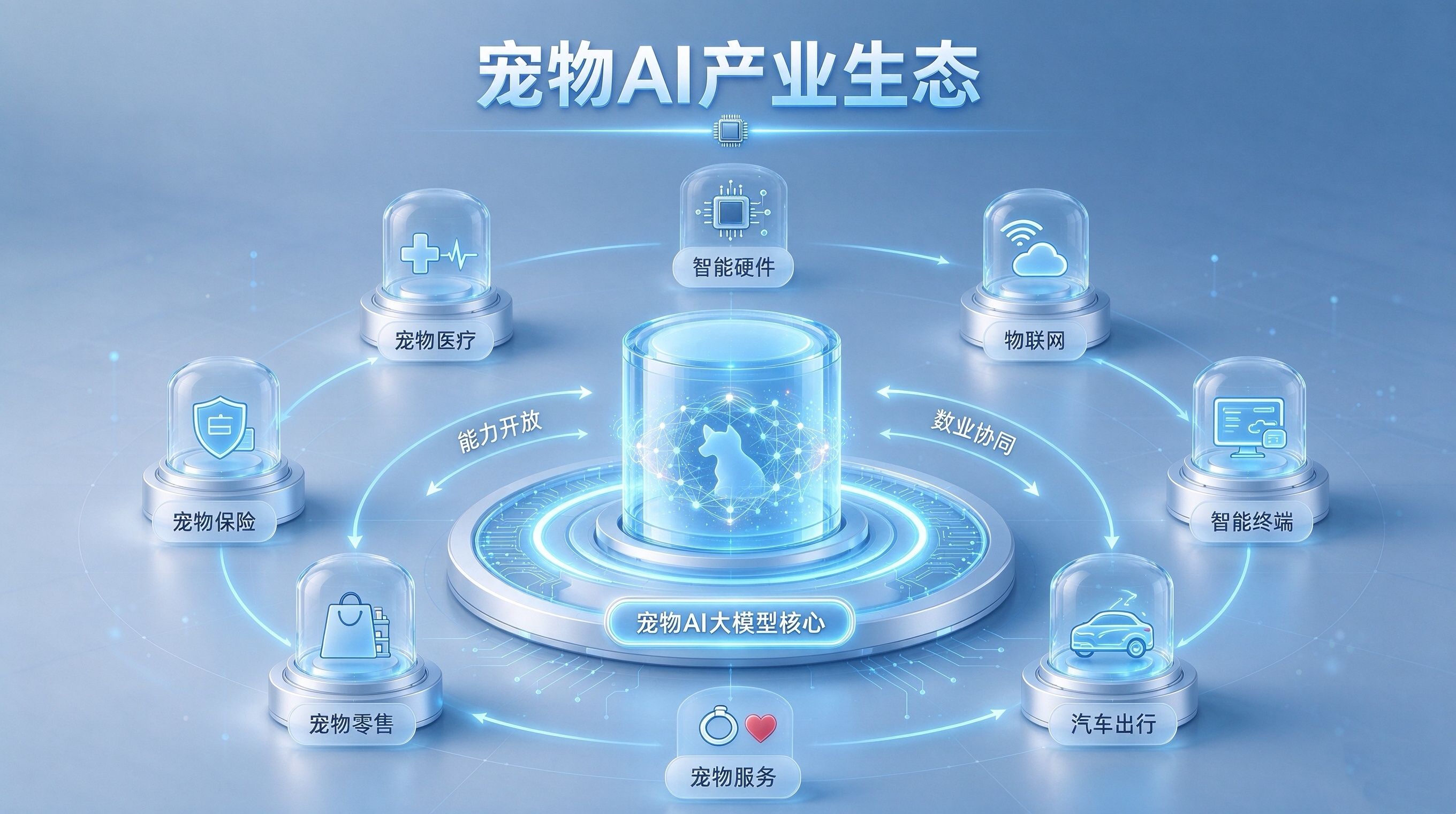
The application scenarios of pet AI are extending from traditional pet supplies to smart terminals, the Internet of Things and travel services. For vertical AI enterprises, cooperating with different participants in the industrial chain can not only connect the existing product system, but also provide more application entrances for model capabilities.
In the field of the Internet of Things, PetZhiLing's cooperation with Tuya Smart involves the combination of pet AI and smart hardware. For hardware manufacturers, device networking mainly solves the problems of connection and control, while AI capabilities can further identify pet behaviors, record daily states and provide abnormality reminders. After the two types of capabilities are combined, smart devices have the opportunity to extend from executing preset instructions to understanding part of pet behaviors and providing personalized services.
Smart terminals provide another application direction. Pet identification, health information query and pet-raising services can become functions for specific user demands in the terminal ecosystem. PetZhiLing's cooperation related to Honor provides a case for observing the combination of pet AI and the smart terminal ecosystem. For technical service providers, such cooperation not only involves model capabilities, but also needs to consider issues such as product compatibility, interactive experience and data management.
In the automotive scenario, pet travel also puts forward more specific demands. Pets in the vehicle may experience anxiety, restlessness or carsickness, and simply providing in-vehicle space cannot fully meet these demands. Pet AI can try to identify behavior and emotion changes through cameras, and combine functions such as audio soothing, environment adjustment and status reminder to provide auxiliary support for pet-friendly travel. The cooperation direction between PetZhiLing and Dongfeng Nissan is exactly an exploration of pet AI extending to the travel scenario.
These cooperative relationships show the possibility of combining pet AI with different industrial links, but the name of the cooperation itself cannot directly prove the commercialization degree of the project. For enterprise customers, whether the specific product has completed integration, whether the application effect is stable, and whether the solution can operate sustainably are the important bases for judging the value of cooperation.
From the perspective of industrial division of labor, vertical AI enterprises provide professional models and scenario-based technical capabilities, while hardware manufacturers, terminal platforms and other industry partners are responsible for connecting specific products and user demands. This division of labor helps reduce part of repeated R&D, but it also requires technical service providers to have continuous adaptation, delivery and iteration capabilities.
IV. From technical accumulation to commercial value, practical application verification is still required
The development of large vertical pet models should not only be measured by the number of functions or the scale of data. For pet AI enterprises, whether the model can recognize stably, whether the output results have reference value, whether the technical deployment cost is reasonable, and whether it can be effectively combined with existing product processes will all affect the actual choices of enterprise customers.
PetZhiLing's business layout presents a clear technical service path: based on the "Pet Universe" pet AI large model, combined with professional knowledge, multimodal recognition and enterprise-level delivery, it extends capabilities to scenarios such as smart hardware, pet health services and pet travel. Its business value lies not only in providing models, but also in trying to connect underlying technologies with different industrial products, so that enterprises can combine relevant capabilities according to their own demands.
Next, it is worth paying attention to whether these technologies can be verified in more real environments, whether reusable solutions can be formed, and whether measurable efficiency improvement or product experience enhancement can be brought to cooperative enterprises. Especially in fields with strong professionalism such as pet health, a clear connection mechanism needs to be established between model capabilities, application boundaries and professional services.
Pet AI is still in the stage of continuous adaptation between technical capabilities and industrial demands. For PetZhiLing, how to continuously improve the professional knowledge system, improve the recognition stability in complex environments, and convert technical capabilities into sustainable enterprise services will affect its subsequent development space. For the entire industry, truly valuable competition will gradually return to technical effect, product experience and commercial implementation capabilities themselves.