Open source code, AI cracks Cold War archives, zero modifications to 220 symbols, multiple achievements in historical cryptography.
Nine comrades, go to Ostrava and stay there for one year.
Moreover, these personnel must also have experience in political work.
These details, so specific that they are almost mundane, are hidden in a page of Czechoslovak cryptography course materials dating to around 1952. Horizontal lines, dots, numbers and strange symbols turn an ordinary text into ciphertext that cannot be read directly.
Now, this passage has been deciphered.
Zijian Zeng, a researcher at UCSI University, used an AI-assisted research workflow to complete the decryption of Ciphertext No. 615 on the HC Portal.
Eugen Antal, Associate Professor at the Slovak University of Technology in Bratislava and project coordinator of the platform, has confirmed that the decryption is correct; the official catalog marks the entry as "Solved" and credits Zijian Zeng as the solver.[1][2] This research was completed less than 10 days after Zijian Zeng published 453 manuscripts, 7 days earlier than OpenAI's large batch of mathematical manuscripts.
Figure 1 AI-generated conceptual illustration of archival decryption. The image is not the original ciphertext, historical photo or actual city scene.
This decryption has a follow-up: Zeng expanded the research into the History Unlocked AI project, sorting out multiple historical cipher cases, reproducible code and position-by-position verification records. The decryption results of other topics are being verified by other experts, and the conclusions will be announced one by one.
Nine Comrades Behind 220 Symbols
First look at the original image. The paper is yellowed, the ciphertext is arranged in eight lines, and red marks divide it into 32 segments. Many symbols look familiar, but they cannot be read according to ordinary numbers and punctuation. Question-mark-shaped strokes may represent a letter; one horizontal line and two horizontal lines may represent completely different letters.
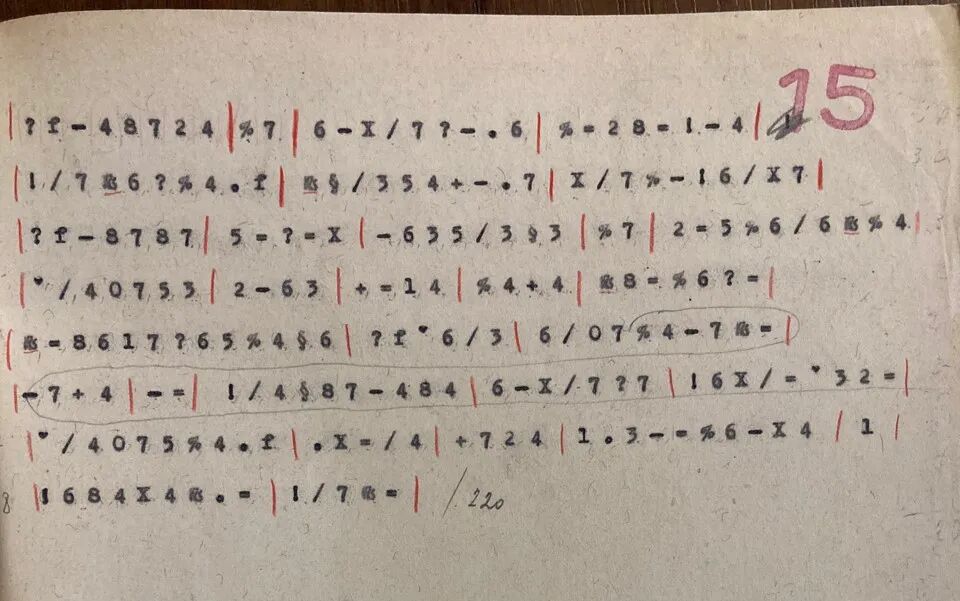
Figure 2 Original ciphertext of HC615. Source: HC Portal, image 1762; Archiv bezpečnostních složek, ZSGS, BF388a, 27-19/6-099.
HC Portal catalogs this page of material as HC615, and the archival location is ZSGS, BF388a, 27-19/6-099 in the Archives of the Security Forces of the Czech Republic. It is identified as a cryptanalysis course exercise, with the agreed year given in the catalog as 1952.[1]
In the project's records dated October 5, this problem was still marked as "Not solved". Now, it has a complete decryption and a public credited solver.
The general meaning of the decrypted content is: dispatch excellent staff to the Ostrava region; Transporta sends nine comrades to join a one-year labor team, including members of the factory-wide committee of a certain organization; they signed up voluntarily; Ostrava needs personnel with political work experience.
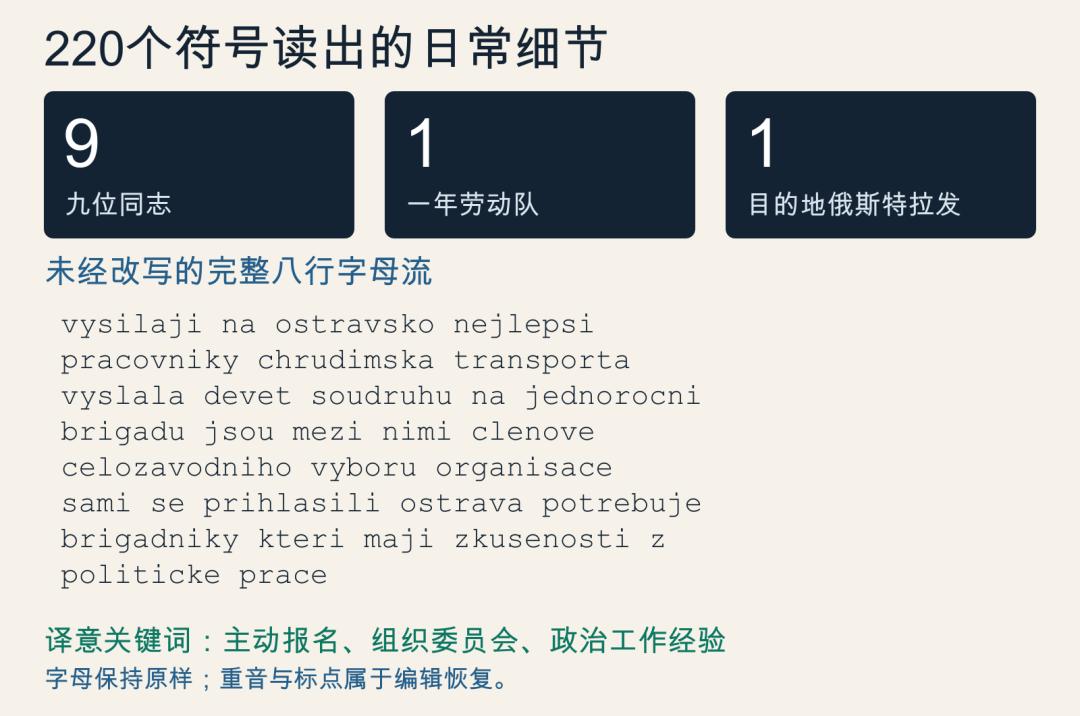
Figure 3 Complete 8-line ASCII letter stream and key translated terms. The letters are kept as they are; accents and punctuation are editorially restored.
"Nine comrades", "one year", "voluntarily signed up" and "political work experience" make this page of exercise readable, and also show readers the language of that era: factory organizations, labor arrangements and political work are written into the same text.
The urban history of Ostrava provides context for these terms. According to municipal records, after World War II and in the 1950s, the local area developed heavy industries such as mining and iron and steel. Industrial expansion attracted new workers to move in, and the city was known as the "steel heart" of the republic.[3]
The narrative of the labor team in the ciphertext can be cross-referenced with this background. However, the nine individuals have not yet been independently identified; the original source of the course text still has room for further investigation. Enterprise names, place names and organizational terminology have become retrieval clues for subsequent research.
AI Locks Every Symbol First
To read this page, the first hurdle is to figure out exactly what the input is.
Single and double horizontal lines, low and high dots, serif number 1 and thin vertical strokes are easy to confuse in scans. The research workflow preserves these differences, records the position of each symbol, and then freezes the transcription. The subsequent algorithm must interpret this fixed input.
The final transcription contains 220 symbols, 22 types of glyphs, 32 segments, and 8 lines of text. The red separations are analyzed as word boundaries, and this working hypothesis is also written into the records.[4]
This is a monoalphabetic substitution cipher: the same glyph, no matter which line it appears in, corresponds to the same letter. For example, in the confirmed mapping, the X-shaped symbol corresponds to t, and the 6-shaped symbol corresponds to o. The glyph names only describe their visible appearance.
AI assists in organizing materials, reviewing transcriptions, writing programs and sorting out experiments. It is the classic cipher solver that actually searches for the key table: it scores candidates using the statistical patterns of four consecutive characters in Czech, and explores different letter mappings through simulated annealing.
At this point, the role of AI becomes concrete: it helps researchers connect image viewing, coding, language verification and evidence preservation, and continuously advance the same task.
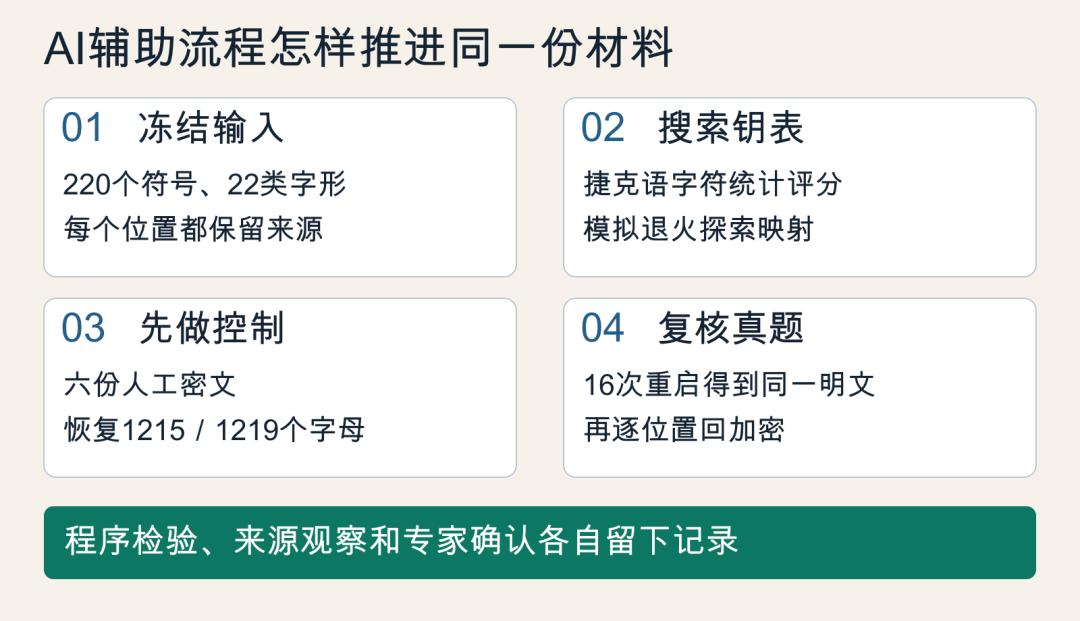
Figure 4 Drawn based on the saved program and experimental records. The control experiment results measure software performance and cannot be used as the probability of historical decryption.
Encrypt the Answer Back
A passage of text that resembles Czech only emerges as a candidate. To make it a verifiable decryption, all symbols must make sense.
The study first tested the software with six artificially generated Czech ciphertexts of similar structure, and the decoder did not read the answers during operation. The saved results correctly recovered 1215 letters out of a total of 1219 letters. This number measures the program's performance in the control experiment.
The real target was then run according to the fixed configuration. 16 restores saved the same complete plaintext; these outputs are also kept in the evidence package.[4]
Next, the obtained text is re-encoded according to the fixed key table, and then compared position by position: all 220 observed symbols match, and all 32 segments and 8 lines also correspond. No symbols were rewritten, no null codes were deleted, and no temporary exceptions were added for any position.
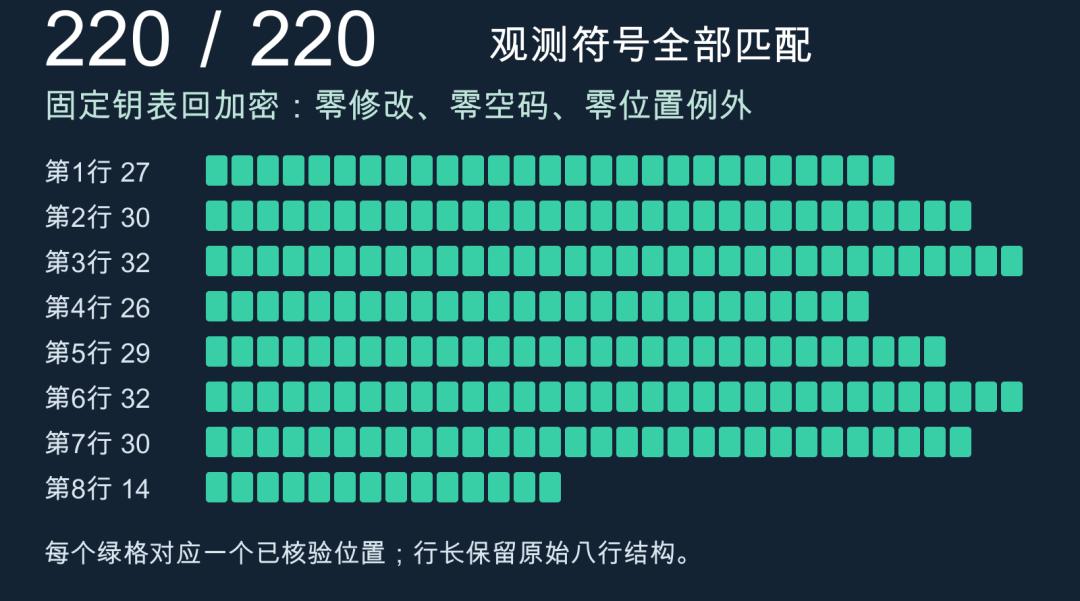
Figure 5 Verification results visualized by the number of symbols in the original 8 lines. Green squares indicate position matches in the fixed transcription, not re-identification or generation of scan pixels.
This check gives the result a very practical advantage: another researcher can recalculate the matching relationship along the same transcription, the same key table and the same set of credentials.
The records also retain parts that cannot yet be restored: f, q, w, x do not appear in the plaintext, and the corresponding historical symbols are still unknown; accents, capitalization and sentence punctuation are editorially restored. The sentence boundary near chrudimska can have different readings, and the original spelling of organisace remains unchanged.
Subsequently, this result obtained professional confirmation from Antal. The HC Portal public catalog synchronously shows the "Solved" status and the credited solver. Algorithmic consistency, language review and public records form interconnected evidence in this case.[1][2]
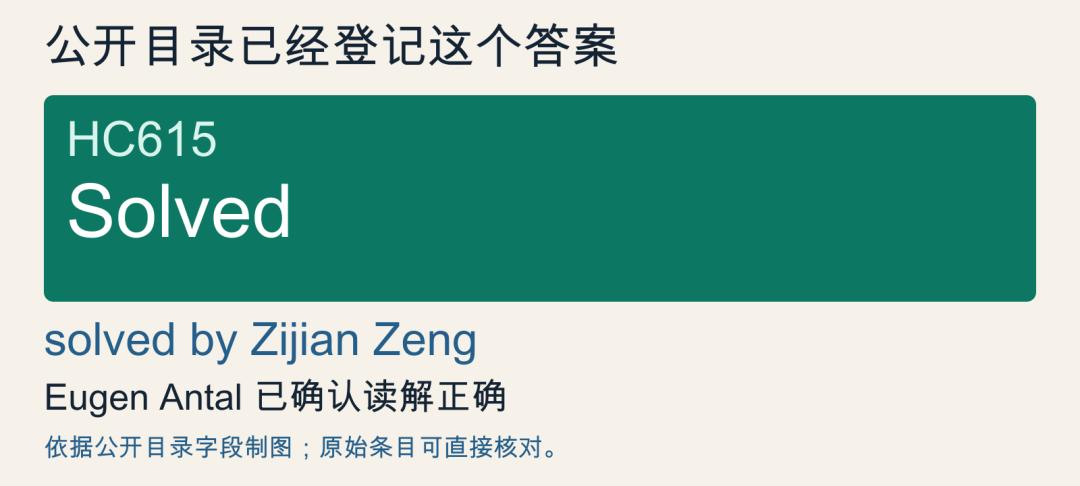
Figure 6 Drawn based on official public fields and confirmed review results, not a screenshot of a website or email. The confirmation scope of HC615 is recorded independently.
More Historical Ciphers Are Entering Verification
HC615 is the externally confirmed anchor point of this project. Other results also have their own code, records and completion scopes.
For example, HC696 uses another classic cipher PORTAX. The study has obtained a complete local decryption of 180 final visible letters, and the re-encryption position by position can be recalculated; the doubts of the covered old layers are retained.
HC849, HC851 and HC852 involve rotating grilles. Using the publicly released grille keys, the study reproduced 64, 144 and 64 valid letters respectively, to test the relationship between historical manual encryption operations and visible text.
The project also preserves conditional decryption and partial analysis of handwritten symbol materials. For a single stroke with multiple readings or unexplained positions, the evidence package retains the original ambiguity and records them separately from the complete results.
The decryption results of other topics are being verified by other experts. Subsequent confirmations will be updated by topic, and the completion scope of different cases will continue to be retained.
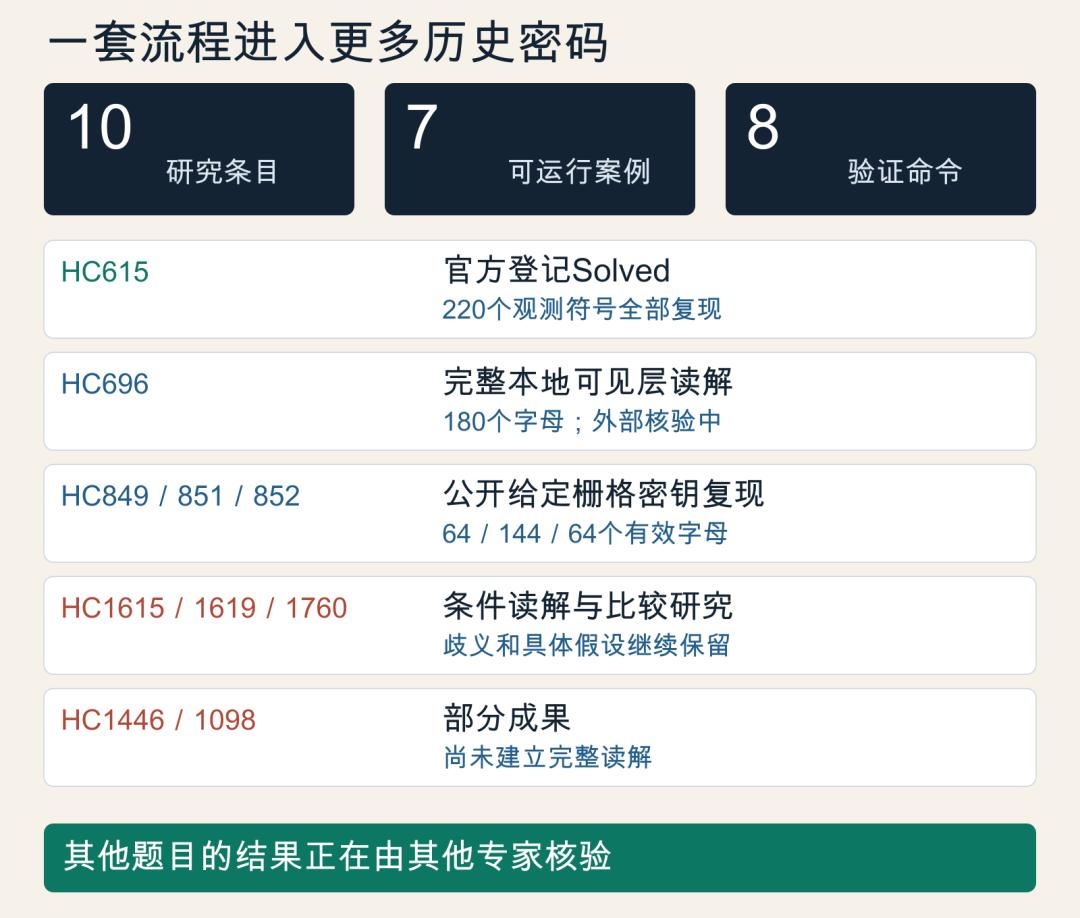
Figure 7 Completion scope is retained by case. The comparison materials of HC1619 are not counted as another group of independent results; not all 10 research entries are confirmed decryptions.
The current repository includes 10 research entries, of which 7 cases have runnable review procedures. 8 verification commands have passed; GitHub's automatic review also shows success. Research indexes, necessary data, source code and homepages in English, Chinese, Czech and Japanese are all concentrated in the same public project.[4][5]
The Next Page of Archives May Also Become Readable Because of This
When historical documents enter research, a series of specific tasks often need to be completed first: find the correct source, distinguish symbols, establish transcription, write applicable programs, and then check every interpretation. The capabilities required for these tasks are scattered, and if any link stops, the material may remain just an image.
This project demonstrates a reusable workflow: researchers use AI to connect these steps, and then use code, source records and expert verification to make the results verifiable. Subsequent materials still require their own observation and verification.
For archivists, this can be a tool for sorting out encrypted exercises, old postcards and historical telegrams. For ordinary readers, the source code provides an entry point for participation: you can directly see how the method acts on this material, and you can also put forward specific traceable alternative readings or corrections.
After downloading the project, you can review the saved evidence with one Python command. The verification process does not require paid calls to large models, and the fixed input and credentials will be checked item by item locally.
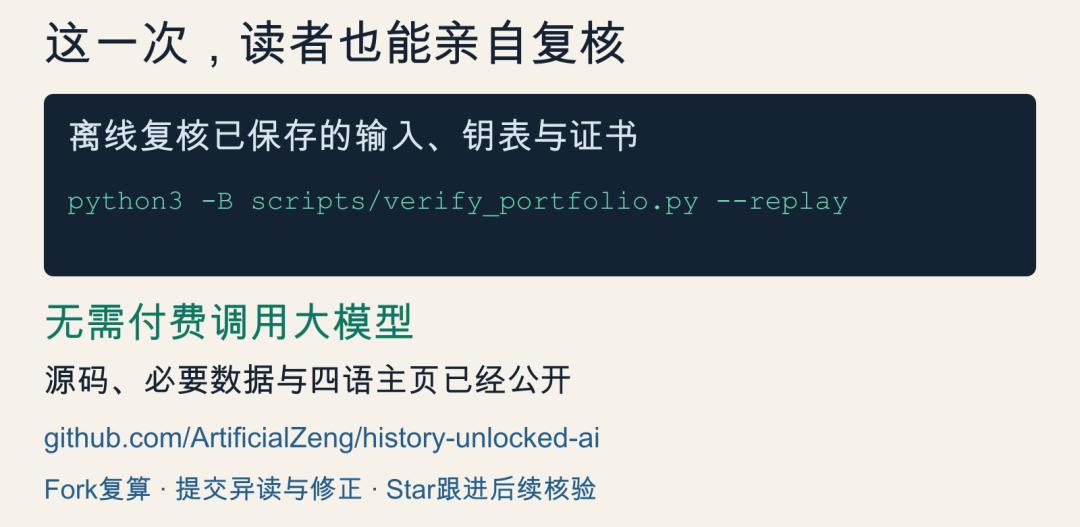
Figure 8 Offline verification entry for the public project. 7 cases and 8 verification commands can recalculate the saved evidence.
This page of Cold War course paper now has a public answer. It also leaves behind traceable names, place names and institutional terms. As the expert verification of other topics continues to advance, more decryption results will also be added to the same reviewable record sheet.
When a page of symbols becomes readable, searchable and verifiable text, it can re-enter historical research. Readers finally have the opportunity to follow the code and see how this answer is established.
References:
https://crypto.hcportal.eu/dashboard/cryptograms/615
https://github.com/ArtificialZeng/history-unlocked-ai
Editor:
[1] Official entry of HC615 https://crypto.hcportal.eu/dashboard/cryptograms/615
[2] Official data and "Solved" field https://api.hcportal.eu/api/cryptograms/615
[3] Eugen Antal's university personnel page https://uim.fei.stuba.sk/en/pracovnici/eugen-antal/
[4] Urban history of Ostrava Municipal Government https://www.ostrava.cz/en/o-meste/historie-mesta
[5] Multi-case project, source code and instructions for each case https://github.com/ArtificialZeng/history-unlocked-ai
[6] Complete decryption and method of HC615 https://github.com/ArtificialZeng/history-unlocked-ai/blob/main/cases/hc615/docs/SOLUTION.md
[7] GitHub automatic review passing record https://github.com/ArtificialZeng/history-unlocked-ai/actions/runs/37951103714