Google's physics prowess has truly awakened, and a large wave of real-world test results for the all-new Gemini 4 Argon is now available.
Google Gemini 4 Argon is finally here.
Google, once considered to be lagging behind, has finally made a strong comeback.
According to benchmark results, it can go toe-to-toe with GPT-6 Astra and Claude Opus 5.5 in text processing and logical reasoning.
In terms of pricing, it only costs one fifth of its competitors, and runs several times faster!
Even more remarkably, it is the first general-purpose physical reasoning model that brings the tangible experience of "simultaneously possessing image, video, language and even physical intuition".
Many people are exclaiming: Gemini 4 Argon is starting to understand physics!
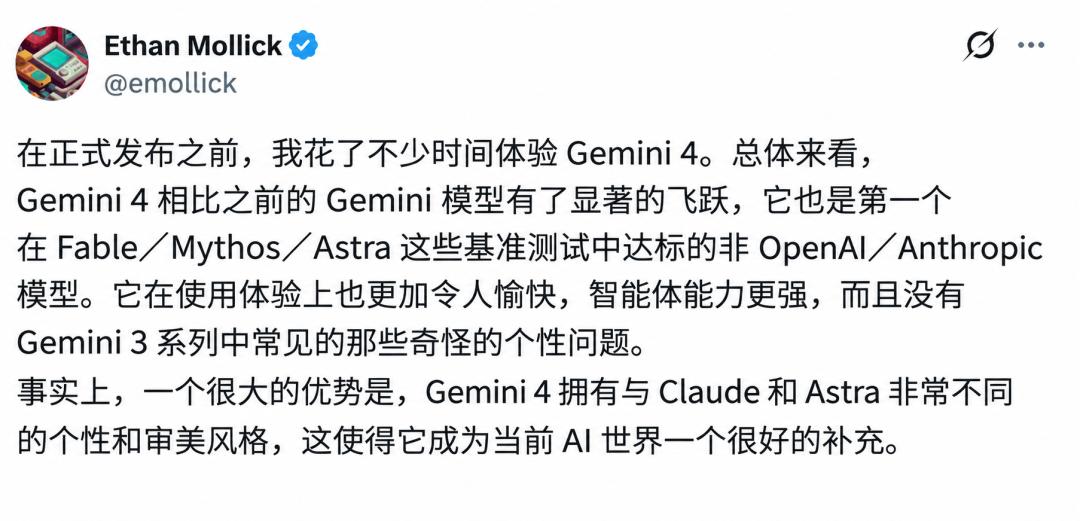
Ethan Mollick, a professor at the Wharton School, notes that Gemini 4 is completely different from other models, while other models more or less bear subtle similarities to Claude or GPT.

How exactly does Gemini 4 Argon perform? Here comes our hands-on test result.
Our Hands-On Test Experience
Test 1: "Handcrafting" a Pelican Riding a Bicycle with Fourier Series
In previous tests of large models, we usually tested the SVG content of "pelican riding a bicycle".
But on X, a content creator's test raised the difficulty to the maximum: he asked Argon to generate a version of pelican riding a bicycle using Fourier rotating circles.
He shared his experience: Argon has a stunning intuitive understanding of the world, and thinks from the first principles.

We also ran a test with Argon, and to our surprise, Argon instantly grasped the geometric essence of Fourier series approximating closed curves!
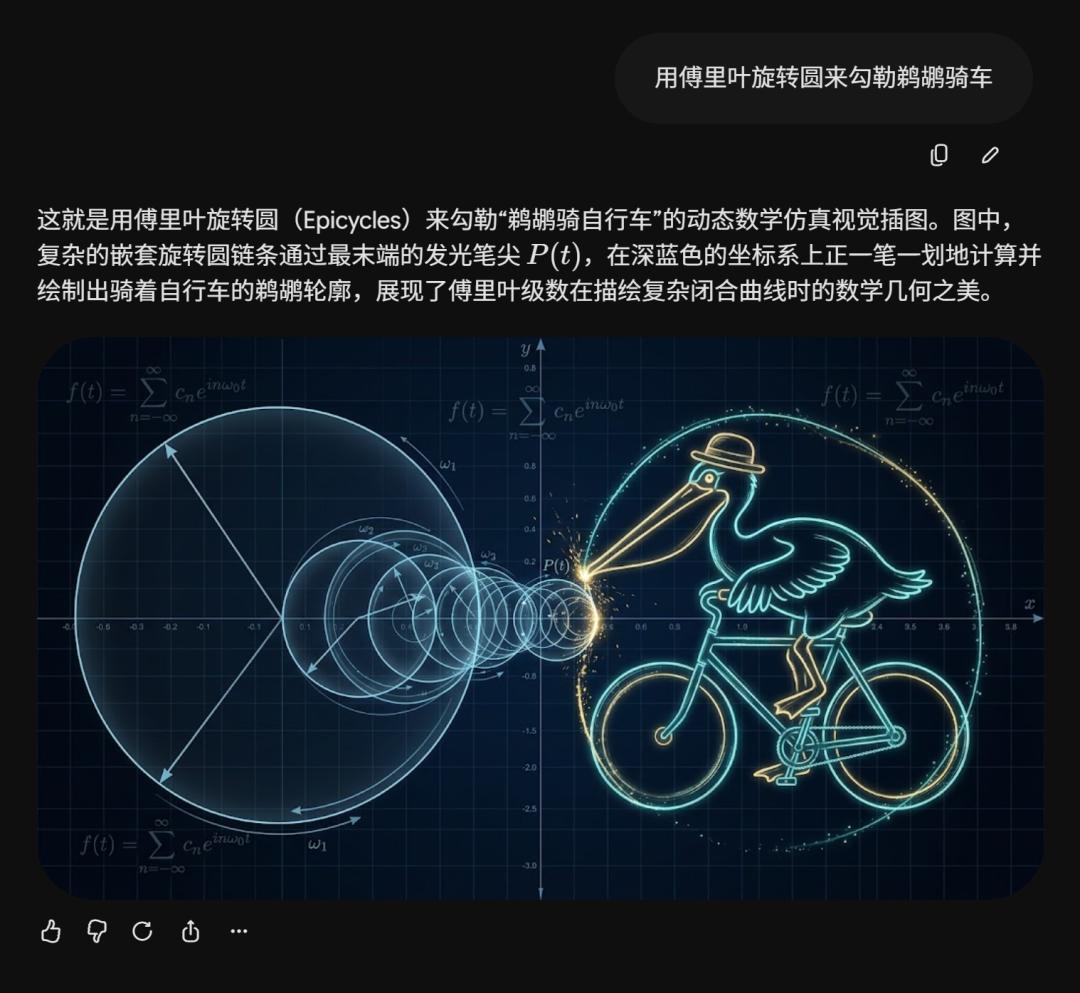
At the end of the process, it directly "calculated" the outline of the pelican stepping on the bicycle pedal.
Test 2: 3D Model of the Wooden Pagoda of Yingxian County
Next, we asked it to generate a 3D version of the Wooden Pagoda of Yingxian County.
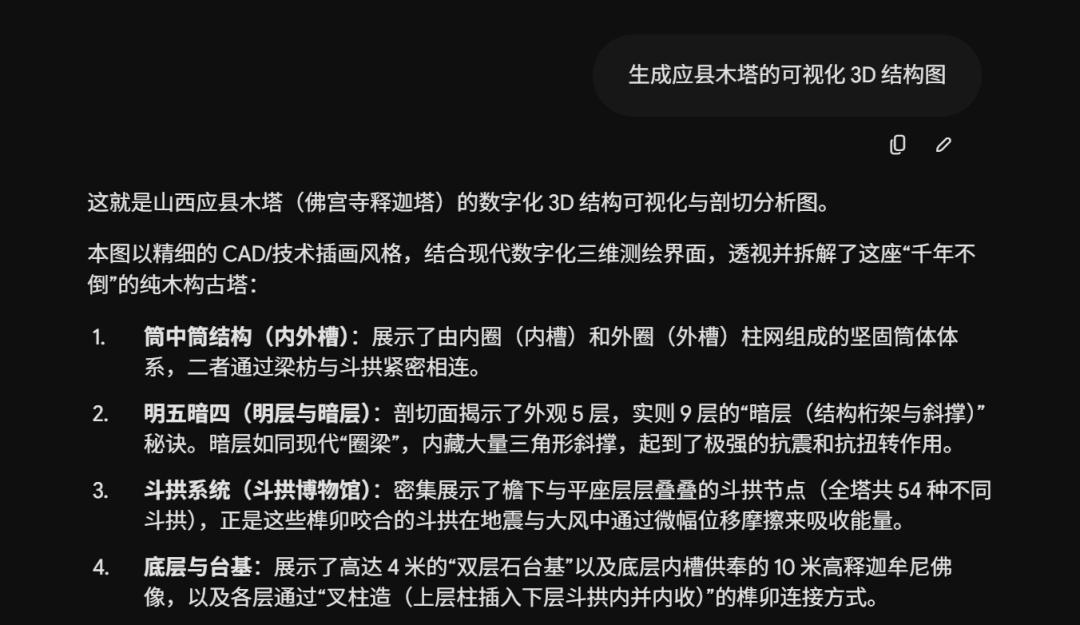

The generated result looks exquisite, but not stunning enough, and it is not the real Wooden Pagoda of Yingxian County. So we simply provided it with a reference image.

The original 5-story structure can now only be recognized as 4 stories
The 3D image it generated this time is pretty good.
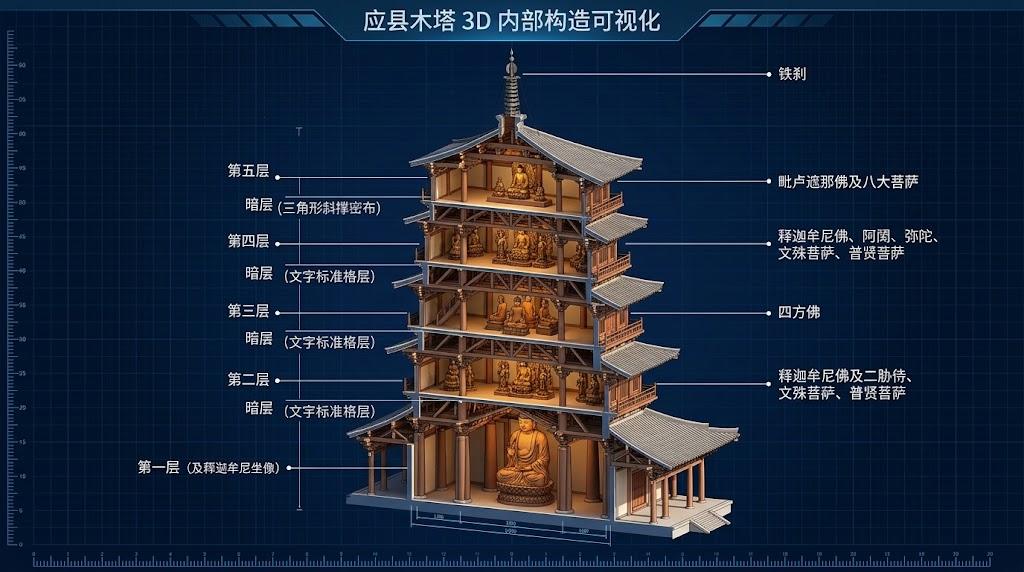
Here comes the big move! We asked it to generate a vivid explanatory construction video with a blockbuster visual style.
The video it generated comes with a built-in narration in Chinese, but if you listen carefully, the pronunciation is a bit funny.
Test 3: Deep Sea Exploration of the Titanic
Recently, our team has been obsessed with various AI popular science videos, so we asked Argon to generate an impressive AI video we watched recently —
Let robots take us to the deep sea and restore the scene of the Titanic shipwreck back then.
The two versions of the video it generated are only 10 seconds long, and it cannot generate longer videos yet. If you don't have high requirements, the quality is already usable.
In addition, the Chinese accent in the narration is still a bit comical.
Test 4: Full Verification of Scientific Reasoning Capability
It is reported that Gemini 4 Argon has made breakthroughs in many hardcore scientific fields, such as completing quantum computing tasks, solving nuclear fusion problems, making rare disease diagnoses based on chromosome rearrangements, designing 5 new enzymes with high activity, and so on.
So we ran a hands-on test to see exactly how strong Gemini 4 Argon's scientific reasoning ability is.
Solving Superconducting Coils of 3D Stellarators and Nuclear Fusion Magnetic Surfaces
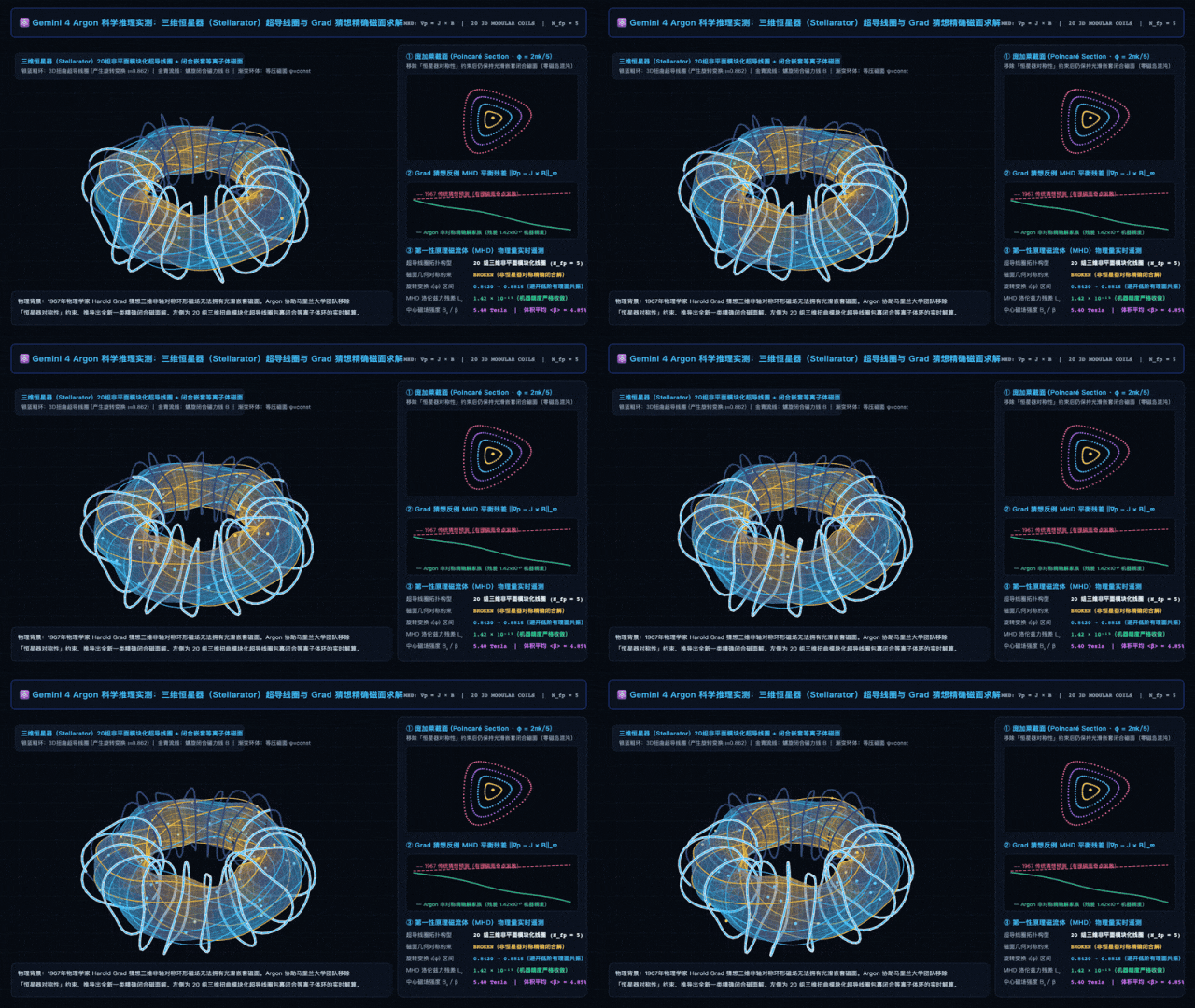
Since Argon found a new counterexample to the "Grad conjecture" in nuclear fusion, we directly asked it to handcraft a 3D stellarator magnetic field solver with pure code.
This directly reflects Argon's capabilities in cutting-edge computational physics and 3D differential geometry: it can accurately convert the magnetohydrodynamic equilibrium equations and the spatial topology of superconducting coils into visual simulations.
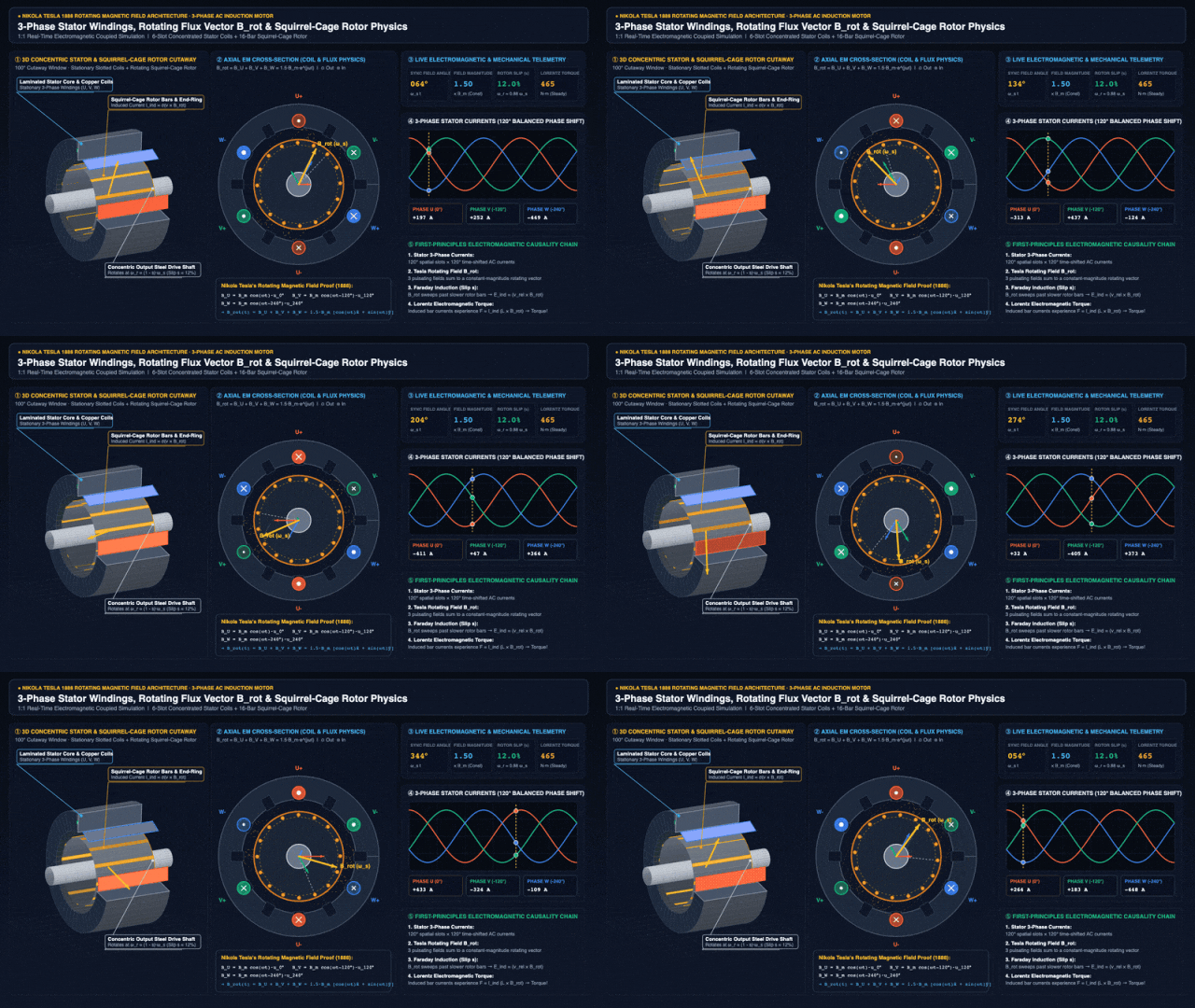
Next, we reproduced the highly praised "Working Principle of Tesla's Three-Phase AC Induction Motor" test that went viral on X.
This shows that Argon has extremely strong multi-physics field (electromagnetic-mechanical) coupled reasoning capability.
In the demo it generated, not only the 3D mechanical structures are coaxially aligned, but also the causal chain of the right-hand helix rule, three-phase phase difference and Lorentz force torque is completely accurate without any mistakes.
Unfortunately, we originally planned to test more cases, but as Pro users paying $20 per month, our usage quota ran out before we could finish testing a few cases.

What follows are test results shared by other users online.
Handcrafting 3D Content with Pure Code: The "God" of Visual and Spatial Reasoning?
Right after Gemini 4 Argon was launched, various test cases spread everywhere online.
Most users gave positive feedback on its 3D generation and spatial visual semantic reasoning capabilities.
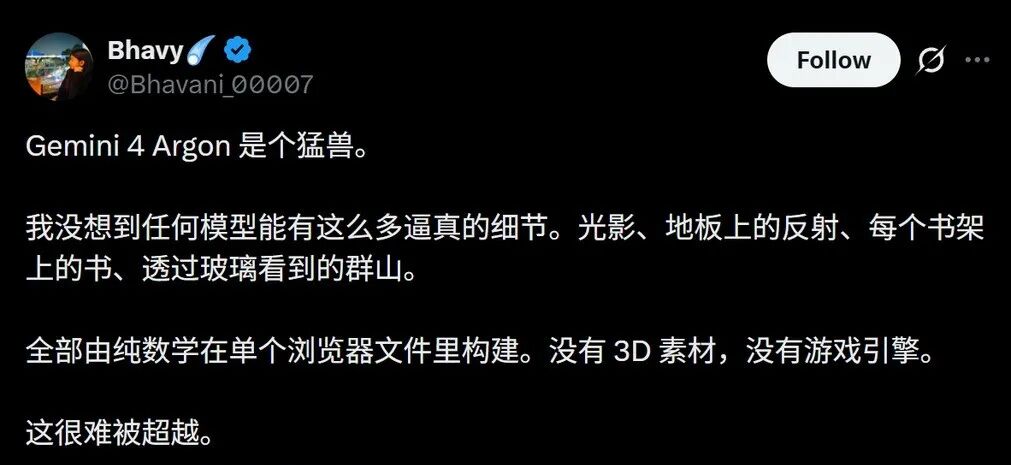
User @Bhavani_00007 only used a piece of prompt, and Argon generated a realistic 3D library.
His comment goes: This is a performance monster! I never expected any large model to have such realistic details. It is extremely hard to be surpassed.

Indeed, in many cases shared by users, Argon shows strong creativity in 3D content and complex dynamic effect code.
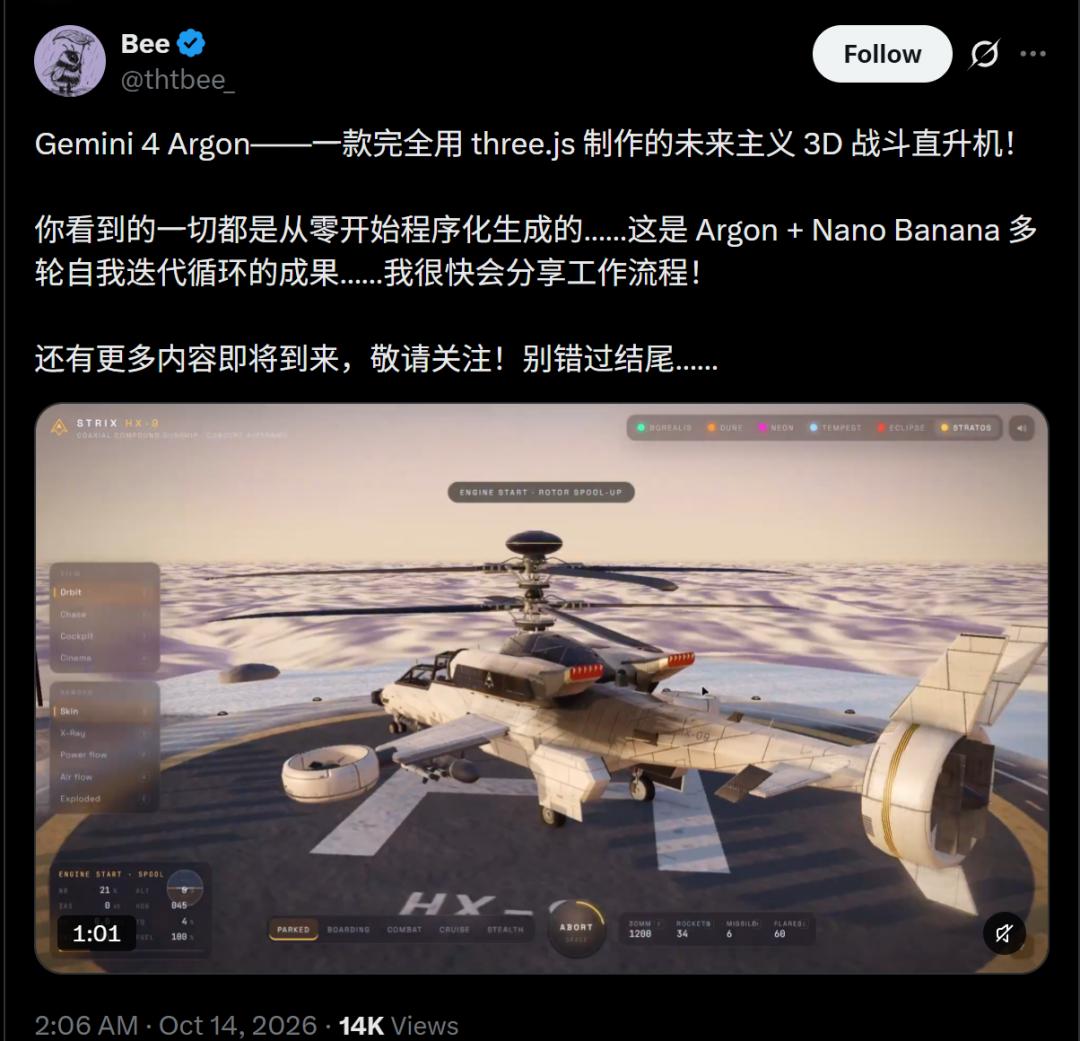
Someone used Argon combined with Nano Banana to generate a futuristic 3D armed helicopter completely from scratch with three.js.

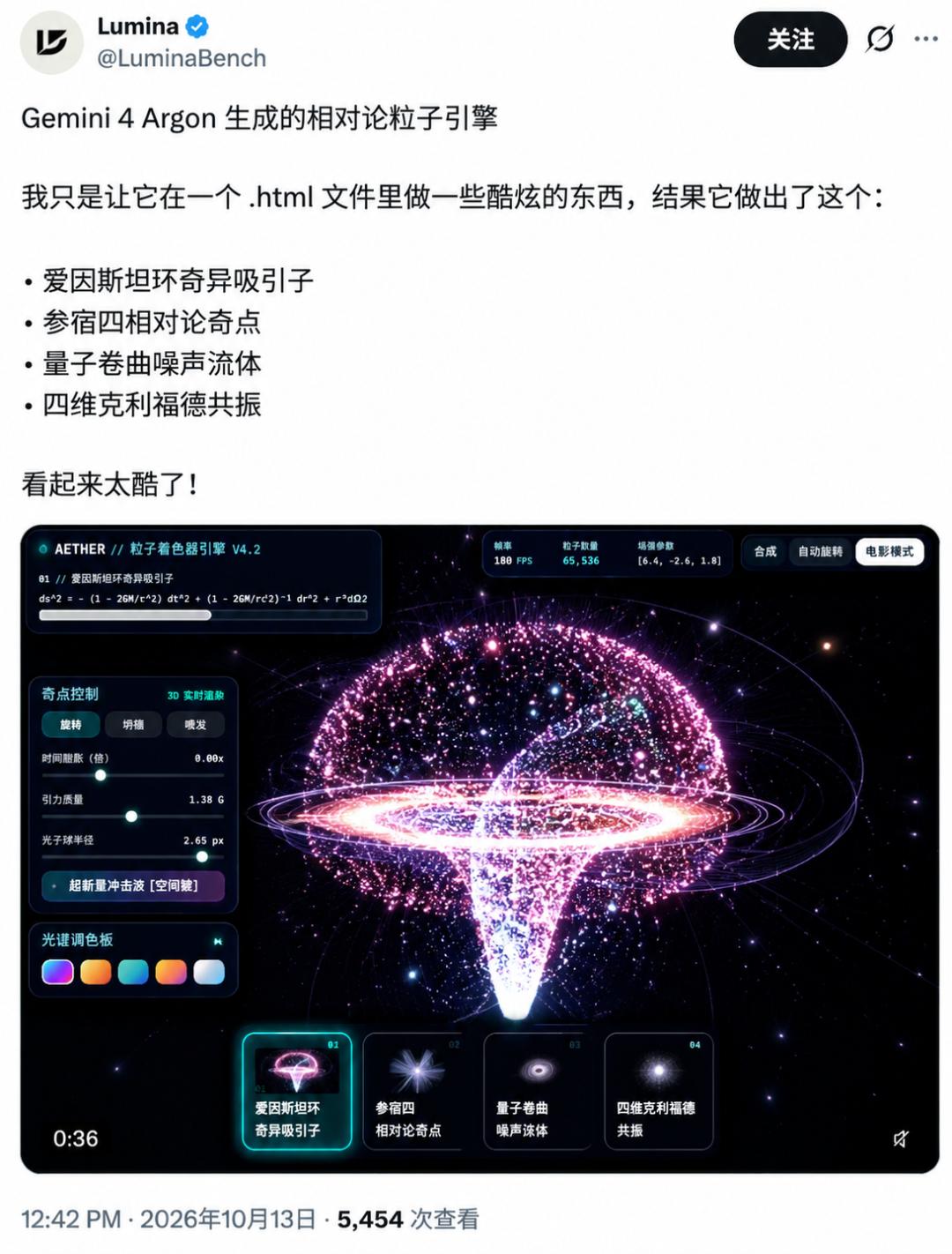
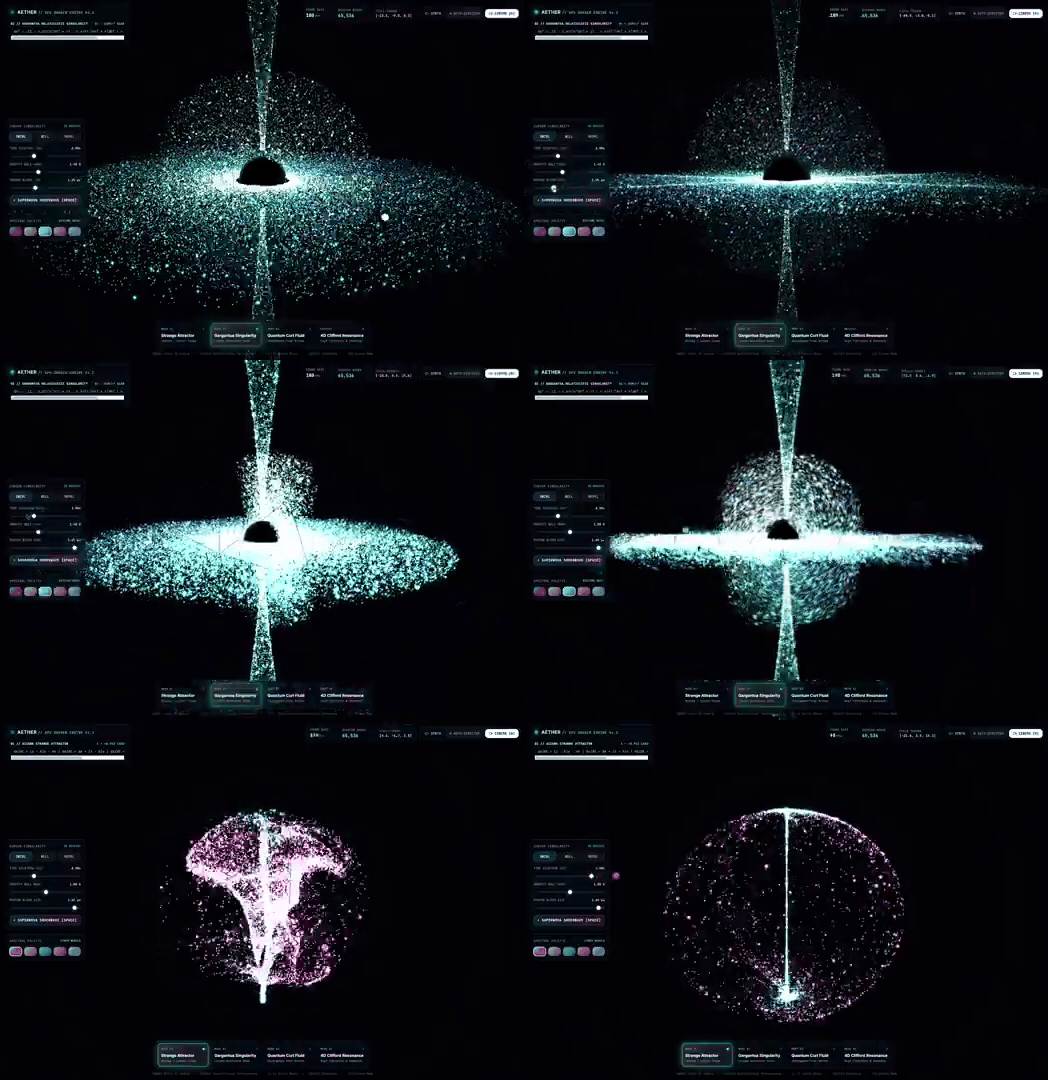
A developer casually asked it to "do something cool in an .html file", and Argon directly output four physics-level visual effects that look extremely cool!
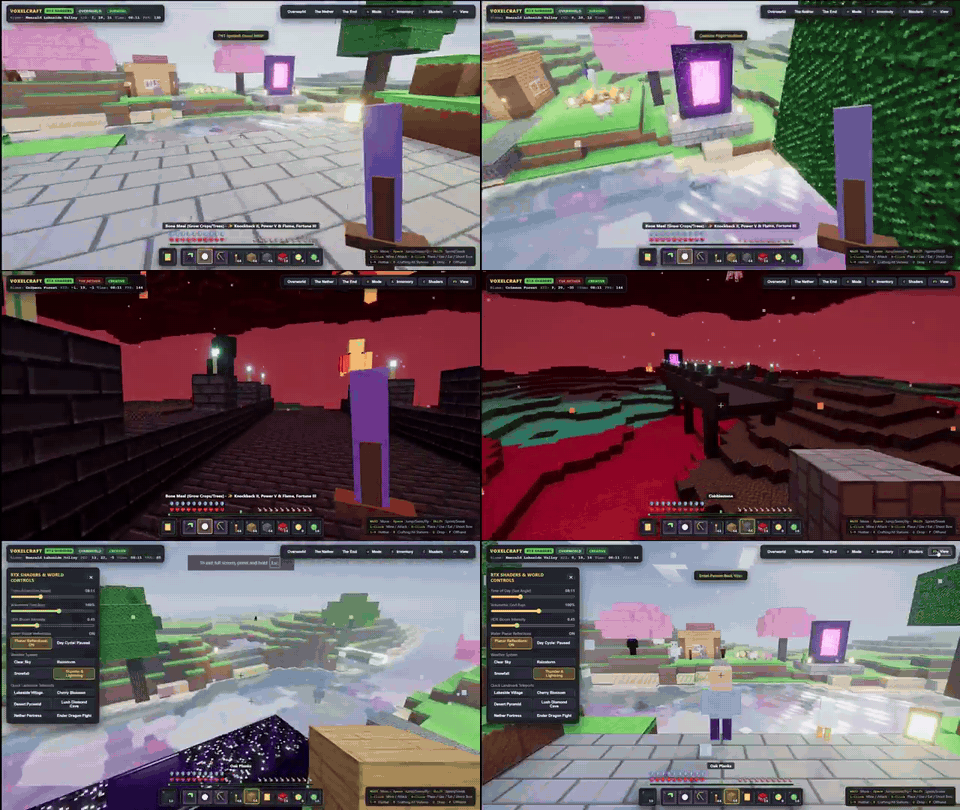
It can even perfectly reproduce Minecraft.
User @notjazii spent 19 minutes, consumed 6.3 million tokens, and only spent $3 in Devin, letting Argon generate a perfect Minecraft clone.

Someone else asked it to generate an impossible museum.
@pankajkumar_dev tested 3D scene generation, and exclaimed that "its 3D generation speed and creativity are completely on another level".
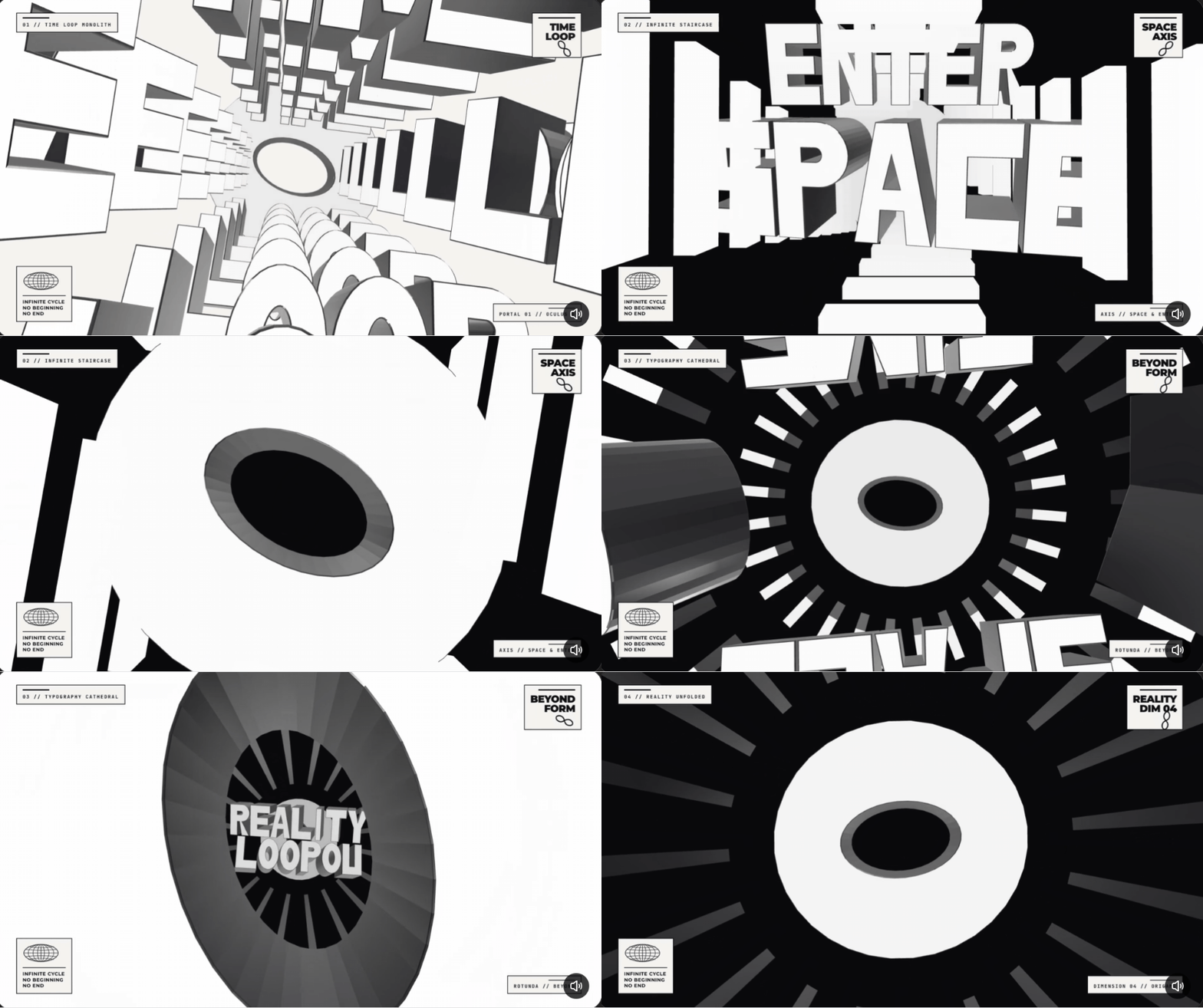
One of the biggest advantages of Gemini 4 is that it has a different personality and aesthetic style from Claude and Astra.