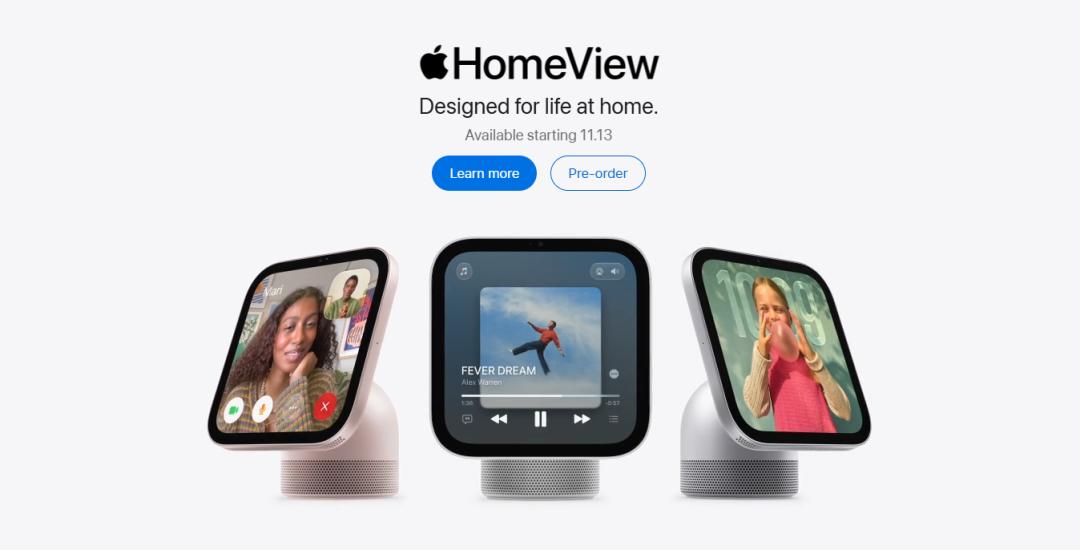
Whoa, I must have woken up too abruptly, Apple has launched a number of smart home products.
At 9 p.m. Beijing Time on October 13, Apple released a series of new products on its official website.
This launch caught many people off guard, as it turned out to be Apple's smart home product line that hasn't been updated for years...
In fact, Tony sorted out the history of Apple's smart home business for everyone a few days ago after seeing the launch invitation.
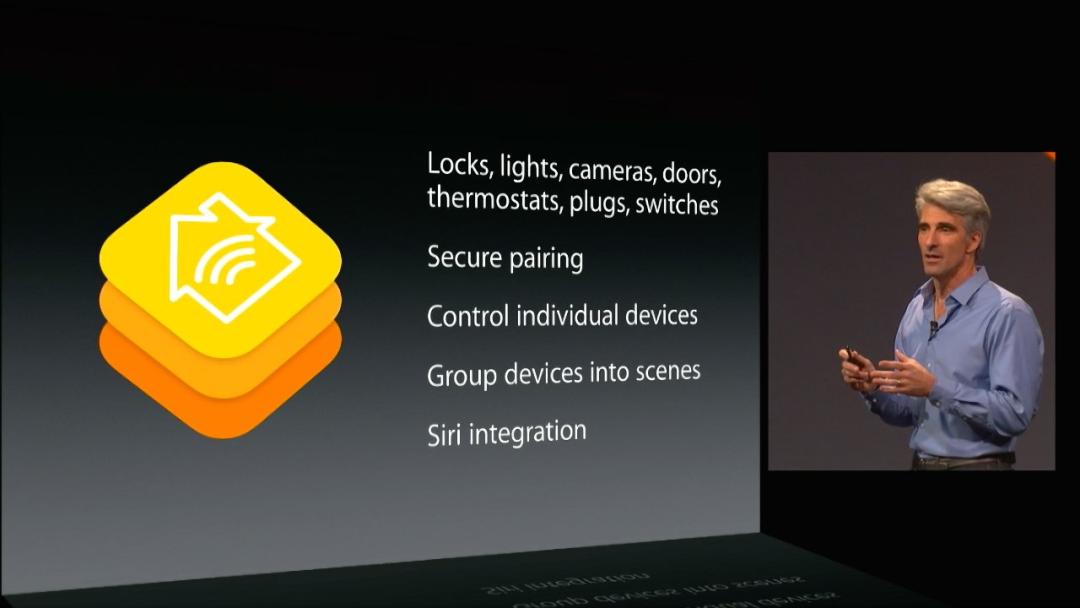
Simply put, Apple entered the smart home track very early, but it set the bar too high at the beginning, and the products were not cheap, which led to low user acceptance of Apple's smart home ecosystem.
No matter the early HomeKit ecosystem standard, the later Home app, or the HomePod speaker, they are barely attractive to smart home users, and many people find them less practical than Mijia paired with a Home Assistant box.
Now the U.S. smart home market is dominated by Amazon and Google, while China has the well-known Mijia and many leading home appliance brands, whose products are cost-effective, leaving little market space for overseas brands.
In addition, Apple's Siri AI came far later than expected, while we have long had all kinds of screen-equipped voice assistants. To be honest, if I were Apple, I would also be very anxious about the situation.
So this time, Tony feels like Apple has completely revamped its entire smart home line.
The new products released this time are the brand-new smart home hub HomeView, HomePod mini 2 and the new Apple TV.
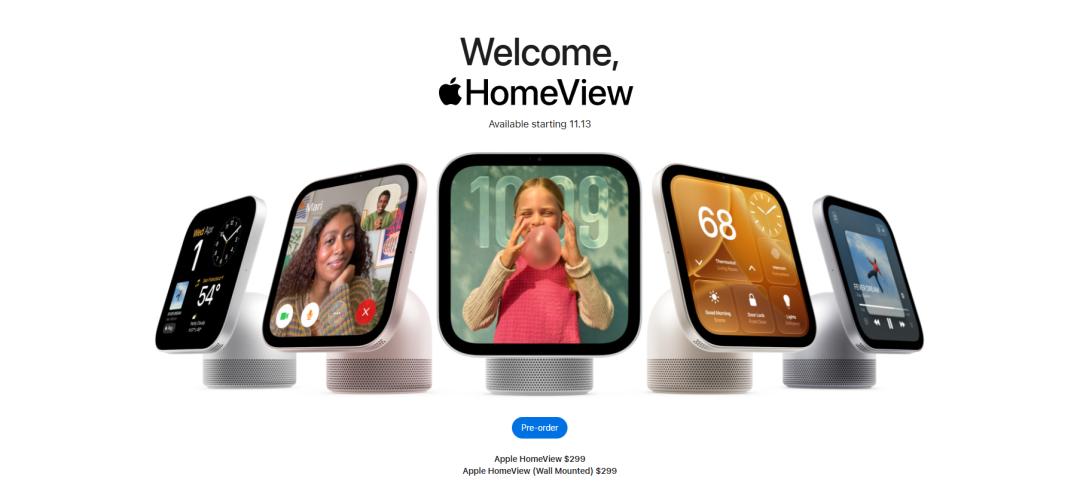
To be frank, apart from this HomeView, the rest of the products can only be regarded as regular iterations (reheating old meals) ...
Tony will first walk you through all the products, and let's start with the brand new HomeView directly.
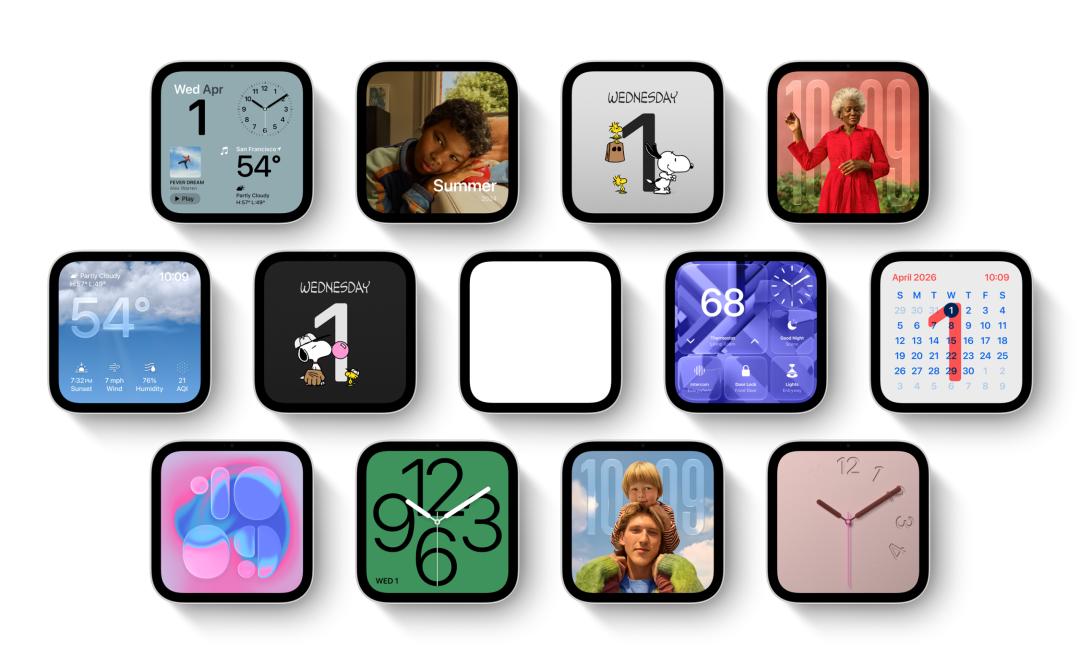
HomeView has two versions: desktop version and wall-mounted version. Personally, Tony prefers the desktop version, as it comes with an extra base and can be moved around freely.
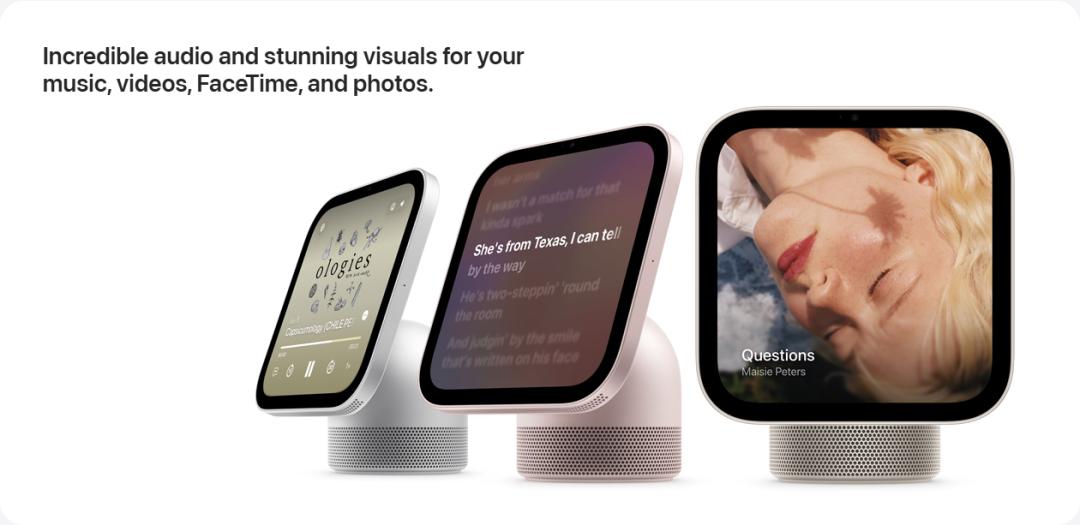
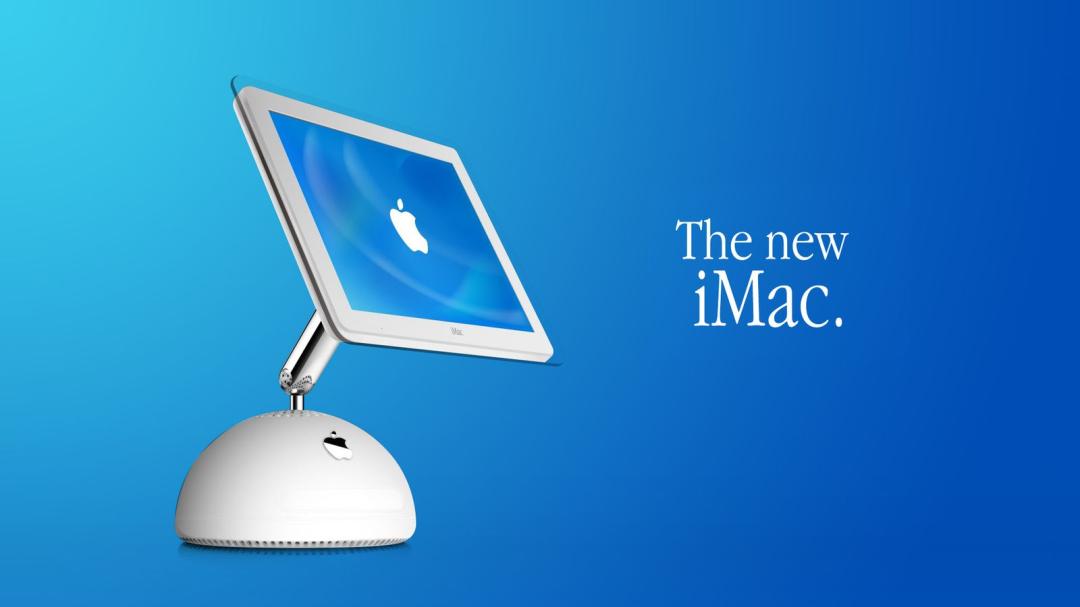
And this base-mounted version, at first glance, really looks a bit like the iMac G4 in the old days, except that its "neck" is not that long...
The configuration of HomeView is very typical Apple-style, which can be said to be the most powerful smart home hub on the planet. Can you believe that it is equipped with a 7-inch Liquid Retina screen...
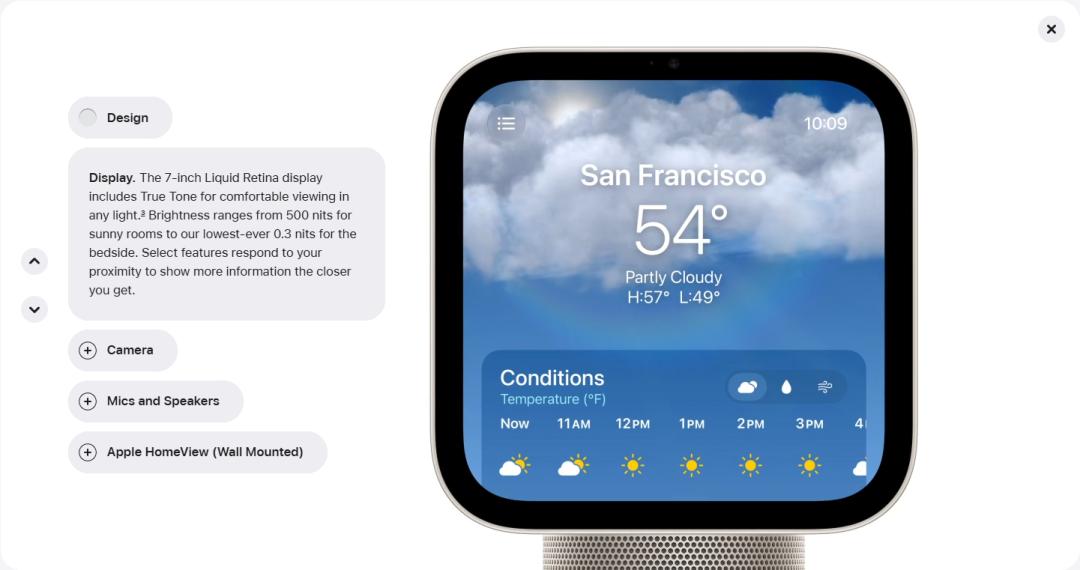
This is not only a Liquid Retina screen, but also supports True Tone adaptive color temperature, which can automatically adjust brightness between 0.3 and 500 nits, and automatically adjust information density according to the user's distance.
Wow, it even supports brightness as low as 0.3 nits, while the lowest brightness of our flagship phone screens is only 1 nit. So maybe HomeView can keep the screen on all the time without disturbing you when placed in the house?
In terms of audio, the display of HomeView integrates two driver units, and the base below has a built-in woofer unit.
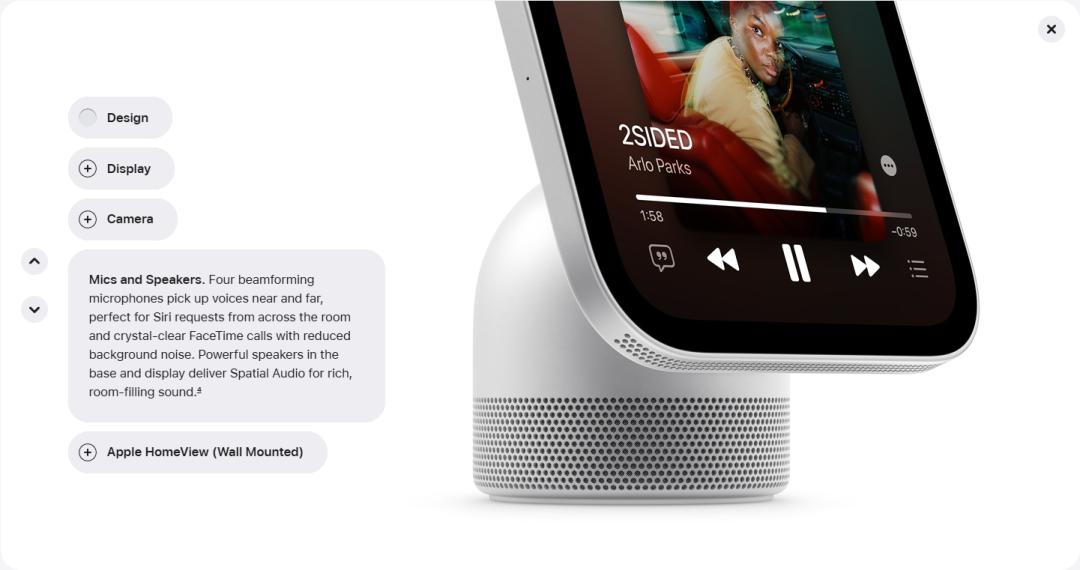
If you have multiple HomeView or HomePod devices at home, you can also form a whole-house audio system.
All the features mentioned above are just basic operations. The highlight of HomeView this time is that it is equipped with the A18 chip and supports Siri AI.
This means that with the advantage of Apple's ecosystem, HomeView can become the smart assistant for your whole family. Anyone can quickly ask Siri to check their schedules or messages, and of course, play music and make video calls.
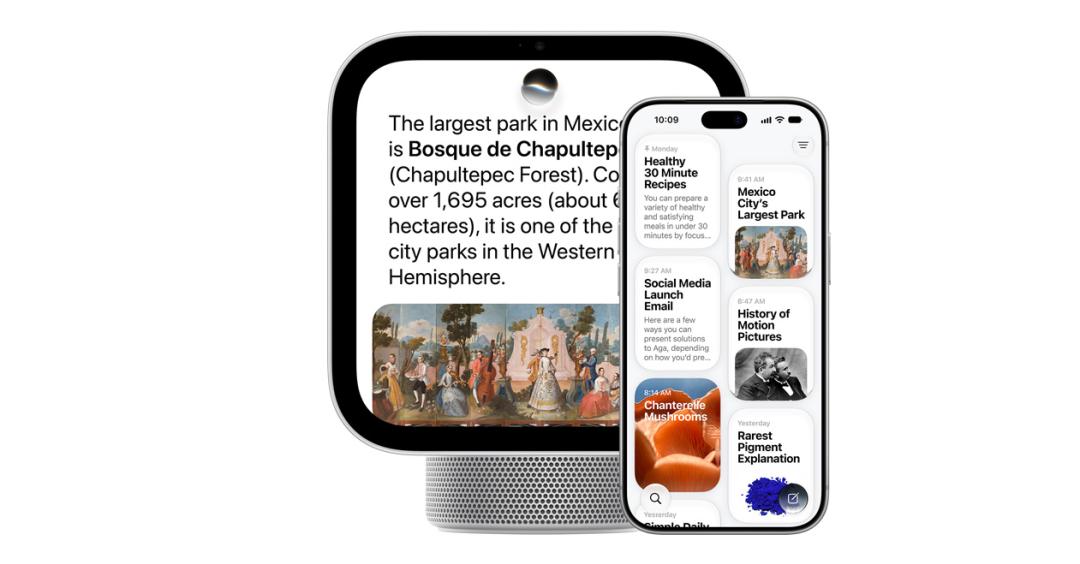
At this point, some people will definitely wonder, won't everyone's information get mixed up then?
Apple has thought about this long ago, after all, it is the brand that always talks about privacy. If you want to view the information, you must pass face recognition first.
For example, if the kid in your family tries to view the messages sent to you through HomeView, he will not be able to access them if his face recognition does not match.
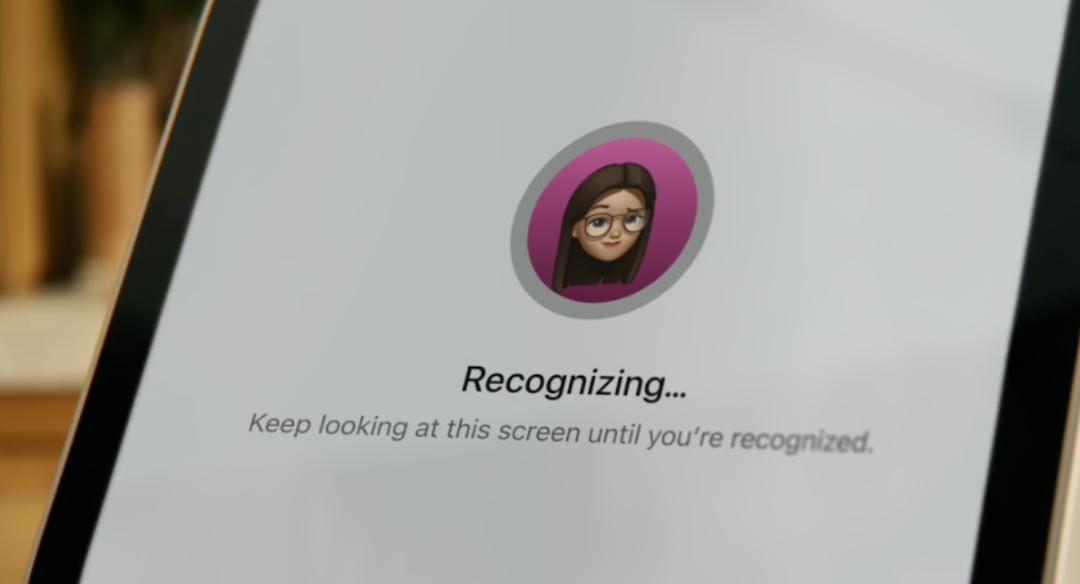
Of course, linkage with cameras, smoke alarms and other similar devices are also basic operations for smart home systems, and HomeView supports all these functions.
It can be said that since Apple has mastered AI technology, the software part of its smart home business has finally made new progress. After all, without a smart voice assistant, the practicality of the system will be greatly reduced.
Coupled with the high-performance screen and speakers that are likely to deliver good experience, as well as the ecosystem support, Apple has packed all kinds of hardware and software capabilities into this product this time.
However, due to well-known reasons, Siri AI on HomeView currently only supports English in a small number of countries. Its selling price in the United States is 299 US dollars, and this product has little to do with users in mainland China for now.
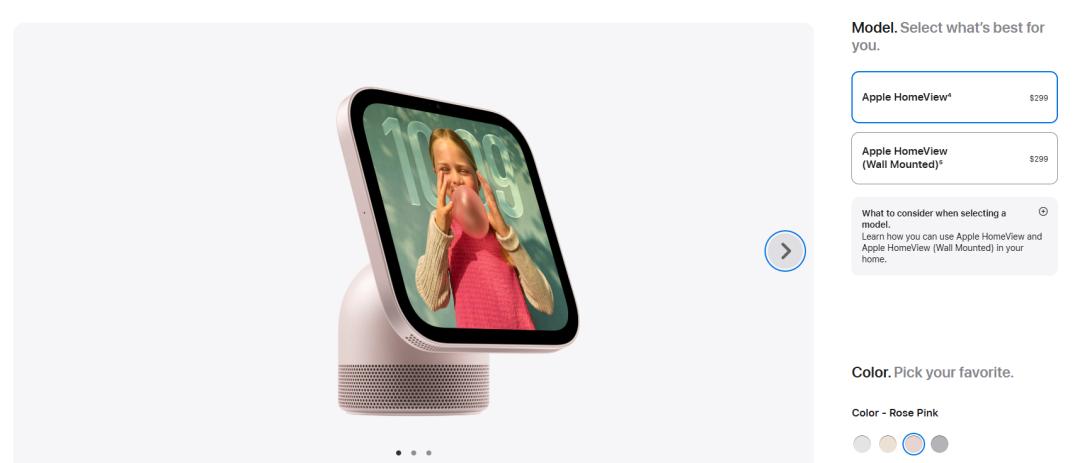
Up to this point, Apple's smart home hub looks very good in both workmanship and configuration, but there is still a very important problem —— what about the smart home ecosystem?
Apple's official website has actually given the answer. There is an introduction called Apple Home Collection on the HomeView detail page, which you can understand as Apple's own version of HarmonyOS Intelligent Mobility solution...
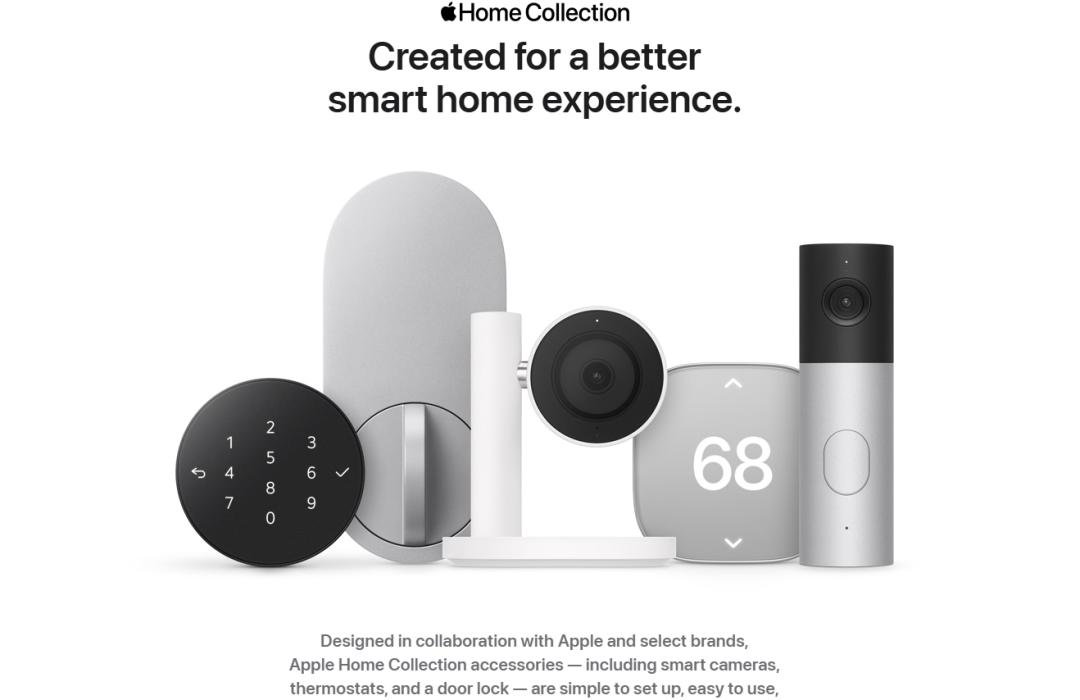
The design and function development of these smart home products are all in the charge of Apple, while the production, branding and after-sales services are handed over to the partner brands themselves. For example, Apple's press release has officially announced its cooperation with LG and Schneider Electric.

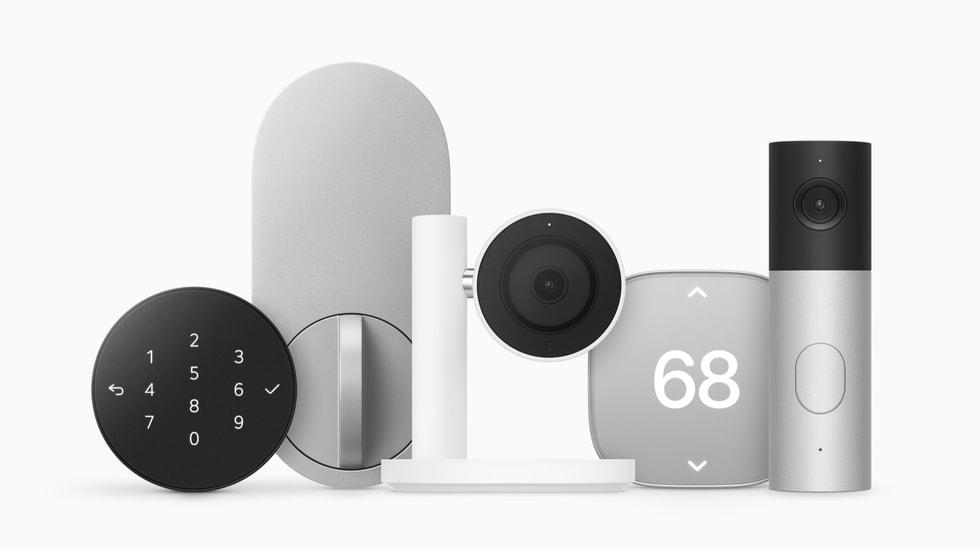
The first batch of publicly announced products include, but are not limited to, indoor and outdoor cameras, thermostats, temperature sensors, video doorbells and door locks, which are all relatively basic products.
Great, now we Americans will have our own Mijia + HarmonyOS Intelligent Mobility system.
Then there are the two products that are labeled as regular iterations but are actually reheated old meals. The first one is the new Apple TV 4K that some people have been waiting for.
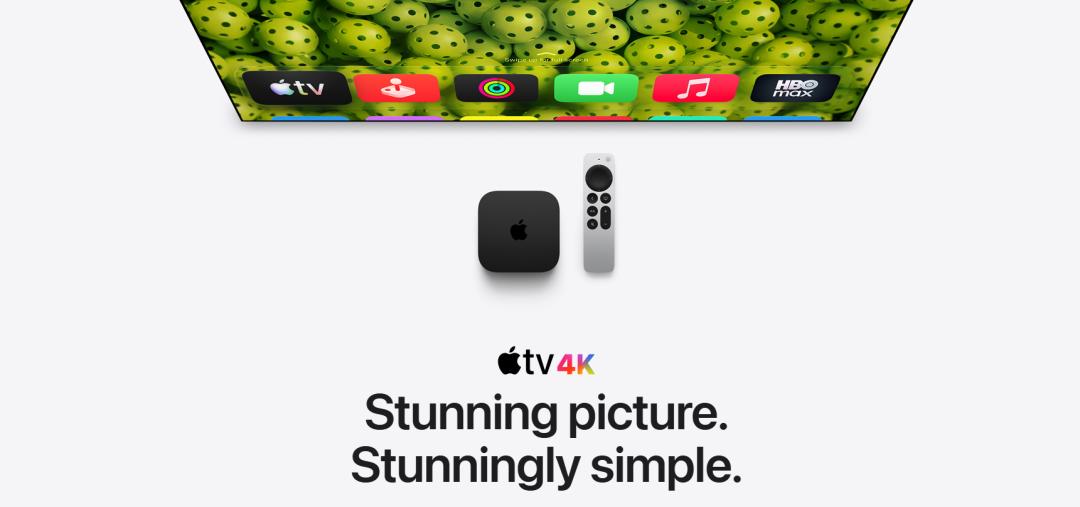
But so far, Tony found that the only two differences between it and the previous generation Apple TV launched 4 years ago are that the chip is replaced with A19, and it supports Siri AI...
If you have to find two more updates, they are the built-in microphone on the TV box and the support for AV1 hardware decoding.

Because of the built-in microphone, this generation of Apple TV also supports far-field wake-up, and voice control works pretty well.
Hey Siri, turn on the TV!
However, the price this time is really not cheap, reaching 299 US dollars, and the price in Hong Kong region is 2399 Hong Kong dollars.
For the same 128GB version, the previous generation was only priced at 149 US dollars, which could be bought for a little over 1000 yuan.
Another reheated old product, and also the only product in this new lineup that has a mainland China version, is HomePod mini 2.
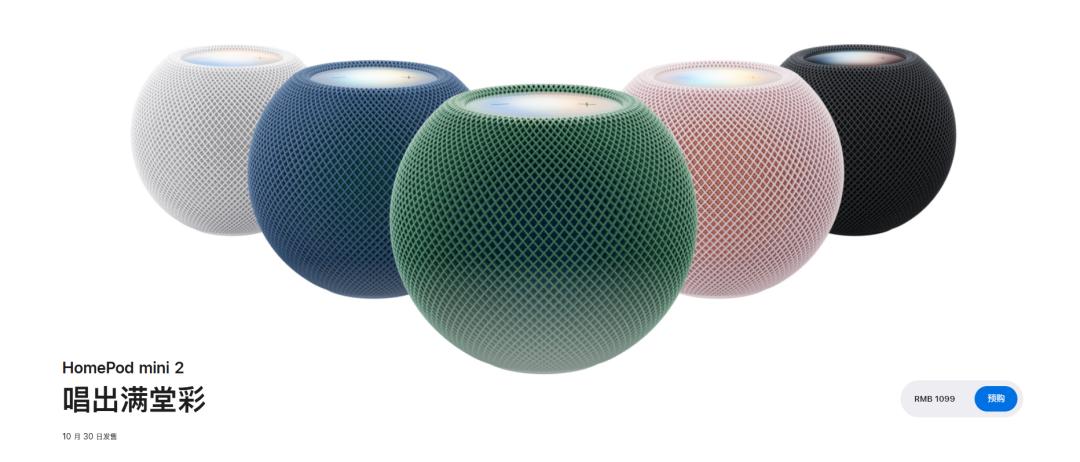
This one is even more excessive. Not only has its price risen from 749 yuan to 1099 yuan, there are no obvious hardware upgrades except that the chip is upgraded from S5 to S10...
Oh right, if your Mac also supports WiFi 6E, then HomePod mini 2 can be used as the default speaker for your Mac.
That's all for Apple's new products this time. To be fair, HomeView is very good, but it is still a little far from the Apple smart home system in my mind.
Actually, what makes me most uncomfortable is not that Apple TV and HomePod mini are still being iterated with old technologies after many years, nor that we can't use the Siri AI on HomeView for now.
Everyone here knows better than anyone else that a smart home system relies on a complete product ecosystem, and a single hub is not enough to build a full smart home system.
The Mij