Wang Xingxing has become more optimistic about AI, so why haven't robots been widely deployed in factories on a large scale yet?
On October 12, the 26th China International Industry Fair opened in Shanghai. At the opening ceremony, WANG Jian, Academician of the Chinese Academy of Engineering and Director of Zhejiang Lab, WANG Xingxing, Founder, Chairman, General Manager and Chief Technology Officer of Unitree Robotics, and Xiang Shaoqing, Co-founder of Sharpa, launched discussions on the computing power, training data and practical applications of robots.
According to the report released by IDC on September 29, in the first half of 2026, the global shipment of humanoid robots was close to 25,000 units, representing a year-on-year increase of 432.1%, among which the shipment in the Chinese market exceeded 19,000 units. Nevertheless, scenarios such as scientific research and education, performance and exhibition, and government data collection centers still account for 69% of global shipments, while scenarios including industrial manufacturing, retail and logistics have not yet become the major shipment directions.
WANG Xingxing stated on site that the application of robots in factories does not start from scratch. Back in 2024, Unitree had carried out landing pilots with several automobile enterprises, and other robot enterprises at home and abroad are also making attempts. However, to turn single-point tests into large-scale applications, the generalization and operation efficiency of robots still need to be improved.
Compared with the mass production schedule, he is more optimistic about the iteration speed of AI. He believes that embodied intelligence technology is likely to witness considerable progress in the next one or two years, but this is only a judgment based on the advancement of models, not a definite commercialization node.
"The biggest mistake I have made in the past ten years is that I did not believe in AI enough in the past." WANG Xingxing said that with the improvement of AI capabilities, his confidence in AI is growing day by day.
In his view, many people still do not make full use of AI, and technological changes may be faster than the industry originally expected.
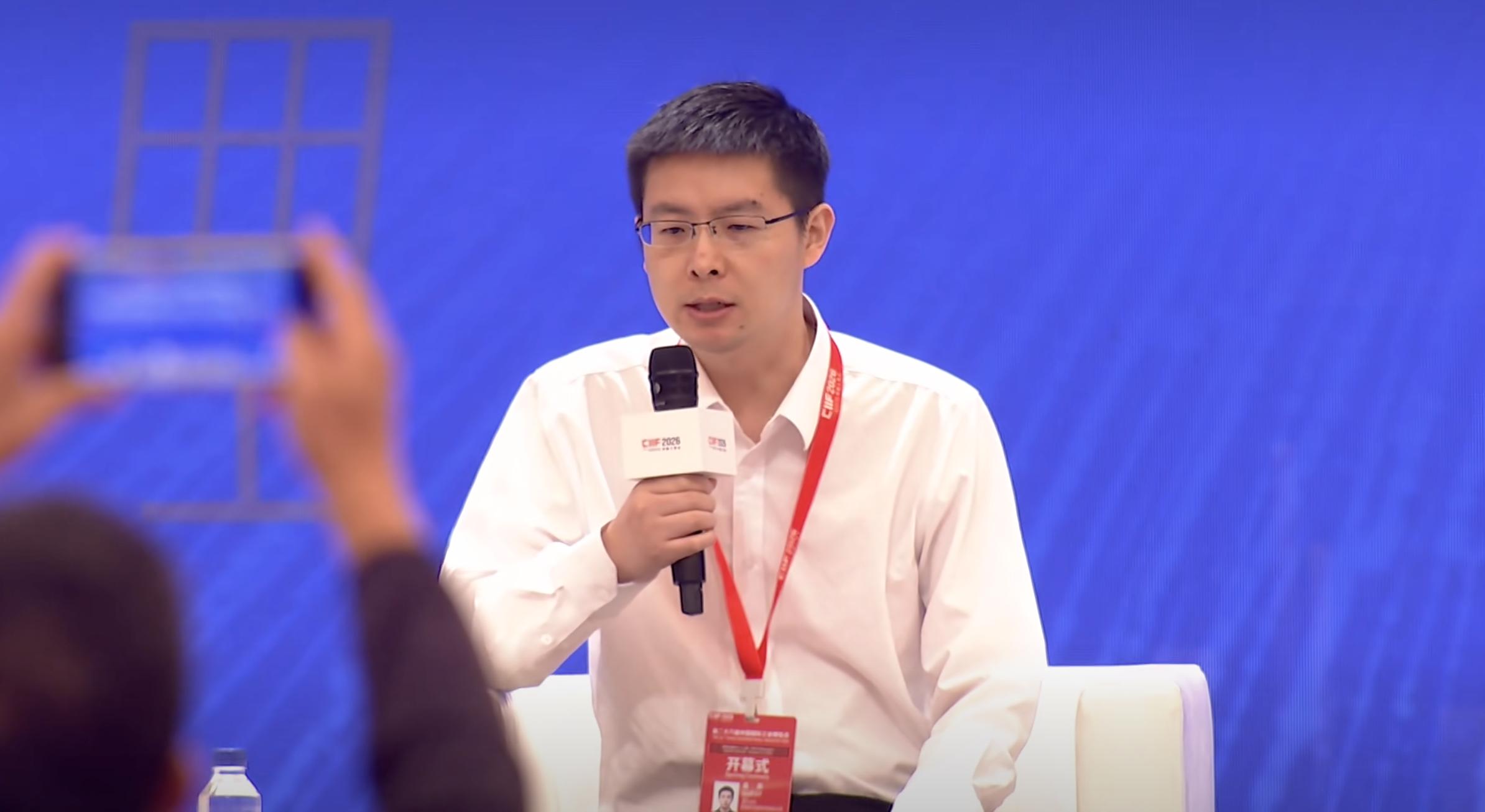
WANG Xingxing. Image source: Official live broadcast screenshot of the Industry Fair
However, this optimism does not mean that industrial scenarios will be the first to achieve popularization. WANG Xingxing pointed out that compared with factories, some enterprise-oriented commercial service scenarios may advance faster, while household services put forward higher requirements for robots' ability to adapt to complex environments, so their landing sequence may not be in the front.
How to allocate computing power is also a practical problem faced by robot manufacturers. WANG Xingxing explained that restricted by body space, battery power supply and heat dissipation, it is impossible to install a large amount of high-end computing power on each robot. Unitree's idea is that calculations with high real-time requirements such as motion control remain on the robot body, while operations involving complex decision-making and large-range scene adaptation rely on the cloud as much as possible.
He added that the body computing power can be selected and configured according to customer demands, and there is no need to unify the configuration of all models. The advantage of the cloud is that computing power can be flexibly scheduled, but if the model can be small enough to run directly on the body in the future, it will also be a more ideal choice.
Xiang Shaoqing also regards time delay as an important constraint. He believes that in the next three to five years, a large number of complex calculations may still be placed in the cloud, and action execution will mainly rely on the end side. In the long run, the increase in the number of robots will bring pressure on cloud load and communication bandwidth, and more computing power may shift to the local side.
From WANG Jian's perspective, the cloud side and the end side are not mutually exclusive technical routes, but the division of labor of computing resources. Taking smart phones as an example, he pointed out that mature products often use both local and cloud computing power. The robot industry is still in the early stage, so the deployment of computing power should start from actual demands, rather than rushing to choose a certain technical route.
In addition to computing power configuration, WANG Xingxing also talked about the recent progress of foundation models. He said that global AI technology has almost major updates every one or two months. After the previous release of GPT-6, the Unitree team has applied it to task tests of different robots, and the effect is "pretty good".
He judged that the technical critical point of embodied intelligence may come in the next one or two years at the earliest. He even proposed that if GPT-7 is launched next year, it is possible to "completely break through the embodied intelligence problem".
However, the progress of foundation models does not mean that the development of robot models has matured. WANG Xingxing said that at the current stage, the development of robot models is still relatively "primitive": engineers look up papers and write models, and then hand over the trained models to testers, and continue to modify after the test results are returned, with many links still connected manually.
He believes that links such as coding, model training, deployment and testing can be further handed over to AI to let the model iterate automatically according to test results. But at the current stage, manual evaluation is still indispensable. For example, whether the robot's actions are appropriate, whether the task success rate meets the standard, and whether the results are what people really need, still require human participation in scoring at present.
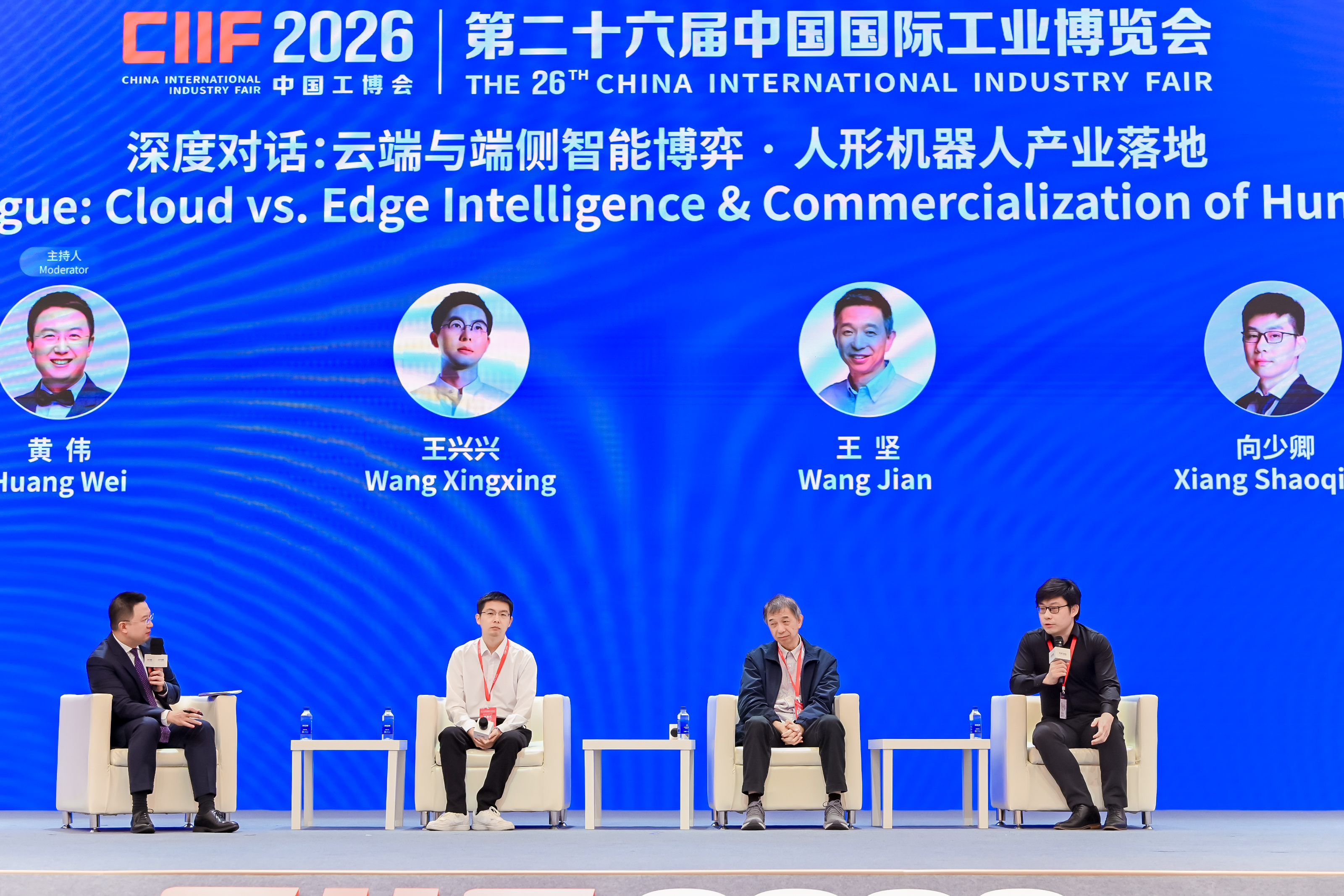
Image source: Official of the Industry Fair
In terms of training data, WANG Xingxing believes that first-person human operation data is valuable, but when robots actually enter the physical world, the contact and operation of the last few millimeters still need to be continuously adjusted relying on real machine data. As a body manufacturer, Unitree pays special attention to the test feedback of robots in real environments.
Xiang Shaoqing believes that the three types of data: human operation, simulation and real machine, have their respective functions. Human operation data provides initial reference, simulation can be used for reinforcement learning and expand training scenarios, and real machine data is used to correct the deviation between simulation and reality. These three links can be carried out at the same time, and it is difficult to omit any of them.
"I think the industrial sector should make industrial data available." WANG Jian appealed on site. He believes that an important condition for Internet texts and open source codes to be used for training large models is that data can be widely obtained, while a large amount of industrial data still remains inside various enterprises.
"All the data in the industrial sector is still locked in everyone's drawer today." WANG Jian said. If industrial data can never be used for model training, it will be difficult for robot enterprises to make full use of the experience accumulated in industrial production.
WANG Xingxing responded to this that AI does require all kinds of data, but enterprises also have confidentiality requirements. How to use industrial data for training on the premise of protecting trade secrets is still a problem to be solved.
At present, some robot enterprises have begun to accumulate operation data from the actual operation of stores. On August 28, the robot restaurant cooperated by Sharpa and DQ was unveiled in Shanghai, and officially started operation the next day.
Xiang Shaoqing introduced that Sharpa's robots can process real orders in stores that do not need special transformation. He believes that when robots enter commercial scenarios, what matters is whether they can adapt to original equipment and workflows and continuously complete tasks, rather than re-transforming the business environment for robots.
Xiang Shaoqing revealed that Sharpa's next plan is to deploy 30,000 robots in three scenarios: catering, retail and hotels. He hopes that in the future, store operators can make robots adapt to new scenarios with only a small amount of data and simple training.
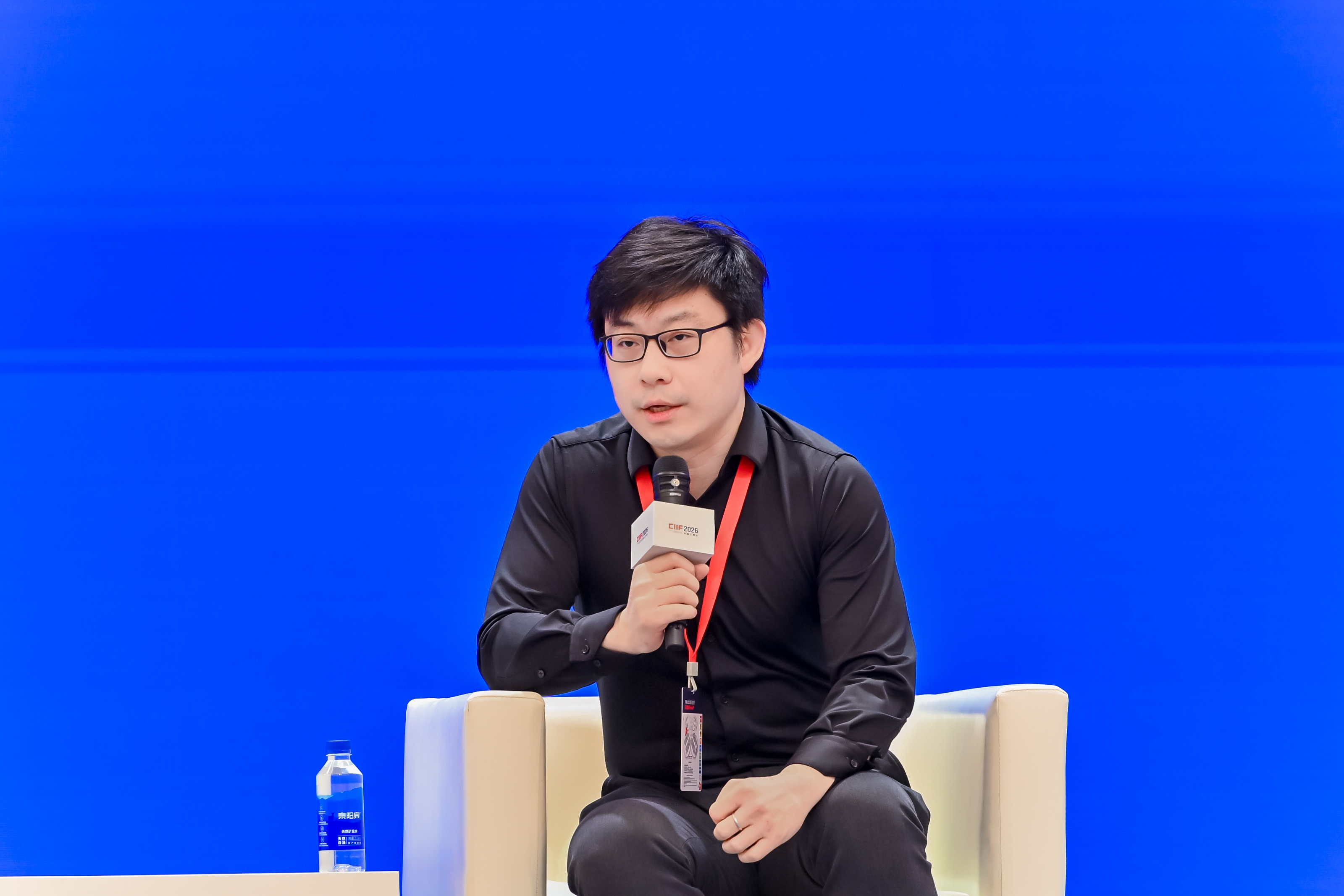
Xiang Shaoqing. Image source: Official of the Industry Fair
There is still a gap in efficiency and cost from single-store verification to deployment of tens of thousands of units. Previously, the reporter of Jiemian News observed in the above cooperative store that it took about 6 minutes for the robot to make an ice cream, while a skilled shop assistant usually only takes two or three minutes.
Li Yifan, Co-founder of Sharpa, also admitted to the reporter of Jiemian News at that time that the equipment is far from profitable at the current stage. The price of the whole set of equipment is still at the level of hundreds of thousands of RMB, and the long-term goal is to reduce it to the order of 100,000 RMB.
Regarding the external evaluation of robots by the standard of "exhibit or product", WANG Jian believes that this statement is unfair to the industry that is still in the period of rapid iteration. In his view, robot technology has made great progress, but the industry still needs to find applications that are really suitable for robots and can solve practical problems.
"This is not a simple matter, it is a thing that requires a lot of creativity." WANG Jian said.
This article is from "Jiemian News", reporter: XU Meihui, editor: WEN Shuqi, 36Kr is published with authorization.