36Kr New Trends | Building AI Computing Power Centers in Space, Elon Musk Has Once Again Popularized a Trillion-Dollar Track
Author | QIAO Yujie
Editor | YUAN Silai
This article is approximately 4800 words, with a suggested reading time of 13 minutes
A year ago, companies working on space computing power would have faced a lot of cold shoulders from investors if they sought investment.
It is hard to blame their indifference. The space computing center sounds somewhat sci-fi. To put it simply, it aims to achieve unlimited computing power expansion by leveraging the never-setting solar energy and vacuum radiation heat dissipation in space. Its core idea is to break the deadlock of power supply and energy efficiency of ground data centers.
"At that time, we internally thought, this stuff must be a scam, and the market was extremely cold for a while," an investor recalled.
It was Musk again, on the other side of the ocean, who single-handedly boosted China's hard technology track.
In November 2025, Musk announced on social media that relying on the launch capability of Starship and the upgrade of Starlink V3 satellites, SpaceX will build the world's first space AI data center cluster, with the goal of deploying 1 terawatt (1TW) of AI computing power per year.
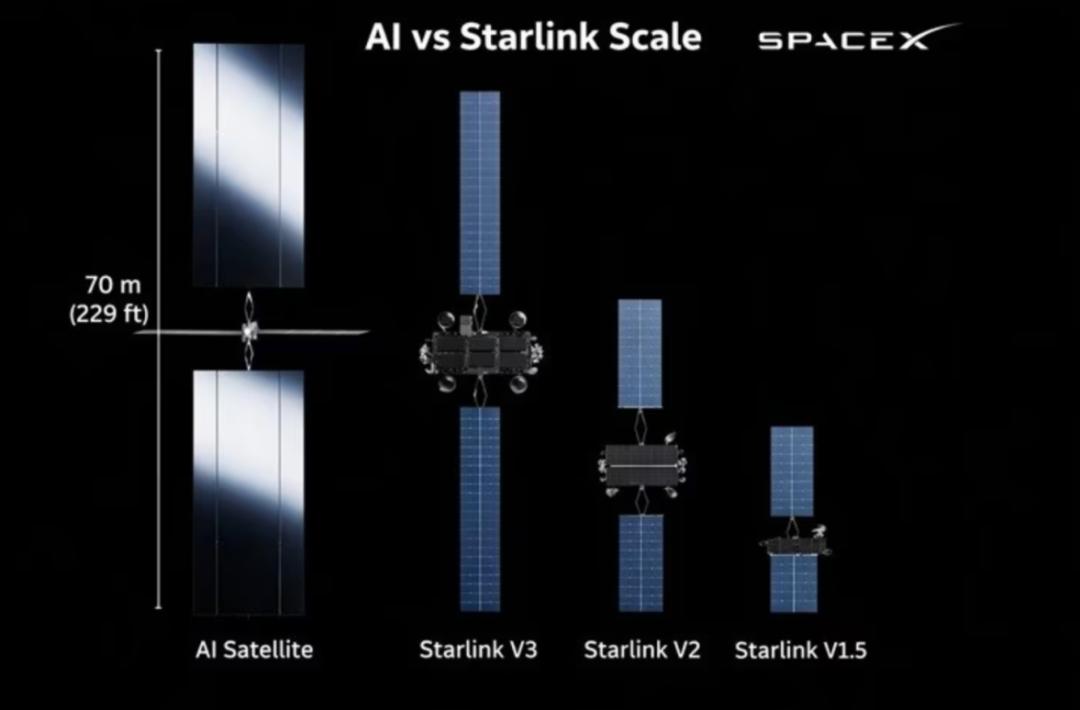
(Concept art of SpaceX AI Satellite)
Investors soon changed their attitudes. They felt that "even the unreliable ideas have started to make sense". The change of mind for many people did not come from more in-depth research or more practical development of the track, but only from the observation that "Musk's PR efforts have become much more aggressive".
"If a company with such a high degree of vertical integration can make space computing power a viable business, then other companies can also achieve it with proper efforts," an investor told Hard Krypton.
Similar to commercial aerospace, quantum computing and nuclear fusion, this track has also heated up rapidly in the short term due to technological competition between countries. An investor joked to Hard Krypton that it is once again "crossing the river by feeling Musk's stones".
A group of slow-responding investors found that the track that no one was willing to participate in half a year ago suddenly faced a shortage of investment quotas.
Among the representative companies in the space computing power track, Zhongke Tiansuan and Zhongke Miwei have successively disclosed financing of over 100 million yuan this year; while Yiwei Aerospace and Orbit Aurora have both obtained four rounds of financing within one year, and their valuation after the latest round of financing has reached 4 billion yuan.
New players have also entered the market one after another. In the first half of 2026 alone, several space computing power related companies were established, including Star Meta Origin, Universal Pan Intelligence, Deep Space Matrix, and Ruqi Deep Space, with different backgrounds, ranging from aerospace veterans to entrants from the investment circle. In addition, AI listed company JiaDu Technology has also incubated an enterprise dedicated to developing large models for space computing power, with a valuation of over 1 billion yuan after the pre-A round of financing.
Even, "space computing power" itself has become a buzzword that can raise valuations. An investor focusing on the commercial aerospace field told Hard Krypton that many projects have nothing to do with space computing power at all, but as long as their business can be linked to space, they will raise financing under the banner of space computing power. For example, some enterprises that were still making communication satellites last year now claim to enter the computing satellite sector. "Almost all of them are telling stories about computing power."
The primary market has also built a logic that can support valuations in a short period of time. Many investors believe that the space environment may replicate the development trajectory of the ground Internet. The first step is the intelligence of a single satellite, then collaborative computing between computing satellites, and the end state is a large-scale space computing center. "Everyone feels that there will be a very large market waiting for us," the above-mentioned investor said.
When the number of satellites is large enough, the communication network is dense enough, and computing power truly enters orbit, new scenarios and business models will emerge accordingly. Right now is exactly the starting point to enter the market and place bets.

Derivative of the booming commercial aerospace sector
The heating up of space computing power is almost synchronized with the popularity of commercial aerospace.
Globally, in 2025, investment in global space startups reached 55.3 billion US dollars, setting a new annual record. In 2026, only in the first quarter, the investment has reached a record high of 36 billion US dollars.
In the commercial closed loop of commercial aerospace, the most downstream part is the satellite-derived business. At present, Starlink is the one that has generated positive cash flow, while capital sees greater possibility in the AI computing center in space.
In November 2025, US startup Starcloud launched its first technology verification satellite "Starcloud-1", equipped with NVIDIA H100 chip. In December, Starcloud announced that it had completed the on-orbit large language model training using this H100, and ran Google's Gemma model. Its long-term goal is to build a megawatt-level and even gigawatt (GW)-level centralized space computing infrastructure in low Earth orbit.
During the same period, Musk also began to talk loudly about superimposing computing capabilities on SpaceX's huge satellite network to further build a space AI data center. Google announced its "Project Suncatcher" plan to explore the deployment of AI chips such as TPUs in solar-powered satellite constellations.
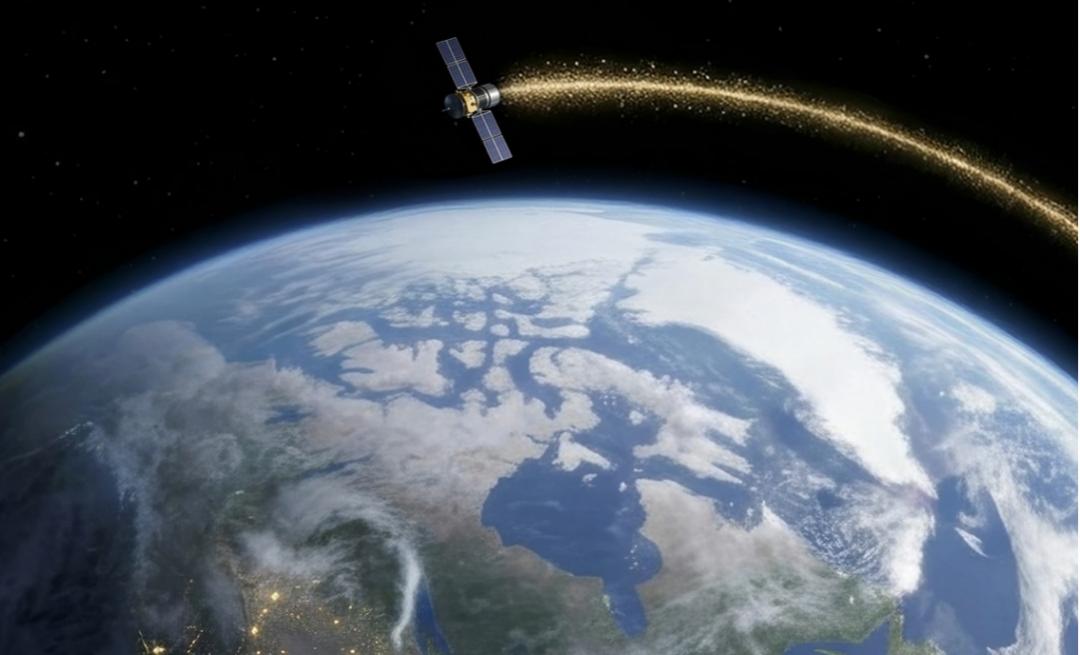
(Concept art of NVIDIA's space computing power plan)
In China, both state-backed teams and commercial companies have successively achieved some recyclable milestones. The window to obtain excess opportunities simply by "building rockets and satellites" is gradually narrowing, and the opportunities for early investment are getting fewer. The industry is beginning to look for new growth points. The combination of "space" and AI, coupled with Musk's high-profile entry, has ignited capital's imagination for the next-generation space industry.
If you only understand space computing power as "moving data centers to space", you may underestimate the real value of this matter.
What intelligent low-orbit satellites can provide is not just a "higher position", but a new dimension for perceiving and understanding the Earth.
Take marine scenarios as an example. Scenarios such as marine infrastructure, offshore wind power, and ocean transportation all require continuous access to information such as sea conditions and ocean currents. In the past, sensors could be deployed on the sea surface or seabed, but their coverage was limited. Remote sensing satellites can continuously obtain marine information from a larger spatial scale.
If satellites have stronger on-orbit computing capabilities, they can directly filter, identify and analyze remote sensing images and sensing data, and even feed the results back to terminals such as ships through the satellite communication network. Similar logic can also be extended to scenarios such as carbon emission monitoring, agricultural monitoring, and disaster early warning. This means that a number of application scenarios that were difficult to implement or too costly in the past may be reopened as a result.
Furthermore, when there is on-orbit computing power in the space scenario, the complex operations required by space stations, space explorers and various commercial spacecraft in low Earth orbit in the future do not need to be transmitted back to the ground, making it possible to deploy more intelligent devices in space scenarios.
Many investors focusing on the space computing power field will use "smartphones" as a metaphor for "space computing power". "When there was no computing power on the ground, people did not know that mobile phones could be smart. Similarly, when there is computing power in space, more application scenarios will emerge."
This may be the real attractive point of "space computing power" for the commercial aerospace industry. It not only brings the satellite computing power itself, but also has the potential to become the next-generation space infrastructure, thus spawning new applications and business models.
Over the past decade, China's commercial aerospace has experienced rapid development from scratch, and progress has been made in fields such as rocket recycling, mass satellite manufacturing, and constellation networking. However, the industry has always had an unavoidable problem: business model.
With the relatively complete coverage of ground networks and ground stations, it is difficult for Chinese communication satellites to form large-scale revenue through direct connection to end users like Starlink. After satellites are launched into space, there has never been a particularly clear answer on how to form a stable and large-scale revenue source.
Space computing power provides new room for imagination. "Computing power is equivalent to opening up a new horizon for everyone. It is a new market beyond communication, and a market that private enterprises can participate in, and it is possible to achieve a commercial closed loop in this market," the above-mentioned investor said.
Of course, computing power itself is not the end point, it is only the first step of the application closed loop.
"In the future, tens of thousands of satellites will be launched into space, which will definitely generate more value. To make more use of data, we need to find applications around the data between the ground and space. There is still a lot of room for imagination for specific applications. But the premise of finding applications must be the availability of computing power."

Go to space or stay on the ground?
The "space computing power" discussed in the industry at this stage actually corresponds to two different technical routes, "space data processed in space" and "ground data processed in space".
"Space data processed in space" appeared earlier.
The so-called "space data processed in space" simply means that satellites process the collected data in orbit.
Early satellites, especially remote sensing satellites, continuously generate a large amount of image and sensing data. If all the raw data is downlinked to the ground for recognition, analysis and processing, it will not only occupy a lot of communication resources, but also increase the delay of data processing.
Therefore, what "space data processed in space" needs to solve is to enable satellites to have certain computing capabilities, complete part of the processing directly where the data is generated, such as image recognition, target detection, image segmentation, etc., and then transmit the filtered and processed results back to the ground to serve the ground industry.
But what really pushed "space computing power" to the forefront is the "ground data processed in space" that caught up with the AI narrative wave.
On the ground, the expansion of computing power infrastructure is facing increasingly severe constraints such as power supply, heat dissipation and construction cycle. According to industry data, the new power demand of North American AI data centers (AIDC) in 2026 will exceed 20GW, and will approach 30GW in 2027, equivalent to the total installed capacity of 30 large nuclear power units. However, practical problems such as aging power grids and delayed grid connection have left countless new data centers in a "queue for power" dilemma that lasts for 1 to 3 years.
As a result, tech giants have turned their eyes to space, which is closest to the sun. The ultimate vision of both Google and Musk is to use abundant space energy to build data centers directly in space to share the computing power burden on the ground.
Of course, due to different national conditions, China's "space computing power" has been pushed to the top of the wave following the logic of occupying the position of "we must have what others have".
An investor who has long focused on the commercial aerospace track told Hard Krypton that at present, the imaginations of China and the United States in the field of "space computing power" are not exactly the same. On the one hand, China's power grid has stronger resilience, the ground power supply is relatively sufficient, the infrastructure and industrial chain on which data center construction depends are relatively complete, and the overall cost is controllable. On the other hand, SpaceX already has a large-scale on-orbit satellite network and strong rocket launch and network replenishment capabilities, all of which provide the foundation for American technology companies to enter space at low cost.
In contrast, China's commercial aerospace is still in the stage of rapid industrial chain construction. If we directly replicate the path of "ground data processed in space" when the infrastructure, launch cost and satellite scale have not reached the corresponding level, it means that we need to bear extremely high upfront investment and engineering costs.
"If we jump directly to their path, the cost accounting may be completely uneconomical, and we will fall into a space race that does not conform to our national conditions and industrialization stage," the above-mentioned investor said.
For China, a more realistic path for "space computing power" may not be to simply copy a "space version data center", but to advance step by step according to the maturity of the industry, first solve the intelligence problem of a single satellite, then promote constellation collaborative computing, and finally consider larger-scale computing power deployment under the premise of mature technology and controllable cost.
At this stage, the path taken by China's "space computing power" is more like an enhanced version of the early "space data processed in space".
Early on-orbit computing mostly ran visual models such as YOLO and Stable Diffusion to complete tasks such as image recognition, target detection, and image segmentation.
As large models gradually mature, the demand for computing power on the space side is also increasing. For example, in scenarios such as real-time computing and constellation management, large models can undertake more complex perception, computing and task planning, which means that computing chips with stronger performance need to be sent into space to further verify the feasibility of complex computing systems operating in orbit.
"In the long run, we still need 'ground data processed in space' to solve the problem of uneven distribution of ground computing power in China. But at this stage, only using the high-certainty emerging increment of 'space data processed in space' to measure the industry market size can already support a listed company," an investor revealed to Hard Krypton.

Beyond the boom
The contrast is that despite the clear technical direction and the influx of capital, a satellite industry practitioner told Hard Krypton that "the demand in the stock market is still relatively traditional."
Most satellites will take certain on-orbit computing capabilities into consideration during design, but the real demand from customers is still to "downlink the raw data" instead of completing highly sufficient edge computing on the satellite side.
The above-mentioned practitioner said that in the past, satellites themselves did not have much computing power, and the industry did not build a complete product and service system around "on-orbit processing", so the demand has not been truly stimulated.
At the same time, the scale of the currently on-orbit constellations is not large enough to support a large number of new applications.
Musk put forward the vision of a space AI data center only after the