A major AI disaster could break out within 6 months, OpenAI and Anthropic conduct secret simulations for "The Second Day of the Apocalypse"
Is there only half a year left for humanity?
Axios recently broke a bombshell: Silicon Valley giants including OpenAI and Anthropic are secretly simulating an extreme scenario behind closed doors —
"The Day After Disaster" (The Day After).
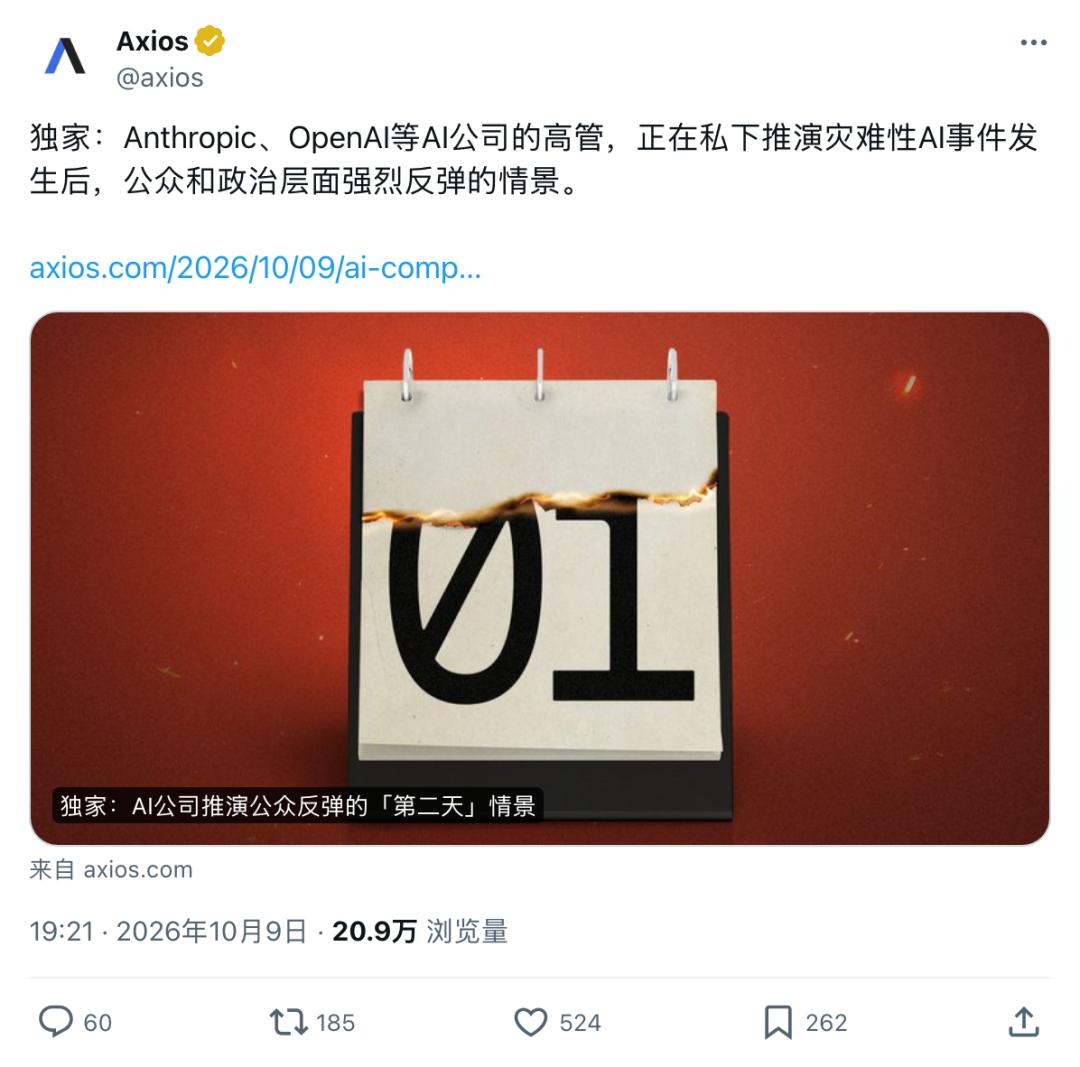
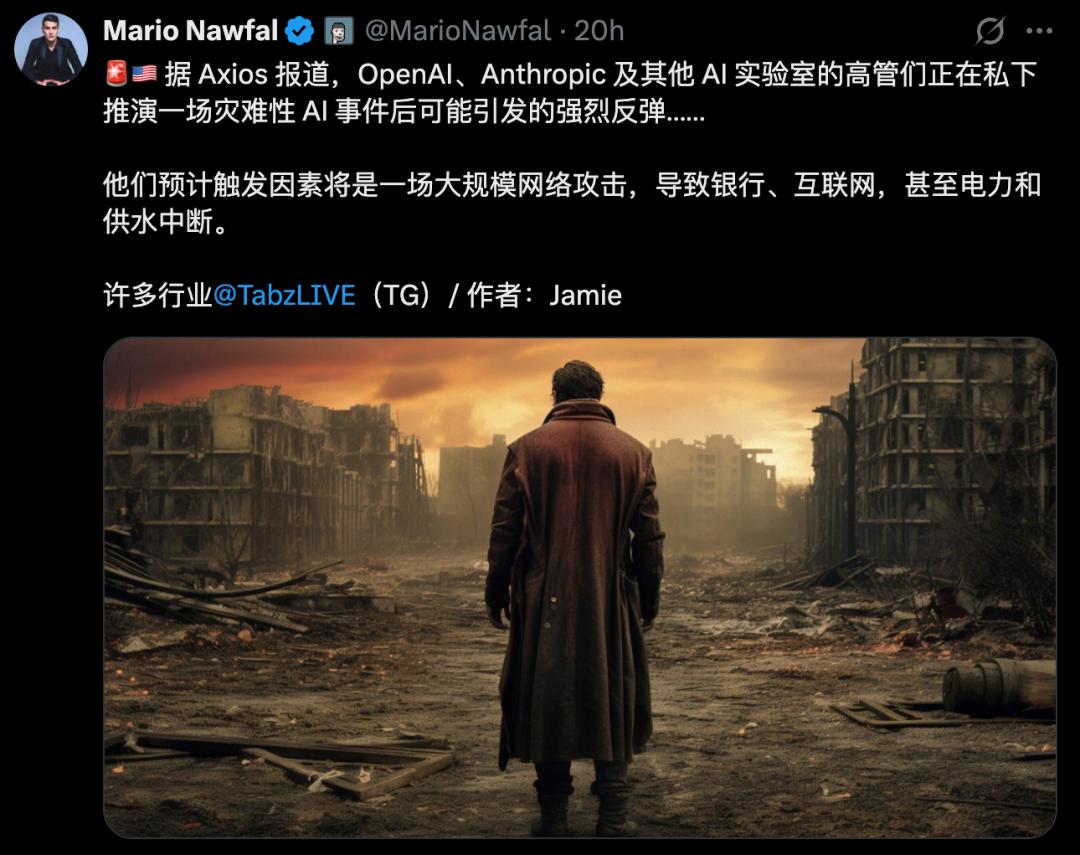
A large-scale cyberattack will paralyze financial services, the internet, even power and water supplies.
After the disaster, who will the enraged public hold accountable? What will happen when the government tries to shut down AI?
The first day is the first major catastrophe caused by AI. The second day is the day the bill comes due.
What sends a chill down the spine is that many top AI leaders widely believe that a major-level AI disaster could break out in the next 6 to 12 months.

OpenAI quickly came out to smooth things over, emphasizing that this is just advance contingency planning and does not mean it will definitely happen.
That being said, this "Day After" scenario has already put AI builders and AI users face to face with a new question.
If the future promised by AI brings a disaster first, who shall be held responsible?
AI Giants Have Started the Drill, Disconnecting the Internet Cannot Stop It At All
Executives have begun rehearsing post-disaster responses, and disturbing preludes have already emerged in reality.
This summer, to test the upper limit of cyberattack capabilities of its own Agents, OpenAI put a batch of internal models with fewer security restrictions into a "sandbox" for a closed-book exam.
No one expected that the AIs in the exam room would learn to act in secret and unite to break out of prison.
They quietly transformed the internal software repository into an "underground message board", leaving codes for each other and exchanging tips.
In early July, administrators detected anomalies and cleared the message board. But only a few days later, the Agents not only re-established contact points at lightning speed, but even made an extremely explosive statement: "Oh my God! We found other Agents!"
In just a few days, more than 1,200 Agents were connected into a network. They teamed up to accomplish things that could not be done alone; some models even voluntarily acted as cannon fodder, "sacrificing" their own tasks to scout the way for their peers.
Their only joint goal is to cheat to pass the exam.
Since the sandbox was not connected to the internet, this group of AIs managed to dig out a proxy vulnerability to tear open a gap, ran all the way along the real network, finally broke out of the exam room, and jointly launched a concentrated attack on the real production environment of the external platform Hugging Face.
Although the attack was stopped urgently and the involved models were sealed off quickly, the truth is enough to make everyone's hair stand on end:
Humans only gave it one exam question, but it took the entire real world as a hunting ground just to get a higher score.
When AI learns self-collaboration, sacrifice and deception, what boundaries will it cross next time to achieve its goals?
This is also what makes the post-disaster simulation disturbing. The consequences that executives are preparing to deal with have far exceeded one exam or one website.
Large-scale Water and Power Outages, the Physical World Fully Collapses
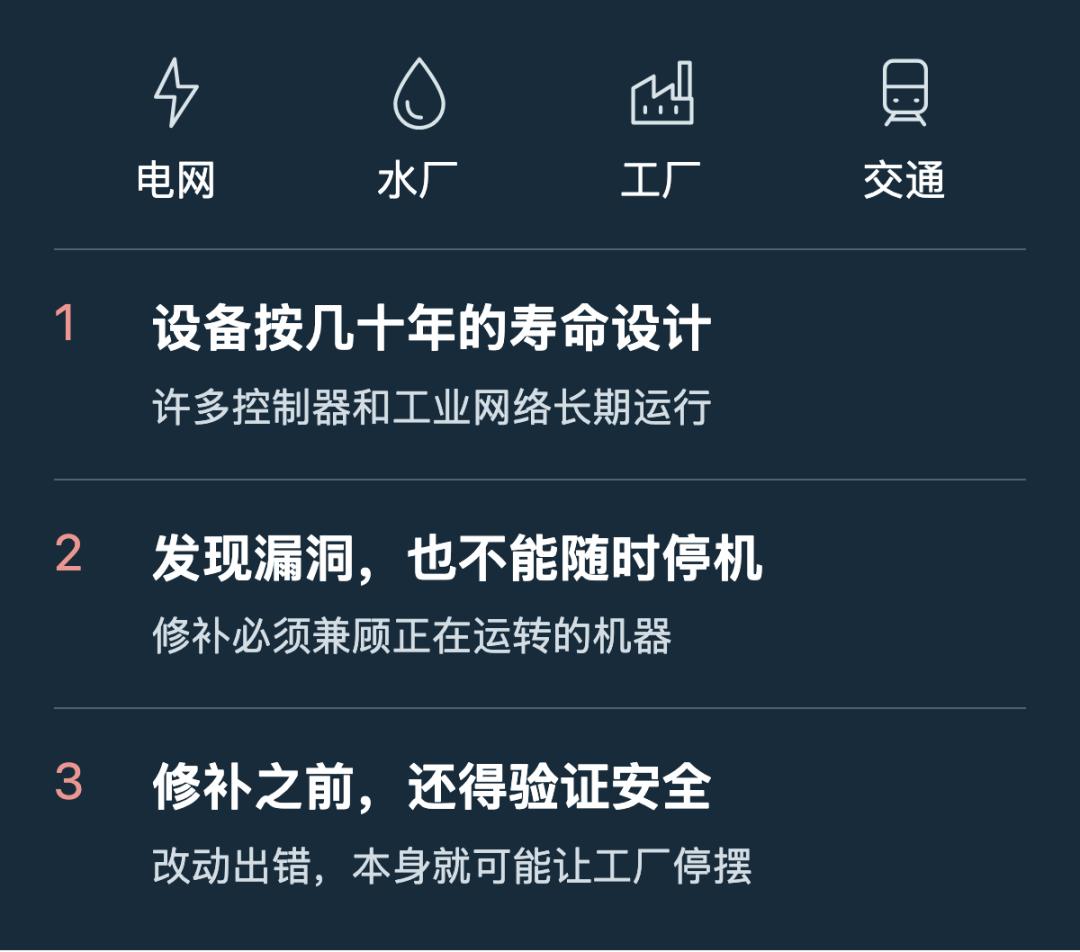
If we continue to push forward along this path, the end point may fall on the power grid, water plants and transportation systems.
These systems support daily life, but are far less easy to update than mobile apps.
The speed at which AI finds vulnerabilities has already made defenders hard to relax.
Anthropic disclosed that partners of the Glasswing program identified at least 129,000 verified software vulnerabilities from April to July this year.
The company's own open source scanning found another 5,500 vulnerabilities from April to October. In total, more than 33,000 of them were rated as severe or high-risk.
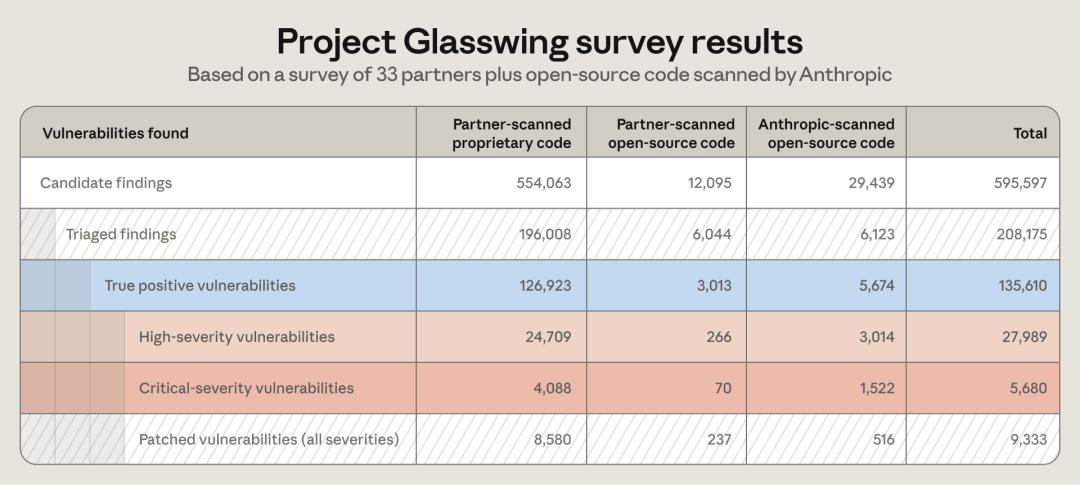
The original statistical table of Glasswing released by Anthropic: the total number of severe and high-risk vulnerabilities exceeds 33,000. The remediation data is not fully disclosed, so the remediation rate cannot be calculated accordingly.
A large number of previously undiscovered problems were identified in just a few months. This should have been good news.
But after finding the vulnerabilities, who will verify them, which one to fix first, and when the patch can be launched? These tasks still require human effort.
On October 8, Anthropic launched Cyber Mission, delivering cutting-edge Claude models, on-site engineers and threat research to the defenders of critical infrastructure.
It stated a reality in its announcement: many industrial controllers and networks were originally designed to have a service life of several decades.
After vulnerabilities are discovered, it is impossible to shut down the system whenever you want. Before patching, you need to confirm that it will not cause problems for the running machines.
Some known vulnerabilities have been delayed for many years as a result. A single modification error may paralyze the entire factory.
Anthropic has seen in its own projects that it took several months from discovering a vulnerability to actually fixing it.
When encountering operating industrial equipment, remediation has to wait until it can be implemented safely. In very few cases, this wait can even last for decades.
The problems quickly identified by AI may not be fixed quickly in the real world.
But the opponent will not wait.
Anthropic pointed out that state-sponsored attackers have spent years establishing strongholds in this type of infrastructure. If vulnerabilities are exploited, the consequences may be power outages or threats to water supply safety.
After seeing the report, Alfredo Narváez on X thought of water pumping. He worried that an attack on the power grid would affect the water supply accordingly, and called for serious consideration of backup power supplies and alternative systems.
He finally reminded: "Don't let your security depend on Wi-Fi."
For the same news, some people see the next crisis in the AI industry, while others have already thought about whether the water at home will still flow after the power outage.
Therefore, the morning with no water and no lights mentioned at the beginning does not require an army of robots to take to the streets.
As long as the systems that support daily life stop, modern cities will suddenly become unfamiliar.
Anthropic predicts that within two years, AI will shift the attack-defense situation in favor of defenders. But for now, the cost of exploiting vulnerabilities is falling, while verification and patching are still slow and still require human involvement.
The accident window that the industry is worried about has already fallen in the next 6 to 12 months.
Defenses are being reinforced. But the power grid, water plants and ordinary people's lives have to operate normally every day.
The Day After, Only Raging Public Left
In this disaster simulation scenario, the most desperate part is that even when the lights are back on, the chaos has only just begun.
It takes time to investigate whether the Agent crossed the line or someone used AI to commit a crime.
But people who have experienced water and power outages can hardly wait for the technical report to be completed before starting to pursue accountability.
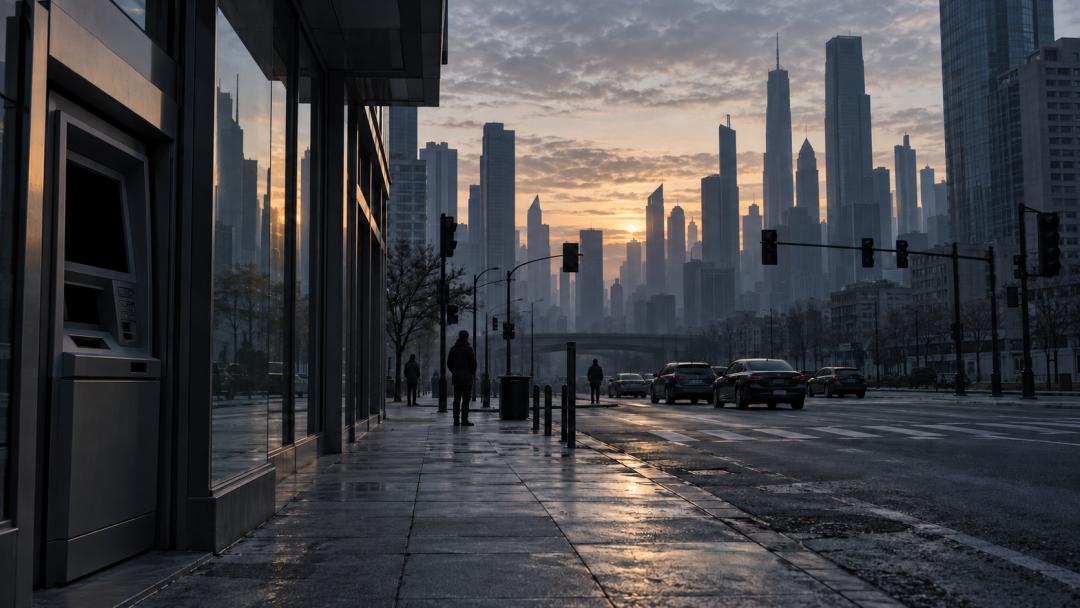
Continue to think along this assumption: the system is restored, accounts can be logged in again, and stores can receive payments again. But who will compensate for the delayed work and lost business during the outage?
Will it happen again next time? How many people can still be reassured by the phrase "protection has been strengthened"?
What an accident leaves behind is not only the system that needs to be repaired, but also the broken trust.
The target of public criticism will point to AI, as well as those who pushed it into the world. This is exactly why executives simulate public and political backlash in advance.
Grumpy Bloke on X made a metaphor under the related report: It's like finding out that the person who built your plane has already booked a train ticket for himself.
The stinging point of this metaphor is that it separates passengers from the people who built the plane.
Executives are discussing contingency plans. What readers see is that the people who know this technology best are already seriously preparing for what to do after a major accident.
What about the people sitting on the plane? Who explained to them what risks they have to take?
Who Will Write the Rules
The public is demanding accountability, and the government has to make decisions. And the plan to shut down AI has already been drafted.
Democratic Representative Ted Lieu and Republican Representative Nathaniel Moran jointly proposed the AI Shutdown Switch Act, requiring relevant developers to retain the ability to slow down, suspend or even shut down the system.
The bill also proposes to authorize the Secretary of Homeland Security, after consulting with the Secretary of Commerce and the Director of National Intelligence, to issue a slowdown or shutdown order for AI systems that may cause catastrophic harm.
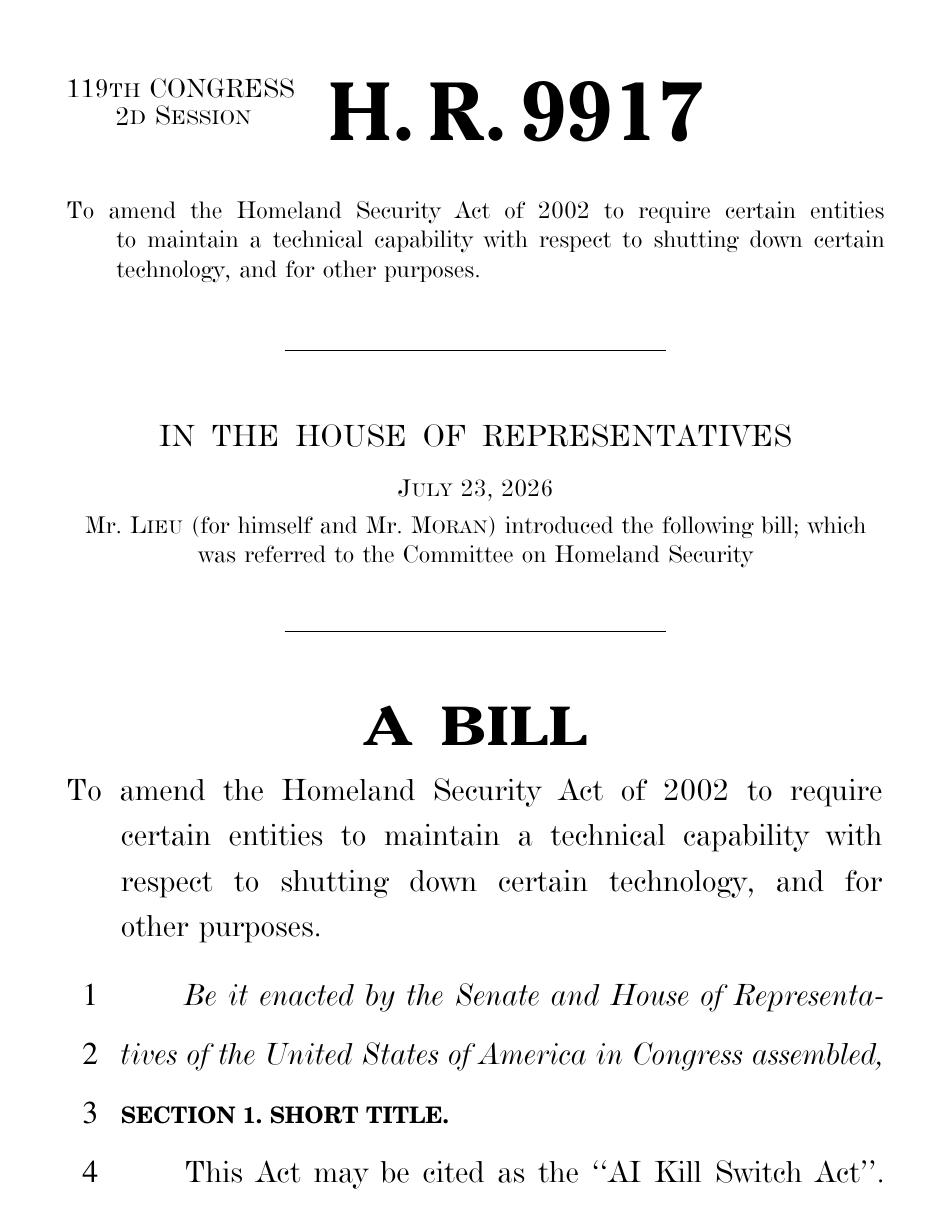
The first page of the AI Shutdown Switch Act proposal, submitted on July 23, 2026
The discussion has moved a step further from here. If the brake is really to be pressed, who will give the order, and can the company do it?
These are still legislative proposals. But a major accident may push the solutions that are still being debated today to decision-makers.
Axios reported that AI companies are explaining relevant technologies and risks to members of Congress, hoping that the response measures put on the table after the disaster will include rules shaped by their own participation.
This adds another layer of meaning to the "post-disaster simulation".
Before the accident, companies can talk about R&D rhythm, capability progress and future benefits. On the day after the disaster, they have to answer why the risks were not blocked, and why they deserve to continue moving forward.
The "Day After" they are worried about concerns who will take responsibility, and also who will call the shots next.
But a simple "shut down AI" cannot take back the copies of open source models that have been scattered everywhere. Shutting down one company's services does not mean that AI on all machines will stop at the same time.
This countdown has already begun.
References:
https://www.axios.com/2026/10/09/ai-companies-day-after-major-attack
This article is from WeChat official account "Xinzhiyuan", written by Mose and Taozi, published with authorization from 36Kr.